Economic Growth vs. Environmental Protection: Finding the Balance
Updated:
In the global conversation about progress, one debate continually takes center stage: Economic Growth vs. Environmental Protection. While nations strive to expand industries, build infrastructure, and improve standards of living, these developments often place strain on the natural environment. The challenge lies not in choosing one over the other, but in striking a balance between economic prosperity and ecological sustainability. Achieving this balance invites governments, businesses, communities, and innovators to rethink how development can occur without sacrificing the planet’s long-term health.
Today’s leaders are confronted with a crucial question: How do we continue to grow economically while preserving the natural resources that support all life? Tackling this issue involves examining the conflict, understanding the economic motivations behind environmental impacts, and discovering solutions that allow both objectives to coexist harmoniously.
Understanding the Conflict Between Economy and Environment
The conflict between economic growth and environmental protection arises from how industries traditionally pursue profit. Economic expansion historically depends on the consumption of natural resources such as fossil fuels, minerals, timber, and land. Manufacturing, agriculture, construction, energy production, and transportation all generate revenue, but they can also contribute to pollution, deforestation, and overuse of resources.
Many countries view rapid economic growth as a path to increased employment, higher incomes, and better infrastructure. However, without responsible environmental management, economic success becomes unsustainable. Once soil is depleted, water becomes scarce, and air quality deteriorates, both public health and economic activity suffer. This conflict is not just ecological, it is societal and economic at its core.
Why Economic Growth Often Comes at Environmental Cost
Economic growth frequently comes at the expense of the environment due to profit-driven priorities. Businesses and governments may overlook environmental impacts in favor of faster revenue generation. Common examples include:
Over-extraction of resources to meet consumer demand
Industrial pollution from manufacturing and energy production
Urban expansion that reduces green spaces and wildlife habitats
Agricultural commercialization that exhausts land and emits greenhouse gases
These practices can lead to biodiversity loss, climate change, waste accumulation, and health problems among populations. Ignoring these costs may produce short-term financial gain, but it creates long-term environmental liabilities. Preventing or mitigating damage is often far more cost-effective than repairing ecological destruction after it occurs.
The Role of Sustainable Development in Bridging the Gap
The concept of Sustainable Development bridges the gap between economic growth and environmental protection. It emphasizes meeting present needs without compromising the ability of future generations to meet their own. Sustainable encourages society to rethink energy, agriculture, transportation, and land use through innovative and eco-conscious techniques.
Instead of hindering economic growth, sustainability fuels it by creating new industries, improving efficiency, conserving resources, and increasing resilience against climate-related risks. For example, companies specializing in renewable energy, recycling systems, and environmentally responsible construction are expanding rapidly due to high demand for greener alternatives.
Green Technologies: A Path Toward Eco-Friendly Growth
One of the most promising solutions to this issue is the advancement of green technologies. These innovations reduce environmental harm without slowing economic activity. Some key examples include:
Renewable energy systems: Solar, wind, and geothermal power reduce reliance on fossil fuels.
Smart manufacturing: Automation and energy-efficient equipment minimize waste and emissions.
Green building materials: Eco-friendly concrete, recycled steel, and sustainable lumber lower carbon footprints.
Electric and hybrid transportation: Cleaner vehicles reduce air pollution.
Water conservation technologies: Smart irrigation systems and wastewater treatment save critical resources.
These technologies not only protect the environment but also open new job markets and improve resource efficiency, proving that growth and sustainability can coexist.
Government Policies that Balance Profit and Planet
Governments play a central role in regulating how industries impact the environment. Environmental policies encourage businesses to operate responsibly. Effective strategies include:
Carbon taxes that penalize excessive greenhouse gas emissions
Incentives for green technologies such as subsidies or tax credits
Strict pollution standards for factories and vehicles
Protected land and conservation laws to prevent ecosystem damage
Permits and assessments for development projects to ensure eco-compliance
When well-implemented, such policies encourage long-term economic stability while preserving natural ecosystems. Nations with comprehensive environmental regulations tend to experience fewer costly natural disasters, healthier populations, and more stable economies. Even local industries, such as land development services in Jacksonville, FL, are adopting sustainable methods to ensure their projects comply with environmental standards while supporting economic expansion.
How Corporations Can Drive Sustainable Growth
Corporations hold significant influence over environmental outcomes. By adopting greener business practices, companies can reduce waste, improve efficiency, and build stronger reputations among consumers. Corporate strategies that promote sustainable include:
Energy-efficient operations that reduce utility costs
Ethical supply chains that prioritize eco-friendly materials
Waste reduction programs like recycling and composting initiatives
Transparency in environmental performance through sustainability reports
Investment in research and development for eco-friendly technologies
Forward-thinking companies are realizing that environmental responsibility is not merely a social obligation, it is a strategic advantage. Businesses with strong sustainability practices often outperform competitors by attracting loyal customers, cutting operational costs, and complying more easily with regulations.
Environmental Protection as an Economic Opportunity
Protecting the environment should no longer be seen as a limitation to economic growth. Instead, it opens doors to innovation, job creation, and new industries. Sustainability-driven markets include:
Green construction and architecture
Renewable energy engineering
Eco-tourism and conservation services
Organic agriculture and sustainable farming
Recycling and waste management enterprises
These sectors not only contribute to the global economy but also preserve natural resources. Investments in environmental protection create more long-term value than short-term exploitation.
Public Awareness and Its Impact on Environmental Policy
The voice of the public plays a powerful role in shaping sustainable governance. Environmental awareness campaigns, educational programs, and media advocacy influence policymakers to adopt stricter environmental laws. When communities understand the health, economic, and social risks of environmental neglect, they are more likely to demand protection from leaders and corporations.
Consumers also drive eco-friendly markets by purchasing products and services from businesses that prioritize sustainability. This shift in consumer behavior incentivizes companies to adopt greener operations.
The Future: Can We Achieve Prosperity Without Pollution?
The question of whether we can achieve economic growth without harming the environment is no longer hypothetical, it is necessary. The future demands rethinking traditional development models and embracing sustainability as the foundation for progress. It requires collaboration between governments, industries, scientists, educators, and citizens.
With continued innovation, responsible regulation, green technology investment, and corporate accountability, the world can pursue economic expansion while safeguarding the planet. The debate over Economic Growth vs. Environmental Protection should evolve into a partnership between profit and preservation. Prosperity should not come at the cost of pollution, and with global commitment, a cleaner, greener economy can flourish.
How useful was this post?
Click on a star to rate it!
Average rating 0 / 5. Vote count: 0
No votes so far! Be the first to rate this post.
We are sorry that this post was not useful for you!
Let us improve this post!
Tell us how we can improve this post?
charlesnoble
Here at Spheral Solar, I’m a hands-on solar power enthusiast, constantly exploring and experimenting with DIY solutions. I’m dedicated to sharing my discoveries, insights, and even the bumps I hit along the way, all in the pursuit of a more sustainable future.
Community Solar Projects Made Simple: How You Can… by Charlesnoble March 19, 2026 Picture this: You’re renting an apartment with a north-facing roof, or your property is shaded by towering oak trees, yet you’re determined to power your life with clean solar energy. Community solar makes this possible. Instead of installing panels on your own property, you buy or lease a portion of…
Growing Crops Under Solar Panels Actually Works… by Charlesnoble April 3, 2026 Imagine doubling the productivity of your land by growing crops and generating electricity in the same space. That’s exactly what agrivoltaics makes possible—and it’s not just for large-scale farms anymore. An agrivoltaic system combines solar panels with agriculture, mounting photovoltaic arrays high enough that crops, livestock, or pollinator habitats can…
Turn Your Home’s Exterior Into a Power Plant With BIPV Solar by Charlesnoble February 19, 2026 Picture this: your home’s windows generating electricity while you admire the view. Your patio awning powering your outdoor lights as it shades your afternoon barbecue. Your garage door collecting energy every time the sun hits it. This isn’t science fiction – it’s building integrated photovoltaics, and it’s transforming how we…
This Massive Off-Grid Solar System Powers an Entire… by Charlesnoble October 17, 2025 Imagine powering an entire remote community with nothing but sunshine – that’s exactly what the world’s largest off-grid solar installations achieve today. These engineering marvels, some exceeding 100 megawatts in capacity, are revolutionizing how we think about off-grid solar fundamentals and energy independence. From Australia’s massive Pilbara mine site installation…
Why CSP Solar Never Made It Into Your Backyard (And… by Charlesnoble January 30, 2026 When you see massive solar installations in the desert generating headlines, they’re often concentrating solar power plants—but the panels on your neighbor’s roof? Those are photovoltaics, and understanding the distinction matters more than you might think. Concentrating solar power uses mirrors or lenses to focus sunlight onto a receiver, creating…
This DIY Floating Solar Pool Heater Slashed My… by Charlesnoble January 18, 2026 Place your floating solar heater on the pool’s sunny side during morning hours, positioning it where water circulation naturally draws heated water toward your skimmer return. You’ll capture 5-10 degrees of temperature gain on clear days without spending thousands on permanent installations. Build your first unit using black irrigation tubing…
Subscribe for handpicked DIY projects, exclusive tips, and giveaways.
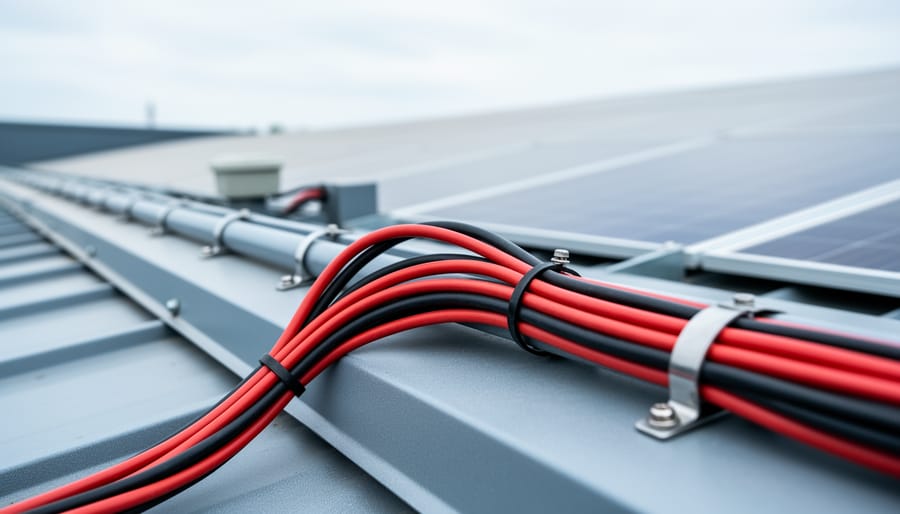
Route your PV wires through UV-resistant conduit within 18 inches of leaving the solar array, securing it every 3 feet with proper clamps to prevent wind damage and code violations. This single step prevents 80% of the wire degradation issues I’ve seen in DIY solar installations over the past decade. Group your positive and negative… Read more: Why Your PV Wire Management Could Fail Inspection (And How to Fix It)
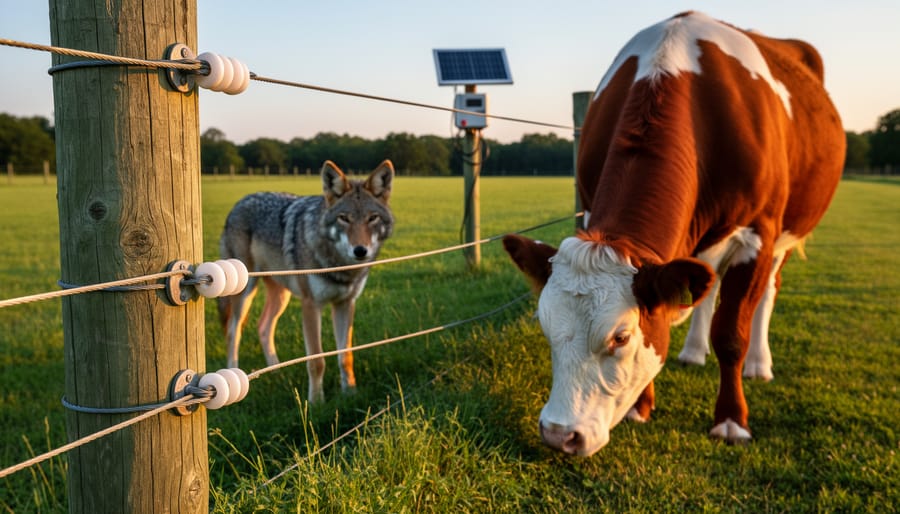
Understand that 6000 volts sounds terrifying but delivers surprisingly low amperage—typically around 120 milliamps for just 3/10,000th of a second per pulse. This combination creates an unforgettable shock that trains animals to avoid the fence without causing lasting harm. The voltage pushes current through thick fur and hide, while the minimal amperage and microsecond duration… Read more: Why 6000 Volts Won’t Kill Your Livestock (But Will Stop Predators Cold)
Check the maximum voltage and current ratings first—these determine whether your controller can actually handle your solar panel array without frying itself on the first sunny day. I learned this the hard way when my first DIY system shut down every afternoon because I’d paired 600 watts of panels with a controller rated for only… Read more: Why Your Solar Setup Needs Both a Charge Controller and Inverter (And How to Pick the Right Ones)