
Solar Specifications
-
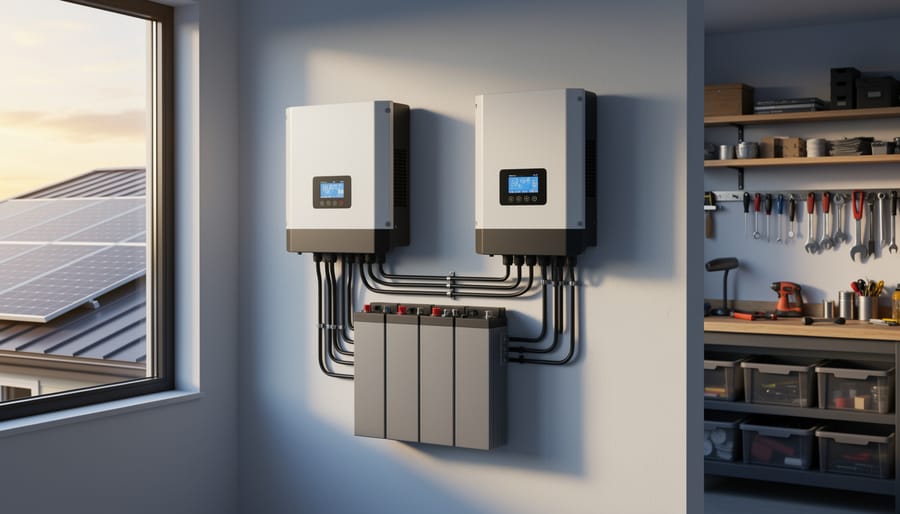
Why Your Solar Setup Needs Both a Charge Controller and Inverter (And How to Pick the Right Ones)
Check the maximum voltage and current ratings first—these determine whether your controller can actually handle your solar panel array without frying itself on the first sunny day. I learned this the hard way when my first DIY system shut down every afternoon because I’d paired 600 watts of panels with a controller rated for only…
-
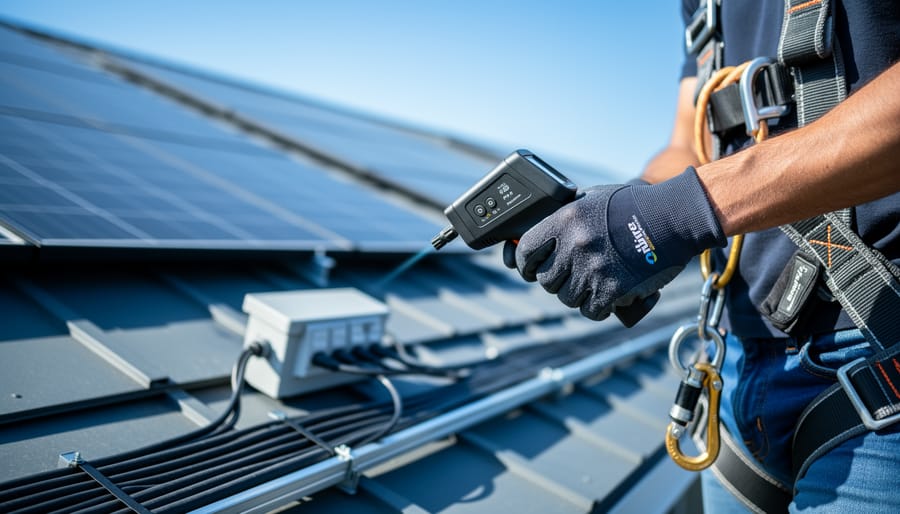
How to Test Your DIY Solar System Like a Pro (Without the Pro Price Tag)
Flip the main DC disconnect three times while monitoring voltage drop—this single action reveals whether your connections can handle full load without dangerous resistance buildup. Check every MC4 connector with an infrared thermometer under peak sun; any reading more than 10 degrees above ambient temperature signals a faulty crimp that could spark a fire next…
-
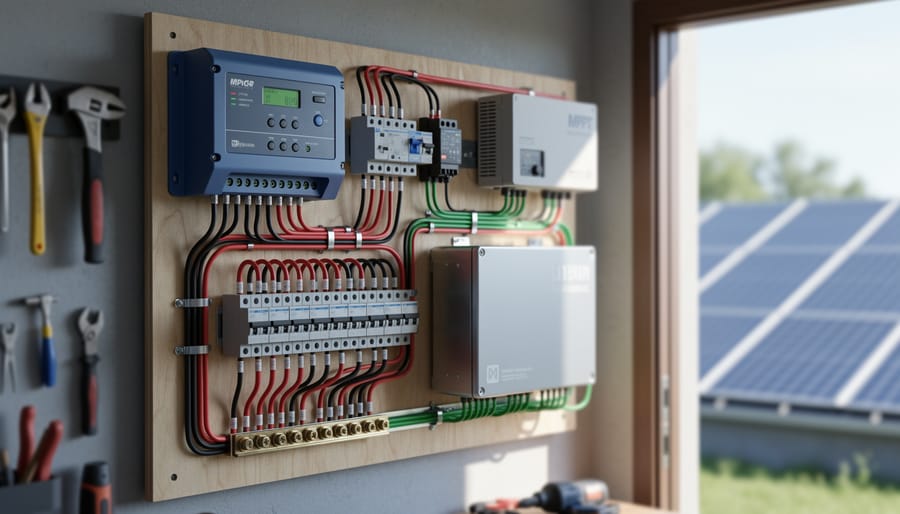
Wire Your Solar System Right the First Time (Before It Becomes a Fire Hazard)
Sketch your complete solar system on paper before purchasing a single component—mapping the physical distance from your solar panels to the charge controller, then to the battery bank, and finally to your inverter will reveal the exact wire gauges you need and prevent the costly mistake of voltage drop that kills system efficiency. I learned…
-
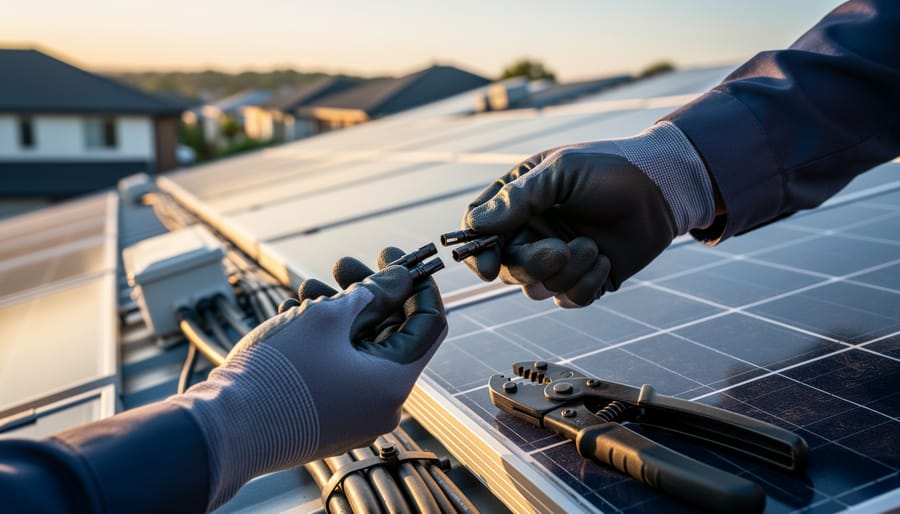
Why Your Solar Panel Connectors Matter More Than You Think
Choose MC4 connectors for most residential solar installations—they’ve become the industry standard since 2011, offering waterproof reliability and simple snap-together connections that even first-time DIYers can master in minutes. I learned this the hard way when my first solar setup used mismatched connectors that corroded after one rainy season, costing me hours of troubleshooting and…
-
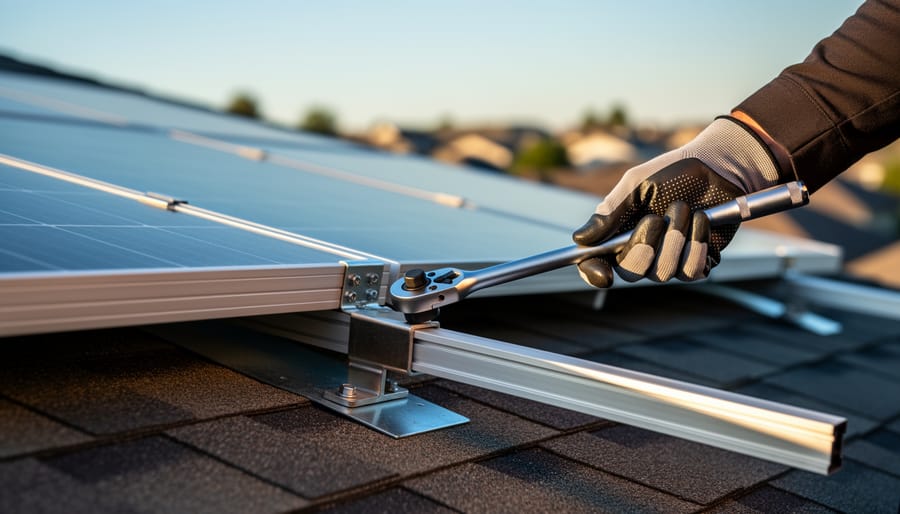
Why Your Solar Panels Need the Right Mounting System (Before You Drill Anything)
Your solar panels are only as reliable as what holds them in place. A solar array mounting system is the structural foundation that secures your panels to rooftops, ground surfaces, RVs, or portable setups, and choosing the wrong one can lead to damage, reduced efficiency, or even safety hazards. Think of mounting systems as the…
-
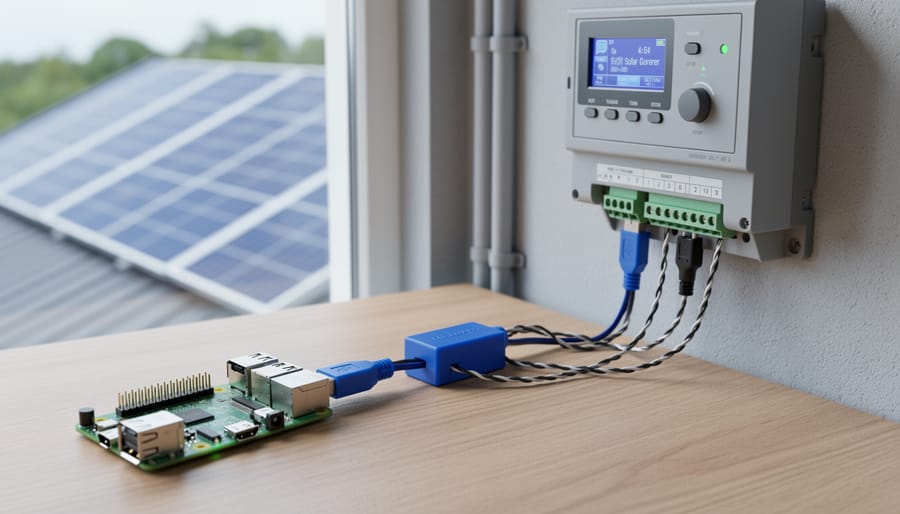
How Solar Monitoring Systems Actually Talk to Each Other (And Why It Matters for Your DIY Setup)
Check your solar panel’s data sheet for the communication protocol it supports—most modern systems use Modbus RTU, RS485, or CAN bus, and matching this protocol with your monitoring hardware prevents compatibility headaches before you start. Download the manufacturer’s protocol documentation and verify voltage levels match between your inverter’s output (typically 5V or 12V) and your…
-
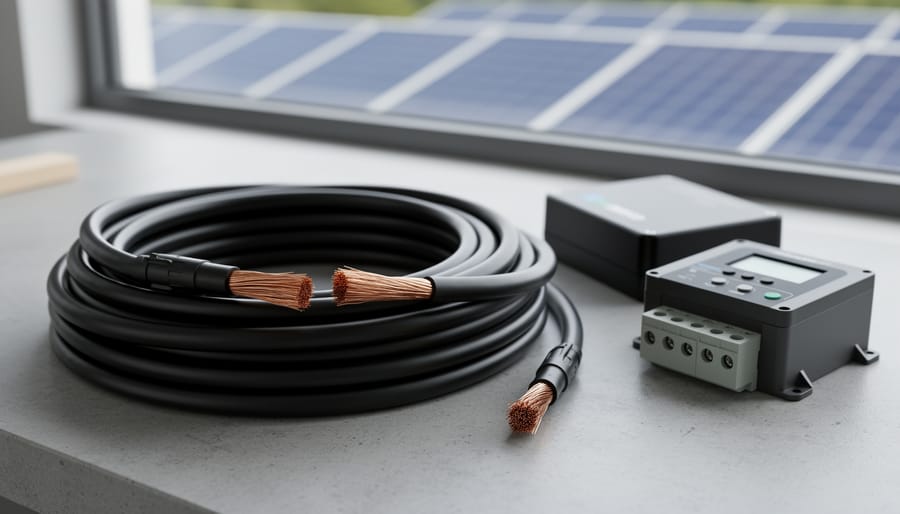
Why 8 AWG Solar Wire Might Be Wrong for Your System (And How to Know for Sure)
Calculate your system’s maximum current first—8 AWG solar wire safely handles 40-55 amps depending on installation conditions, making it the sweet spot for mid-sized solar arrays between 1,200 and 3,000 watts at 12-24 volts. If your panels produce more than 40 amps combined, you need thicker wire; less than 30 amps, and you’re overspending on…
-

Why Lithium-Ion Batteries Changed Everything About Solar Storage (And What You Need to Know)
Match your battery’s voltage to your solar panel system—12V, 24V, or 48V configurations must align perfectly, or you’ll waste energy through conversion losses and potentially damage expensive equipment. Check the battery’s amp-hour (Ah) rating against your daily power consumption: multiply your total watt-hours by 1.2 to account for inefficiency, then divide by your system voltage…
-
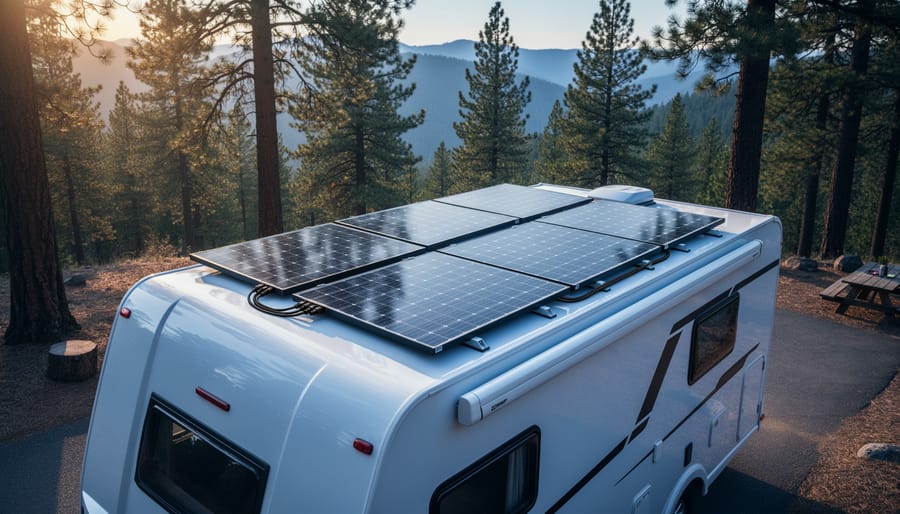
Why Series-Parallel Is the Sweet Spot for Small Solar Setups
Connect two panels in series to double your voltage, then wire two of these series pairs in parallel to maintain higher voltage while increasing your amperage—this series-parallel configuration gives you the sweet spot between performance and practicality for most small-scale solar setups. I learned this the hard way during my first RV solar installation when…
-
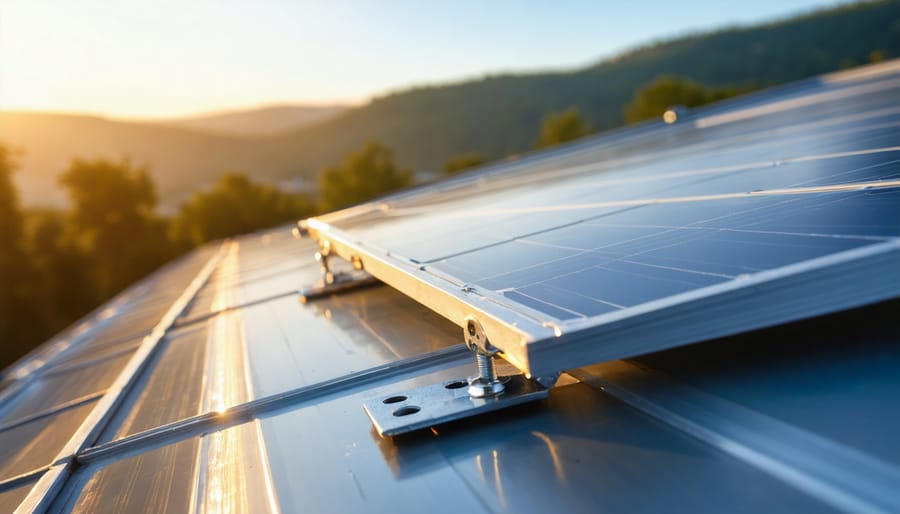
Why Z Brackets Are Your Secret Weapon for Small Solar Panel Setups
**Mount your solar panels with confidence using Z brackets—the simplest, most versatile hardware solution for small-scale solar projects.** These L-shaped metal brackets bolt directly to your panel’s frame on one side and your mounting surface on the other, creating a low-profile, secure connection that works equally well on RV roofs, shed walls, or portable camping…
-
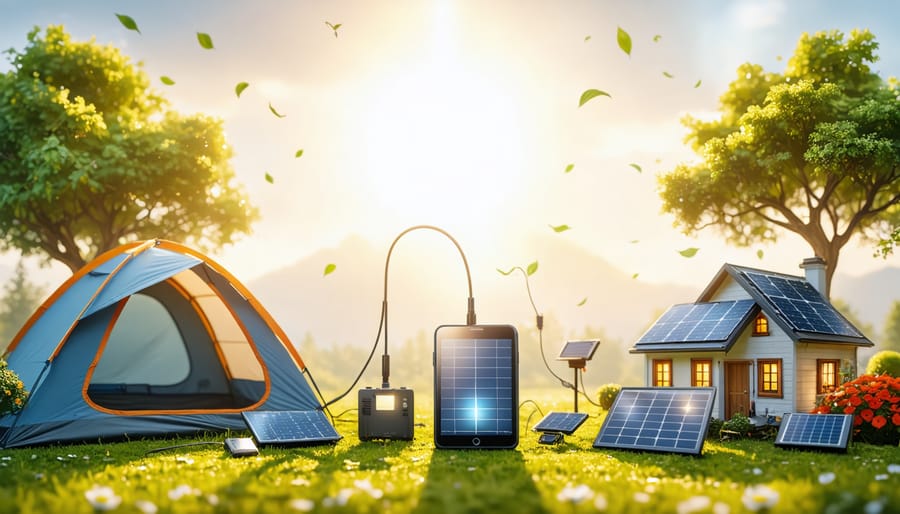
Micro Solar Panels Are Perfect for These Portable Power Projects
Micro solar panels are revolutionizing how we power our everyday devices, from backyard lighting to portable electronics. These compact powerhouses, typically ranging from 1 to 20 watts, pack the same photovoltaic technology as their larger counterparts into a palm-sized package. Whether you’re a weekend camping enthusiast or a budding renewable energy hobbyist, these miniature solar…
-

What Will 100 Watt Solar Panel Run
A 100 watt solar panel can provide power for various small electronic devices and appliances to run but is limited in capacity for larger loads. In this article, we will provide an overview of the power output and capabilities of a standard 100-watt solar panel, including how much energy it can produce per day, what…
-

Solar Panel Specifications Explained
Solar panel specifications can seem like they are written in another language, but they aren’t that complicated. Not only are the terms easy to understand, but many solar panel specifications allow you to make better decisions for your needs and your home. It is important to understand solar panel specifications to maximize your return on…
-

Why Do Solar Panels Have a Peak Power?
A peak power rating lets users estimate optimum Photovoltaic (PV) system performance. Still, as we find out below, industry experts tend to take this number poorly. Peak power for solar panels, rated in kilowatts per hour (kWp), is the maximum energy output that a panel can produce. The datasheet contains this information for each solar…


