Why Grid Code Compliance Matters (Even When You’re Off the Grid)
Updated:
Check your local utility’s interconnection requirements before assuming your off-grid system is exempt from grid codes—many jurisdictions now require compliance even for systems with no planned grid connection, especially if your property remains connected to utility lines. Download your utility’s technical standards document and your state’s electrical code amendments, then cross-reference them with your system design to identify which provisions apply to your specific setup.
Understand that true off-grid systems operating on properties with zero utility connection face minimal grid code requirements, but the moment you add a backup connection, plan to sell power back, or keep utility service as a safety net, you enter regulated territory. Grid codes exist primarily to protect utility workers from backfeed—when your solar system sends power onto lines they believe are dead—and to maintain power quality for all customers on your local grid.
Most DIYers hit compliance issues with three components: inverters lacking required anti-islanding protection, missing rapid shutdown systems for firefighter safety, and improperly sized disconnect switches. These aren’t arbitrary rules—anti-islanding prevents your system from energizing downed lines during outages, potentially saving lives. I learned this the hard way during my first installation when an inspector red-tagged my project for using a modified sine wave inverter that couldn’t communicate with the grid.
The confusion around grid codes stems from overlapping jurisdictions—IEEE standards, National Electrical Code requirements, utility-specific rules, and local amendments all layer on top of each other. Your backup generator might operate under completely different rules than your solar array, even though both provide backup power. The key is identifying which authority has jurisdiction over your specific installation type, then working backward through their requirements to ensure every component meets their standards before you invest thousands in equipment.
What Exactly Is Grid Code Compliance?
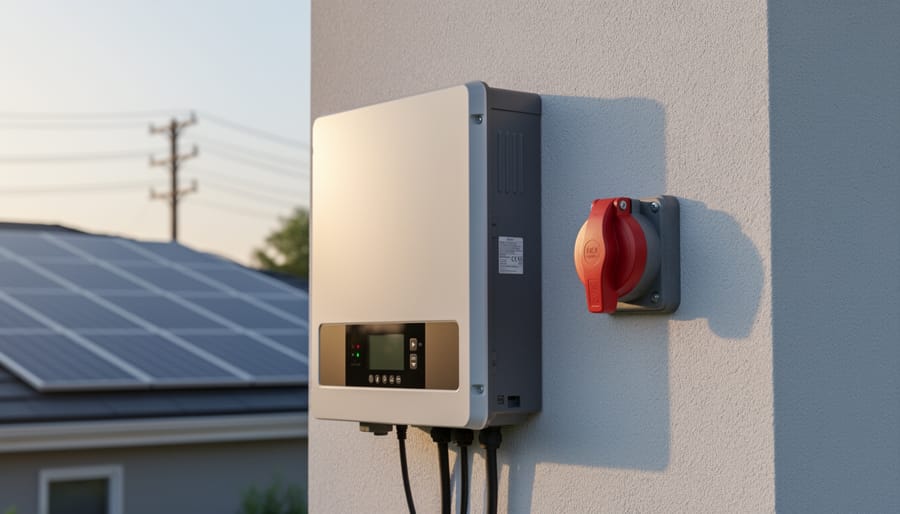
Modern solar installations must meet specific electrical codes and safety standards, regardless of whether they connect to the grid.
The Difference Between Off-Grid, Grid-Tied, and Backup Systems
When I first started exploring solar power, I thought “off-grid” and “backup” were just different ways of saying the same thing. Turns out, the differences matter quite a bit, especially when it comes to compliance. Let me break down these three system types so you can figure out exactly where your project fits.
Off-grid systems are completely independent from the utility grid. Think of a remote cabin or RV setup where there’s no utility connection at all. These systems store energy in batteries and have no interaction with power lines. Here’s the good news: because they never connect to the grid, they typically don’t need to meet utility grid code compliance requirements. However, you still need to follow local electrical codes and building permits.
Grid-tied systems connect directly to your utility’s power lines without batteries. When your panels produce excess energy, it flows back to the grid, and you draw power when your panels aren’t producing enough. These systems absolutely must comply with grid codes because they directly interact with utility infrastructure. You’ll need approved inverters, anti-islanding protection, and utility permission before flipping the switch.
Backup systems, also called hybrid systems, are the middle ground. They connect to both the grid and battery storage, automatically switching to battery power during outages. This is where things get interesting for compliance. Even though your batteries can operate independently during an outage, the grid-connected portion still requires full grid code compliance. Your backup system configuration must include proper disconnects and approved equipment.
The key takeaway? If your system touches utility power lines in any way, compliance isn’t optional. Only truly isolated off-grid setups get a pass on utility requirements, though local codes still apply everywhere.
When ‘Off-Grid’ Still Means Compliance
Here’s something that catches many DIY solar enthusiasts off guard: just because you’re planning an off-grid system doesn’t automatically mean you’re free from all compliance requirements. I learned this the hard way when helping my neighbor set up what we thought was a simple standalone battery backup system.
The biggest surprise? If your off-grid system has any capability to connect to the utility grid, even as an emergency backup, you typically need to meet grid code compliance standards. That transfer switch or inverter with grid-tie capability? It brings compliance requirements along with it. Local utilities and electrical inspectors want to ensure that even backup systems won’t accidentally backfeed power during an outage, potentially endangering line workers.
Beyond grid connection concerns, building codes and electrical codes still apply to off-grid installations. Your local building department doesn’t care whether you’re connected to the utility company or not. They care about fire safety, proper wiring, structural integrity for panel mounting, and whether your installation meets National Electrical Code standards. I’ve seen DIYers get stuck when they assumed their remote cabin project was exempt from permits, only to face issues later when selling the property or filing insurance claims.
Some states and municipalities have additional requirements for energy storage systems, particularly regarding battery installations and fire safety. Lithium batteries, even in completely off-grid setups, may need specific ventilation, containment, or monitoring equipment. The key takeaway? Always check with your local building department and electrical inspector before assuming your off-grid project flies under the regulatory radar.
The Key Standards You Actually Need to Know
IEEE 1547: The Grid Connection Rulebook
If you’re connecting any solar system to the utility grid—even just for a moment—IEEE 1547 is the rulebook you need to understand. Think of it as the universal language that helps your solar equipment and the utility grid play nice together. This standard, maintained by the Institute of Electrical and Electronics Engineers, sets the technical requirements for how distributed energy resources like solar panels can safely connect to the electrical grid.
At its heart, IEEE 1547 focuses on two main priorities: safety and grid stability. The most critical safety feature is anti-islanding protection, which prevents your system from continuing to feed power into the grid during an outage. Imagine utility workers trying to repair downed lines, assuming the power is off—but your solar system is still energizing those lines. Anti-islanding requirements ensure your system detects grid outages within two seconds and immediately disconnects.
Here’s where many DIYers get confused: even if you’re installing a system primarily for backup power, if it can connect to the grid at all, IEEE 1547 applies to you. Your inverter must be listed as compliant, which thankfully most modern grid-tie and hybrid inverters already are.
Charles recalls the lightbulb moment when he first understood this: “I thought my backup system was exempt because it ran off-grid during outages. Wrong. The moment I wanted to reduce my electric bill by selling excess power back during normal operation, IEEE 1547 became my responsibility. The good news? My inverter manufacturer had already done the heavy lifting—I just needed to verify the certification label and include it in my permit application.”
The standard also covers voltage and frequency limits, power quality requirements, and how quickly your system must respond to grid disturbances. While this sounds technical, compliance usually means selecting certified equipment rather than engineering solutions yourself.
NEC Article 690: Your Solar Installation Bible
When I first started exploring solar installations, I kept hearing about NEC Article 690 like it was some sacred text—and honestly, that’s not far from the truth. The National Electrical Code Article 690 is your comprehensive guidebook for solar photovoltaic system installations, and understanding it can mean the difference between a safe, compliant setup and a dangerous, potentially illegal one.
Here’s what matters most for DIY solar enthusiasts: Article 690 covers everything from wire sizing to system grounding, and even if you’re building an off-grid system, these requirements still apply to your home installation. I learned this the hard way when an electrical inspector flagged my friend’s “simple” off-grid cabin setup for missing crucial safety features.
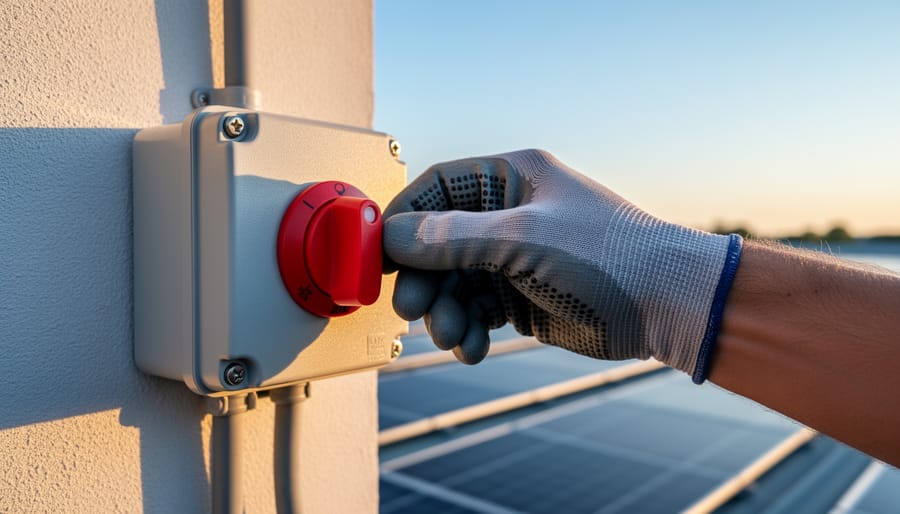
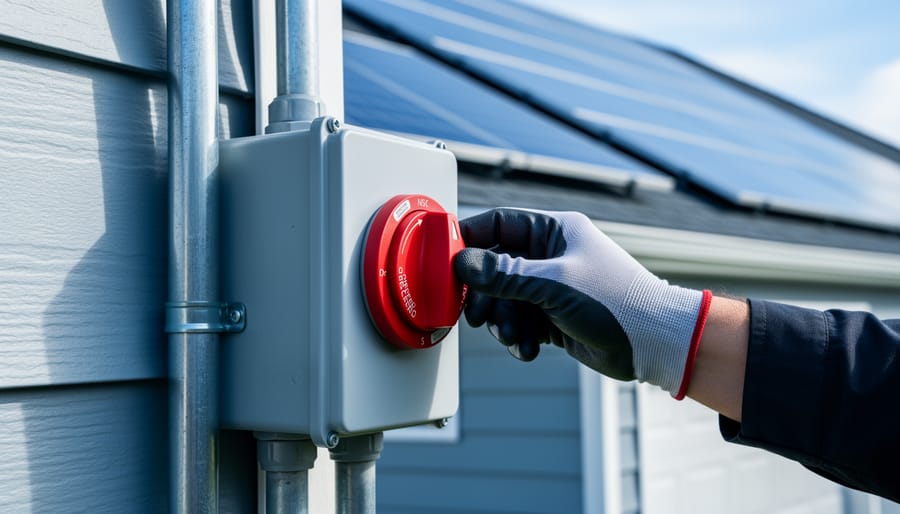
The article mandates several key components. First, you need properly sized conductors that can handle both your system’s maximum current and environmental factors like temperature. This isn’t guesswork—there are specific calculations to follow. Second, proper disconnect installation is absolutely required, giving you a way to safely shut down your system during maintenance or emergencies.
Grounding requirements are another critical element. Your system needs both equipment grounding (protecting people from electric shock) and system grounding (protecting equipment), and Article 690 spells out exactly how to implement these safeguards. Many DIYers assume grounding is optional for small systems—it absolutely isn’t.
Arc-fault and ground-fault protection are also mandated for most installations. These devices detect dangerous electrical conditions and shut down your system before fires can start or people get hurt. While they add cost, they’re non-negotiable safety features that have prevented countless electrical fires.
The good news? Article 690 is publicly accessible online, and taking time to review the sections relevant to your project will help you plan correctly from the start.
Proper disconnect switches and safety equipment are essential compliance components for both grid-tied and backup solar systems.
Real-World Compliance Scenarios for DIY Solar
Installing a Backup System That Can Switch to Grid
Installing a hybrid backup system that can switch between off-grid and grid-connected modes gives you the best of both worlds, but it also means you need to play by the utility company’s rules. Even if you plan to run off-grid most of the time, the moment your system has the capability to connect to the grid, compliance becomes essential.
The heart of a compliant hybrid system is an approved transfer switch. This device ensures that your backup power and grid power never mix, which prevents dangerous backfeeding situations. Understanding transfer switch requirements is your first step toward a safe, legal installation. You’ll need a UL-listed automatic or manual transfer switch rated for your system’s capacity.
Before you start installing, contact your utility company. I learned this the hard way when I helped my neighbor set up his hybrid system without notifying the utility first. They showed up during a routine inspection and we had to halt everything until we got proper approval. Most utilities require you to submit an interconnection agreement, even for backup systems that rarely export power.
Your system will also need proper metering. The utility may require a bidirectional meter to track any power flow between your system and the grid. Some areas allow net metering for hybrid systems, which can offset your electric bill when you do connect.
Finally, schedule inspections at the right times. You’ll typically need an electrical inspection before energizing the system and a final utility inspection before receiving permission to operate. Keep all documentation organized, including equipment certifications, installation photos, and approval letters. This paper trail protects you and proves compliance if questions arise later.
Truly Off-Grid Cabins and RVs
Here’s a liberating truth: being off-grid doesn’t mean you’re off the hook for all regulations, but it does simplify things considerably. If your cabin or RV is genuinely disconnected from the utility grid, you won’t need to worry about utility interconnection agreements or anti-islanding requirements. However, local building codes, electrical safety standards, and fire codes typically still apply.
I learned this firsthand while helping my neighbor Charles with his off-grid hunting cabin last fall. He assumed being twenty miles from the nearest power line meant zero regulations. Wrong. The county still required permits for the structure itself, and his insurance company wanted documentation that the electrical system met basic safety standards, even though no inspector would ever see it. We ended up following NEC guidelines anyway because, as Charles put it, “I’d rather not burn down my weekend retreat trying to save a few bucks on proper wiring.”
The reality is that compliance for truly off-grid systems is more about safety and liability than bureaucracy. Your homeowner’s or property insurance will likely require proof of safe installation practices. If you ever sell the property, buyers and their lenders will ask questions. Smart off-gridders treat codes as helpful guidelines rather than annoying obstacles, ensuring their systems are built to last and won’t create hazards down the road.
The Portable Generator Loophole (And Its Limits)
Here’s the good news: portable solar generators typically get a pass on grid code compliance because they’re considered consumer electronics, not installed electrical systems. Think of them like a really powerful battery bank with solar panels attached—they’re plug-and-play devices that don’t require permanent wiring into your home.
The distinction matters because once you start hard-wiring a system into your home’s electrical panel or permanently mounting equipment, you’ve crossed into installation territory where permits and inspections apply. A portable unit you wheel out during camping trips or plug into an extension cord? Generally fine. That same unit wired directly into a transfer switch or your breaker box? Now it’s an installation that needs compliance.
The line gets fuzzy with larger portable systems. I learned this when helping a neighbor who mounted his “portable” 2,000-watt generator on a platform and ran dedicated circuits to it. His insurance company considered it an installed system after a claim, creating complications. If your setup looks permanent, stays in one place, or involves any hardwiring, expect it to be treated as an installation requiring proper compliance—even if the manufacturer calls it portable.
How to Actually Get Your System Compliant
Working With Your Local Authority Having Jurisdiction (AHJ)
Finding your local Authority Having Jurisdiction might sound intimidating, but it’s usually simpler than you’d think. Start by calling your city or county building department—they’re listed on your local government website. When you call, explain that you’re planning a solar installation and ask who handles electrical permits and inspections in your area. Some jurisdictions hand this off to the county, while others have their own inspectors.
I remember Charles telling me about his first call to the AHJ. He was nervous, expecting a bureaucratic runaround, but the inspector turned out to be genuinely helpful and even offered tips on local quirks he should watch for. That’s more common than you might expect—most inspectors want your project to succeed safely.
Once you’ve identified your AHJ, ask for their solar installation requirements checklist. You’ll typically need electrical diagrams, equipment specifications showing UL listings, and proof that your components meet relevant standards. Some jurisdictions accept digital submissions, while others still work with paper. Understanding their preferred format upfront saves everyone time.
Keep all communication documented. Email works great because you’ll have a paper trail. When speaking with inspectors, be honest about your experience level and ask questions. Phrases like “I want to make sure I understand correctly” show you’re taking safety seriously.
If you’re finding your local requirements especially restrictive, consider this: some rural counties have streamlined processes for DIY solar projects, particularly for off-grid systems. While you shouldn’t choose where to live based solely on solar regulations, it’s worth knowing that installer-friendly jurisdictions exist. Search online forums where DIYers share experiences with different regions—this community knowledge is invaluable for understanding what to expect.
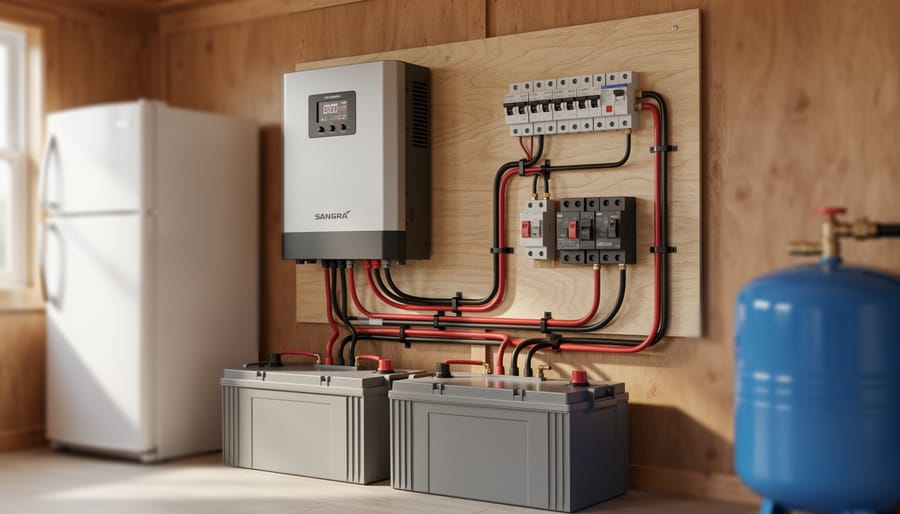
Pre-certified inverters with built-in grid compliance features simplify the approval process for DIY solar installations.
Equipment That Makes Compliance Easier
Here’s something I learned the hard way: not all solar equipment is created equal when it comes to compliance. When I first started tinkering with grid-tied systems, I assumed any quality inverter would work. Turns out, getting the right pre-certified gear upfront saved me weeks of headaches and paperwork down the road.
The easiest path to compliance starts with choosing the right inverter—specifically, models already certified to meet grid codes like UL 1741 SA. These smart inverters come loaded with built-in compliance features like anti-islanding protection, voltage and frequency ride-through, and automatic grid disconnection. Think of them as having a compliance checklist baked right into the hardware.
Many utilities and jurisdictions maintain approved equipment lists, sometimes called AELs. If your components appear on these lists, your approval process becomes significantly smoother. You’re essentially showing the utility that others have already vetted your gear, which builds confidence and speeds up reviews.
Modern smart inverters go even further, offering remote monitoring and settings adjustment. This means if grid codes change or the utility needs specific parameters tweaked, updates can often happen via software rather than physical equipment changes.
My advice? Before buying anything major, check your utility’s approved equipment list and look for inverters with recognized certifications clearly stated. Yes, these components might cost slightly more upfront, but they’ll save you from expensive do-overs and frustrated calls with your utility’s interconnection department. Trust me on that one.
When to Call in a Professional
Let me be straight with you: I’ve watched neighbors tackle grid-tie inverter installations themselves, only to fail inspection three times and rack up costly re-work fees. Here’s my rule of thumb—educational research and system planning? Absolutely DIY-friendly. Actual grid interconnection work? That’s professional territory in most jurisdictions.
You can confidently handle researching local codes, calculating your system size, and understanding which regulations apply to your setup. These tasks cost you nothing but time and build valuable knowledge. However, when it comes to utility interconnection agreements, anti-islanding protection verification, and final inspections, licensed professionals aren’t just recommended—they’re typically required by law.
The cost-benefit breakdown is clear: hiring a qualified solar electrician or PE engineer for grid-connected systems typically runs $500-2000 for inspection-ready installation, but saves you from potential fines ($1000+), failed inspections, insurance headaches, and the nightmare scenario of your utility refusing interconnection altogether. For truly off-grid systems with zero grid connection, you’ve got more flexibility, though complex battery configurations still benefit from professional eyes.
Bottom line? Think of professionals as insurance for your investment. Your DIY skills shine in planning and preparation; their expertise ensures you actually get to flip that switch legally and safely.
The Consequences of Skipping Compliance
Working with licensed professionals and local inspectors ensures your solar installation meets all safety and compliance requirements.
Safety Risks Nobody Talks About
Let me share something I learned the hard way during my early solar days. A friend of mine installed what he thought was a simple off-grid setup, but he skipped proper anti-islanding protection. During a utility outage, his system kept feeding power back to the grid while workers were trying to repair lines nearby. Those workers expected dead wires but got a potentially lethal surprise. Thankfully, nobody was hurt, but it was a wake-up call about why these rules exist.
Grid code compliance isn’t bureaucratic red tape. It prevents real dangers like electrical fires from improperly configured inverters, equipment damage from voltage mismatches, and most critically, protecting utility workers who need to safely maintain power lines. When storms knock out power and crews are working to restore it, they rely on specific safety protocols. Your non-compliant system could energize lines they believe are dead.
Even off-grid systems need proper grounding and overcurrent protection to prevent fires. Backup systems that connect to your home’s electrical panel require transfer switches and proper islanding detection. These aren’t suggestions, they’re lifesaving measures. I’ve seen melted wiring, damaged appliances, and close calls that could have been avoided with proper compliance. The rules exist because these incidents have happened before, and we can learn from those mistakes without repeating them.
Insurance and Liability Issues
Here’s something I learned the hard way during a consulting call last year: A friend had installed what he thought was a simple backup solar system, only to discover during a roof fire claim that his homeowner’s insurance wouldn’t cover the damage. Why? The system wasn’t compliant with local electrical codes, and the insurer considered it an unauthorized modification that increased risk.
Non-compliant solar installations can create serious insurance headaches. Most homeowner policies require that electrical work meets local building codes and passes inspection. If your system doesn’t comply and something goes wrong—whether it’s a fire, electrical shock, or property damage—your insurer may deny the claim entirely. Even worse, you could face personal liability if someone gets hurt because of faulty installation.
Property values take a hit too. When potential buyers discover an unpermitted or non-compliant system during home inspections, they’ll either walk away or demand significant price reductions. Some mortgage lenders won’t even approve loans on properties with code violations until they’re corrected, which can derail sales completely.
The fix? Always pull permits, use certified components, and get proper inspections—even for off-grid systems. Yes, it adds time and some cost upfront, but it protects your investment and keeps everyone safe. Think of compliance as insurance for your insurance.
Grid code compliance doesn’t have to be the intimidating hurdle that stops your solar dreams in their tracks. Think of it instead as your safety checklist, the same way you’d approach any other home improvement project with the right preparation and knowledge. When I first started working with solar systems, I’ll admit the regulations felt overwhelming. But here’s what I learned: understanding these rules actually makes you a better builder. You’ll make smarter decisions, create safer installations, and avoid expensive do-overs down the road.
The beauty of taking time to understand compliance is that it naturally guides you toward systems that work better and last longer. Those anti-islanding protections? They’re keeping utility workers safe. That proper grounding? It’s protecting your investment and your family. Every requirement exists for a solid reason, and once you see the why behind the rules, they start making perfect sense.
Don’t tackle this alone. The DIY solar community is full of people who’ve navigated these same waters. Share your experiences, ask questions, and learn from others who’ve successfully brought their systems online. Your local inspector can become an ally rather than an adversary when you approach them with thoughtful questions early in your planning.
Ready to get started the right way? Spheral Solar’s resources and calculators help you design compliant systems from day one. Plug in your numbers, see what works for your situation, and build with confidence knowing you’re meeting both safety standards and your energy goals.
How useful was this post?
Click on a star to rate it!
Average rating 0 / 5. Vote count: 0
No votes so far! Be the first to rate this post.
We are sorry that this post was not useful for you!
Let us improve this post!
Tell us how we can improve this post?
charlesnoble
Here at Spheral Solar, I’m a hands-on solar power enthusiast, constantly exploring and experimenting with DIY solutions. I’m dedicated to sharing my discoveries, insights, and even the bumps I hit along the way, all in the pursuit of a more sustainable future.
This Critical Safety Switch Could Save Your Solar… by Charlesnoble February 22, 2026 Picture this: you’ve just finished mounting your solar panels, the sun is shining, and DC power is flowing through your system at voltages high enough to seriously injure or kill someone. Without a proper DC isolator switch, you have no safe way to disconnect that power for maintenance, emergencies, or…
How Much Battery Backup Do You Really Need? (Sizing… by Charlesnoble March 6, 2026 Calculate your actual power needs before committing to a 5kW battery backup system by listing every device you want to run during an outage and adding up their wattages. A 5kW system means you can draw 5,000 watts of power at any given moment, but the real question is for…
Why Your Backup System Needs a Critical Load Panel… by Charlesnoble December 28, 2025 Picture this: It’s 2 AM, the power’s out, and your backup battery system is silently draining itself trying to keep your pool pump, water heater, and every other non-essential appliance running. By morning, you’re out of power—right when you actually need it for your refrigerator and medical equipment. I learned…
The Stream Behind Your House Could Power It (Here’s… by Charlesnoble March 26, 2026 Walk down to your nearest stream with a five-gallon bucket and a stopwatch. Fill that bucket and time how long it takes—this simple test reveals whether you have enough flowing water to power your off-grid home. If you can fill it in under 10 seconds from a source that drops…
Why Your Solar Array Needs a Disconnect (And How to… by Charlesnoble January 5, 2026 Picture this: You’ve just finished wiring your solar panels to your charge controller, feeling pretty accomplished, when someone asks, “Where’s your disconnect?” Your confident smile fades. That little switch you skipped to save fifty bucks? It’s actually the difference between a safe solar installation and a potentially dangerous one that…
Stop Oversizing Your Off-Grid Inverter (Here’s What… by Charlesnoble December 24, 2025 Calculate your total daily energy consumption in watt-hours by listing every appliance you plan to run off-grid, from your refrigerator drawing 150 watts for 8 hours to your laptop charging at 65 watts for 3 hours. Multiply each appliance’s wattage by its daily runtime, then add everything together. This number…
Subscribe for handpicked DIY projects, exclusive tips, and giveaways.
Walk down to your nearest stream with a five-gallon bucket and a stopwatch. Fill that bucket and time how long it takes—this simple test reveals whether you have enough flowing water to power your off-grid home. If you can fill it in under 10 seconds from a source that drops at least 10 feet in… Read more: The Stream Behind Your House Could Power It (Here’s How Micro Hydro Works)
Brush snow off your panels with a soft-bristled roof rake from ground level, working gently from bottom to top to avoid scratching the glass or damaging your DIY solar setup. Use lukewarm water in a spray bottle for stubborn ice patches, never hot water that could crack cold panels from thermal shock. Install panels at… Read more: Snow on Your Solar Panels? Here’s What Actually Works (And What Wastes Your Time)
Picture this: Last summer, I draped what looked like sparkling fairy lights across my patio pergola, and guests immediately asked where I’d hidden the extension cord. There wasn’t one. These solar powered outdoor curtain lights had transformed my backyard into an enchanting evening retreat without adding a cent to my electric bill or requiring any… Read more: Solar Curtain Lights That Actually Work Outdoors (What I Learned Installing Mine)