Why Your Pool Deserves Floating Solar Lights (And How to Choose the Right Ones)
Updated:
Picture this: It’s a warm summer evening, and your pool transforms into a glowing oasis without adding a single dollar to your electricity bill. That’s the magic of floating solar lights—simple devices that charge during the day and automatically illuminate your pool at night, creating ambiance while eliminating the headache of wired installations or battery replacements.
I first experimented with floating pool lights three years ago at my neighbor’s backyard gathering, and I was immediately hooked by how such a straightforward solar application could deliver such impressive results. These lights aren’t just decorative accessories; they’re your gateway to understanding practical solar energy principles in action. You’ll witness firsthand how photovoltaic cells convert sunlight into stored energy, then automatically release it when darkness falls—all contained in a waterproof package that bobs peacefully on your pool’s surface.
Whether you’re looking to purchase ready-made floating solar lights for an upcoming pool party or you’re curious about modifying them for enhanced performance, this guide covers both angles. We’ll explore what makes quality floating solar lights worth your investment, how to choose models that actually last beyond one season, and how you can tinker with these devices to boost their brightness or customize their color patterns. For DIY enthusiasts, these lights represent an accessible entry point into solar experimentation—no electrical expertise required, just curiosity and a willingness to learn through hands-on experience.
What Are Floating Solar Lights and Why They’re Perfect for Pools
Floating solar lights transform an ordinary pool into an enchanting evening retreat while operating entirely on renewable energy.
The Solar Technology Behind the Glow
Let me share something I learned the first time I tossed a floating solar light into my pool: these little glowing orbs are actually miniature power plants. They’re simpler than you might think, and understanding how they work opens up a world of possibilities for solar experimentation.
At their heart, floating pool lights rely on three essential components working in harmony. First up are the photovoltaic cells, those dark panels you see on top of the light. These are the same solar power principles that run everything from calculators to entire homes, just scaled down. When sunlight hits these cells, they convert light energy directly into electricity through a process called the photovoltaic effect. Think of them as tiny energy harvesters, constantly working during daylight hours.
Next, we have the rechargeable battery, typically lithium-ion or nickel-metal hydride (NiMH). This is your light’s energy storage unit. During the day, the photovoltaic cells feed electricity into this battery, storing it for later use. It’s like filling a water tank, except with electrical charge. Most quality floating lights use lithium batteries because they hold more power in a smaller space and handle hundreds of charge cycles.
Finally, there’s the LED light itself. LEDs are perfect for solar applications because they’re incredibly energy-efficient, converting most of their power into light rather than wasted heat. When darkness falls, a simple light sensor automatically triggers the circuit, allowing stored battery power to flow to the LED.
The beauty of this system is its elegant simplicity: charge all day, glow all night, repeat endlessly. No wires, no switches, just pure solar magic floating in your pool.
The solar panel on top captures sunlight during the day to power LED lights that automatically illuminate at night.
Real-World Benefits Beyond Pretty Lights
Beyond their aesthetic appeal, floating solar lights deliver tangible practical benefits that make pool ownership safer and more enjoyable. The most significant advantage is enhanced nighttime safety. These lights illuminate the water’s surface, making it easier to see swimmers and distinguish the pool’s edges and depth changes during evening gatherings. Unlike traditional pool lighting that requires professional electrical installation near water, floating solar lights eliminate electrical hazards entirely—no wiring, no shock risk, no complex installation.
The financial benefits are equally compelling. Once purchased, these lights cost absolutely nothing to operate. They charge during the day using free sunlight and automatically illuminate at dusk, requiring zero ongoing electricity costs. Installation couldn’t be simpler: just unwrap and place them in the water. No permits, no electricians, no drilling through pool decking.
Portability adds another layer of practicality. Moving them for pool cleaning takes seconds, and you can easily bring them indoors during winter months or take them to lake houses and vacation rentals. This flexibility makes them ideal for renters who want ambiance without permanent modifications.
Charles shares an interesting perspective: “I actually started understanding solar energy principles through simple projects like pool lights. Watching how panel angle affects brightness or how cloudy days impact charging taught me fundamentals that later helped with larger solar installations. Sometimes the best classroom is a floating light bobbing in your own backyard.” These unassuming decorations can serve as your introduction to renewable energy concepts without overwhelming complexity.
Choosing the Right Floating Solar Lights for Your Pool
Solar Panel Quality and Charging Efficiency
When I first started experimenting with floating solar lights in my pool, I learned quickly that not all solar panels are created equal. The quality of your solar panel directly determines how well your lights perform, especially during those long summer evenings when you want them glowing brightest.
Solar panel efficiency ratings typically range from 15% to 22% for floating pool lights. This percentage tells you how much sunlight gets converted into usable electricity. Higher is better, but even a 17% efficient panel can work great if it’s sized appropriately. Look for panels at least 2-3 inches in diameter for decent performance.
Here’s where things get interesting: monocrystalline panels consistently outperform polycrystalline options in pool applications. Monocrystalline panels have that uniform dark appearance and handle partial shade much better. Since pool environments often have trees, umbrellas, or nearby structures casting shadows, this resilience matters more than you might think.
Living in a cloudier climate? You’ll want to prioritize larger panel surface area over absolute efficiency ratings. A bigger panel captures more diffuse light on overcast days. I’ve found that lights with panels smaller than 2 inches struggle in the Pacific Northwest, while 3-inch panels keep things running smoothly.
To calculate whether your pool location gets adequate sun exposure, spend a day observing your pool area. Your floating lights need at least 6-8 hours of direct or bright indirect sunlight daily. Count the hours between 10 AM and 4 PM when your pool area isn’t heavily shaded. If you’re getting less than 6 hours, consider repositioning furniture or trimming back vegetation, or look for lights specifically rated for low-light conditions. Some manufacturers now offer “cloudy climate” versions with oversized panels and more efficient batteries.
Battery Capacity and Runtime Expectations
When I first started experimenting with floating solar pool lights, I learned quickly that not all batteries are created equal. Understanding battery capacity and performance can mean the difference between lights that glow all evening and ones that fizzle out right when your pool party gets going.
Most floating solar lights come with batteries rated between 600-1200 mAh (milliamp hours). Think of mAh as the fuel tank size: a 600 mAh battery is like a compact car, while 1200 mAh is more like an SUV. In practical terms, you can expect 4-8 hours of runtime on a full charge, with most quality lights averaging around 6 hours.
Here’s where geography matters more than you’d think. Living in Arizona, my neighbor’s pool lights consistently hit that 8-hour mark during summer. Meanwhile, my cousin in Seattle gets closer to 4-5 hours during cloudy months. The sun’s intensity and daylight hours directly affect charging efficiency.
Seasonal variations are real. Summer typically delivers peak performance with longer days and stronger sunlight. Winter reduces runtime by 30-50 percent in most climates, not because batteries fail, but because shorter, weaker sunlight means incomplete charging cycles.
Set realistic expectations: if your lights claim 8-hour runtime, that’s under ideal conditions with a fresh battery and perfect weather. Plan for 5-6 hours in real-world use, and consider them a bonus ambient lighting option rather than your primary pool illumination system.
Durability: IP Ratings and Material Construction
When shopping for floating solar pool lights, you’ll see ratings like IP67 or IP68—here’s what they actually mean. The first digit (6) indicates complete dust protection. The second digit matters more for pools: 7 means the light can handle temporary submersion up to one meter, while 8 means continuous underwater use. For floating lights that occasionally tip or get splashed by cannonballs, IP67 is perfectly adequate.
I learned this the hard way last summer when a friend bought bargain lights rated at IP44. They lasted exactly three pool parties before water seeped into the electronics. The real vulnerability isn’t the waterproofing—it’s the materials. Cheap plastic housings crack under UV exposure after just one season, and chlorinated water accelerates this degradation dramatically.
Look for UV-stabilized ABS plastic or polycarbonate construction. These materials resist both sun damage and chemical attack from pool treatments. Salt water pools are even tougher on components, so check manufacturer specifications explicitly mention salt compatibility.
The solar panel seal typically fails first on budget models. Quality products use sonic-welded seams rather than glued joints. Spending an extra twenty dollars upfront often means three additional years of reliable operation—much better value than replacing cheap lights annually.
Installation and Placement Tips for Maximum Performance
Strategic Placement for Solar Charging
Getting enough sunlight is the make-or-break factor for floating solar lights. These little globes need direct, unobstructed sunlight for at least six to eight hours to fully charge their batteries. Sounds simple, right? Well, I learned the hard way.
When I first got floating solar lights for my pool, I left them bobbing around during the day, thinking they’d soak up plenty of sun. Turns out, my pool umbrella cast a shadow across half the pool by midday, and a neighbor’s oak tree blocked the morning light. After three disappointing evenings of dim lights that barely lasted an hour, I realized my mistake.
Here’s what actually works: during charging hours, remove your lights from the pool and place them in the sunniest spot you can find. I created a simple charging station using a weatherproof tray on my deck’s south-facing side, away from any shade sources. Check for shadows throughout the day, especially from fences, trees, pergolas, and yes, those pool umbrellas we all love.
If you prefer leaving lights floating, map your pool’s sun exposure first. Use chalk to mark shaded areas at different times, then position your lights in the consistently sunny zones. Some folks use small floating anchors to keep lights in optimal spots.
The difference between proper charging and haphazard placement? A full night of beautiful illumination versus disappointment after dinner. Trust me, those few extra minutes of strategic placement pay off every single evening.
Strategic placement of floating solar lights during daytime ensures optimal sun exposure for charging while maintaining pool aesthetics.
Maintenance That Takes Minutes
Good news: keeping your floating solar lights in top shape takes just a few minutes each month. I learned this the hard way after neglecting mine for an entire season – they dimmed considerably until I gave them some simple TLC.
Start with the solar panels, which are the heart of your lights. Once a month, wipe them down with a soft, damp cloth to remove pollen, dust, and pool chemicals. Avoid abrasive cleaners that might scratch the surface. Think of it like cleaning your glasses – gentle is best.
For battery longevity, let your lights fully discharge and recharge every few months. This helps prevent memory effect in some battery types. Most floating lights use rechargeable batteries that last 1-2 years before needing replacement. When winter arrives, store your lights indoors in a cool, dry place. Remove batteries if you won’t be using them for extended periods.
Troubleshooting dim lights? First, check if the solar panel is clean and positioned to catch sunlight. Dim lighting often means the battery needs replacing or the light isn’t getting enough charging time. If lights won’t turn on, verify the on/off switch position (yes, we’ve all forgotten to flip it) and ensure water hasn’t seeped into the battery compartment.
With these quick maintenance habits, your floating solar lights will shine bright season after season.
DIY Enhancements and Creative Solar Pool Lighting Projects
Building Your Own Floating Solar Light
Creating your own floating solar light is easier than you might think, and I’ll walk you through the process using components you can find at most hardware or electronics stores. I remember building my first pool light on a rainy Saturday afternoon, and the sense of accomplishment when it actually worked was incredible.
Start with your floating base. Foam pool noodles, plastic food containers with tight-fitting lids, or small foam boards all work beautifully. The key is ensuring whatever you choose has enough buoyancy to support the weight of your components while staying stable in the water.
Next, you’ll need a small solar panel, typically 1-2 watts for a basic design. Mount this on top of your floater where it can catch maximum sunlight. Waterproof LED strips are your light source—look for ones rated IP67 or higher for water resistance. A small rechargeable battery, like an AA or AAA NiMH, stores the energy collected during the day.
The basic wiring is straightforward: connect your solar panel to a charge controller (essential for battery protection), then to your rechargeable battery, and finally to your LED strip. Adding a light sensor creates automatic on-off functionality at dusk and dawn.
For sizing your components properly, use online solar calculator tools to determine the right battery capacity and panel wattage based on how many hours of light you want each evening. Most pool lights need surprisingly little power—even a 1-watt panel can provide 4-6 hours of illumination with the right battery setup.
Seal all electrical connections with marine-grade silicone or heat-shrink tubing to prevent water damage. Test everything on dry land before launching your creation into the pool.
Building your own floating solar lights from readily available components offers a hands-on introduction to solar technology principles.
Upgrading Store-Bought Lights for Better Performance
Store-bought floating solar lights work great out of the box, but a few simple upgrades can significantly boost their performance. I learned this the hard way when my first set barely lasted through summer!
The easiest modification is swapping the standard battery for a higher capacity version. Most floating lights use rechargeable AA or AAA batteries, typically around 300-600mAh. Replacing these with 1000mAh or higher batteries extends runtime dramatically. Just ensure you match the voltage and chemistry type, usually NiMH.
For brighter illumination, consider upgrading to higher-output LEDs. Many budget lights use dim 5mm LEDs that can be replaced with modern SMD LEDs offering double the brightness at the same power consumption. This requires basic soldering skills, so start with an inexpensive light for practice.
Improving waterproofing is crucial for longevity. I add a thin bead of silicone sealant around seams and battery compartments before first use. This simple step has extended my lights’ lifespan by entire seasons. Check O-rings regularly and replace any that look compressed or cracked.
Safety matters when modifying solar products. Always work with the light off and battery removed. Never exceed the voltage rating of original components. Avoid modifications near water, and test everything in a safe, dry location first. If you’re uncertain about electrical modifications, stick to battery upgrades and waterproofing improvements, which carry minimal risk.
Remember, even small upgrades teach valuable lessons about solar technology while improving your pool’s ambiance.
Beyond the Pool: Other Floating Solar Applications
Ponds, Fountains, and Water Features
The beauty of floating solar lights extends far beyond swimming pools. I discovered this myself when I placed a few pool lights in my garden pond and noticed something wonderful—the local frogs seemed more active at dusk, and birds visited more frequently during early morning hours. These same lights work brilliantly in bird baths, decorative fountains, and any water feature in your yard.
The technology remains identical regardless of water depth or size. Your pond lights charge during the day and automatically illuminate at night, creating ambient lighting that enhances the natural beauty of aquatic plants and helps you observe evening wildlife activity. For smaller features like bird baths, choose compact designs that won’t overwhelm the space.
From an environmental perspective, these lights serve double duty. They eliminate the need for electrical wiring near water sources, reducing installation costs and habitat disruption. The gentle illumination also helps beneficial insects navigate while being subtle enough not to disturb nocturnal wildlife patterns. Many hobbyists report that strategically placed floating lights actually attract helpful pollinators to nearby garden areas, creating a more balanced ecosystem around water features.
Floating Solar as a Gateway to Larger Projects
Working with floating solar pool lights taught me something unexpected—they’re perfect training wheels for understanding floating solar technology on a grander scale. When you grasp how these simple lights harvest energy, store it, and manage waterproofing challenges, you’ve actually learned the fundamentals that apply to larger solar projects.
I’ve noticed many community members start with pool lights, then move confidently toward rooftop installations or ground-mounted arrays. The principles stay consistent—you’re just scaling up. What’s fascinating is that large-scale floating solar farms use remarkably similar concepts to your backyard lights, just with industrial-grade components covering reservoirs and lakes. These commercial installations generate megawatts while addressing water evaporation and maintaining buoyancy, proving that floating solar isn’t just decorative—it’s a legitimate renewable energy solution with massive potential. Your pool might be small, but the knowledge you’re building definitely isn’t.
Floating solar lights for your pool offer more than just ambiance—they’re your gateway into the world of solar energy. I remember when I first picked up a basic floating light years ago; I had no idea it would spark my curiosity about photovoltaics and lead me down this entire solar journey. These little devices prove that harnessing the sun’s power doesn’t require a huge investment or engineering degree.
The beauty of starting with pool lights is that there’s virtually no risk involved. If you’re curious about solar but intimidated by larger projects, this is your perfect entry point. Grab a few affordable lights, float them in your pool, and observe how they perform. Notice how weather affects charging, experiment with placement, and if you’re feeling adventurous, crack one open to understand what makes it tick.
Don’t stop at just purchasing and using them as intended. The solar DIY community thrives on experimentation and sharing discoveries. Try customizing your lights, compare different models, or document what works best in your climate. We’d love to hear about your experiences at Spheral Solar—whether you’ve modified a light, solved a performance issue, or simply discovered the perfect poolside setup.
Remember, every solar expert started somewhere simple. Your floating pool lights might be the first step toward understanding panels, batteries, and renewable energy systems. Start small, stay curious, and keep experimenting. Your backyard pool is now your solar laboratory.
How useful was this post?
Click on a star to rate it!
Average rating 0 / 5. Vote count: 0
No votes so far! Be the first to rate this post.
We are sorry that this post was not useful for you!
Let us improve this post!
Tell us how we can improve this post?
charlesnoble
Here at Spheral Solar, I’m a hands-on solar power enthusiast, constantly exploring and experimenting with DIY solutions. I’m dedicated to sharing my discoveries, insights, and even the bumps I hit along the way, all in the pursuit of a more sustainable future.
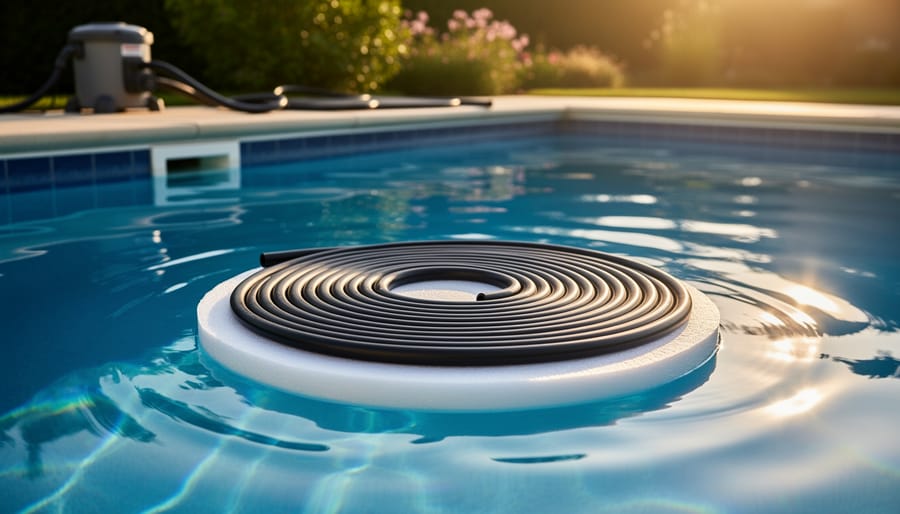
This DIY Floating Solar Pool Heater Slashed My… by Charlesnoble January 18, 2026 Place your floating solar heater on the pool’s sunny side during morning hours, positioning it where water circulation naturally draws heated water toward your skimmer return. You’ll capture 5-10 degrees of temperature gain on clear days without spending thousands on permanent installations. Build your first unit using black irrigation tubing…
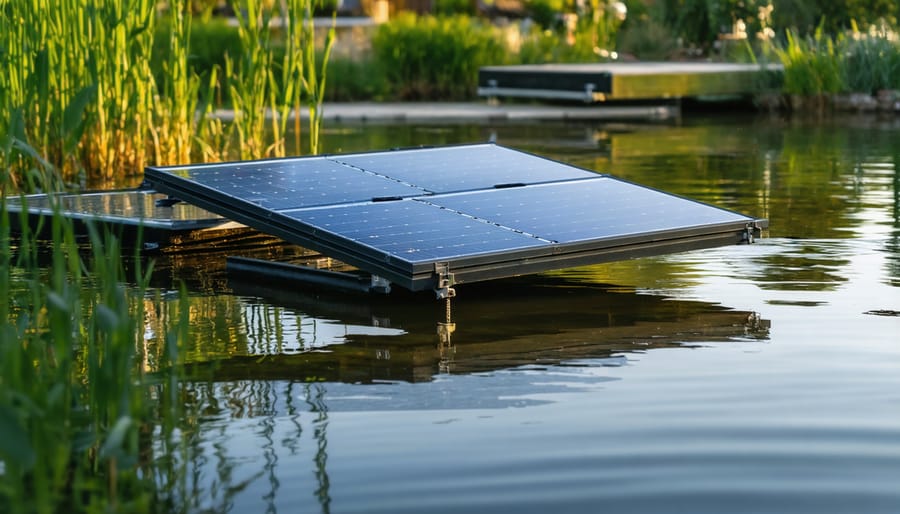
Floating Solar Panels Could Change Where You Generate Power by Charlesnoble November 29, 2025 Picture your backyard pond doing double duty: supporting wildlife while generating clean electricity for your home. That’s the promise of floating solar panels, an innovation that’s transforming how we think about renewable energy installation. Floating solar systems, also called floatovoltaics, mount photovoltaic panels on buoyant platforms that rest on water…
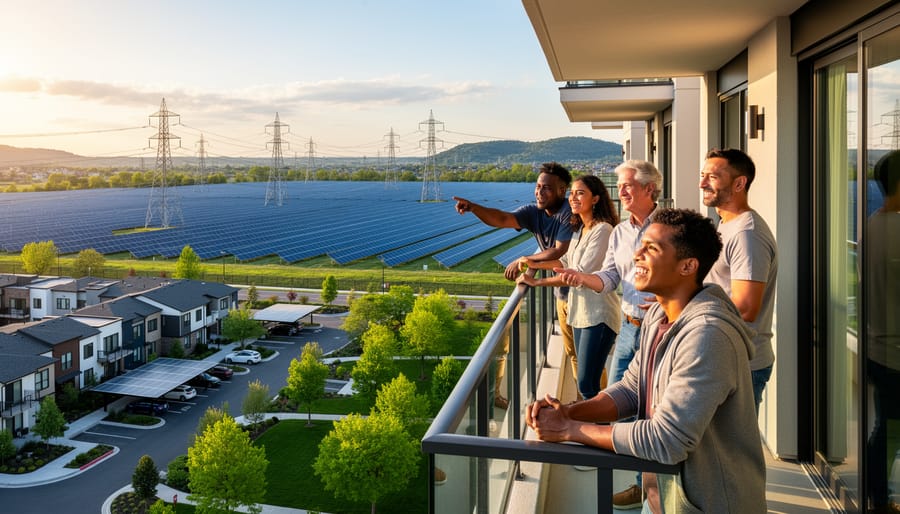
Community Solar Projects Made Simple: How You Can… by Charlesnoble March 19, 2026 Picture this: You’re renting an apartment with a north-facing roof, or your property is shaded by towering oak trees, yet you’re determined to power your life with clean solar energy. Community solar makes this possible. Instead of installing panels on your own property, you buy or lease a portion of…
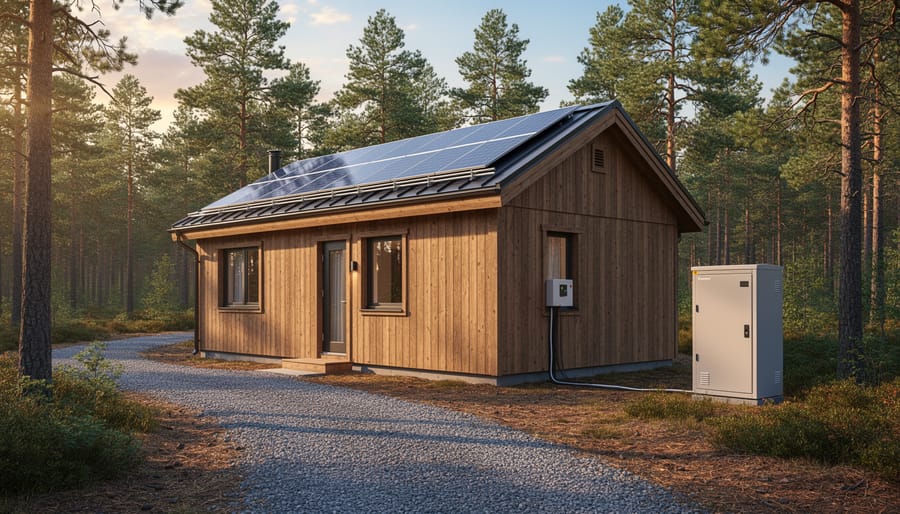
Why DC Microgrids Are Perfect for Your DIY Solar Setup by Charlesnoble January 7, 2026 Picture this: you’re running LED lights, a laptop, and a small fridge in your off-grid cabin, and every device is drawing power directly from your solar panels without converting DC to AC and back again. That’s the elegant simplicity of a DC microgrid system, where electricity flows in its natural…
Why Your Electric Vehicle Needs Solar Panels (And… by Charlesnoble January 19, 2026 Picture yourself pulling into a campsite after hours on the road, your electric vehicle’s battery sitting at 40%, and the nearest charging station is twenty miles back. Now imagine your EV quietly replenishing its own power from panels mounted right on the roof while you set up camp. This isn’t…
Grid-Tied Solar: Why Most DIYers Choose It (And When… by Charlesnoble November 8, 2025 Imagine flipping a switch and watching your electric meter spin backward while your solar panels pump clean energy into the grid—earning you credits that slash your utility bill to nearly zero. That’s the everyday reality of grid-tied solar, the most popular solar setup in America, powering millions of homes and…
Subscribe for handpicked DIY projects, exclusive tips, and giveaways.
Match your solar panels to microinverters or power optimizers based on your roof’s shading patterns—even partial shade from a chimney or tree during morning hours means module-level power electronics will recover 15-25% more energy than string inverters lose to the weakest panel. Install power optimizers when you’re working with mixed panel orientations across multiple roof… Read more: Why Smart Solar Modules Could Save Your DIY Array (Before It’s Too Late)
Measure your conduit run before purchasing materials by mapping the exact path from your solar array to the inverter and battery location, accounting for a 10% waste factor and additional length for bends. PVC electrical conduit remains the most cost-effective protective solution for DIY solar installations, but improper installation creates fire hazards, code violations, and… Read more: Why Your Solar Conduit Installation Could Start a Fire (And How to Do It Right)
Walk down to your nearest stream with a five-gallon bucket and a stopwatch. Fill that bucket and time how long it takes—this simple test reveals whether you have enough flowing water to power your off-grid home. If you can fill it in under 10 seconds from a source that drops at least 10 feet in… Read more: The Stream Behind Your House Could Power It (Here’s How Micro Hydro Works)