Why Your Solar Array Needs a Disconnect (And How to Install One Safely)
Updated:
Picture this: You’ve just finished wiring your solar panels to your charge controller, feeling pretty accomplished, when someone asks, “Where’s your disconnect?” Your confident smile fades. That little switch you skipped to save fifty bucks? It’s actually the difference between a safe solar installation and a potentially dangerous one that won’t pass inspection.
A solar array disconnect is simply a switch that lets you quickly cut power flowing from your solar panels. Think of it as an emergency brake for your solar system. When the sun hits your panels, they’re generating electricity whether you want them to or not. Without a disconnect, you can’t safely work on your system, and emergency responders have no way to shut down your solar array if they need to access your home.
Here’s what catches most DIYers off guard: the National Electrical Code doesn’t just suggest a disconnect—it requires one. But that’s actually good news for you. This simple device protects your equipment, simplifies maintenance, and could literally save your life or someone else’s during an emergency.
I learned this lesson early in my solar journey when a friend tried troubleshooting his charge controller with live panels still connected. Let’s just say his multimeter didn’t survive, and neither did his confidence. Don’t be that person. Understanding solar array disconnects isn’t complicated, and installing one correctly is easier than you think.
What Is a Solar Array Disconnect and Why Does It Matter?
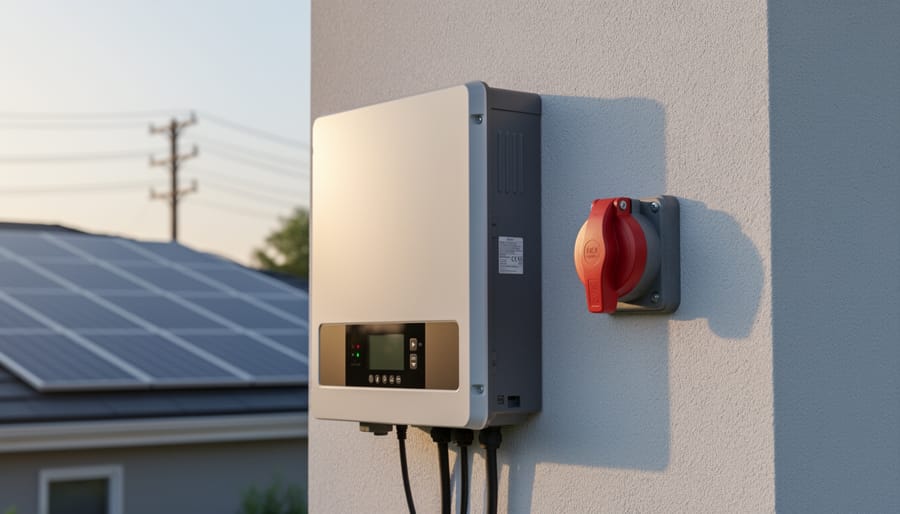
Think of your solar array disconnect as the emergency stop button for your solar power system—it’s that crucial switch that lets you completely cut off your solar panels from everything else with one simple motion. Just like you’d flip your home’s main circuit breaker before doing electrical work, a solar array disconnect gives you that same power-down capability for your solar setup.
Here’s the straightforward explanation: this is essentially a heavy-duty switch installed between your solar panels and the rest of your system. When you flip it, electricity stops flowing from your panels to your inverter, batteries, or anything else downstream. It’s like unplugging your entire solar array without actually having to climb on the roof or disconnect wires manually.
So why should you care about this component? Let me share why it’s become one of those non-negotiable parts of any solid solar installation.
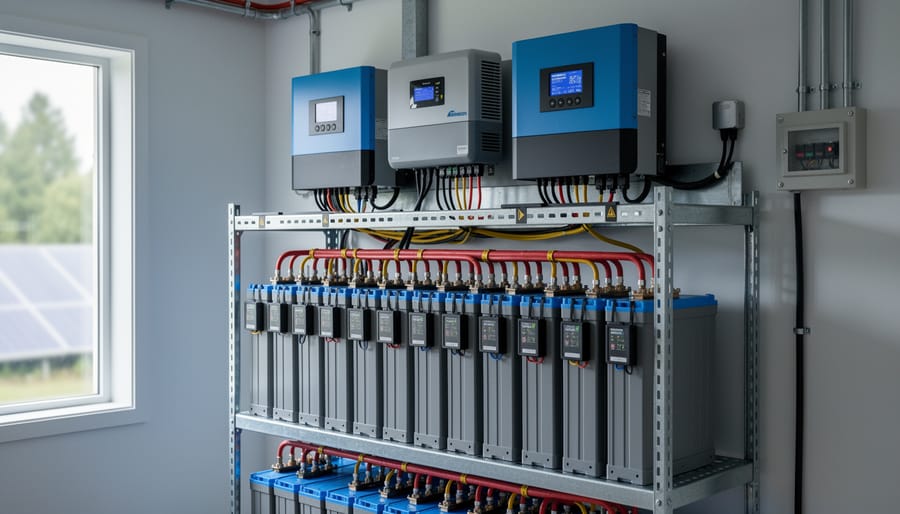
First and foremost, it’s your safety lifeline. When I started tinkering with solar systems years ago, I quickly learned that working on live solar panels is genuinely dangerous. Unlike your home’s electrical panel that you can simply shut off, solar panels keep generating electricity whenever the sun’s out—there’s no off switch on the panel itself. The disconnect gives you that critical ability to completely de-energize your system before maintenance or troubleshooting. This becomes especially important when you’re integrating complex components like your battery system design.
Second, it’s typically required by electrical code. Inspectors want to see a clearly labeled, accessible disconnect that firefighters or emergency responders can quickly identify and use. This isn’t just bureaucratic red tape—it’s about giving first responders a safe way to shut down your system during emergencies.
Finally, it protects your equipment from damage during electrical faults or maintenance procedures, potentially saving you thousands in replacement costs down the line.
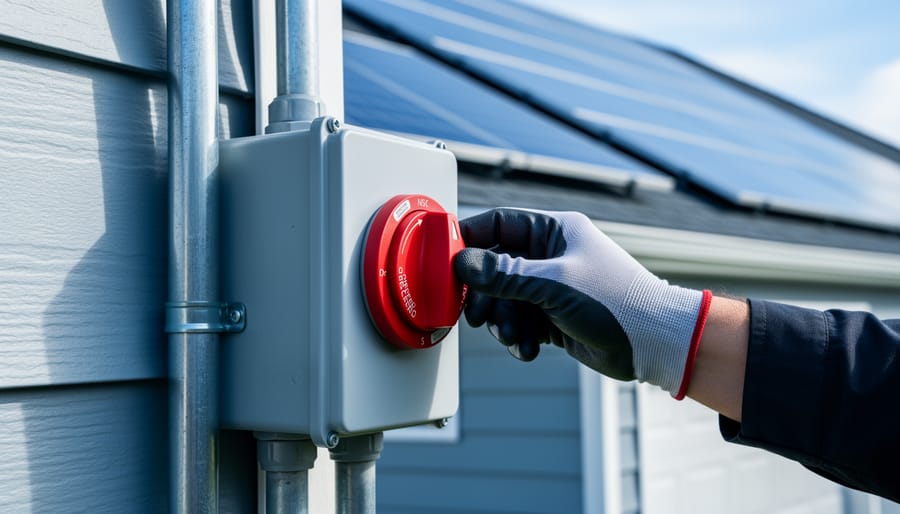
A properly mounted solar array disconnect switch provides essential safety access for maintenance and emergency shutoff situations.
The Real Dangers of Working on Live Solar Arrays
Let me share something that changed my perspective completely during my early solar days. I was helping a neighbor troubleshoot his array on a cloudy afternoon, thinking we were relatively safe since the sun wasn’t even visible. The moment I touched a poorly insulated connection, I got a shock that sent me stumbling backward. Even on that overcast day, those panels were producing enough power to be dangerous.
Here’s the reality that every DIY solar enthusiast needs to understand: solar panels are fundamentally different from almost every other electrical system in your home. You can flip a breaker to kill power to your water heater or unplug your refrigerator, but solar panels generate electricity whenever any light hits them. Moonlight, streetlights, even the glow from your porch lamp can create voltage. There’s no off switch for photons.
This brings us to DC voltage, which deserves serious respect. While your home runs on AC power that alternates direction 60 times per second, solar arrays produce direct current that flows in one constant direction. DC voltage tends to sustain electrical arcs much more readily than AC, meaning if something goes wrong, you’re dealing with a continuous, burning arc rather than one that naturally extinguishes. String voltages in residential systems commonly reach 300 to 600 volts, and commercial systems can exceed 1,000 volts. For context, it takes as little as 50 volts DC to potentially cause harm under the right conditions.
The arc flash risk amplifies everything. When high DC voltage meets a fault or accidental connection, the resulting arc can reach temperatures exceeding 35,000 degrees Fahrenheit, vaporizing metal and creating an explosive expansion of superheated gases.
Add the rooftop element to this equation, and you’ve got a perfect storm of hazards. You’re working at height, often in hot conditions that affect judgment and reaction time, handling energized equipment that can’t be fully de-energized without proper disconnects. This isn’t fear-mongering, it’s acknowledging that solar deserves the same cautious respect we’d give any powerful electrical system.
Types of Solar Array Disconnects for Off-Grid Systems
DC-Rated Disconnect Switches
Here’s something I learned the hard way during my first solar installation: not all switches are created equal. I grabbed what I thought was a perfectly good disconnect switch from the hardware store, only to have an electrician friend politely inform me that my AC-rated switch could literally become a fire hazard in a DC solar system. That was an expensive lesson in understanding DC-rated disconnect switches.
The fundamental issue is that DC electricity behaves differently than AC when you’re breaking a circuit. AC current naturally crosses zero 60 times per second, which helps extinguish any arc that forms when you open a switch. DC current, however, maintains constant voltage, making arcs much harder to break. A DC-rated disconnect switch is specifically designed with larger contact gaps and arc suppression features to handle this challenge safely. Using a standard AC switch in your solar array isn’t just against code—it’s genuinely dangerous.
You’ll encounter two main varieties: non-fused and fused disconnect switches. Non-fused switches simply break the connection, while fused models include built-in overcurrent protection. For smaller systems under 2kW, you’ll typically need switches rated for 30-60 amps. Mid-size systems from 3-6kW usually require 60-100 amp ratings, and larger residential setups might need 100-200 amp switches.
Mounting location matters too. Outdoor installations require weatherproof NEMA 3R rated enclosures with gaskets and drainage features, while indoor switches can use simpler NEMA 1 enclosures. The price difference reflects this—basic indoor non-fused switches start around 40-80 dollars, while weatherproof fused models for larger systems can run 150-400 dollars depending on amperage rating and features.
Remember, your local code will specify exact requirements, so always verify before purchasing.
Breaker-Based Disconnects
Here’s something I learned the hard way during my first big solar installation: you don’t always need separate components for everything. DC-rated breakers can actually serve double duty as both your overcurrent protection and your disconnect switch, which can save you space, money, and installation headaches.
Think of a breaker-based disconnect as a two-in-one tool. Instead of having a breaker to protect your wiring and then a separate disconnect switch next to it, you’re using one device that trips when there’s overcurrent and can be manually switched off when you need to disconnect the array. Pretty clever, right?
This approach makes the most sense when you’re working with combiner boxes or breaker boxes where space is at a premium. I’ve used breaker-based disconnects in systems where I had multiple string inputs coming together, and having each string protected by its own DC-rated breaker that also served as a disconnect kept everything neat and organized. Just make sure you’re using breakers specifically rated for DC voltage, they’re engineered differently than standard AC breakers because DC arcs are much harder to extinguish.
When integrating with your critical load panel or main system, breaker-based disconnects can streamline your setup significantly. The key is ensuring your breakers have enough amperage rating and that they’re accessible for manual disconnection when needed. You’ll still want that visible break requirement met, which usually means positioning them where someone can clearly see the breaker is in the off position.
What Charles Uses (And Why)
After years of installing solar systems of all sizes, I’ve developed some strong preferences when it comes to disconnect switches. For my own 400-watt camper van setup, I use a simple Blue Sea Systems 275A surface mount battery switch. It’s compact, affordable, and perfectly suited for smaller systems where space is at a premium. I learned the hard way on my first van build that not all battery disconnects are created equal – that cheap automotive switch I initially installed corroded within six months from moisture exposure.
For my off-grid cabin running a 3kW array, I stepped up to a proper Midnite Solar MNPV6 combiner with built-in disconnect breakers. This was a game-changer because it combines array combining and disconnection in one weatherproof enclosure. Yes, it cost more upfront, but having everything integrated saved me installation time and reduced potential failure points. One lesson I can’t stress enough: I always install disconnects in accessible locations now. On my first cabin system, I mounted the main disconnect behind some equipment, and when I needed to service the inverter during a snowstorm, I practically had to disassemble half my setup to reach it.
For anyone starting out, my advice is simple: buy quality over price, size appropriately for future expansion, and think about accessibility before you drill that first mounting hole. Your future self will thank you.
Where to Install Your Solar Array Disconnect
Location, location, location—it matters just as much for your solar disconnect as it does in real estate! Getting this right isn’t just about following code; it’s about creating a system that’s safe, functional, and won’t make you curse on a rainy day when you need to access it.
Let me share something I learned the hard way. On my first solar setup, I mounted the array disconnect in what I thought was a clever spot—tucked neatly beside my charge controller inside a shed. Great for aesthetics, terrible for emergencies. When I needed to quickly kill power to the panels during troubleshooting, I had to squeeze past equipment in a cramped space. Not fun, and definitely not safe.
The National Electrical Code requires your disconnect to be readily accessible, meaning you can reach it without moving obstacles, climbing ladders, or performing gymnastics. It should also be visible or clearly marked. Think about it—in an emergency, you don’t want to hunt for a hidden switch.
Here’s the layout that works best: Install your first disconnect as close to where your solar array wiring enters your building or power center as possible. This becomes your main shutoff point for all that incoming solar energy. If you’re working with roof-mounted panels, consider a disconnect at the roof penetration point or immediately inside the building.
The second critical location is between your charge controller selection and your battery bank. This lets you isolate the charge controller for maintenance without disconnecting your entire array.
Weather protection is essential for outdoor installations. Use a NEMA-rated weatherproof enclosure (NEMA 3R minimum for weather resistance). I’ve seen too many corroded disconnects fail because someone saved a few bucks on the enclosure.
Keep your disconnect at a comfortable working height—between four and six feet off the ground is ideal. Mount it where you have clear standing room and adequate lighting. Label everything clearly with waterproof tags indicating what each disconnect controls.
Installing Your Solar Array Disconnect: A Step-by-Step Walkthrough
Alright, let’s get our hands dirty and walk through installing your solar array disconnect. I remember my first installation—I triple-checked everything because I was nervous about working with DC voltage. Good news: if you follow these steps carefully, you’ll nail it the first time.
Start by choosing your location. Your disconnect needs to be within sight of your solar array and easily accessible. I learned this the hard way when I mounted one behind a bush that grew like crazy each summer. Mount it on a sturdy surface, typically an exterior wall or dedicated post, keeping it at least 3-5 feet above ground level to prevent accidental contact or flooding issues.
Before mounting anything, shut off your system completely. This is non-negotiable. Double-check with a multimeter that there’s no voltage present where you’ll be working.
Now for wire sizing—this trips up a lot of DIYers. Your disconnect needs wire rated for at least 125% of your maximum circuit current. If your array produces 30 amps, you need wire rated for at least 37.5 amps. Use copper wire rated for outdoor use, and always check your local code requirements. When I consulted with my neighbor on his setup, we discovered he’d undersized his wire by almost 30%, which could have caused serious overheating.
When making connections, strip just enough insulation to fit into the terminal—typically about half an inch. Too much exposed copper creates safety hazards. Tighten terminal screws firmly but don’t overtighten, which can crack the lugs. Give each wire a gentle tug after tightening to ensure it’s secure.
Here’s a pro tip: apply anti-oxidant paste to all copper connections. This five-dollar tube will prevent corrosion and maintain good conductivity for years.
Labeling is where many people get lazy, but proper labels are crucial for safety. Use weatherproof labels that clearly identify what’s connected, the voltage, and amperage. I use a label maker with outdoor-rated tape, and I label both ends of every wire. Your future self—or the electrician who works on it later—will thank you.
Before closing everything up, test the disconnect. Turn it off and on several times to ensure smooth operation. Measure voltage on both sides to confirm it’s actually breaking the circuit when open.
The biggest mistake I see? Rushing through the final inspection. Take photos of your completed installation, verify all connections are tight, and ensure your disconnect operates smoothly. A professional-looking installation isn’t just about aesthetics—it’s about safety and reliability that’ll serve you for decades.
Making proper electrical connections with correctly sized wire and terminals ensures safe and reliable disconnect operation.
Beyond Code Compliance: When You’ll Actually Use Your Disconnect
Here’s the thing about a solar array disconnect that nobody tells you upfront: you’ll use it way more often than you think. This isn’t just some box you mount to satisfy an inspector and then forget about. It’s genuinely going to become one of your most-used tools.
Last winter, I had a panel that wasn’t producing what it should. Being able to flip that disconnect, verify everything was truly dead with my multimeter, and then safely trace back through connections saved me hours of anxious troubleshooting. Without it, I’d have been trying to work on live circuits or shutting down my entire off-grid system just to check one panel.
Regular maintenance becomes so much easier too. When you need to clean panels properly (and you will, because dust and debris can rob you of 20-30% efficiency), having that positive shutoff gives you peace of mind while you’re up there with a hose and squeegee. Upgrading your charge controller? Installing additional panels? Replacing worn MC4 connectors? Every single time, you’ll reach for that disconnect first.
Then there are the unexpected moments. A severe storm rolling in when you want to protect equipment. A family member who needs to cut power quickly in an emergency. Even just showing friends your setup and demonstrating how everything works safely.
Your disconnect transforms from a compliance requirement into your safety partner. It’s the difference between confidently maintaining your system yourself versus calling an electrician for every little adjustment. That’s real energy independence.
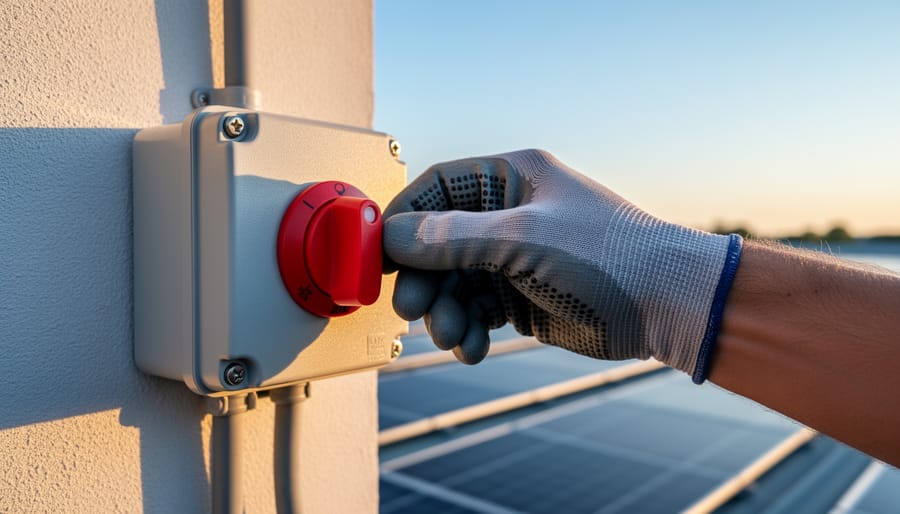
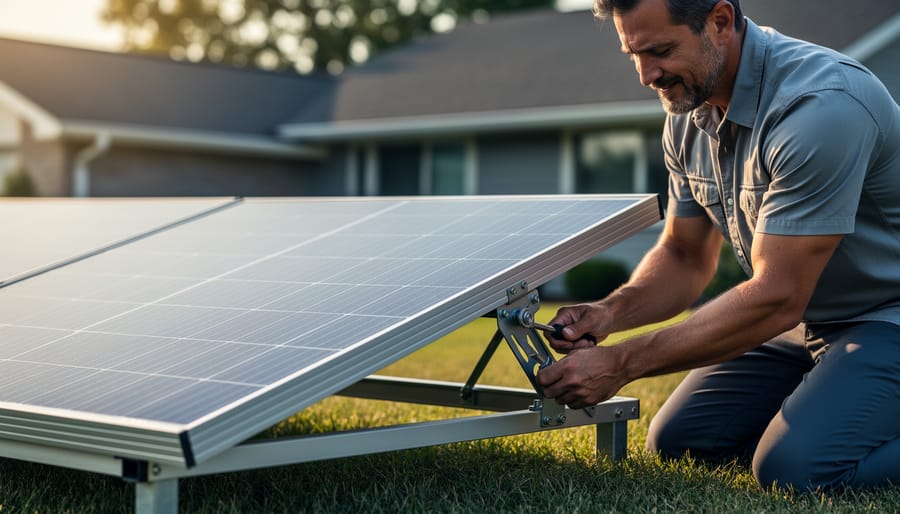
Accessible disconnect placement allows homeowners to quickly and safely isolate their solar array when needed for maintenance or emergencies.
Common Questions About Solar Array Disconnects
Let me tackle some of the questions I hear most often from folks diving into their first solar projects. Trust me, you’re not alone in wondering about these!
Can I just use a regular light switch instead of a proper disconnect?
Here’s the straight answer: no, and please don’t try it. Regular household switches aren’t designed to handle DC current from solar panels, which behaves very differently from the AC power in your home. DC current can create an arc that won’t extinguish like it would with AC, potentially causing serious damage or fire. Solar array disconnects are specifically engineered to safely break DC circuits. I learned this the hard way during my early experiments – let’s just say a melted switch box taught me a valuable lesson about using the right tool for the job.
Do I need a disconnect for my small camping setup?
For truly portable camping panels (think 100 watts or less that you set up and take down), you can usually get away with simple plug-and-play connectors. However, once you’re mounting panels semi-permanently on an RV or building a larger portable system, absolutely install a disconnect. It’s about safety and convenience – you’ll thank yourself when you need to service your charge controller or batteries.
What amperage rating do I need?
Here’s a simple formula: take your solar array’s total wattage, divide by your system voltage, then multiply by 1.25 for safety margin. For example, a 400-watt array at 12 volts equals about 33 amps, so you’d want at least a 40-amp rated disconnect. Always round up to the next standard rating.
Can I install it myself?
If you’re comfortable with basic electrical work and follow local codes, many DIYers successfully install their own disconnects. However, grid-tied systems typically require a licensed electrician and inspection. For off-grid setups, assess your comfort level honestly – there’s no shame in calling a pro for the critical safety components.
I’ve seen too many DIYers treat disconnects as an afterthought, something they’ll “add later” or skip entirely to save a few bucks. Here’s the truth: a solar array disconnect isn’t optional, it’s essential. Think of it as your system’s emergency stop button, the component that stands between you and potentially dangerous voltage when you need to perform maintenance or troubleshooting.
Throughout my years working with solar systems, the projects that give me the most confidence are those where proper disconnects were installed from day one. They’re the systems where owners can confidently swap out charge controllers, check connections, or upgrade components without second-guessing their safety. That peace of mind is invaluable.
Your DIY solar journey should be empowering, not nerve-wracking. By prioritizing proper disconnect installation alongside thoughtful system design, you’re building something you can maintain and modify for years to come. Ready to take the next step? Explore our charge controller selection guides and use our interactive calculators to fine-tune your system specifications. Your safer, more capable solar setup is just around the corner.
How useful was this post?
Click on a star to rate it!
Average rating 0 / 5. Vote count: 0
No votes so far! Be the first to rate this post.
We are sorry that this post was not useful for you!
Let us improve this post!
Tell us how we can improve this post?
charlesnoble
Here at Spheral Solar, I’m a hands-on solar power enthusiast, constantly exploring and experimenting with DIY solutions. I’m dedicated to sharing my discoveries, insights, and even the bumps I hit along the way, all in the pursuit of a more sustainable future.
This Critical Safety Switch Could Save Your Solar… by Charlesnoble February 22, 2026 Picture this: you’ve just finished mounting your solar panels, the sun is shining, and DC power is flowing through your system at voltages high enough to seriously injure or kill someone. Without a proper DC isolator switch, you have no safe way to disconnect that power for maintenance, emergencies, or…
How Much Battery Backup Do You Really Need? (Sizing… by Charlesnoble March 6, 2026 Calculate your actual power needs before committing to a 5kW battery backup system by listing every device you want to run during an outage and adding up their wattages. A 5kW system means you can draw 5,000 watts of power at any given moment, but the real question is for…
Why Grid Code Compliance Matters (Even When You’re… by Charlesnoble January 16, 2026 Check your local utility’s interconnection requirements before assuming your off-grid system is exempt from grid codes—many jurisdictions now require compliance even for systems with no planned grid connection, especially if your property remains connected to utility lines. Download your utility’s technical standards document and your state’s electrical code amendments, then…
The Stream Behind Your House Could Power It (Here’s… by Charlesnoble March 26, 2026 Walk down to your nearest stream with a five-gallon bucket and a stopwatch. Fill that bucket and time how long it takes—this simple test reveals whether you have enough flowing water to power your off-grid home. If you can fill it in under 10 seconds from a source that drops…
Why Your Off-Grid Battery System Fails (And How to… by Charlesnoble January 4, 2026 Calculate your daily energy consumption in watt-hours by listing every device you’ll power, its wattage, and hours of daily use—this single number determines whether you need a 5kWh system or a 50kWh system. Most first-time builders overestimate their needs by 40% or underestimate by forgetting phantom loads like WiFi routers…
Stop Oversizing Your Off-Grid Inverter (Here’s What… by Charlesnoble December 24, 2025 Calculate your total daily energy consumption in watt-hours by listing every appliance you plan to run off-grid, from your refrigerator drawing 150 watts for 8 hours to your laptop charging at 65 watts for 3 hours. Multiply each appliance’s wattage by its daily runtime, then add everything together. This number…
Subscribe for handpicked DIY projects, exclusive tips, and giveaways.
Position your solar panels at an angle equal to your latitude for year-round performance, or adjust seasonally by adding 15 degrees in winter and subtracting 15 degrees in summer to capture maximum sunlight during each season’s sun path. Use a simple angle finder app on your smartphone against the back of your panel to verify… Read more: The Right Tilt Angle Can Boost Your Solar Panel Output by 30% (Here’s How to Find It)
Route your PV wires through UV-resistant conduit within 18 inches of leaving the solar array, securing it every 3 feet with proper clamps to prevent wind damage and code violations. This single step prevents 80% of the wire degradation issues I’ve seen in DIY solar installations over the past decade. Group your positive and negative… Read more: Why Your PV Wire Management Could Fail Inspection (And How to Fix It)
Understand that 6000 volts sounds terrifying but delivers surprisingly low amperage—typically around 120 milliamps for just 3/10,000th of a second per pulse. This combination creates an unforgettable shock that trains animals to avoid the fence without causing lasting harm. The voltage pushes current through thick fur and hide, while the minimal amperage and microsecond duration… Read more: Why 6000 Volts Won’t Kill Your Livestock (But Will Stop Predators Cold)