Why Your Solar Panels Are Losing 25% Efficiency (And How a Simple Cleaning Kit Fixes It)
Updated:
Inspect your solar panels monthly for dust, pollen, bird droppings, and mineral deposits that can reduce energy production by 15-25%. A proper cleaning kit eliminates this performance loss without the $150-300 cost of professional cleaning services, paying for itself after just two uses.
Choose a kit with three essential components: a soft-bristled brush or microfiber mop with an extension pole (to reach panels safely from the ground), a non-abrasive cleaning solution specifically formulated for photovoltaic surfaces, and a squeegee or lint-free cloths for streak-free drying. Skip household cleaners like dish soap or window spray, as they leave residue that attracts more dirt and can degrade anti-reflective coatings over time.
I learned this lesson the hard way when I first started maintaining my system. Using regular cleaning products seemed fine initially, but I noticed a persistent haze developing on the panels. After switching to a dedicated solar panel cleaning solution, my energy output jumped back up by 12% within the first month. That experience taught me that the right tools matter more than aggressive scrubbing.
Time your cleaning for early morning or late evening when panels are cool to the touch. Spraying cold water on hot panels (which can reach 150°F on sunny days) risks thermal shock and micro-cracking. This simple precaution protects your investment while making the cleaning process more comfortable and effective.
Most residential systems need cleaning 2-4 times yearly depending on your environment. Dusty areas, locations near farms or construction sites, and regions with minimal rainfall require more frequent attention. A quality cleaning kit transforms this maintenance from an intimidating chore into a straightforward 30-minute task that keeps your system running at peak efficiency.
The Real Cost of Dirty Solar Panels
Let me share something I discovered the hard way: dirty solar panels can cost you serious money. After noticing my system’s output dropping last spring, I climbed up to find a layer of pollen so thick I could write my name in it. That yellow dust was blocking about 25% of my power generation, which translated to roughly $15-20 per month in lost electricity production.
Here’s what actually happens when your panels get dirty. Each layer of grime acts like a curtain between your panels and the sun. Bird droppings are the worst offenders because they’re opaque and sticky, sometimes blocking entire cells and creating hot spots. Dust and pollen create a film that scatters sunlight, reducing the amount of energy reaching the photovoltaic cells. Even morning dew mixed with dust can bake onto panels in the heat, creating a stubborn residue that compounds over time.
Real-world data shows that efficiency losses vary dramatically by location. If you live near agricultural areas or construction sites, you might see 20-30% drops in just a few weeks. Desert environments can cause 7-10% losses monthly from dust alone. Coastal areas deal with salt spray that gradually builds up and becomes corrosive if left untreated.
Want to check if your panels need cleaning? Here’s my simple method: compare your current daily energy production to the same period last year using your monitoring app. A drop of more than 10% when weather conditions are similar suggests cleaning time. You can also do a visual inspection from the ground using binoculars, looking for visible buildup or discoloration.
Every percentage point of efficiency loss means less power for your home and longer payback periods for your investment. If you’re experiencing persistent issues with output, start with basic solar panel troubleshooting before assuming dirt is the culprit, but in most cases, a good cleaning restores panels to near-original performance levels.
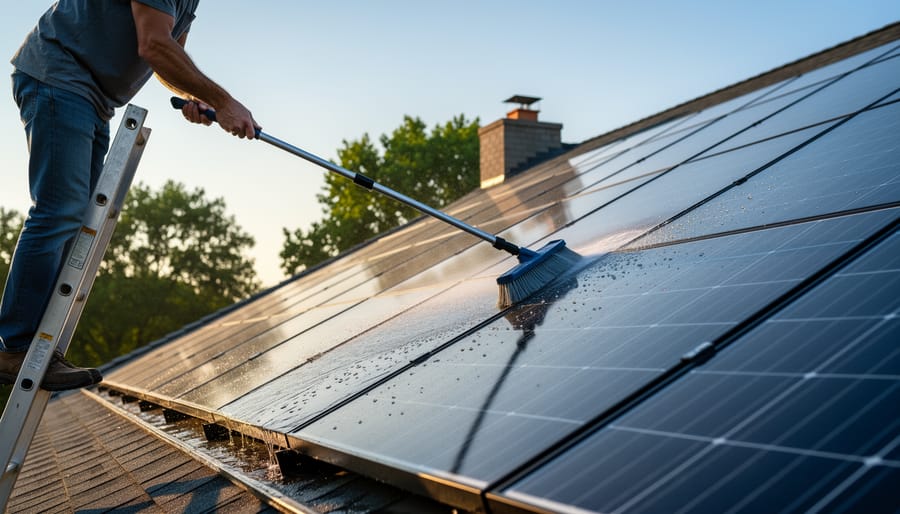
Accumulated dirt, pollen, and debris on solar panels can reduce efficiency by up to 25%, significantly impacting power generation.A quality solar panel cleaning kit includes specialized brushes, extension poles, squeegees, and panel-safe cleaning solutions designed to protect your investment.
What’s Actually Inside a Solar Panel Cleaning Kit
The Core Cleaning Tools
When I first started cleaning my solar panels, I grabbed the same squeegee I used for my car windows and a deck brush from the garage. Big mistake! I learned quickly that solar panels need specialized tools that won’t scratch their delicate surface or leave residue that blocks sunlight.
The brushes designed for solar panels differ significantly from household scrubbers. They feature soft, non-abrasive bristles, typically made from materials like hog’s hair or specialized synthetic fibers that won’t scratch the panel’s anti-reflective coating. Unlike stiff deck brushes or those wire brushes you’d use on a grill, solar brushes are gentle enough for the glass surface while still effective at removing dirt and bird droppings. Many come with built-in water channels that rinse as you scrub, which is genius for efficiency.
Squeegees for solar panels also have unique characteristics. They’re constructed with softer rubber blades than typical window squeegees, preventing micro-scratches while providing streak-free results. The blade width usually ranges from 10 to 14 inches, perfectly sized for panel dimensions without leaving gaps.
Extension poles are perhaps the most crucial safety component. Professional-grade poles can extend from 6 to 24 feet, allowing you to reach roof-mounted panels while standing safely on the ground. Look for poles made from lightweight aluminum or fiberglass with secure locking mechanisms. I’ve seen too many friends risk dangerous ladder climbs when a good extension pole would have kept them safely earthbound. These poles typically feature universal thread connections, so they’re compatible with various brush and squeegee heads.
Cleaning Solutions That Won’t Damage Your Investment
Here’s the truth I learned the hard way: not all cleaning solutions are created equal, and some can seriously damage your panels’ protective coating. I once watched a neighbor enthusiastically scrub his panels with ammonia-based window cleaner, only to discover weeks later that it had created a hazy film that actually reduced his energy output.
The safest bet? Plain distilled water works wonderfully for most cleaning jobs. If you need a bit more cleaning power, mix a few drops of mild, non-abrasive dish soap (the kind without added moisturizers or degreasers) with distilled water. That’s it. Simple, effective, and safe.
Now, here’s your avoid-at-all-costs list: never use abrasive cleaners, detergents with heavy chemicals, ammonia, alcohol-based solutions, or anything containing petroleum. These can scratch the glass, degrade the anti-reflective coating, or leave residues that attract more dirt. I’ve also learned to skip regular tap water when possible, especially if you live in an area with hard water. Those mineral deposits will leave spots that are tougher to remove than the original dirt.
Many solar panel cleaning kits come with purpose-formulated solutions that are pH-neutral and designed specifically for photovoltaic surfaces. If you’re buying a pre-made solution, that’s what you want to look for.
Safety and Reach Accessories
Getting to your panels safely is just as important as the cleaning itself. I learned this the hard way during my first panel cleaning when I nearly lost my balance reaching across a 10-foot section. Trust me, investing in the right reach and safety accessories isn’t optional.
Extension poles are your best friend for ground-level cleaning. Telescoping poles ranging from 6 to 24 feet let you reach most residential roof installations without ever leaving the ground. Look for lightweight aluminum or fiberglass options with secure locking mechanisms. I prefer poles with adjustable angles at the brush head, which helps you match the panel tilt without awkward wrist positions.
If you must access your roof, safety comes first. A basic roof safety harness kit runs about $50-100 and could literally save your life. Pair it with a sturdy anchor point rated for fall protection. Non-slip footwear with soft soles protects both you and your panels.
For single-story homes with accessible panels, a stable extension ladder and a spotter might suffice. However, steep roofs or multi-story installations really call for professional cleaning. There’s no shame in recognizing when a job exceeds your comfort zone. The money you save on DIY cleaning isn’t worth a hospital visit or damaged panels from an unsafe cleaning attempt.
Choosing the Right Kit for Your Setup
For Small Off-Grid and Vehicle Systems
For those of you running solar-powered systems on RVs, boats, or small cabins, you need something lightweight and travel-friendly. I learned this the hard way during my first RV trip when I tried lugging around my full-sized home cleaning setup. Not practical.
Look for compact kits that include a telescoping pole (usually 6-10 feet is plenty), a squeegee attachment, and a soft-bristle brush head. Many companies now make kits specifically designed to fit in storage compartments. I keep mine in a simple mesh bag that hangs in my shed.
Since you’re likely accessing these panels directly without climbing onto roofs, you can skip the heavy-duty extension poles. A simple spray bottle with diluted dish soap works just as well as fancy cleaning solutions. The key advantage here is accessibility, so you can clean more frequently with minimal effort.
Pro tip from experience: If you’re in a remote location, bring extra microfiber cloths. They dry quickly when hung in the sun and can be reused multiple times before needing a proper wash. This saves precious water when you’re off-grid.
For Residential Rooftop Arrays
When your panels are mounted on your rooftop, safety becomes your number one priority—trust me on this one. I learned this lesson early in my solar journey when I nearly took a tumble trying to reach a stubborn bird dropping with a too-short brush. Not my finest moment!
For rooftop arrays, extension poles are absolutely essential. Look for telescoping poles that reach at least 20 to 30 feet, depending on your roof height. The best ones have adjustable angles so you can position the brush without climbing a ladder or scrambling across shingles. I prefer poles made from lightweight aluminum or fiberglass—they’re easier on your arms during those longer cleaning sessions.
Speaking of brushes, choose ones specifically designed for rooftop work with soft, non-abrasive bristles that won’t scratch your panels. Many quality kits include brush heads that swivel or pivot, making it much easier to clean at awkward angles.
Safety features matter tremendously. Consider investing in a kit that includes a harness attachment point or non-slip pole grips. If you’re cleaning from ground level, stable footing is crucial—work on dry days and avoid rushing. Some homeowners find it worthwhile to install permanent anchor points for safety equipment, especially if they’re planning regular maintenance schedules.
Extension poles and specialized brushes allow safe ground-level cleaning of rooftop solar arrays without dangerous ladder work.
For Ground-Mounted and Tilt Systems
Ground-mounted and adjustable tilt systems present unique cleaning advantages that make maintenance a breeze compared to rooftop installations. If you’ve got a DIY solar system at ground level, you’re already ahead of the game in terms of accessibility and safety.
For these setups, your cleaning kit needs are refreshingly straightforward. A standard telescopic pole with a soft-bristle brush works perfectly, but you won’t need the extreme extension lengths required for roof work. I’ve found that an 8-foot pole handles most ground installations comfortably. The real advantage here is that you can use a regular garden hose without needing special water-fed systems, making your kit more budget-friendly.
Tilt systems require special attention to the undersides and frames where dirt accumulates differently than flat installations. Include a smaller hand brush in your kit for getting into those adjustable hinges and mounting points. Charles recommends checking these areas quarterly, as debris buildup can actually affect your panel’s ability to tilt smoothly. Since you can reach everything safely from ground level, consider adding a microfiber detailing cloth to your kit for spot-cleaning stubborn marks without dragging out the full setup every time.
DIY vs. Pre-Made Kits: What Actually Works
When I first started cleaning my solar panels about five years ago, I’ll be honest—I went straight for the “whatever’s under the kitchen sink” approach. A bucket, some dish soap, an old mop, and my garden hose seemed perfectly adequate. And you know what? For that first cleaning, it worked okay. But here’s what I learned after trying both methods over dozens of cleaning sessions: the answer isn’t as simple as “DIY is always better” or “buy the kit.”
Let me walk you through what actually happened. My DIY approach cost me maybe $15 since I already had most supplies. I used a standard mop with a microfiber head, dish soap diluted in water, and my regular garden hose. The panels looked cleaner afterward, but I noticed two problems pretty quickly. First, the mop head wasn’t quite soft enough and left some micro-scratches that became visible in certain light. Second, I couldn’t reach the center of my panels without climbing onto the roof, which made me nervous every single time.
After about six months of this routine, I invested in a purpose-built cleaning kit that cost around $80. It included a telescoping pole that extended to 24 feet, a specialized soft-bristle brush head designed specifically for solar panels, a squeegee attachment, and a hose adapter with an adjustable spray pattern. The difference was immediately noticeable—not necessarily in cleaning performance, but in ease and safety.
Here’s my honest breakdown: if you have ground-mounted panels or a single-story installation with easy access, the DIY route can work fine. Use distilled water or your regular hose water if it’s not too hard, a genuine microfiber cloth or mop head (emphasis on genuine—cheap ones can scratch), and either plain water or a tiny amount of mild dish soap. Skip the window cleaners with ammonia or anything abrasive.
However, pre-made kits really shine in three situations. First, if your panels are on a steep roof or difficult to reach safely. That telescoping pole was a game-changer for me. Second, if you have hard water like we do in many areas—some kits include water filtration attachments that prevent mineral deposits. Third, if you’re cleaning frequently enough that the time savings matter. I can now clean all twelve of my panels in about 30 minutes versus the 90 minutes it used to take.
The sweet spot? Start with what you have for your first cleaning. If you notice it’s awkward, unsafe, or potentially damaging your panels, then invest in a proper kit. You’ll know within one session whether DIY works for your specific situation.
How Often Should You Really Clean Your Panels
Here’s the honest truth: there’s no one-size-fits-all answer to how often you should clean your solar panels. When I first started maintaining my system, I thought quarterly cleaning was the golden rule. Then I moved closer to a busy highway, and suddenly my panels needed attention much more frequently.
Your cleaning schedule depends heavily on where you live and what Mother Nature throws at you. If you’re in a dusty desert climate or near agricultural areas, you’ll likely need to clean monthly during dry seasons. For those in rainy regions with minimal pollution, nature might handle most of the work for you, requiring only 2-3 cleanings per year. Urban areas near highways or industrial zones typically fall somewhere in between, needing attention every 6-8 weeks.
Environmental factors play a huge role too. If you have trees overhead, pollen season might mean more frequent cleaning. Bird populations in your area can dramatically affect your schedule, especially if your roof happens to be a favorite perch. Coastal solar installations face salt spray buildup, while wildfire-prone areas deal with ash deposits that require immediate attention.
Rather than rigidly following a calendar, learn to read your panels. Here are the telltale signs it’s time to break out your cleaning kit: visible dirt or debris accumulation, a noticeable drop in energy production compared to similar weather days from previous months, water spots that don’t wash away with rain, or bird droppings that have been sitting for more than a week.
I recommend checking your panels visually every two weeks and monitoring your system’s output regularly. This proactive approach has saved me from unnecessary cleanings while catching problems before they significantly impact performance.
Proper cleaning technique uses soft brushes and appropriate solutions to restore panels to peak performance without causing scratches or damage.
Common Cleaning Mistakes That Damage Panels
I’ll be honest with you—I learned some of these mistakes the hard way when I first started maintaining solar panels. One scorching summer afternoon, I grabbed a regular scrub brush and went to town on my neighbor’s panels, thinking I was being helpful. Big mistake. Those seemingly harmless bristles left micro-scratches that actually reduced efficiency over time.
The most common error I see is using abrasive materials. Household sponges with rough scouring pads, stiff brushes, or even paper towels can scratch the protective glass coating on your panels. Once that coating is compromised, dirt accumulates faster and performance drops. Always stick with soft microfiber cloths or specialized solar panel brushes with gentle bristles.
Timing is another rookie mistake that can cost you. Cleaning panels during peak sun hours when they’re blazing hot might seem convenient, but rapid temperature changes from cold water hitting hot glass can cause thermal shock and lead to cracks. I learned this after watching a hairline fracture spread across a panel during midday cleaning. Early morning or late evening is your sweet spot—the panels are cool, and you won’t waste water to evaporation.
High-pressure washers are tempting shortcuts, but they’re panel destroyers. The intense water pressure can damage panel seals, force water into electrical components, and even crack the glass. Gentle water pressure from a regular garden hose works perfectly fine.
Using harsh chemicals or detergents is another no-go. Household cleaners can leave residue that attracts more dirt or damage protective coatings. Plain water handles most cleaning jobs, and when you need extra cleaning power, use pH-neutral soap specifically designed for solar panels.
Finally, never walk directly on your panels or lean ladders against them. The pressure creates stress points that can cause cracks. Use proper safety equipment and work from stable positions around the panels, not on them.
Beyond Cleaning: Simple Maintenance Checks
Here’s something I learned the hard way during my first year with solar panels: cleaning time is actually the perfect opportunity for a quick system health check. You’re already up there with your equipment, so why not spend an extra five minutes catching potential problems before they become expensive repairs?
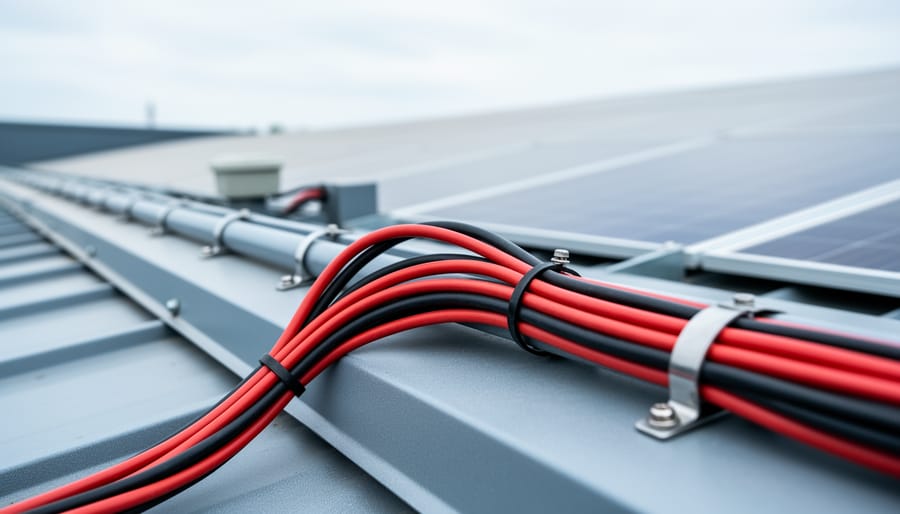
Start by inspecting all visible cable connections while you’re cleaning. Look for any signs of corrosion, loose fittings, or frayed wiring. I once discovered a connection that had worked itself loose during a windstorm, which could have led to performance issues or worse. A gentle tug test on accessible connections takes seconds but can save you from future headaches.
Next, scan your panels for physical damage. Small cracks or chips in the glass might seem minor, but they can worsen over time and allow moisture to seep in. Check the frame edges too, as these areas are prone to wear from weather exposure. If you spot anything concerning, document it with photos for your records or to show a professional if needed.
Don’t overlook the mounting hardware. Give bolts and brackets a visual inspection to ensure nothing has loosened or corroded. In coastal areas especially, salt air can be tough on metal components. While you’re at it, clear any debris that’s accumulated around the mounting points, as trapped moisture can accelerate deterioration.
Finally, check the area beneath your panels for any signs of nesting animals or excessive debris buildup. Birds and critters sometimes find these spaces cozy, but their presence can cause problems. This comprehensive approach to maintaining your investment ensures your panels stay productive for years to come.
Here’s the thing I’ve learned after years of tinkering with solar setups: keeping your panels clean doesn’t have to be this massive project you dread every few months. Honestly, once you’ve got your cleaning kit sorted and you’ve done it a couple times, the whole process takes maybe 30 minutes. I usually knock it out on a Saturday morning with my coffee, and I’m done before most people finish scrolling through their news feeds.
Think of it like washing your car, but with way better returns on your time investment. Those panels up there represent real money you’ve put into your energy independence, and a quick rinse every few months keeps them working at peak efficiency. You wouldn’t let dust pile up on something valuable inside your home, right? Same principle applies here.
The best part is watching your monitoring app show those numbers climb back up after a good cleaning session. It’s genuinely satisfying to see that immediate impact from such a simple task. Plus, you’re protecting the investment you worked hard to build, whether you installed everything yourself or had professionals help out.
I’d love to hear how your cleaning routine goes. What methods work best for your setup? Any clever tricks you’ve discovered? Drop your experiences in the comments below. This community thrives when we share what we learn, and your insight might be exactly what another solar enthusiast needs to hear.
How useful was this post?
Click on a star to rate it!
Average rating 0 / 5. Vote count: 0
No votes so far! Be the first to rate this post.
We are sorry that this post was not useful for you!
Let us improve this post!
Tell us how we can improve this post?
charlesnoble
Here at Spheral Solar, I’m a hands-on solar power enthusiast, constantly exploring and experimenting with DIY solutions. I’m dedicated to sharing my discoveries, insights, and even the bumps I hit along the way, all in the pursuit of a more sustainable future.
Solar-Powered Irrigation Changed How I Water My… by Charlesnoble November 15, 2025 Last summer, I watched my neighbor haul gasoline cans across his property every few days just to keep his garden watered. Meanwhile, my own irrigation system was running silently on pure sunshine, costing me nothing after the initial setup. That’s the beauty of solar-powered irrigation—it transforms water management from a…
Why Your Solar Panels Need Proper Grounding (And How… by Charlesnoble March 17, 2026 Connect your solar panel frame directly to a grounding rod using 6-gauge bare copper wire and listed grounding lugs—this single action protects your system from lightning strikes and prevents dangerous electrical shocks. Strip back half an inch of wire, insert it into the grounding lug attached to your panel’s frame…
Why Your Solar Watch Needs Different Care Than… by Charlesnoble November 27, 2025 Protect your solar watch investment by exposing the dial to bright light for at least 8 hours monthly, even when fully charged. This prevents the lithium battery from deep discharge, which permanently reduces its lifespan. Position your watch near a window during work hours or wear it outdoors regularly to…
Why Solar-Powered Fountains Are Better Than You… by Charlesnoble April 1, 2026 Picture a garden fountain that runs entirely on sunlight, requiring no electrical outlets, trenching, or monthly power bills. Solar-powered fountains harness photovoltaic technology to circulate water through decorative displays, creating peaceful ambiance while operating completely off-grid. These self-contained systems typically feature a small solar panel connected to a submersible pump,…
Solar Power Your Kitchen While Saving the Planet (And Money) by Charlesnoble February 21, 2026 Calculate your kitchen’s current energy consumption by tracking appliance usage for one week, noting which devices draw the most power—typically refrigerators, dishwashers, and electric stoves account for 60-80% of kitchen energy use. This baseline becomes your roadmap for meaningful change, showing exactly where solar integration or efficiency upgrades will deliver…
Why Your DIY Solar System Needs Rapid Shutdown… by Charlesnoble January 13, 2026 Picture this: You’ve just installed your dream solar array, the panels are gleaming in the sun, and you’re ready to flip the switch—then your inspector mentions something about rapid shutdown compliance. If you’re scratching your head wondering what that means and why it matters for your system, you’re not alone.…
Subscribe for handpicked DIY projects, exclusive tips, and giveaways.
Route your PV wires through UV-resistant conduit within 18 inches of leaving the solar array, securing it every 3 feet with proper clamps to prevent wind damage and code violations. This single step prevents 80% of the wire degradation issues I’ve seen in DIY solar installations over the past decade. Group your positive and negative… Read more: Why Your PV Wire Management Could Fail Inspection (And How to Fix It)
Understand that 6000 volts sounds terrifying but delivers surprisingly low amperage—typically around 120 milliamps for just 3/10,000th of a second per pulse. This combination creates an unforgettable shock that trains animals to avoid the fence without causing lasting harm. The voltage pushes current through thick fur and hide, while the minimal amperage and microsecond duration… Read more: Why 6000 Volts Won’t Kill Your Livestock (But Will Stop Predators Cold)
Check the maximum voltage and current ratings first—these determine whether your controller can actually handle your solar panel array without frying itself on the first sunny day. I learned this the hard way when my first DIY system shut down every afternoon because I’d paired 600 watts of panels with a controller rated for only… Read more: Why Your Solar Setup Needs Both a Charge Controller and Inverter (And How to Pick the Right Ones)