This DIY Floating Solar Pool Heater Slashed My Heating Bills to Zero
Updated:
Place your floating solar heater on the pool’s sunny side during morning hours, positioning it where water circulation naturally draws heated water toward your skimmer return. You’ll capture 2-8°F of temperature gain on sunny days without spending thousands on permanent installations.
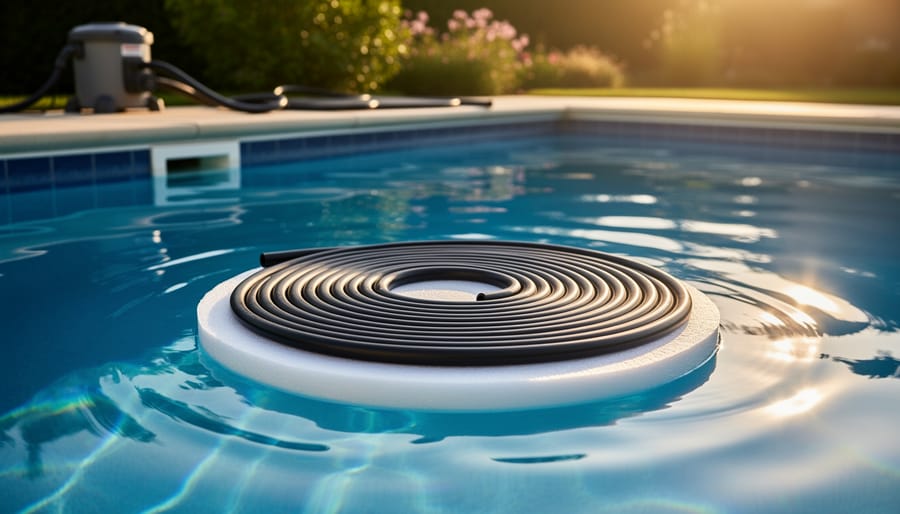
Build your first unit using black irrigation tubing coiled on a foam base, connecting it to your existing pump system with basic garden hose fittings. Charles tested this exact setup in his backyard pool and extended his swimming season by six weeks, spending less than $200 on materials from the hardware store.
Choose between passive floating mats that require no pump connection or active systems that integrate with your filtration cycle. Passive units work best for smaller above-ground pools and hot tubs, while active systems deliver faster heating for in-ground pools over 15,000 gallons.
Calculate your heating needs by measuring your pool’s surface area and average sunlight hours. Every 100 square feet of solar collector heats approximately 400 gallons effectively. Most DIYers discover they need coverage equal to 50-70% of their pool’s surface to achieve comfortable swimming temperatures from April through October.
Position multiple smaller units rather than one large panel to maximize sun exposure throughout the day as shadows shift. You’ll also gain flexibility to remove units during pool parties or heavy use periods.
Monitor water flow rates through your system, targeting 2-4 gallons per minute for optimal heat transfer. Too fast and water doesn’t absorb heat efficiently; too slow and you risk damaging the tubing from excessive temperatures.
This practical approach transforms cold spring water into comfortable swimming conditions while teaching you solar thermal principles you can apply to other home projects.
Why Floating Solar Pool Heaters Are Game-Changers
A DIY floating solar pool heater uses black tubing to absorb sunlight and transfer heat directly to pool water.
Most pool owners face the same frustration: chilly water that cuts the swim season short. Gas and electric heaters work, but they hit your wallet hard every month. A floating solar pool heater solves both problems at once.
The concept is simple. Dark-colored tubing or panels float on your pool’s surface, where black hose heats water by absorbing sunlight. Water circulates through the system naturally or with a small pump, picking up warmth from the sun-soaked material and releasing it back into the pool. No fuel, no monthly bills.
A properly sized solar pool heater can boost water temperature by 10-15°F over baseline. On sunny days, expect daily gains of 2-8°F. Most pools reach comfortable swimming temperatures within three to five days under optimal conditions, depending on your climate and system size.
Budget is where floating heaters really shine. You can build a basic DIY setup for under $200 in materials. Pre-built commercial systems cost more, but even premium models like the NanoEdge heater with Nano-Graphitic tubes deliver impressive specs: 30% faster heat transfer, 18% higher water flow through 8mm diameter tubes, and overall performance gains of 40% compared to standard designs.
Installation is straightforward. No roof mounting. No special equipment. Just unroll, connect, and float. The water does the rest.
How They Actually Work
The beauty of floating solar pool heaters lies in their elegant simplicity. When I first tested one in my own pool, I was amazed at how such a straightforward design could make such a noticeable difference.
Here’s what’s happening under the surface: These devices work on a basic principle of solar absorption and heat transfer. The black or dark-colored surface of the floating unit soaks up sunlight like a sponge absorbs water. This dark material heats up significantly when exposed to direct sun, sometimes reaching temperatures well above 100°F on a warm day.
As your pool’s water naturally circulates through the unit, either by passive flow or with help from your existing pump, it comes into direct contact with this heated surface. The warmth transfers from the solar collector into the water through a process called conduction, the same way a warm mug heats your hands on a cold morning.
Most floating heaters use one of two designs. The simpler models are essentially insulated mats with internal channels that water flows through. More advanced versions include small built-in pumps powered by integrated solar panels, actively pulling water through the heating chambers and returning it warmer to the pool.
The water doesn’t need to flow quickly. In fact, slower circulation often works better because it gives the water more time to absorb heat. A properly sized solar pool heater delivers water that runs 10-15°F warmer than baseline. On sunny days, you can expect daily gains of 2-8°F, depending on your system’s size, sun exposure, and pool volume. Most pools take three to five days to reach a comfortable swimming temperature with a properly sized solar heating system in optimal conditions. Over several hours of sunshine, thousands of gallons gradually pass through these floating collectors, each cycle adding warmth to your pool’s overall temperature.
The Cost Reality: What You’ll Actually Save
Let me be straight with you about money, because that’s what most of us really care about, right? When I first floated my DIY solar heater on the pool, my neighbor asked the question you’re probably asking: “But did you actually save anything?”
Here’s my real-world data. Before the floating solar heater, my gas pool heater was costing me roughly $180-220 per month during swimming season (April through October in my area). That’s about $1,260 annually. My DIY floating solar heater cost me $340 in materials for a 150-square-foot system. Do the math with me: that’s a payback period of just under three months of actual use.
Now, let’s compare this to traditional heating options. A standard gas heater runs $1,500-4,000 upfront plus those monthly operating costs I mentioned. Electric heat pumps cost $2,500-5,000 installed and still add $50-150 monthly to your electric bill. Commercial solar pool heating systems? You’re looking at $3,000-7,000 for professional installation.
My floating system paid for itself in one season. By year two, I was swimming in pure savings (pun intended). Over five years, I’ve saved approximately $6,300 compared to continuing with gas heat.
Here’s what really surprised me: even if you go with a semi-commercial floating solar system at around $800-1,200, you’re still looking at payback within one to two seasons. The key difference is maintenance costs, which for my DIY version have been essentially zero except for replacing one damaged panel after a particularly nasty hailstorm.
Your savings will vary based on your climate, pool size, and current heating costs, but the principle holds: floating solar heaters offer the fastest ROI of any pool heating option available.
Choosing Your Floating Solar Heater Approach
The Full DIY Build (For True Tinkerers)
If you’re the type who loves working with your hands and enjoys a proper weekend project, building a floating pool heater from scratch might be your perfect challenge. I’ll be honest with you, when I first attempted this route, my wife took one look at my pile of black tubing and foam insulation and asked if I was building a raft or a science experiment. Turns out, it was a bit of both.
The basic concept is beautifully simple. You’re creating a solar collector that floats on your pool’s surface while circulating water through black tubing that absorbs sunlight. Here’s what you’ll need: black polyethylene tubing (around 50-100 feet for an average pool), rigid foam insulation boards for the base, a small submersible pump, cable ties, and some waterproof sealant.
Start by cutting your foam boards to create a stable floating platform, something around 4×4 feet works well for testing. Arrange your black tubing in a spiral or zigzag pattern across the foam, securing it with cable ties. The key is maximizing surface area while keeping everything compact enough to float freely. Connect one end of the tubing to your pump, which draws water from below the platform, pushes it through the heated tubing, and releases it back into the pool.
The beauty of this approach is the flexibility. You can adjust your design based on what actually works, add multiple platforms, or experiment with different tubing lengths. Expect to spend less than $200 in materials for a basic project, and don’t be discouraged if your first attempt needs tweaking. Under the right conditions, a well-built DIY system can boost your pool temperature by 3-6°F over several sunny days, with daily gains of 2-8°F on particularly sunny days.
The Hybrid Approach (Best for Most DIYers)
Here’s where most DIYers find their sweet spot. After testing both extremes, I discovered that buying quality commercial solar panels but handling the mounting and plumbing yourself delivers the best bang for your buck. You get reliable heat production without paying professional installation rates.
The concept is straightforward: purchase proven solar pool panels from established manufacturers, then create your own floating platform and circulation system. Similar to other DIY solar approaches knowing when to buy versus build makes all the difference.
Start with two to four commercial solar panels rated for pool heating. Mount them on marine-grade foam board or repurposed pool floats using UV-resistant zip ties and PVC framework. The key is creating a stable platform that won’t flip in wind or waves.
For circulation, a small solar-powered fountain pump works wonderfully. I use a 20-watt pump that pulls water from the pool bottom, pushes it through the panels, and returns it heated. No electrical hookups needed. Add a simple timer or manual valve so you can control when heating occurs.
This hybrid method took me one weekend to assemble. When properly sized for your pool, the system can deliver water that runs 10-15°F warmer than baseline, with daily gains of 2-8°F on sunny days. The beauty is you’re investing in proven heating technology while keeping costs manageable through smart DIY integration.
Ready-Made with DIY Tweaks
Not everyone wants to build from scratch, and that’s perfectly fine! I picked up a commercial floating solar heater a few years back, and honestly, it worked decently right out of the box. But here’s the thing—with a few simple tweaks, I nearly doubled its efficiency.
Start by adding reflective material around the pool’s edges. Aluminum foil boards or mylar sheets bounce extra sunlight onto your floater, giving it more energy to work with. I used some leftover emergency blankets from a camping trip, and the temperature difference was noticeable within days.
Another game-changer is improving water circulation. Most commercial units rely on passive flow, which can be sluggish. I attached a small 12-volt pump powered by a separate solar panel, creating active circulation that distributed warm water much faster. Total cost? About thirty dollars.
Consider insulating the underside too. A layer of foam board prevents heat loss to cooler water below. Just make sure whatever you add doesn’t compromise the unit’s buoyancy or stability.
The beauty of starting with a ready-made system is you can experiment without pressure. If a modification doesn’t work, simply remove it. You’re building knowledge and confidence while still enjoying a warmer pool.
Building Your Own Floating Solar Pool Heater: Step-by-Step
Materials You’ll Actually Need
Here’s what you’ll need to gather before starting your floating solar pool heater project. I learned the hard way that having everything ready beforehand saves multiple trips to the hardware store!
For basic DIY projects, materials typically cost less than $200. You can complete a straightforward system with careful planning and smart shopping.
Component Category
Details
Estimated Price Range
Tubing
100-200 feet black polyethylene (½” diameter)
$25-40
Flotation Base
Foam insulation board (4×8 ft) + pool noodles/PVC
$25-35
Pump or Solar Panel
12V DC pump (basic) or 20-50W panel (hybrid)
$30-80
Fittings & Hardware
Hose clamps, barbed fittings, flexible hose, zip ties
For the solar collector, you’ll need 100-200 feet of black polyethylene tubing (half-inch diameter works best), which runs about $25-40 at Home Depot or Lowe’s. Grab a sheet of rigid foam insulation board (4×8 feet, around $15-20) to create your floating base.
For the floating platform assembly, pick up marine-grade PVC pipes or pool noodles for buoyancy support (about $10-15), along with zip ties, waterproof adhesive, and UV-resistant cable ties. These typically cost under $20 combined at any hardware store.
Don’t forget the connection hardware: hose clamps, barbed fittings to connect your tubing to the pool’s return line, and flexible pool hose sections. Budget around $20-30 for these items.
If you’re building a hybrid system with solar-powered circulation, you’ll need a small 20-50 watt solar panel ($40-80), a waterproof charge controller ($15-25), and a 12-volt battery to store energy for cloudy periods ($30-50). Marine supply stores often have great deals on these components. Adding these will push your total toward $300 or more.
Many community members have found similar materials at Habitat for Humanity ReStores for significant savings.
Building a floating solar heater involves connecting heat-absorbing tubing to buoyant foam boards using basic materials.
The Build Process (Simpler Than You Think)
I’ll be honest with you—when I first laid out all the materials for my floating pool heater, I had that familiar moment of “what have I gotten myself into?” But here’s the thing: this project is actually pretty straightforward once you break it down into manageable chunks.
Start by cutting your black irrigation tubing into a coil pattern that matches your float base dimensions. I used a simple pizza box template to keep my spacing consistent—about 2 inches between each coil works perfectly. The biggest rookie mistake here is making the coils too tight. Trust me, you want enough space for water to flow freely, or you’ll end up with a sad trickle instead of efficient heating.
Next, secure the tubing to your float using UV-resistant cable ties. Here’s where I learned something valuable: don’t cinch those ties too tight initially. The tubing will expand in the sun, and if you’ve already maxed out the tension, you’ll hear some unpleasant cracking sounds on that first hot day. Leave just a bit of wiggle room.
For the inlet and outlet connections, marine-grade hose fittings are your friends. I initially tried cheaper hardware store fittings and ended up with slow leaks. Spend the extra few dollars—it’s worth it. Position your inlet at the coolest part of your pool (usually the deep end) and the outlet where you want warmer water distributed.
The pump connection is probably the trickiest part. You’ll need a small solar-powered water pump rated for your tubing diameter. I recommend doing a dry run first, measuring the flow rate with a bucket and timer. You’re aiming for the water to spend enough time in the coils to actually heat up—usually about 2-3 minutes of travel time through the entire system.
One pitfall nobody warns you about: algae loves warm, slow-moving water in dark tubing. Include a simple inline filter at your inlet, and plan to flush the system weekly with a bit of pool shock during cleaning.
Finally, test everything before committing to a permanent setup. Float it, run it for an afternoon, and check all connections while it’s operating. This test run saved me from discovering a weak fitting after I’d already invited neighbors over to see my “amazing invention.”
Making It Float and Stay Put
Getting your heater to actually stay where you want it is easier than you might think. I learned this the hard way when my first prototype ended up wedged against the pool filter after a windy afternoon!
For buoyancy, closed-cell foam pool noodles are your best friend. I cut them to length and secured two on each side of my heater frame using zip ties. This kept everything nicely afloat without adding bulk. If you’re using PVC panels, they’re naturally buoyant, but copper collectors will need extra flotation. Test in shallow water first to check balance before anchoring.
Anchoring is crucial. I use a simple tether system with marine-grade rope tied to my deck cleats, keeping about 3 feet of slack so the heater can move slightly with water movement without strain. Some folks drill small weights into pool-safe anchors at the bottom, but check your pool warranty first since drilling isn’t always allowed.
To prevent tipping, distribute weight evenly across your frame. My design keeps the heaviest components (pump, if using one) centered and low. A wider base also helps stability in choppy conditions from kids cannonballing nearby. Position your heater away from return jets to minimize drift, and consider adding a second anchor point if your pool gets afternoon winds like mine does.
Setting Up the Water Circulation
Getting water to flow through your floating solar heater might seem intimidating at first, but it’s actually one of the simpler parts of the project. I remember Charles telling me about his first attempt – he overthought it completely and nearly bought an industrial-grade pump before realizing his existing pool pump could handle the job just fine.
The key is understanding that you’re working with your pool’s existing circulation system, not replacing it. Most setups use a simple bypass configuration. You’ll create a loop where water diverts from your main pool line, flows through your floating heater panels, and returns to the pool. Think of it like adding a scenic detour on a highway – the destination stays the same, but the water picks up some warmth along the way.
For connecting the pumps, start by identifying your pool’s return line. You’ll need a T-junction or diverter valve installed on this line to split the flow. One path continues to your regular pool returns, while the other routes to your floating heater. Basic PVC fittings from any hardware store work perfectly here. Make sure everything is watertight using PVC primer and cement, and let connections cure for at least two hours before testing.
The beauty of this setup is flow control. Install a simple ball valve on your heater line so you can adjust how much water goes through the panels versus back to the pool. On cooler days, you might send more water through the heater; on already-warm days, dial it back.
Safety tip: always turn off your pool pump before making any plumbing modifications, and test all connections at low pressure first.
A complete floating solar heating system includes the heater unit and circulation pump working together to warm pool water.
Maximizing Performance: What Actually Matters
Positioning and Orientation Tricks
Getting the most from your floating heater is all about smart placement. I learned this the hard way when my first attempt spent half the day bumping against the shady north wall of my pool.
For maximum efficiency, position your heater where it gets unobstructed sunlight during peak hours, typically 10 AM to 4 PM. In my setup, I found that keeping it in the center-south area worked best. If your pool has circulation, let the natural flow do the work, gently moving the heater around so it doesn’t create hot spots.
Sun tracking isn’t really necessary for most floating heaters since they naturally rotate with water movement, but if you notice consistent shading, a quick nudge in the morning helps. Some DIYers attach lightweight tethers to guide their heaters into optimal positions without restricting movement entirely.
Seasonal adjustments matter more than you might think. During summer, your heater can handle more area, but in spring and fall, I position mine closer to where we actually swim to concentrate the warmth. In winter, if you’re maintaining temperature for a spa section, park it directly over that zone. One neighbor even marks optimal positions with discrete pool-safe markers on the deck as seasonal reference points.
Place heaters in the center-south area of the pool for best sun exposure
Ensure unobstructed sunlight from 10 AM to 4 PM
Adjust position seasonally: concentrate warmth near swim zones in spring and fall
Use lightweight tethers to guide placement without restricting natural movement
When to Run (and Not Run) Your System
Getting the timing right with your floating solar pool heater makes a huge difference in performance. I learned this the hard way during my first season when I’d leave the system running overnight, wondering why my results were inconsistent.
The golden rule is simple: run your heater whenever the solar panels are producing more energy than they’re losing to the environment. In practical terms, this means mid-morning through late afternoon on sunny days. I typically start my system around 10 AM once the panels are fully warmed up and shut it down by 5 PM before the evening chill sets in.
Nighttime is where many beginners stumble. Without sunlight, your panels become radiators that actually cool the water passing through them. Always turn off your circulation pump after sunset unless you’ve added a bypass valve with a temperature sensor.
Cloudy days require a judgment call. Light cloud cover often provides enough diffuse sunlight to maintain warmth, especially in summer. I’ve found that if I can see distinct shadows on the ground, the system is probably worth running. On heavily overcast days, though, you’re better off keeping the pump off and letting the pool maintain its existing temperature. It’s about working with nature rather than fighting it.
Common Problems You’ll Face (And How I Solved Them)
Regular cleaning prevents algae buildup on solar surfaces and maintains optimal heating efficiency.
The Algae and Cleaning Challenge
Here’s the reality nobody tells you about floating solar heaters: algae absolutely loves them. I learned this the hard way during my second summer when I noticed my pool temperatures dropping despite sunny weather. The culprit? A thin layer of algae blocking sunlight on my panels.
The good news is you can tackle this challenge without becoming a full-time pool equipment custodian. Prevention beats scrubbing every time. Position your panels where they get occasional splashing from swimmers or install a small fountain nearby – moving water discourages algae growth naturally. Some DIYers add a tiny amount of pool-safe algaecide to the water inside their panels during initial filling, though this works better for closed-loop systems.
For maintenance, a quick weekly wipe-down with a soft sponge takes maybe five minutes. I keep a telescoping pool brush handy and give my panels a gentle once-over every Sunday morning with my coffee. If you’re building from scratch, consider using darker materials that don’t show algae as readily, or textured surfaces that make growth less likely to take hold.
The key is establishing a simple routine before it becomes a problem. Think of it like brushing your teeth – a small habit that prevents bigger headaches down the road.
Weather, Wind, and Durability Issues
Your floating solar heater is surprisingly tough, but Mother Nature can still throw some curveballs. I learned this the hard way during my first summer when a sudden windstorm sent my prototype skittering across the pool like a frisbee!
Wind is your biggest immediate concern. Even lightweight designs can become projectiles in strong gusts. I now anchor mine with fishing line tied to pool ladder legs—just enough to keep it centered without restricting natural movement. For serious storms, pulling your unit out takes only a minute and can save weeks of repair work.
UV damage sneaks up on you over time. That brilliant summer sun that heats your water also degrades plastic components and solar panels. Look for UV-resistant materials from the start, or plan to apply protective coatings annually. I’ve noticed my solar cells lose about 5-10% efficiency after two years of constant exposure, which is pretty normal.
Seasonal storage is essential in colder climates. Completely dry your heater before storing it in a garage or shed to prevent mold and material breakdown. Remove any detachable components and inspect connections. A little off-season care means your heater will be ready to go when swimming weather returns, extending its lifespan from 2-3 years to potentially 5-7 years with proper maintenance.
When Performance Disappoints
Let me be honest with you—my first floating solar heater barely raised the pool temperature two degrees. I was disappointed, but that experience taught me valuable lessons about realistic expectations and troubleshooting.
First, understand that floating solar heaters work best as supplemental heating, not primary systems. They’re most effective in sunny climates during shoulder seasons when you just need a few extra degrees of warmth. If your pool isn’t heating as expected, start with these basics: check the pump flow rate (too slow means insufficient circulation), ensure the solar panels aren’t shaded during peak sun hours, and verify your pool is properly covered at night to retain heat.
Sometimes underperformance signals that individual solar system components need upgrading. I learned this when my cheap pump couldn’t push water through the panels efficiently. Upgrading to a slightly more powerful pump made a noticeable difference. Similarly, adding reflective insulation beneath panels can boost heat capture by 15-20 percent.
When should you consider a complete upgrade? If your system struggles even on perfect sunny days, or if your pool size has outgrown your heating capacity, it might be time. But often, small tweaks—better positioning, improved circulation, or adding a second panel—can transform a disappointing system into a satisfying one.
Check flow rate and pump operation, insufficient circulation is the most common culprit for poor performance.
Verify unshaded positioning during peak hours; even partial shade can dramatically reduce heat capture.
Use a nighttime pool cover to prevent heat loss; without one, you’ll lose overnight what you gained during the day.
Consider a reflective insulation upgrade beneath panels to boost heat capture by 15-20 percent.
Assess system sizing for pool volume, your heater may simply be too small for the water you’re trying to warm.
Beyond Pool Heating: Other Floating Solar Applications
Here’s something I discovered during my solar journey that genuinely surprised me: once you understand the principles behind floating solar pool heaters, you start seeing opportunities everywhere there’s water and sunshine. The technology isn’t limited to swimming pools at all.
Take hot tubs, for example. These smaller bodies of water are perfect candidates for floating solar heating. Because they hold less water than a full-sized pool, even a compact floating solar panel can make a noticeable difference in temperature. I’ve chatted with several DIY enthusiasts who’ve adapted pool heater designs for their backyard spas, and they’ve cut their energy bills significantly. The beauty is that you can scale down the same concepts we’ve discussed earlier.
Stock tanks represent another fantastic application, especially for those with livestock or rural properties. Farmers and ranchers have been using floating solar heaters to prevent ice formation during winter months, ensuring animals have access to drinkable water without running expensive electric heaters continuously. It’s practical, cost-effective, and completely off-grid.
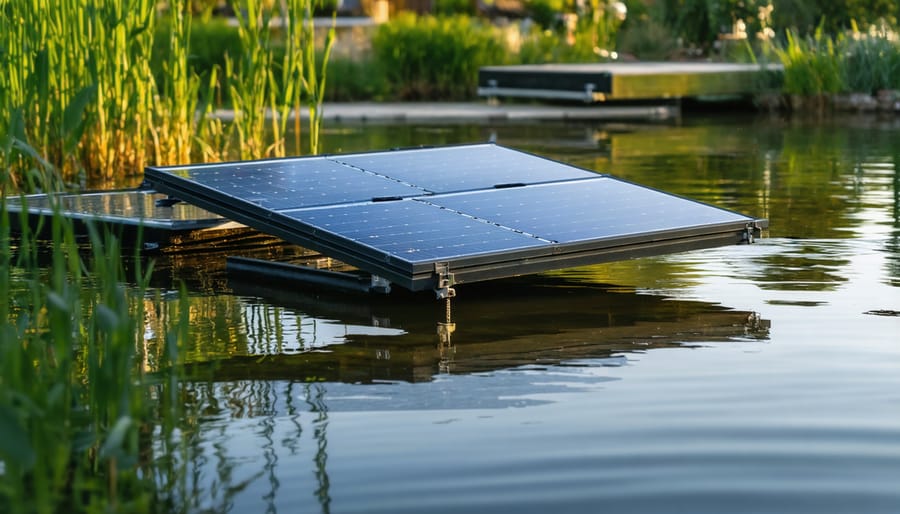
Pond owners are getting creative too. Garden ponds and koi ponds benefit from gentle temperature regulation, which floating solar systems provide naturally. Unlike floating solar pool accessories that focus on aesthetics, these heating applications prioritize function while still looking sleek on the water’s surface.
The camping and outdoor recreation community has embraced portable floating solar heaters as well. Imagine setting up a temporary heating system for a backcountry hot spring or warming water for outdoor showers at remote campsites. These applications might seem small-scale, but they demonstrate the versatility of the technology.
Once you master the basics of floating solar heating, you can adapt these principles to virtually any water-based scenario. It’s part of the broader movement toward larger solar applications that’s transforming how we think about renewable energy in everyday situations.
So there you have it – everything you need to know about floating solar pool heaters, from the basic science to real-world builds that actually work. I’ve been down this road myself, and I can tell you there’s nothing quite like jumping into warm water that the sun heated for free. No monthly bills, no guilt about energy consumption, just pure solar-powered comfort.
The beauty of this project is that you can start wherever you feel comfortable. Maybe you grab a basic floating heater this weekend and see how it performs. Or perhaps you’re ready to dive into a full DIY build with custom panels and circulation systems. Either way, you’re taking a practical step toward energy independence and proving that renewable solutions can work in everyday life.
Before you start ordering materials, I’d strongly encourage you to use Spheral Solar’s calculator tools to properly size your system. Nothing’s more frustrating than building something that doesn’t match your pool’s needs. These calculators take the guesswork out of panel surface area, pump requirements, and expected temperature gains based on your specific situation.
Now I want to hear from you. Have you built a floating solar heater? What challenges did you face? What worked better than expected? Drop your questions and experiences in the comments below. This community thrives when we share our successes and failures alike. Let’s keep learning together and making solar power accessible for everyone.
How useful was this post?
Click on a star to rate it!
Average rating 0 / 5. Vote count: 0
No votes so far! Be the first to rate this post.
We are sorry that this post was not useful for you!
Let us improve this post!
Tell us how we can improve this post?
charlesnoble
Here at Spheral Solar, I’m a hands-on solar power enthusiast, constantly exploring and experimenting with DIY solutions. I’m dedicated to sharing my discoveries, insights, and even the bumps I hit along the way, all in the pursuit of a more sustainable future.
Floating Solar Panels Could Change Where You Generate Power by Charlesnoble November 29, 2025 Picture your backyard pond doing double duty: supporting wildlife while generating clean electricity for your home. That’s the promise of floating solar panels, an innovation that’s transforming how we think about renewable energy installation. Floating solar systems, also called floatovoltaics, mount photovoltaic panels on buoyant platforms that rest on water…
Growing Crops Under Solar Panels Actually Works… by Charlesnoble April 3, 2026 Imagine doubling the productivity of your land by growing crops and generating electricity in the same space. That’s exactly what agrivoltaics makes possible—and it’s not just for large-scale farms anymore. An agrivoltaic system combines solar panels with agriculture, mounting photovoltaic arrays high enough that crops, livestock, or pollinator habitats can…
Why Your Pool Deserves Floating Solar Lights (And… by Charlesnoble December 21, 2025 Picture this: It’s a warm summer evening, and your pool transforms into a glowing oasis without adding a single dollar to your electricity bill. That’s the magic of floating solar lights—simple devices that charge during the day and automatically illuminate your pool at night, creating ambiance while eliminating the headache…
Why Your DIY Solar Microgrid Will Fail Without the… by Charlesnoble November 22, 2025 Understand that a microgrid energy storage system is your battery bank plus the smart components that decide when to store solar power, when to use it, and when to pull from the grid or a backup generator. This integrated approach transforms disconnected parts into a cohesive power management solution that…
Why DC Microgrids Are Perfect for Your DIY Solar Setup by Charlesnoble January 7, 2026 Picture this: you’re running LED lights, a laptop, and a small fridge in your off-grid cabin, and every device is drawing power directly from your solar panels without converting DC to AC and back again. That’s the elegant simplicity of a DC microgrid system, where electricity flows in its natural…
Turn Your Home’s Exterior Into a Power Plant With BIPV Solar by Charlesnoble February 19, 2026 Picture this: your home’s windows generating electricity while you admire the view. Your patio awning powering your outdoor lights as it shades your afternoon barbecue. Your garage door collecting energy every time the sun hits it. This isn’t science fiction – it’s building integrated photovoltaics, and it’s transforming how we…
Subscribe for handpicked DIY projects, exclusive tips, and giveaways.
Nine times out of ten, an RV generator that won’t start has a stale fuel problem. If your generator hasn’t run in more than 30 days, degraded gasoline is likely gumming up the carburetor and preventing ignition. Before you panic or call for expensive roadside service, try this: turn on the generator’s fuel valve (if… Read more: RV Generator Troubleshooting: Common Problems and How to Fix Them
A 5kW solar system occupies between 250 and 350 square feet of roof or ground space and produces roughly 20 to 25 kilowatt-hours of electricity per day in most U.S. locations. That’s enough to power a typical three-bedroom home with moderate energy use, though your exact needs depend on your daily consumption patterns, climate zone,… Read more: How to Size a 5kW Solar System for Your Home or RV
Installing a home solar system yourself takes 2-4 weekends for an average 5kW setup, requires solid electrical knowledge and comfort working at heights, and can save you $5,000-$8,000 in labor costs if you tackle everything except the final utility interconnection. The process breaks down into five main phases: permitting and design, mounting the racking system,… Read more: Solar Power Installation Step by Step: Complete DIY Guide From Start to Finish