Your EV Can Power Your Home During Blackouts (Here’s How to Set It Up)
Updated:
Picture this: A winter storm knocks out power to your neighborhood for three days. While your neighbors huddle around candles, you’re running your refrigerator, keeping phones charged, and maintaining heat—all powered by the electric vehicle sitting in your driveway. This isn’t science fiction. It’s happening right now in garages across the country.
Your EV isn’t just transportation anymore. That massive battery pack—typically storing 60 to 100 kilowatt-hours of energy—can become your home’s most powerful backup generator. To put that in perspective, the average American home uses about 30 kilowatt-hours per day. Your EV could potentially keep essential systems running for two to three days, or stretch even longer with smart rationing.
The technology comes in two flavors, each serving different needs. Vehicle-to-Load, or V2L, lets you plug standard devices directly into your EV using built-in outlets—perfect for camping trips, outdoor work sites, or charging essential devices during brief outages. Vehicle-to-Home, or V2H, takes things further by connecting your EV directly to your home’s electrical panel, acting as a whole-home backup system that seamlessly kicks in when the grid fails.
Here’s what makes this especially exciting: if you’re already exploring solar energy or living off-grid, your EV becomes part of a larger energy ecosystem. Charge it with solar panels during the day, use that stored energy at night or during emergencies, and you’ve created a resilient, renewable power system that reduces both your carbon footprint and vulnerability to grid failures. The barriers to entry are dropping fast, with more automakers adding bidirectional charging capability and installation costs becoming increasingly competitive with traditional backup generators.
What Is EV Backup Power and How Does It Actually Work?
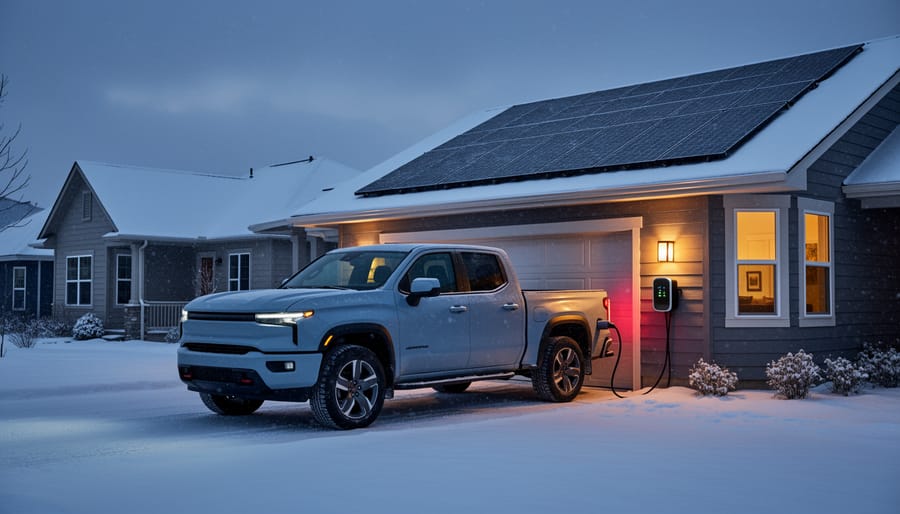
Modern EVs like the F-150 Lightning can serve dual purposes as both transportation and home backup power sources.
V2H: Turning Your EV Into a Whole-Home Battery
Vehicle-to-Home technology is where things get really exciting. I remember chatting with a neighbor last winter during a power outage—he was running extension cords all over his house from a gas generator, while I was thinking about how much simpler this could be with an EV sitting in the driveway.
V2H essentially turns your electric vehicle into a massive whole-home battery system. Unlike V2L, which uses your vehicle’s standard outlets, V2H connects directly to your home’s electrical panel through specialized bidirectional charging equipment. This means seamless backup power that automatically kicks in when the grid goes down, similar to how a traditional home battery system works.
The capacity is impressive. Take the Ford F-150 Lightning, for example—its extended-range battery holds about 131 kWh of energy. For context, the average American home uses around 30 kWh per day, meaning that truck could theoretically power your home for three to four days during an outage. The Chevrolet Silverado EV boasts even more capacity at 200 kWh, potentially extending that to nearly a week of backup power.
Setting up V2H requires a bidirectional charger (sometimes called a vehicle-to-grid or V2G charger) and a transfer switch or smart electrical panel that manages the power flow between your EV, the grid, and your home. Ford’s Intelligent Backup Power system and the Ford Charge Station Pro are good examples of this integration. Some systems can even prioritize which circuits to power first, ensuring your refrigerator and essential systems stay running while less critical loads wait.
The installation isn’t a weekend DIY project—you’ll need a licensed electrician and likely permits—but the investment means never worrying about outages again.
V2L: The Portable Power Solution for Camping and Emergencies
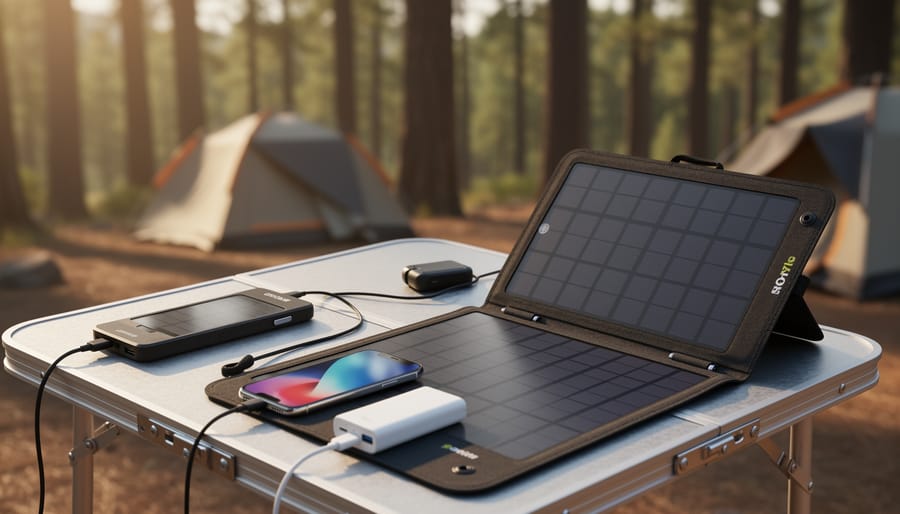
Vehicle-to-Load, or V2L, is one of the most immediately accessible features of modern EVs, and honestly, it’s a game-changer for anyone who loves the outdoors or wants peace of mind during emergencies. Think of it as turning your electric vehicle into a rolling generator, but quieter and cleaner than any gas-powered alternative.
The technology works through dedicated power outlets built into certain EVs. Depending on the model, you’ll find these outlets either inside the cabin, in the truck bed, or under the rear seats. Some vehicles, like the Ford F-150 Lightning, offer multiple outlets in different locations, while others might require an adapter that plugs into the charging port. It’s worth checking your specific model’s manual to locate these connection points.
Most V2L systems provide between 1.5 to 3.6 kilowatts of power, with some trucks pushing up to 9.6 kilowatts. That might not sound like much compared to your home’s total electrical capacity, but it’s plenty for practical applications. I’ve powered camping setups with electric coolers, portable induction cooktops, and even a small space heater during October trips when nights got unexpectedly cold. Friends have run power tools at remote job sites, and one neighbor kept her medical equipment running during a six-hour outage last winter.
For emergency preparedness, V2L means you can charge phones, run a refrigerator, power medical devices, or keep essential lighting operational without investing in a traditional backup generator. It’s versatile, sustainable, and already built into your vehicle.
Which EVs Can Actually Do This? (Compatibility Guide)
EVs with V2H Capability Right Now
If you’re ready to use your EV as backup power today, several models already offer V2H or V2L capability. The Ford F-150 Lightning leads the pack with impressive whole-home backup potential, delivering up to 9.6 kW of power through the available Intelligent Backup Power system. You’ll need Ford’s Charge Station Pro and a home integration system, which runs around $3,000-$4,000 for professional installation, but many owners find it worthwhile for peace of mind during outages.
The Nissan Leaf has technically supported V2H since 2013, though accessing this feature in North America requires a compatible bidirectional charger like the Fermata Energy system. It provides around 6 kW of continuous power, enough for essential loads in most homes.
Hyundai and Kia’s newer models, including the Ioniq 5, Ioniq 6, and EV6, come with built-in V2L capability through a simple adapter that plugs into the charging port. While these provide only 1.9 kW (perfect for camping or powering tools), they’re incredibly accessible since no special installation is required.
The Rivian R1T and R1S offer similar plug-and-play V2L functionality, and the Chevrolet Silverado EV promises robust V2H features when it arrives. When I spoke with early Lightning adopters, they consistently mentioned how reassuring it feels knowing their truck doubles as a generator without the noise, fuel costs, or maintenance headaches.
EVs with V2L for Camping and Light Backup
If you’re looking for an EV that can power your camping gear or keep essential devices running during a brief outage, Vehicle-to-Load (V2L) is the feature you need. Think of it as a built-in generator that turns your EV into a mobile power station.
Several popular models now include V2L capability. The Hyundai Ioniq 5 and Kia EV6 both offer standard 120-volt outlets that can deliver up to 1.9 kW of power—enough to run a refrigerator, charge laptops, or power camping equipment for days. I’ve personally used my friend’s Ioniq 5 on a weekend camping trip, and we ran a portable induction cooktop, lights, and even a small electric heater without any issues.
The Ford F-150 Lightning takes things further with up to 9.6 kW of exportable power through its Pro Power Onboard system, making it suitable for construction tools or tailgating events. Rivian’s R1T and R1S trucks also offer V2L through their bed outlets and charge ports.
These V2L systems typically use your vehicle’s standard charging port with an adapter, providing regular household outlets. While they won’t power your entire home, they’re perfect for outdoor adventures and keeping critical devices running during short-term emergencies.
What You Need Beyond the Vehicle
Here’s the thing I wish someone had told me when I first looked into using my EV for backup power: the vehicle is just one piece of the puzzle. To actually get electricity flowing from your car to your home appliances, you’ll need some additional equipment.
At minimum, you’re looking at a bidirectional charger that can reverse the flow of electricity from your EV’s battery back out through the charging port. Think of it like a traffic controller that manages two-way energy flow instead of the one-way street your regular charger provides.
For whole-home backup, you’ll also need a transfer switch installed by a licensed electrician. This critical safety device prevents your home’s power from backfeeding into the grid during an outage, protecting utility workers and your equipment. Some setups might require specific adapters to connect everything together, depending on your vehicle and charger models.
The good news? Many of these components are becoming more standardized and easier to find as the technology matures.
The Essential Equipment You’ll Need for V2H Setup
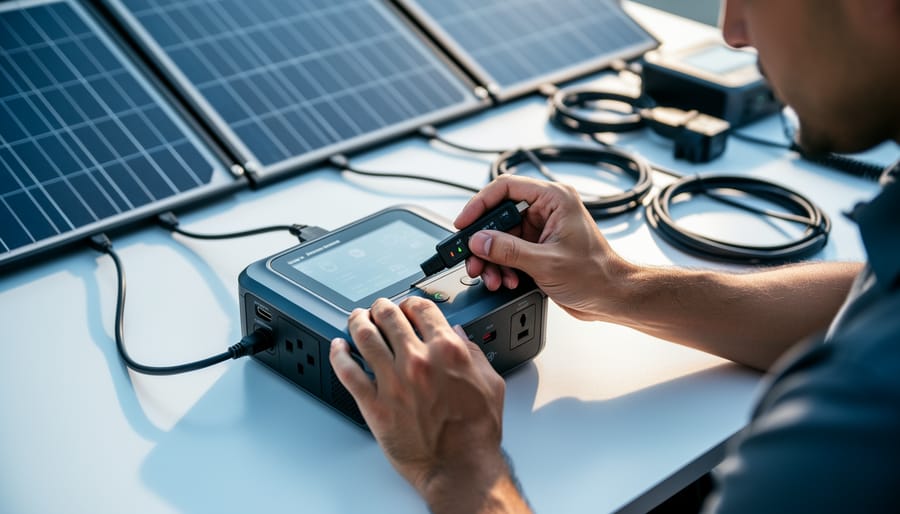
Bidirectional chargers are the essential equipment that enables electricity to flow from your EV back into your home’s electrical system.
Bidirectional Charger (The Heart of the System)
Think of your EV’s standard charger as a one-way street—electricity flows from your home to your car, period. To reverse that flow and send power back into your house, you need a bidirectional charger, which is essentially a sophisticated two-way gateway.
Here’s the thing: I learned this the hard way when I first got excited about using my EV for backup power. I assumed my existing Level 2 charger would work both ways. It doesn’t. Standard chargers simply can’t reverse the electrical flow or communicate with your home’s electrical panel in the way V2H (vehicle-to-home) systems require.
Bidirectional chargers manage the complex dance of converting your EV’s DC battery power into AC power your home can use, while also ensuring safe integration with your electrical system. They’re basically the traffic controllers that make everything work safely.
Currently, your options include the Ford Charge Station Pro (which works exclusively with the F-150 Lightning), the Wallbox Quasar 2, and the Fermata Energy FE-15. Expect to invest between $3,500 and $7,500 for the hardware alone—this doesn’t include installation costs, which typically add another $2,000 to $5,000 depending on your electrical setup.
The catch? Availability remains limited, and compatibility varies by vehicle. Some manufacturers bundle their bidirectional chargers with specific EV models, while others sell them separately. Always verify compatibility with your specific EV before purchasing—not all bidirectional chargers work with all compatible vehicles.
Transfer Switch and Electrical Panel Integration
Here’s the straight truth about using your EV for home backup: you absolutely need a transfer switch, and this isn’t optional. I learned this the hard way when I first started experimenting with backup power systems. A transfer switch is essentially the gatekeeper that prevents your backup power from feeding into the utility grid—which could seriously injure line workers during an outage or damage your equipment.
You’ll encounter two main types: automatic transfer switches (ATS) that sense power loss and switch instantly, and manual transfer switches that require you to physically flip them. Automatic switches are convenient but cost significantly more, typically $500-$2,000 versus $200-$600 for manual versions. For most DIY setups, manual switches work perfectly fine—you just need to remember to engage them when the power drops.
Now, here’s where I need to be honest: installing a transfer switch requires working inside your main electrical panel, which means dealing with live electricity even when breakers are off. This is serious stuff. While I’m all about DIY projects, electrical panel work typically requires a licensed electrician and permits. Most jurisdictions won’t allow homeowners to do this work themselves, and your insurance might not cover damage from unpermitted electrical work.
The good news? Once your electrician installs the transfer switch and sets up your critical load panel, you can handle the EV connection part yourself in many areas. Your electrician will also ensure all essential safety switches are properly configured to protect both your home and utility workers.
When Solar Meets EV Backup (A Perfect Match)
Here’s where things get really exciting. If you already have solar panels on your roof, adding an EV with V2H capability creates what I like to call a “closed loop” energy system. During normal operation, your solar charges your EV’s battery. When the grid goes down, your EV becomes a backup power source that can actually recharge itself from your panels once the sun comes up.
I remember chatting with a neighbor who’d been skeptical about EVs until he realized this potential. His existing 8kW solar array could keep his EV topped up during extended outages, essentially giving him indefinite backup power as long as the sun cooperated.
For those considering this setup, proper sizing matters. Your solar system needs enough capacity to handle both your home’s daytime loads and charge your EV battery. The interactive calculators at Spheral Solar can help you determine if your existing system has the headroom or what size you’d need for a new installation. Off-grid enthusiasts especially benefit from this pairing, as the EV battery adds massive storage capacity without purchasing separate battery banks.
Setting Up V2L: The Simpler Starting Point
V2L capability transforms your EV into a portable power station perfect for camping trips and outdoor adventures.
What You Can (and Can’t) Power with V2L
Understanding what you can realistically power with your EV helps set proper expectations. Let’s break down some common devices and how long your vehicle can keep them running.
A typical portable camping fridge draws about 50 watts and would run for roughly 1,200 hours on a 60 kWh EV battery. That’s 50 days of continuous operation! Your morning coffee maker at 1,000 watts? You could brew about 60 pots before depleting the battery. Power tools vary widely, but a circular saw pulling 1,500 watts could run for approximately 40 hours of actual cutting time.
For medical devices, a CPAP machine using 50-60 watts could operate for around 1,000 hours, providing peace of mind during extended outages. Phone and laptop charging barely register, using maybe 1-2% of your battery capacity to fully charge multiple devices.
I learned this firsthand during a weekend camping trip when I powered a portable heater, LED lights, a small electric griddle, and charged everyone’s devices simultaneously from my EV. We used about 15% battery over two days, which surprised me given how much we were running.
Here’s a quick calculation method: divide your EV’s usable battery capacity (in kilowatt-hours) by the device wattage (divided by 1,000) to estimate runtime. A 75 kWh battery powering a 500-watt device gives you 150 hours of use. Remember that most EVs reserve 10-20% capacity as a buffer, so factor that into your planning.
What you probably can’t power: whole-home HVAC systems, electric water heaters, or multiple high-draw appliances simultaneously without proper V2H equipment.
Cables, Adapters, and Accessories You Might Need
Getting your EV backup power setup right means having the proper cables and adapters on hand. When I first experimented with vehicle-to-load power during a camping trip, I learned this lesson the hard way after realizing my extension cord wasn’t rated for the load I needed.
For outdoor use, always choose heavy-duty extension cords rated for outdoor conditions with a minimum 12-gauge wire thickness. Look for cords labeled “SJTW” or “SJEOW” that can handle moisture and temperature changes. A 25-foot cord typically works for most scenarios without significant voltage drop.
Power strips designed for outdoor use should have weatherproof covers and surge protection. Many folks overlook this, but standard indoor power strips can be dangerous when exposed to the elements. I recommend keeping a waterproof cord protector box handy to shield connections from rain and snow.
You’ll also want various adapters on hand. Different EVs use different outlet configurations for their V2L ports. Some vehicles provide a 120V standard outlet, while others might require specific adapter plugs. Check your vehicle’s manual to understand what comes standard and what you might need to purchase separately.
For weather protection, consider investing in a weatherproof outlet cover or building a simple protective enclosure if you’re planning regular outdoor use or emergency preparedness scenarios.
Real-World Performance: What to Expect from EV Backup Power
How Long Will Your EV Actually Power Your Home?
Let’s break down the math to see how long your EV can actually keep the lights on during an outage. I remember the first time I calculated this for my neighbor’s Chevy Bolt—she was surprised to learn her car could power her home for days, not just hours.
Here’s a simple formula you can use: Battery Capacity (in kWh) ÷ Daily Home Usage (in kWh) = Days of Backup Power
Most EVs have batteries ranging from 40 kWh (smaller models like the Nissan Leaf) to 100+ kWh (Tesla Model X, Ford F-150 Lightning). The average American home uses about 30 kWh per day, though this varies significantly by season and lifestyle.
Let’s look at realistic examples. A Ford F-150 Lightning with its 98 kWh battery could theoretically power an average home for 3.2 days. But here’s the catch: you probably won’t want to drain your battery completely, and you’ll want to keep some range for emergencies. If you reserve 20% for driving, that same truck gives you about 2.5 days of backup.
Seasonal variations matter too. Summer air conditioning can push daily usage to 40-50 kWh, while mild spring days might only need 20 kWh. During winter outages, a 60 kWh EV battery running essential circuits only (refrigerator, lights, heating) could stretch to a full week.
The concepts here mirror sizing your battery backup for solar systems—understanding your baseline consumption is key to planning.
Battery Degradation and Range Anxiety Concerns
Let me address the worry I hear most often when I talk to folks about using their EV for home backup: “Won’t this destroy my battery?” It’s a completely valid concern, and one that deserves an honest, evidence-based answer.
The short version? Modern EV batteries are tougher than you might think. Most manufacturers actually build in significant buffer zones that prevent you from fully depleting the battery, even when you’re using it to power your home. For example, when a Ford F-150 Lightning provides backup power through its Intelligent Backup Power system, it typically reserves about 20-30% of the battery capacity just for driving, ensuring you won’t get stranded.
Battery degradation happens naturally over time regardless of how you use your EV. Charging cycles matter more than what you’re actually powering. Using your battery to run your fridge during an outage counts the same as using it to drive to the grocery store. The key factor is how many complete charge cycles your battery goes through over its lifetime.
Several manufacturers, including Ford and GM, have specifically engineered their bidirectional charging systems with battery health in mind. Their warranties typically cover backup power use, which tells you something important: they’re confident the technology won’t cause premature wear.
As for range anxiety, think of it this way: a modest home backup scenario might use 30 kWh over 24 hours during an outage. That’s equivalent to driving about 100 miles. With proper planning and the battery management features built into modern systems, you’ll maintain enough charge for essential driving needs while keeping your critical home systems running.
Off-Grid Living: Using Your EV as Part of a Solar System
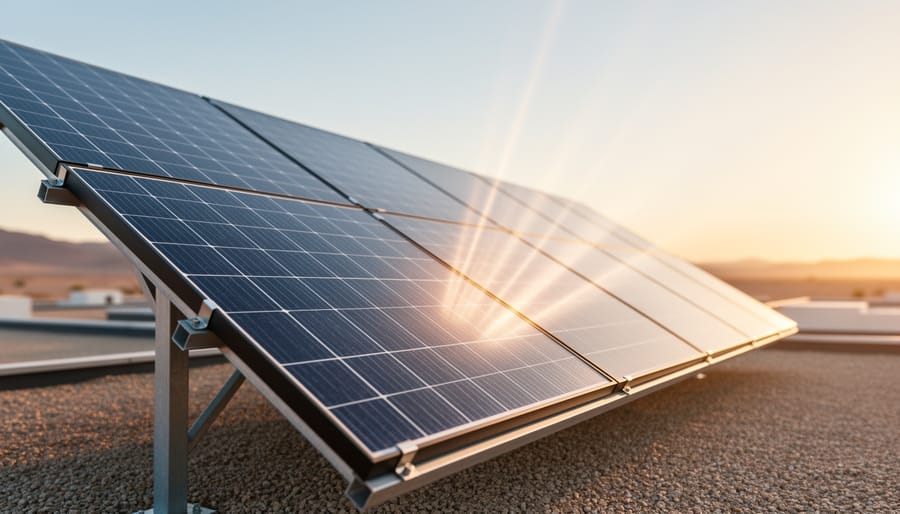
Combining solar panels with EV backup power creates a comprehensive home energy system capable of operating during grid outages.
The EV as a Mobile Battery Bank
Think of your EV as a massive battery on wheels—because that’s exactly what it is. Most electric vehicles pack 60-100 kWh of storage capacity, which is substantially more than typical home battery systems. This opens up fascinating possibilities for energy management that go well beyond emergency backup.
Here’s where it gets interesting: you can use your EV strategically as part of your energy ecosystem. During sunny days when your solar panels are cranking out power, charge your vehicle. Then, as evening approaches and your panels stop producing, tap into that stored energy to run your home. This practice, called energy arbitrage, lets you maximize your solar investment by storing excess daytime production for nighttime use.
For those exploring off-grid battery systems, an EV can serve as a powerful complement to your battery bank. I’ve experimented with this approach during extended cloudy periods—my EV essentially became a mobile reserve that I could strategically charge when conditions improved.
The beauty of this setup is load balancing. Instead of sizing your stationary battery system for worst-case scenarios, your EV provides flexible capacity you can deploy when needed. Just remember to maintain enough charge for your driving needs—getting stranded isn’t part of the sustainability plan!
Limitations for Full Off-Grid Reliance
Let’s be real here—your EV shouldn’t be your only backup power plan, especially for off-grid living. I learned this the hard way during a cloudy week at my cabin when my Nissan Leaf sat at 40% charge and I needed to drive to town.
The biggest issue? Your EV needs to remain mobile. If you drain the battery powering your home, you’re stuck without transportation for emergencies. Most experts recommend keeping at least 30-40% charge reserved strictly for driving.
Weather throws another wrench into the works. Solar charging works great on sunny days, but winter storms or extended cloudy periods mean you’re drawing down your battery without a reliable way to recharge. Unlike stationary battery banks paired with generators, your EV isn’t designed for constant discharge cycles while stationary.
Think of your EV as one component in a resilient energy system, not the whole solution. It works best alongside dedicated home batteries, properly sizing inverters, and backup charging options. This hybrid approach gives you flexibility—use your EV for short-term outages or supplemental power, while relying on purpose-built systems for sustained off-grid living.
Getting Started: Your Action Plan
Now that you understand the possibilities, let’s map out your next steps based on where you’re starting from.
For camping enthusiasts and weekend adventurers, your pathway is straightforward. If you already own an EV with V2L capability, you can start experimenting this weekend with minimal investment. Grab a heavy-duty extension cord rated for outdoor use (around $30-50) and test powering your camping gear. Budget about $200-500 for quality adapters and safety equipment. Timeline? You could be powering your campsite within days. I remember my first attempt at running a portable fridge from my EV during a family camping trip – it was surprisingly simple, though I learned quickly that keeping track of your battery percentage matters more than you’d think!
Homeowners wanting emergency backup power face a medium-complexity journey. Start by calculating your essential loads during an outage: refrigerator, a few lights, phone chargers, maybe your internet router. This typically totals 2-5 kW. If your current EV supports V2H or you’re planning to buy one that does, budget $3,000-8,000 for bidirectional charging equipment and professional installation. Realistic timeline: 2-6 months from research to operational system, including permit approvals. Don’t skip the electrician consultation – this isn’t a DIY electrical panel project.
Off-grid builders have the most complex but rewarding path. You’re essentially designing an integrated energy ecosystem. Plan for 6-12 months of research and implementation. Budget $15,000-30,000+ for a complete system including solar panels, bidirectional charger, backup batteries, and professional installation. Start by joining online communities where others share real-world experiences. Your EV becomes one component in a larger renewable energy strategy, requiring careful planning but offering genuine energy independence.
The journey into EV backup power doesn’t have to be an all-or-nothing leap. If you’re feeling intrigued but maybe a bit overwhelmed by the technical complexity or upfront costs, here’s my advice: start small and let the technology come to you.
I personally began experimenting with V2L on camping trips, using my vehicle to power a portable fridge and some LED lights. No expensive home installation required, just a simple adapter and my existing EV. It was eye-opening to see how much utility my car could provide beyond just transportation. These smaller applications let you build confidence with the technology while waiting for V2H systems to become more affordable and standardized.
The reality is that EV backup power sits at an exciting intersection of transportation, renewable energy, and home resilience. Yes, there are still hurdles around costs, compatibility, and permitting. But the trajectory is clear. As battery capacities increase and bidirectional charging becomes standard rather than optional, your next EV will likely offer capabilities that seem futuristic today.
We’re committed to keeping you updated as this space evolves. At Spheral Solar, we’ll be publishing hands-on guides, compatibility updates, and real-world testing results to help you make informed decisions. Whether you’re looking to power your next camping adventure or achieve true energy independence at home, the community here is ready to share experiences and troubleshoot together. What’s your first step going to be?
How useful was this post?
Click on a star to rate it!
Average rating 0 / 5. Vote count: 0
No votes so far! Be the first to rate this post.
We are sorry that this post was not useful for you!
Let us improve this post!
Tell us how we can improve this post?
charlesnoble
Here at Spheral Solar, I’m a hands-on solar power enthusiast, constantly exploring and experimenting with DIY solutions. I’m dedicated to sharing my discoveries, insights, and even the bumps I hit along the way, all in the pursuit of a more sustainable future.
Stop Oversizing Your Off-Grid Inverter (Here’s What… by Charlesnoble December 24, 2025 Calculate your total daily energy consumption in watt-hours by listing every appliance you plan to run off-grid, from your refrigerator drawing 150 watts for 8 hours to your laptop charging at 65 watts for 3 hours. Multiply each appliance’s wattage by its daily runtime, then add everything together. This number…
The Stream Behind Your House Could Power It (Here’s… by Charlesnoble March 26, 2026 Walk down to your nearest stream with a five-gallon bucket and a stopwatch. Fill that bucket and time how long it takes—this simple test reveals whether you have enough flowing water to power your off-grid home. If you can fill it in under 10 seconds from a source that drops…
This Critical Safety Switch Could Save Your Solar… by Charlesnoble February 22, 2026 Picture this: you’ve just finished mounting your solar panels, the sun is shining, and DC power is flowing through your system at voltages high enough to seriously injure or kill someone. Without a proper DC isolator switch, you have no safe way to disconnect that power for maintenance, emergencies, or…
Why Your Solar Array Needs a Disconnect (And How to… by Charlesnoble January 5, 2026 Picture this: You’ve just finished wiring your solar panels to your charge controller, feeling pretty accomplished, when someone asks, “Where’s your disconnect?” Your confident smile fades. That little switch you skipped to save fifty bucks? It’s actually the difference between a safe solar installation and a potentially dangerous one that…
Solar Lab Reviews: Transparent Testing for Solar… by Charlesnoble May 13, 2026 Solar Lab Reviews: Transparent Testing for Solar Products & Buying Guides Well, if you have ever googled a solar product, then you pretty much know the issue. Each retailer has its own best-selling gadget. Five stars for each sponsored post that you do. And after you’ve read ten “reviews,” you…
Subscribe for handpicked DIY projects, exclusive tips, and giveaways.
After testing dozens of solar chargers across camping trips, power outages, and backyard experiments, we found the X-Dragon 20W delivers the most reliable charging performance for phones and tablets, while the Goal Zero Nomad 50W steps up when you need to power larger devices or handle extended emergencies. If you’re planning weekend hikes, assembling an… Read more: 7 Best Solar Powered USB Chargers of 2026, Tested and Reviewed
There is something special about a mature tree. Decades of growth, shade that actually cools the house, branches that the kids climbed, a root system that has quietly held the yard together through every storm. So when circumstances force a move, whether it is a home renovation, a new driveway, or a construction project that… Read more: How to Move a Mature Tree Without Killing It: The Complete Relocation Guide
A mass energy conversion calculator lets you determine how much energy is locked inside any amount of matter using Einstein’s famous equation E=mc². Whether you’re working on a physics assignment or simply curious about the enormous energy potential in everyday objects, the calculation itself takes just seconds once you understand the formula’s three components: energy… Read more: How to Use a Mass Energy Conversion Calculator (Step-by-Step Guide)