What You’ll Actually Pay for an 8 kW Solar System (Real Numbers Included)
Updated:
An 8 kW solar system typically costs between $16,000 and $24,000 before incentives, with most homeowners paying around $20,000 for professional installation. After claiming the 30% federal tax credit, your actual out-of-pocket expense drops to $11,200-$16,800. That’s real money we’re talking about, and I’ve helped dozens of DIY solar enthusiasts navigate these numbers to make smart decisions.
The price breakdown isn’t mysterious. Equipment accounts for roughly 40-50% of total costs—panels, inverters, racking, and wiring. Labor and installation add another 30-40%, which is exactly where DIY builders save thousands. The remaining costs cover permits, inspections, and soft expenses like system design and utility interconnection fees.
But here’s what most pricing guides won’t tell you: the final number on your invoice depends heavily on your specific situation. Your roof type, electrical panel capacity, local permit requirements, and even your property’s sun exposure all push costs up or down by thousands of dollars. A straightforward south-facing roof with asphalt shingles? You’re looking at baseline pricing. Spanish tile roof requiring specialized mounting? Add $2,000-$4,000.
For DIY builders willing to handle installation themselves, you can slash costs dramatically—some of my community members have completed 8 kW systems for $8,000-$12,000 in equipment costs alone. This guide breaks down every cost factor, explores financing options, and shows you exactly where DIY approaches make sense and where professional help pays off. Whether you’re ready to climb on your roof or just want transparent pricing to evaluate installer quotes, you’ll find the numbers you need to move forward confidently.
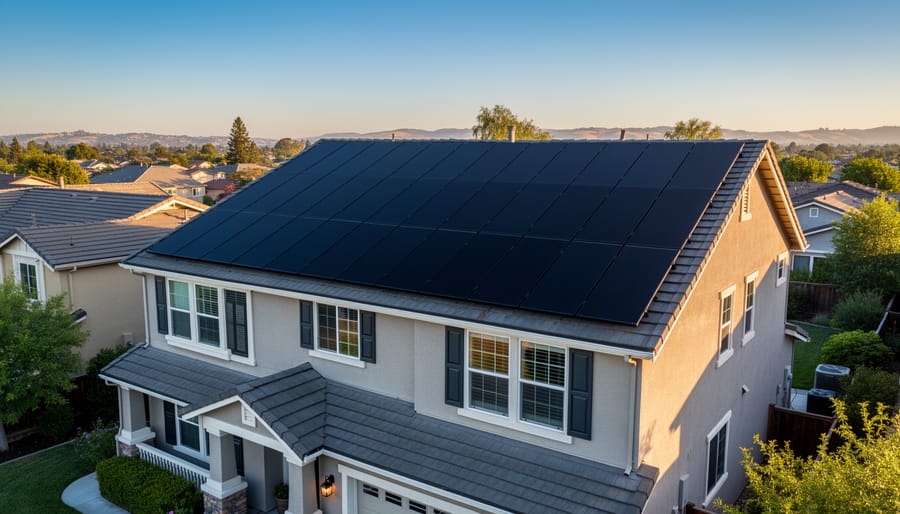
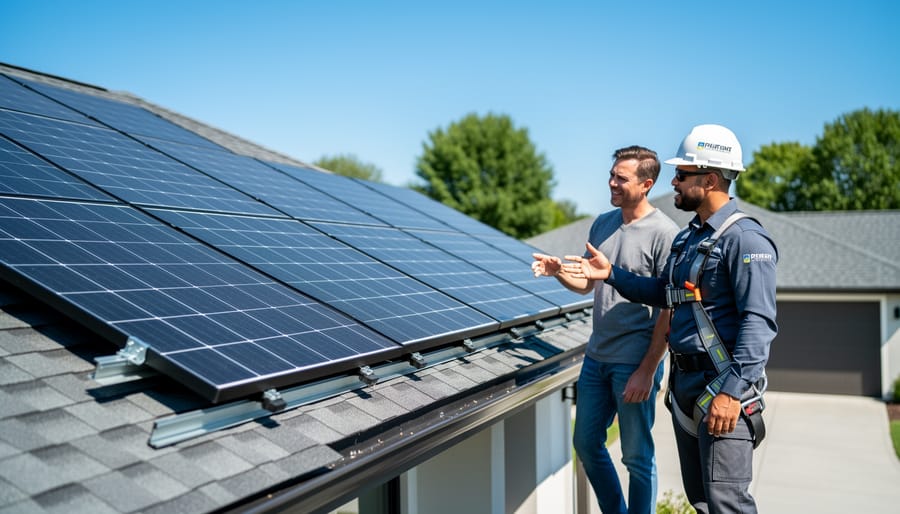
A typical 8 kW residential solar installation consists of 20-24 panels covering approximately 450-500 square feet of roof space.
Breaking Down the 8 kW Solar System Price Tag
Equipment Costs: Where Your Money Goes
Let me break down where your money actually goes when you invest in an 8 kW solar system. Understanding these costs helped me make smarter choices when I installed my first array, and it’ll do the same for you.
Solar panels typically eat up the biggest chunk of your budget, around 30-35% of total costs. For an 8 kW system, you’re looking at $4,000-$7,000 for the panels themselves. The price variation? It’s all about quality and efficiency. Premium monocrystalline panels cost more but produce more power per square foot, while polycrystalline options run cheaper but need more roof space. Think of it like buying a car—a Honda gets you there, but a Tesla has different features and performance.
Your inverter comes next, claiming about 10-15% of costs ($1,500-$3,000). You’ve got three choices here. String inverters are the budget-friendly option, great for roofs without shade. Microinverters cost more upfront but let each panel work independently, perfect if you’ve got trees nearby. Power optimizers split the difference. I went with microinverters after a neighbor’s tree taught me an expensive lesson about shade.
Racking and mounting systems run $1,000-$2,000. Roof-mount systems cost less, while ground-mount setups (great for a DIY solar generator expansion later) require sturdier hardware.
Electrical components—your combiner boxes, wiring, disconnects, and monitoring systems—add another $800-$1,500. These aren’t exciting purchases, but skimping here means headaches down the road. Quality copper wiring and weatherproof connections protect your investment for decades.
The remaining costs cover permits, inspections, and labor if you’re not going the DIY route. Remember, cheaper components might save money today but could cost you in efficiency and longevity tomorrow.
Quality inverter equipment represents a significant portion of your 8 kW system investment but determines efficiency and reliability.
Installation vs. DIY: The Labor Factor
Let me be straight with you: installing an 8 kW solar system yourself can save you roughly $4,000 to $8,000 in labor costs, but it’s not for everyone. I learned this the hard way during my first installation when I confidently assured my wife it would take a weekend. Three weekends later, we were still mounting panels.
The typical professional installation fee for an 8 kW system ranges from $0.50 to $1.00 per watt, translating to $4,000-$8,000 of your total project cost. Understanding the professional installation versus DIY decision requires honest self-assessment.
Here’s what you need to know: some parts of solar installation are genuinely DIY-friendly, while others require professional expertise. The panel mounting and basic wiring? Totally doable if you’re comfortable on a roof and have basic electrical knowledge. I’ve helped dozens of community members successfully tackle these aspects. However, connecting to your electrical panel and dealing with grid-tie inverters typically requires a licensed electrician in most jurisdictions.
Time investment is significant. Plan for 40-60 hours spread across several weekends for a complete DIY install. You’ll need a helper, proper safety equipment, and patience for permit paperwork.
My recommendation? Consider a hybrid approach. Handle the panel mounting and racking yourself, then hire an electrician for the electrical connections. This gives you the satisfaction of hands-on work and cuts labor costs by about half, while ensuring code compliance and safety.
Remember, even DIY installations need permits and inspections. Your local building department doesn’t care whether you’re a pro or hobbyist, the standards remain identical. Budget time for these requirements alongside your actual installation work.
How Much Power Does an 8 kW System Actually Generate?
Let me break this down in terms you can actually use. An 8 kW system doesn’t produce 8 kW of power constantly. That 8 kW rating represents the system’s peak output under ideal conditions—think bright sunshine at noon on a clear day.
In practical terms, an 8 kW system typically generates between 28 to 40 kWh (kilowatt-hours) per day, depending on your location. If you’re in sunny Arizona, you’ll be closer to that upper range. In cloudier Seattle? You’ll land toward the lower end. Over a month, that’s roughly 900 to 1,200 kWh.
To put that in perspective, the average American household uses about 877 kWh monthly according to the EIA. So an 8 kW system can comfortably power an entire typical home, with some energy to spare in many cases. We’re talking about running your refrigerator, washing machine, lights, computers, TV, and yes, even solar-powered appliances like air conditioning during peak summer months.
When I installed my first 8 kW system back in 2016, I was amazed watching my meter spin backwards on sunny afternoons. My household of four, with all our gadgets, electric cooking, and AC usage in Texas heat, found that system covered about 85% of our annual needs.
Here’s a quick appliance breakdown: an 8 kW system can simultaneously run your central AC (3,500W), refrigerator (700W), a couple of computers (400W), LED lighting throughout your home (200W), and still have capacity left over. During non-AC months, you’ll likely generate surplus energy that feeds back to the grid.
Want to know exactly what an 8 kW system would generate at your specific address? Use our solar calculator tool to get personalized estimates based on your roof angle, shading, and local weather patterns. It takes about two minutes and gives you real numbers to work with.
An 8 kW solar system typically generates enough electricity to power a medium to large household’s daily energy needs including major appliances.
Incentives That Slash Your Actual Cost
Here’s the reality that excites me every time I talk to someone about solar: that sticker price you’re looking at isn’t what you’ll actually pay. Not even close. Thanks to various incentives, your 8 kW system could cost thousands less than the upfront quote suggests.
The federal Investment Tax Credit (ITC) is your biggest ally right now. This incentive lets you claim 30% of your total system cost as a tax credit. Let me break down what that means in real dollars. If your 8 kW system costs $20,000 before incentives, you’ll get a $6,000 tax credit. That brings your actual cost down to $14,000. I remember when my neighbor installed his system and came over almost giddy about this credit. He thought it was too good to be true until his accountant confirmed it.
State rebates add another layer of savings. Many states offer cash rebates ranging from $500 to $4,000 depending on system size. California, for example, has historically offered strong rebate programs through various regional initiatives. Massachusetts provides rebates through its Solar Massachusetts Renewable Target (SMART) program. These come as direct payments, not tax credits, so you see the money faster.
Your utility company might sweeten the deal further with performance-based incentives. Some utilities pay you for every kilowatt-hour your system produces during the first few years. I’ve seen programs offering 5 to 10 cents per kWh, which can add up to hundreds of dollars annually.
Net metering deserves special attention because it affects your long-term savings. This program credits you for excess electricity your panels send back to the grid. In states with favorable net metering policies, you essentially use the grid as a battery, banking credits during sunny months to offset winter usage.
To find your local incentives, start with the Database of State Incentives for Renewables and Efficiency (DSIRE). Just type in your zip code and it shows everything available in your area. Your utility’s website typically lists their specific programs too. Many solar installers will also research this for you, though I always recommend verifying independently.
Let’s look at a complete example. Starting price: $20,000. Subtract 30% federal credit ($6,000), state rebate ($2,000), and utility incentive ($1,000). Your actual out-of-pocket cost drops to $11,000 for an 8 kW system. That’s nearly half off the original price.
The Hidden Costs Nobody Tells You About
When I first priced out my solar installation, I thought the panel and inverter costs were the whole story. Boy, was I in for a surprise! Let me walk you through the sneaky expenses that can add thousands to your final bill.
First up, permits and inspections typically run between $400 and $1,200, depending on your location. Some municipalities are solar-friendly with streamlined processes, while others require multiple inspections. Pro tip: check if your installer includes permit costs in their quote, many professional companies do, but DIY folks need to budget separately.
Here’s where things get expensive. About 30% of homeowners discover their electrical panel needs upgrading to handle solar input. These upgrades range from $1,500 to $3,000 for a standard 200-amp panel replacement. Before you panic, have an electrician assess your current setup. Sometimes a simple subpanel addition at $500-$800 does the trick.
Roof condition matters more than you’d think. If your roof needs repairs or has less than 10 years of life left, address it now. Removing and reinstalling panels later costs $3,000-$5,000. I learned this watching my neighbor’s regret firsthand. Consider bundling roof replacement with solar installation, some contractors offer package deals that save 15-20%.
Insurance adjustments are minor but real, typically adding $50-$100 annually to homeowners policies. Call your agent before installation to avoid surprises. On the flip side, some insurers offer green home discounts that offset this increase.
Maintenance costs stay relatively low, around $150-$300 yearly for professional cleaning and inspections. DIY enthusiasts can handle basic panel cleaning with a garden hose and soft brush, saving most of this expense. Just avoid pressure washers, they damage panel coatings.
The bottom line: budget an extra 10-15% beyond equipment costs for these hidden expenses. Planning ahead prevents sticker shock and keeps your solar journey on track.
Is 8 kW the Right Size for Your Home?
Before you dive into pricing details, let’s figure out if an 8 kW system actually matches your energy needs. I learned this lesson the hard way when I helped my neighbor size their first system. We got so excited about the technology that we almost skipped this crucial step!
The simplest way to determine if 8 kW is right for you is to look at your electricity bills from the past year. Add up your total kilowatt-hours (kWh) used and divide by 12 to get your monthly average. Most households that benefit from an 8 kW system use between 800 and 1,200 kWh per month. If your usage falls in this range, you’re looking at the right size.
Here’s a quick calculation method: An 8 kW system typically produces around 10,000 to 12,000 kWh annually, depending on your location and roof orientation. That breaks down to roughly 830 to 1,000 kWh per month. If your monthly consumption is significantly higher or lower, you might need to adjust your system size accordingly.
Several factors affect whether 8 kW is your sweet spot. Your geographic location plays a huge role since solar panels in sunny Arizona produce more power than identical systems in cloudy Seattle. Roof space and orientation matter too. You’ll need approximately 450 to 550 square feet of unshaded roof area for an 8 kW installation.
Your future plans also count. Planning to buy an electric vehicle or add a home office? Factor in that additional electricity demand now rather than upgrading later.
For a personalized recommendation based on your specific situation, I highly recommend using our interactive solar calculator. It takes just a few minutes and considers all these variables to give you a tailored system size estimate. Trust me, those few minutes of planning will save you headaches down the road.
Three Ways to Pay (And Which One Makes Sense)
When I was deciding how to finance my 8 kW system, I spent weeks running numbers at my kitchen table. Let me break down the three main payment options and what I discovered about each one.
Cash purchase is the simplest route. You pay upfront (typically $16,000-$24,000 for an 8 kW system before incentives) and own everything immediately. After the federal tax credit, you’re looking at around $11,200-$16,800 out of pocket. The math here is straightforward: you’ll break even in about 6-8 years depending on your electricity rates, and after that, it’s pure savings. Over 25 years, you could save $30,000-$60,000. The downside? That’s a hefty chunk of change all at once. But if you have it available, this delivers the best return on investment since you’re not paying interest to anyone.
Solar loans make the system accessible without draining your savings. You get the same tax credit benefits and own the system from day one, but you’ll pay interest over the loan term. A typical 15-year loan at 6% interest on a $20,000 system means monthly payments around $169. Your break-even point extends to 10-12 years because of interest costs, but your monthly loan payment often equals or beats what you’d pay the utility company. Just watch out for dealer fees that some lenders sneak in.
Leases and Power Purchase Agreements (PPAs) require zero money down. The solar company owns the system, and you either pay a flat monthly lease or pay per kilowatt-hour generated. Sounds great, right? Here’s the catch: you miss out on tax credits, your savings are usually 10-20% instead of the full electricity cost, and selling your home gets complicated. These work if you can’t access the tax credit or absolutely need zero upfront cost.
I went with cash because I’d been saving specifically for this project, and the long-term returns convinced me. But my neighbor chose a loan and is thrilled with his decision too. The right choice depends on your financial situation and how long you plan to stay in your home.
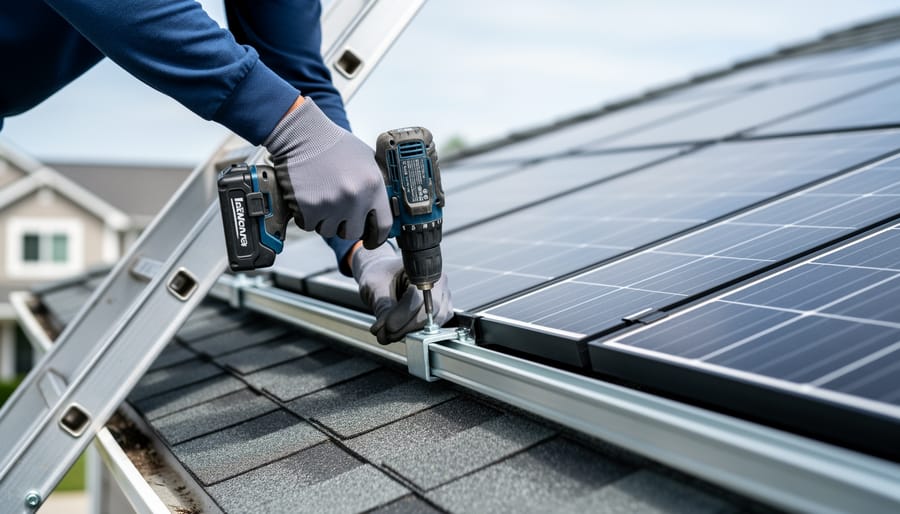
DIY solar installation can significantly reduce your total system cost, with mounting and electrical work being accessible to determined homeowners.
How I’d Install an 8 kW System on a Budget
Here’s my honest take on installing an 8 kW system without breaking the bank. I’ve helped dozens of community members through this process, and the ones who succeeded all followed similar principles.
First, let’s talk about what you can DIY and what you shouldn’t. The racking and mounting? Totally doable if you’re comfortable on a roof. I saved $3,200 doing my own mounting using pre-assembled rail systems. The wiring and panel installation are straightforward too if you follow our solar panel setup guide. Where you need to be careful is the electrical interconnection. I always recommend hiring a licensed electrician for the final hookup to your main panel. It’s typically $800-1,200, but it keeps you safe and code-compliant.
Sourcing components strategically makes a massive difference. Community member Jake from Colorado saved $4,800 by buying panels directly from a wholesale distributor instead of retail. He got 20 used 400W panels for $75 each (they were only 2 years old from a commercial upgrade). Used panels at 85-95% efficiency are perfectly fine for residential use. Just verify warranty transferability first.
For inverters, refurbished units from reputable sellers can cut costs by 40%. Sarah in Texas got a certified refurbished 8 kW string inverter for $1,100 instead of $2,000. She’s been running it flawlessly for three years now.
Consider a phased installation approach. Install 4 kW initially, get it operational, then add the remaining 4 kW within 12 months. This spreads costs and lets you learn from experience. Your solar power system design should accommodate future expansion from day one.
Buy during off-season (October through February). Distributors often discount inventory 15-25% when installation demand drops. Mark from Oregon timed his purchase perfectly and saved $2,300.
Join our forums before buying. Members share group-buy opportunities, alert others to sales, and offer honest equipment reviews. Last month, eight members coordinated a bulk purchase and each saved $600 on identical setups.
My total DIY cost? $9,400 for quality components, compared to $18,000 quoted professionally. That’s real money staying in your pocket.
So what’s the bottom line? After breaking down all the numbers, you’re looking at roughly $16,000 to $24,000 for a professionally installed 8 kW solar system before incentives. Factor in the federal tax credit, and that drops to around $11,200 to $16,800 out of pocket. If you’re willing to roll up your sleeves and go the DIY route like I did with my first installation, you could potentially cut that in half, bringing costs down to $8,000 to $12,000 for quality equipment.
Here’s what I love about solar in 2024: it’s no longer reserved for electrical engineers or people with massive budgets. The learning curve is real, but it’s absolutely manageable if you take it step by step. I remember staring at my first solar panel thinking I had no idea what I was doing. Fast forward a few years, and I’ve helped dozens of community members design and install their own systems.
Ready to take the next step? Start by using our interactive calculators to get a personalized estimate based on your roof, location, and energy needs. These tools will give you real numbers, not generic estimates. Then dive into our community forums where experienced DIYers share their installation stories, troubleshoot problems, and offer encouragement. Solar is accessible, the savings are genuine, and the satisfaction of powering your home with sunshine you installed yourself? That’s priceless. You’ve got this.
How useful was this post?
Click on a star to rate it!
Average rating 0 / 5. Vote count: 0
No votes so far! Be the first to rate this post.
We are sorry that this post was not useful for you!
Let us improve this post!
Tell us how we can improve this post?
charlesnoble
Here at Spheral Solar, I’m a hands-on solar power enthusiast, constantly exploring and experimenting with DIY solutions. I’m dedicated to sharing my discoveries, insights, and even the bumps I hit along the way, all in the pursuit of a more sustainable future.
DIY Solar Generator – Complete Guide With Diagrams by Paul July 17, 2021 Building a weatherproof DIY solar generator involves mounting and wiring a battery, charge controller, inverter, trickle charger, and fusing inside a weatherproof case. Then all the relevant input and output sockets are wired and mounted on the outside of the case where they are easily accessible. What Exactly Are Solar…
Solar Power Installation Step by Step: Complete DIY… by Charlesnoble October 15, 2026 Installing a home solar system yourself takes 2-4 weekends for an average 5kW setup, requires solid electrical knowledge and comfort working at heights, and can save you $5,000-$8,000 in labor costs if you tackle everything except the final utility interconnection. The process breaks down into five main phases: permitting and…
How Does a Solar-Powered Drip Irrigation System Work by Paul September 13, 2021 Heads up: some links here are affiliate links, and purchases through them support the site. As an Amazon Associate I earn from qualifying purchases. Solar-powered drip irrigation can be installed in most gardens using a small solar system, readily available irrigation materials, and minimal tools. If you already have a…
How to Choose a J1772 Solar Charger for Your Ebike:… by Charlesnoble July 14, 2026 A J1772 solar charger combines a standard J1772 charging connector (the same Type 1 plug used by most North American EVs and electric bikes) with solar panels and battery components to create an off-grid or grid-supplemented charging system. You’ll need three core elements: solar panels (typically 400-800 watts for practical…
How I Built a 48V Ebike Solar Charger That Works Anywhere by Charlesnoble January 14, 2026 Calculate your ebike’s battery capacity in watt-hours by multiplying 48 volts by your amp-hour rating—this determines the minimum solar panel wattage you’ll need. A standard 48V 14Ah ebike battery holds 672Wh, requiring at least a 200-watt solar panel for a full day’s charge in optimal sunlight conditions. Match your solar…
How UMN Students Built a Solar Car That Changed Everything by Charlesnoble May 8, 2026 The University of Minnesota Solar Vehicle Project represents one of collegiate engineering’s most ambitious renewable energy challenges, where student teams design, build, and race solar-powered cars across thousands of miles. Since 1990, UMN’s solar racing team has competed in events like the American Solar Challenge and Formula Sun Grand Prix,…
Subscribe for handpicked DIY projects, exclusive tips, and giveaways.
A 5kW solar system occupies between 250 and 350 square feet of roof or ground space and produces roughly 20 to 25 kilowatt-hours of electricity per day in most U.S. locations. That’s enough to power a typical three-bedroom home with moderate energy use, though your exact needs depend on your daily consumption patterns, climate zone,… Read more: How to Size a 5kW Solar System for Your Home or RV
Installing a home solar system yourself takes 2-4 weekends for an average 5kW setup, requires solid electrical knowledge and comfort working at heights, and can save you $5,000-$8,000 in labor costs if you tackle everything except the final utility interconnection. The process breaks down into five main phases: permitting and design, mounting the racking system,… Read more: Solar Power Installation Step by Step: Complete DIY Guide From Start to Finish
After testing dozens of solar chargers across camping trips, power outages, and backyard experiments, we found the X-Dragon 20W delivers the most reliable charging performance for phones and tablets, while the Goal Zero Nomad 50W steps up when you need to power larger devices or handle extended emergencies. If you’re planning weekend hikes, assembling an… Read more: 7 Best Solar Powered USB Chargers of 2026, Tested and Reviewed