How Community Solar with El Paso Electric Could Slash Your Power Bill (Without Installing Panels)
Updated:
Check El Paso Electric’s current solar programs by calling their customer service line at 915-543-5970 or visiting their business programs page, since community solar availability changes as new projects launch. If they don’t currently offer community solar, request to join their waitlist and ask about projected timeline for future programs—utilities often gauge interest through these inquiries before committing resources.
Compare community solar subscription costs against DIY solar installation expenses using your actual electricity bills from the past 12 months. Community solar typically saves 5-15% on your electric bill without upfront costs, while DIY systems require initial investment but deliver 50-80% savings over their lifetime. Calculate your break-even point: if you’re spending $150 monthly on electricity, a DIY system might cost $8,000-12,000 but pays for itself in 5-7 years, whereas community solar provides immediate modest savings with zero installation hassle.
Verify your eligibility for community solar programs by confirming you’re an El Paso Electric residential customer and checking whether your rental agreement or HOA permits participation. Community solar works perfectly for renters, condo owners, or homes with shaded roofs where traditional solar panels aren’t feasible. The subscription follows your account when you move within El Paso Electric’s service territory, making it ideal for non-permanent housing situations.
Request transparent pricing details including subscription fees, kilowatt-hour rates, cancellation policies, and contract length before committing to any community solar program. Some programs charge monthly fees that offset savings, while others lock you into multi-year contracts with early termination penalties. Read the fine print carefully—legitimate programs should clearly explain exactly how much you’ll save monthly after all fees.
El Paso’s abundant sunshine (302 sunny days annually) makes it one of America’s best solar markets, whether you choose community solar’s convenience or DIY installation’s maximum savings. Understanding your options means matching your housing situation, budget, and commitment level to the right solar solution for your specific circumstances.
What Exactly Is Community Solar (And Why El Paso Needs It)
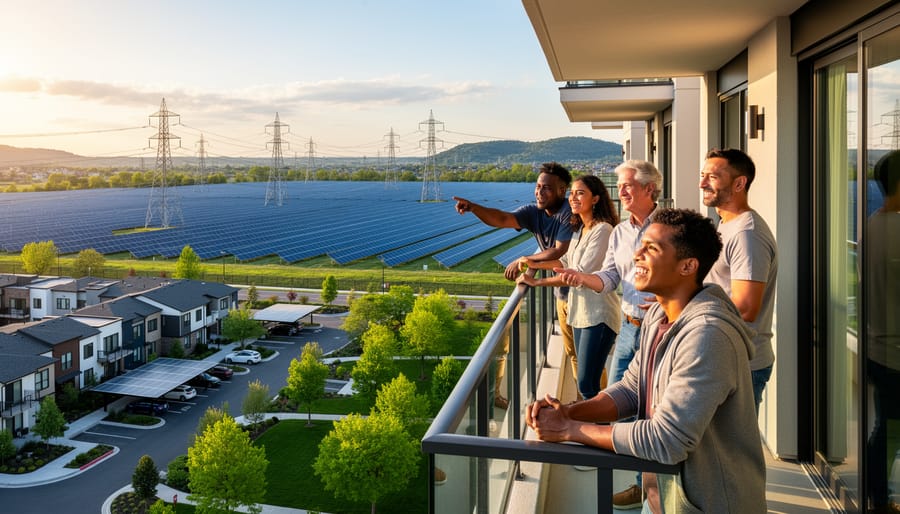
Community solar farms allow multiple households to benefit from shared solar installations without requiring rooftop panels.
How Community Solar Differs from Rooftop DIY Projects
When I first started exploring solar options years ago, I thought it was either DIY or nothing. Then I discovered community solar, and I realized both paths serve different folks beautifully.
Traditional DIY solar installations mean you’re purchasing and installing panels on your own property. You own the equipment, control every decision, and enjoy hands-on involvement from planning through installation. This approach works wonderfully if you own your home, have a suitable roof or yard space, can handle the upfront investment (even with financing), and genuinely enjoy the project aspect. Many of our readers at Spheral Solar love the satisfaction of building their own system and the deep understanding that comes from doing it yourself.
Community solar, conversely, requires zero installation work on your part. You’re essentially subscribing to a portion of a larger solar farm elsewhere. There’s no equipment on your property, no permits to pull, and no maintenance responsibilities. This makes perfect sense if you rent your home, live in an apartment or condo, have significant roof shading, lack the physical ability for installation work, or simply prefer a hands-off approach to going solar.
The financial structures differ too. DIY involves upfront equipment costs but delivers long-term ownership benefits. Community solar typically works through monthly subscriptions with immediate savings but no asset ownership. Think of it like buying versus leasing, each legitimate depending on your situation and goals.
El Paso Electric’s Community Solar Program: The Current Reality
What Other Texas Communities Are Doing Right
While El Paso might be catching up, other Texas cities have already paved the way with community solar programs that are making renewable energy accessible to thousands of residents. Let me share what’s working elsewhere in the Lone Star State.
Austin Energy launched one of Texas’s first community solar programs back in 2015, and it’s been a real success story. Their model allows subscribers to purchase or lease portions of large solar arrays without installing anything on their own property. What I love about their approach is the flexibility. Residents can start with as little as one solar panel’s worth of capacity and scale up as their budget allows. Austin Energy subscribers see credits on their monthly bills based on their share of the solar production, making it a straightforward way to support clean energy even if you’re renting or have a shaded roof.
Down in San Antonio, CPS Energy runs a similar program that’s been equally popular. Their SolarHost initiative connects customers who want solar power with homeowners who have ideal roof conditions but might not be able to afford installation costs. It’s a win-win that creates community connections while expanding solar access.
Both programs show what’s possible when utilities commit to renewable energy options beyond traditional rooftop installations. They’ve demonstrated that community solar can work in Texas’s unique regulatory environment and hot climate.
For El Paso residents, these programs prove there’s demand and viability for community solar in Texas. If you’re waiting for El Paso Electric to catch up, you might consider DIY solar as a bridge solution. My own journey started with a small DIY setup while waiting for better utility programs, and I haven’t looked back since.
Who Benefits Most from Community Solar in El Paso
Community solar programs offer the most significant advantages to people who face barriers to traditional rooftop solar installations. If you’re renting an apartment in central El Paso or own a condo without individual roof access, community solar might be your best path to energy independence. You don’t need permission from a landlord or an HOA approval to participate, just a utility account with El Paso Electric.
Homeowners with heavily shaded properties are another group who benefit tremendously. I’ve talked with folks in the solar DIY community who live near the Franklin Mountains where mature trees create beautiful shade but make rooftop solar impractical. Charles often mentions these situations in our community discussions, pointing out that even the best solar panels can’t overcome persistent shade. Community solar lets these homeowners tap into solar energy generated at optimal locations.
The upfront cost barrier disappears with community solar, which helps families who want to go solar but can’t afford the $15,000 to $30,000 investment for a home system. You typically pay nothing to join and start saving immediately through reduced electricity bills. This approach works especially well for seniors on fixed incomes who need predictable energy costs but don’t want to drain their savings on a major home improvement project.
People with older roofs also find community solar appealing. If your roof needs replacement within five years, installing solar panels now doesn’t make financial sense. Community solar lets you enjoy clean energy benefits while you save for that roof replacement.
Charles has observed that many DIY solar enthusiasts actually combine both approaches. They might join a community solar program for immediate savings while gradually building their own DIY system. This hybrid strategy provides immediate benefits while working toward complete energy autonomy. It’s a practical stepping stone that lets you learn about solar energy without the pressure of a massive upfront commitment.
Renters and apartment dwellers who cannot install rooftop solar are prime candidates for community solar programs.
The Real Costs and Savings Breakdown
Understanding subscription costs and potential savings is crucial before enrolling in a community solar program.
Hidden Fees to Watch For
Before you sign on the dotted line for community solar, let me share something I learned the hard way when reviewing contracts with my neighbor Maria. We almost missed a hefty early termination fee buried in paragraph 47. Community solar can be fantastic, but like any contract, there are some sneaky charges you need to catch upfront.
Early termination fees are probably the biggest gotcha. Many programs lock you in for 20-25 years, and if you need to leave early (maybe you’re moving or your circumstances change), you could face penalties ranging from $100 to several hundred dollars. Always ask about exit clauses and whether the subscription transfers if you sell your home.
Minimum subscription requirements can also surprise folks. Some programs require you to subscribe to a certain number of kilowatt-hours monthly, regardless of your actual usage. If your energy needs drop (say you install better insulation or your kids move out), you’re still paying for credits you don’t need.
Credit allocation caps are another tricky area. Some contracts limit how many solar credits you can apply to your bill each month, meaning excess credits might expire worthless instead of rolling over. This defeats the purpose of sunny months offsetting cloudier ones.
Here’s my advice: grab a highlighter and actually read the entire agreement. Look specifically for words like “penalty,” “minimum,” “maximum,” and “non-refundable.” Don’t hesitate to ask the program administrator to explain anything confusing. A legitimate community solar provider will happily walk you through every detail without rushing you.
How to Get Started with Community Solar in El Paso
Questions to Ask Before You Subscribe
Before signing on the dotted line, you’ll want to ask some important questions to protect yourself. Start with contract length—most community solar agreements run 12-24 months, but some lock you in longer. I learned this the hard way when a friend got stuck in a three-year contract after accepting his new job in another state.
Speaking of moving, ask about transferability. Can you transfer your subscription if you relocate within El Paso Electric’s service area? What happens if you move outside it? Some programs let you cancel penalty-free, while others charge hefty exit fees.
Production guarantees matter too. Will you receive credits for a guaranteed minimum amount of solar energy, or does it fluctuate based on actual production? Request historical production data to see how the solar farm performs throughout the year.
Don’t skip questions about customer service. How do they handle billing disputes? What’s their average response time? Check online reviews and ask for references from current subscribers.
Finally, clarify the savings calculation method. Are estimates based on current electricity rates or locked-in pricing? Understanding these details upfront helps you avoid surprises and ensures community solar actually delivers the benefits you’re expecting.
When DIY Rooftop Solar Still Makes More Sense
Let me be honest with you – community solar isn’t always the best financial choice, especially if you’re someone who enjoys hands-on projects and has a suitable roof. After years of helping DIYers go solar, I’ve learned that investing in your own solar system often delivers significantly better returns over time.
Here’s when you should seriously consider installing your own panels instead of joining a community solar program:
You own your home and plan to stay put for at least 7-10 years. The break-even point for a DIY solar system typically happens around year 6-8, after which you’re generating essentially free electricity. Community solar subscriptions, meanwhile, continue charging you monthly indefinitely.
Your roof receives good sunlight and is in decent condition. If you’re not dealing with heavy shading or facing a major roof replacement soon, you have the ideal setup for solar panels.
You’re comfortable with moderate DIY projects or willing to learn. Installing solar isn’t rocket science, and the resources available today make it more accessible than ever. Plus, federal tax credits apply to DIY installations just as they do for professional installs – that’s a 30% reduction off your total system cost.
Your electricity usage is high. The more power you consume, the faster you’ll recoup your investment. Community solar typically offers modest savings of 10-15%, while owning your system can eliminate 70-90% of your electric bill after payback.
Community solar makes perfect sense for renters and those with unsuitable roofs, but homeowners with good solar potential should seriously run the numbers before committing to a subscription model.
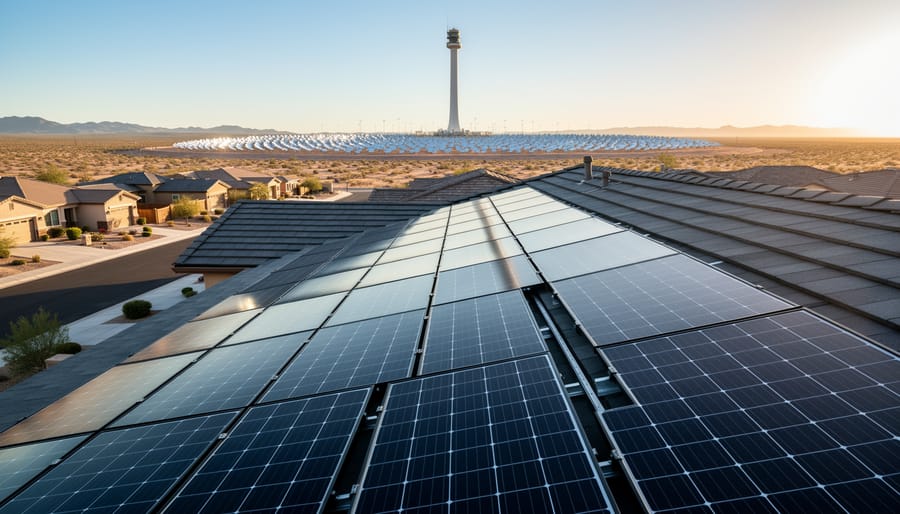
Homeowners with suitable roof conditions may benefit more from traditional rooftop solar than community solar subscriptions.
Community solar represents more than just an alternative energy option—it’s a doorway to clean power for thousands of El Paso residents who’ve felt left out of the solar revolution. Whether you’re renting an apartment, living in a shaded neighborhood, or simply don’t have the budget for a full rooftop installation, community solar levels the playing field.
I’ve talked with countless people over the years who felt frustrated watching their neighbors install solar panels while facing their own barriers to entry. That’s why I’m genuinely excited about the potential community solar holds for our region, even though El Paso Electric’s specific offerings remain limited compared to other markets. The energy landscape is constantly evolving, and staying informed means you’ll be ready when opportunities arise.
Here’s my advice: don’t wait passively for the perfect program to land in your lap. Start researching what’s currently available through El Paso Electric and keep tabs on their announcements for new initiatives. Sign up for their newsletters, follow local renewable energy advocacy groups, and connect with your neighbors who share your interest in clean power. The more residents demonstrate interest in community solar, the more likely utilities are to expand these offerings.
Remember, the goal isn’t perfection—it’s progress. Whether you end up joining a community solar farm, installing a small DIY system on your property, or simply switching to renewable energy credits through your utility, every step matters. The renewable energy movement needs all of us, regardless of which path we take to get there.
Your participation matters. Your voice matters. And your commitment to cleaner energy, however you choose to express it, helps build a more sustainable El Paso for everyone.
How useful was this post?
Click on a star to rate it!
Average rating 0 / 5. Vote count: 0
No votes so far! Be the first to rate this post.
We are sorry that this post was not useful for you!
Let us improve this post!
Tell us how we can improve this post?
charlesnoble
Here at Spheral Solar, I’m a hands-on solar power enthusiast, constantly exploring and experimenting with DIY solutions. I’m dedicated to sharing my discoveries, insights, and even the bumps I hit along the way, all in the pursuit of a more sustainable future.
Community Solar Projects Made Simple: How You Can… by Charlesnoble March 19, 2026 Picture this: You’re renting an apartment with a north-facing roof, or your property is shaded by towering oak trees, yet you’re determined to power your life with clean solar energy. Community solar makes this possible. Instead of installing panels on your own property, you buy or lease a portion of…
Turn Your Home’s Exterior Into a Power Plant With BIPV Solar by Charlesnoble February 19, 2026 Picture this: your home’s windows generating electricity while you admire the view. Your patio awning powering your outdoor lights as it shades your afternoon barbecue. Your garage door collecting energy every time the sun hits it. This isn’t science fiction – it’s building integrated photovoltaics, and it’s transforming how we…
Growing Crops Under Solar Panels Actually Works… by Charlesnoble April 3, 2026 Imagine doubling the productivity of your land by growing crops and generating electricity in the same space. That’s exactly what agrivoltaics makes possible—and it’s not just for large-scale farms anymore. An agrivoltaic system combines solar panels with agriculture, mounting photovoltaic arrays high enough that crops, livestock, or pollinator habitats can…
Why CSP Solar Never Made It Into Your Backyard (And… by Charlesnoble January 30, 2026 When you see massive solar installations in the desert generating headlines, they’re often concentrating solar power plants—but the panels on your neighbor’s roof? Those are photovoltaics, and understanding the distinction matters more than you might think. Concentrating solar power uses mirrors or lenses to focus sunlight onto a receiver, creating…
This DIY Floating Solar Pool Heater Slashed My… by Charlesnoble January 18, 2026 Place your floating solar heater on the pool’s sunny side during morning hours, positioning it where water circulation naturally draws heated water toward your skimmer return. You’ll capture 2-8°F of temperature gain on sunny days without spending thousands on permanent installations. Build your first unit using black irrigation tubing coiled…
Why DC Microgrids Are Perfect for Your DIY Solar Setup by Charlesnoble January 7, 2026 Picture this: you’re running LED lights, a laptop, and a small fridge in your off-grid cabin, and every device is drawing power directly from your solar panels without converting DC to AC and back again. That’s the elegant simplicity of a DC microgrid system, where electricity flows in its natural…
Subscribe for handpicked DIY projects, exclusive tips, and giveaways.
Charging a battery bank with a 3-phase inverter requires connecting your inverter’s AC output to a compatible battery charger or hybrid inverter system that can convert the 3-phase power back to DC for storage. Most DIY solar setups achieve this by using a hybrid inverter that handles both solar input and battery charging simultaneously, or… Read more: How to Wire and Configure a Battery Inverter 3 Phase System for Off-Grid Solar
Wiring a 7-pin RV plug correctly connects your tow vehicle to your trailer’s lights, brakes, and auxiliary power in about 45 minutes with basic hand tools and careful attention to the color-coded wire standard. The diagram follows a specific layout mandated by the RV Industry Association: each pin controls a distinct function, from left turn… Read more: How to Wire a 7-Way RV Plug: Step-by-Step Diagram and Setup Guide
Nine times out of ten, an E050 arc fault error on your solar inverter means a loose connection somewhere in your DC wiring. Before you panic or call an expensive technician, check every MC4 connector between your panels and inverter. A single connection that wasn’t snapped fully closed or has corroded from weather exposure will… Read more: Why Is My Solar Inverter Showing Arc Fault E050? Causes and How to Fix It