Solar Microgrids: Your Path to True Energy Independence
Updated:
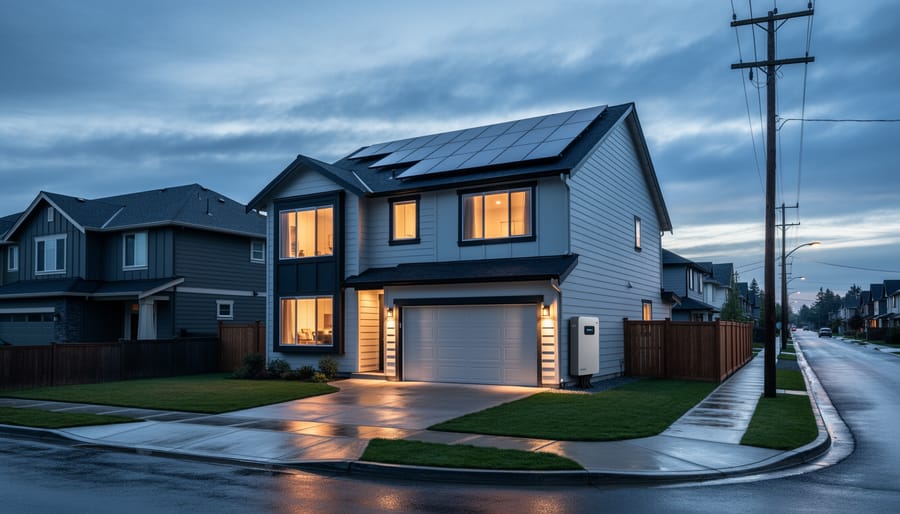
Picture this: the power grid fails during a storm, but your lights stay on, your refrigerator keeps running, and your phone continues charging. That’s the promise of a solar microgrid—a self-contained energy system that generates, stores, and manages its own electricity independently from the utility company.
Unlike traditional grid-tied solar systems that shut down during outages (yes, even with panels on your roof), microgrids keep working when you need them most. They’re essentially mini power plants designed for a single property or small community, combining solar panels, battery storage, and smart control systems to create energy independence.
I’ve spent years helping people transition from basic solar setups to complete microgrids, and I’ve seen firsthand how transformative this technology can be. One neighbor started with a simple off-grid cabin system and now powers his entire workshop through winter storms without missing a beat. Another friend built a microgrid for her suburban home and hasn’t paid an electric bill in three years.
The beautiful part? Building a solar microgrid isn’t reserved for engineers or the ultra-wealthy anymore. With the right planning and understanding, hobbyists and determined DIYers can design and install systems that deliver real energy security. Whether you’re preparing for emergencies, seeking energy independence, or simply tired of rising utility costs, microgrids offer a practical path forward.
This guide breaks down everything you need to know: what components you’ll actually need, how to size your system correctly, and the realistic steps to make it happen. We’ll skip the sales pitches and focus on what actually works in the real world.
What Exactly Is a Solar Microgrid?
A complete solar microgrid system includes solar panels, battery storage, and power management equipment working together as an independent power source.
Microgrid vs. Grid-Tied Solar: Understanding the Real Difference
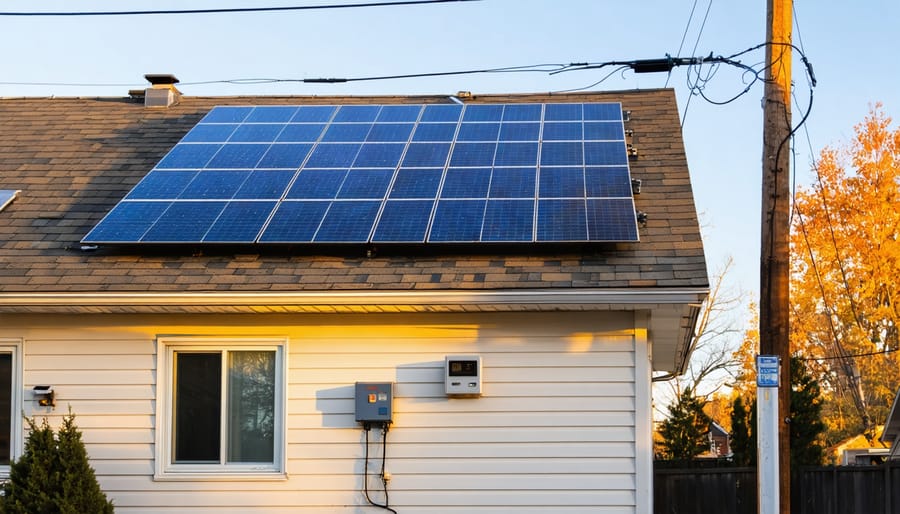
Here’s the thing most people don’t realize: your typical grid-tied solar systems actually shut down when the power goes out. Sounds backward, right? I learned this the hard way during my first solar installation when a storm knocked out power and my panels just sat there, useless.
The key difference comes down to one thing: battery storage and independence. Grid-tied systems are designed to immediately disconnect during outages for safety reasons. This protects utility workers who might be repairing lines. Your panels keep generating power, but without the grid to send it to, the system stops working.
Microgrids flip this script entirely. They include batteries that store excess energy, plus special equipment called a transfer switch and an inverter that can operate independently. When the grid goes down, your microgrid seamlessly switches to battery power, keeping your lights on and refrigerator running.
Think of it this way: grid-tied systems are like having a car with no gas tank, only a direct fuel line to the station. Microgrids are the complete package with storage capacity. You’re generating power, storing what you don’t use immediately, and maintaining operations whether the grid is up or down. That independence comes at a higher upfront cost, but for many homeowners, the peace of mind during outages makes it worthwhile.
Why DIYers Are Building Solar Microgrids Right Now
From Camping to Complete Home Backup
Here’s what makes solar microgrids so versatile—they scale beautifully to fit your needs, whether you’re planning a weekend camping trip or preparing to power your entire home during an outage.
I started my microgrid journey with a simple portable setup: a 100-watt panel, a small charge controller, and a 100Ah battery packed into a rolling cart. Total investment? About $400. That little system kept my phone, laptop, and camping lights running for three-day trips into the backcountry. No generator noise, no fuel cans—just quiet, reliable power under the stars.
The beauty of starting small is that you’re not locked in. That camping system taught me the fundamentals without a huge financial commitment. I learned how sunlight angles affect charging, how to manage battery capacity, and what happens when clouds roll in. These lessons proved invaluable when I later expanded.
As your confidence grows, so can your system. Add another battery for longer trips. Upgrade to a 300-watt panel for faster charging. Many people use this stepping-stone approach, gradually building toward a home backup system that can run critical appliances during grid outages—refrigerator, internet router, medical equipment, and lighting.
The same core principles apply whether you’re powering a campsite cooler or your home office. You’re matching solar input to energy storage and consumption needs. A complete home backup might use 3,000 watts of panels and 10-15 kWh of battery storage, but the concept remains identical to that first camping system. You’re simply scaling the numbers to match your goals.
The Core Components You Need (And What Each One Does)
Solar Panels: Your Power Generation Foundation
Solar panels are the heart of your microgrid, converting sunlight into usable electricity. For microgrid applications, you’ll typically choose between three main types: monocrystalline panels (efficient but pricier), polycrystalline panels (good balance of cost and performance), and thin-film panels (flexible but less efficient).
Charles recalls his first microgrid project: “I bought the cheapest panels I could find, thinking I’d save money. Big mistake! They degraded quickly and couldn’t handle our weather. Now I always recommend mid-range monocrystalline panels for reliability.”
Sizing your panel array depends on your daily energy consumption. Start by calculating your average daily watt-hours, then add 25-30% for system losses and cloudy days. A typical home microgrid might need 3-8 kilowatts of panels, while a shed or workshop could run on just 500-1000 watts.
Placement matters tremendously. South-facing installations (in the Northern Hemisphere) capture maximum sunlight, and panels should be tilted at an angle roughly equal to your latitude. Avoid shading from trees or buildings, as even partial shade significantly reduces output. Ground-mounted systems offer flexibility for microgrids, making maintenance and expansion easier than rooftop installations.
Battery storage is the heart of any solar microgrid, storing energy for use when the sun isn’t shining.
Battery Banks: The Heart of Your Microgrid
I’ll be honest—when I first built my microgrid, I underestimated how crucial the right battery system would be. Batteries are what transform your solar setup from a grid-tied system into a true microgrid capable of operating independently.
The lithium vs. lead-acid debate boils down to this: lithium batteries cost more upfront but last 3-4 times longer, weigh significantly less, and handle deeper discharges without damage. Lead-acid batteries are budget-friendly initially but require more maintenance and replacement cycles.
For capacity calculations, start with your daily energy consumption in kilowatt-hours. Multiply that by the number of days you want your system to run without sun (typically 1-3 days for most microgrids). Add 20% for efficiency losses. So if you use 10 kWh daily and want two days of backup, you’ll need roughly 24 kWh of storage capacity.
Remember, your battery bank needs to match your inverter’s voltage requirements, so plan these components together rather than separately.
Inverters and Charge Controllers: Your System’s Brain
Think of inverters and charge controllers as your microgrid’s command center, each handling crucial but different jobs. The inverter converts DC power from your panels and batteries into AC power that your appliances can actually use. Without it, you’d just be staring at a bunch of charged batteries with no way to power your coffee maker.
The charge controller, on the other hand, manages the flow of electricity from your panels to your batteries, preventing overcharging during sunny days and over-discharging at night. I learned this the hard way when I initially skipped a quality charge controller on my first setup and ended up with damaged batteries within six months.
Here’s the confusing part for beginners: you need both devices, but they work at different points in your system. The charge controller sits between panels and batteries, while the inverter connects batteries to your home’s electrical panel.
When choosing specifications, match your inverter’s wattage capacity to your total load plus 20 percent buffer. For charge controllers, you’ll see two types: PWM (cheaper, less efficient) and MPPT (pricier, maximizes power harvest). For most DIY microgrids, MPPT controllers are worth the investment, especially if you’re running multiple panels.
Sizing Your Solar Microgrid: A Step-by-Step Approach
Calculate Your Real Power Needs
Before you start pricing out batteries and panels, let’s figure out what you actually need. I learned this lesson the hard way when I built my first system – I sized everything based on my total home energy bill, only to realize I was powering things I barely used!
Start by tracking your actual consumption. Grab your recent utility bills and note your daily kilowatt-hour usage. Then comes the important part: distinguishing between critical and non-essential loads. Critical loads are things you genuinely need during an outage – refrigeration, lighting, phone charging, medical equipment, and maybe a fan or space heater. Non-essential loads? That second refrigerator in the garage, the pool pump, electric dryers, and central air conditioning.
Here’s a practical exercise that changed everything for me: Walk through your home with a notepad and list every electrical device you’d want during a power outage. Be honest with yourself. Then find the wattage label on each device (usually on the back or bottom) and estimate daily runtime. Multiply watts by hours to get watt-hours, then divide by 1,000 for kilowatt-hours.
You’ll probably discover you need far less than you thought. Most families can get by on 5-10 kWh daily for essentials, compared to the typical 30 kWh whole-home consumption.
Want to make your microgrid even more affordable? Simple efficiency upgrades make a huge difference. Swap those old bulbs for LEDs, replace that energy-hungry spare fridge, and consider a propane backup for heating and cooking. Every watt you don’t need is a watt you don’t have to buy panels and batteries for.
Calculating your actual power consumption is the critical first step in sizing a solar microgrid for your needs.
Building Your First Microgrid: Start Small, Think Scalable
Starting with a small microgrid project like powering a shed helps beginners learn the fundamentals before scaling up.
Charles’s First Microgrid Mistake (So You Don’t Make It)
Let me share a mistake I made during my second microgrid project that cost me three days of troubleshooting and one very humbling call to a friend who knew better. I got so excited about the batteries and inverters that I completely undersized my charge controller. I figured “close enough” would work, but microgrids don’t forgive math shortcuts.
Here’s what happened: my solar array could theoretically produce 3,000 watts at peak sunlight, but my charge controller was only rated for 40 amps. I didn’t account for the voltage conversion properly. When everything fired up on a bright Saturday morning, the controller immediately went into protection mode and shut down. My “weekend project” turned into a lesson in why electrical specifications exist.
The fix required ordering a properly sized 60-amp MPPT controller and waiting for shipping. Meanwhile, my partially assembled system sat there mocking me. The lesson? Always calculate your maximum current based on your panel output divided by battery voltage, then add 25% headroom. Measure twice, order once. Trust me, your future self will thank you when everything powers up smoothly on the first try.
Real-World Applications: Where Microgrids Make the Most Sense
Solar microgrids shine brightest when your power needs don’t match what the traditional grid offers. Let me share where these systems make the most practical sense based on what I’ve seen in our community.
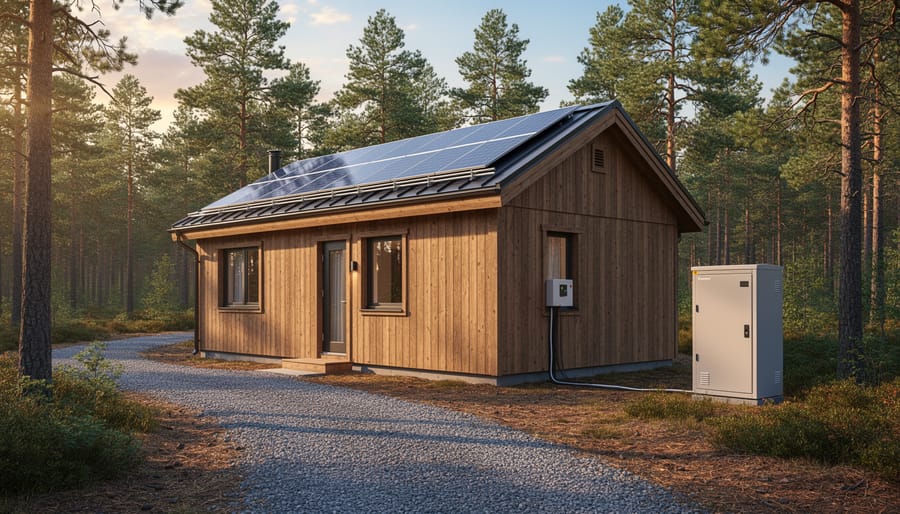
Remote cabins and weekend getaways top the list. If you’re tired of running noisy generators or your property sits beyond economical grid connection distance, a microgrid changes everything. I helped my cousin set up a 2kW system at his hunting cabin last year, and he hasn’t touched his generator since spring. It powers lights, a small fridge, water pump, and phone charging without the fuel costs or maintenance headaches.
Emergency backup systems represent another perfect fit, especially for critical equipment. Families with medical devices like CPAP machines or refrigerated medications can’t afford extended outages. A properly sized microgrid keeps essentials running when the grid fails, providing genuine peace of mind. Unlike traditional generators, solar systems operate silently and require no fuel stockpiling.
Workshops and detached structures also benefit tremendously. Running trenches for grid extensions costs thousands, but a off-grid solar system can power your tool shed or art studio independently. You’re not dealing with utility companies or monthly connection fees.
For the tech-curious among us, DC microgrids offer fantastic learning opportunities. You’ll understand energy consumption in ways grid-connected life never teaches. My own garage microgrid became an unexpected education in power efficiency that changed how I approach energy throughout my entire home.
The common thread? Microgrids excel when you need independence, reliability, and control over your power supply.
Common Pitfalls and How to Avoid Them
I’ve made most of these mistakes myself, so you’re in good company! Let me share what I’ve learned from watching systems underperform and helping folks troubleshoot their setups.
The battery undersizing trap catches nearly everyone. Here’s the thing: when you calculate your daily power needs, you’re probably thinking about normal usage. But what about that cloudy week in winter? I once built a system sized for three days of backup, thinking I was being generous. Reality check: five consecutive overcast days left me rationing power like a contestant on a survival show. The troubleshooting fix? Track your actual usage with a simple energy monitor for at least two weeks before finalizing your battery bank size. Add 30-40% capacity beyond what the math suggests, especially if you live anywhere that experiences seasonal weather changes.
Wire sizing seems boring until your cables get hot enough to melt insulation. I learned this during a summer project when my inverter kept shutting down unexpectedly. The culprit? Undersized wiring creating voltage drops that the system interpreted as faults. Use online wire sizing calculators and always round up to the next gauge. Remember that longer cable runs need thicker wire, and DC systems are particularly fussy about this.
Maintenance neglect is sneaky because solar systems run so quietly. Set phone reminders every three months to check battery water levels if you’re using flooded lead-acid, clean panels, and inspect connections for corrosion. One corroded terminal can drop your system efficiency by 20%.
The expectation gap is real. Your microgrid won’t match grid power’s convenience immediately. There’s a learning curve. You’ll discover which appliances are power hogs and adjust your habits accordingly. This isn’t a limitation, it’s an education in energy awareness that most people never get.
You’ve made it through the technical details, the component breakdowns, and the sizing calculations—and hopefully you’re feeling excited rather than overwhelmed. Here’s what I want you to remember: building a solar microgrid isn’t reserved for engineers or professionals. It’s absolutely within your reach, whether you’re taking your first steps into renewable energy or expanding an existing system.
I’ll never forget the satisfaction I felt when my first microgrid powered through a weekend power outage while the neighborhood sat in darkness. That moment of independence is something I want for every one of you, and it starts with just one decision—maybe it’s calculating your energy needs today, purchasing your first panel next month, or simply learning more about battery storage.
The beauty of this community is that you’re not alone in this journey. I’d love to hear where you are in your solar adventure. Are you still in the planning phase? Already running a small system? Drop a comment below and share your experiences, questions, or even your concerns. Your story might be exactly what inspires someone else to take their next step.
Remember, Spheral Solar has all the resources you need to keep moving forward—calculators to size your system accurately, detailed tutorials for hands-on projects, and honest equipment reviews to help you make smart purchasing decisions.
Energy independence isn’t just a dream for the privileged few. It’s a practical, achievable goal for anyone willing to learn and take action. Your microgrid journey starts now.
How useful was this post?
Click on a star to rate it!
Average rating 0 / 5. Vote count: 0
No votes so far! Be the first to rate this post.
We are sorry that this post was not useful for you!
Let us improve this post!
Tell us how we can improve this post?
charlesnoble
Here at Spheral Solar, I’m a hands-on solar power enthusiast, constantly exploring and experimenting with DIY solutions. I’m dedicated to sharing my discoveries, insights, and even the bumps I hit along the way, all in the pursuit of a more sustainable future.
Why DC Microgrids Are Perfect for Your DIY Solar Setup by Charlesnoble January 7, 2026 Picture this: you’re running LED lights, a laptop, and a small fridge in your off-grid cabin, and every device is drawing power directly from your solar panels without converting DC to AC and back again. That’s the elegant simplicity of a DC microgrid system, where electricity flows in its natural…
Community Solar Projects Made Simple: How You Can… by Charlesnoble March 19, 2026 Picture this: You’re renting an apartment with a north-facing roof, or your property is shaded by towering oak trees, yet you’re determined to power your life with clean solar energy. Community solar makes this possible. Instead of installing panels on your own property, you buy or lease a portion of…
Why Your DIY Solar Microgrid Will Fail Without the… by Charlesnoble November 22, 2025 Understand that a microgrid energy storage system is your battery bank plus the smart components that decide when to store solar power, when to use it, and when to pull from the grid or a backup generator. This integrated approach transforms disconnected parts into a cohesive power management solution that…
Grid-Tied Solar: Why Most DIYers Choose It (And When… by Charlesnoble November 8, 2025 Imagine flipping a switch and watching your electric meter spin backward while your solar panels pump clean energy into the grid—earning you credits that slash your utility bill to nearly zero. That’s the everyday reality of grid-tied solar, the most popular solar setup in America, powering millions of homes and…
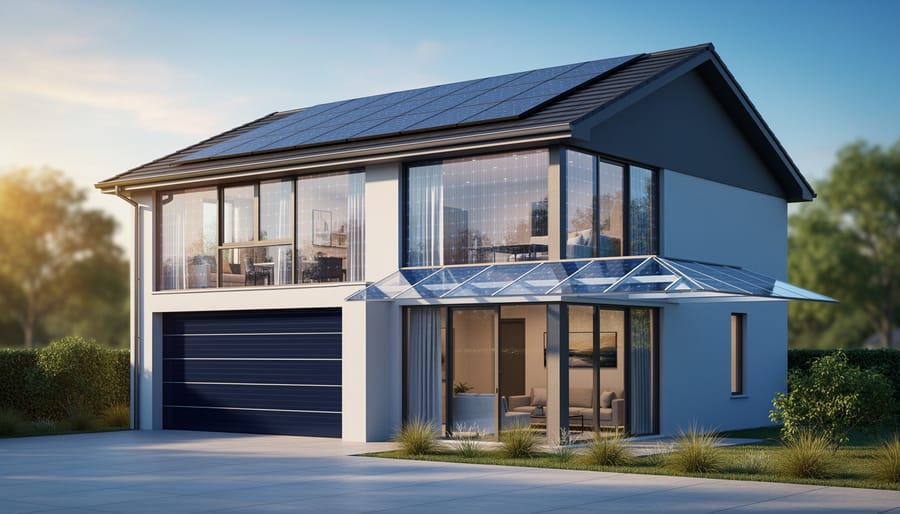
Turn Your Home’s Exterior Into a Power Plant With BIPV Solar by Charlesnoble February 19, 2026 Picture this: your home’s windows generating electricity while you admire the view. Your patio awning powering your outdoor lights as it shades your afternoon barbecue. Your garage door collecting energy every time the sun hits it. This isn’t science fiction – it’s building integrated photovoltaics, and it’s transforming how we…
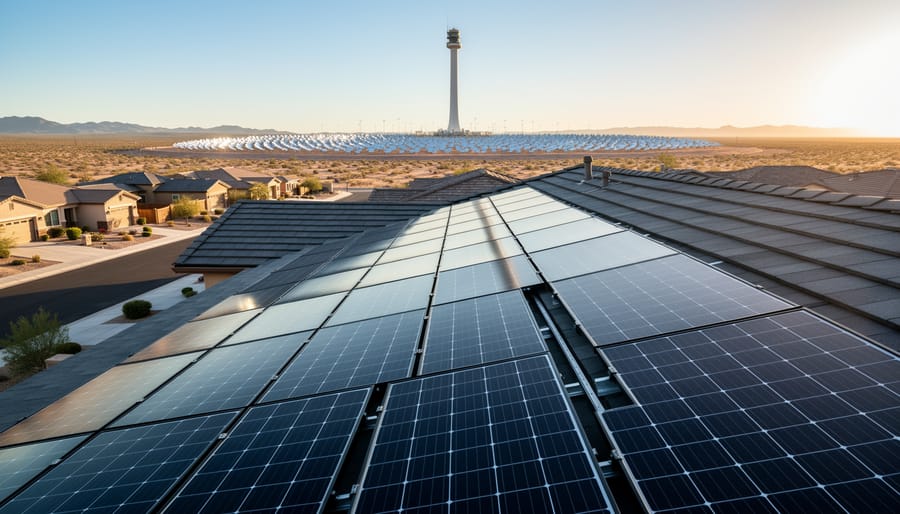
Why CSP Solar Never Made It Into Your Backyard (And… by Charlesnoble January 30, 2026 When you see massive solar installations in the desert generating headlines, they’re often concentrating solar power plants—but the panels on your neighbor’s roof? Those are photovoltaics, and understanding the distinction matters more than you might think. Concentrating solar power uses mirrors or lenses to focus sunlight onto a receiver, creating…
Subscribe for handpicked DIY projects, exclusive tips, and giveaways.
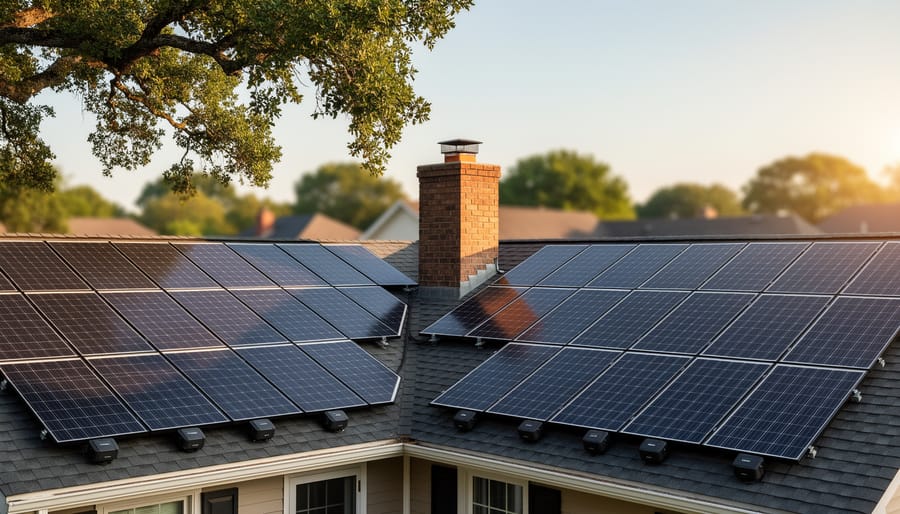
Match your solar panels to microinverters or power optimizers based on your roof’s shading patterns—even partial shade from a chimney or tree during morning hours means module-level power electronics will recover 15-25% more energy than string inverters lose to the weakest panel. Install power optimizers when you’re working with mixed panel orientations across multiple roof… Read more: Why Smart Solar Modules Could Save Your DIY Array (Before It’s Too Late)
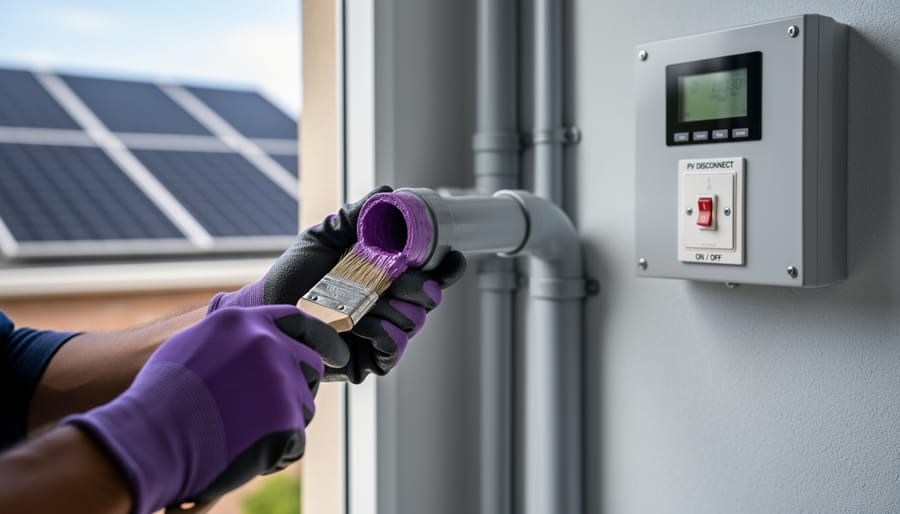
Measure your conduit run before purchasing materials by mapping the exact path from your solar array to the inverter and battery location, accounting for a 10% waste factor and additional length for bends. PVC electrical conduit remains the most cost-effective protective solution for DIY solar installations, but improper installation creates fire hazards, code violations, and… Read more: Why Your Solar Conduit Installation Could Start a Fire (And How to Do It Right)
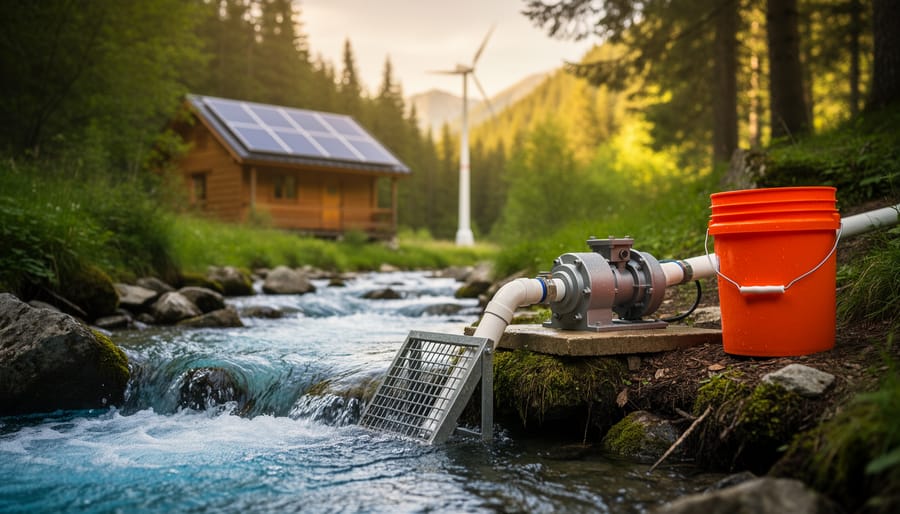
Walk down to your nearest stream with a five-gallon bucket and a stopwatch. Fill that bucket and time how long it takes—this simple test reveals whether you have enough flowing water to power your off-grid home. If you can fill it in under 10 seconds from a source that drops at least 10 feet in… Read more: The Stream Behind Your House Could Power It (Here’s How Micro Hydro Works)