Why Grid-Tie Solar Inverters Are Your Gateway to Energy Independence (Without Breaking the Bank)
Updated:
Grid-tie solar inverters transform your solar panels’ DC electricity into AC power that feeds directly into your home’s electrical system and the utility grid, eliminating the need for expensive battery banks while letting you earn credits for excess power you generate. When your panels produce more electricity than you’re using, the surplus flows back to the grid and your meter literally runs backward, banking energy for cloudy days or nighttime use through net metering programs.
These inverters differ fundamentally from off-grid systems because they synchronize perfectly with your utility company’s power supply, automatically shutting down during grid outages for safety reasons. This means you won’t have backup power during blackouts unless you add batteries, but you’ll save thousands of dollars upfront and reduce system complexity significantly.
The magic happens through a process called synchronization, where the inverter constantly monitors grid voltage and frequency, matching them precisely before feeding your solar power into the system. Most modern grid-tie inverters achieve 95-98% efficiency, meaning very little energy gets lost in the conversion process.
I’ve watched countless DIYers successfully install these systems in their homes, and the technology has become remarkably user-friendly over the past decade. Whether you’re planning a small starter system or a whole-home solar installation, understanding how grid-tie inverters work helps you make smarter choices about equipment selection, system sizing, and realistic expectations for your energy independence journey. The right inverter becomes the brain of your solar setup, quietly managing power flow while you enjoy lower electric bills.
What Makes Grid-Tie Inverters Different (And Why You Should Care)
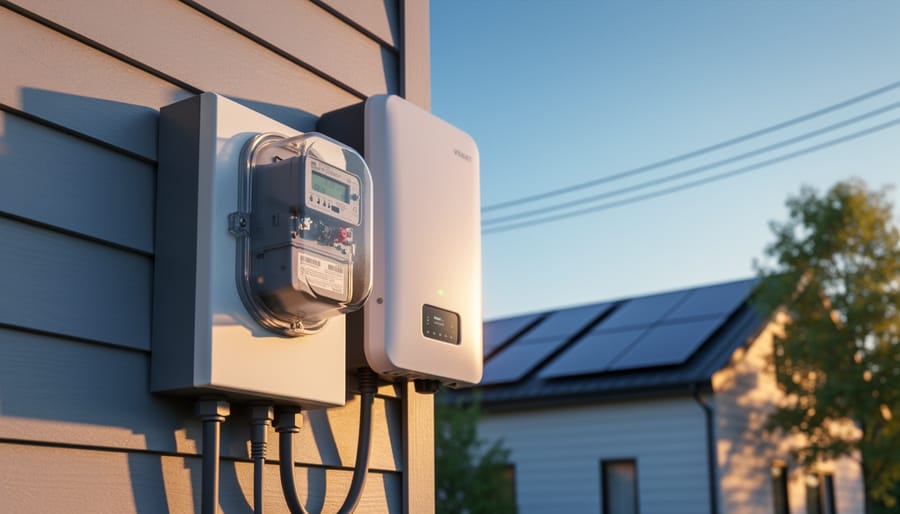
A grid-tie solar system allows your electric meter to run backwards, crediting you for excess power sent to the utility grid.
The Three Types of Solar Inverters: Where Grid-Tie Fits In
When I first started exploring solar options, the different inverter types felt overwhelming. Let me break them down in a way that actually makes sense for your real-world situation.
Grid-tie inverters are the most popular choice for homeowners who want to stay connected to their utility company. These inverters convert your solar panels’ DC power into AC power and feed it directly into the grid. Here’s the thing: they’re designed to shut off automatically during power outages for safety reasons. That means no backup power during blackouts, which surprised me when I learned it. However, they’re typically the most affordable option and let you take advantage of net metering programs where your utility credits you for excess power.
Off-grid inverters are for the true independence seekers. These work with battery banks to create a completely self-sufficient system. I’ve visited a friend’s cabin that runs entirely off-grid, and it’s pretty amazing watching everything work without any utility connection. The downside? You’ll need substantial battery storage, making this the most expensive route. It’s perfect for remote locations where grid connection isn’t feasible or for those who really want energy independence.
Hybrid inverters blend both worlds. They connect to the grid but also include battery backup capabilities. Think of them as your safety net – you get the benefits of grid connection during normal times but have backup power when outages strike. These have become increasingly popular, especially in areas prone to power disruptions.
For most DIY solar projects on existing homes, grid-tie inverters offer the sweet spot of simplicity, affordability, and return on investment. But if you experience frequent outages or want backup capability, investing in a hybrid system might be worth the extra cost upfront.
How Your Grid-Tie Inverter Talks to the Power Company
Your grid-tie inverter is essentially having a sophisticated conversation with the power company every single second it’s operating. Think of it like two dance partners perfectly syncing their movements – your inverter needs to match the grid’s rhythm exactly before it can join in.
The process starts with grid synchronization. Your inverter constantly monitors the utility power, checking the voltage, frequency (that 60 Hz we mentioned earlier), and even the phase. It won’t send a single watt until everything matches perfectly. I learned this the hard way during my first installation when I kept wondering why nothing was happening – turns out the inverter was just doing its job, patiently waiting for the perfect moment to connect.
Here’s where safety gets really interesting: anti-islanding protection. Imagine a power outage hits your neighborhood while your panels are cranking out electricity. Without this feature, your system could keep energizing the power lines, creating a dangerous “island” of electricity that could harm utility workers. Your inverter detects grid failures in milliseconds and immediately disconnects. It’s continuously testing the grid, sending tiny signal pulses to verify there’s actually utility power present, not just your solar feeding back into dead lines. This built-in safety feature is why grid-tie systems automatically shut down during outages.
The Technology Inside: String Inverters vs Microinverters
String Inverters: The Traditional Powerhouse
String inverters have been the workhorse of residential solar installations for decades, and there’s a good reason they’re still incredibly popular today. Think of them as the central hub that connects all your solar panels in a series, similar to how old-fashioned Christmas lights worked. When I first started exploring solar energy, Charles (my neighbor who’s been running solar since 2008) described string inverters as the “no-nonsense” option that gets the job done without overthinking things.
Here’s how they work: your solar panels connect together in a string (usually 8-12 panels), and all that DC electricity flows down to a single inverter box, typically mounted on the side of your house or in your garage. This inverter then converts everything to AC power that your home and the grid can use. Simple, straightforward, and battle-tested.
The biggest advantage? Cost. String inverters are significantly cheaper than microinverter systems, sometimes saving you 30-40% on inverter costs alone. For a straightforward rooftop installation with minimal shading, they’re incredibly efficient and reliable, often lasting 10-15 years or more.
However, they do have an Achilles heel: shading. Since all your panels are connected in series, if one panel gets shaded by a tree branch or chimney, it can reduce the output of your entire string. Charles learned this the hard way when a neighbor’s tree grew and started shading his afternoon production. It’s like that old Christmas light problem—one weak link affects the whole chain.
String inverters work best when your roof has consistent sun exposure throughout the day and all panels face the same direction. If that describes your situation, you’ll get excellent performance at an unbeatable price point.
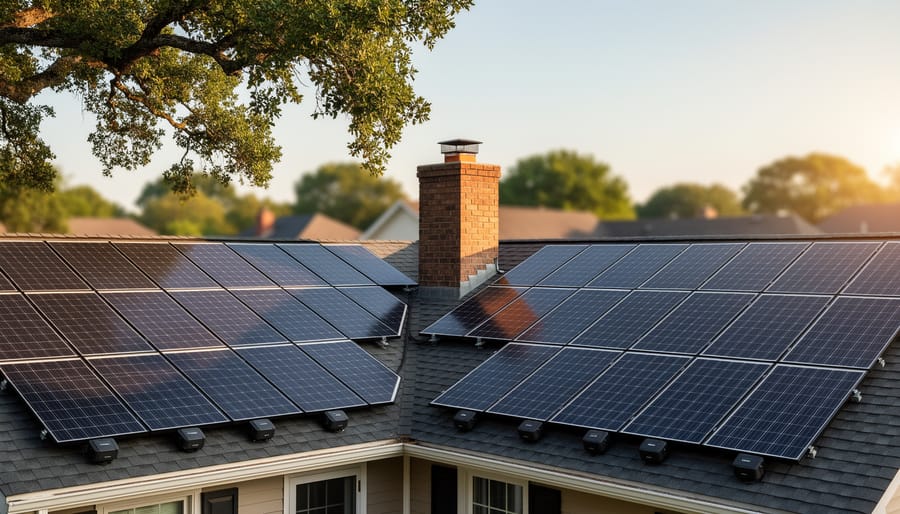
String inverters connect multiple solar panels in series, offering a cost-effective solution for unshaded roof installations.
Microinverters: Panel-Level Power Optimization
If you’re leaning toward a DIY solar installation, microinverters might just become your new best friend. Unlike traditional string inverters that handle all your panels as one unit, microinverters attach directly to each individual solar panel. Think of it like giving each panel its own personal power manager.
Here’s why that matters. When I first learned about microinverters from my friend Charles, he described them as the difference between running a relay race versus having independent sprinters. With string inverters, if one panel gets shaded or underperforms, it drags down the whole system’s output. Microinverters let each panel operate at its peak potential, regardless of what its neighbors are doing. This is huge if you’ve got trees, chimneys, or that pesky afternoon shadow creeping across your roof.
The panel-level monitoring is honestly where microinverters shine for DIY enthusiasts. You can check each panel’s performance from your smartphone, spotting issues immediately. Notice Panel 7 producing 20% less power? You know exactly which one needs attention rather than troubleshooting your entire array.
Expanding your system later becomes wonderfully simple too. Want to add three more panels next year? Just snap on microinverters and plug them in. No worrying about mismatched panel specifications or redesigning your string configuration.
The popularity surge in DIY installations makes perfect sense. Microinverters typically work with standard AC wiring that most homeowners understand, and there’s no high-voltage DC running across your roof. Yes, they cost more upfront than string inverters, but many DIYers find the flexibility, safety, and monitoring capabilities worth every penny. Plus, if one microinverter fails, only that panel goes offline while your system keeps generating power.
Microinverters attach directly to individual solar panels, providing panel-level optimization and easier system expansion.
Key Features That Actually Matter for Your DIY Solar Project
Efficiency Ratings: What the Numbers Really Mean
When I first started comparing inverters, those efficiency percentages seemed pretty abstract—until I did the math on my own electric bill! Here’s what those numbers actually mean for your wallet.
Peak efficiency is the inverter’s best performance under ideal conditions, usually around midday when solar production is strongest. You’ll see impressive numbers like 97-98% on spec sheets. But here’s the thing: your system doesn’t operate at peak conditions all day long.
That’s where weighted efficiency (also called CEC efficiency) comes in. This measurement accounts for how the inverter performs throughout the entire day—during cloudy mornings, lower-production hours, and everything in between. It’s typically 1-2% lower than peak efficiency, but it’s the number that matters for real-world performance.
So what’s the dollar difference? Let’s say you have a 5kW system producing 7,000 kWh annually. An inverter with 96% weighted efficiency versus 94% efficiency means the difference between converting 6,720 kWh and 6,580 kWh to usable power. At average electricity rates of 13 cents per kWh, that’s about $18 annually—which adds up to $450 over a 25-year system lifespan. Not earth-shattering, but definitely worth considering when comparing models in similar price ranges.
Maximum Power Point Tracking (MPPT) Explained Simply
Think of your solar panels like a car engine that performs differently depending on conditions. Just as your car runs best at certain RPMs, solar panels have a sweet spot where they produce maximum power, and this spot constantly shifts with sunlight intensity, temperature, and shading. That’s where Maximum Power Point Tracking comes in.
MPPT is essentially a smart algorithm built into your grid-tie inverter that constantly monitors your panels and adjusts voltage and current to extract every possible watt. I remember when Charles first explained this to me using a garden hose analogy: imagine trying to fill a bucket fastest by adjusting both water pressure and flow rate simultaneously. MPPT does exactly that with electricity, making hundreds of tiny adjustments per second.
Why does this matter for your system? MPPT can boost your energy harvest by 20-30% compared to basic inverters, especially on cloudy days or during temperature swings. It works seamlessly with pure sine wave technology to deliver clean, efficient power to the grid. For DIY solar enthusiasts, choosing an inverter with quality MPPT means squeezing maximum value from every panel you install.
Voltage Windows and Why Size Matching Matters
Getting your solar array’s voltage matched to your inverter isn’t just important, it’s essential for safety and performance. Think of it like Goldilocks: too low and your inverter won’t start, too high and you risk damaging expensive equipment (or worse, voiding warranties).
Here’s what I learned the hard way: solar panels produce different voltages depending on temperature. On cold, sunny mornings, your panels can produce significantly higher voltage than their rated specs suggest. I once helped a neighbor troubleshoot why his new system kept shutting down, only to discover his array’s cold-weather voltage exceeded his inverter’s maximum input window.
Your inverter’s datasheet will list its operating voltage window, typically something like 200-600V for residential units. Your solar array’s combined voltage must stay within this range under all conditions, hot summer afternoons and freezing winter mornings alike.
We’ve created a simple solar voltage calculator on our resources page that factors in temperature variations and串联configuration. Just input your panel specs and local climate data, and it’ll tell you if your planned array matches your inverter’s requirements. This five-minute check can save you from costly mistakes and ensure your system performs optimally year-round.
Real-World Installation Considerations for Grid-Tie Systems
Navigating Permits and Utility Interconnection Agreements
Getting your grid-tie system approved and connected might seem daunting, but I promise it’s more straightforward than you’d think. When I installed my first system, I thought the paperwork would be the hardest part, but breaking it down into steps made everything manageable.
Start by contacting your local utility company early in your planning process. Ask specifically about their interconnection requirements and request their application forms. Most utilities now have dedicated renewable energy departments, and honestly, they’re usually eager to help. You’ll typically need to provide details about your system size, inverter specifications, and installation plans.
The permitting process varies by location, but generally involves submitting plans to your local building department. You’ll need electrical diagrams, equipment specifications, and sometimes structural calculations if you’re mounting panels on your roof. Many municipalities now offer streamlined permitting for residential solar, which can speed things up considerably.
Here’s a practical tip: many inverter manufacturers provide pre-approved documentation packages that satisfy most utility and permit requirements. This can save you hours of preparation time.
Expect the interconnection agreement to include a net metering arrangement, which determines how you’re credited for excess power you send back to the grid. Read this carefully because it directly affects your energy savings.
Timeline-wise, budget about 4-8 weeks for the entire approval process, though some areas move faster. Once approved, your utility will typically install a bi-directional meter that tracks both power you use and power you generate.
Safety First: Why Grid-Tie Systems Require Extra Precautions
Let me be honest with you: grid-tie systems are amazing, but they’re also the most safety-critical solar setup you can work with. Why? Because you’re literally connecting your system to the power grid that serves your entire neighborhood. One mistake could endanger not just you, but utility workers down the line who might be repairing lines they think are de-energized.
Here’s what makes grid-tie systems different from off-grid setups. Even when you flip your main breaker, your solar panels can still be generating power and feeding it back into your home’s wiring. This creates a potential shock hazard that catches many DIYers off guard. Charles here—I learned this the hard way during my first installation when I assumed turning off the main breaker was enough. It wasn’t. Always disconnect both the grid connection and the solar input before working on anything.
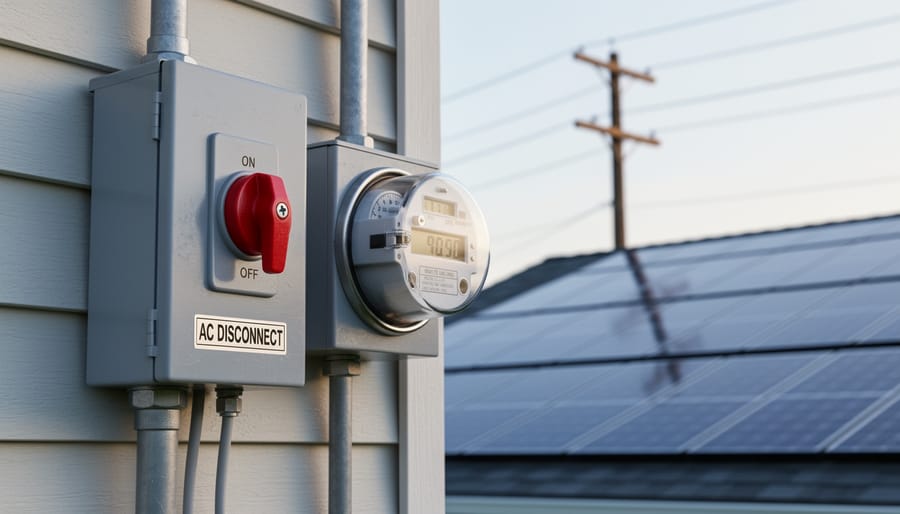
The anti-islanding protection in your inverter is your safety net. This feature automatically shuts down your system when grid power goes out, preventing your panels from energizing dead power lines. Never, and I mean never, bypass or disable this feature.
So when should you call a licensed electrician? Always for the final grid connection at your main service panel. This isn’t DIY territory—it requires permits, inspections, and proper utility coordination. Most jurisdictions require a licensed professional for this work anyway. An electrician should also handle any upgrades to your main panel or service entrance.
You can absolutely handle the DC wiring from panels to inverter and mounting work yourself. But for troubleshooting solar inverter issues or resetting inverter overloads, always follow manufacturer guidelines and know your limits. When in doubt, call the pros. Your safety is worth more than any money saved.
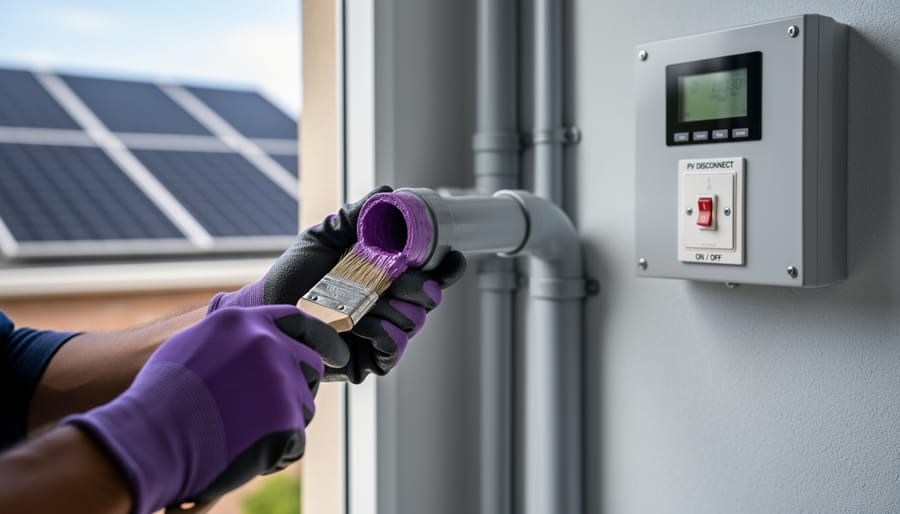
Grid-tie installations require proper electrical connections and adherence to utility interconnection standards for safe operation.
Choosing the Right Grid-Tie Inverter for Your Situation
Budget-Friendly Options That Don’t Sacrifice Quality
Let’s be real: the solar equipment market can feel overwhelming when you’re watching your budget. I learned this the hard way on my first DIY setup, initially choosing the cheapest inverter only to replace it six months later. Here’s what actually works.
For entry-level budgets under $300, look for string inverters from established brands with solid warranties. You’ll sacrifice some efficiency (around 95% versus 97-98% for premium models), but for smaller systems under 2kW, this difference won’t break the bank. I’ve seen hobbyists successfully run their workshop tools and charge stations with these basic units for years.
Mid-range budgets ($300-$800) open up better options. This sweet spot gets you into quality inverter options with monitoring capabilities and longer warranties. The efficiency gains here actually pay for themselves within 3-5 years through increased energy production.
The key isn’t always spending more, it’s matching your inverter to your actual needs. A 3kW system on a suburban roof doesn’t need the same features as a 10kW commercial installation. Focus on reliability over flashy features. Check user reviews from actual DIYers, not just spec sheets. Remember, a budget inverter that lasts ten years beats a premium model that fails in three.
Planning for Future Expansion
When I first planned my solar setup, I made the mistake of sizing my inverter to exactly match my initial panel array. Big regret! Within a year, I wanted to expand but had to upgrade the entire inverter—an expensive lesson learned.
Here’s the smarter approach: choose an inverter with capacity 20-30% above your initial panel wattage. If you’re starting with 3,000 watts of panels, look for a 4,000-watt inverter. This overhead gives you room to grow without replacing equipment.
Think about your system architecture too. String inverters are trickier to expand since you need to maintain proper voltage ratios when adding panels. Microinverters shine here—just add another panel with its own microinverter, and you’re done. No complex recalculations needed.
Consider your roof space and electrical panel capacity during initial planning. I recommend using our solar expansion calculator to model different growth scenarios before purchasing equipment. Check your main breaker rating—most residential panels can handle 200 amps, but verify you have headroom for additional circuits.
Also, future-proof your installation by running extra conduit during initial setup. It’s much cheaper than retrofitting later. Leave junction boxes accessible and document everything clearly. Your future self will thank you when expansion day arrives, and the process takes hours instead of days.
You’ve made it this far, which tells me something important: you’re ready to take control of your energy future. Grid-tie solar technology isn’t just for professionals with fancy certifications anymore. It’s become genuinely accessible for motivated DIYers who are willing to roll up their sleeves and learn.
I remember when I first started exploring solar inverters, feeling overwhelmed by all the technical specifications and electrical codes. But here’s what I discovered: the learning curve is absolutely manageable when you take it step by step. Thousands of homeowners just like you have successfully installed their own grid-tie systems, and you can too.
So what’s your next move? If you’re serious about designing your system, start by using Spheral Solar’s calculators to figure out the right inverter size for your needs. Plug in your power consumption, available roof space, and location to get a realistic picture of what you’ll need. From there, research the specific inverter models that fit your budget and technical comfort level. Read reviews from actual DIY installers, not just marketing materials.
And don’t go it alone. The DIY solar community is incredibly welcoming and helpful. Join online forums, watch installation videos, and ask questions. Nobody expects you to be an expert on day one.
The technology is ready. The resources are available. The only question left is: are you ready to take that first step toward energy independence?
How useful was this post?
Click on a star to rate it!
Average rating 0 / 5. Vote count: 0
No votes so far! Be the first to rate this post.
We are sorry that this post was not useful for you!
Let us improve this post!
Tell us how we can improve this post?
charlesnoble
Here at Spheral Solar, I’m a hands-on solar power enthusiast, constantly exploring and experimenting with DIY solutions. I’m dedicated to sharing my discoveries, insights, and even the bumps I hit along the way, all in the pursuit of a more sustainable future.
Why Your Home Solar System Fails During Power… by Charlesnoble March 8, 2026 Picture this: It’s 2 AM, a storm knocks out power in your neighborhood, and while your neighbors scramble for flashlights, your home stays lit, your refrigerator keeps running, and your family sleeps soundly. That’s the peace of mind a solar battery backup system delivers, and honestly, it’s one of the…
This Device Lets Your Solar System Talk to the Grid… by Charlesnoble February 2, 2026 Verify your utility’s specific anti-islanding requirements before purchasing any equipment—most power companies mandate IEEE 1547-compliant devices that automatically disconnect your solar system when the grid goes down, protecting line workers from unexpected backfeed. Contact your local utility interconnection department directly and request their technical specifications document, which lists approved devices…
Size Your Off-Grid Solar Inverter Right the First… by Charlesnoble February 10, 2026 Calculate your total daily energy consumption by listing every device you’ll power, multiplying each device’s wattage by hours of daily use, then adding 20% for system losses. This single number becomes your foundation—underestimate it, and you’ll face frustrating power shortages; overestimate significantly, and you’ll waste thousands on oversized equipment. Identify…
Why Your RV Inverter Keeps Failing (And How to Fix It Fast) by Charlesnoble January 11, 2026 Check your battery connections first—loose or corroded terminals account for nearly 60% of inverter issues I’ve seen in my years working with RV solar systems. Remove both positive and negative cables, clean them with a wire brush and baking soda solution, then reconnect tightly. While you’re at it, use a…
Why Most RV Solar Setups Fail (And How to Build Yours Right) by Charlesnoble December 21, 2025 Calculate your daily power consumption by listing every device you’ll run in your RV—from the refrigerator drawing 40-60 amp-hours daily to your phone charger using just 5 amp-hours—then multiply by 1.3 to account for system losses and cloudy days. This single step prevents the most common mistake I see fellow…
Why 3-Phase Solar Inverters Are Game-Changers for… by Charlesnoble January 29, 2026 Check your main electrical panel right now—if you see three thick power cables entering your home instead of two, you already have 3-phase power and might benefit from a 3-phase solar inverter. Most residential homes run on single-phase power, making 3-phase systems unnecessary for typical DIY solar setups, so understanding…
Subscribe for handpicked DIY projects, exclusive tips, and giveaways.
Match your solar panels to microinverters or power optimizers based on your roof’s shading patterns—even partial shade from a chimney or tree during morning hours means module-level power electronics will recover 15-25% more energy than string inverters lose to the weakest panel. Install power optimizers when you’re working with mixed panel orientations across multiple roof… Read more: Why Smart Solar Modules Could Save Your DIY Array (Before It’s Too Late)
Measure your conduit run before purchasing materials by mapping the exact path from your solar array to the inverter and battery location, accounting for a 10% waste factor and additional length for bends. PVC electrical conduit remains the most cost-effective protective solution for DIY solar installations, but improper installation creates fire hazards, code violations, and… Read more: Why Your Solar Conduit Installation Could Start a Fire (And How to Do It Right)
Walk down to your nearest stream with a five-gallon bucket and a stopwatch. Fill that bucket and time how long it takes—this simple test reveals whether you have enough flowing water to power your off-grid home. If you can fill it in under 10 seconds from a source that drops at least 10 feet in… Read more: The Stream Behind Your House Could Power It (Here’s How Micro Hydro Works)