Why Your LiFePO4 Battery Fails in Winter (And How to Fix It)
Updated:
Your lithium iron phosphate battery won’t charge below 32°F and risks permanent damage from freezing—a problem that catches many first-time solar DIYers off guard during their system’s first winter. LiFePO4 batteries operate within a specific temperature window: charging requires 32°F to 113°F (0°C to 45°C), while discharging tolerates a wider range from -4°F to 140°F (-20°C to 60°C). Push beyond these limits and you’ll face reduced capacity, accelerated aging, or complete cell failure.
I learned this lesson the hard way during my first off-grid installation in Colorado. My battery bank dropped to 28°F overnight, and when the solar panels started generating power at sunrise, the charge controller dumped current into frozen cells. The damage wasn’t immediately obvious, but within three months, my capacity had dropped by 30 percent—an expensive mistake that better temperature management would have prevented entirely.
Understanding these ranges isn’t just about avoiding disaster. It’s about maximizing your investment’s lifespan and performance. Whether you’re installing batteries in an Arizona garage hitting 120°F in summer or a Minnesota shed dropping below zero in winter, you need practical strategies to keep your system running optimally. The difference between a battery lasting 3,000 cycles versus 6,000 cycles often comes down to consistent temperature management—and that translates to thousands of dollars over your system’s lifetime.
What Temperature Range Do LiFePO4 Batteries Actually Handle?
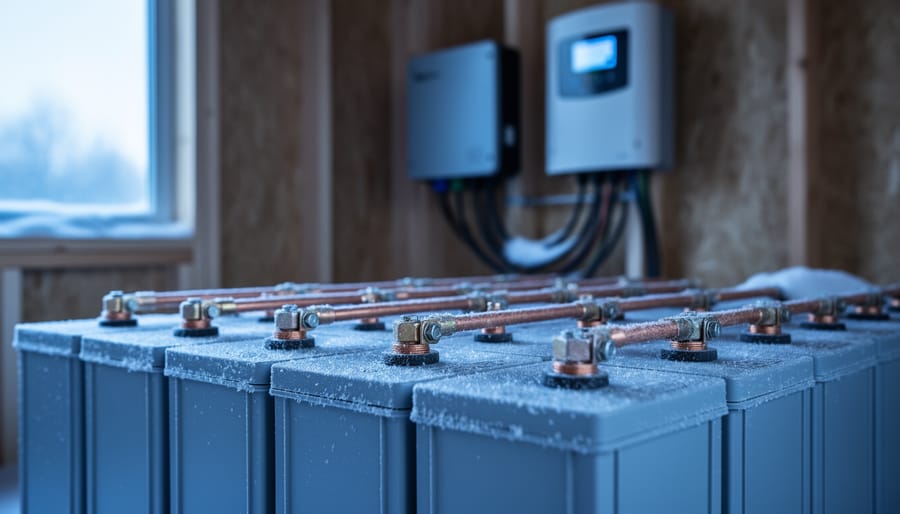
Cold temperatures create unique challenges for LiFePO4 batteries, requiring understanding of operational limits to prevent damage.
Discharge Temperature Range: When You Can Use Them
LiFePO4 batteries truly shine when it comes to discharge flexibility. You can safely draw power from them in temperatures ranging from -4°F to 140°F (-20°C to 60°C), which covers most real-world situations you’ll encounter.
Here’s what I’ve learned from experience: at the colder end around -4°F, your battery will discharge, but you’ll notice reduced capacity and voltage sag under heavy loads. Think of it like trying to pour cold honey—it flows, but slower. This matters if you’re winter camping and running a heater or lights. Your battery might deliver only 70-80% of its rated capacity in freezing conditions.
On the hot end near 140°F, the battery works fine but ages faster. I’ve seen this in desert solar setups where batteries sit in unshaded enclosures. The good news? Unlike lead-acid batteries, LiFePO4 won’t suddenly fail at these extremes—they just perform differently.
For weekend camping trips in moderate weather, you won’t even think about temperature limits. For permanent solar installations, consider insulated battery boxes in extreme climates. Your batteries will thank you with longer lifespan and consistent performance when you actually need them.
Charging Temperature Range: The Critical Limitation
While LiFePO4 batteries can operate across a wide temperature spectrum, charging them is a different story. The charging temperature range is much more restrictive: 32°F to 113°F (0°C to 45°C). This narrower window isn’t just a suggestion from manufacturers—it’s a critical boundary that protects your battery investment.
Here’s why charging below freezing causes permanent damage: When temperatures drop below 32°F, the lithium ions inside your battery slow down considerably. Think of it like trying to pour cold honey—everything moves sluggishly. If you force charge during these conditions, lithium ions can’t properly insert themselves into the battery’s structure. Instead, they plate onto the anode surface as metallic lithium, kind of like ice forming on a windshield. This process, called lithium plating, reduces your battery’s capacity permanently and can even create safety hazards.
I learned this the hard way during my first winter with solar batteries. I noticed my charge controller pushing power into batteries sitting in an unheated garage at 28°F. After that season, those batteries never held the same capacity again—a costly mistake I don’t want you to repeat.
On the hot end, charging above 113°F accelerates chemical degradation inside the cells, shortening their lifespan. The good news? Most quality charge controllers include temperature sensors that prevent charging outside safe ranges. If yours doesn’t, adding one is a worthwhile upgrade that’ll protect your system for years to come.
What Really Happens to Your Battery in Extreme Temperatures
The internal structure of LiFePO4 batteries reveals why temperature affects charging and discharging performance differently.
Cold Weather Problems: Sluggish Performance and Charging Dangers
When temperatures drop below freezing, LiFePO4 batteries face their biggest challenge. I learned this the hard way during my first winter with a solar setup when I noticed my battery bank wasn’t holding charge like it used to. Here’s what’s actually happening inside those cells.
Cold weather causes the electrolyte inside your battery to thicken, similar to how honey gets sluggish in the fridge. This means ions move slower between the positive and negative plates, reducing both capacity and discharge rates. At 32°F (0°C), you might see a 10-20% capacity drop. As temperatures continue falling toward 0°F (-18°C), that loss can reach 30% or more. Your battery isn’t broken, it’s just temporarily handicapped by physics.
The real danger, though, is charging below freezing. When you charge a LiFePO4 battery under 32°F (0°C), lithium ions can’t properly insert into the anode material. Instead, they form metallic lithium plating on the surface, kind of like frost forming on a window. This plating permanently reduces capacity, creates internal short circuit risks, and can destroy an otherwise healthy battery in just a few charge cycles.
This is why most quality Battery Management Systems will refuse to charge below freezing, even if you want them to. If you’re installing batteries in an unheated space like a garage or shed, you’ll need either a heated battery box or batteries with built-in heating elements. Trust me, spending a bit extra on thermal management beats replacing expensive batteries every year.
Hot Weather Challenges: Accelerated Aging and Safety Concerns
While cold weather gets a lot of attention, excessive heat presents equally serious challenges for LiFePO4 batteries, and honestly, it caught me off guard during my first Arizona installation. I learned the hard way that scorching temperatures can significantly shorten your battery’s lifespan and create unexpected performance issues.
When temperatures climb above 113°F (45°C), your battery starts aging much faster than normal. Think of it like leaving your phone in a hot car—the heat accelerates chemical reactions inside the cells that gradually degrade capacity. I’ve seen batteries installed in poorly ventilated sheds lose 20-30% of their expected lifespan simply because owners didn’t realize their storage area was essentially an oven during summer months.
Heat also affects performance in real-time. While warm batteries actually charge more efficiently at moderate temperatures, extreme heat triggers safety mechanisms that can throttle charging rates or even shut down the battery management system entirely. During a Texas heatwave last summer, several community members reported their solar systems mysteriously stopped charging mid-day—their batteries were protecting themselves from thermal damage.
The safety concerns are real but manageable. Unlike some lithium chemistries, LiFePO4 batteries are remarkably stable even under heat stress, but you still want to avoid situations where temperatures exceed manufacturer specifications. I always recommend installing batteries in climate-controlled spaces when possible, or at minimum, ensuring excellent ventilation and keeping them out of direct sunlight. Simple shade structures or insulated battery boxes with ventilation fans can make a tremendous difference in extending your investment’s lifetime.
Practical Solutions for Cold Weather Solar Setups
Simple Insulation Techniques That Actually Work
You don’t need expensive solutions to keep your LiFePO4 batteries comfortable. I learned this the hard way during my first winter with a van setup when I overthought everything. Here’s what actually works.
For basic insulation, start with reflective bubble wrap or camping sleeping pads wrapped around your battery box. I’ve used both in my projects, and the difference in temperature stability is remarkable. Secure them with zip ties or velcro straps for easy removal during summer months.
Your battery box construction matters more than you’d think. A simple plywood box with 1-inch foam board lining can maintain temperatures 10-15 degrees warmer than ambient air in cold weather. Leave small ventilation holes near the top since batteries generate heat during charging, but position them away from direct drafts.
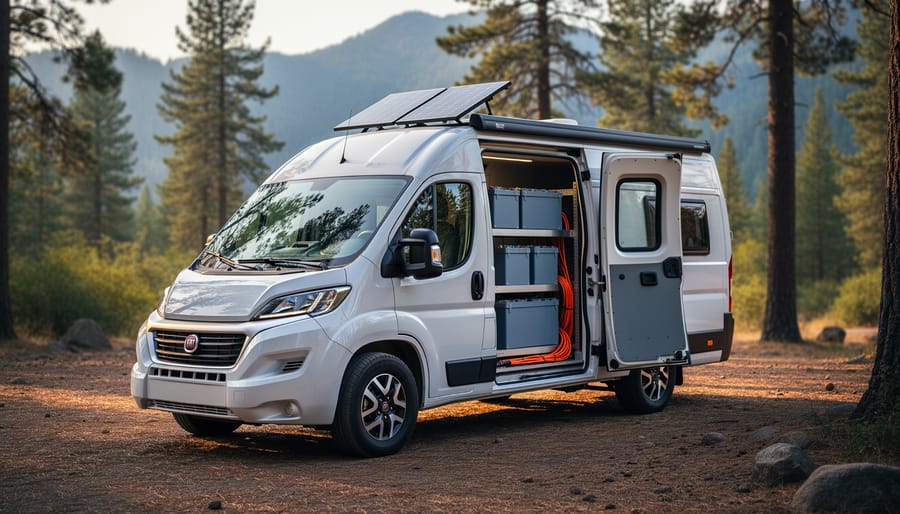
For van and camping setups, I’ve found that mounting batteries inside the living space instead of external compartments makes the biggest difference. Even unheated van interiors stay significantly warmer than outside storage. One friend insulated an old cooler for his portable setup, and it’s worked brilliantly for three seasons.
Remember, your goal isn’t to create an oven but to buffer against temperature extremes. Simple solutions work surprisingly well when thoughtfully applied.
Simple insulation techniques using readily available materials protect batteries from cold temperature damage in DIY solar installations.
Battery Heating Solutions: From DIY to Built-In
When winter hits or you’re installing a solar system in a cold climate, keeping your LiFePO4 batteries warm becomes essential. I learned this the hard way during my first winter with a DIY solar setup—watching my battery refuse to charge on a frigid morning was a real wake-up call!
Let’s break down your heating options from simplest to most sophisticated. DIY heating pads are the budget-friendly entry point, typically costing $30-60 for a battery-sized pad. You’ll wrap these around your battery box and connect them to a thermostat controller (another $15-25). The total DIY approach runs about $50-85 per battery. It works, but you’ll need to monitor it and ensure proper temperature distribution.
Mid-range solutions include dedicated battery heating blankets designed specifically for solar installations, running $80-150. These often come with built-in temperature sensors and more even heat distribution than generic pads.
The premium option? Self-heating LiFePO4 batteries with integrated BMS protection. These beauties automatically warm themselves when needed and prevent charging below freezing without any external intervention. Yes, they cost 20-30% more upfront than standard batteries, but they eliminate the hassle factor entirely. When choosing the right battery, consider your climate and how hands-on you want to be.
For solar system integration, your charge controller should communicate with your heating solution. Many modern controllers include temperature sensor inputs that automatically adjust charging parameters based on battery temperature, creating a seamless protective system.
Smart Charge Controllers That Prevent Cold-Weather Damage
Modern charge controllers with built-in temperature sensors are your battery’s best friend during winter months. These smart devices automatically stop charging when temperatures drop below 32°F (0°C), protecting your lithium iron phosphate batteries from permanent damage.
I learned this the hard way during my first winter with solar. I woke up one January morning to find my system trying to charge frozen batteries—not good! That’s when I upgraded to a temperature-compensated charge controller, and it’s been smooth sailing ever since.
Here’s how to set it up: Connect the temperature sensor probe directly to your battery terminals or tape it securely to the battery casing. Most quality controllers like Victron or Renogy models have a dedicated port for these sensors. In your controller settings, program the low-temperature cutoff to 32°F for charging. You can typically set a resume temperature around 40°F to ensure safe operation.
For discharge, you can safely operate down to -4°F (-20°C), so configure that separately. The controller should also adjust charging voltage based on temperature—warmer batteries need slightly lower voltages.
When planning your system, remember that proper solar panel sizing works hand-in-hand with temperature management. Oversized panels might try pushing too much current during cold sunny days, so balance is key.
This small investment in smart charging technology prevents costly battery replacements and gives you peace of mind year-round.
Keeping Your Batteries Cool in Summer Heat
Ventilation and Placement Strategies
Smart placement can make the difference between batteries that last a decade and ones that fail in just a few years. I learned this the hard way when my first RV battery bank overheated in a poorly ventilated compartment during a summer camping trip.
The golden rule is simple: give your batteries breathing room. Position them at least 2-3 inches away from walls and other batteries to allow air circulation on all sides. Think of it like people in an elevator – crowding creates uncomfortable heat buildup.
For RVs and outdoor enclosures, avoid the common mistake of sealing batteries in airtight compartments. Install passive vents at both the top and bottom of the enclosure to create natural convection. Hot air rises and exits through the top vent while cooler air enters from below. Even simple louvered vents from your local hardware store work beautifully.
In sheds and garages, keep batteries off direct concrete floors in winter, which act like cold sinks. A simple wooden platform or foam insulation board underneath helps maintain stable temperatures.
Never position batteries in direct sunlight or next to heat sources like water heaters or furnaces. I’ve seen batteries in outdoor solar setups bake in metal enclosures that essentially became ovens. If outdoor mounting is necessary, paint enclosures white to reflect heat and consider adding small solar-powered ventilation fans for active cooling during peak summer months.
Strategic battery placement with adequate ventilation prevents overheating in hot climates and summer conditions.
When to Consider Active Cooling
I’ve learned through trial and error that passive cooling works great most of the time, but there are situations where adding a small fan really makes sense. If your battery enclosure regularly hits 113°F (45°C) or higher during summer months, active cooling becomes worth considering. I installed a simple 12V computer fan in my battery box after noticing temperatures creeping above 110°F on hot afternoons, and it dropped things by 8-10 degrees pretty consistently.
The good news is that active cooling doesn’t need to be complicated or power-hungry. A typical 12V fan draws only 2-5 watts, which is negligible compared to your battery’s capacity. The real game-changer is using a temperature-triggered relay or thermostat switch that automatically turns the fan on at around 95-100°F and off when things cool down. This saves power while protecting your investment when it matters most.
Consider active cooling if you’re storing batteries in tight spaces with poor airflow, running high-discharge applications that generate significant heat, or living in climates where summer temperatures regularly exceed 95°F. For my setup, the fan paid for itself in extended battery life within the first season, and I sleep better knowing my batteries aren’t cooking during heat waves.
Monitoring Temperature: Tools and Techniques
Budget-Friendly Monitoring Options
You don’t need fancy equipment to keep tabs on your LiFePO4 battery temperature. I learned this the hard way when I first started with solar – I spent way too much money on monitoring gear before realizing simple solutions work just as well.
The easiest approach is using basic digital thermometers with external probes. You can find these at hardware stores for under $15. Just attach the probe to your battery’s side using heat-conductive tape, and you’ll get accurate readings. I keep one permanently mounted on my main battery bank.
For analog enthusiasts, stick-on temperature strips are incredibly practical. These adhesive strips change color based on temperature and cost just a few dollars. They’re perfect for quick visual checks during your morning routine.
Here’s my favorite low-tech method: simply touch the battery case. If it feels uncomfortably hot or cold to your hand, that’s your cue to investigate further. Your batteries should feel close to room temperature during normal operation.
Some charge controllers include built-in temperature sensors – check your manual before buying additional equipment. Many DIYers already have what they need without realizing it.
Smart Monitoring for Peace of Mind
I’ve been testing several Battery Management Systems (BMS) with Bluetooth capabilities lately, and honestly, they’ve transformed how I monitor my LiFePO4 batteries. The Daly Smart BMS and Overkill Solar BMS both connect to smartphone apps that display real-time temperature readings right on your phone. I check mine every morning with my coffee—takes about five seconds.
Setting up temperature alerts is genuinely a game-changer. In the app, I configured warnings at 5°C (41°F) on the low end and 45°C (113°F) on the high end. When temperatures approach these thresholds, my phone buzzes with a notification. Last winter, this alert saved me from attempting to charge my battery bank during an unexpected cold snap that would have caused permanent damage.
The JBD Smart BMS offers particularly detailed data logging, storing temperature trends over weeks. I discovered my battery enclosure was getting hotter than expected on summer afternoons, which prompted me to add better ventilation. These monitoring systems aren’t just fancy gadgets—they’re your early warning system that prevents costly mistakes and extends battery life significantly.
Real-World Temperature Scenarios for Solar DIYers
Winter Camping and Off-Grid Cabins
I learned this lesson the hard way during a January camping trip in Vermont. My LiFePO4 battery for lights and phone charging simply refused to charge one morning when temperatures dropped to 15°F. Here’s what every winter adventurer needs to know.
LiFePO4 batteries won’t accept a charge below 32°F (0°C), though they’ll discharge down to about -4°F (-20°C). This means you can use stored power in freezing conditions, but recharging requires warmth. For weekend camping trips, charge your battery fully at home and keep it insulated in a sleeping bag or cooler during the day. A simple foam-wrapped battery box maintains several degrees of warmth just from the battery’s own operation.
Off-grid cabin dwellers face bigger challenges. Consider installing your battery bank in an insulated indoor space, even if it means longer cable runs to outdoor solar panels. If indoor mounting isn’t possible, build an insulated battery box with a small heating pad controlled by a temperature switch set to activate at 35°F. This draws minimal power but prevents charging damage.
Some newer battery management systems include self-heating features that automatically warm cells before accepting charge. While pricier, they’re worth considering if you’re serious about year-round off-grid living in cold climates.
Summer Van Life and Desert Camping
Last summer, I talked with Charles after he rescued a van-lifer whose battery system shut down in Death Valley. The lesson? Heat management matters just as much as cold protection with LiFePO4 batteries.
When you’re living or camping in a vehicle during summer, your battery enclosure becomes an oven. I’ve seen van interiors hit 140°F, which pushes batteries dangerously close to their 140-160°F charging cutoff limit. The battery management system will protect your cells by refusing to charge, leaving you stranded without power exactly when you need it most for fans and refrigeration.
Here’s what actually works in extreme heat: Mount batteries as low as possible in your vehicle where temperatures stay cooler. Add ventilation fans to your battery box that activate above 100°F. If you’re boondocking in the desert, charge your batteries during early morning hours when it’s coolest, then rely on stored power through the afternoon heat.
One clever solution Charles shared involves reflective insulation around battery enclosures and parking in shade during peak charging hours. Some dedicated van-lifers even install small 12V cooling fans that run directly off solar panels, creating airflow without draining battery reserves. These simple adaptations keep your system running when temperatures soar.
Understanding the temperature limitations of your lithium iron phosphate batteries isn’t just about protecting an investment—it’s about designing a solar system that works reliably year after year, no matter what weather throws at you. When you know these batteries thrive between 32°F and 113°F for operation and prefer 50°F to 77°F for charging, you can make informed decisions about enclosure insulation, heating solutions, and placement strategies.
The key takeaways are straightforward: cold temperatures slow down chemical reactions and can damage cells if you charge below freezing, while excessive heat accelerates degradation and shortens lifespan. But here’s the good news—with proper thermal management, you can keep your batteries happy in nearly any climate. Whether that means adding battery warmers in Minnesota winters or ensuring adequate ventilation in Arizona summers, small adjustments make enormous differences.
I’ll be honest—I learned some of these lessons the hard way. My first winter with LiFePO4 batteries taught me that “cold weather performance” on a spec sheet doesn’t always match reality when temperatures drop. That experience pushed me to dig deeper into thermal management, and now I’m passionate about helping others skip those early mistakes.
Before finalizing your system design, take a hard look at your local climate extremes. What’s your coldest winter night? Your hottest summer afternoon? Choose quality solar batteries with appropriate temperature ratings, then plan your thermal management accordingly.
What temperature challenges are you facing in your location? Share your experiences and solutions in the community—your insight might be exactly what someone else needs.
How useful was this post?
Click on a star to rate it!
Average rating 0 / 5. Vote count: 0
No votes so far! Be the first to rate this post.
We are sorry that this post was not useful for you!
Let us improve this post!
Tell us how we can improve this post?
charlesnoble
Here at Spheral Solar, I’m a hands-on solar power enthusiast, constantly exploring and experimenting with DIY solutions. I’m dedicated to sharing my discoveries, insights, and even the bumps I hit along the way, all in the pursuit of a more sustainable future.
Why Lithium Iron Phosphate Batteries Won’t Explode… by Charlesnoble December 25, 2025 No, lithium iron phosphate batteries don’t explode under normal conditions—and that’s precisely why I switched my entire off-grid solar setup to LiFePO4 technology three years ago without a single safety incident. The fear is understandable. We’ve all seen news reports about phone batteries catching fire or hoverboards bursting into flames.…
Lifepo4 Voltage Chart: Understanding Battery… by Charlesnoble October 18, 2023 A LiFePO4 battery voltage chart displays how the voltage is related to the battery’s state of charge. These charts vary depending on the size of the battery—whether it’s 3.2V, 12V, 24V, or 48V. This article will dive deep into interpreting these charts and their practical implications. We’ll also cover the…
Stop Killing Your E-Bike Battery: Charging Mistakes… by Charlesnoble November 6, 2025 Charge your e-bike battery to only 80% for daily rides—this single habit can double its usable lifespan compared to always topping off to 100%. Store the battery at room temperature between 32°F and 77°F, removing it from the bike during extreme weather since heat above 90°F accelerates degradation faster than…
Your iPhone Doesn’t Need a Wall Outlet Anymore by Charlesnoble November 16, 2025 Charge your iPhone anywhere the sun shines by pairing a solar panel rated at minimum 10 watts with a portable battery bank that has USB output. I learned this the hard way during a week-long camping trip in Colorado when my flimsy 5-watt panel couldn’t keep up with my phone’s…
Which Solar Battery Actually Lives Up to the Hype? by Charlesnoble November 8, 2025 Compare capacity ratings in amp-hours (Ah) and watt-hours (Wh) first—these numbers tell you exactly how much energy each battery stores and how long it’ll power your devices. Check the depth of discharge (DoD) percentage next, because a battery with 90% DoD gives you far more usable energy than one limited…
How Solar Energy Actually Works in Your Home (And… by Charlesnoble December 5, 2025 Capture sunlight with photovoltaic panels that convert solar radiation into direct current electricity through semiconductor technology. Position your panels at the optimal angle for your latitude—typically between 30 and 45 degrees in most locations—to maximize energy absorption throughout the day. Store excess electricity in deep-cycle lithium or lead-acid batteries, which…
Subscribe for handpicked DIY projects, exclusive tips, and giveaways.
When your solar array needs more power than a simple series connection provides, but your charge controller can’t handle high voltages, series-parallel wiring becomes your solution. This hybrid approach combines the voltage-boosting benefits of series connections with the current-increasing advantages of parallel wiring, giving you the flexibility to match your system’s exact requirements. Most DIYers… Read more: Why Series-Parallel Wiring Could Save Your Solar Setup (And Your Wallet)
An 8kW solar system typically generates between 24 and 40 kWh per day, depending on your location, season, and installation quality. That’s enough to power most average homes completely, but the reality is more nuanced than a single number can capture. I remember installing my first 8kW array in Arizona and being thrilled when it… Read more: How Much Power Does an 8kW Solar System Actually Produce Each Day?
Flip your bifacial solar panels over and you’ll find a second active surface that can boost your system’s energy production by 10-30% – but only if you design your array to take advantage of it. Unlike traditional panels that capture sunlight from one side, bifacial modules harvest energy from both their front and rear surfaces,… Read more: Why Your Bifacial Solar Panels Need a Completely Different Array Design