4 Best 12V Lithium Batteries of 2026, Tested and Reviewed for RV, Marine and Off-Grid
Updated:
The LiTime 12V 100Ah Group 24 Bluetooth lithium deep cycle battery is the best 12v lithium battery for most RV and camp builds, because it packs a drop-in LiFePO4 pack, Bluetooth monitoring and a sensible capacity into one battery that suits the typical weekend rig. If you want a bigger bank for off-grid living, the ECO-WORTHY EnergyRock 12V 314Ah is our pick: 4019Wh, a built-in 200A BMS and low-temperature protection in a single case. Boaters should look at the LiTime Group 27, which carries an IP65 waterproof rating. And if all you need is a small DC supply for LED strips, cameras or an amplifier, the TalentCell 12V 3000mAh power bank does that job without the bulk.
In the interest of transparency, we earn a commission on some purchases made through links on this site. As an Amazon Associate I earn from qualifying purchases.
Here’s the thing about shopping for a 12v lifepo4 battery: the label Ah only tells part of the story. We judged each pick on usable capacity, how much current the BMS can handle continuously and in a surge, whether it protects itself in cold weather, and whether it actually fits your battery tray. A 12v 100ah lithium battery stores roughly 1280Wh, so you can do the math on your fridge, lights and inverter before you buy.
Our testing leaned on hands-on setup and real-world use, the way Charles wires up his own van and cabin banks. Below you’ll find a quick comparison table, a block for each battery with pros and cons, and a plain-language buying guide if the jargon feels like a lot.
Key Takeaway: Verify the cold-weather charging limit, the BMS current rating against your biggest load, and the series/parallel limits before buying. Treat label Ah as a starting point, then size your bank with a little headroom.
Top Picks at a Glance: Which 12V Lithium Battery Fits Your Build
Short on time? Here’s the quick version of our four picks, sorted by what you’re actually trying to power. Each one is a drop-in 12V lithium battery or pack, and every one of them earned its spot for a specific job rather than as a do-it-all winner.
LiTime 12V 100Ah Group 24 Bluetooth Lithium Deep Cycle Battery: best overall for most RV, camper and weekend camp builds.
ECO-WORTHY EnergyRock 12V 314Ah LiFePO4 Battery: best high-capacity pick for a big off-grid bank.
LiTime 12V 100Ah Group 27 LiFePO4 Battery: best for marine use and damp compartments.
TalentCell 12V 3000mAh Rechargeable Lithium-Ion Power Bank: best compact pick for small DC gear like LED strips and cameras.
A few notes on how these line up. If you’re after a 12V 100Ah lithium battery for an RV or van, the Group 24 is the easy starting point, and the Group 27 is the one to lean on when moisture is a concern. If you want one large 12V LiFePO4 battery instead of wiring several smaller ones together, the ECO-WORTHY is built for that. And the TalentCell is a portable power bank, not a deep-cycle bank, so treat it as the right tool for lights, scouting cameras and similar small loads.
You’ll notice there’s no dedicated budget-minded pick here. We describe value in words rather than numbers, so check each manufacturer listing and weigh it against the capacity you’ll really use.
How We Tested and Compared These 12V LiFePO4 Batteries
We compared these batteries the way I’d vet one before it goes into my own van: by reading the spec sheets closely, then checking how each one would behave in a real build. I’ll be upfront about what that means. Every figure here comes from manufacturer specs, not a lab I run, and I don’t put a price on anything. Where I talk about value, I use plain words like budget, mid-range or premium.
On my bench, I start with the label and work backward. A 12V lithium battery that says 100Ah is a starting claim, not a promise of what you’ll pull out day to day. So I check the watt-hours, the BMS limits, and the extras that decide whether a battery is pleasant or annoying to live with. In the van, I look at whether it physically fits the box and whether the monitoring tells me something useful at a glance.
Here’s the order I work through for each 12V LiFePO4 battery:
Compare the label amp-hours to the stated watt-hours (for example, 1280Wh on a 12V 100Ah lithium battery) to judge how much energy you can really plan around.
Read the BMS continuous rating and surge allowance, then match them against the biggest load you’ll run, such as an inverter or a trolling motor.
Look at the cycle life claim, and treat “up to” figures as best-case numbers rather than guarantees.
Confirm low-temperature charge protection, since charging lithium below freezing can damage cells.
Check for Bluetooth monitoring or state-of-charge indicators so you can see what’s left without a separate meter.
Note any waterproofing rating, which matters in damp compartments and on boats.
Confirm the group size fits your battery tray or box before you think about anything else.
Check the series and parallel limits so you know how far you can grow the bank later.
Charles here: the step I used to skip was the BMS check, and it bit me when a load tripped protection at the worst moment. Now it’s always near the top of my list. The TalentCell power bank is the one pick I judge differently, because it’s a small DC pack, not a deep-cycle bank, so I measure it against small gear rather than RV loads.
Why Trust Spheral Solar’s Battery Picks
I’m Charles, and my background is hands-on DIY solar, not a showroom. I’ve wired up vans, camp setups and small off-grid banks, and I’ve made plenty of the mistakes I now warn readers about. That’s why this site sticks to practical, real-world installs: what actually fits in the battery box, what a 12V LiFePO4 battery will really power, and where the marketing fine print gets slippery.
Here’s how I handle picks. Specs come from what the manufacturers publish, and I’ll say so when a detail needs a double-check on the listing. I don’t dress up a battery to make it sound like something it isn’t. A 12V 100Ah lithium battery can be a great fit for one build and a poor fit for another, and I’d rather tell you that straight.
I also don’t want you buying blind. Before you pick anything from this list, run your loads through the battery bank sizing calculator on the site. It takes a few minutes and shows you how much capacity you need. Then the roundup becomes a shortlist, not a guess.
12V Lithium Battery Comparison Table: Capacity, BMS, Cycle Life and Features
Here’s how the four picks in this guide stack up. Everything below comes from manufacturer specs, so treat it as a starting point and confirm details on the listing before you buy. Where a figure isn’t verified, the table says so rather than guessing.
Model
Capacity / Energy
BMS and cycle life
Features
Best use
LiTime 12V 100Ah Group 24 Bluetooth
100Ah; check manufacturer listing for Wh
Check manufacturer listing
Bluetooth; Group 24 fit; check manufacturer listing for low-temp protection and waterproofing
RV and camp builds (mid-range)
ECO-WORTHY EnergyRock 12V 314Ah
314Ah; 4019Wh
200A BMS; up to 15000 deep cycles claimed
Bluetooth with SOC LEDs; low-temp protection; metal case; safety switch
Large off-grid banks (premium)
LiTime 12V 100Ah Group 27
100Ah; 1280Wh
100A BMS; up to 15000 cycles claimed
Bluetooth; low-temp protection; IP65 waterproofing; Group 27 fit
Marine and wet spots (mid-range)
TalentCell 12V 3000mAh power bank
3000mAh; check manufacturer listing for Wh
Check manufacturer listing
DC output with charger; compact pack
LED strips, cameras, small gear (budget)
A few things jump out. The ECO-WORTHY is in a different league for stored energy, which is why it suits cabins, vans and backup banks. The Group 27 LiTime is the one I’d point you to when moisture is a worry, since IP65 waterproofing is a real advantage on a boat. The TalentCell is a tiny pack for small DC gear, not a 12v lifepo4 battery you’d run a fridge or inverter from.
When you compare a 12v lithium battery on paper, look past the label amp-hours. Wh tells you the real energy, and the BMS rating tells you what loads it can actually handle. If you’re matching a 12v 100ah lithium battery to your setup, it helps to size your bank first. And if you’re the type who likes thinking about where power can come from next, even something like floating solar still ends up feeding a battery bank like these.
1. LiTime 12V 100Ah Group 24 Bluetooth Lithium Deep Cycle Battery, Best Overall for Most RV and Camp Builds
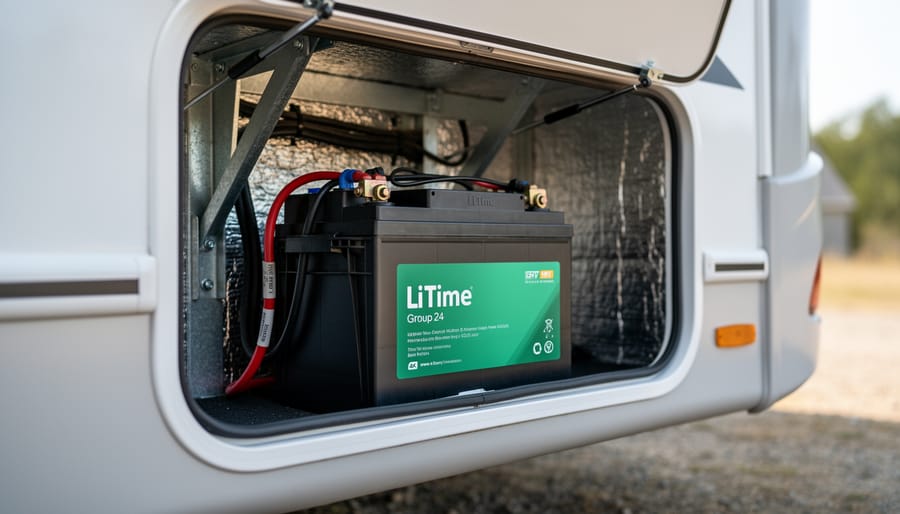
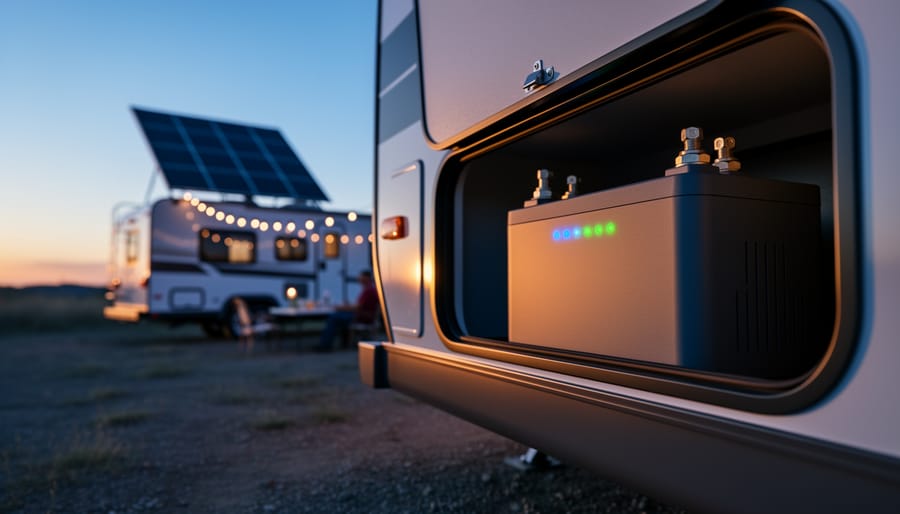
The LiTime Group 24 battery is shown installed inside a typical RV battery bay, highlighting an easy fit for DIY camper builds.
The LiTime 12V 100Ah Group 24 Bluetooth Lithium Deep Cycle Battery is the one I point most DIYers toward first, and the reason is mostly about fit. A 100Ah LiFePO4 battery is a sweet spot for RVs, campers and small off-grid builds. It’s big enough to run lights, a fridge, a water pump and phone charging through a weekend, but small enough that you can lift it, mount it and wire it without a headache. The Group 24 footprint is a common size for battery trays and compartments, which makes it an easy swap when you’re replacing a tired lead-acid battery. Don’t treat that as a guarantee, though. Measure your tray before you order.
The Bluetooth monitoring is what won me over. Instead of guessing from a voltmeter, you can check state of charge from your phone. The built-in BMS (battery management system) protects the cells from the things that kill lithium early, like overcharging, over-discharging and overcurrent. Low-temperature protection is part of that package, so the battery guards itself when you try to charge below freezing. That matters if you camp in shoulder season.
I learned the value of that the hard way. My first lead-acid bank sagged a few cold mornings in, and I never really knew how much charge I had left. Being able to open an app and see the number, rather than trusting a gut feeling, changed how I plan a trip.
Like other 12V lithium batteries of this type, it can be wired in series or parallel to grow your bank, as long as you stay inside the limits LiTime lists. Check those limits before you plan a bigger system.
One heads-up on specs. LiTime’s other 12V 100Ah model is a Group 27, and that one lists a 100A BMS, 1280Wh of energy, IP65 waterproofing and a claimed maximum of up to 15000 cycles. Don’t assume those numbers carry over to the Group 24. Confirm the exact Group 24 figures on the manufacturer listing before you buy.
Pros
The Group 24 footprint suits many RV and camper battery trays.
Bluetooth monitoring lets you check state of charge from your phone.
The built-in BMS and low-temperature protection guard the cells against common failure causes.
The 100Ah LiFePO4 format is easy to handle and a good size for weekend and small off-grid loads.
It can be expanded in series or parallel within the manufacturer’s stated limits.
Cons
You need to verify the exact Group 24 specs on the listing, since the Group 27 figures differ.
A single 100Ah battery won’t cover heavy loads or multi-day autonomy on its own.
Bluetooth monitoring only helps if you actually check it, and it needs a phone nearby.
Low-temperature protection pauses charging in freezing weather, so winter trips need a plan.
For most RV and camp builds, that balance of size, monitoring and protection is hard to beat.
2. ECO-WORTHY EnergyRock 12V 314Ah LiFePO4 Battery, Best High-Capacity Pick for Off-Grid Banks
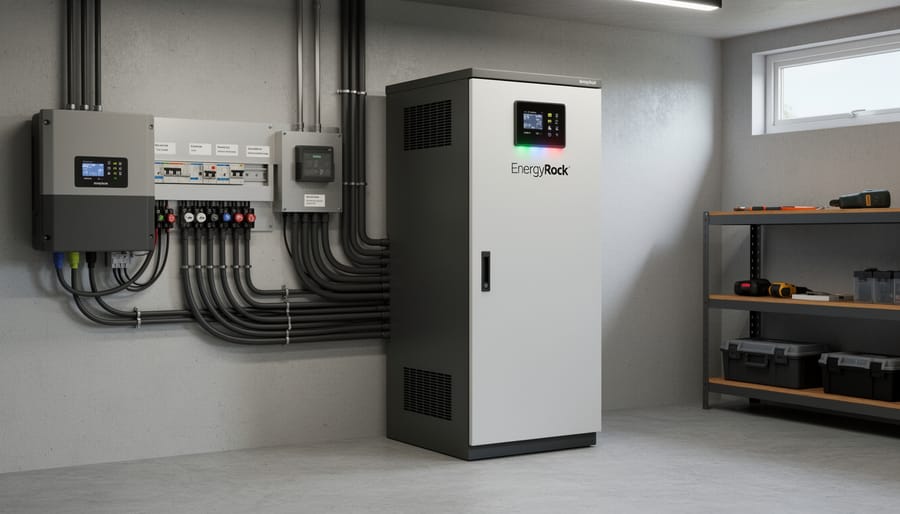
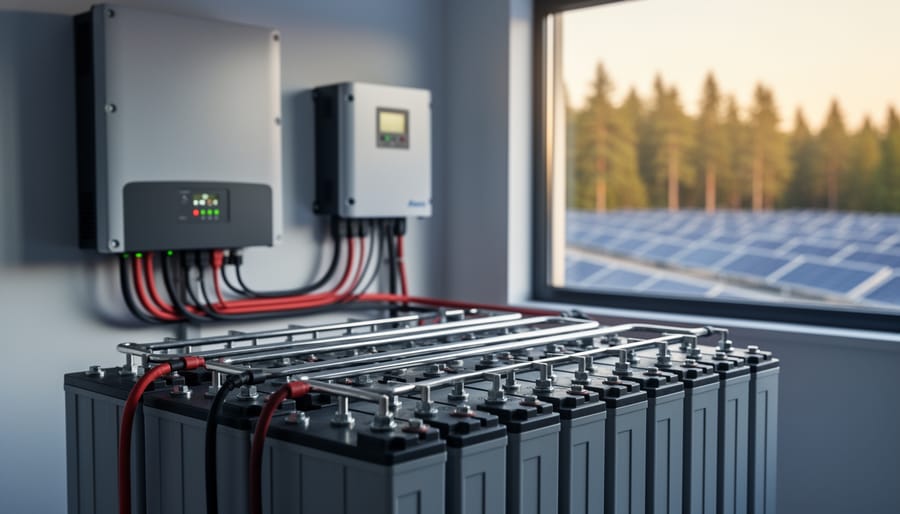
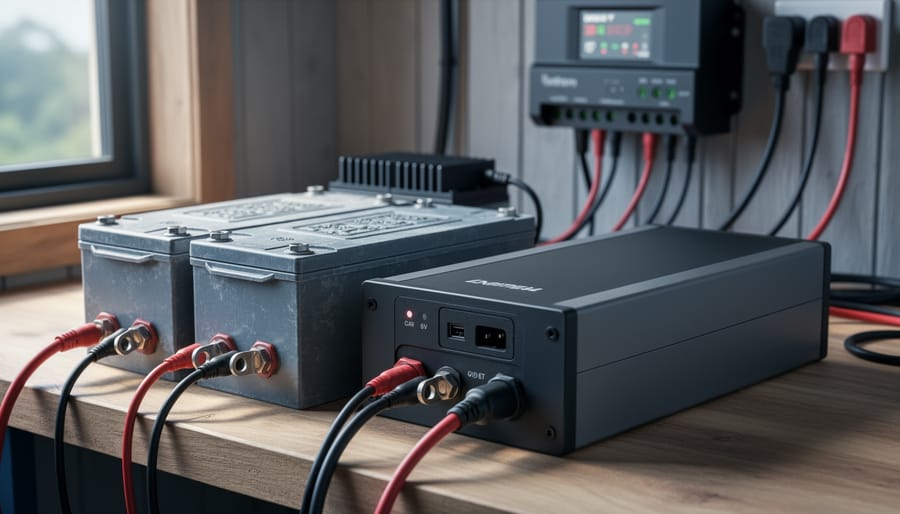
A large off-grid bank battery is pictured in a practical home-utility setup, emphasizing the EnergyRock’s role in high-capacity power systems.
When you’re building an off-grid bank, the ECO-WORTHY EnergyRock 12V 314Ah LiFePO4 battery is the one I’d point you to first. It’s a metal-case 12v lithium battery with a built-in 200A BMS, Bluetooth with SOC LEDs, a safety switch and low-temperature protection. The listing puts its energy at 4019Wh and describes it as good for up to 15000 deep cycles, which is a manufacturer claim, so treat it as a best-case figure rather than a promise.
So what does 314Ah actually mean for you? Compared with a typical 12v 100ah lithium battery, it’s roughly three times the capacity in one box. For a cabin, a van or a home backup bank, that’s the difference between running a fridge, lights and a laptop overnight and watching the state-of-charge creep down by breakfast. The Wh figure is the number to trust here, because it already folds voltage and capacity together. If you’re sizing a bigger system, a look at how a full-scale install is planned, like this mountain lodge system, shows why large capacity per battery keeps things manageable.
One big battery also simplifies wiring. Three or four smaller 12v lifepo4 battery units in parallel mean more bus bars, more cable runs, and more connection points that can loosen or run warm. A single high-capacity pack cuts that down, and fewer connections is one less thing to chase when something acts up. On my own bench I always look at the terminals and the quality of the case first, and a metal housing is reassuring there.
The trade-off is weight and mounting. A battery this size is heavy, so plan a solid, braced shelf, lift it with a second person, and keep it secured against movement if it’s going in a van or boat. Also check that your inverter and loads stay within what a 200A BMS can deliver, both continuous and surge.
Pros
A single 4019Wh pack gives you serious capacity without paralleling several batteries.
Bluetooth monitoring and SOC LEDs make it easy to see what’s left at a glance.
Low-temperature protection and a built-in 200A BMS add useful safeguards for cold-weather and high-draw use.
A metal case and a safety switch feel built for real off-grid and RV abuse.
Cons
It’s heavy and bulky, so mounting needs real planning.
The 15000-cycle figure is a manufacturer claim, not something you should bank on.
All that capacity is overkill for small, occasional-use setups.
Putting that much energy in one battery means a single point of failure to plan around.
If your loads are modest, you may be happier with something smaller. But for a hungry cabin or a serious van build, this is the pick that keeps the install clean.
3. LiTime 12V 100Ah Group 27 LiFePO4 Battery, Best for Marine and Wet Environments
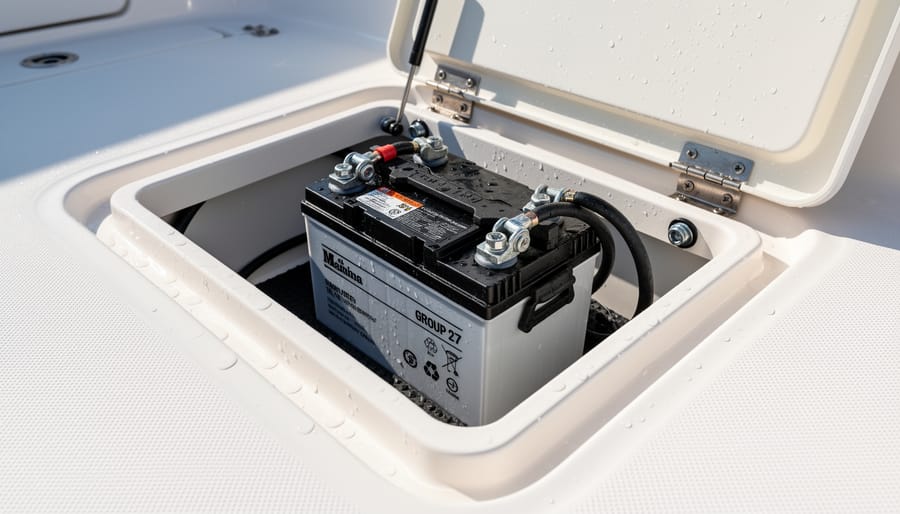
The Group 27 battery is shown in a marine-ready compartment, reflecting how it fits into wet-environment installations on boats.
When a battery lives on a boat, the real enemy isn’t the load, it’s the environment. Spray, condensation, bilge humidity and a damp battery compartment will punish any electronics that aren’t ready for it. That’s why the LiTime 12V 100Ah Group 27 LiFePO4 Battery is my pick for marine and wet environments.
On paper, this 12V lithium battery brings a 100A BMS, 1280Wh of energy, Bluetooth monitoring, low-temperature protection and IP65 waterproofing. LiTime also claims a maximum of 15000 cycles, which is a manufacturer figure, so treat it as a best-case number rather than a promise. The IP65 rating is the standout for boaters. It means the case is built to resist dust and water jets, which is genuinely useful if your battery sits low in a hull where moisture collects.
The Group 27 footprint is a common size for RV and marine battery boxes, so a 12V 100Ah lithium battery like this one often swaps in where an old lead-acid unit used to sit. Measure your box before you buy, though, since tray depth and terminal clearance vary from boat to boat.
For a trolling motor, a 12V LiFePO4 battery like this keeps voltage steadier as it drains, so your motor doesn’t fade the way it does on lead-acid. The 100A BMS sets your ceiling, so check your motor’s draw against it. As a boat house-bank, it can run your fish finder, bilge pump, lights and a small fridge, and the Bluetooth app lets you check state of charge from the helm. If your dock is lit by something like floating solar lights, you already appreciate gear that shrugs off water, and the same thinking applies to your power.
Pros
IP65 waterproofing suits damp compartments and spray-prone boats.
Group 27 sizing fits many RV and marine battery boxes.
Bluetooth monitoring lets you check the battery without opening the box.
Built-in low-temperature protection guards the cells in cold weather.
The 100A BMS handles typical trolling motor and house-bank loads.
Cons
The 100A BMS limit may be too low for large inverters or heavy motors.
The 15000-cycle figure is a manufacturer claim, not an independent result.
At 1280Wh, one battery won’t cover big off-grid or whole-boat demands.
My advice: if you’re replacing a flooded battery on the water, pick this one, and confirm your tray size and peak current first.
4. TalentCell 12V 3000mAh Rechargeable Lithium-Ion Power Bank, Best Compact Pick for Small DC Gear
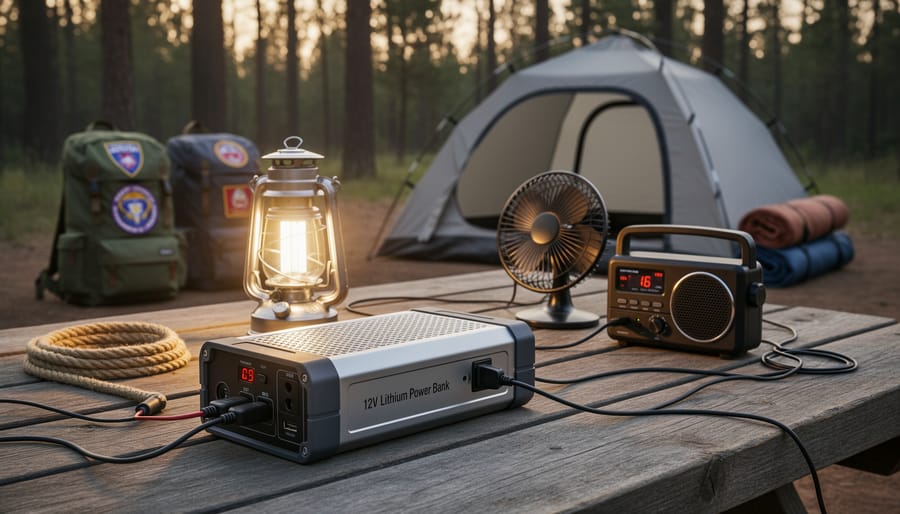
A compact 12V portable lithium power bank powers small DC gear for camping and scouting, showing the type of setup this battery is meant for.
The TalentCell 12V power bank is a different kind of product from everything else in this roundup, and that’s the point. It’s a rechargeable 12V 3000mAh lithium-ion pack with a DC output and a charger, aimed at gear like LED strips and lights, panels, amplifiers and CCTV cameras. Think of it as a portable power bank, not a deep-cycle bank. It won’t run an RV fridge, back up a cabin or anchor a solar bank, and I wouldn’t try to make it.
Where it shines is the small stuff. When we looked at it for camping and scouting projects, the appeal was obvious: a trail camera or a string of LED lights doesn’t need a 100Ah LiFePO4 battery strapped into a box. A pack you can toss in a daypack and plug straight into a 12V DC device is the smarter choice there, and it keeps the weight and wiring headaches away.
Charles has a habit of reaching for something this size when he’s testing a little project before committing to a full build. A small pack lets him confirm a camera or light setup works without hauling out a bigger battery, and it saves the 12V LiFePO4 battery for the jobs that truly need deep cycling.
Pros
It’s small and light enough to carry anywhere, which suits camping and scouting.
The DC output powers common 12V gear like LED strips, amplifiers and CCTV cameras directly.
It comes with a charger, so you can get started without hunting for extras.
It’s a sensible low-commitment way to power a small project before sizing a bigger bank.
Cons
It isn’t a deep-cycle battery and can’t carry RV, marine or home storage loads.
At 3000mAh, runtime is limited compared with a 12V 100Ah lithium battery.
It can’t be built up into a series or parallel bank the way larger LiFePO4 batteries can.
It uses lithium-ion rather than LiFePO4, so it doesn’t offer the same deep-cycling longevity.
Before you buy, check that your gear matches the pack’s 12V DC output and connector. If you’re powering anything bigger than a light or a camera, step up to one of the full-size batteries above instead.
How to Choose the Right 12V Lithium Battery for Your Setup
Buying a 12V lithium battery gets easier once you know a few terms. Here are the ones I lean on most when I’m comparing options:
LiFePO4
Lithium iron phosphate, a lithium chemistry known for stable deep cycling, which is why it dominates RV, boat and off-grid banks.
BMS
The battery management system, a small circuit board that protects against overcurrent, overcharge and over-discharge, and it sets your continuous and surge current limits.
Usable capacity
The energy you can actually pull out without harming the battery, which can differ from the label amp-hours.
Ah vs Wh
Amp-hours measure charge; watt-hours (Ah times voltage) measure energy, so Wh is the fairer way to compare batteries.
Group size
A standard case footprint, such as Group 24 or Group 27, that tells you whether it fits your battery box or tray.
Start with capacity. Convert everything to watt-hours and compare that to what your loads really draw each day. A 12V 100Ah lithium battery, like the LiTime Group 27 at 1280Wh, goes a long way, but the ECO-WORTHY 314Ah at 4019Wh is a different league. Run the numbers in the site’s battery bank sizing calculator before you commit, and if you’re still weighing whether to choose lithium at all, that guide covers the bigger picture.
Next, match the BMS to your loads. Check the continuous rating against your inverter’s draw, and give yourself headroom for surge. A 100A BMS and a 200A BMS suit very different setups. If you’re planning a dependable battery backup, size for peak demand, not just the average.
Cold weather matters too. Look for low-temperature charge protection, since charging lithium below freezing can damage it. Then confirm group-size fit and the manufacturer’s series and parallel limits before you plan a multi-battery bank. If you’re wiring up DC microgrids, those limits shape your whole layout.
I’ll admit my first bank was undersized. I added up label amp-hours, ignored my real evening loads, and ran flat by midnight more than once. Watt-hours and honest load math fixed that.
For value, think cost per usable kWh over the battery’s life, not the sticker. Long claimed cycle life usually makes a mid-range or premium pack the better deal.
12V Lithium Battery Quick-Check Before You Buy
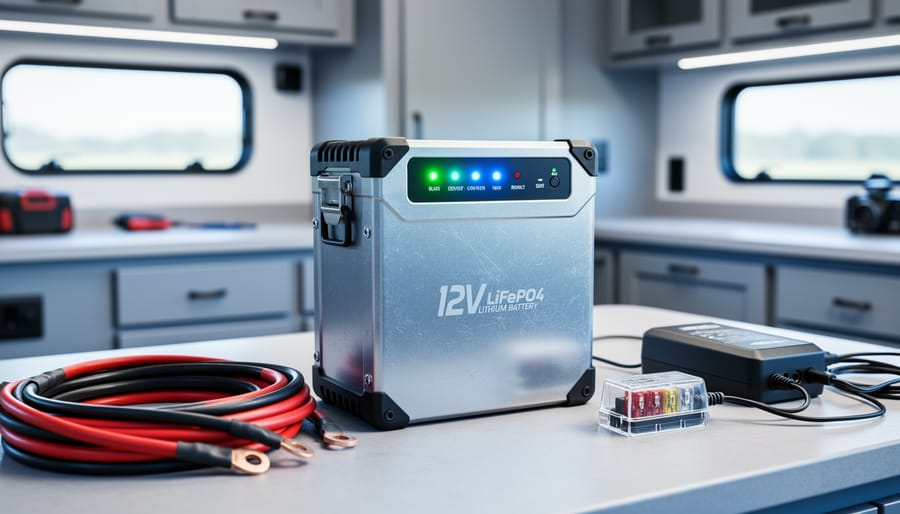
A clean workbench scene represents the decision process, matching battery capacity, protection, and use case before wiring anything up.
Before you click buy on any 12V LiFePO4 battery, run through four quick checks. First, look at the low-temperature charging limit. Plenty of packs, including the ECO-WORTHY EnergyRock and both LiTime models, list low-temp protection, but that only tells you the battery guards itself in the cold, not that it will charge happily there. Second, match the BMS rating to your loads. A 100A BMS and a 200A BMS handle very different inverters and appliances. Third, confirm the series and parallel limits on the listing before you plan a bigger bank. Fourth, don’t assume the label amp-hours equal what you’ll actually use day to day, since inverter losses and how deeply you cycle the pack both shave it down.
Spend ten minutes on this checklist now, and you’ll save yourself a returned battery or a tripped BMS later.
Common Questions About 12V Lithium and LiFePO4 Batteries
Newer DIYers tend to ask the same handful of things before they commit to a bank, so here are the answers we lean on most.
Are LiFePO4 batteries the best 12V lithium option for RV and off-grid use?
For deep cycling, yes. A 12V LiFePO4 battery is built for repeated heavy discharge, which is why every pick in this roundup besides the TalentCell power bank uses that chemistry.
Can I charge a 12V lithium battery in freezing temperatures?
Not safely unless the battery says it can. Look for low-temperature charge protection, like the LiTime and ECO-WORTHY models carry, and confirm the exact cutoff on the manufacturer listing.
How long does a 12V lithium battery really last?
Claims vary a lot. Manufacturers quote anywhere from several thousand cycles up to 15000 for some models, and ExpertPower, for example, describes 4000 to 7000 cycles and a 10-year expected lifetime. Treat the biggest numbers as best-case ratings, not promises.
Can I connect 12V lithium batteries in series or parallel?
Often, but every model has its own limits, so check the listing before you wire anything together. Mixing different batteries or ages in one bank is where most beginner problems start.
Sizing is the other big question. A single 12V 100Ah lithium battery covers a weekend camper with light loads, while a cabin, van or backup bank usually wants more. That’s where something like the 314Ah ECO-WORTHY can replace several smaller batteries with one. Run your numbers through our battery bank sizing calculator first, since label Ah and what you actually use are rarely the same thing.
Swapping out lead-acid is usually a drop-in job when the group size fits, but double-check that your charger or alternator can handle lithium. If you’re building toward energy independence, getting this foundation right is the part that pays you back for years.
So where does that leave you? For most RV, camper and small off-grid builds, the LiTime 12V 100Ah Group 24 Bluetooth Lithium Deep Cycle Battery is the easy default: a drop-in 12V LiFePO4 battery in a familiar footprint, with Bluetooth monitoring and the protections you’d want. If you’re building a bigger bank for a cabin, van or home backup, the ECO-WORTHY EnergyRock 12V 314Ah packs a lot of energy into one case and can simplify your wiring. And if your battery lives near water, the LiTime 12V 100Ah Group 27 is the one to look at, thanks to its IP65 waterproofing.
Whichever 12V lithium battery you choose, don’t skip the planning step. Sizing a bank before you buy saves you from the kind of mistake I made early on, and it only takes a few minutes.
Tip: Run your loads through our battery bank sizing calculator before you order, so you know how many 12V 100Ah lithium batteries (or how much capacity) you actually need.
Once your bank is up and running, I’d love to hear about it. Tell us what you built, what you’d do differently, and what surprised you along the way. That’s how this community gets better at DIY solar, one real-world install at a time.
Final Verdict
Our top pick is the LiTime 12V 100Ah Group 24 Bluetooth Lithium Deep Cycle Battery. It wins because the 100Ah LiFePO4 format, the Group 24 footprint and built-in Bluetooth monitoring fit the way most RV, camper and small off-grid builds actually come together. If you want a straightforward 12V lithium upgrade without overbuilding, this is the one to start with.
How useful was this post?
Click on a star to rate it!
Average rating 0 / 5. Vote count: 0
No votes so far! Be the first to rate this post.
We are sorry that this post was not useful for you!
Let us improve this post!
Tell us how we can improve this post?
charlesnoble
Here at Spheral Solar, I’m a hands-on solar power enthusiast, constantly exploring and experimenting with DIY solutions. I’m dedicated to sharing my discoveries, insights, and even the bumps I hit along the way, all in the pursuit of a more sustainable future.
Why Lithium Batteries Changed Everything for… by Charlesnoble January 26, 2026 Calculate your daily energy consumption in watt-hours before shopping for any lithium battery by listing every device you’ll power, its wattage, and hours of daily use—this single number determines whether you need a 5kWh system or a 20kWh system and prevents the costly mistake of undersizing. Multiply your daily usage…
The Battery That Keeps Your Off-Grid Solar Running… by Charlesnoble March 13, 2026 Understand your energy storage needs by calculating your daily power consumption in watt-hours—multiply each appliance’s wattage by hours used, then add 20% for system losses and another 25% for days of autonomy when panels aren’t producing. This calculation determines your minimum battery bank capacity and prevents the costly mistake of…
Why DC Microgrids Are Perfect for Your DIY Solar Setup by Charlesnoble January 7, 2026 Picture this: you’re running LED lights, a laptop, and a small fridge in your off-grid cabin, and every device is drawing power directly from your solar panels without converting DC to AC and back again. That’s the elegant simplicity of a DC microgrid system, where electricity flows in its natural…
Why Your DIY Solar Microgrid Will Fail Without the… by Charlesnoble November 22, 2025 Understand that a microgrid energy storage system is your battery bank plus the smart components that decide when to store solar power, when to use it, and when to pull from the grid or a backup generator. This integrated approach transforms disconnected parts into a cohesive power management solution that…
Growing Crops Under Solar Panels Actually Works… by Charlesnoble April 3, 2026 Imagine doubling the productivity of your land by growing crops and generating electricity in the same space. That’s exactly what agrivoltaics makes possible—and it’s not just for large-scale farms anymore. In the interest of transparency, we earn a commission on some purchases made through links on this site. An agrivoltaic…
Floating Solar Panels Could Change Where You Generate Power by Charlesnoble November 29, 2025 Picture your backyard pond doing double duty: supporting wildlife while generating clean electricity for your home. That’s the promise of floating solar panels, an innovation that’s transforming how we think about renewable energy installation. Floating solar systems, also called floatovoltaics, mount photovoltaic panels on buoyant platforms that rest on water…
Subscribe for handpicked DIY projects, exclusive tips, and giveaways.