3 Best LiFePO4 Batteries for RV in 2026, Reviewed for Real Rigs
Updated:
The LiTime 12V 230Ah Bluetooth lithium battery is our top pick for most RVers, because it gives you enough usable capacity to dry-camp a long weekend without babysitting a battery monitor every hour. If your rig is bigger or your power appetite is heavier, the ECO-WORTHY 12V 314Ah is the one to look at. And if you just want a simple drop-in swap for an aging lead-acid house battery, the ECO-WORTHY 12V 100Ah with Bluetooth is the budget-friendly way in.
In the interest of transparency, we earn a commission on some purchases made through links on this site. As an Amazon Associate I earn from qualifying purchases.
Here’s the real reason a LiFePO4 battery for RV use wins. You can pull 80% to 100% of its capacity without harming it, where lead-acid asks you to stop around half. Add a weight savings of up to 70%, plus a lifespan of up to 10 years and over 4,000 cycles at full depth of discharge, and the math gets hard to ignore.
But not every RV lithium battery is built the same. We looked at BMS limits, low-temperature charge protection, how each 12V LiFePO4 RV battery handles bank wiring, and whether it plays nicely with alternator, shore power, and roof solar charging.
I’ve spent enough nights staring at a dying voltage readout to know that capacity numbers on a box only tell half the story. So we focused on how each battery behaves in real camping use, then ranked them so you can pick with confidence.
Key Takeaway: Match capacity to your daily watt-hour use, confirm the BMS can handle your biggest load, and decide how the battery will be charged before you buy. Those three checks matter more than chasing the biggest number on the label.
Our Top Picks at a Glance
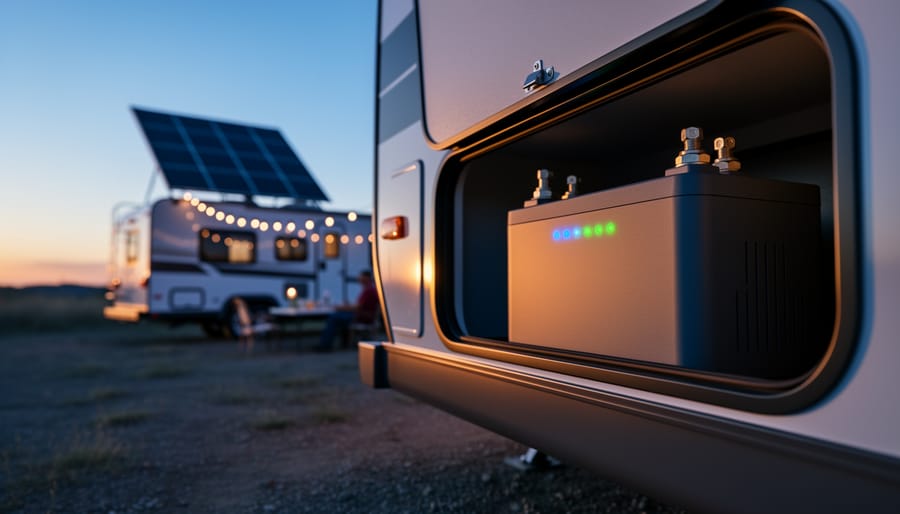
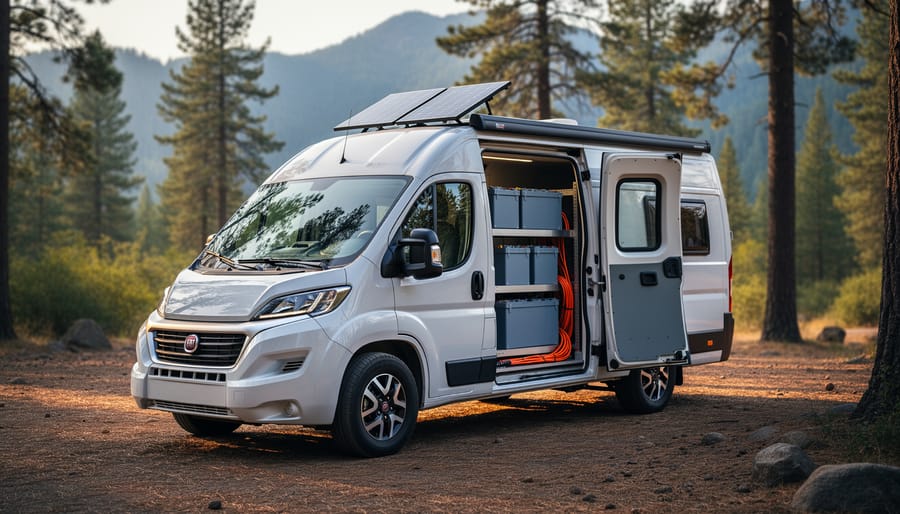
An off-grid RV at sunset with a visual emphasis on lithium battery power supporting day-to-night living during camping.
Short on time? Here’s the lineup, ranked in the same order as the full reviews below. Each one is a 12V LiFePO4 RV battery, so it works as a drop-in house bank upgrade over lead-acid.
LiTime 12V 230Ah Bluetooth Lithium RV Battery, best for long dry-camping weekends: the 230Ah capacity class and Bluetooth monitoring suit a mid-size rig running a fridge, lights and a small inverter off-grid.
ECO-WORTHY 12V 314Ah LiFePO4 Battery, best for big rigs and heavy power users: 4019Wh and a 200A BMS give you serious runway for inverter loads and extra days away from a plug.
ECO-WORTHY 12V 100Ah LiFePO4 Battery with Bluetooth, best budget-friendly drop-in upgrade: a Group 24 fit and built-in 100A BMS make it an easy swap for weekenders, vans and small trailers.
Two quick notes before you dive in. First, I list value in words rather than dollar amounts, so think of the 100Ah as the budget-friendly entry point and the 314Ah as the heavy-duty choice for bigger power appetites. Second, check the spec sheet for BMS surge ratings and cold-charge protection on any battery you’re eyeing, since those details vary and matter for real RV use. If you’re unsure how much capacity you need, jump ahead to the buyer’s guide and try the site’s calculators first.
How We Tested and Chose These RV Lithium Batteries
Picking a battery for a camper isn’t about chasing the biggest number on the box. We compared these RV lithium batteries the way a DIYer would before spending a weekend wiring one in, and we tied every criterion to something that actually happens on the road. Here’s what we looked at:
Usable capacity: how many amp-hours or watt-hours you can really pull out to run the fridge and lights overnight.
BMS limits: the battery management system’s continuous and surge ratings, which decide whether an inverter or microwave will trip it.
Cold protection: low-temperature charge cutoff or self-heating, so a frosty morning doesn’t damage the cells.
App monitoring: Bluetooth readouts of charge level, so you aren’t guessing at 2 a.m.
Weight: how much the battery adds to your rig and how easy it is to lift into a bay.
Fit: whether it drops into a Group 24 slot or needs a bigger compartment.
Cycle life: how many charge-and-discharge rounds it should last, which sets its long-term value.
Here’s how each one plays out in real life. A furnace fan and fridge run all night, so usable capacity matters most there. An inverter is where BMS surge limits earn their keep, because a coffee maker can ask for far more current than your lights ever do. Cold protection matters if you camp shoulder-season, and fit decides whether the battery goes in without cutting into your bay.
When Charles plans a DIY install, he weighs fit and BMS limits first, since those are the two things you can’t fix after the purchase. Then comes capacity, then the nice-to-haves like Bluetooth.
We want to be straight with you about our method. These picks rest on manufacturer specifications and verified research, not on lab numbers we made up. Where a detail isn’t confirmed, we tell you to check the spec sheet.
As for why trust us, Charles has spent years building solar setups into his own vehicles, so these criteria come from real wiring and real dry-camping weekends. We’re not here to push a product. We’d rather you buy the right battery once.
Why LiFePO4 Beats Lead-Acid in an RV House Bank
The first dry-camping weekend after I pulled my old lead-acid bank out of the rig, I noticed two things right away: my back didn’t hurt, and the fridge was still humming happily on Sunday afternoon. That’s the real-world version of why an RV lithium battery has become the default house bank choice.
Here are the terms worth knowing before we get into the numbers:
LiFePO4
Short for lithium iron phosphate, a lithium battery chemistry known for stable, steady power and strong deep-cycle performance.
Depth of discharge
How much of the battery’s stored energy you’ve used. Using 80% of the capacity means an 80% depth of discharge.
Cycle life
The number of full charge-and-discharge rounds a battery can handle before it holds noticeably less energy.
Usable capacity
The portion of a battery’s rated capacity you can actually draw on without shortening its life.
BMS
The battery management system, a built-in circuit board that guards against overcharging, over-discharging, overheating and excess current.
Usable capacity is where the gap really shows. With lead-acid, you generally need to stop well short of empty to protect the battery (the lead-acid voltage chart shows how quickly voltage sags as you go deeper). According to Sike Power’s RV camping guide, you can use 80% to 100% of a lithium battery’s capacity without harming it. In practice, a 100Ah lithium battery gives you far more usable amp-hours than a 100Ah lead-acid one.
The same guide claims these batteries can last up to 10 years with over 4,000 cycles at 100% depth of discharge, and that they’re up to 70% lighter than lead-acid. Treat those as manufacturer and guide claims rather than guarantees, since real life depends on how you charge, discharge and store them. Still, the direction is clear, and it’s why a 12V LiFePO4 RV battery is a sensible long-term upgrade.
Lithium also accepts charge quickly, so alternator, shore power or roof solar can refill it faster. If you camp in the cold, read up on why LiFePO4 fails in winter before you buy. For peace of mind about the chemistry itself, see our notes on LiFePO4 safety in RVs.
1. LiTime 12V 230Ah Bluetooth Lithium RV Battery, Best for Long Dry-Camping Weekends
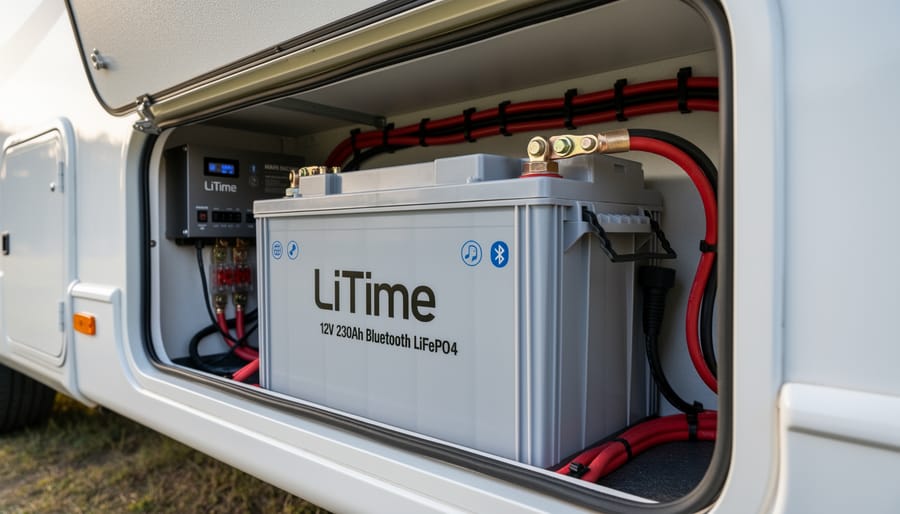
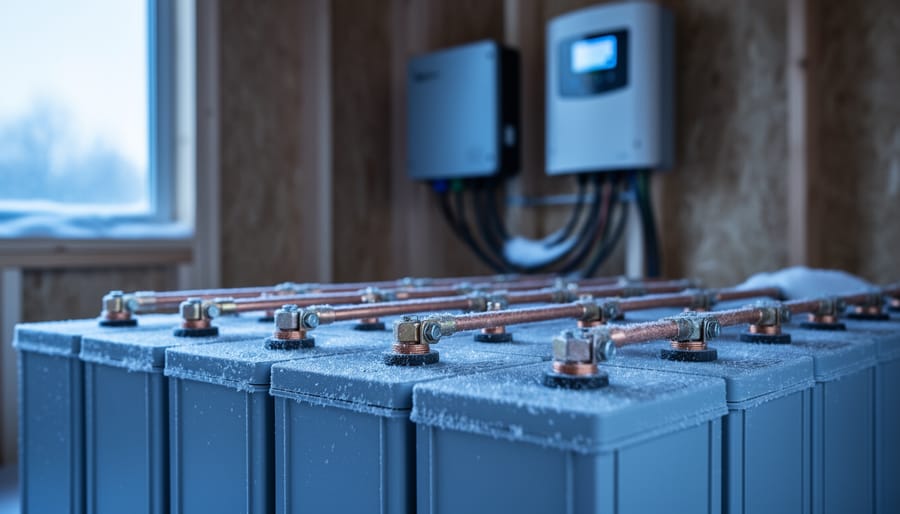
A LiTime 12V 230Ah Bluetooth LiFePO4 battery installed in an RV battery bay, highlighting the practical fit and tidy cabling for off-grid use.
When I think about a long dry-camping weekend, I think about a fridge that never stops, lights that stay on after dark, and a small inverter that wakes up for a laptop or a blender. That’s the job the LiTime 12V 230Ah Bluetooth Lithium RV Battery is built around, and it’s why it sits at the top of our list for mid-size rigs.
The 230Ah capacity class is the sweet spot here. It gives a travel trailer or Class C a real cushion for off-grid living, so you aren’t watching the voltage every few hours. Because LiFePO4 chemistry lets you use roughly 80% to 100% of the capacity without harming the cells, a 230Ah lithium RV battery delivers far more usable power than the same number printed on a lead-acid label. That’s the main reason a 12V LiFePO4 RV battery this size can stretch a weekend comfortably.
The Bluetooth monitoring is the part I’d miss most if it were gone. Checking state of charge from your phone, instead of crawling into a battery bay, makes it easy to see how the fridge and inverter are really treating your bank. For anyone newer to lithium, that visibility builds confidence quickly.
It also fits flexibly. One battery can anchor a modest setup, and you can wire a second in parallel later if your power habits grow.
Pros
The 230Ah capacity class suits a fridge, lights and a small inverter off-grid.
Bluetooth monitoring lets you check charge from your phone.
An RV-focused design makes it a natural lifepo4 battery for rv house banks.
It can run alone or be paralleled with another unit to grow your bank.
Cons
A higher-capacity battery needs more room than a standard drop-in unit.
It’s more battery than a tiny weekend rig will ever use.
BMS limits, cold-charge protection and dimensions must be checked before you commit.
Before buying, open the spec sheet and confirm the BMS continuous and surge ratings against your inverter and heaviest appliance. Check whether it has cold-charge protection if you camp in freezing weather, and measure your bay against the listed dimensions. I’d rather you spend ten minutes on that than discover a mismatch after the install.
Value-wise, think of it as a mid-range investment in long-term, low-maintenance power rather than a bargain pick. If you have a tight battery bay, or a tiny rig that only sees a night or two of light use, you can skip it and look at a smaller option further down the list.
2. ECO-WORTHY 12V 314Ah LiFePO4 Battery, Best for Big Rigs and Heavy Power Users
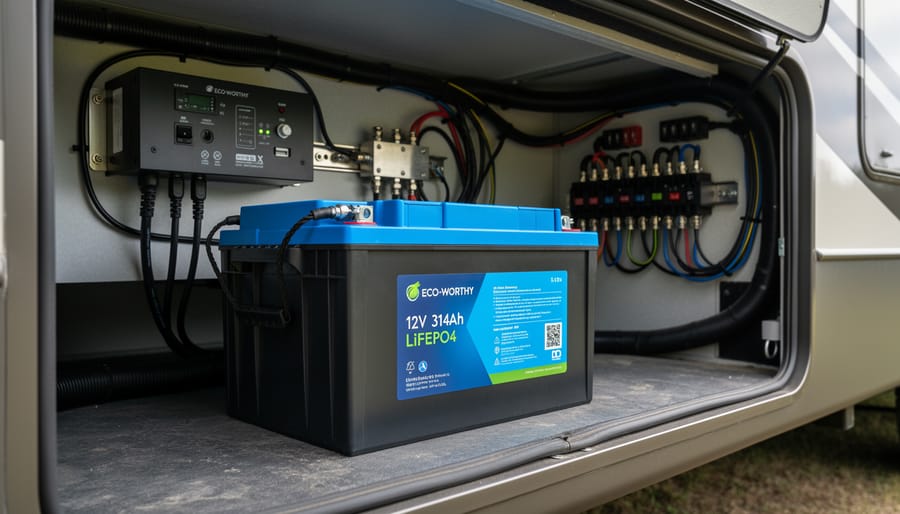
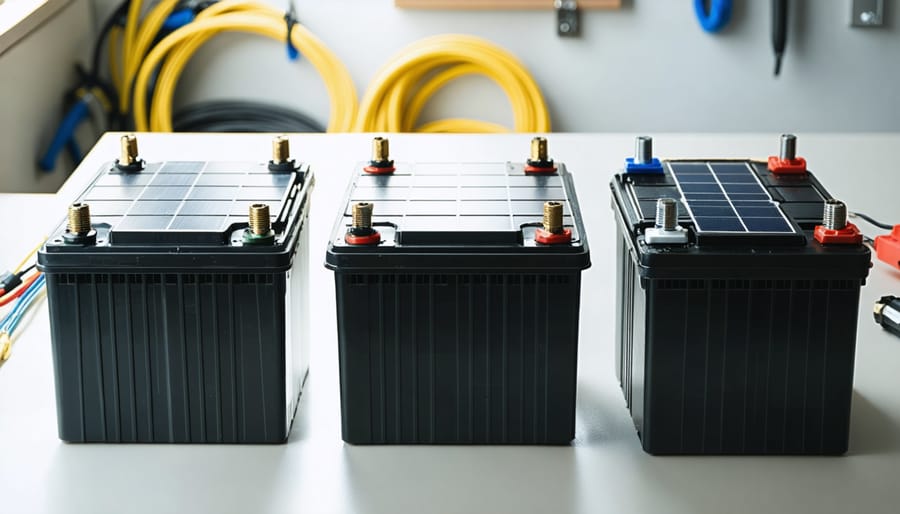
The ECO-WORTHY 12V 314Ah LiFePO4 battery shown in a large RV battery bay setup, emphasizing its heft and serious power-user role.
The ECO-WORTHY 12V 314Ah is the one I point people toward when a rig has real appetite for power. It’s a big-format 12V LiFePO4 RV battery rated at 4019Wh, with Bluetooth monitoring, state-of-charge LEDs, low temperature protection and a 200A BMS. For a lot of full-timers and boondockers, that’s the whole shopping list.
So what does 4019Wh mean once you’re parked off-grid? Think in terms of days rather than hours. A fridge, LED lighting, a water pump and daily laptop charging can run for a good stretch on a bank this size before you start watching the state of charge nervously. You can also run an inverter for short bursts, like a coffee maker, a microwave or a hair dryer, without feeling like you’re draining the whole battery for one breakfast.
That 200A BMS rating is the part I’d study most closely. The BMS (battery management system) is the built-in circuit board that protects the cells, and its current limit decides how hard you can pull from the battery. Inverter loads draw big current at 12V, so a 200A BMS gives you real headroom for a decent-sized inverter running heavy appliances. If the BMS is too small, it simply shuts the battery off mid-use, which is a frustrating way to learn your limits.
Low temperature protection works by stopping charging when it’s freezing out. That might sound like a limitation, but it’s a good thing: charging lithium cells below freezing can damage them permanently. The battery is protecting its own lifespan. Just plan for it if you winter camp, since your solar or alternator charging won’t help until things warm up.
Tip: Check your battery bay dimensions and your inverter’s continuous draw against the BMS rating before ordering a large-format battery like this one.
The practical caveat is size and weight. A single big battery is simpler to wire than a bank of smaller ones, but it’s heavy and needs a bay that fits it and a way to get it in safely. In terms of value, I’d call it a premium-capacity choice that makes the most sense if you’ll actually use that energy.
3. ECO-WORTHY 12V 100Ah LiFePO4 Battery with Bluetooth, Best Budget-Friendly Drop-In Upgrade
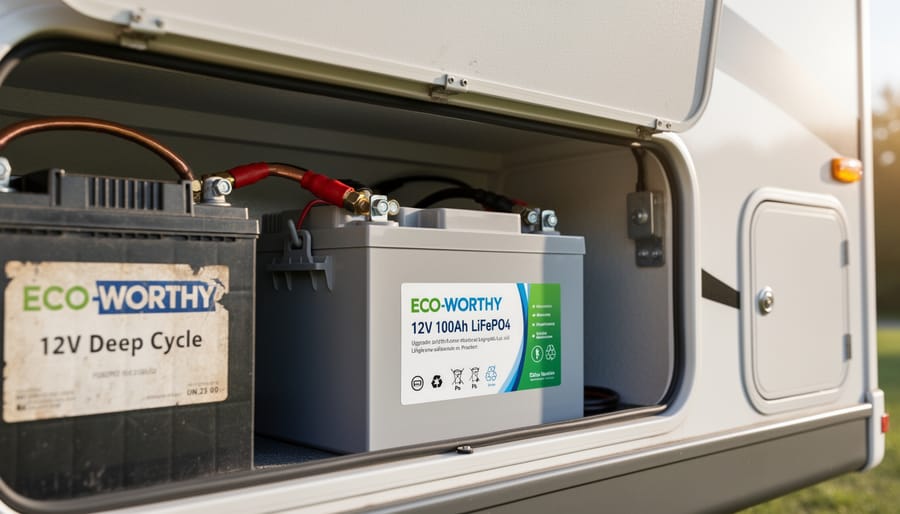
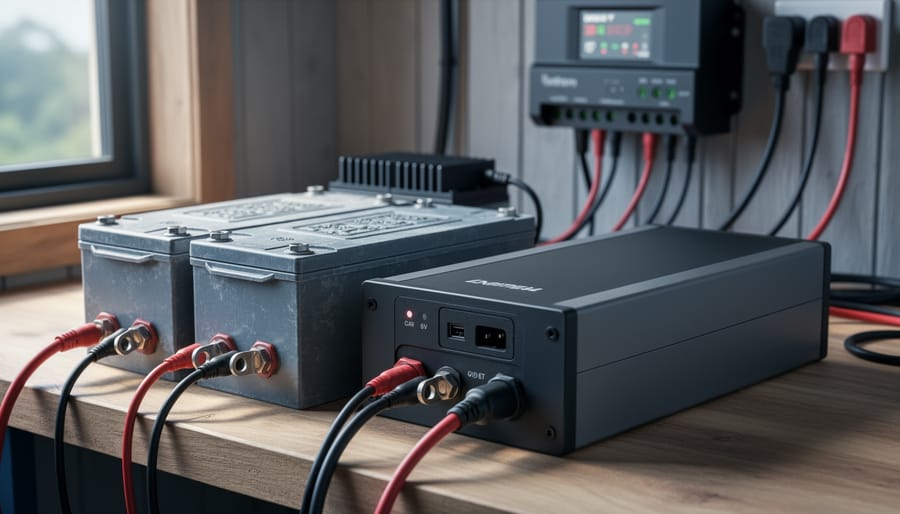
A visual context shot showing an ECO-WORTHY 12V 100Ah LiFePO4 battery as a practical upgrade alternative for a smaller RV battery bay.
The ECO-WORTHY 12V 100Ah LiFePO4 battery is the one I’d point most first-timers toward. It’s a Group 24 fit, so if you’re pulling out an old lead-acid house battery in a weekend trailer or camper van, this one slides into the same tray with little fuss. For a budget-friendly drop-in upgrade, that’s hard to beat.
Here’s what the spec sheet gives you: Bluetooth monitoring, a maximum of 1280Wh of energy, low temperature protection, and a built-in 100A BMS. The Bluetooth lets you check state of charge from your phone instead of guessing from a voltage reading. If you like to know what those numbers mean, our LiFePO4 voltage chart is a handy companion. The low temperature protection halts charging in freezing conditions, which protects the cells, so you’ll want to remember that on cold mornings. The 100A BMS handles typical RV loads like lights, a fridge, and a water pump comfortably, though a large inverter would be pushing it.
What I like most is how easily it scales. Wire several identical 12V units in parallel and you add capacity while staying at 12V. Wire them in series and you build a 24V bank. If you’re unsure which direction fits your rig, our breakdown of the 12V vs 24V setup walks through the tradeoffs.
Don’t get hypnotized by the biggest number on the label, though. What matters is matching your bank to your daily amp-hour use. Add up what you actually run, then use a power system calculator to find your target. From there, solar panel sizing tells you what to put on the roof to refill it. And if the panels ever underperform, these RV solar charging fixes are a good place to start troubleshooting.
Who should skip it? If you run a big inverter or a roof air conditioner, a single 100Ah unit won’t cut it. For everyone else, it’s a friendly entry into lithium.
Here’s the three-pick comparison at a glance. We kept it to details we can stand behind from manufacturer information, so anything we couldn’t verify says “check spec sheet” rather than a guess.
Battery
Capacity and Energy
Monitoring and Cold Protection
BMS and Fit
Value Tier
LiTime 12V 230Ah Bluetooth Lithium RV Battery
230Ah; check spec sheet for Wh
Bluetooth; check spec sheet for cold protection
Check spec sheet for BMS rating and dimensions
Mid-range
ECO-WORTHY 12V 314Ah LiFePO4 Battery
314Ah, 4019Wh
Bluetooth, state-of-charge LEDs, low temperature protection
200A BMS; large, heavy single unit
Premium
ECO-WORTHY 12V 100Ah LiFePO4 Battery with Bluetooth
100Ah, max 1280Wh
Bluetooth, low temperature protection
Built-in 100A BMS; Group 24 fit
Budget-friendly
A few things stand out when you line them up. The 100Ah ECO-WORTHY is the only one that drops straight into a Group 24 tray, which makes it the easiest swap for a small trailer or camper van. The 314Ah is the heavy hitter for inverter loads thanks to its 200A BMS, but you’ll want to measure your battery bay first. The LiTime 230Ah sits in the middle on capacity, so confirm its BMS limits and cold-charge behavior before you commit.
If you’re curious how capacity options scale across the wider market, Digi Marker makes 12.8V LiFePO4 batteries from 60Ah (768Wh) up to 300Ah (3840Wh). That range is a handy reference when sizing a 12V LiFePO4 RV battery bank to your own daily amp-hour use.
How to Choose the Right 12V LiFePO4 RV Battery for Your Setup
Start with the number that matters most: how much energy you actually use in a day. List your loads (fridge, lights, water pump, laptop, furnace fan), multiply each one’s watts by the hours it runs, and add them up. That total, in watt-hours, tells you how big your bank needs to be. Because a LiFePO4 battery lets you use roughly 80% to 100% of its rated capacity without harm, according to Sike Power, a 100Ah 12V battery (about 1280Wh) gives you far more usable energy than the same size lead-acid. Our site’s solar system calculators will do this math for you, and I’d say try them before you shop. On my own builds, the bank I sized on paper always beat the one I picked by gut feel.
Next, check the BMS (battery management system), the built-in brain that protects the cells. Look at its continuous rating and its surge rating. A 100A BMS, like the one on the ECO-WORTHY 100Ah, is plenty for a fridge and lights, but a big inverter running a microwave can ask for a lot more. The 200A BMS on the ECO-WORTHY 314Ah suits heavier loads. Add up your inverter’s maximum draw, divide by 12 volts, and make sure the BMS clears that number with room to spare. For the LiTime 230Ah, confirm both ratings on the spec sheet.
Cold weather is the next question. Many RV lithium batteries, including both ECO-WORTHY models here, have low-temperature protection that stops charging when it’s freezing. That protects the cells, but it also means no charging on a frosty morning. Some batteries use self-heating instead, which warms the cells so charging can continue. If you camp in winter, that difference is worth paying attention to.
Then think about wiring. Paralleling 12V batteries adds capacity at the same voltage, while wiring in series builds a 24V bank, which cuts current for big inverters. Match every battery in a bank.
Finally, plan your charging sources. An alternator needs a DC-DC charger so it doesn’t overload. Shore power needs a lithium-compatible charger. Roof solar should run through an MPPT controller. Any one of these works, but know which you’ll rely on before you buy.
LiFePO4 RV Battery FAQs
How long does an RV lithium battery last?
Guides like Sike Power’s say a LiFePO4 battery can last up to 10 years and over 4,000 cycles at 100% depth of discharge. Treat that as a manufacturer-style claim, not a guarantee, since real life depends on how hard you cycle it and how well you charge it.
Can I swap my lead-acid battery for a LiFePO4 one directly?
Often, yes. Something like the ECO-WORTHY 12V 100Ah is built to fit a Group 24 space, so it can replace a lead-acid battery of that size. Just check that your charger and converter have a lithium-compatible setting first.
Can I charge a LiFePO4 battery in freezing weather?
Not safely without protection. Low-temperature protection, like on the ECO-WORTHY models, stops charging in the cold to protect the cells, and that’s a good thing. Discharging is usually fine in the cold, but check your battery’s spec sheet for exact limits.
How many amp-hours does my RV need?
Add up what you run each day, such as the fridge, lights, a fan and device charging, then size the bank to cover that with some headroom. The bigger the daily draw, the more you’ll lean toward something like the LiTime 12V 230Ah or the ECO-WORTHY 314Ah.
Charging sources matter as much as capacity. Most DIYers charge a lithium house bank from three places: the alternator through a DC-DC charger, shore power through a lithium-compatible charger, and roof solar through an MPPT controller. Plan for at least one of those, and ideally two, so a cloudy stretch doesn’t leave you stuck.
As for wiring, a 12V LiFePO4 RV battery bank can grow by connecting units in parallel for more capacity, or in series if you’re building a 24V system. Keep an eye on the BMS limits when you do, because that’s where inverter loads can trip things up.
So here’s where it lands. If your rig runs a fridge, lights and a small inverter through long dry-camping weekends, the LiTime 12V 230Ah Bluetooth Lithium RV Battery is the one to look at first. Big rigs and heavy power users will get more from the ECO-WORTHY 12V 314Ah, especially with its 200A BMS handling inverter loads. And if you’re swapping out a Group 24 lead-acid battery in a van or small trailer, the ECO-WORTHY 12V 100Ah with Bluetooth is an easy, budget-friendly way into an RV lithium battery.
Before you buy anything, size your bank. Work out your daily amp-hour or watt-hour use, then run the numbers through our solar system calculators. A well-sized 12V LiFePO4 RV battery bank beats chasing the biggest number every time, and it keeps you from overspending on capacity you’ll never touch.
That’s really the heart of DIY solar: start small, learn as you go, and build something that fits how you actually travel. Once your rig is wired up, share it. Post your setup, your lessons and even your mistakes, because the next person staring at a pile of cables is counting on folks like you to show the way.
Final Verdict
For most mid-size RVs, the LiTime 12V 230Ah Bluetooth Lithium RV Battery is our top pick. Its 230Ah capacity covers a fridge, lights and a small inverter through a long dry-camping weekend, and Bluetooth monitoring lets you see what’s left without guessing. It suits weekenders and mid-size rig owners who want one dependable house battery, though you should confirm it fits your bay.
How useful was this post?
Click on a star to rate it!
Average rating 0 / 5. Vote count: 0
No votes so far! Be the first to rate this post.
We are sorry that this post was not useful for you!
Let us improve this post!
Tell us how we can improve this post?
charlesnoble
Here at Spheral Solar, I’m a hands-on solar power enthusiast, constantly exploring and experimenting with DIY solutions. I’m dedicated to sharing my discoveries, insights, and even the bumps I hit along the way, all in the pursuit of a more sustainable future.
Lifepo4 Voltage Chart: Understanding Battery… by Charlesnoble October 18, 2023 A LiFePO4 battery voltage chart displays how the voltage is related to the battery’s state of charge. These charts vary depending on the size of the battery—whether it’s 3.2V, 12V, 24V, or 48V. This article will dive deep into interpreting these charts and their practical implications. We’ll also cover the…
Why Lithium Iron Phosphate Batteries Won’t Explode… by Charlesnoble December 25, 2025 No, lithium iron phosphate batteries don’t explode under normal conditions—and that’s precisely why I switched my entire off-grid solar setup to LiFePO4 technology three years ago without a single safety incident. The fear is understandable. We’ve all seen news reports about phone batteries catching fire or hoverboards bursting into flames.…
Why Your LiFePO4 Battery Fails in Winter (And How to Fix It) by Charlesnoble February 9, 2026 Your lithium iron phosphate battery won’t charge below 32°F and risks permanent damage from freezing—a problem that catches many first-time solar DIYers off guard during their system’s first winter. LiFePO4 batteries operate within a specific temperature window: charging requires 32°F to 113°F (0°C to 45°C), while discharging tolerates a wider…
Which Solar Battery Actually Lives Up to the Hype? by Charlesnoble November 8, 2025 Compare capacity ratings in amp-hours (Ah) and watt-hours (Wh) first—these numbers tell you exactly how much energy each battery stores and how long it’ll power your devices. Check the depth of discharge (DoD) percentage next, because a battery with 90% DoD gives you far more usable energy than one limited…
How Long Will a 100Ah Battery Run a TV by Charlesnoble November 6, 2023 A 100Ah battery’s ability to power a TV depends on the battery chemistry, the TV’s energy consumption, and losses through voltage conversion. The key is calculating the battery’s usable capacity and the TV’s hourly energy draw. In general, a 100Ah lithium battery can run an LED TV for 15-25 hours…
Subscribe for handpicked DIY projects, exclusive tips, and giveaways.
The DJI Power 2000 is our top pick for most people shopping for a portable solar generator in 2026, because it gets you back to full power fast without…