Hook Up Your Solar Pool Heater the Right Way (Before You Waste Your Money)
Updated:
Position your solar collectors above pool water level whenever possible to enable gravity drainage when the system shuts off, preventing freeze damage and extending panel life. This single design choice eliminates the most common failure point in DIY solar pool heating installations.
Study the three-zone valve configuration before purchasing components. Your diagram must show water flowing from the pool filter, through a diverter valve, up to the solar collectors on your roof, and back to the pool return. When the collectors reach optimal temperature, the valve redirects water through the panels. When clouds pass or evening arrives, it bypasses them entirely. Missing this automatic switching mechanism means you’ll heat your pool during the day but cool it at night, wasting all your effort.
Install check valves at the highest point of your collector array to prevent backflow and air lock issues that reduce heating efficiency by up to 40%. Most diagrams show these valves but don’t explain why they’re positioned there. The physics are simple: without them, water drains backward through your panels when the pump stops, creating air pockets that block proper circulation when the system restarts.
Verify your existing pool pump can handle the additional head pressure from rooftop panels before connecting anything. I learned this the hard way when my first installation moved water beautifully through ground-level collectors but barely trickled when I elevated them 15 feet. Calculate the vertical rise plus pipe friction losses, then confirm your pump’s specifications can overcome that resistance. If not, you’ll need a booster pump in your diagram, adding complexity but ensuring your system actually works.
Size your pipes one diameter larger than you think necessary. Undersized plumbing creates resistance that forces pumps to work harder, increasing electricity costs and negating your solar savings.
Why Your Plumbing Setup Matters More Than the Panels Themselves
I learned this lesson the hard way during my first solar pool heating installation. I’d invested in quality panels, spent hours positioning them perfectly on my roof, and couldn’t wait to enjoy that extended swimming season. But after firing everything up, my temperature gains were disappointingly modest. The culprit? My plumbing setup was sabotaging the entire system.
Here’s something most homeowners don’t realize: poor plumbing design can slash your solar heating efficiency by 30 to 50 percent. That’s not a typo. You could have the most expensive, highest-rated solar collectors on the market, but if water isn’t flowing through them correctly, you’re essentially heating your pool with one hand tied behind your back.
The relationship between water flow and heat transfer is straightforward but critical. Solar collectors work by transferring heat from the sun-warmed panels into the water flowing through them. If water moves too quickly, it doesn’t spend enough time in the collectors to absorb adequate heat. Too slow, and you’re not circulating enough water to make a meaningful difference in your overall pool temperature. It’s a Goldilocks situation that requires proper pipe sizing, valve placement, and flow control.
Common mistakes I see regularly include using undersized pipes that create excessive resistance, positioning valves where they create turbulence and reduce flow, neglecting to install check valves that prevent reverse flow at night, and failing to properly balance the system so water takes the path of least resistance around the collectors instead of through them.
One friend recently complained his new solar system barely worked. When I visited, I discovered he’d used flexible hose with sharp 90-degree bends and connectors that were two sizes smaller than his main plumbing. These restrictions were choking his flow rate to about half what it should have been. After replumbing with proper-sized rigid pipe and gentle bends, his heating performance nearly doubled. The panels hadn’t changed, but suddenly they could actually do their job efficiently.
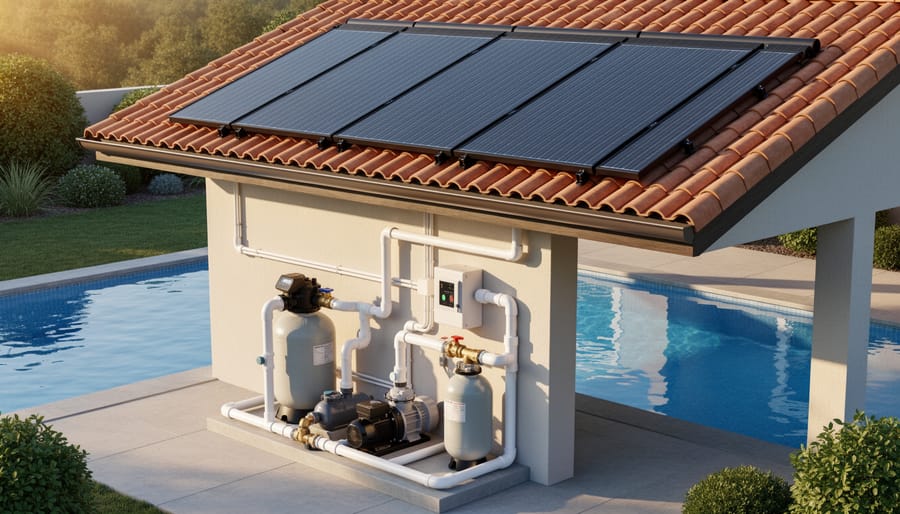
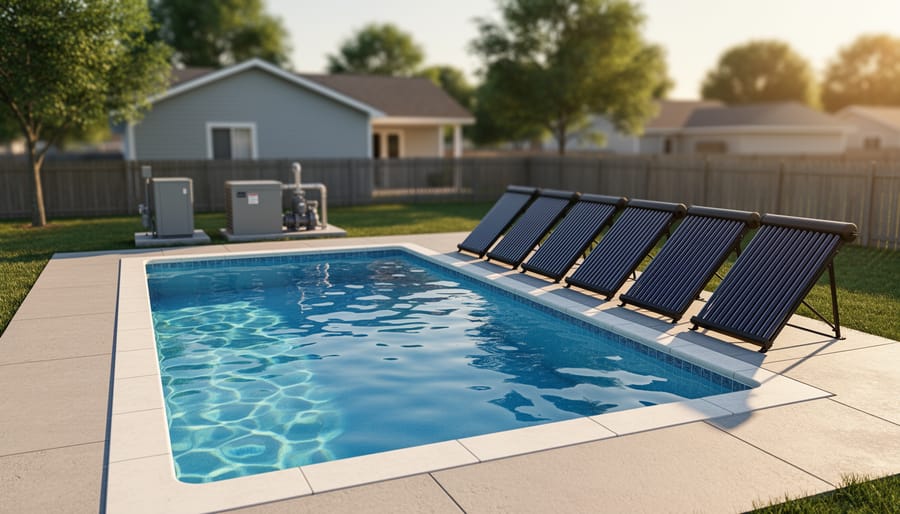
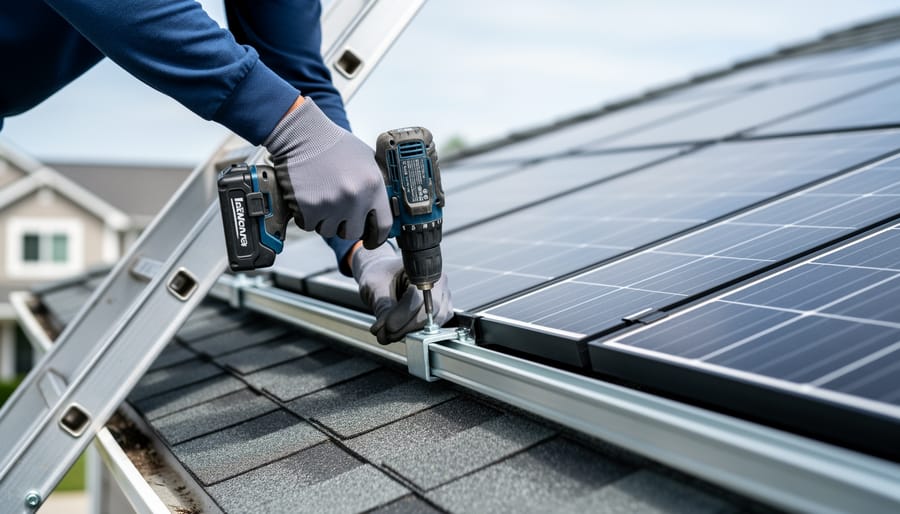
A properly installed solar pool heating system with collectors positioned on the roof for optimal sun exposure.
The Basic Solar Pool Heating System: Understanding the Flow
The Four Essential Components
Let me break down the four components you’ll see in any pool solar heating diagram – think of them as the essential players in your solar heating team.
First up is your pool pump, the workhorse that keeps everything moving. It’s already there doing its regular job of circulating water through your filter, and now it’ll also push water up to your solar collectors. Some folks opt for a separate pump for solar heating, which gives you more control, but most systems work just fine with your existing pump.
Next is the filter, which cleanses your pool water before it heads to the solar collectors. This matters more than you might think – sending dirty water through those collectors can clog them up faster than leaves in a gutter. Always position your filter before the solar loop in your plumbing diagram.
The solar collectors are where the magic happens. These panels sit on your roof or nearby rack, absorbing sunlight and transferring that heat to the water flowing through them. They’re essentially a maze of tubes that give the water maximum sun exposure time.
Finally, you’ve got the control valve or automation system. This is your system’s brain, deciding when to divert water to the collectors based on temperature sensors. A simple manual valve works, but automated three-way valves make life easier by doing the thinking for you. When your collectors are hotter than the pool, the valve opens and sends water up for heating. When clouds roll in, it redirects flow back to normal circulation.
How Water Actually Moves Through Your System
Understanding how solar pool heating works starts with following the water’s journey through your system. Let me walk you through this step-by-step, just like I did when I installed my first solar pool heater back in 2015.
The process begins at your pool’s existing filtration pump. This pump does double duty, sending water through your regular filter and up to the solar collectors. When you look at the diagram, you’ll see this marked as Stage 1. The pump creates the pressure needed to push water up to your roof or wherever you’ve mounted the collectors.
From the pump, water travels through your filter to remove debris. Clean water is essential because dirty water can clog the small tubes inside your solar panels. This is Stage 2 in the diagram, typically shown as a blue line flowing upward.
Next comes the control valve, which determines whether water goes to the collectors or bypasses them entirely. On sunny days when you need heating, the valve directs water to the collectors. This appears as Stage 3 in most diagrams, often with a directional arrow showing the flow path.
At Stage 4, water enters the solar collectors. Here’s where the magic happens. Water flows through dozens of small tubes inside the panels, absorbing heat from the sun. The diagram will show this as a series of parallel lines representing the collector array.
Finally, at Stage 5, the now-warmed water returns to your pool through the return line. The diagram typically shows this as a red line, indicating heated water completing the circuit back to where it started.
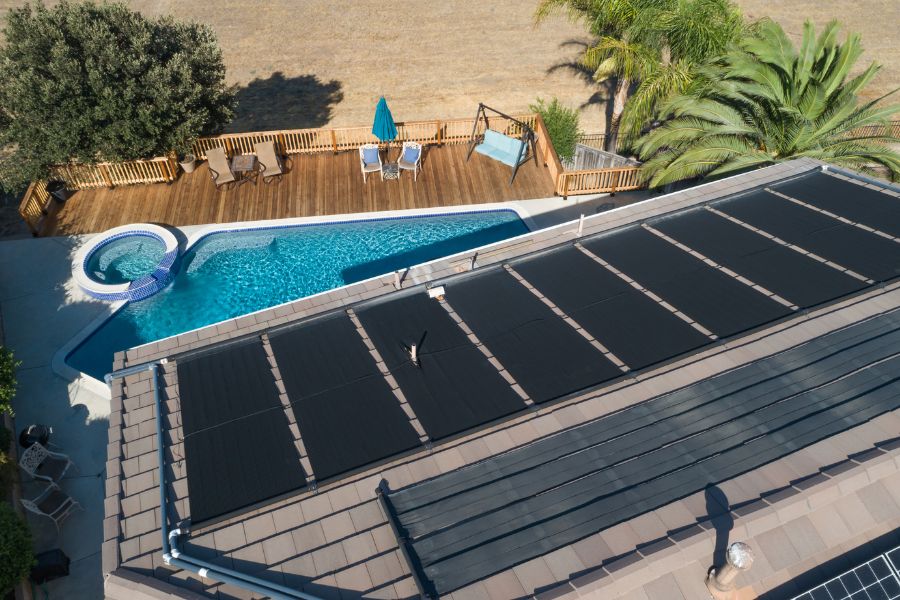
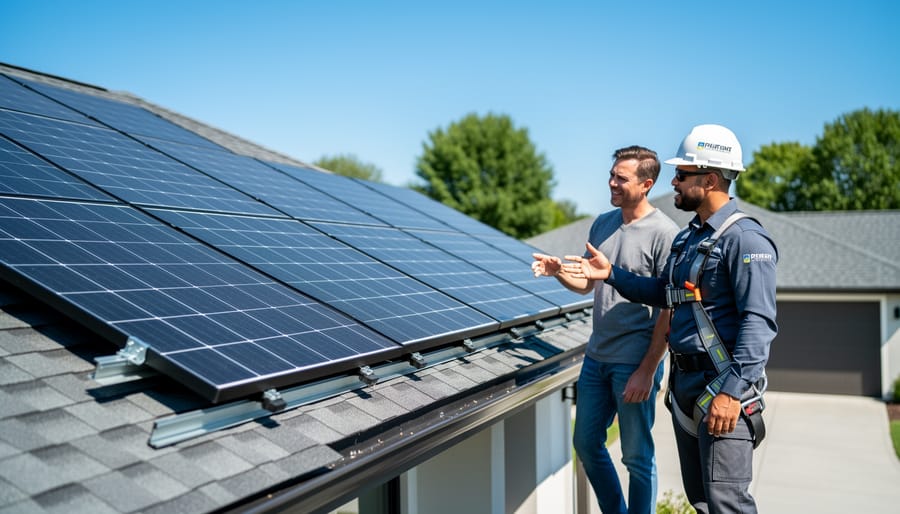
Solar collectors on a residential roof with properly installed inlet and outlet plumbing connections.
Reading Your Solar Pool Heating Plumbing Diagram
Decoding the Symbols and Lines
When I first looked at my pool solar heating diagram, I’ll admit—it looked like someone had spilled spaghetti on a blueprint. But once you understand the basic symbols, these diagrams become surprisingly straightforward. Let me walk you through what you’ll typically see.
The most common symbol you’ll encounter is a simple line, which represents your pipes or plumbing connections. Arrows along these lines show water flow direction—absolutely critical for understanding how water moves from your pool, through the collectors, and back again. Thicker lines sometimes indicate larger diameter pipes, while dashed lines might show optional or seasonal connections.
Valves appear as various geometric shapes interrupting the pipe lines. A basic gate valve looks like a bow-tie or two triangles meeting at points, while check valves (which prevent backflow) typically show an arrow within the triangle pointing in the allowed flow direction. Three-way valves, essential for diverting water to or from your solar collectors, often appear as a Y-shape or T-shape with multiple flow paths.
Your solar collectors are usually represented as long rectangles, sometimes with internal grid patterns suggesting the tubes inside. Temperature sensors appear as small circles or thermometer symbols, typically placed before and after the collectors to measure heating efficiency.
Pool pumps show up as circles with internal fan-like patterns, while filters might be cylinders or rectangles. Once you recognize these basic shapes, the entire system logic reveals itself, making installation and troubleshooting much more manageable for us DIYers.
Following the Water Path on Paper
Before you ever pick up a wrench, grab a colored pencil set and spend quality time with your diagram. I learned this the hard way during my first solar installation when I overlooked a crucial check valve placement. Now, I always encourage folks to trace the water path like you’re following a treasure map.
Start at your pool pump and use one color to draw the path water takes leaving the pool. Follow it through your filter, then mark where it splits off toward your solar collectors. Use a different color for the return path back to the pool. This simple exercise helps you visualize the complete circuit and spot potential issues before they become expensive mistakes.
Pay special attention to transitions where water changes direction or elevation. Mark these spots with question marks on your diagram. Are you creating any low points where water might pool during shutdown? Do you have high points that could trap air and create flow restrictions? These are the sneaky problems that don’t show up until your system is running.
Check that every valve position makes sense for both heating mode and bypass mode. I like to sketch out both scenarios on separate copies of the same diagram. This reveals whether you have enough control points and helps you understand how water will behave in different operating conditions.
Don’t rush this paper phase. Spending an extra hour with your diagram now can save you days of troubleshooting later. Share it with a friend or post it in online DIY communities for feedback before committing to installation.
Two Proven Plumbing Configurations (With Diagrams You Can Actually Use)
The Direct Return System: Simple and Effective
When I first started helping folks with solar pool heating, the direct return system was hands-down the most popular choice, and for good reason. It’s straightforward, reliable, and perfect for most residential pools. Let me walk you through how it works and when you should consider using it.
In a direct return setup, water flows in a simple loop from your pool to the solar collectors and back again. Here’s the basic flow: your existing pool pump pulls water from the main drain and skimmer, pushes it through your filter (as it normally would), then diverts it up to the solar panels mounted on your roof. After being warmed by the sun, the water flows back down and returns to the pool through your existing return jets. Simple as that.
The key component that makes this system work is a three-way valve, sometimes called a diverter valve. Think of it as a traffic controller for your pool water. When you want solar heating, you adjust the valve to send water up to the collectors. On cloudy days or when your pool’s already warm enough, you simply redirect the flow to bypass the solar panels entirely. Many homeowners install automatic valves controlled by thermostats, but a manual valve works perfectly fine and costs considerably less.
This system shines in situations where your solar panels are positioned relatively close to your pool equipment, typically within 50 feet. It’s also ideal when your panels are mounted at a similar elevation to your equipment pad, meaning the pump doesn’t have to work extra hard fighting gravity.
The biggest advantage? Simplicity means fewer things can go wrong. You’re essentially adding one loop to your existing plumbing. Installation is manageable for confident DIYers, and maintenance is minimal. The downside is that if you have a large array far from your equipment or significantly elevated panels, you might need a larger pump or a dedicated booster pump, which pushes you toward more complex configurations.
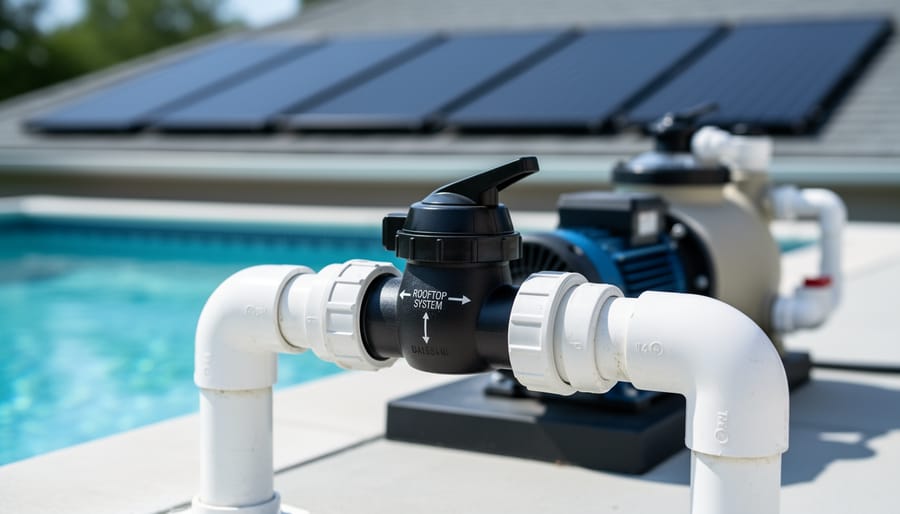
Three-way valve and PVC plumbing connections form the heart of a bypass solar heating system.
The Bypass System: For Better Control
If you’re serious about maximizing your solar pool heating efficiency, a three-way valve bypass system is your best friend. I remember Charles telling me about his first installation without one – he couldn’t regulate the water temperature and ended up with a pool that felt like bathwater by mid-afternoon. Not exactly refreshing.
Here’s how it works: instead of forcing all your pool water through the solar collectors every time the pump runs, a three-way valve (sometimes called a diverter valve) lets you control how much water goes through the panels versus bypassing them completely. Think of it like a traffic controller directing cars down different routes.
The setup involves three pipe connections. Your main return line from the filter splits into two paths at the three-way valve – one route goes up to your solar collectors on the roof, while the other bypasses them entirely and heads straight back to the pool. The magic happens when these paths reconnect after the collectors, merging the heated and unheated water before it returns to your pool.
When should you invest in this extra complexity? If you live in a climate with significant temperature swings, it’s absolutely worth it. The system lets you dial in your perfect swimming temperature rather than accepting whatever the sun decides to deliver. On cooler days, send 100 percent of the water through the collectors. When it’s scorching hot, bypass some or all of the flow.
Most DIYers opt for motorized three-way valves controlled by a temperature sensor in the pool. The sensor automatically adjusts the valve position to maintain your target temperature – set it and forget it. Manual three-way valves work too and cost less, but you’ll need to adjust them yourself as weather conditions change.
The diagram for this setup shows the valve positioned after your filter but before the split to the collectors, with clear markings indicating the flow direction for each position.
Critical Plumbing Details That DIYers Often Miss
Pipe Sizing and Flow Rate Calculations
Getting the pipe size right is one of those details that can make or break your solar pool heating system. I learned this the hard way on my first installation when I used pipes that were too narrow and wondered why my system barely warmed the pool. The water was moving too slowly through the collectors, and I was losing precious heat.
For most residential pool solar heating systems, you’ll want to use 1.5-inch or 2-inch PVC pipe. The general rule is simple: match your pipe diameter to your pool pump’s output size. If your pump pushes water through 2-inch plumbing, stick with that size throughout your solar loop. Reducing the diameter creates restrictions that force your pump to work harder and can reduce efficiency by 20 percent or more.
Flow rate matters too. You’re aiming for your entire pool volume to pass through the solar collectors once every 8-12 hours during sunny days. Too fast, and the water doesn’t have time to absorb heat. Too slow, and you’re not maximizing your collector area. After sizing your solar collectors, calculating the optimal flow becomes straightforward.
A helpful guideline: aim for 0.5 to 1.0 gallons per minute per square foot of collector area. So if you have 200 square feet of collectors, you want between 100-200 GPM flowing through them.
To take the guesswork out of these calculations, check out our interactive flow calculator tool that factors in your specific pool size, collector area, and pump specifications to recommend the perfect setup.
Check Valves, Air Vents, and Other Small Parts That Matter
When I first installed my solar pool heating system, I learned the hard way that these small components aren’t just accessories—they’re essential to keeping everything running smoothly. Let me walk you through why they matter and exactly where they belong in your setup.
Check valves are your first line of defense against reverse flow, which can happen when your pump shuts off at night. Without one, warm water from your solar panels can actually flow backward, cooling your pool instead of heating it. Install your check valve on the return line coming back from the solar panels, before it reconnects to your main pool circulation. This prevents gravity from pulling water back through the system when the pump stops.
Automatic air relief valves deserve a spot at the highest point in your solar panel array. Air pockets can form in your collectors, creating airlocks that reduce water flow and heating efficiency. I once spent an entire afternoon wondering why my panels weren’t heating properly, only to discover trapped air was blocking half the flow. An air relief valve automatically purges these bubbles, ensuring consistent circulation through all your panels.
Unions are the unsung heroes of maintenance access. Install them on both sides of your pump, filter, and any valves in the system. These threaded connectors let you disconnect components without cutting pipes—a real timesaver when you need to service equipment or winterize your system. Place them strategically anywhere you might need future access.
One practical tip: use clear PVC unions where possible. Being able to see water flow during troubleshooting has saved me countless headaches. These small parts might add fifty dollars to your project, but they’ll save you hundreds in future repairs and energy waste.
Adding Automation and Controls to Your System
Manual Three-Way Valve Setup
If you’re working with a tight budget, a manual three-way valve is your best friend. I remember when I first installed one on my own pool setup – it cost me less than $30 and gave me complete control over when my solar panels heated the water. The beauty of this approach is its simplicity and reliability.
Here’s how it works: the three-way valve acts as a traffic controller for your pool water. When positioned one way, water bypasses your solar collectors entirely and returns directly to the pool. Flip it the other direction, and water flows up to your roof-mounted panels for heating. The middle position? That’s where you can blend heated and unheated water for perfect temperature control.
Installation is straightforward – mount it after your pump but before the split to your solar panels. Most DIYers can handle this with basic PVC skills. The key to operating it effectively is checking your pool temperature daily during swimming season. On cool mornings, direct all flow through the panels. Once your pool reaches that perfect 78-82 degree range, switch to bypass mode. This prevents overheating and saves your pump from unnecessary work. Mark your valve positions with waterproof labels so the whole family knows which way is which.
Automatic Controllers and Sensors
If you’re considering automating your pool solar heating system, understanding sensor placement and automated valve operation can save you time and energy costs in the long run. I installed my first automated controller about five years ago, and honestly, the convenience factor changed everything about how I use my pool heating system.
Here’s how the automation works in your plumbing diagram: you’ll need two temperature sensors. The first sensor mounts on your solar collector panels or near their outlet, measuring the heated water temperature. The second sensor goes in your pool return line or attaches directly to your filter housing, monitoring actual pool temperature. These sensors connect to a differential controller, which is basically the brain of your system.
The automated valve, typically a three-way motorized valve, installs at the same junction point where your manual valves would go in a basic system. When the controller detects that your solar panels are significantly warmer than your pool water, it automatically opens the valve to divert water through the collectors. Once the pool reaches your target temperature or the panels cool down at sunset, the valve redirects flow back through the bypass line.
Is the upgrade worth it for DIYers? If you’re handy with basic electrical wiring and comfortable following installation instructions, absolutely. Most quality controller kits run between $150-$300 and pay for themselves within two seasons through improved efficiency. You’ll avoid the common mistake of running cold water through hot panels or forgetting to manually switch valves. Plus, your system operates optimally even when you’re away from home, maximizing every hour of available sunshine.
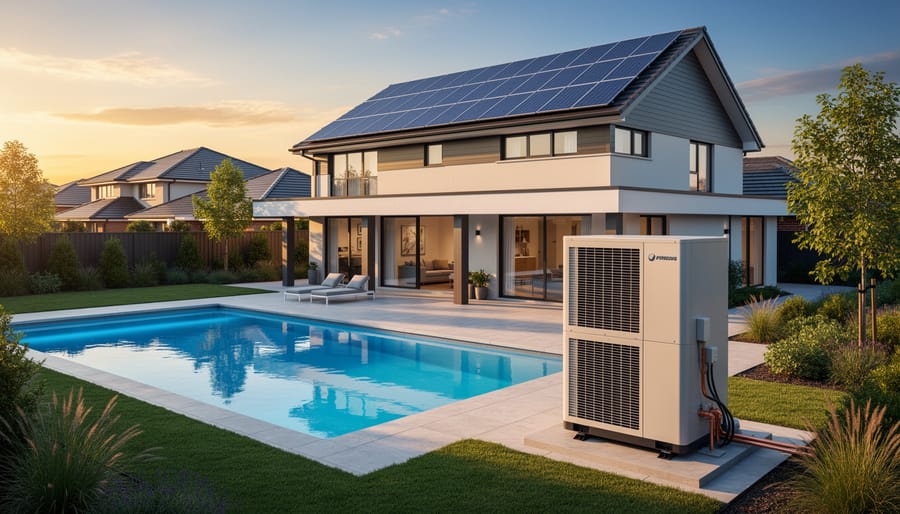
DIY installation of solar pool heating plumbing requires careful attention to proper pipe sizing and connections.
From Diagram to Reality: Installation Tips
When I first attempted to install my pool solar heating system, I learned the hard way that even the most beautiful diagram won’t save you from real-world surprises. The paper version showed neat, straight lines and perfectly positioned components. My actual installation? Let’s just say there were more twists and curves than I anticipated.
Start by walking the entire route from your pool equipment to where your solar collectors will sit. Take photos, measure distances, and note any obstacles. My biggest mistake was not accounting for a stubborn tree root that forced me to reroute my entire return line. Mark your measurements directly onto your diagram. This living document becomes far more valuable than the pristine original.
Before cutting a single pipe, lay everything out dry first. Position your check valves, unions, and isolation valves exactly where they’ll go. This test run saved me twice when I realized my shutoff valve would have been completely inaccessible behind the equipment pad. Trust me, future-you will appreciate being able to reach every component for maintenance.
Speaking of valves, invest in quality isolation valves at both the input and output of your solar loop. They cost a bit more upfront, but they let you work on the solar system without draining your entire pool. I learned this lesson during a leak repair that turned into an all-day affair because I couldn’t isolate the problem area.
Pay special attention to your check valve orientation. That little arrow matters more than you think. I installed mine backward initially, which created a frustrating situation where water would drain back through the collectors overnight. The diagram shows the direction, but in the heat of installation, it’s easy to overlook.
Use your DIY solar pool heater guide alongside your plumbing diagram for comprehensive support throughout the process. The combination of visual diagrams and step-by-step instructions makes troubleshooting much simpler.
Finally, pressure test everything before burying pipes or making permanent installations. Fill the system, pressurize it to about 20 PSI, and let it sit for an hour. Walk the entire line checking for leaks. Finding a leak now takes five minutes to fix. Finding one after you’ve landscaped over it? That’s a weekend project you don’t want.
At the end of the day, getting your pool solar heating system right comes down to that plumbing setup. You can have the best solar collectors on the market, but if the water flow isn’t configured properly, you’re leaving efficiency and money on the table. Think of it like building a house – you need a solid foundation before anything else matters.
I’ve been helping folks through their solar projects for years now, and the ones who succeed are always the ones who take their time with the planning phase. Don’t rush into cutting pipes and making permanent connections until you’ve double-checked your diagram against your actual equipment. Charles always reminds me that measuring twice and cutting once isn’t just an old saying – it’s saved him countless headaches and expensive do-overs.
Before you get started, take advantage of our interactive calculator tools on the site. They’ll help you determine the right sizing for your specific pool and climate conditions. And honestly, whether you’re weighing professional installation vs DIY, having those numbers gives you confidence in your approach.
Once your system is up and running, we’d love to hear about it. Share your experience, photos of your setup, or even questions you had along the way in our community forums. Your insights might be exactly what another DIYer needs to get over the finish line with their own project.
How useful was this post?
Click on a star to rate it!
Average rating 0 / 5. Vote count: 0
No votes so far! Be the first to rate this post.
We are sorry that this post was not useful for you!
Let us improve this post!
Tell us how we can improve this post?
charlesnoble
Here at Spheral Solar, I’m a hands-on solar power enthusiast, constantly exploring and experimenting with DIY solutions. I’m dedicated to sharing my discoveries, insights, and even the bumps I hit along the way, all in the pursuit of a more sustainable future.
9 Best Solar Pool Heaters in 2026 by Adeyomola June 20, 2021 Heads up: some links here are affiliate links, and purchases through them support the site. As an Amazon Associate I earn from qualifying purchases. When buying solar pool heaters, people often give precedence to features like square footage, mounting type, water pressure limit, and the type of pool the solar…
Why Your Pool Solar Heater Valve Position Changes… by Charlesnoble March 9, 2026 Set your three-way valve to point toward the roof when you want solar heating, typically between 10 AM and 4 PM on sunny days when your panels can effectively warm the water. Point it toward the bypass position during cloudy weather, at night, or when your pool has reached the…
Heat Your Pool for Pennies Using Solar Panels You… by Charlesnoble April 12, 2026 Imagine cutting your pool heating costs by 70% while extending your swimming season by months—that’s the reality when you harness your existing solar panel system to warm your pool water. If you’ve already invested in rooftop solar or are planning an installation, you’re sitting on an untapped heating solution that…
How Does Solar Pool Heating Work? by Charlesnoble August 27, 2023 Solar pool heating systems work by is a sustainable and cost-effective way to extend the swimming season and enjoy warmer water in your pool. Solar pool heating systems work by harnessing heat from sunlight and transferring it to the pool water pumped through the collectors. This solar-heated water is returned…
Heat Your 7000 Gallon Pool for Pennies Using Solar Power by Charlesnoble May 24, 2026 Calculate your heating needs by multiplying 7000 gallons by 8.34 pounds per gallon, then factor in your desired temperature rise and the time frame you want to achieve it. For a 7000-gallon pool, you’ll typically need between 75,000 and 150,000 BTUs per hour depending on your climate, but before you…
DIY Solar Pool Heater – Beginner’s Guide With Diagrams by Paul June 27, 2021 Heads up: some links here are affiliate links, and purchases through them support the site. As an Amazon Associate I earn from qualifying purchases. Although you may think it’s a tall order, you can build a DIY solar pool heater using irrigation tubing and fittings, framing lumber, and basic tools…
Subscribe for handpicked DIY projects, exclusive tips, and giveaways.
Nine times out of ten, an RV generator that won’t start has a stale fuel problem. If your generator hasn’t run in more than 30 days, degraded gasoline is likely gumming up the carburetor and preventing ignition. Before you panic or call for expensive roadside service, try this: turn on the generator’s fuel valve (if… Read more: RV Generator Troubleshooting: Common Problems and How to Fix Them
A 5kW solar system occupies between 250 and 350 square feet of roof or ground space and produces roughly 20 to 25 kilowatt-hours of electricity per day in most U.S. locations. That’s enough to power a typical three-bedroom home with moderate energy use, though your exact needs depend on your daily consumption patterns, climate zone,… Read more: How to Size a 5kW Solar System for Your Home or RV
Installing a home solar system yourself takes 2-4 weekends for an average 5kW setup, requires solid electrical knowledge and comfort working at heights, and can save you $5,000-$8,000 in labor costs if you tackle everything except the final utility interconnection. The process breaks down into five main phases: permitting and design, mounting the racking system,… Read more: Solar Power Installation Step by Step: Complete DIY Guide From Start to Finish