Why Your DIY Solar System Needs Insulation Monitoring (Before Something Goes Wrong)
Updated:
Check your solar system’s ground fault protection monthly by verifying the insulation resistance between your DC circuits and ground stays above 500 ohms per volt of system voltage. Install an insulation monitoring device (IMD) on any off-grid system over 48 volts or grid-tied system operating without galvanic isolation to catch deteriorating wire insulation, damaged solar panels, or moisture intrusion before they create dangerous fault conditions. Test your IMD functionality every six months by temporarily creating a controlled resistance path to ground through a 100k-ohm resistor and confirming the alarm triggers properly.
I learned about insulation monitoring the hard way when a friend’s 120-volt off-grid system developed a slow ground fault from a rodent-damaged cable. For weeks, his system worked fine, but current was leaking to ground through his metal equipment rack. When he grabbed a grounded metal tool while touching the rack, he completed the circuit and got knocked backward. An insulation monitoring device would have caught that degrading insulation weeks earlier and shut down the system automatically.
Here’s what most DIYers miss: insulation monitoring isn’t just another code requirement to check off your list. It’s fundamentally about understanding that your solar system’s isolation from ground can deteriorate gradually and invisibly. Modern monitoring solutions give you advance warning before minor insulation problems become serious safety hazards or equipment damage.
Whether you’re designing a new system or adding protection to an existing one, understanding how insulation monitoring works and when you need it transforms it from confusing technical jargon into a straightforward safety tool that makes perfect sense for your specific installation.
What Insulation Monitoring Actually Means (And Why It’s Not as Scary as It Sounds)
The Difference Between Insulation Resistance and Ground-Fault Monitoring
Think of insulation monitoring and ground-fault monitoring like this: imagine your garden hose carrying water to your vegetable garden. Insulation monitoring is like checking for tiny pinhole leaks along the entire length of the hose—those slow drips that might not stop the water flow but waste resources over time and could eventually become bigger problems. Ground-fault monitoring, on the other hand, detects a major rupture where the hose has burst and water is gushing everywhere, creating an immediate hazard.
In your solar system, insulation monitoring continuously watches for gradual degradation in the protective coating around your wires. It’s preventative—alerting you before small issues become dangerous. I remember when a friend ignored subtle signs of insulation wear in his off-grid cabin setup. The system kept working, but months later, moisture had created a slow path to ground that eventually caused a complete system shutdown during a critical winter storm.
Ground-fault monitoring, however, responds to sudden, serious faults—like when a wire gets pinched or damaged, creating a direct path for electricity to flow where it shouldn’t. This is your emergency shutdown system, designed to protect you from immediate shock hazards or fire risks.
Here’s when each matters: If you’re building an off-grid solar system or working with ungrounded systems (common in many DIY solar setups), insulation monitoring is often required by code and gives you early warning of problems. Ground-fault protection is essential in grid-tied systems and anywhere people might come into contact with your equipment. Many modern solar inverters actually include both types of monitoring, working together like your home’s smoke detector and carbon monoxide alarm—different threats, overlapping protection.
Why Your DIY PV System Is at Risk (Even If You Did Everything Right)
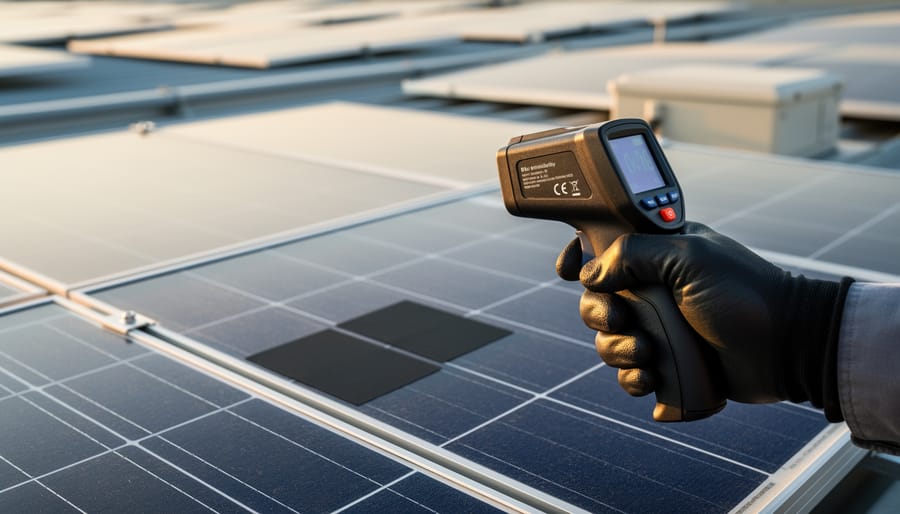
Damaged cable insulation from weather exposure or wildlife is one of the most common risks in DIY solar installations that insulation monitoring can detect early.
The Hidden Dangers of Ignoring Insulation Problems
I’ll be honest with you—when I first started building solar systems, I thought insulation monitoring was just another fancy feature that manufacturers added to justify higher prices. Then a friend nearly had a serious accident when his off-grid system developed a ground fault that went undetected for weeks. That experience changed my perspective completely.
Here’s the reality: unmonitored insulation problems don’t just fix themselves. They escalate. When your solar system loses proper insulation between conductors and ground, you’re essentially creating a pathway for electricity to flow where it shouldn’t. This can lead to electric shock hazards, especially in wet conditions or when you’re working on equipment you think is safe.
Fire risk is another serious concern. Degraded insulation can create small current leaks that generate heat over time. In a worst-case scenario, this heat buildup can ignite nearby materials. I’ve seen charred junction boxes that could have been prevented by catching problems early.
Beyond safety, there’s the equipment damage factor. Your inverter, charge controller, and other components aren’t designed to handle fault currents continuously. These conditions can shorten their lifespan significantly or cause sudden failures that leave you without power at the worst possible moment.
Then there are code violations. Most jurisdictions now require insulation monitoring for off-grid systems above certain voltages. Failing to comply can mean failed inspections, insurance issues, or problems when selling your home.
But here’s the empowering part: every single one of these dangers is preventable. Modern insulation monitoring equipment is more affordable and easier to install than ever before. Think of it as insurance that actually works—detecting problems before they become emergencies.
How Insulation Monitoring Actually Works in Your Solar Setup
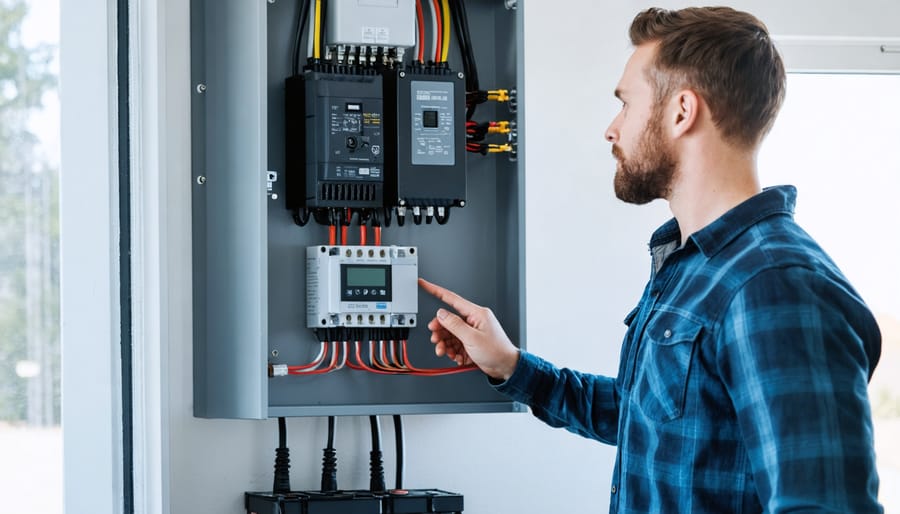
Dedicated insulation monitoring devices continuously track the electrical health of your solar system and alert you to potential problems.
The Role of Insulation Monitoring Devices (IMDs) in Off-Grid and Grid-Tied Systems
Here’s where things get practical—understanding which systems actually need IMDs and why. If you’re designing your solar setup, this might save you some head-scratching later.
Off-grid battery systems are where IMDs really shine. When you’re running ungrounded (floating) DC systems, which many battery-based setups are, an IMD becomes your early warning system. I learned this the hard way when a friend’s off-grid cabin had a ground fault develop slowly over months. Without an IMD, he didn’t catch it until his inverter started throwing errors. These systems benefit most because they operate independently—there’s no utility connection to trip breakers if insulation breaks down gradually.
Grid-tied systems have a different relationship with IMDs. Most grid-tied inverters already include built-in ground fault protection as part of their safety certification. If you’re connecting to the utility, your equipment likely has some insulation monitoring baked in. However, larger DIY installations with multiple strings or battery backup might still benefit from dedicated IMDs, especially on the DC side before the inverter. Think of it like power monitoring—the more complex your system, the more you want granular visibility.
Here’s my rule of thumb: if you’re building an off-grid system above 500 watts, seriously consider an IMD. For grid-tied without batteries, check your inverter specs first—you might already be covered. Hybrid systems with battery backup fall somewhere in between, and adding an IMD provides extra peace of mind, especially if you’re in wet climates or harsh environments where insulation degradation happens faster.
The key is matching the safety tool to your system’s actual risks and complexity level.
Understanding the Numbers: What Insulation Resistance Values Mean
Let me break down insulation resistance in a way that actually makes sense for your solar setup. Think of it like measuring how well your system keeps electricity where it belongs—inside the wires and not leaking out where it could cause problems.
Insulation resistance is measured in ohms or megohms (that’s one million ohms). Here’s what I’ve learned from years of testing your solar panels and systems: the bigger the number, the better your insulation is doing its job.
For most residential solar systems, you want to see at least 1 megohm (1MΩ) of resistance. That’s your baseline—anything below this, and you’re in the danger zone. Industry standards typically require a minimum of 0.5 megohms, but honestly, I always aim higher for peace of mind.
Here’s a practical reference guide I keep handy:
Above 50 megohms: Excellent. Your system is well-insulated and safe.
Between 10-50 megohms: Good. This is normal for most functioning systems.
Between 1-10 megohms: Acceptable, but worth monitoring more frequently. Check your connections and look for moisture or wear.
Below 1 megohm: Concerning. Investigate immediately before energizing your system.
Below 0.5 megohms: Stop everything. This requires immediate professional attention before any further operation.
Remember, moisture, temperature changes, and aging can all affect these readings. That’s why regular monitoring matters—it catches problems before they become dangerous.
Choosing the Right Insulation Monitoring Solution for Your DIY Solar Project
Budget-Friendly Options vs. Professional-Grade Monitors
When I first started looking into insulation monitoring devices, I was honestly shocked by the price range. You can find basic monitors for around $150, while professional-grade units can run over $1,500. So what’s the difference, and more importantly, which one do you actually need?
Budget-friendly monitors in the $150-$400 range typically provide basic insulation resistance readings and maybe a simple alarm function. They’ll tell you if your system has developed a ground fault, but that’s about it. For many DIY solar setups, especially smaller systems under 3kW, these entry-level options get the job done. They meet code requirements and give you that essential safety monitoring without breaking the bank.
Mid-range options between $400-$800 usually add features like data logging, multiple alarm thresholds, and better accuracy. This is the sweet spot for most serious DIYers. You get reliable monitoring plus the ability to track trends over time, which helps you catch problems before they become emergencies.
Professional-grade monitors above $800 include advanced diagnostics, remote monitoring capabilities, integration with larger energy management systems, and typically much longer warranties. Unless you’re running a commercial installation or want every bell and whistle, you probably don’t need this level.
Charles here: I use a mid-range monitor on my home system, around the $600 mark. It gives me peace of mind with data logging so I can spot trends, and the accuracy is solid. For most DIY folks, I recommend starting in that $400-$600 range. You get quality components and useful features without paying for capabilities you’ll never use. Remember, the goal is safety and compliance, not impressing your neighbors with fancy equipment. Save your budget for more solar panels instead.
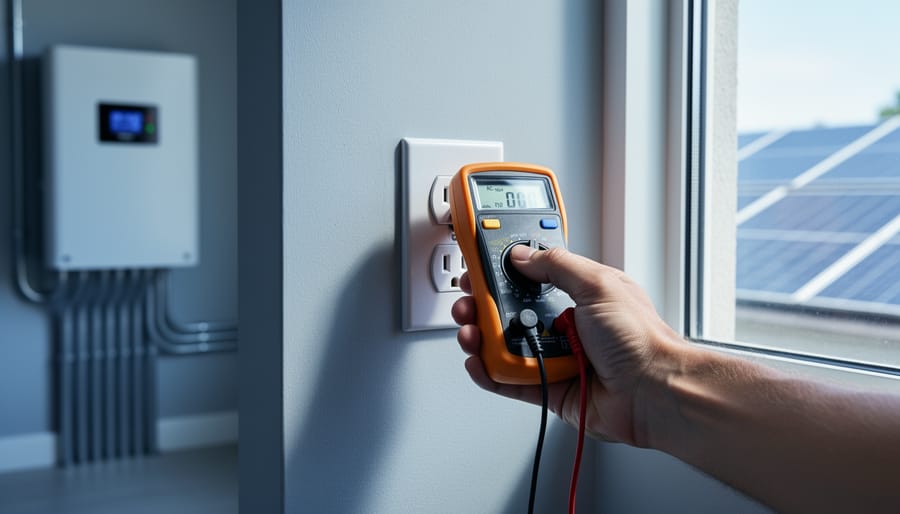
Regular testing with a multimeter provides budget-friendly insulation monitoring for smaller DIY solar systems.
Installing and Setting Up Insulation Monitoring (Step-by-Step)
Before we dive in, let me share something from my own experience: the first time I installed an insulation monitoring device, I was convinced I’d mess it up. Turns out, it’s actually more straightforward than wiring up some charge controllers I’ve worked with. The key is taking it step by step and not rushing the process.
Safety first, always. Before touching anything, make sure your system is completely powered down. Disconnect your solar panels (cover them or disconnect at the combiner box), turn off your charge controller, and disconnect your battery bank. Treat every wire like it’s live until you’ve verified otherwise with a multimeter. I learned this the hard way with a nasty shock early in my DIY journey.
Most insulation monitoring devices install between your solar array’s negative bus and your system ground. You’re essentially creating a monitoring point where the device can measure any leakage current flowing to ground. Check your specific device’s manual, but the typical setup involves three main connections: one to your system’s negative bus, one to your grounding point (usually your ground rod or grounding electrode), and power leads that connect to your battery or DC bus to power the monitor itself.
Start by identifying where your system is currently grounded. In most DIY setups, this is where your negative conductor connects to your grounding electrode conductor. You’ll be interrupting this connection to insert the monitoring device. Mount the monitor in a location where you can easily see its display and access its controls, usually near your charge controller or main disconnect.
Strip your wires carefully, following the gauge requirements in your monitor’s specifications. Most units want 10 or 12 AWG wire for the main monitoring connections. Make solid, tight connections using the appropriate terminal blocks or lugs. Loose connections here defeat the entire purpose and can create false readings or safety hazards.
Once everything is wired, double-check every connection against the wiring diagram. I keep a printed copy right there with me because it’s easy to second-guess yourself mid-installation. Before powering up, use your multimeter to verify you haven’t accidentally created any shorts.
Power on your system gradually: batteries first, then the monitoring device, then your charge controller, and finally reconnect your solar panels. The monitor should power up and begin its initial calibration. Most devices run a self-test that takes a few minutes. During this time, don’t touch anything or make adjustments.
Set your alarm thresholds according to local code requirements or manufacturer recommendations. For most residential DIY systems, a trip point around 30-50 kΩ (kilohms) is typical, but verify this for your specific situation. Test the alarm function if your device includes that feature.
Reading the Signs: How to Interpret Your Monitoring Data
What to Do When Your Monitor Detects a Problem
Okay, so your insulation monitor has started beeping or flashing an alarm. Take a deep breath—this is exactly why you installed it in the first place. It’s doing its job by alerting you to a potential issue before it becomes dangerous.
First things first: safety protocol. If your monitor indicates a serious fault or you see any visible damage to your system, immediately disconnect your solar array from all loads and shut down the system if you can do so safely. Don’t touch any exposed wiring or components. I learned this lesson early in my solar journey when I got a little too confident troubleshooting a mystery fault—sometimes the smartest move is backing away and calling for help.
Now, if the alarm seems less urgent, start with basic troubleshooting. Check your monitor’s display or app to understand what it’s telling you. Is the insulation resistance dropping gradually or did it plummet suddenly? A slow decline over weeks might indicate moisture infiltration, while a sudden drop could mean damaged wiring or a compromised component.
Look for obvious culprits: recent rain or snow that might have introduced moisture, any work you did on the system recently, or visible damage to cables and junction boxes. Sometimes the issue is as simple as water pooling near a connection point. Document what you’re seeing with photos and notes—this information will be invaluable whether you solve it yourself or call a professional.
Speaking of professionals, when should you pick up the phone? If you can’t identify an obvious cause, if the resistance continues dropping despite your fixes, or if you’re uncomfortable working with the voltages involved, it’s time to call a qualified solar electrician. This isn’t admitting defeat—it’s being smart about safety and protecting your investment.
Maintaining Your System’s Insulation Health Over Time
Here’s the truth I’ve learned after years of monitoring solar systems: maintaining insulation health doesn’t need to be complicated or time-consuming. Think of it like checking your tire pressure—a quick routine that prevents bigger headaches down the road.
I recommend a simple quarterly visual inspection schedule. Walk around your system on the first day of each season and look for obvious signs of trouble: frayed wires, cracked conduit, moisture in junction boxes, or any physical damage. Takes maybe fifteen minutes. If you’re in an area with harsh winters or monsoon seasons, add one extra check after severe weather events.
During these walkarounds, I jot down three things in a basic notebook: the date, anything unusual I noticed, and my system’s insulation resistance reading if I’m testing that day. You don’t need fancy software—just consistent records. I actually use an old composition notebook that lives in my garage. When patterns emerge over time, you’ll spot them.
Your monitoring device itself is doing the heavy lifting continuously, but give it a visual once-over during your seasonal checks. Make sure indicator lights are functioning and connections haven’t worked loose from vibration or temperature cycling.
Seasonal considerations matter too. Spring is perfect for checking winter weather damage, while fall inspections catch summer heat degradation before winter stress compounds problems. In my experience, systems checked consistently this way rarely surprise you with sudden failures—you catch issues while they’re still whispers, not emergencies.
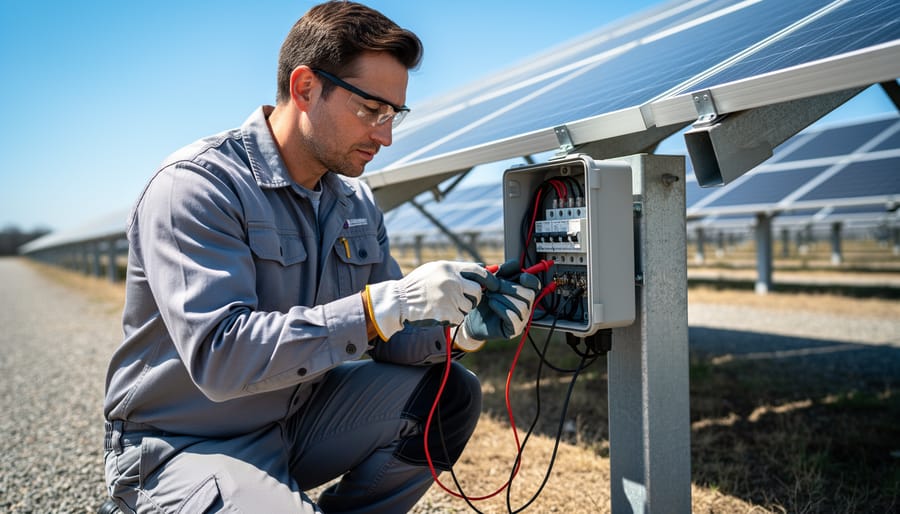
A properly installed and monitored DIY solar system provides reliable clean energy and peace of mind for years to come.
Here’s the thing about insulation monitoring that I’ve come to really appreciate over the years: once you install it, it just works quietly in the background, watching over your system while you go about your life. It’s one of those beautiful “set it and forget it” safety features that doesn’t demand constant attention but delivers tremendous peace of mind.
I remember when I first added insulation monitoring to my own setup. There was that initial learning curve, sure, but once everything was connected and calibrated, I could finally relax knowing my system would alert me to any electrical issues before they became dangerous. That’s worth its weight in gold, especially for those of us working with off-grid systems where safety margins matter even more.
The best part? This isn’t some impossibly complex technology reserved for professional installers. If you’ve made it this far in your DIY solar journey, you’re absolutely capable of adding this layer of protection to your system. Break it down into manageable steps, follow the manufacturer’s guidelines, and don’t hesitate to ask questions in the community when you need help.
Ready to take the next step? Head over to Spheral Solar’s planning calculators to see how insulation monitoring fits into your overall system design. And if you’ve already implemented monitoring in your setup, we’d love to hear about your experience in the community forums. Your insights might be exactly what someone else needs to take the leap toward a safer solar installation.
How useful was this post?
Click on a star to rate it!
Average rating 0 / 5. Vote count: 0
No votes so far! Be the first to rate this post.
We are sorry that this post was not useful for you!
Let us improve this post!
Tell us how we can improve this post?
charlesnoble
Here at Spheral Solar, I’m a hands-on solar power enthusiast, constantly exploring and experimenting with DIY solutions. I’m dedicated to sharing my discoveries, insights, and even the bumps I hit along the way, all in the pursuit of a more sustainable future.
Your Multimeter Can Tell You Everything About Your… by Charlesnoble March 8, 2026 Grab your multimeter and set it to AC voltage mode—typically marked as “V~” or “VAC”—which allows you to measure the alternating current output from your solar inverter, the device that converts your panels’ DC power into usable household electricity. You’ll want to verify that your system is delivering the standard…
Why Your RV Solar Panels Aren’t Charging (And How to… by Charlesnoble November 30, 2025 Check your multimeter readings at each connection point along your solar charging path—from panels to charge controller to battery—to pinpoint exactly where voltage disappears. Most RV solar systems lose 10-30% of their potential power to voltage drop, but this invisible thief often goes undetected until you systematically measure and compare…
Why Your DIY Solar System Needs 3-Phase Power… by Charlesnoble December 26, 2025 Check your electrical panel right now—if you see three thick cables entering your home or property instead of two, you’re already working with 3-phase power, and standard single-phase monitoring won’t give you the complete picture of your solar system’s performance. This matters more than most DIY solar enthusiasts realize: a…
Read Your Solar System Like a Pro: What Every Wire… by Charlesnoble October 31, 2025 Locate the single-line diagram in your solar system documentation—it’s your roadmap to understanding how energy flows from panels through inverters to your home’s electrical panel. This schematic shows every critical component: charge controllers, battery banks, breaker boxes, and safety disconnects, all connected by lines representing wire runs with their corresponding…
Why Your DIY Solar Project Needs a Calibrated… by Charlesnoble February 3, 2026 Point your infrared thermometer at your solar panel surface on a sunny afternoon, and you might get a reading of 145°F—but is that number actually accurate? Without proper calibration, that measurement could be off by 10, 20, or even 30 degrees, leading you to misdiagnose hot spots, overestimate efficiency losses,…
Why Your Solar Panels Aren’t Making Enough Power… by Charlesnoble April 14, 2026 Grab your multimeter and head to your solar array during peak sunlight hours—the voltage and current readings you’re about to take will reveal everything about your system’s health. An I-V curve is simply a graph showing how your solar panels behave when you measure voltage (I) against current (V) under…
Subscribe for handpicked DIY projects, exclusive tips, and giveaways.
A portable power station will typically run your camping devices for anywhere from a few hours to several days on a single charge, depending on what you’re powering and the station’s capacity. As for lifespan, most quality units last between 3 to 10 years before the battery degrades enough to need replacement. The distinction matters… Read more: Your Portable Power Station Won’t Last as Long as You Think (Here’s Why)
A J1772 solar charger combines a standard J1772 charging connector (the same Type 1 plug used by most North American EVs and electric bikes) with solar panels and battery components to create an off-grid or grid-supplemented charging system. You’ll need three core elements: solar panels (typically 400-800 watts for practical ebike charging), a battery storage… Read more: How to Choose a J1772 Solar Charger for Your Ebike: A Buying Guide
Installing a whole house ventilation system powered by solar takes about 6 to 8 hours for a moderately skilled DIYer and delivers continuous fresh air circulation without touching your electric bill. The core method involves mounting a solar panel on your roof to power an intake or exhaust fan, routing ductwork through your attic or… Read more: How to Install a Whole House Ventilation System Using Solar Power