Turn Your Home’s Exterior Into a Power Plant With BIPV Solar
Updated:
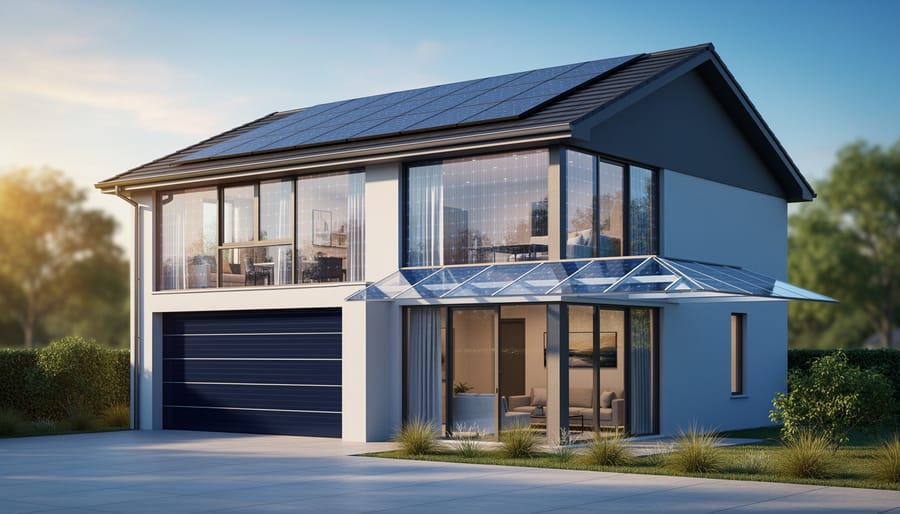
Picture this: your home’s windows generating electricity while you admire the view. Your patio awning powering your outdoor lights as it shades your afternoon barbecue. Your garage door collecting energy every time the sun hits it. This isn’t science fiction – it’s building integrated photovoltaics, and it’s transforming how we think about solar power.
Traditional solar panels sit on top of your roof like an afterthought, bolted on and often clashing with your home’s design. Building integrated photovoltaics, or BIPV, takes a fundamentally different approach. These systems replace conventional building materials – think roof shingles, windows, facades, and awnings – with solar-generating alternatives that serve dual purposes. You’re not adding solar panels to your home; you’re building with them from the start.
I’ve spent years helping DIY solar enthusiasts navigate the renewable energy landscape, and BIPV represents one of the most exciting frontiers in residential solar. The technology appeals to homeowners who refuse to choose between aesthetics and sustainability. You want solar power, but you also want your home to look beautiful. You’re environmentally conscious, but you’re not willing to compromise on architectural integrity.
Here’s the reality: BIPV isn’t the right solution for everyone, and it’s definitely more complex than mounting traditional panels on your roof. Some applications are genuinely DIY-friendly, while others absolutely require professional installation. The cost-benefit equation varies wildly depending on your specific situation.
This guide cuts through the marketing hype to give you honest, practical information about BIPV. We’ll explore what these systems actually are, how they compare to conventional solar, whether they make financial sense for your project, and which aspects you can tackle yourself versus when to call in the professionals.
What Makes BIPV Different From Regular Solar Panels
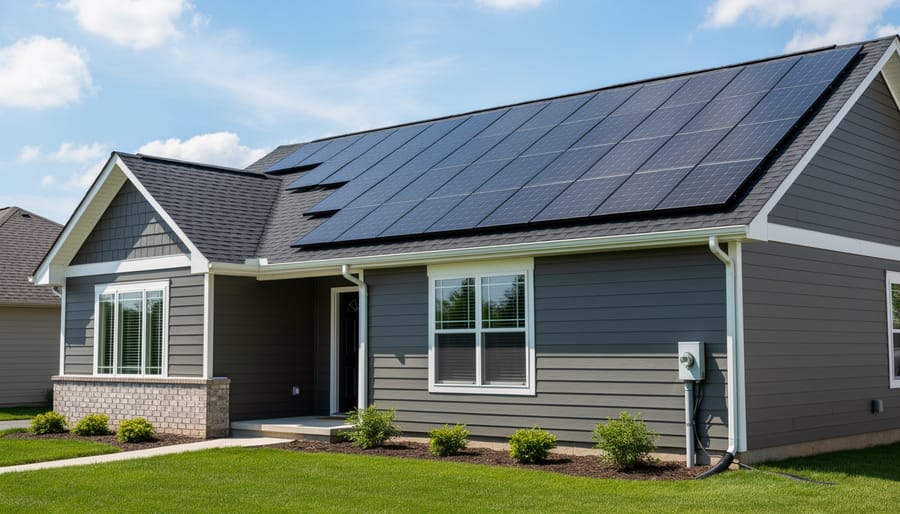
Here’s the thing that confused me when I first heard about BIPV: I kept picturing regular solar panels somehow built into a house, but that’s not quite it. The lightbulb moment came when my neighbor replaced his roof with solar shingles. Instead of installing shingles and then mounting panels on top, the solar tiles were the roof. That’s BIPV in a nutshell.
With traditional rooftop solar panels, you’re essentially adding another layer to your home. You’ve got your existing roof, siding, or windows doing their regular job, and then solar panels sit on top of mounting racks, generating electricity separately. It’s an add-on system that doesn’t replace anything you already have.
BIPV flips this approach entirely. These systems replace conventional building materials rather than sitting on top of them. Solar shingles become your actual roof. Solar glass becomes your actual windows. Photovoltaic facades become your actual exterior cladding. You’re getting two functions from one product: weather protection and energy generation.
Think about the cost implications. When you install traditional panels, you’re paying for roofing materials and solar equipment separately. With BIPV, you’re combining those expenses. If you need a new roof anyway, solar shingles might make financial sense because you’re offsetting the cost of conventional materials.
The aesthetic difference is huge too. Traditional panels are visibly bolted onto your home, which some people love and others find intrusive. BIPV systems blend seamlessly because they are the building envelope itself. From the street, solar shingles often look like premium architectural shingles, and solar glass windows appear like high-end tinted glass.
One practical consideration I’ve noticed: traditional panels can be removed and repositioned relatively easily if needed. BIPV systems are permanent structural components. That’s both a pro—they’re incredibly durable and integrated—and a con—repairs or upgrades require more extensive work. Understanding this fundamental difference helps you evaluate which approach suits your project best.
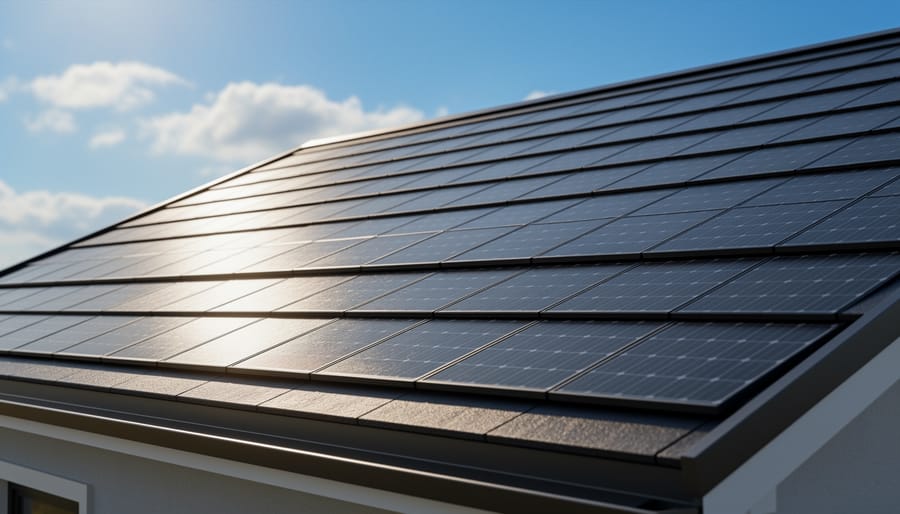
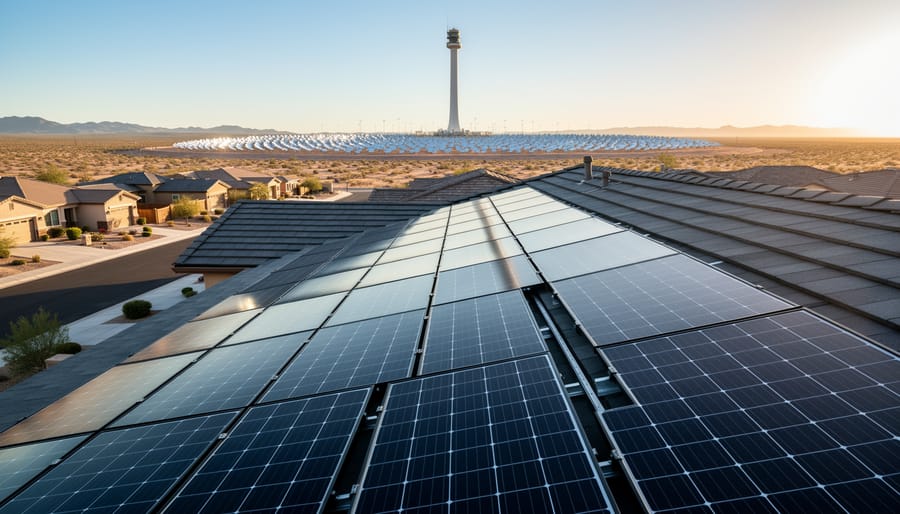
Solar roof shingles integrate seamlessly with conventional building materials, replacing traditional roofing while generating electricity.
Types of BIPV Systems You Can Actually Use
Solar Roof Tiles and Shingles
Solar roof tiles and shingles represent one of the most exciting developments in BIPV technology because they completely replace your traditional roofing material while generating electricity. Unlike rack-mounted panels that sit on top of your existing roof, these integrated shingles actually become your roof, serving double duty as both weather protection and power generation.
Here’s how they work: each shingle contains small photovoltaic cells that connect to your neighboring shingles, creating a seamless electrical system across your entire roof. The electricity flows down to an inverter, just like a traditional solar setup. From street level, most people won’t even realize you have solar—they just look like regular roof shingles, often in sleek black or dark gray finishes.
Popular options include Tesla Solar Roof, GAF Energy’s Timberline Solar, and CertainTeed’s Apollo II. Each offers different aesthetics, warranties, and price points, so it’s worth researching what’s available in your area.
I’ll be honest with you—this isn’t a weekend DIY project like some other solar installations might be. Charles learned this the hard way when he excitedly researched doing his own solar roof, only to discover the complexity involved. Solar shingles require precise roofing skills, electrical expertise, and typically special certifications from manufacturers to maintain warranties. You’re essentially doing a complete roof replacement plus a solar installation simultaneously.
That said, understanding how they work helps you make informed decisions and communicate effectively with installers. If you’re handy, you might assist with prep work or handle permitting paperwork, but the actual installation should definitely involve licensed roofing and electrical professionals.
Individual solar shingles function as both protective roofing material and energy-generating photovoltaic cells.
Solar Siding and Facade Panels
Solar siding and facade panels bring photovoltaics to the vertical surfaces of your home, transforming ordinary walls into energy generators. These systems include solar cladding that replaces traditional siding materials and specialized panels designed to mount directly onto exterior walls.
Here’s the honest truth about vertical installations: they typically produce 30-40% less energy than roof-mounted panels because they receive less direct sunlight throughout the day. The sun hits walls at a less optimal angle, especially during peak midday hours when solar production is strongest.
So why consider them? I’ve seen homeowners get creative with facade panels when roof space is limited or when architectural aesthetics matter. East and west-facing walls can actually perform surprisingly well, capturing morning and evening sun when energy demand often peaks in homes.
Solar cladding systems work particularly well on commercial buildings with large south-facing walls or on multi-story homes where every surface counts. Some modern systems include adjustable mounting brackets that let you angle panels slightly outward for better sun exposure.
For DIY enthusiasts, facade panels offer an interesting entry point since you’re working at ground level rather than climbing roofs. However, proper weatherproofing and structural mounting become critical considerations. These installations need professional-grade flashing and sealing to prevent water infiltration behind your home’s envelope.
Solar Windows and Transparent Panels
Solar windows and transparent panels represent one of the coolest innovations in BIPV—they let light through while generating electricity. I’ll be honest with you: these semi-transparent technologies won’t power your entire home. Most generate only 20-50% of what traditional panels produce because they’re designed to balance electricity generation with visibility and natural lighting.
That said, they shine in specific applications. Sunrooms are perfect candidates—you get natural light without the greenhouse effect, plus you’re generating power. Greenhouses benefit similarly, with some models even filtering light wavelengths to optimize plant growth while producing energy. For off-grid cabin applications, transparent panels on south-facing windows can supplement your power system while maintaining views.
The technology works by using special coatings or spacing solar cells to allow light passage. Some versions appear slightly tinted, like high-quality sunglasses for your building. Before investing, calculate your realistic power expectations—think supplemental energy rather than primary generation. They’re best suited for spaces where traditional panels won’t work but where you value both natural light and incremental solar production.
Solar Awnings, Canopies, and Pergolas
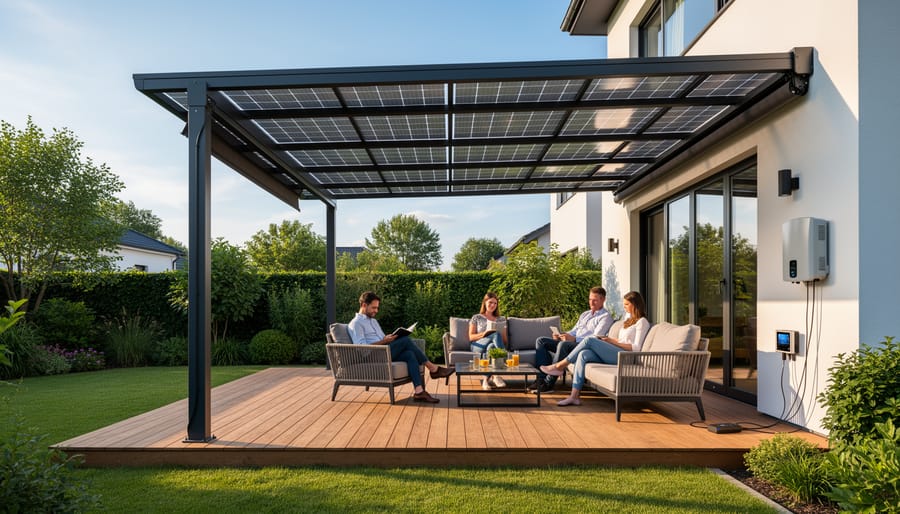
Here’s where things get really exciting for DIY solar enthusiasts. Solar awnings, canopies, and pergolas are hands-down the most approachable BIPV projects you can tackle yourself. I’ve installed flexible solar panels on my RV awning, and honestly, it was easier than building a bookshelf.
These structures give you the perfect foundation for integrating solar panels while serving a practical purpose. Your backyard pergola can provide shade and generate electricity simultaneously. RV awnings become power-producing additions that offset your camping energy needs. Even portable canopies for tailgating or weekend camping trips can incorporate lightweight flexible panels.
The beauty of this approach is that you’re working with accessible materials and straightforward mounting systems. You don’t need specialized construction knowledge or permits in most cases. Start small with a camping canopy setup to learn the basics, then scale up to permanent backyard structures as your confidence grows. The panels connect to your existing power system just like any other solar array, making this a genuinely achievable weekend project that delivers real results.
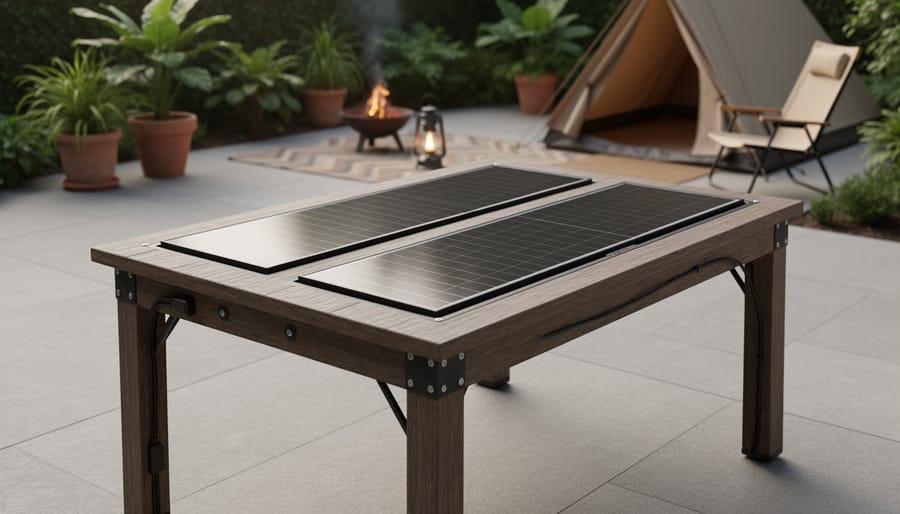
Solar pergolas and awnings offer DIY-friendly BIPV applications that provide both shade and power generation for outdoor living spaces.
The Real Benefits (Beyond Just Looking Cool)
Let’s get real about what BIPV actually brings to the table—because yes, it looks amazing, but there’s more to the story than just architectural eye candy.
First up, space efficiency. I learned this the hard way when my neighbor Charles tried mounting traditional panels on his small urban roof. Between the racking system, maintenance clearances, and optimal tilt angles, he lost nearly 30% of his roof space to, well, nothing. BIPV eliminates that waste. Your solar glass is your window. Your solar shingles are your roof. Every square inch does double duty, which matters tremendously if you’re working with limited real estate.
The aesthetic advantage is obvious but genuinely valuable. Traditional panels scream “I have solar!” BIPV whispers it. For those dealing with homeowners associations or historic district requirements, this difference can mean the difference between approval and rejection. I’ve watched friends navigate these battles, and integrated systems simply face fewer objections.
Here’s something most people overlook: weather protection upgrades. Quality BIPV products often outperform standard building materials. Solar glass can offer better insulation than regular windows. Photovoltaic roofing tiles typically exceed the durability specs of conventional shingles. You’re not adding something to your building—you’re upgrading the building itself.
Property value is trickier. While traditional solar systems have well-documented ROI data, BIPV is newer territory. Early indicators suggest comparable or better value increases, particularly in markets where aesthetics command premium pricing. The key is viewing it as both an energy system and a building upgrade.
Now for the honest part: BIPV costs more upfront than rack-mounted panels. Installation complexity means higher labor costs, and the technology itself carries a premium. You’re also somewhat locked into your design—can’t exactly reposition your solar windows like you might reangle traditional panels. For true energy independence, you’ll need to carefully calculate whether BIPV’s benefits justify its costs for your specific situation. Sometimes they absolutely do. Sometimes traditional panels make more sense. That’s okay—informed choices beat trendy ones every time.
The Challenges You Need to Know About
I’ll be honest with you—when I first started exploring BIPV options a few years back, I was blown away by the concept but pretty quickly hit some reality checks. Building integrated photovoltaics sounds amazing in theory, and it absolutely can be, but there are some genuine challenges you need to think through before diving in.
Let’s start with the big one: cost. BIPV systems typically run 10-30% more expensive than traditional solar panels upfront. You’re not just buying solar panels; you’re buying custom building materials that happen to generate electricity. That solar window or photovoltaic roof tile costs more than a regular window or shingle plus a standard panel. The good news? Over time, you’re saving on both materials and installation labor since BIPV serves dual purposes. But you need to be prepared for that initial investment.
Installation complexity is another consideration I wish someone had emphasized to me earlier. Unlike mounting panels on your roof—which many confident DIYers can tackle—BIPV installation often requires coordination between solar installers, architects, and construction professionals. You’re working with your building’s structure itself, which means building codes, permits, and inspections become more involved. The DIY opportunities here are honestly limited compared to traditional solar.
Here’s something that surprised me: efficiency. Some BIPV products, especially semi-transparent ones like solar windows, generate less electricity per square foot than conventional panels. They’re optimized for aesthetics and building integration, which sometimes means compromising on pure power output. It’s a trade-off you need to calculate carefully.
Repairs and replacements also require extra thought. If a traditional solar panel fails, you swap it out. If a BIPV solar roof tile fails, you’re potentially dealing with roofing work, not just electrical work. Finding qualified professionals who understand both the solar and structural aspects can be challenging in some areas.
None of this means BIPV isn’t worth pursuing—just that informed decisions beat enthusiastic ones every time.
Can You DIY BIPV? What’s Realistic for Home Projects
Let me be honest with you: most true BIPV projects aren’t great DIY candidates. But before you get discouraged, there’s a spectrum here worth exploring.
The reality is that BIPV involves structural integration, meaning those solar elements become part of your building’s envelope. When you’re replacing roofing materials, skylights, or siding with photovoltaic alternatives, you’re dealing with waterproofing, load-bearing calculations, and warranties that typically require licensed contractors. I learned this the hard way when I initially thought I could retrofit BIPV tiles myself. My building inspector quickly set me straight about what crosses the line from simple electrical work into structural modification.
Here’s what’s realistic for home projects: BIPV-adjacent installations like solar awnings, pergola covers, and carport structures often fall into DIYable territory, especially if they’re considered “accessory structures” in your jurisdiction. These projects let you experiment with building-integrated concepts without compromising your home’s structural integrity. I’ve successfully installed a solar patio cover that functions beautifully as both shade and power generation, and it didn’t require a structural engineer’s stamp.
For smaller applications, DIY opportunities definitely exist. Solar window films, lightweight solar facade panels on non-load-bearing walls, and portable BIPV solutions for sheds or outbuildings are all within reach for moderately skilled DIYers. These projects still require electrical knowledge, particularly for safely connecting to your DIY solar setup or battery system.
The permitting question varies dramatically by location. Most jurisdictions require permits for any electrical work and definitely for anything modifying your roof or walls. Start with your local building department before buying materials. Some areas have streamlined solar permitting, while others treat BIPV as complex custom construction.
Safety concerns center on three areas: electrical hazards during installation, fall risks when working at heights, and ensuring proper weatherproofing. If you’re uncomfortable with any of these, hiring professionals isn’t admitting defeat; it’s smart project management.
My recommendation? Start with a detached structure project to learn the ropes before considering anything attached to your home. This gives you valuable experience while keeping risks manageable.
How to Calculate If BIPV Makes Sense for Your Project
Here’s my honest take after helping dozens of folks through this decision: figuring out if BIPV makes sense isn’t rocket science, but it does require some number-crunching and soul-searching about what matters most to you.
Start with the money conversation. Pull up the Spheral Solar calculators and plug in your numbers for both traditional solar panels and BIPV options. Here’s what you need to compare: the upfront cost of BIPV minus what you’d spend anyway on roofing, windows, or whatever building material you’re replacing. That’s your real BIPV premium. Then calculate the same for traditional panels plus their mounting systems. I’ve seen projects where BIPV actually came out ahead when folks factored in that they needed a new roof anyway.
Next, assess your actual energy needs. How much power does your home use monthly? Check your utility bills for the past year. The Spheral Solar energy calculator can help you figure out how much generation capacity you need. BIPV typically produces slightly less power per square foot than optimal-angle traditional panels, so you’ll need more surface area. If your roof space is limited, this might be your deciding factor right there.
Now for the part that often tips the scales: how much do aesthetics matter to you? And I mean really matter. Are you in a neighborhood with strict HOA rules? Planning to sell soon? Some homeowners tell me the sleek look of BIPV is worth an extra five years on their payback period. Others couldn’t care less what’s on their roof as long as it generates power.
Calculate your payback period for both options. Divide your net investment by your annual energy savings. Traditional solar typically pays back in 6-10 years, while BIPV might take 10-15 years depending on the system. Don’t forget to factor in battery storage considerations if you’re planning for energy independence.
Finally, consider the intangibles. Will BIPV increase your home’s value more than rack-mounted panels? Does your local utility offer special incentives for building-integrated systems? These factors can shift your decision significantly.
Getting Started: Your First BIPV-Inspired Solar Project
Ready to dip your toes into BIPV-inspired projects? You don’t need a full roof renovation to explore these concepts. I started my BIPV journey with a simple solar awning over my back patio, and it taught me more about integrated solar design than any textbook could.
For beginners, a solar awning project is perfect. You’re essentially building a shade structure using bifacial solar panels as the roofing material. This serves double duty by generating power while keeping your outdoor space cool. Start small with a 4×8 foot awning using two or three panels. You’ll need basic carpentry skills, some treated lumber for the frame, and proper mounting hardware designed for the panel weight. The key learning here is understanding structural loads and weatherproofing connections, both critical BIPV skills.
If you’re more into camping and outdoor adventures, try building a portable BIPV-style panel setup. Think of it as creating a solar suitcase with rigid panels instead of flexible ones. Mount panels to a hinged plywood frame that folds flat for transport. This project teaches you about optimal angle positioning and how to protect electrical connections in outdoor environments.
For gardeners, solar greenhouse glazing offers incredible potential. Replace some south-facing greenhouse panels with semi-transparent solar glass or thin-film panels. This creates the classic BIPV balance: generating electricity while still allowing enough light for plant growth. Start with just one or two panels to experiment with light levels before committing to more.
Small structure projects like solar-roofed tool sheds or chicken coops let you practice full BIPV integration on a manageable scale. These projects involve everything from waterproofing to electrical integration without the high stakes of your main house.
To continue learning, explore resources from the Solar Energy Industries Association and DIY solar forums where fellow enthusiasts share their builds. Start with one small project, document your process, learn from mistakes, and gradually scale up your ambitions.
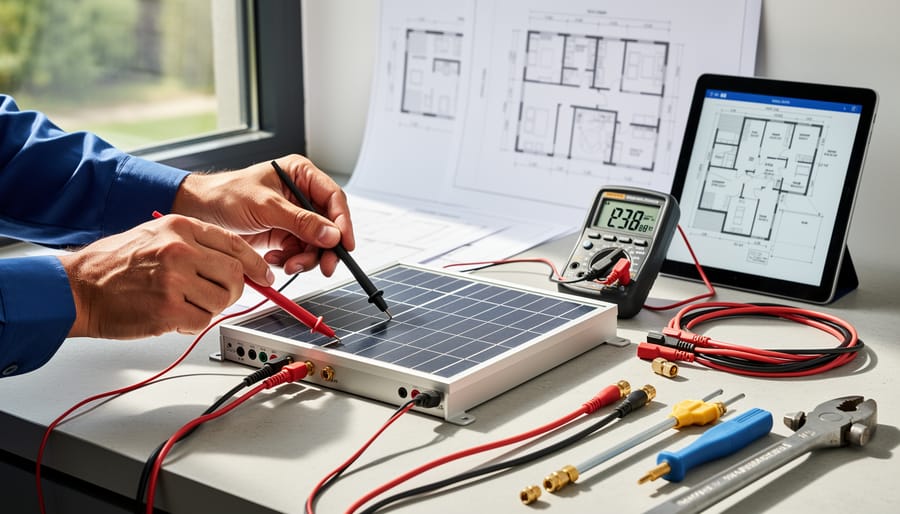
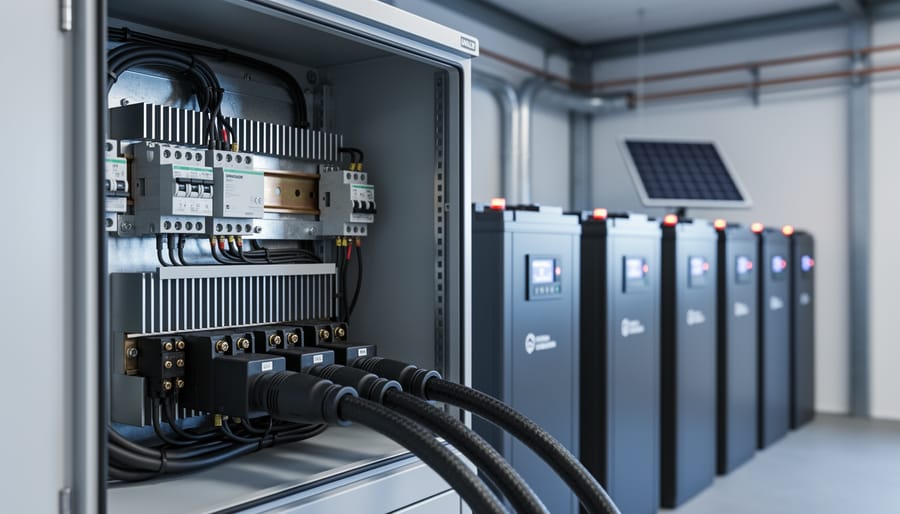
Testing and evaluating solar components is an essential skill for DIYers planning BIPV-inspired projects.
Building integrated photovoltaics represents an exciting frontier in solar energy, and while full-scale BIPV installations might seem beyond the typical DIY project scope, the innovative thinking behind it can absolutely inspire your own creative solar integration efforts. You don’t need to replace your entire roof with solar tiles to benefit from BIPV concepts. Think about starting small: a solar pergola over your patio, photovoltaic panels integrated into your shed design, or even portable BIPV solutions for your camping setup.
The beauty of the DIY solar community is our willingness to experiment, share ideas, and learn from each other’s successes and challenges. As you explore BIPV possibilities, document your journey and share what works and what doesn’t. Whether you’re tackling a small weekend project or planning a larger renovation that incorporates solar elements, your experience becomes valuable knowledge for others in our community.
Charles often reminds us that today’s complex technology becomes tomorrow’s accessible DIY project. He’s seen it happen repeatedly over his decades working with solar. BIPV technology is following that same path. What requires specialized installers today might become standard DIY territory in five or ten years, especially as manufacturers recognize the enthusiasm and capability of the home solar community.
The future of BIPV isn’t just in architectural showpieces, it’s in creative homeowners finding clever ways to make every sun-facing surface productive. Your innovative spirit and willingness to experiment today helps shape that accessible future for everyone.
How useful was this post?
Click on a star to rate it!
Average rating 0 / 5. Vote count: 0
No votes so far! Be the first to rate this post.
We are sorry that this post was not useful for you!
Let us improve this post!
Tell us how we can improve this post?
charlesnoble
Here at Spheral Solar, I’m a hands-on solar power enthusiast, constantly exploring and experimenting with DIY solutions. I’m dedicated to sharing my discoveries, insights, and even the bumps I hit along the way, all in the pursuit of a more sustainable future.
Community Solar Projects Made Simple: How You Can… by Charlesnoble March 19, 2026 Picture this: You’re renting an apartment with a north-facing roof, or your property is shaded by towering oak trees, yet you’re determined to power your life with clean solar energy. Community solar makes this possible. Instead of installing panels on your own property, you buy or lease a portion of…
Why DC Microgrids Are Perfect for Your DIY Solar Setup by Charlesnoble January 7, 2026 Picture this: you’re running LED lights, a laptop, and a small fridge in your off-grid cabin, and every device is drawing power directly from your solar panels without converting DC to AC and back again. That’s the elegant simplicity of a DC microgrid system, where electricity flows in its natural…
Growing Crops Under Solar Panels Actually Works… by Charlesnoble April 3, 2026 Imagine doubling the productivity of your land by growing crops and generating electricity in the same space. That’s exactly what agrivoltaics makes possible—and it’s not just for large-scale farms anymore. An agrivoltaic system combines solar panels with agriculture, mounting photovoltaic arrays high enough that crops, livestock, or pollinator habitats can…
Why CSP Solar Never Made It Into Your Backyard (And… by Charlesnoble January 30, 2026 When you see massive solar installations in the desert generating headlines, they’re often concentrating solar power plants—but the panels on your neighbor’s roof? Those are photovoltaics, and understanding the distinction matters more than you might think. Concentrating solar power uses mirrors or lenses to focus sunlight onto a receiver, creating…
This DIY Floating Solar Pool Heater Slashed My… by Charlesnoble January 18, 2026 Place your floating solar heater on the pool’s sunny side during morning hours, positioning it where water circulation naturally draws heated water toward your skimmer return. You’ll capture 2-8°F of temperature gain on sunny days without spending thousands on permanent installations. Build your first unit using black irrigation tubing coiled…
Floating Solar Panels Could Change Where You Generate Power by Charlesnoble November 29, 2025 Picture your backyard pond doing double duty: supporting wildlife while generating clean electricity for your home. That’s the promise of floating solar panels, an innovation that’s transforming how we think about renewable energy installation. Floating solar systems, also called floatovoltaics, mount photovoltaic panels on buoyant platforms that rest on water…
Subscribe for handpicked DIY projects, exclusive tips, and giveaways.
Building a solar powered outdoor table takes about 8 to 12 hours and requires basic woodworking skills plus some familiarity with electrical connections. You’ll mount solar panels directly onto a custom-built or modified outdoor table, wire them to a charge controller and battery system housed underneath, and add USB ports or AC outlets for charging… Read more: How to Build a Solar Powered Outdoor Table for Your Camping Setup
Charging a battery bank with a 3-phase inverter requires connecting your inverter’s AC output to a compatible battery charger or hybrid inverter system that can convert the 3-phase power back to DC for storage. Most DIY solar setups achieve this by using a hybrid inverter that handles both solar input and battery charging simultaneously, or… Read more: How to Wire and Configure a Battery Inverter 3 Phase System for Off-Grid Solar
Wiring a 7-pin RV plug correctly connects your tow vehicle to your trailer’s lights, brakes, and auxiliary power in about 45 minutes with basic hand tools and careful attention to the color-coded wire standard. The diagram follows a specific layout mandated by the RV Industry Association: each pin controls a distinct function, from left turn… Read more: How to Wire a 7-Way RV Plug: Step-by-Step Diagram and Setup Guide