What Really Happens to Your Old Solar Panels (And Where They Go)
Updated:
Contact certified electronics recyclers in your area first—many accept photovoltaic panels even if they don’t advertise it specifically. Call ahead with your panel specifications, including wattage, age, and whether they contain crystalline silicon or thin-film materials, as facilities often specialize in particular types. Most recyclers will ask about quantity since processing individual residential panels differs from commercial-scale decommissioning.
Locate specialized solar recycling facilities through the Solar Energy Industries Association database or PV Cycle programs, which maintain updated directories of certified processors across North America and Europe. These facilities can recover up to 95% of materials from crystalline silicon panels, extracting valuable aluminum frames, glass, silicon wafers, and copper wiring for remanufacturing. Transportation logistics matter here—some facilities offer pickup services for bulk quantities, while single-panel recycling typically requires drop-off.
Understand that recycling costs range from free to $30 per panel depending on your location and facility capabilities. Some states mandate manufacturer take-back programs, making recycling cost-neutral for consumers, while others treat panels as universal waste requiring certified handling. Before scheduling removal, verify your panels haven’t reached a repairable condition—panels producing 80% or more of rated output may find second lives through resale or donation to community projects.
Document your panel information before decommissioning: model numbers, installation dates, performance data, and any maintenance records. This documentation helps recyclers sort materials efficiently and may qualify you for environmental credits or rebates in participating jurisdictions. The solar community thrives when we close the loop responsibly, transforming yesterday’s panels into tomorrow’s renewable infrastructure rather than landfill burden.
Why Solar Panel Recycling Matters More Than You Think
I’ll be honest with you—when I first installed my solar panels fifteen years ago, I never thought about what would happen when they stopped working. Like most people, I assumed solar panels were the environmental solution, end of story. But here’s the reality check: those panels on your roof have a lifespan of about 25 to 30 years, and we’re now facing a wave of first-generation panels reaching retirement age.
Here’s why this matters more than most people realize. Every solar panel contains incredibly valuable materials—silicon wafers that form the heart of the cells, silver for conducting electricity, copper wiring, and aluminum frames. We’re talking about materials that took significant energy and resources to mine and manufacture. When panels end up in landfills, we’re essentially throwing away a mini treasure chest of recyclable resources. Even worse, some panels contain small amounts of lead or cadmium that shouldn’t be sitting in a dump.
The numbers are staggering. By 2050, experts predict we’ll have 78 million metric tons of solar panel waste globally. That’s roughly the weight of 260,000 Statues of Liberty worth of panels. Without proper recycling infrastructure, we risk undermining the environmental benefits that made sustainable solar adoption so appealing in the first place.
This is where our DIY community can lead the charge. By understanding recycling options and making responsible choices about panel disposal, we’re not just dealing with our own installations—we’re setting an example for the entire solar industry. Every panel we recycle instead of landfill recovers materials for new panels, reduces mining impacts, and keeps our renewable energy movement truly sustainable. It’s about closing the loop and ensuring solar power remains the environmental champion we know it can be.
When Your Rooftop Panels Need to Come Down
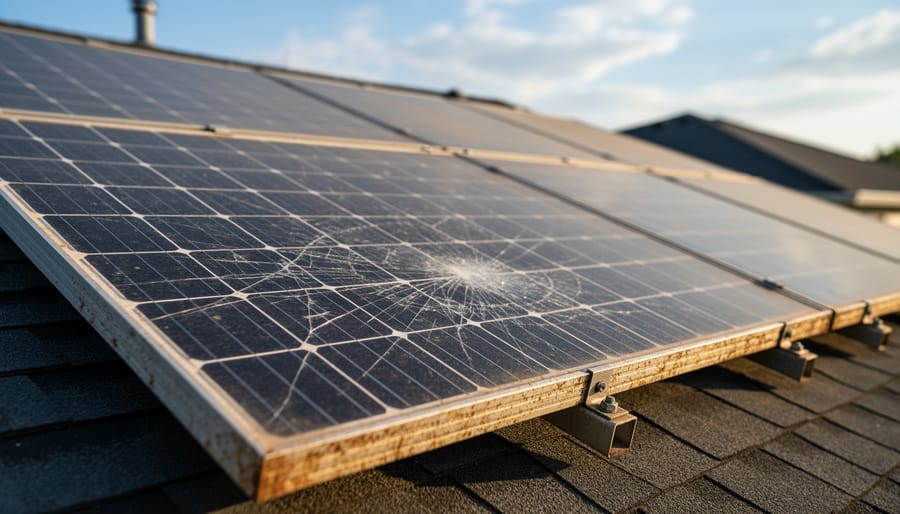
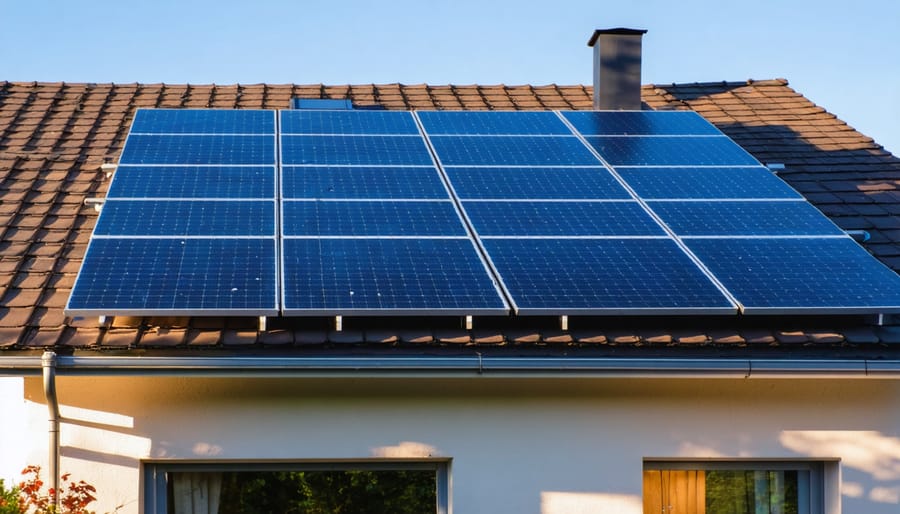
Solar panels typically last 25-30 years, but visible wear like micro-cracks and discoloration signals declining efficiency and potential end-of-life.
Signs It’s Time for Decommissioning
Knowing when to retire your solar panels can save you money and help you plan for responsible recycling. I learned this the hard way when I kept nursing along an aging array that was costing me more in lost production than it would have to replace!
The most obvious sign is declining efficiency. If your panels are producing 20% less energy than their original output, it’s time to start thinking about replacement. Most panels last 25-30 years, but performance drops gradually over time. Keep an eye on your monitoring system, those numbers tell the real story.
Physical damage is another clear indicator. Visible cracks in the glass, discoloration, or delamination where layers separate means the panel’s protection is compromised. Micro-cracks aren’t always visible to the naked eye, but you’ll notice them through reduced output or hot spots on thermal imaging.
Your energy needs might also change. Maybe you’ve added an electric vehicle or expanded your home, and your current system just can’t keep up. Rather than letting old panels sit unused on your roof, recycling them makes room for more efficient technology.
Don’t forget that consistent panel maintenance can extend lifespan, but eventually every system reaches its endpoint. When multiple panels show issues simultaneously, that’s your cue to explore recycling options.
Before You Remove: Repurposing Options
Before you load those older panels into the truck for recycling, consider this: panels that no longer meet the efficiency standards for your main roof installation still have plenty of life left for smaller projects. I’ve repurposed dozens of decommissioned panels over the years, and they’ve become some of the most useful tools in my workshop and outdoor adventures.
Think about your power needs beyond the house. A single 250-watt panel that’s dropped to 70-80 percent efficiency can still generate around 175-200 watts, which is perfect for charging power tool batteries in a detached workshop or garage. I mounted two older panels above my woodshop, and they keep my drill batteries topped off without adding a cent to my electric bill.
For camping enthusiasts, decommissioned panels make exceptional portable charging stations. Cut the mounting hardware down, add a basic charge controller (about $30), and you’ve got a reliable power source for RV batteries, phones, and camping lights. My camping buddy runs his entire portable fridge setup from a panel I gave him that was headed for recycling.
Off-grid cabins are another perfect application. Panels that aren’t roof-worthy can still provide adequate power for LED lighting, small appliances, and basic electronics in remote locations. The efficiency drop that matters for a full home system becomes irrelevant when you’re just powering a weekend retreat.
Before recycling, honestly assess whether your panels could serve these secondary purposes. You’ll extend their useful life by years while keeping them out of the waste stream a bit longer.
What’s Actually Inside Your Solar Panels
Before you can truly appreciate what happens at a solar panel recycling facility, it helps to understand what you’re actually sending there. I remember the first time I took apart an old panel in my garage—I was surprised by how much valuable material was packed inside that seemingly simple rectangle on my roof.
Your typical solar panel is essentially a sandwich of recyclable materials. The top layer is tempered glass, which makes up about 75% of the panel’s weight. This is high-quality, low-iron glass that can be recovered and reused in new products. Beneath that glass sits the real star of the show: the silicon solar cells. These wafer-thin cells contain the semiconductors that actually generate electricity—and if you want to dive deeper into that process, check out how solar panels work.
The aluminum frame around the edges accounts for about 10% of the panel’s weight and is highly recyclable—in fact, recycling facilities love aluminum because it’s easy to process and valuable. Inside the panel, you’ll find copper wiring connecting all those cells together, plus small amounts of silver used in the cell contacts. While silver makes up less than 0.1% of the panel’s weight, it’s actually one of the most valuable materials to recover.
Here’s the exciting part: modern recycling facilities can recover up to 95% of a solar panel’s materials. Glass typically sees recovery rates around 95%, aluminum frames are nearly 100% recyclable, and copper recovery hovers around 90%. Even that tiny amount of silver can be extracted and reused.
The remaining 5% consists of plastics, adhesives, and protective backing materials—these are trickier to recycle but advancing technology is improving recovery rates every year. Understanding these components helps you appreciate why proper recycling matters and what value your old panels still hold.
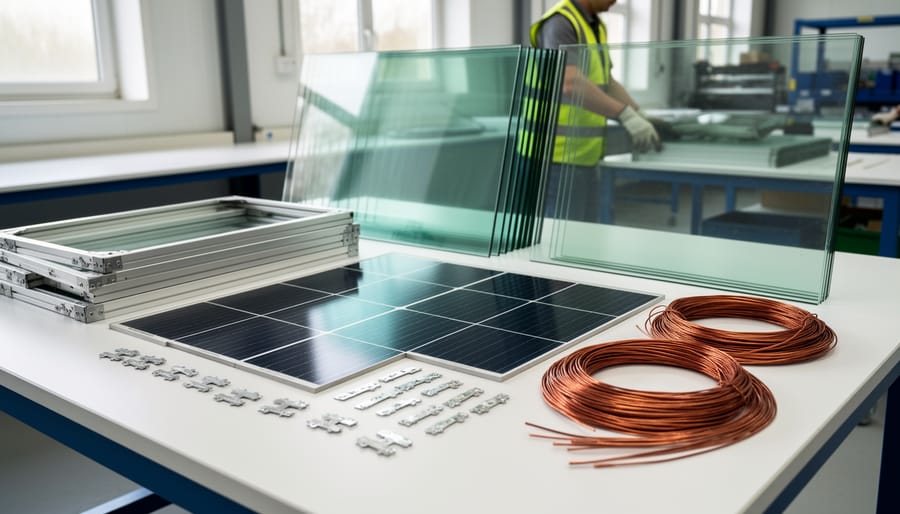
Solar panels contain valuable recoverable materials including silicon cells, aluminum frames, copper wiring, glass, and small amounts of silver.
How Solar Panel Recycling Facilities Work
The Sorting and Assessment Stage
When your panels arrive at a recycling facility, they don’t all get treated the same way. Think of it like sorting recyclables at home, but on a much more sophisticated level. The first thing facilities do is separate panels into two main categories: crystalline silicon panels (the most common type you’ll find on residential roofs) and thin-film panels (which are lighter and more flexible).
I remember talking with a facility manager in Arizona who explained this sorting process perfectly. She said they check each panel like a doctor doing a diagnosis. Workers examine the condition of each panel, looking for cracks, water damage, or whether the frame is still intact. This assessment is crucial because it determines which recycling path makes the most sense.
Panels in relatively good shape might be refurbished and resold for secondary markets. Those too damaged for reuse get categorized by their material composition. Crystalline panels, which contain valuable silicon, silver, and copper, follow a different recycling process than thin-film panels that might contain materials like cadmium telluride.
Modern facilities use visual inspections combined with scanning technology to identify panel types quickly. Some even use barcode systems to track each panel’s journey through the recycling process. This careful sorting ensures maximum material recovery and helps facilities determine whether thermal, mechanical, or chemical processing will work best for each batch.
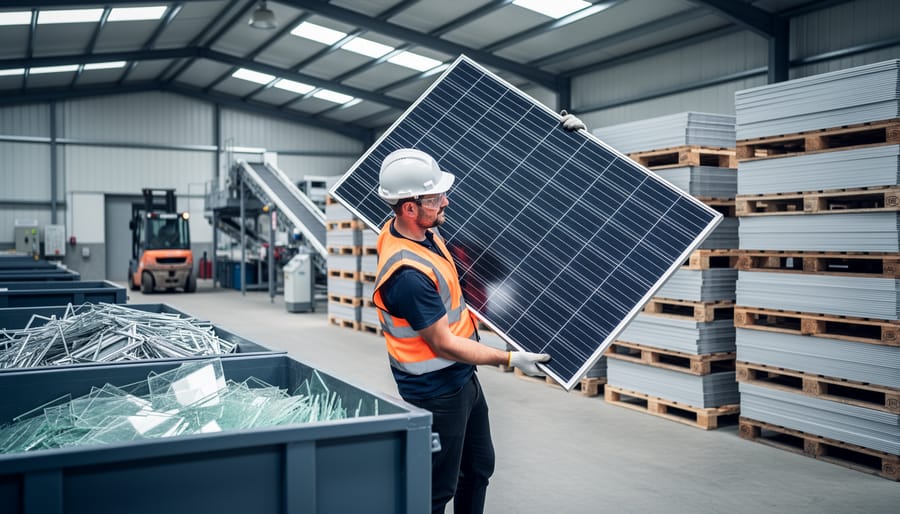
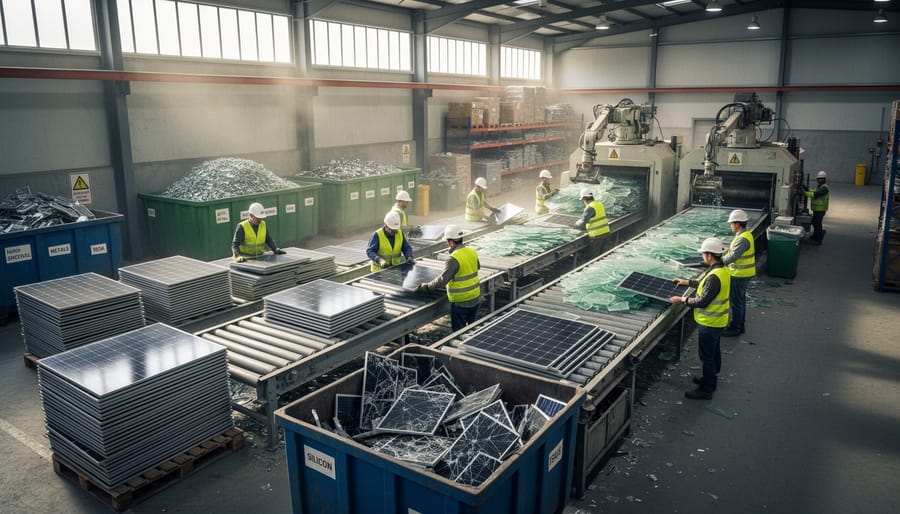
Specialized recycling facilities process end-of-life solar panels, sorting them by type and condition before recovering valuable materials.
Breaking Down the Panels
Think of panel recycling like reverse baking a layered cake – you’re carefully separating ingredients that were fused together. When your old solar panels arrive at a recycling facility, they go through several fascinating stages that recover up to 95% of their materials.
First comes the aluminum frame removal, which is honestly the easiest part. Workers detach these frames just like you’d remove a picture from its frame. The aluminum gets sorted and shipped off to be melted down for new products – maybe even frames for fresh solar panels!
Next, the panels enter what I call the “disassembly line.” Thermal processing heats the panels to specific temperatures (think of it like using a heat gun to remove old paint), which softens the adhesive bonding layers. This allows machines to separate the glass from the semiconductor materials underneath without shattering everything.
The glass, which makes up about 75% of each panel’s weight, gets crushed and sorted. Clean glass goes straight to glass manufacturers, while the rest heads for additional processing.
Here’s where it gets really interesting: the silicon wafers and other materials go through chemical or mechanical treatments to extract valuable components. Specialized equipment grinds everything down, then uses a combination of screening (like panning for gold) and chemical baths to separate silver, copper, and silicon. These recovered metals often have higher purity than freshly mined materials – nature’s ultimate recycling win!
Material Recovery and Reuse
Once your solar panels arrive at a recycling facility, something pretty remarkable happens – those seemingly worn-out panels transform into valuable raw materials ready for their next chapter. I’ve watched this process firsthand, and it never stops amazing me how much of each panel gets a second life.
Here’s the breakdown of where everything goes: Glass makes up about 75% of a typical panel, and recyclers recover roughly 95% or more of it. This recovered glass doesn’t just disappear into landfills – it heads straight to construction companies where it becomes fiberglass insulation, bottles, or even new building materials. Pretty cool, right?
The aluminum frames also enjoy an impressive recovery rate of 95% or higher. After cleaning and processing, this aluminum returns to manufacturers who melt it down for new products. Since aluminum can be recycled indefinitely without losing quality, your old panel frames might end up in anything from window frames to new solar panel mounting systems.
Silicon cells present a trickier challenge, but modern facilities are getting better at handling them. Through chemical and thermal treatments, recyclers can purify silicon to approximately 85-90% recovery rates. This reclaimed silicon often makes its way back into new solar cells, though sometimes it’s used in electronics or semiconductor applications.
The smaller components – copper wiring, junction boxes, and other metals – typically achieve 90-95% recovery rates. These materials get sorted, processed, and returned to manufacturing supply chains. When you consider that most facilities recover around 90-95% of a panel’s total weight, that’s an incredible win for sustainability.
Finding a Recycling Facility Near You
Certification and Standards to Look For
When I started researching recycling options for my first set of aging panels, I quickly discovered that not all facilities operate with the same environmental standards. This is where certifications become your best friend in ensuring your panels are truly recycled responsibly.
The two gold-standard certifications to look for are R2 (Responsible Recycling) and e-Stewards. Think of these as the organic labels of the electronics recycling world. R2-certified facilities follow strict guidelines for environmental protection, worker safety, and downstream accountability, meaning they verify that materials don’t end up in landfills or shipped to countries with poor environmental controls. e-Stewards certification is even more stringent, prohibiting the export of hazardous electronic waste to developing nations and requiring comprehensive environmental management systems.
Why does this matter for your old solar panels? Certified facilities track every component through the recycling process, ensuring valuable materials like silicon, silver, and aluminum are actually recovered and toxic elements like lead are properly handled. They also maintain transparent documentation, so you can verify your panels were responsibly processed.
When contacting facilities, don’t hesitate to ask about their certifications directly. Legitimate recyclers are proud of these credentials and will happily discuss their processes. If a facility seems evasive or can’t provide certification information, that’s a red flag worth heeding.
National and Regional Recycling Programs
Finding the right recycling option for your solar panels doesn’t have to be complicated, even if you’re miles from the nearest facility. Let me share what I learned when I helped my neighbor Jim navigate this process last year when his 15-year-old panels finally called it quits.
Many solar panel manufacturers now offer take-back programs as part of their commitment to sustainability. Companies like SunPower, First Solar, and Canadian Solar will accept their own panels for recycling, though policies vary. Some cover shipping costs, while others require you to deliver panels to designated collection points. I always recommend checking your original purchase documentation first, as you might have recycling provisions already built into your warranty.
At the state level, Washington became the first to require manufacturers to finance solar panel recycling programs in 2017. California, with its massive solar installation base, is developing similar infrastructure. However, most states still lack dedicated solar recycling mandates, which means you’ll need to be proactive.
For DIYers in rural areas without nearby facilities, specialized recycling networks like the Solar Energy Industries Association’s national recycling partners can be lifesavers. These programs coordinate bulk shipments from remote locations, making recycling feasible even from small towns. I’ve also seen community solar groups organize collective drop-offs to share transportation costs.
Here’s my practical tip: call your local electronic waste facility first. While they might not advertise solar panel recycling specifically, many accept them alongside other electronics. When Jim did this, he discovered his county’s e-waste center accepted panels quarterly during special collection events. Sometimes the solution is closer than you think, you just need to ask the right questions.
The Real Cost of Recycling Your Panels
Let me be straight with you—recycling your old solar panels isn’t free, but it’s probably more affordable than you think. Most recycling facilities charge between $15 and $45 per panel, depending on your location and the panel type. When I helped my neighbor decommission his 20-panel array last year, we paid about $28 per panel at our regional facility, which came to $560 total. Not pocket change, but definitely manageable when you plan ahead.
Here’s the thing that surprised us: transportation can actually cost more than the recycling itself if you’re not strategic. If you’re hauling panels individually or making multiple trips, you’ll burn through gas money quickly. We borrowed a friend’s pickup truck and made one trip with all 20 panels properly secured, which saved us a bundle. Some facilities even offer pickup services for larger quantities, typically for arrays of 15 panels or more, though this adds $100-200 to your total cost.
Now, let’s talk about offsetting these expenses. Many communities have started bulk recycling programs where neighbors can combine their panels for group drop-offs, splitting transportation costs. I’ve seen solar hobbyist groups on local forums organize quarterly recycling runs—it’s a great way to connect with fellow enthusiasts while saving money. Some facilities also waive fees for certain income brackets or offer discounts during designated collection events, so it pays to call ahead and ask.
Comparing this to landfill fees provides helpful context. Where landfills accept solar panels (and many don’t anymore due to environmental regulations), disposal costs typically run $20-35 per panel anyway. You’re paying roughly the same amount, but with recycling, you’re recovering up to 95% of valuable materials like silicon, silver, and aluminum instead of creating toxic waste. That’s a win for your conscience and the planet.
DIY Decommissioning: What You Can (and Should) Handle Yourself
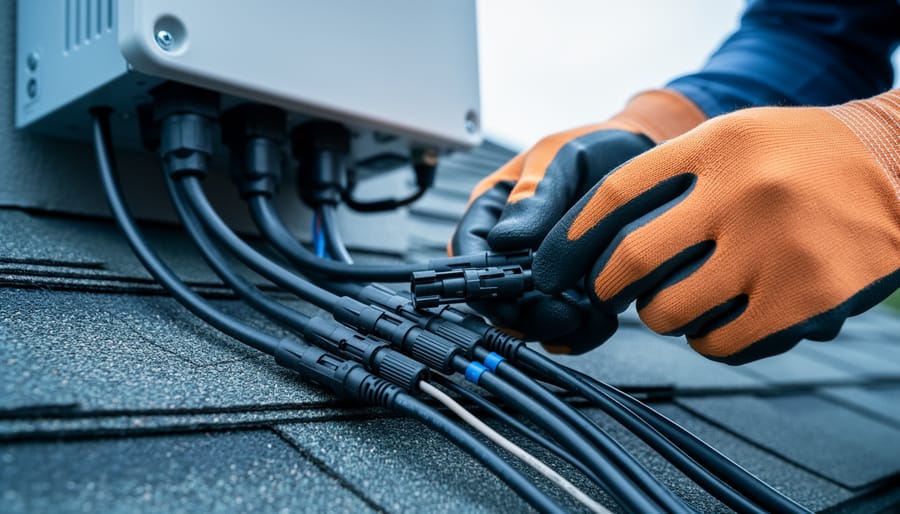
Safe DIY panel removal requires proper safety equipment, correct disconnection procedures, and careful handling to prevent damage.
Safe Panel Removal Checklist
Before your panels can be responsibly recycled, they need to come off your roof safely. I learned this the hard way years ago when I rushed a removal job and cracked a panel, creating a recycling headache and a safety hazard. Let me walk you through the proper process so you can avoid my mistakes.
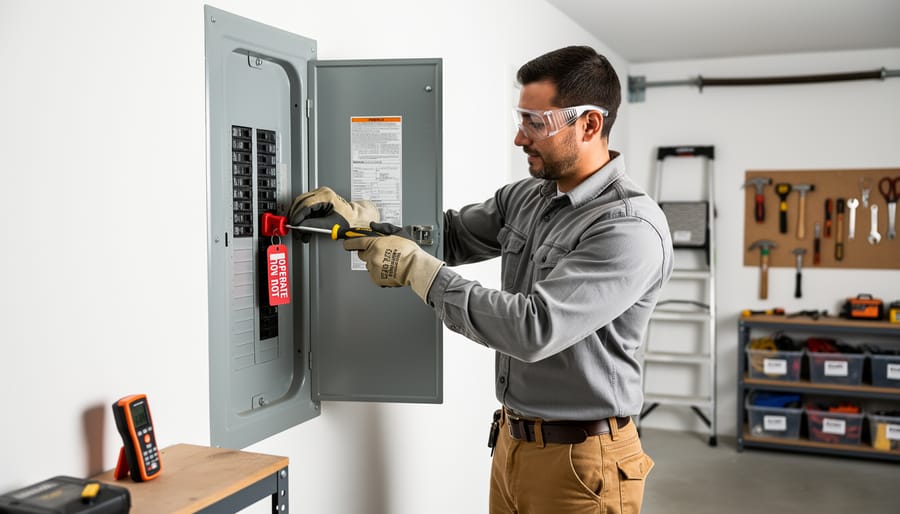
Start by scheduling your removal for a cool, overcast day if possible. Panels get extremely hot in direct sunlight, making them harder to handle safely. Your first step is complete system shutdown. Begin by turning off your home’s main electrical panel, then flip off the AC and DC disconnect switches on your inverter. Properly disconnecting solar panels from the electrical system is absolutely critical for your safety and cannot be skipped.
Gather your tools before climbing up: a socket wrench set, insulated gloves, safety harness, non-slip shoes, and a helper on the ground. Document everything with photos as you go, especially wiring configurations and mounting hardware. This helps recycling facilities assess what materials they’re receiving.
Work methodically from one end of your array to the other. Label each wire connection before disconnecting anything. Remove panels one at a time, never stacking them on the roof. Even end-of-life panels retain some electrical charge, so treat them as live equipment. Handle panels by their frames, never by the glass or backing, and avoid applying pressure that could cause microcracks.
Once removed, store panels flat in a covered area away from moisture until transport. Keeping them intact and undamaged makes the recycling process significantly more efficient and valuable.
Preparing Panels for Transport to Recyclers
Getting your old panels safely to a recycling facility is like preparing fragile equipment for a cross-country move—proper care makes all the difference. When I helped my neighbor Charles transport his 15-year-old panels last spring, we learned this lesson the hard way after hearing some unsettling cracks during our first attempt.
Start by never stacking panels face-to-face without protection. Place cardboard or foam padding between each panel, and limit stacks to no more than four panels for standard crystalline silicon types. Think of it like creating a sandwich where the filling protects both slices of bread. For thin-film panels containing cadmium telluride (which may release trace amounts of cadmium if broken), extra caution is essential. Wrap these individually in plastic sheeting and clearly label them as “thin-film” so recyclers can handle them appropriately.
Secure your stack with ratchet straps—not bungee cords, which can create pressure points. Place the stack flat in your vehicle rather than on edge, and avoid sudden stops or sharp turns during transport. If you’re moving more than eight panels, consider renting a trailer with tie-down anchors.
Most importantly, call your chosen recycling facility beforehand to ask about their specific packaging requirements. Some facilities provide special containers or have loading dock procedures that can save you considerable hassle.
The Future of Solar Recycling (And Why It’s Getting Better)
Here’s the exciting news: solar panel recycling is getting dramatically better, and faster than most people realize. When I first started working with solar in the early 2000s, recycling options were practically nonexistent. Today, we’re witnessing a complete transformation in how we handle end-of-life panels.
New recycling technologies are recovering upwards of 95% of materials from panels, including high-purity silicon, silver, and aluminum. Companies like Veolia and ROSI Solar are pioneering processes that make recycling economically viable, not just environmentally necessary. The old problem was that recycling panels cost more than the recovered materials were worth. That equation is shifting as precious metal prices rise and processing becomes more efficient.
The infrastructure is expanding rapidly too. The European Union already requires manufacturers to fund recycling programs, and similar legislation is gaining traction in California, Washington, and other U.S. states. This creates the funding and framework needed for recycling facilities to pop up in more locations.
Here’s where our DIY solar community comes in: we have real power to accelerate this progress. Every time we choose to recycle rather than landfill, we’re supporting these emerging facilities and proving there’s demand for sustainable practices. When you contact installers or manufacturers about your projects, ask about their recycling programs. Vote with your purchasing decisions for companies committed to panel take-back programs.
I’ve noticed more DIYers in online forums sharing information about recycling options, creating informal networks that help everyone find responsible disposal solutions. That collaborative spirit is exactly what will push the industry toward a truly circular economy where today’s panels become tomorrow’s solar materials.
I’ll be honest with you—when I installed my first solar array fifteen years ago, recycling was the furthest thing from my mind. I was focused on energy independence, cost savings, and doing something good for the planet. But here’s what I’ve learned since then: true sustainability isn’t just about what happens during those productive decades your panels sit on your roof. It’s about completing the entire circle, from installation to responsible end-of-life management.
That’s why I’m encouraging you to think differently than I did. Before you even mount your first panel, take an hour to research recycling facilities in your area. Bookmark their contact information. Understand their requirements. Some facilities accept drop-offs from individuals, while others work only through installers or require minimum quantities. Knowing this now saves you scrambling later when panels actually need replacement.
Planning for end-of-life from day one might seem premature, but it’s part of being a responsible solar steward. Your panels will likely outlast their 25-year warranty, but eventually, they’ll need proper disposal. By identifying your recycling pathway early, you’re ensuring that the environmental benefits you’re creating today don’t become tomorrow’s waste problem.
I’d love to hear from our community about your decommissioning experiences. Have you successfully recycled panels? What challenges did you face finding facilities? Your stories help others navigate this final phase of their solar journey with confidence.
Remember, choosing solar power is choosing sustainability. Proper recycling completes that promise. Start your research today, and you’ll have peace of mind knowing your renewable energy commitment extends through every stage of your system’s life.
How useful was this post?
Click on a star to rate it!
Average rating 0 / 5. Vote count: 0
No votes so far! Be the first to rate this post.
We are sorry that this post was not useful for you!
Let us improve this post!
Tell us how we can improve this post?
charlesnoble
Here at Spheral Solar, I’m a hands-on solar power enthusiast, constantly exploring and experimenting with DIY solutions. I’m dedicated to sharing my discoveries, insights, and even the bumps I hit along the way, all in the pursuit of a more sustainable future.
How the Solar Tax Credit Puts Thousands Back in Your Pocket by Charlesnoble January 16, 2026 Claim up to 30% of your solar installation costs back from the federal government through the residential solar tax credit—officially called the Investment Tax Credit (ITC)—which applies to equipment, labor, and even permits when you install solar panels on your home. This credit directly reduces what you owe the IRS…
How I Built a Zero Energy Home Without Breaking the Bank by Charlesnoble November 14, 2025 **Imagine slashing your electricity bill to zero—permanently.** A zero energy home produces as much renewable energy as it consumes over the course of a year, transforming your house from an energy drain into a self-sustaining powerhouse. It’s not science fiction or reserved for millionaires; thousands of homeowners are already living…
Six Energy Sources That Work With Your Solar Panels… by Charlesnoble December 16, 2025 Harness the sun’s energy streaming onto your roof right now—solar panels convert sunlight into electricity that powers your home while slashing monthly utility bills. Capture moving air with residential wind turbines mounted on your property, generating supplemental power during breezy days and nights when solar production drops. Tap into the…
How Sunlight Becomes Electricity in Your Home (The… by Charlesnoble November 3, 2025 Understand the photovoltaic effect—when sunlight hits solar panels, photons knock electrons loose from silicon atoms, creating an electrical current through a principle Einstein won a Nobel Prize for discovering. Your solar panels generate direct current (DC) electricity, which then flows to an inverter that converts it into alternating current (AC)…
Why Your Rooftop Solar Installation Needs… by Charlesnoble January 28, 2026 Seal every penetration point where your solar mounting hardware breaks through the deck surface with marine-grade polyurethane caulk rated for continuous UV exposure and thermal cycling. I learned this the hard way after my first DIY installation when I assumed standard silicone would suffice—three months later, I discovered water pooling…
Why Florida Homeowners Are Going Solar (And How You Can Too) by Charlesnoble March 6, 2026 Calculate your home’s solar potential by checking your annual electricity bills and measuring your available south-facing roof space—Florida homes typically need 20-30 panels to offset 100% of energy usage. Contact your utility provider to understand net metering policies, as companies like Duke Energy, FPL, and Tampa Electric have different buyback…
Subscribe for handpicked DIY projects, exclusive tips, and giveaways.
Charging a battery bank with a 3-phase inverter requires connecting your inverter’s AC output to a compatible battery charger or hybrid inverter system that can convert the 3-phase power back to DC for storage. Most DIY solar setups achieve this by using a hybrid inverter that handles both solar input and battery charging simultaneously, or… Read more: How to Wire and Configure a Battery Inverter 3 Phase System for Off-Grid Solar
Wiring a 7-pin RV plug correctly connects your tow vehicle to your trailer’s lights, brakes, and auxiliary power in about 45 minutes with basic hand tools and careful attention to the color-coded wire standard. The diagram follows a specific layout mandated by the RV Industry Association: each pin controls a distinct function, from left turn… Read more: How to Wire a 7-Way RV Plug: Step-by-Step Diagram and Setup Guide
Nine times out of ten, an E050 arc fault error on your solar inverter means a loose connection somewhere in your DC wiring. Before you panic or call an expensive technician, check every MC4 connector between your panels and inverter. A single connection that wasn’t snapped fully closed or has corroded from weather exposure will… Read more: Why Is My Solar Inverter Showing Arc Fault E050? Causes and How to Fix It