How I Built a 48V Ebike Solar Charger That Works Anywhere
Updated:
Calculate your ebike’s battery capacity in watt-hours by multiplying 48 volts by your amp-hour rating—this determines the minimum solar panel wattage you’ll need. A standard 48V 14Ah ebike battery holds 672Wh, requiring at least a 200-watt solar panel for a full day’s charge in optimal sunlight conditions.
Match your solar charge controller to handle both your panel’s output voltage and your battery’s charging requirements—MPPT controllers extract 20-30% more power than PWM models, making them essential for maximizing limited solar collection time. Most 48V systems need controllers rated for 60-75 volts input and 15-30 amps output.
Position panels to capture 4-6 peak sun hours daily, understanding that real-world charging takes 1.5-2 times longer than calculations suggest due to weather, angle variations, and system inefficiencies. When charging an ebike with solar, I learned this the hard way during a week-long bike tour through Oregon—my 300-watt panel couldn’t keep up with cloudy coastal weather until I added a second 100-watt panel for backup power.
Wire your system with appropriately sized cables to prevent voltage drop—14 AWG minimum for connections under 10 feet, 10 AWG for longer runs. This seemingly minor detail cost me 15% efficiency loss on my first setup before I upgraded the wiring between my charge controller and battery.
Budget between 400-800 dollars for a complete portable system or 300-500 dollars for a fixed rooftop installation, with costs varying based on panel quality and controller sophistication. The investment pays back through free charging within 2-4 years depending on your riding frequency and local electricity rates.
Why 48V Ebikes Need Special Solar Charging Consideration
Understanding Your 48V Ebike Battery
Before you can effectively charge your ebike with solar power, you need to understand what’s actually happening inside that battery pack. When I first started my ebike solar charging project, I thought a 48V battery meant it ran at exactly 48 volts. Turns out, that’s just the nominal voltage—the reality is a bit more interesting.
A 48V ebike battery is actually made up of 13 lithium-ion cells connected in series, which we call a “13S” configuration. Each individual cell has a nominal voltage of 3.7 volts, and when you multiply that by 13, you get approximately 48 volts. But here’s the crucial part for solar charging: these batteries don’t stay at 48V. When fully charged, they actually reach 54.6 volts (that’s 4.2 volts per cell), and when depleted, they drop to around 39 volts.
This voltage range matters because your solar charger needs to output that full 54.6 volts to completely charge your battery. Think of it like filling a water tower—you need enough pressure to reach the top.
Capacity-wise, most 48V ebike batteries range from 10Ah to 20Ah, which translates to 480-960 watt-hours of stored energy. A 15Ah battery, for example, holds about 720 watt-hours—that’s roughly what a small laptop uses in a full day of work. Understanding these numbers helps you size your solar panel system appropriately, which we’ll dive into next.
The Solar Panel Voltage Challenge
Here’s something I learned the hard way during my first ebike solar charging attempt: grabbing a basic 12V solar panel from the hardware store won’t cut it for a 48V battery. I was scratching my head wondering why nothing was happening until I understood the voltage challenge.
Think of voltage like water pressure in a hose. Your 48V ebike battery needs a certain pressure to actually accept a charge, typically around 54-58 volts when fully charging. A standard 12V panel simply doesn’t have enough push to move electrons into that battery, no matter how sunny the day.
So what’s the solution? You need solar panels that collectively produce higher voltage than your battery. Most DIY builders use either a single 100W panel (usually outputting 18-22V) combined with multiple panels in series, or opt for higher voltage panels from the start. Understanding solar panel setup basics helps tremendously here.
This is where charge controllers become your best friend. These smart devices take whatever voltage your panels produce and convert it to the precise voltage your battery needs. An MPPT (Maximum Power Point Tracking) charge controller is particularly clever, squeezing every available watt from your panels while safely managing the charging process. It’s like having an intelligent intermediary that speaks both solar panel and battery language fluently.
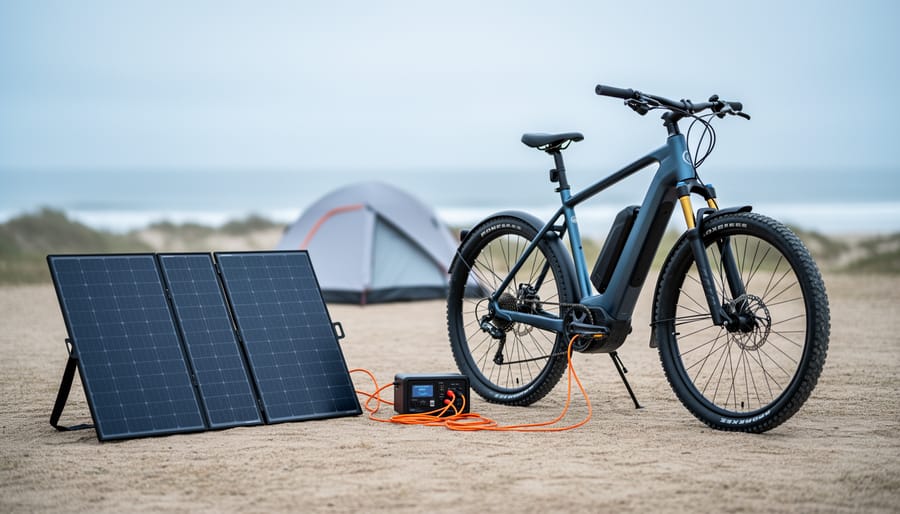
A complete 48V solar charging system includes solar panels, MPPT charge controller, proper gauge wiring, and safety components.
Essential Components for Your 48V Solar Ebike Charging System
Solar Panels: Sizing for Real-World Charging
Choosing the right solar panel size makes all the difference between a quick charge and watching paint dry. For a 48V ebike battery, you’ll typically need between 100W and 400W of solar power, depending on how patient you are and how much sun you get.
Let’s break down the math. A typical 48V ebike battery holds 10-20 amp-hours (480-960 watt-hours). If you have a 200W solar panel producing power for 5 good sun hours, you’re generating roughly 1,000 watt-hours per day. That means you could fully charge a mid-sized battery in one sunny day, accounting for charging losses.
Charles learned this the hard way on his first setup. “I started with a 100W panel thinking I’d save money,” he shares. “Turned out charging my 14Ah battery took nearly two full days of decent sun. I upgraded to a 300W panel and now I’m fully charged by late afternoon, even on partly cloudy days.”
When shopping, you’ll see two main types: monocrystalline and polycrystalline panels. Monocrystalline costs more but performs better in limited space and partial shade, making them ideal for most ebike charging setups. Polycrystalline panels are budget-friendly but need more surface area for the same output.
Here’s a simple formula: divide your battery’s watt-hours by your desired charging hours, then multiply by 1.3 to account for inefficiencies. Want to charge that 672Wh battery in 4 hours? You’ll need about 220W of panels. Add portable folding panels if you’re charging on the trail, or fixed roof-mounted ones for home charging.
MPPT Charge Controllers That Actually Work
MPPT controllers are basically smart middlemen between your solar panels and battery. Instead of just connecting them directly and wasting energy, these controllers constantly adjust to squeeze every available watt from your panels—typically 20-30% more power than basic PWM controllers. For 48V ebike charging, this efficiency boost really matters.
Here’s what confused me initially: most MPPT controllers are designed for 12V or 24V systems. You need one specifically rated for 48V output, and they’re less common. I learned this the hard way after buying a “universal” controller that maxed out at 36V.
Look for controllers rated for at least 48V output (some go up to 60V, which gives you headroom). The Victron SmartSolar 100/20 handles 48V nicely and includes Bluetooth monitoring—genuinely useful for troubleshooting. The Epever Tracer series also works well and costs less, though the interface isn’t as intuitive.
Key specifications to check: maximum input voltage from your panels (usually 100V is sufficient), output current rating (20A handles most setups), and temperature compensation. That last feature adjusts charging based on battery temperature, protecting your expensive ebike battery from damage during hot summer rides or cold winter storage.
Cables, Connectors, and Safety Equipment
Here’s something I learned the hard way during my first solar setup: cheap cables nearly cost me a working charge controller. The wiring between your solar panels and controller needs to handle the current without voltage drop or overheating. For a 48V ebike system, use minimum 10 AWG wire for runs under 10 feet, and 8 AWG for anything longer. This might seem overly cautious, but trust me, undersized wiring creates resistance that wastes precious solar power.
MC4 connectors are the industry standard for solar panel connections, and there’s good reason for that. They’re weatherproof, easy to connect and disconnect, and rated for outdoor use. When I upgraded from basic wire nuts to proper MC4 connectors, my connection reliability improved dramatically, especially during morning dew conditions.
Never skip the inline fuse between your solar panels and charge controller. A 30-amp fuse protects your entire system from shorts or component failures. Position it close to the panel output for maximum protection.
For connecting to your ebike battery, verify your battery’s charging port type. Some require barrel connectors, others use Anderson Powerpole or XT60 connectors. Getting the right adapter prevents frustrating compatibility issues.
Finally, weatherproofing matters even if you think your setup stays dry. Use junction boxes for any exposed connections and apply dielectric grease to prevent corrosion. Your future self will thank you.
Building Your Solar Charging Setup: Step-by-Step
Wiring Your Solar Panels to the Charge Controller
Now for the exciting part—connecting your solar panels to the charge controller. This step is crucial, so let’s take it slow and get it right the first time.
First, decide on your wiring configuration. If you have multiple panels, you can wire them in series to increase voltage or in parallel to boost current while maintaining voltage. For a 48V system, series wiring typically works best. To wire in series, connect the positive terminal of one panel to the negative terminal of the next. The remaining positive and negative terminals become your output connections.
Before making any connections to your charge controller, double-check your polarity with a multimeter. I learned this lesson the hard way. Charles here—I once reversed the connections on my first solar setup because I was working in dim garage lighting and didn’t verify my wiring. The controller’s protection kicked in, but I still felt pretty foolish spending an hour troubleshooting what turned out to be a simple backwards connection. Now I always use colored electrical tape on my wires and test everything twice.
Here’s the proper connection sequence: First, connect your battery to the charge controller. This is important because the controller needs battery voltage as a reference. Then, connect your solar panels to the controller’s solar input terminals. Most controllers have clearly labeled terminals with plus and minus symbols.
After connecting everything, check your charge controller display. You should see voltage readings for both your battery and solar panels. If the numbers look good and there’s no error message, you’re ready to move forward.
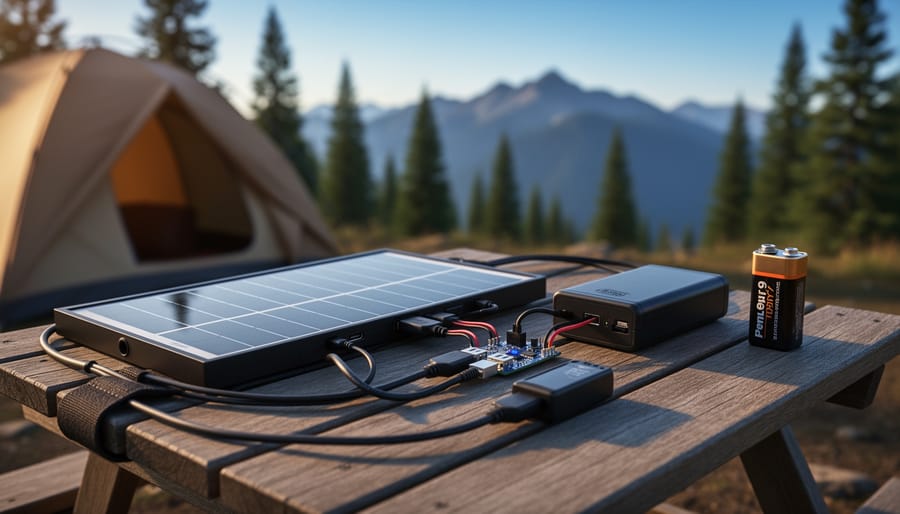
Proper connection of solar panel cables to the charge controller is critical for safe and effective charging.
Programming the MPPT Controller for 48V Output
Now comes the critical part where I learned my most expensive lesson—skipping proper MPPT programming cost me a battery pack! Let me walk you through getting these settings right so your ebike battery stays healthy for years.
Start by accessing your MPPT controller’s settings menu. Most controllers have buttons or a smartphone app for configuration. Your first task is setting the battery type. If you’re using lithium batteries (most common in ebikes), select the lithium profile. This is crucial because lithium batteries require different charging voltages than lead-acid ones. Using the wrong profile can damage your battery or even create safety hazards.
Next, set your system voltage to 48V. The controller needs to know it’s managing a 48V system to calculate charge stages correctly. Then configure the charging voltage parameters. For a typical 48V lithium battery, you’ll want:
Bulk charging voltage: 54.6V (this is where most charging happens)
Float voltage: 54.0V (maintains full charge without overcharging)
Low voltage disconnect: 42V (protects battery from over-discharge)
These numbers matter because lithium batteries are sensitive to both overcharging and deep discharge. Exceeding 54.6V can reduce battery lifespan significantly, while draining below 42V damages cells permanently.
After programming, verify your settings by checking the display shows correct voltages during a test charge. Watch that initial bulk charging doesn’t exceed 54.6V. I recommend monitoring the first few charge cycles closely until you’re confident everything’s working properly. This attention to detail protects your investment and ensures safe, efficient charging every time.
Creating the Connection to Your Ebike
Getting power from your solar charger to your ebike battery requires careful consideration of the connection method. I learned this the hard way during my first attempt when I accidentally reversed polarity and nearly damaged my expensive battery pack. Let me walk you through the three main approaches so you can choose wisely.
The most straightforward method is connecting directly to your battery terminals. This requires opening your battery case and attaching wires with proper connectors to the positive and negative terminals. The advantage? No adapter losses, and you maintain full control. The downside is that you’re voiding warranties and working with exposed electronics. If you choose this route, always disconnect everything first, double-check polarity with a multimeter, and add an inline fuse for protection.
Using your existing charge port is the safest option for most riders. You’ll need an adapter that matches your specific port type, whether that’s an XLR, barrel connector, or proprietary design. This keeps warranties intact and prevents accidental shorts. However, you’re limited by the port’s specifications, and finding the right adapter can be challenging.
Custom adapters offer a middle ground. Many ebike enthusiasts create pigtail connectors that plug into standard charging ports while connecting to their solar setup. This maintains safety while providing flexibility.
Regardless of which method you select, never connect your charger while riding, always verify polarity before connecting, and use proper gauge wiring rated for your system’s amperage. A simple polarity tester costs under ten dollars and could save you from a costly mistake.
Portable vs. Permanent Solar Charging Solutions
Portable Setups for Camping and Bikepacking
When you’re heading into the backcountry with your ebike, every ounce matters. The good news? Modern foldable solar panels have become incredibly lightweight and efficient, making off-grid charging genuinely practical for camping and bikepacking adventures.
I learned this the hard way during my first bikepacking trip. I brought a rigid 100W panel that was awkward to strap down and caught the wind like a sail. Now I exclusively use foldable panels that collapse to briefcase size. Look for panels rated between 100-200W with built-in kickstands and carrying handles. Many quality options weigh under 10 pounds while still delivering enough power for a day’s charge.
For charge controllers, compact MPPT models specifically designed for portable solar power systems work beautifully. I use a waterproof controller that’s smaller than a paperback book and mounts directly to my battery bag. It has saved me countless headaches in unexpected rain.
Protection during transport is crucial. I wrap my folded panel in a foam sleeping pad and secure it with bungee cords on my rear rack. The charge controller goes in a waterproof stuff sack with my electronics. Never strap panels where branches might snag them on trail sections.
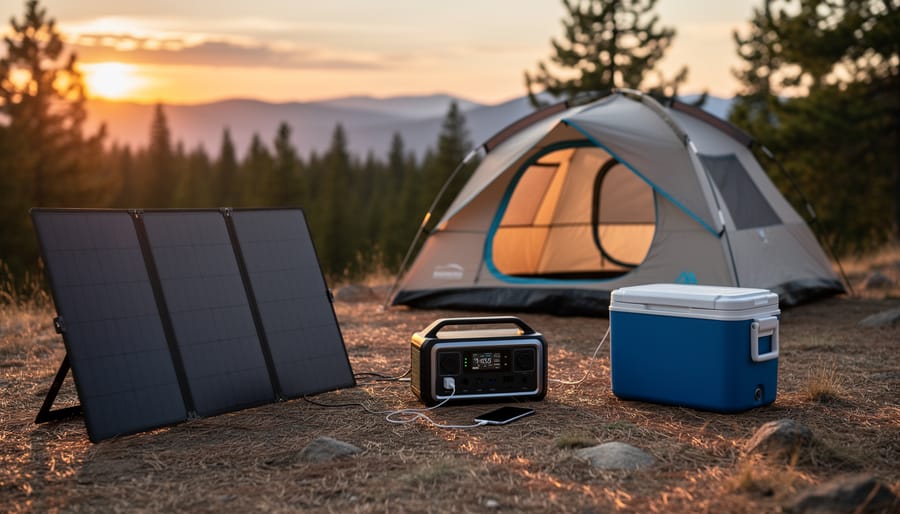
My current camping setup includes a 120W foldable panel, a 20A MPPT controller, and extension cables with waterproof connectors. Total weight? Just under 12 pounds. This system can top off my 48V battery in 6-8 hours of good sunlight, giving me freedom to explore remote trails for days without returning to civilization.
Portable solar charging setups enable off-grid ebike adventures during camping and bikepacking trips.
Fixed Home or Shed Installations
If you’re charging your ebike at home daily, a permanent setup makes life so much easier. I installed mine on my shed roof three years ago, and honestly, it’s been one of my best investments. No more lugging panels around or worrying about weather.
Start by mounting your solar panels on a south-facing surface (north-facing if you’re in the Southern Hemisphere) at an angle matching your latitude for year-round efficiency. Secure brackets or rails firmly to your roof or wall, ensuring they can handle wind loads. Your charge controller and battery bank should go inside the shed or garage where temperatures stay moderate. This protects electronics from moisture and extreme heat.
A dedicated solar charging station offers real advantages: you can size your system larger for cloudy days, add battery storage for nighttime charging, and even integrate it with your home’s electrical system using a transfer switch. Weather-resistant junction boxes and conduit protect outdoor wiring from the elements.
The convenience factor is huge. My ebike plugs in automatically when I get home, and I never think twice about it. Plus, if you’re already running other 12V devices in your workshop, the same solar array can handle multiple duties.
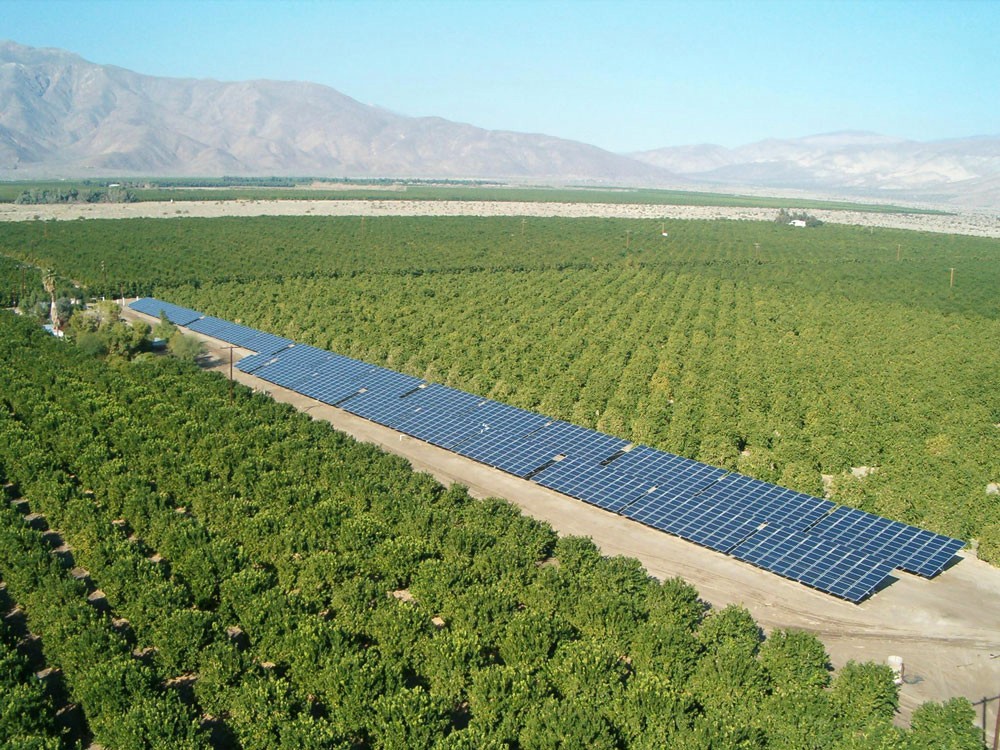
Permanent solar installations on sheds or garages provide reliable daily charging for regular ebike commuters.
Charging Time Expectations and Real-World Performance
Using the Solar Charging Calculator
Figuring out how long your solar setup will take to charge your ebike battery doesn’t require complicated math. I remember sweating over spreadsheets when I started, but it’s actually pretty straightforward once you break it down.
Here’s the simple formula: Divide your battery capacity (in watt-hours) by your solar panel output (in watts), then add about 25% extra time to account for charging losses. For example, if you have a 672Wh battery (that’s a typical 48V 14Ah battery) and a 200W solar panel getting 5 hours of good sunlight, you’d calculate: 672 ÷ 200 = 3.36 hours of pure charging time. Add that 25% buffer, and you’re looking at roughly 4.2 hours of solid sunlight needed.
Keep in mind that “solid sunlight” is the key phrase here. Early morning and late afternoon sun won’t deliver full panel output. I typically assume I’ll get maybe 4-5 hours of optimal charging conditions on a good summer day, even if the sun is technically up for longer.
Your charge controller’s efficiency also matters. Most MPPT controllers run around 95% efficient, while PWM controllers might only hit 75-80%, which means more of your precious solar energy gets lost as heat.
Weather, Season, and Location Factors
Let’s be honest about solar charging: it’s not always sunshine and rainbows. Your charging performance will vary dramatically based on weather, season, and where you live.
Charles learned this the hard way during his first winter with his solar setup. “I was getting 180 watts on a bright summer afternoon,” he recalls, “but come December, the same panel barely produced 60 watts at noon. The sun sits so much lower in the sky during winter that even clear days don’t pack the same punch.”
Cloud cover is the biggest daily variable. Thick clouds can reduce your output to 10-20% of full capacity, while light, wispy clouds might only drop you to 50-70%. Overcast days mean very slow charging or none at all.
Your geographic location matters enormously. If you live in Arizona, you’ll harvest significantly more solar energy year-round than someone in Seattle. Southern locations get stronger sun angles and more annual sunshine hours.
Time of day creates a bell curve of production. You’ll get peak watts for only 3-4 hours around midday. Morning and late afternoon produce considerably less, even on cloudless days.
The practical takeaway? Size your system for realistic conditions in your area, not ideal sunny days. Charles now plans his charging around weather forecasts and keeps his ebike battery topped up before cloudy stretches.
Troubleshooting Common Solar Charging Issues
No Charging Happening at All
When your solar setup isn’t producing any charge at all, don’t panic. I learned this the hard way on my first installation when I spent two hours convinced my controller was faulty, only to discover a loose MC4 connector hiding behind the panel.
Start with the basics: check every connection point from panel to battery. Look for loose MC4 connectors, corroded Anderson plugs, or wires that have worked themselves free. I keep a multimeter handy specifically for these moments. Test voltage at the solar panel first in direct sunlight—you should see around 60-70V open circuit for a typical 48V setup. No voltage? Your panel might be shaded or faulty.
Next, move to the charge controller. Most quality controllers have status lights—green typically means charging, red indicates a problem. Check your controller’s manual to decode what those lights are telling you. Measure voltage at the controller’s input terminals, then at the output to your battery. If voltage enters but doesn’t exit, the controller might be in protection mode or incorrectly configured for your battery type.
Common wiring mistakes include reversed polarity (always connect solar panels to the controller before the battery), undersized cables causing voltage drop, or mixed wire gauges. Double-check that your positive and negative wires haven’t been accidentally swapped—it happens more often than you’d think.
Slow or Inconsistent Charging
If your ebike’s charging slowly or inconsistently, don’t worry—this is one of the most common issues I’ve encountered, and it’s usually fixable. Start by checking if your solar panels are actually large enough for the job. A 48V system typically needs at least 300-400 watts of panel capacity to charge at a reasonable rate. I learned this the hard way when my first 100-watt panel took three full days to charge my battery!
Next, examine your panel positioning. Even slight shading or incorrect angles can reduce output by 50% or more. Clean your panels too—dust and debris act like sunscreen, blocking precious sunlight. I make it a habit to wipe mine down monthly.
Check your cables for voltage drop. Long, thin wires waste energy as heat. Use appropriately thick gauge wire (at least 10 AWG for most setups) and keep cable runs as short as possible.
Finally, dive into your charge controller settings. If the voltage parameters don’t match your battery’s specifications, charging will crawl along inefficiently. Verify that your controller is configured for your specific battery chemistry—lithium batteries need different settings than lead-acid ones.
Cost Breakdown and Budget Considerations
Let me be straight with you about the money side of this project, because I’ve built three of these systems myself, and the costs can vary wildly depending on your approach.
For a bare-minimum budget build, you’re looking at roughly $300-400. This gets you a basic 100W solar panel ($80-120), a 20A PWM charge controller ($30-50), a small 20Ah lithium battery ($150-180), and an affordable 48V ebike charger ($40-60). I started here myself back in 2019, and honestly, it worked fine for occasional weekend charging, though it took most of a sunny day to fully charge my bike.
Mid-range setups run $600-900 and represent the sweet spot most people aim for. You’re getting 200-300W of panels ($200-350), an MPPT controller for better efficiency ($100-150), a properly sized 30-40Ah battery ($250-350), and a quality charger ($60-80). This setup charges your bike in 4-6 hours of good sun and handles daily commuting needs.
Premium systems start at $1,200 and go up from there. Think 400W+ panel arrays, sophisticated MPPT controllers with monitoring, 50Ah+ batteries, and top-tier components throughout. These are for serious off-grid adventurers or folks wanting bulletproof reliability.
Here’s my advice from experience: don’t cheap out on the charge controller or battery. I learned that lesson the expensive way when a bargain controller failed and damaged my first battery. Start with quality core components, then upgrade panels and capacity as your budget allows. The beauty of solar setups is they’re modular, so you can build incrementally without starting over.
Safety Considerations You Can’t Ignore
Let me share something from my early days with solar projects: I once watched a buddy connect his battery without proper fusing, confident he knew what he was doing. The resulting spark and near-fire scared us both straight. Safety isn’t about being paranoid, it’s about respecting the power you’re working with.
When dealing with 48V systems, you’re working with serious electrical potential. While it won’t typically cause lethal shock through dry skin, it can definitely zap you uncomfortably and cause muscle spasms that might lead to falls or injuries. Always disconnect power sources before working on connections, and use insulated tools when possible.
Fusing is absolutely non-negotiable. Install an appropriately rated fuse or circuit breaker between your solar charge controller and battery. This simple component can prevent catastrophic fires if something shorts out. I recommend a fuse rated slightly above your maximum charging current, typically 15-30 amps for most ebike setups.
Lithium batteries deserve special respect. Never charge them in extreme temperatures, which means keeping your setup between 32°F and 113°F. I learned this the hard way when a winter charging session in my unheated garage caused battery damage. Always charge on non-flammable surfaces, away from bedrooms or escape routes.
Your solar panels can deliver surprising power even on cloudy days. Never short-circuit panel connections, and use MC4 connectors properly to prevent accidental disconnections under load. When panels are in sunlight, they’re live, period.
Finally, proper ventilation matters. While modern lithium batteries are sealed, charging generates heat. Give your battery breathing room, and never charge it in completely enclosed spaces. Check connections monthly for looseness or corrosion, and trust your nose, any burning smell means immediate shutdown and investigation.
There’s something incredibly liberating about riding your ebike knowing the sun powered your journey. Throughout this project, I’ve found myself looking at solar panels differently—they’re not just equipment anymore, but partners in a more sustainable way of living. You’re reducing your carbon footprint while gaining independence from the grid, and that combination is genuinely rewarding.
I encourage you to take what you’ve learned here and start your own solar charging setup. Don’t worry about getting everything perfect on the first try. My initial system was far from ideal, but each adjustment taught me something valuable. Start small if you need to—even a basic 200-watt panel setup will get you started and let you expand later.
The Spheral Solar community would love to hear about your experience. Share your setup photos, ask questions, and help others who are just beginning their solar journey. We learn best when we learn together.
For me, this project represents everything I love about renewable energy—it’s practical, achievable, and makes a real difference. Every time I ride past a gas station or avoid plugging into the grid, I’m reminded why building this system was worth every hour of planning and installation. Your solar-powered adventures are waiting.
How useful was this post?
Click on a star to rate it!
Average rating 0 / 5. Vote count: 0
No votes so far! Be the first to rate this post.
We are sorry that this post was not useful for you!
Let us improve this post!
Tell us how we can improve this post?
charlesnoble
Here at Spheral Solar, I’m a hands-on solar power enthusiast, constantly exploring and experimenting with DIY solutions. I’m dedicated to sharing my discoveries, insights, and even the bumps I hit along the way, all in the pursuit of a more sustainable future.
How to Charge an Electric Bike With Solar Power by Charlesnoble November 26, 2023 The most straightforward way to charge an electric bike with solar power is by using portable solar chargers, including solar panels, an inverter, charge controllers, and cables to connect everything to the e-bike battery. You can also build a custom solar charging system by wiring the solar panel directly to…
DIY Solar Generator – Complete Guide With Diagrams by Paul July 17, 2021 Building a weatherproof DIY solar generator involves mounting and wiring a battery, charge controller, inverter, trickle charger, and fusing inside a weatherproof case. Then all the relevant input and output sockets are wired and mounted on the outside of the case where they are easily accessible. What Exactly Are Solar…
Why Your Next Camping Trip Needs a Portable Solar… by Charlesnoble January 24, 2026 Picture yourself camping under a starlit sky, phone at 5%, miles from the nearest outlet. Or imagine a summer storm knocking out power while your refrigerator full of food slowly warms. These moments reveal a simple truth: energy independence isn’t just convenient—it’s essential. Portable solar power systems have evolved far…
Why 9 Volt Solar Panels Are Perfect for Your… by Charlesnoble March 9, 2026 Understand that 9 volt solar panels aren’t actually standardized products delivering exactly 9V—most small panels marketed this way produce anywhere from 6V to 12V depending on sunlight conditions, making them surprisingly versatile for charging batteries, running small electronics, or powering Arduino projects. Match your panel’s actual output voltage to your…
How Does a Solar-Powered Drip Irrigation System Work by Paul September 13, 2021 Solar-powered drip irrigation can be installed in most gardens using a small solar system, readily available irrigation materials, and minimal tools. If you already have a home solar system, it can be tapped into without installing a dedicated system. And the installation of an average drip irrigation system is well…
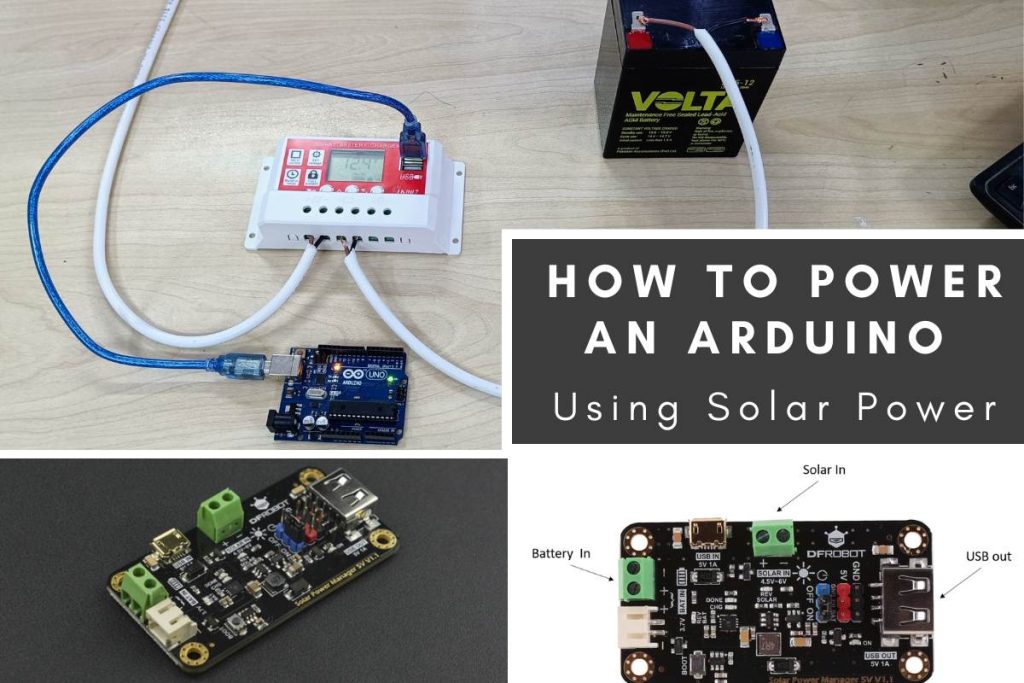
3 Ways to Power an Arduino With Solar Power by Charlesnoble April 24, 2023 To power an Arduino board using solar power, you need a solar panel to generate solar power, a rechargeable battery to store and supply power to your Arduino, and a method to regulate the voltage from the solar panel and prevent overcharging. You can select a solar charge controller with…
Subscribe for handpicked DIY projects, exclusive tips, and giveaways.
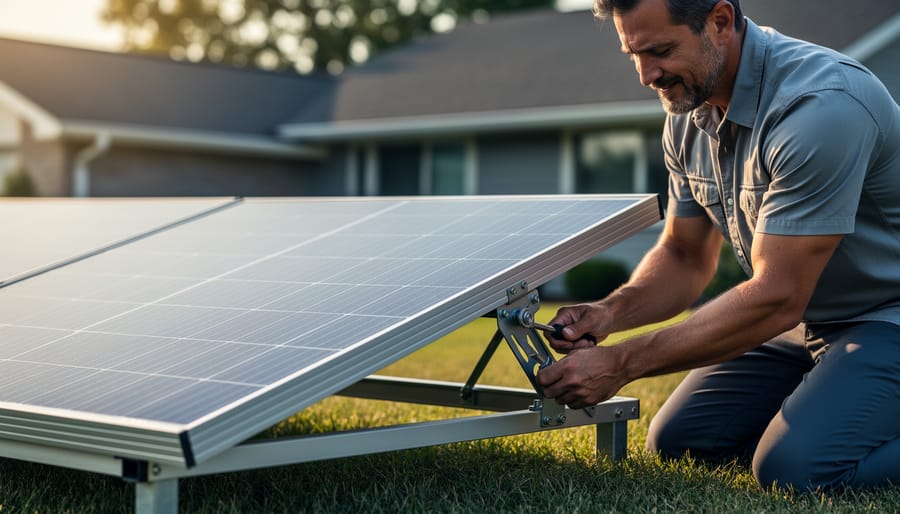
Position your solar panels at an angle equal to your latitude for year-round performance, or adjust seasonally by adding 15 degrees in winter and subtracting 15 degrees in summer to capture maximum sunlight during each season’s sun path. Use a simple angle finder app on your smartphone against the back of your panel to verify… Read more: The Right Tilt Angle Can Boost Your Solar Panel Output by 30% (Here’s How to Find It)
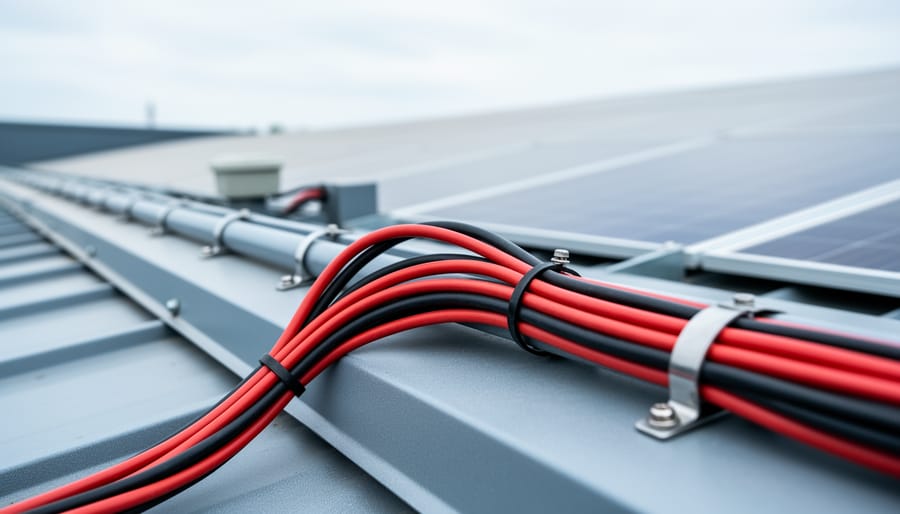
Route your PV wires through UV-resistant conduit within 18 inches of leaving the solar array, securing it every 3 feet with proper clamps to prevent wind damage and code violations. This single step prevents 80% of the wire degradation issues I’ve seen in DIY solar installations over the past decade. Group your positive and negative… Read more: Why Your PV Wire Management Could Fail Inspection (And How to Fix It)
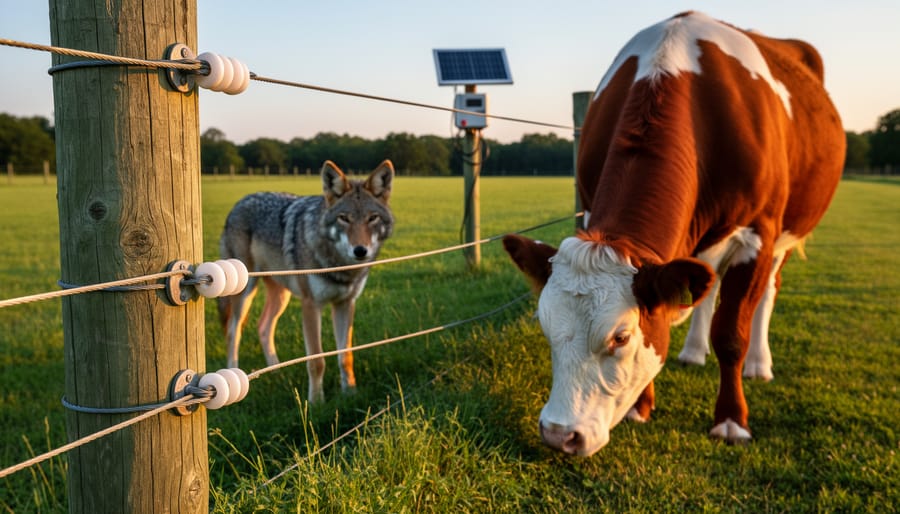
Understand that 6000 volts sounds terrifying but delivers surprisingly low amperage—typically around 120 milliamps for just 3/10,000th of a second per pulse. This combination creates an unforgettable shock that trains animals to avoid the fence without causing lasting harm. The voltage pushes current through thick fur and hide, while the minimal amperage and microsecond duration… Read more: Why 6000 Volts Won’t Kill Your Livestock (But Will Stop Predators Cold)