How Orlando Airport’s Solar EV Charging Could Transform Your Road Trip Energy Strategy
Updated:
Picture this: You’ve just landed at Orlando International Airport after a long flight, your electric vehicle waiting in long-term parking with a battery that’s somehow fuller than when you left it. Sound like science fiction? It’s happening right now at MCO, where solar-powered EV charging stations are transforming how travelers think about airport parking.
Orlando International Airport has become a proving ground for what many of us dream about in our own driveways – reliable, sun-powered charging that works whether you’re home or away. The airport’s solar EV charging infrastructure demonstrates that renewable energy and practical transportation needs aren’t just compatible; they’re a perfect match.
What makes this setup particularly fascinating for DIY solar enthusiasts is how scalable the technology is. The same principles powering EVs at a busy international airport can work in your garage. Solar panels capture sunlight, convert it to electricity, store excess energy in batteries, and deliver it to your vehicle when needed. The airport just does it on a grander scale.
I’ve spent years helping folks understand that solar isn’t some mysterious technology reserved for massive installations. When you see it working at places like MCO, it clicks: if an airport can reliably charge vehicles using nothing but sunshine, your home system can absolutely handle your daily commute.
The real question isn’t whether solar EV charging works – Orlando’s airport proves it does. The question is how you can bring that same independence and sustainability to your own property. Whether you’re a frequent traveler who uses this transportation company to reach MCO or simply inspired by their renewable energy approach, understanding these systems opens doors to energy freedom.
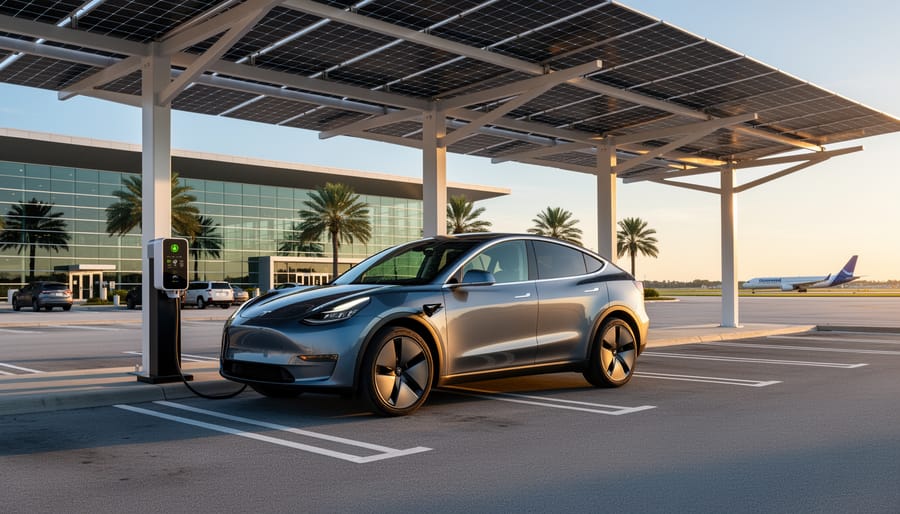
Orlando International Airport’s solar-powered EV charging stations demonstrate how large-scale renewable energy infrastructure integrates with modern transportation hubs.
What Makes Orlando Airport’s Solar EV Charging Different
The Solar Infrastructure Behind the Stations
Orlando’s airport solar EV charging stations showcase a practical, scalable approach to renewable energy that’s actually quite similar to what you might build at home, just on a larger scale.
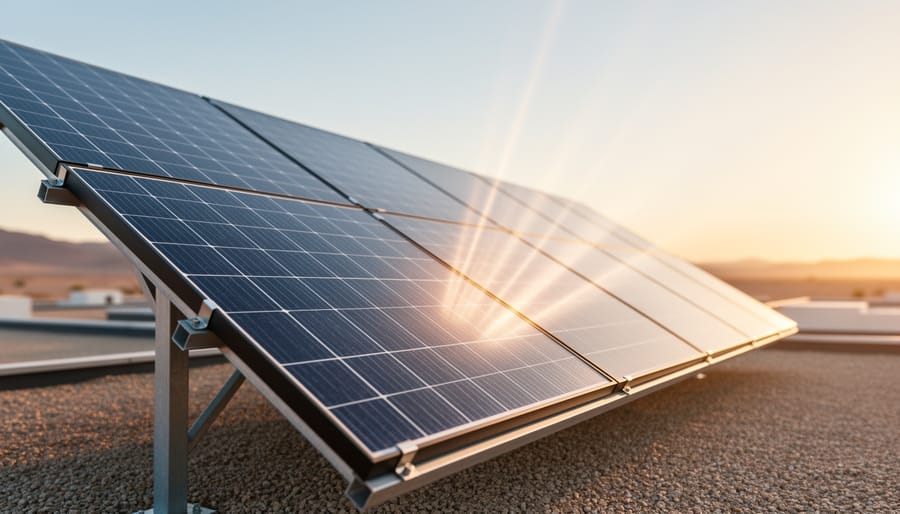
The system relies on commercial-grade photovoltaic panels, typically in the 300-400 watt range per panel. These aren’t fundamentally different from residential panels, just arranged in larger arrays to generate the substantial power needed for multiple charging stations. The airport installation uses ground-mounted or canopy-style arrays that serve double duty by providing shade for parked vehicles while generating electricity.
Here’s where it gets interesting for DIY enthusiasts: the setup includes high-efficiency inverters that convert DC power from the panels into AC power for the charging stations. Think of inverters as translators between your solar panels and the devices they power. The airport likely uses string inverters or microinverters, the same technology you’d choose for a home system.
Many airport installations also incorporate battery storage systems, though not all do. When present, these batteries store excess solar energy generated during peak sunlight hours for use during cloudy periods or high-demand times. This creates a more reliable charging experience and demonstrates grid independence that we DIYers dream about.
The beauty of studying these commercial installations is recognizing that the core components mirror what you’d use in a home solar setup. The main differences are scale and redundancy. I remember visiting a similar setup and realizing my own garage solar project used the exact same principles, just with fewer panels and a smaller inverter.
Charging Capacity and Real-World Performance
Orlando’s solar EV charging stations typically deliver Level 2 charging at 7.2 kW, which means you can add about 25-30 miles of range per hour of charging. That’s perfect for the time you spend grabbing a bite or checking in for your flight. Some newer stations even offer DC fast charging capabilities when grid power supplements the solar panels.
Here’s something I’ve observed from talking to airport operations folks: solar generation peaks around midday, which is actually when many travelers are arriving or departing. During morning and evening hours, the system draws from stored battery power or the grid to maintain consistent charging speeds. This hybrid approach ensures reliability regardless of cloud cover or time of day.
The real beauty of these systems is their balance between renewable energy generation and practical performance. On a sunny Florida day, the solar canopies can generate enough power to fully charge 3-4 vehicles while simultaneously topping off the battery storage for later use. Even on cloudy days, the panels still produce about 20-30% of their peak capacity, keeping the stations operational without relying entirely on grid power. It’s this kind of real-world application that shows how solar and EV technology can work together seamlessly.
Why This Matters for Your Own Solar EV Setup
Scaling Down: What You Can Learn for Home Use
The beauty of Orlando Airport’s solar installation is that it demonstrates principles you can absolutely apply at home—just on a smaller scale. When I first started exploring solar EV charging for residential use, I learned that the fundamentals remain the same whether you’re powering a fleet or a single vehicle.
Let’s start with panel placement. The airport’s canopy design isn’t just about shade—it’s optimized for sun exposure throughout the day. At home, you’ll want south-facing panels (in the Northern Hemisphere) tilted at roughly your latitude angle. Even a simple carport structure can serve double duty: protecting your vehicle while generating power. If roof mounting works better for your property, that’s perfectly viable too.
Power management is where things get interesting. The airport uses sophisticated systems to balance generation and demand, but your home setup can be simpler. A basic grid-tied system with net metering lets you feed excess power back during sunny days and draw from the grid when needed. For a typical EV charging 3-4 times weekly, a 3-5 kilowatt system usually covers your needs.
System sizing comes down to honest math. Calculate your vehicle’s weekly charging needs (most EVs use 25-40 kWh per 100 miles), then size your array accordingly. The airport generates massive amounts because they serve hundreds of vehicles daily. Your single car? Much more manageable.
One lesson the airport reinforces: start with quality components. Their system needs to run flawlessly for decades, and yours should too. Invest in reliable inverters and proper electrical work upfront. The airport’s scale might be intimidating, but the core technology is absolutely within reach for DIY-minded homeowners.
Home solar installations can power EV charging systems using the same principles demonstrated at commercial airport facilities, scaled for residential use.
Charles’s Take: My Experience with Solar Vehicle Charging
I’ll be honest – seeing MCO’s professional solar EV charging setup made me a bit nostalgic for my own first experiments with solar vehicle charging. A few years back, I rigged up a small solar panel system in my garage, basically just three 100-watt panels connected to a charge controller and a battery bank. My goal was simple: charge my electric golf cart without touching the grid.
The results? Mixed, but educational. On sunny Florida days, I could get a decent charge going. On cloudy days, not so much. What I learned quickly was that consistent charging requires either a much larger panel array or patience – lots of it.
The airport’s system is obviously light-years ahead of my DIY setup, but the core principles are identical. They’re just doing it with commercial-grade equipment and professional installation. Seeing their covered parking structures with integrated solar panels made me realize how far residential options have come too. You don’t need an airport-sized budget to start experimenting with solar charging at home – you just need realistic expectations and a willingness to learn from trial and error.
Planning Your Solar EV Charging System: Lessons from Orlando
Calculating Your Power Needs
Figuring out your solar power needs for EV charging might seem complicated at first, but it’s actually pretty straightforward once you break it down. I remember when Charles first tackled this for his own setup—he spent an afternoon with a notepad and came away with a clear roadmap that made the whole project manageable.
Start by checking your EV’s battery capacity, usually measured in kilowatt-hours (kWh). A typical electric vehicle has anywhere from 40 to 100 kWh of battery capacity. Next, consider how often you drive and how much charge you use daily. Most people use about 30-40 miles of range per day for commuting, which translates to roughly 10-12 kWh of electricity.
Here’s where it gets practical: a standard solar panel produces about 300-400 watts. To generate 12 kWh daily, you’d need around 3-4 kilowatts of solar panel capacity, accounting for Orlando’s generous sunshine (about 5-6 peak sun hours daily). That typically means 8-12 panels, depending on their efficiency.
The good news? You don’t have to do all this math manually. Our solar capacity calculator walks you through each step, factoring in your location, energy usage, and budget. Just plug in your numbers and get a customized recommendation.
Remember, systems like the one at Orlando Airport started with these same calculations—just on a much larger scale. Your home setup follows identical principles, making professional-grade solar EV charging totally achievable for the average DIYer.
Essential Components and Budget Considerations
Building your own solar EV charging setup at home is more accessible than you might think, and understanding the core components helps you plan both the system and your budget effectively. Let me walk you through what you’ll actually need.
First, you’ll need solar panels, which are the heart of your system. For charging an electric vehicle, most homeowners start with a 3-5 kilowatt array, which typically means 8-15 panels depending on their wattage. Expect to invest around $2,000-$4,000 for quality panels before any tax incentives.
Next comes the charge controller, which regulates the power flowing from your panels. This component prevents overcharging and keeps everything running smoothly. Budget around $200-$600 for a good MPPT controller, which is more efficient than the cheaper PWM versions.
You’ll also need an inverter to convert the DC power from your panels into AC power that your EV charger can use. A decent inverter runs between $1,000-$2,500, depending on your system size.
Here’s where it gets interesting: battery storage is optional but game-changing. When I added batteries to my setup, I could finally charge my car at night using energy I’d collected during the day. Battery systems range from $5,000-$15,000, but they dramatically increase your energy independence.
The total investment typically lands between $8,000-$25,000 before incentives, with federal tax credits potentially covering 30% of your costs.
Installation Tips for DIY Success
Before you grab your toolkit, let’s talk placement. I learned the hard way that southern-facing panels at a 28-degree tilt work best here in Florida—positioning yours to catch maximum sun exposure makes all the difference. Clear any shade sources and secure panels to withstand our famous afternoon thunderstorms.
For wiring, keep runs short to minimize voltage drop, and always use outdoor-rated conduit. Color-code everything clearly—trust me, your future self will thank you. Proper grounding is non-negotiable for safety and system longevity.
Know your limits. Panel mounting and basic DC wiring? Totally manageable for most DIYers. But when it comes to connecting to your main electrical panel or dealing with permits, call a licensed electrician. Orlando requires electrical permits for solar installations, and having a pro handle that final connection ensures you’re code-compliant and safe. Think of it as a team effort—you handle the prep work, they seal the deal.
The Bigger Picture: Solar Transportation Infrastructure
Solar-powered charging infrastructure along travel routes enables truly sustainable road trips powered entirely by renewable energy.
Making Solar Work While Traveling
Finding solar-powered charging stations while traveling doesn’t have to be complicated. Several smartphone apps like PlugShare and ChargePoint let you filter EV charging stations by renewable energy sources, making it easy to plan your route around solar-charged stops. I learned this firsthand during a trip to Florida last year when I specifically sought out solar charging stations and discovered how rewarding it feels to power your journey with sunshine.
When planning road trips, start by mapping major solar charging hubs along your route. Airports like Orlando MCO are increasingly adding solar EV infrastructure, and many shopping centers and universities now feature solar canopies over their charging stations. Build in extra time at these locations since they double as great spots for meals or exploring local attractions while your vehicle charges.
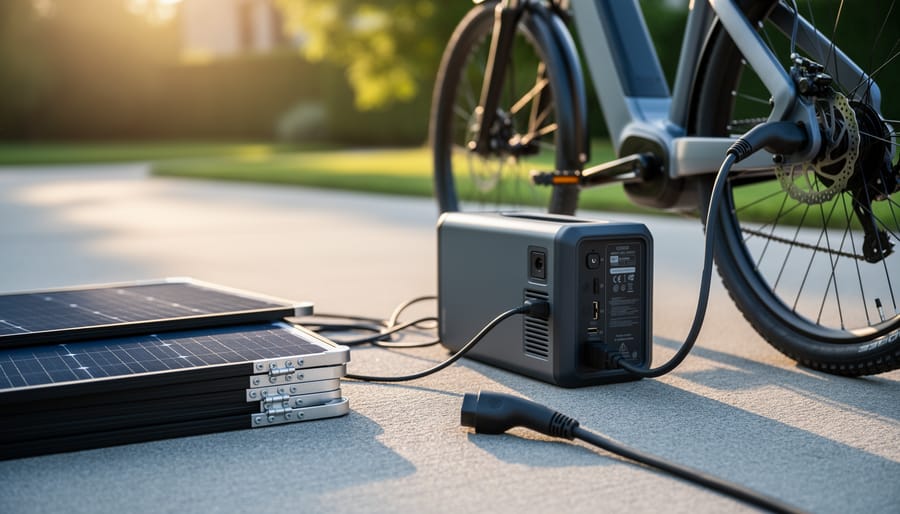
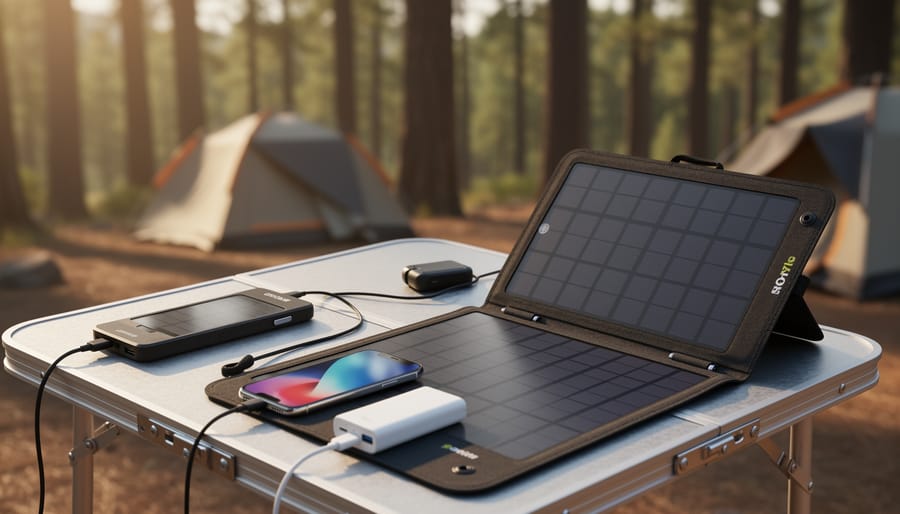
For camping and outdoor adventures, portable solar solutions have become game-changers. Modern foldable solar panels can trickle-charge smaller EVs or maintain your battery while parked, though they work best for e-bikes, scooters, or hybrid camping setups. A 200-watt portable panel won’t fully charge your EV, but it can extend your range by 5-10 miles on a sunny day, which might be just enough to reach the next charging station.
The key is thinking of solar charging as part of your adventure rather than an obstacle. Pack a portable panel, download charging apps before you lose signal, and embrace the slightly slower pace that comes with sustainable travel.
Community Impact and Future Possibilities
Orlando’s airport solar initiative is more than just a convenient charging station – it’s a powerful catalyst for change in our communities. When travelers see solar panels powering their EVs at a major airport, it sparks conversations and curiosity that ripple outward. I’ve noticed this firsthand at community workshops where people say, “If the airport can do it, why can’t we?”
This visibility factor matters enormously. Airport solar installations serve as living demonstrations that solar technology works at scale, handling demanding real-world conditions. Local businesses near MCO have started exploring similar systems, and neighborhood associations are inquiring about community solar projects inspired by what they’ve seen at the airport.
Looking ahead, we’re seeing exciting trends emerge. Airport parking structures are becoming prime real estate for dual-purpose solar canopies that both generate power and protect vehicles. Transportation hubs nationwide are following Orlando’s lead, recognizing that solar EV infrastructure attracts environmentally conscious travelers and employees.
The next wave includes bidirectional charging technology, where EVs can actually feed power back to the grid during peak demand. Some airports are also experimenting with solar-powered shuttle buses and ground support equipment. For home DIYers, these developments mean more affordable components, proven installation techniques, and a growing knowledge base to tap into when building your own solar EV charging setup.
Orlando’s airport solar charging infrastructure shows us what’s possible when we commit to clean transportation solutions. The reality is, what seemed like a futuristic concept just a few years ago is now operational and accessible to everyday travelers. When I first visited MCO’s solar charging station, I remember thinking, “If an airport can do this, why can’t I replicate something similar at home?”
The truth is, you absolutely can. The same principles powering those sleek charging stations at Orlando International Airport can work in your driveway. You don’t need a massive budget or engineering degree to start your solar EV charging journey. Many homeowners begin with basic solar panel setups and gradually expand as their confidence grows.
What makes this especially exciting is how much the technology has improved and become more affordable. The solar panels, inverters, and battery systems available to DIYers today are remarkably similar to what airports and commercial installations use, just scaled differently.
I’d love to hear about your experiences with solar EV charging or any projects you’re considering. Have you thought about installing solar panels to charge your electric vehicle? Are you inspired by what Orlando Airport has accomplished? Maybe you’ve already built your own system and have lessons to share with our community.
Drop your thoughts, questions, or success stories in the comments below. Whether you’re just starting to explore solar possibilities or you’re a seasoned DIYer, your perspective helps build our collective knowledge. Together, we can accelerate the clean energy transition, one solar project at a time.
How useful was this post?
Click on a star to rate it!
Average rating 0 / 5. Vote count: 0
No votes so far! Be the first to rate this post.
We are sorry that this post was not useful for you!
Let us improve this post!
Tell us how we can improve this post?
charlesnoble
Here at Spheral Solar, I’m a hands-on solar power enthusiast, constantly exploring and experimenting with DIY solutions. I’m dedicated to sharing my discoveries, insights, and even the bumps I hit along the way, all in the pursuit of a more sustainable future.
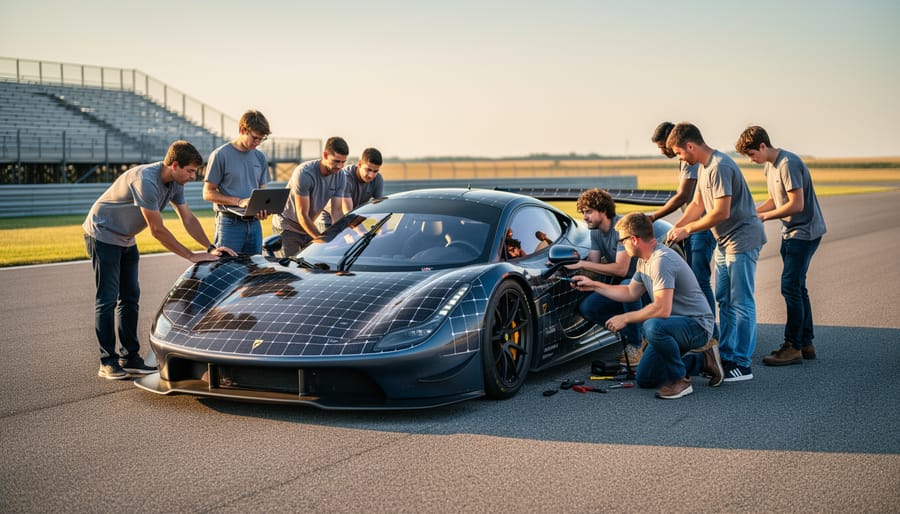
How UMN Students Built a Solar Car That Changed Everything by Charlesnoble May 8, 2026 The University of Minnesota Solar Vehicle Project represents one of collegiate engineering’s most ambitious renewable energy challenges, where student teams design, build, and race solar-powered cars across thousands of miles. Since 1990, UMN’s solar racing team has competed in events like the American Solar Challenge and Formula Sun Grand Prix,…
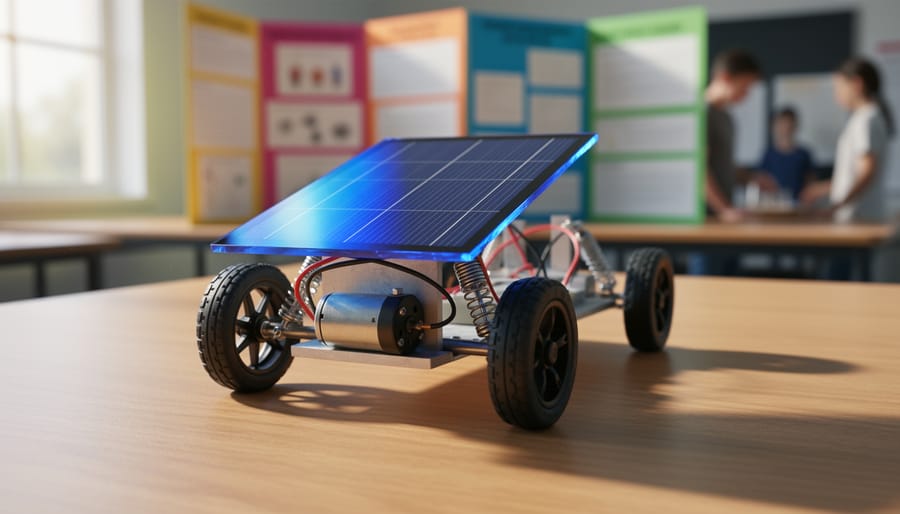
Build a Solar-Powered Car That Actually Wins Your… by Charlesnoble April 5, 2026 Gather a small solar panel (1.5-6 volts), a lightweight toy car chassis or four bottle caps for wheels, a small DC motor, connecting wires, and a hot glue gun to create your science fair winner in an afternoon. Position the solar panel where it catches maximum sunlight—angled slightly toward the…
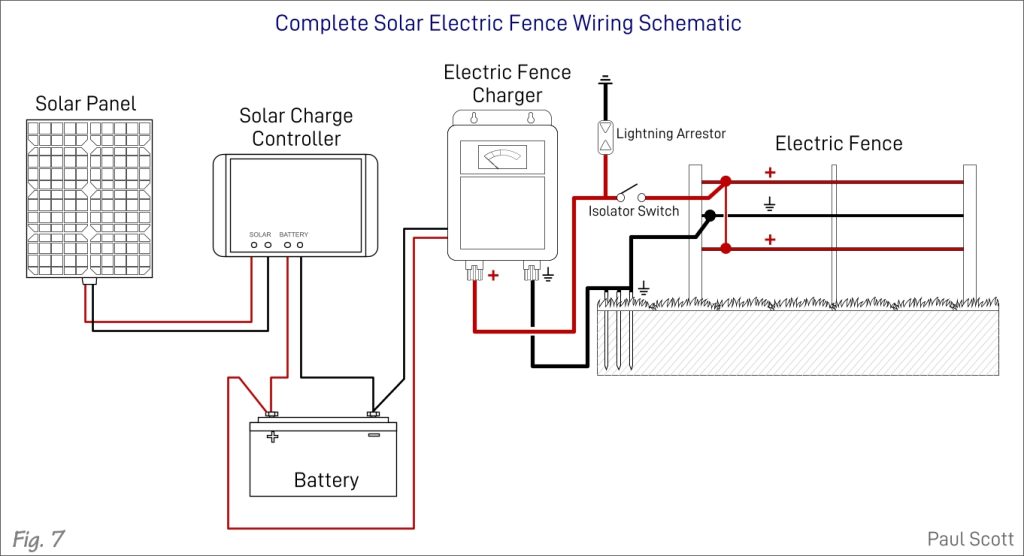
How to Build a Solar-powered Electric Fence (With Diagrams) by Paul November 1, 2021 Heads up: some links here are affiliate links, and purchases through them support the site. As an Amazon Associate I earn from qualifying purchases. You can build a permanent DIY, 3-acre solar-powered electric fence can with basic technical skills in under a week. And depending on whether you opt for…
How to Choose a J1772 Solar Charger for Your Ebike:… by Charlesnoble July 14, 2026 A J1772 solar charger combines a standard J1772 charging connector (the same Type 1 plug used by most North American EVs and electric bikes) with solar panels and battery components to create an off-grid or grid-supplemented charging system. You’ll need three core elements: solar panels (typically 400-800 watts for practical…
Why 6000 Volts Won’t Kill Your Livestock (But Will… by Charlesnoble April 9, 2026 Understand that 6000 volts sounds terrifying but delivers surprisingly low amperage—typically around 120 milliamps for just 3/10,000th of a second per pulse. This combination creates an unforgettable shock that trains animals to avoid the fence without causing lasting harm. The voltage pushes current through thick fur and hide, while the…
Why Your Next Camping Trip Needs a Portable Solar… by Charlesnoble January 24, 2026 Picture yourself camping under a starlit sky, phone at 5%, miles from the nearest outlet. Or imagine a summer storm knocking out power while your refrigerator full of food slowly warms. These moments reveal a simple truth: energy independence isn’t just convenient—it’s essential. Portable solar power systems have evolved far…
Subscribe for handpicked DIY projects, exclusive tips, and giveaways.
After testing dozens of solar chargers across camping trips, power outages, and backyard experiments, we found the X-Dragon 20W delivers the most reliable charging performance for phones and tablets, while the Goal Zero Nomad 50W steps up when you need to power larger devices or handle extended emergencies. If you’re planning weekend hikes, assembling an… Read more: 7 Best Solar Powered USB Chargers of 2026, Tested and Reviewed
There is something special about a mature tree. Decades of growth, shade that actually cools the house, branches that the kids climbed, a root system that has quietly held the yard together through every storm. So when circumstances force a move, whether it is a home renovation, a new driveway, or a construction project that… Read more: How to Move a Mature Tree Without Killing It: The Complete Relocation Guide
A mass energy conversion calculator lets you determine how much energy is locked inside any amount of matter using Einstein’s famous equation E=mc². Whether you’re working on a physics assignment or simply curious about the enormous energy potential in everyday objects, the calculation itself takes just seconds once you understand the formula’s three components: energy… Read more: How to Use a Mass Energy Conversion Calculator (Step-by-Step Guide)