How to Make Your Solar Light Batteries Last Twice as Long
Updated:
Position solar lights in direct sunlight for 8-10 hours daily to maximize battery charging efficiency and extend their operational lifespan. Replace rechargeable batteries every 18-24 months with high-quality NiMH alternatives rated between 600-1000mAh for optimal performance. Clean solar panels monthly using a soft, damp cloth to remove dust and debris that can reduce charging effectiveness by up to 30%. Implement a rotation system during winter months, moving lights to south-facing locations where they receive maximum sunlight exposure despite shorter days.
Today’s solar light batteries combine convenience with sustainable power storage, revolutionizing how we illuminate our outdoor spaces. Whether you’re upgrading an existing system or installing new solar lights, understanding proper battery charging techniques ensures reliable, long-lasting illumination while reducing environmental impact. This guide explores proven strategies for maximizing your solar light battery performance, from selecting the right battery type to implementing effective charging routines that work in any climate.
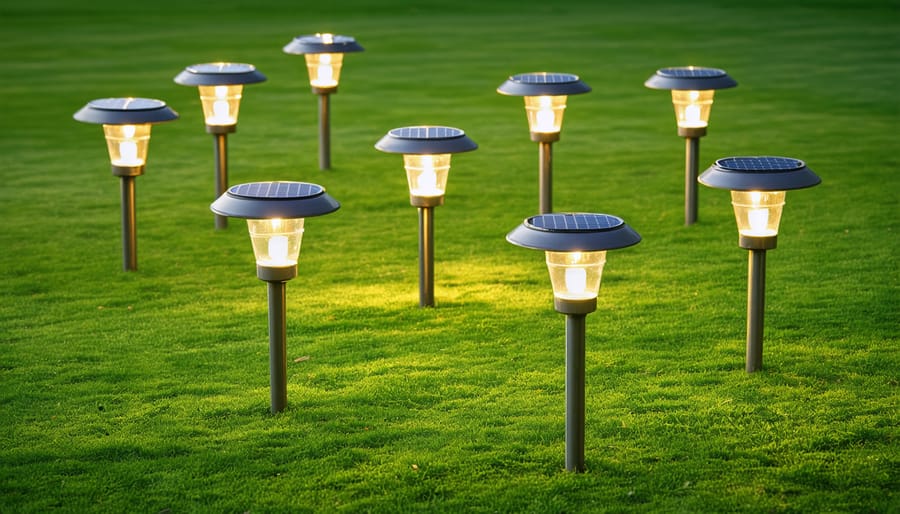
Various types of solar garden lights demonstrating different battery and panel configurations.
Understanding Solar Light Batteries
NiMH vs. NiCd vs. Li-ion
When it comes to solar lights, understanding the differences between battery types can significantly impact performance. NiCd vs NiMH batteries each have their own characteristics, but Li-ion has become increasingly popular in recent years.
NiMH (Nickel-Metal Hydride) batteries are eco-friendly and offer higher capacity than NiCd, making them great for solar lights. They can hold about 2-3 times more charge than NiCd batteries of the same size, though they’re slightly more expensive.
NiCd (Nickel-Cadmium) batteries are known for their durability and long life cycles. They perform well in extreme temperatures and are more affordable, but they contain toxic cadmium and suffer from the “memory effect,” which can reduce capacity over time.
Li-ion (Lithium-ion) batteries are the newest technology, offering the highest energy density and no memory effect. They’re lightweight and hold their charge longer when not in use. However, they’re more expensive and may require special charging circuits to prevent overcharging.
For most solar lights, I recommend NiMH batteries as they offer the best balance of performance, environmental friendliness, and cost.
Capacity and Voltage Requirements
When selecting batteries for your solar lights, it’s crucial to understand two key specifications: capacity (measured in mAh) and voltage requirements. Most solar garden lights use either 1.2V NiMH or 1.2V NiCd rechargeable batteries, typically in AA or AAA sizes. The capacity you’ll need depends on how long you want your lights to operate – higher mAh ratings mean longer running times.
For standard garden solar lights, I’ve found that batteries ranging from 600-1000 mAh work well for most applications. However, if you’re using larger solar fixtures or need extended illumination time, you might want to consider best rechargeable batteries for solar lights with capacities between 2000-2500 mAh.
Here’s a quick tip I learned through experience: always check your solar light’s battery compartment for voltage requirements before making a purchase. Using batteries with incorrect voltage can damage your lights or result in poor performance. Also, remember that while higher capacity batteries last longer, they might also take longer to charge fully during daylight hours.
When replacing batteries, stick to the same type and capacity as the originals to ensure optimal performance and prevent any compatibility issues.
Optimizing Battery Charging Performance
Placement and Sunlight Exposure
The key to maximizing your solar light battery charging lies in strategic placement. Position your solar lights where they’ll receive direct sunlight for at least 6-8 hours daily, typically during peak sunlight hours between 10 AM and 4 PM. Avoid areas shaded by trees, buildings, or other structures that could block crucial sunlight.
For optimal charging efficiency, angle your solar panels to face south if you’re in the Northern Hemisphere (or north if you’re in the Southern Hemisphere). This orientation ensures maximum sun exposure throughout the day. The ideal tilt angle should roughly match your latitude – for example, if you’re at 40 degrees latitude, aim for a 40-degree tilt.
Remember that seasonal changes affect sunlight patterns. During winter months, you might need to adjust the position of your lights to compensate for the sun’s lower path across the sky. Keep your solar panels clean and free from debris, as even a thin layer of dust can reduce charging efficiency by up to 25%.
Consider mounting your solar lights slightly higher than surrounding vegetation to prevent shadows from developing as plants grow. If you’re using multiple solar lights, space them apart to prevent them from casting shadows on each other. In areas with limited direct sunlight, consider using solar lights with larger panels or separate solar collectors that can be positioned in sunnier spots.
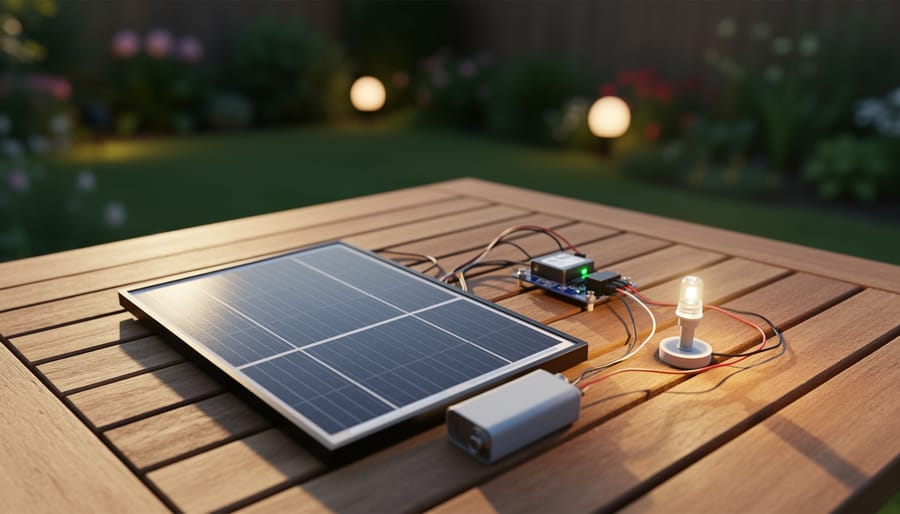
Optimal positioning of a solar light panel to maximize sunlight exposure and charging efficiency.
Weather and Seasonal Considerations
Weather plays a crucial role in how effectively your solar light batteries charge. During sunny summer months, charging is typically more efficient, but you’ll need to monitor battery temperature to prevent overheating. I learned this the hard way when some of my batteries degraded after leaving them charging in direct sunlight during a heatwave.
For optimal charging in hot weather, consider positioning your solar panels in partially shaded areas during peak afternoon hours. This helps maintain battery longevity while still ensuring adequate charging. In winter, angle your solar panels to maximize exposure to the limited sunlight, typically at a steeper angle than in summer.
Rainy or cloudy conditions present their own challenges. While solar panels can still charge on overcast days, they’re much less efficient. During extended periods of poor weather, you might need to supplement with alternative charging methods or reduce your light usage to conserve power.
Seasonal adjustments are essential for maintaining consistent performance. In autumn and winter, clean your solar panels more frequently to remove fallen leaves and debris. Consider investing in weather-resistant battery enclosures to protect against moisture and extreme temperatures. If you live in an area with heavy snowfall, regularly clear snow from your panels to maintain charging capability.
Remember that temperature extremes affect battery capacity – both very hot and very cold conditions can reduce performance. Store backup batteries in a climate-controlled environment when possible.
Maintenance and Troubleshooting
Cleaning and Care
Regular cleaning and maintenance of your solar lights is essential for optimal charging performance. Start by gently wiping the solar panels with a soft, damp cloth every few weeks to remove dust, dirt, and debris. Avoid using harsh cleaning agents or abrasive materials that could scratch the panel surface, as this can reduce their efficiency.
Pay special attention to the battery contacts inside your solar lights. Over time, these can become corroded or covered in grime, preventing proper electrical connection. Clean the contacts using a cotton swab dipped in rubbing alcohol, and ensure they’re completely dry before reinstalling the batteries.
During winter months or extended periods of disuse, remove the batteries and store them in a cool, dry place. This prevents potential damage from moisture and temperature fluctuations. Before reinstalling, check for any signs of corrosion or damage to both the batteries and contacts.
For outdoor solar lights, ensure they’re positioned where they can receive maximum sunlight and aren’t blocked by growing vegetation or seasonal decorations. Regularly trim nearby plants and relocate lights if necessary to maintain optimal charging conditions.
Regular cleaning of solar panels ensures optimal charging performance and extended battery life.
Signs of Battery Problems
Recognizing when your solar light batteries need attention is crucial for maintaining optimal performance. From my experience working with various solar setups, several telltale signs indicate potential battery issues. The most common indicator is significantly reduced operating time – if your lights dim or shut off much earlier than usual, it’s time to investigate your battery capacity requirements.
Watch for inconsistent performance across multiple nights, even with similar weather conditions. If some lights in your setup shine brightly while others appear dim, this usually points to battery degradation rather than solar panel issues. Physical signs like corrosion around battery terminals, bulging or leaking batteries, and difficulty maintaining a charge are red flags that demand immediate attention.
Keep an eye on charging behavior too. If batteries take unusually long to charge or don’t seem to charge at all on sunny days, they might be approaching the end of their lifecycle. A simple test I often recommend is swapping batteries between two similar solar lights – if the problem follows the battery, you’ve identified your culprit.
Temperature sensitivity can also reveal battery problems. If your lights perform poorly during moderate temperature changes, when they previously worked fine, the batteries might be losing their ability to maintain stable voltage levels. Regular monitoring of these signs helps prevent unexpected failures and ensures your solar lighting system remains reliable year-round.
Quick Fixes for Common Issues
Having trouble with your solar light batteries? Here are some quick solutions for common charging issues. If your lights aren’t charging properly, first ensure they’re positioned in direct sunlight – even partial shade can significantly reduce charging efficiency. Clean the solar panels regularly with a soft, damp cloth to remove dust and debris that might be blocking sunlight.
If your batteries aren’t holding a charge, try performing a reset by removing them for 24 hours before reinstalling. This can help reset the charging cycle and improve performance. For rechargeable batteries showing signs of wear, consider running them through a complete discharge-recharge cycle to help restore capacity.
When lights seem dim despite full sun exposure, check for corrosion on battery contacts. Clean them gently with a cotton swab dipped in white vinegar. Also, verify that your batteries are properly aligned with the correct polarity – a reversed battery won’t charge at all.
Sometimes, the simplest fix is relocating your solar lights. Even a few feet can make a difference in sun exposure. Remember, most solar lights need 6-8 hours of direct sunlight for optimal charging.
As we’ve explored throughout this guide, charging solar light batteries effectively is a crucial skill for any solar enthusiast. By following proper charging techniques, selecting the right battery type, and maintaining optimal conditions, you can significantly extend your batteries’ lifespan and improve their performance. Remember to always position your solar panels for maximum sun exposure, keep them clean, and regularly check for any signs of wear or damage.
From my years of experience working with solar systems, I’ve found that the most successful solar light setups are those that receive consistent maintenance and care. Start with a good foundation by choosing quality batteries, implement a regular cleaning schedule, and monitor charging patterns to identify any potential issues early.
For best results, make it a habit to check your batteries monthly, clean your panels seasonally, and replace batteries when they show signs of degradation. By incorporating these practices into your routine, you’ll enjoy reliable solar lighting while minimizing your environmental impact and reducing long-term costs.
Remember, successful solar battery charging is a journey of continuous learning and adjustment. Don’t hesitate to experiment with different setups and share your experiences with fellow solar enthusiasts. Together, we can build a more sustainable future, one solar light at a time.
How useful was this post?
Click on a star to rate it!
Average rating 0 / 5. Vote count: 0
No votes so far! Be the first to rate this post.
We are sorry that this post was not useful for you!
Let us improve this post!
Tell us how we can improve this post?
charlesnoble
Here at Spheral Solar, I’m a hands-on solar power enthusiast, constantly exploring and experimenting with DIY solutions. I’m dedicated to sharing my discoveries, insights, and even the bumps I hit along the way, all in the pursuit of a more sustainable future.
Why NiMH Batteries Keep Your Solar Lights Running… by Charlesnoble November 20, 2025 Choose rechargeable NiMH batteries rated between 600-1000mAh for most standard solar garden lights, matching the voltage of your original batteries—typically 1.2V AA or AAA sizes. These batteries outperform regular alkaline batteries because they handle the constant charge-discharge cycles that solar lights demand daily, lasting 2-3 years compared to just months…
NiCd vs NiMH for Solar Lights by Charlesnoble September 15, 2023 Nickel Metal Hydride batteries (NiMH batteries) are generally the better choice over Nickel Cadmium batteries (NiCd batteries) for most solar light applications today. NiMH offers a higher capacity to store more energy from the sun, lasts longer through more recharge cycles, and is more eco-friendly. However, NiCd can be a…
10 Best Rechargeable Batteries for Solar Lights by Nick April 23, 2021 While lithium-ion batteries have long been touted as the future of the solar battery world, some close rivals are giving them a run for their money. This blog post gives you a closer look at the best rechargeable batteries for solar lights currently available for solar light applications. We’ve covered…
How a 7kW Solar System With Battery Backup Keeps… by Charlesnoble October 15, 2025 A 7kW solar system with battery backup represents the sweet spot for residential energy independence, typically powering a 3-4 bedroom home while providing crucial backup during grid outages. This complete solar solution combines high-efficiency solar panels capable of generating 28-32 kWh daily with advanced lithium battery storage systems storing 10-15…
Why Your Solar Lights Keep Dying (and How 9V… by Charlesnoble January 25, 2026 Match your solar panel’s voltage output to your 9V battery’s charging requirements by selecting panels rated between 9-12 volts to prevent undercharging or damaging overcharge. Test your panel’s actual output with a multimeter in full sunlight before connecting any battery—you’ll often find advertised voltages don’t match real-world performance, especially on…
How Solar Energy Actually Works in Your Home (And… by Charlesnoble December 5, 2025 Capture sunlight with photovoltaic panels that convert solar radiation into direct current electricity through semiconductor technology. Position your panels at the optimal angle for your latitude—typically between 30 and 45 degrees in most locations—to maximize energy absorption throughout the day. Store excess electricity in deep-cycle lithium or lead-acid batteries, which…
Subscribe for handpicked DIY projects, exclusive tips, and giveaways.
Position your solar panels at an angle equal to your latitude for year-round performance, or adjust seasonally by adding 15 degrees in winter and subtracting 15 degrees in summer to capture maximum sunlight during each season’s sun path. Use a simple angle finder app on your smartphone against the back of your panel to verify… Read more: The Right Tilt Angle Can Boost Your Solar Panel Output by 30% (Here’s How to Find It)
Route your PV wires through UV-resistant conduit within 18 inches of leaving the solar array, securing it every 3 feet with proper clamps to prevent wind damage and code violations. This single step prevents 80% of the wire degradation issues I’ve seen in DIY solar installations over the past decade. Group your positive and negative… Read more: Why Your PV Wire Management Could Fail Inspection (And How to Fix It)
Understand that 6000 volts sounds terrifying but delivers surprisingly low amperage—typically around 120 milliamps for just 3/10,000th of a second per pulse. This combination creates an unforgettable shock that trains animals to avoid the fence without causing lasting harm. The voltage pushes current through thick fur and hide, while the minimal amperage and microsecond duration… Read more: Why 6000 Volts Won’t Kill Your Livestock (But Will Stop Predators Cold)