
Installation & Safety
-
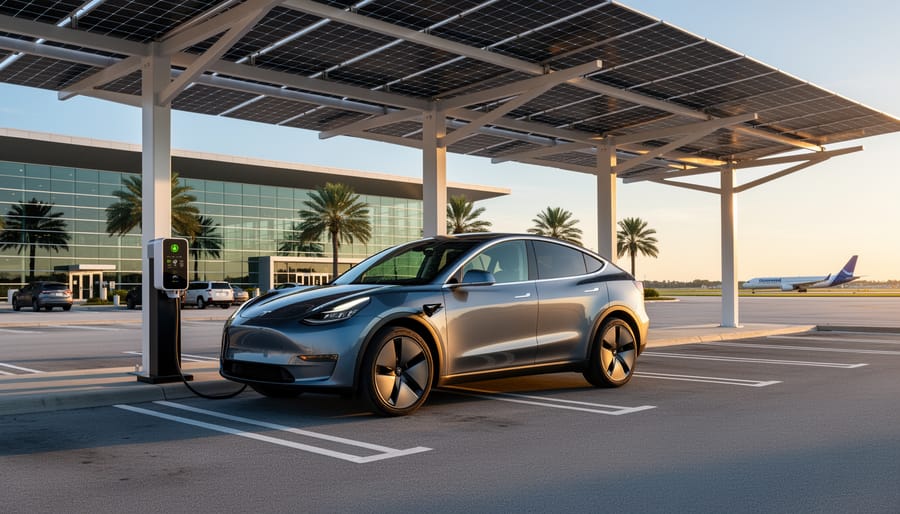
How Orlando Airport’s Solar EV Charging Could Transform Your Road Trip Energy Strategy
Picture this: You’ve just landed at Orlando International Airport after a long flight, your electric vehicle waiting in long-term parking with a battery that’s somehow fuller than when you left it. Sound like science fiction? It’s happening right now at MCO, where solar-powered EV charging stations are transforming how travelers think about airport parking. Orlando…
-
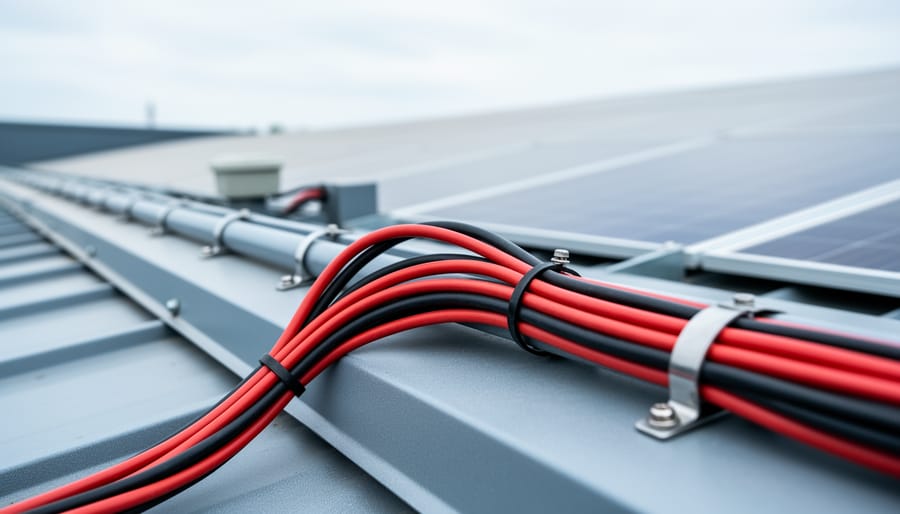
Why Your PV Wire Management Could Fail Inspection (And How to Fix It)
Route your PV wires through UV-resistant conduit within 18 inches of leaving the solar array, securing it every 3 feet with proper clamps to prevent wind damage and code violations. This single step prevents 80% of the wire degradation issues I’ve seen in DIY solar installations over the past decade. Group your positive and negative…
-
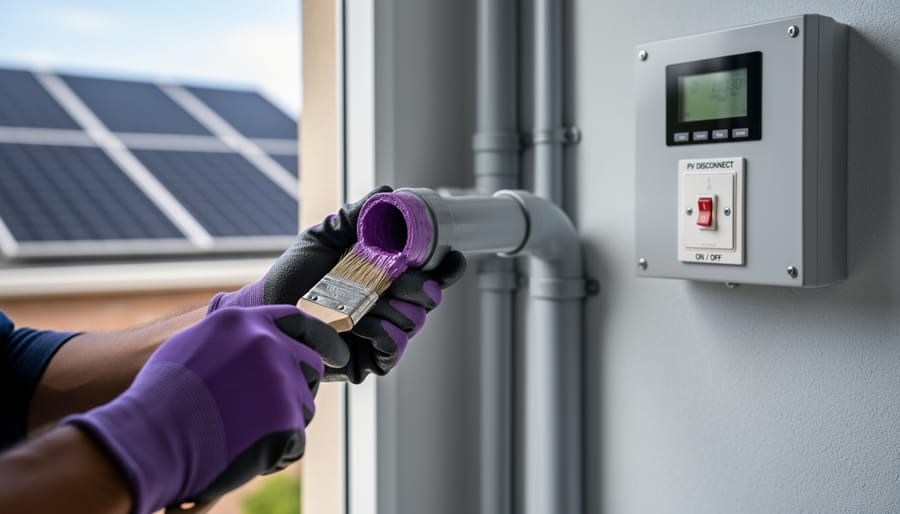
Why Your Solar Conduit Installation Could Start a Fire (And How to Do It Right)
Measure your conduit run before purchasing materials by mapping the exact path from your solar array to the inverter and battery location, accounting for a 10% waste factor and additional length for bends. PVC electrical conduit remains the most cost-effective protective solution for DIY solar installations, but improper installation creates fire hazards, code violations, and…
-
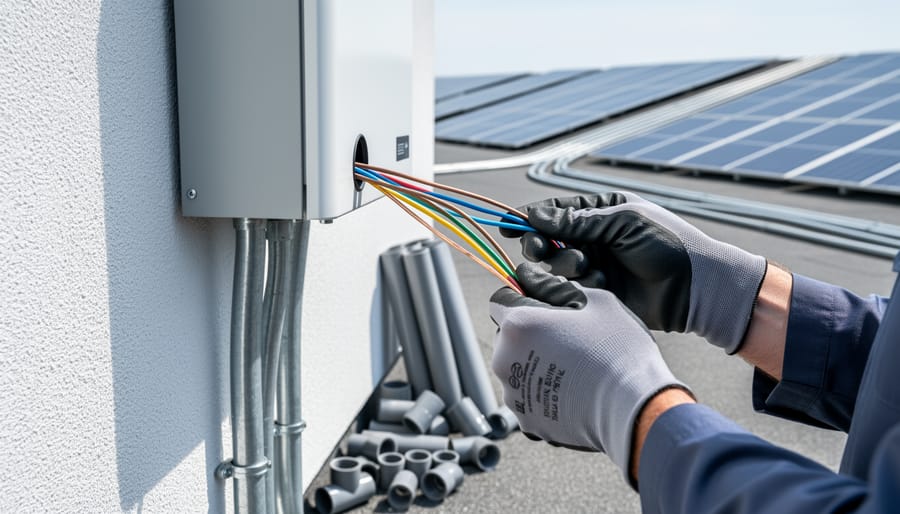
Why Your 6-Wire Solar Setup Needs the Right Conduit (Before You Regret It)
Measure your wire gauge and count of six conductors before selecting conduit—most residential solar installations running six AWG 10 wires require 1-inch conduit, while six AWG 6 wires need 1.5-inch conduit, and six AWG 2/0 wires demand 2.5-inch conduit minimum. Calculate fill capacity using the 40% rule for three or more conductors, which means your…
-
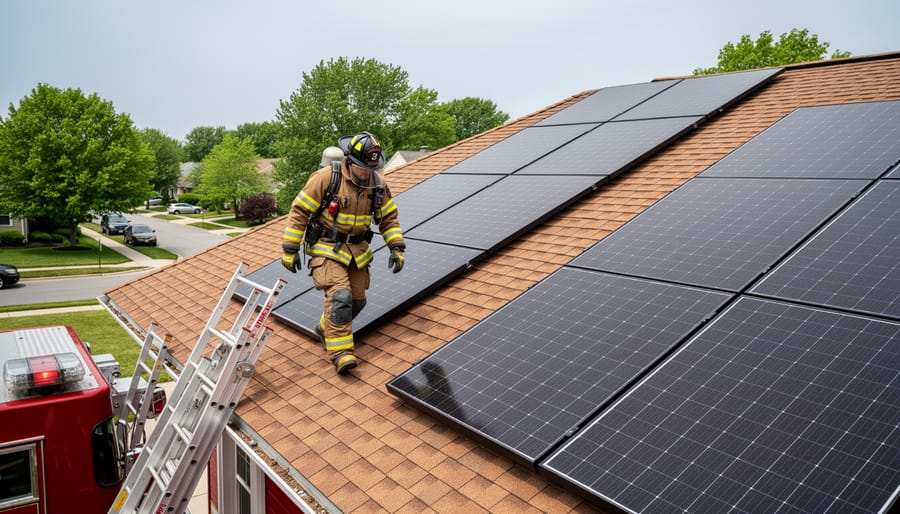
Why Your Rooftop Solar Could Block Firefighters (And How to Fix It)
Measure three feet from your roof’s eaves before placing any solar panels—this clearance creates a critical pathway firefighters use to ventilate roofs during emergencies. When flames engulf a building, firefighters climb onto roofs and cut ventilation holes near the eaves to release heat and smoke, giving occupants precious escape time and preventing flashover conditions inside.…
-

Why Your Battery Storage System Needs Better Airflow (Before It’s Too Late)
Position your Energy Storage System at least three feet away from walls and combustible materials to ensure adequate air circulation prevents dangerous gas buildup and heat accumulation. Last summer, I learned this lesson when a friend’s improperly ventilated battery bank overheated during a heatwave—the batteries swelled, and we had to evacuate his garage for hours.…
-

The Perfect Pair: Home Renovations and Solar Integration for a Sustainable Future
As the demand for sustainable living continues to grow, homeowners are increasingly looking beyond traditional upgrades to make their homes more efficient and environmentally responsible. One of the smartest ways to achieve both is by combining home renovations with solar installation. Whether you’re remodeling a luxury residence or updating an older property, planning your renovation…

