Save Money Now: Calculate Your Home’s Energy Usage Like a Pro
Updated:
Calculate your home’s energy consumption by multiplying each appliance’s wattage by its daily hours of use, then convert to kilowatt-hours (kWh) by dividing by 1,000. A typical American home uses 30 kWh per day, but understanding your specific usage unlocks significant savings potential and solar planning opportunities.
Start with your biggest energy consumers – HVAC systems typically account for 40% of home energy use, followed by water heaters (14%) and lighting (12%). Track these first for maximum impact on your calculations. Install a smart meter or energy monitor to capture real-time data, revealing hidden power drains and usage patterns across your home’s electrical system.
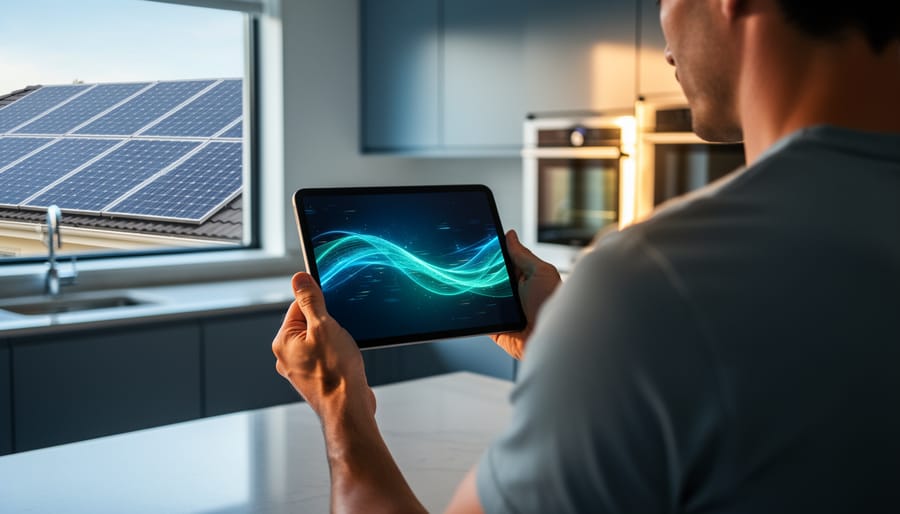
Smart phone apps and utility company portals now make energy tracking remarkably simple, providing detailed breakdowns of consumption by time of day and device. This granular data proves invaluable for right-sizing solar systems and identifying the most cost-effective energy efficiency upgrades. Whether you’re aiming to reduce your carbon footprint or prepare for solar installation, accurate energy calculations form the foundation for informed decision-making.
Begin measuring today – your utility bills provide historical context, but real-time monitoring reveals the true story of your home’s energy profile.
Understanding Your Home’s Energy Components
Major Appliances and Their Energy Draw
Understanding your major appliances’ energy consumption is crucial for managing your home’s power usage effectively. Let me share what I’ve learned from years of energy monitoring: refrigerators typically draw between 100-200 watts continuously, while a clothes dryer can demand up to 3,000 watts during operation. Electric water heaters are real power hungry, using around 4,000 watts when heating, though not continuously.
Kitchen appliances vary widely – microwaves use about 1,000 watts while running, but dishwashers can pull 1,200-2,400 watts during their heating cycles. Your electric stove’s burners might draw anywhere from 1,200 to 3,000 watts each, depending on the setting.
HVAC systems are usually the biggest energy consumers. Central air conditioning systems typically draw 3,500 watts during operation, while electric heating can use 10,000-15,000 watts! Even smaller window AC units consume around 900 watts.
Remember that these are approximate values – actual consumption depends on the appliance’s age, efficiency rating, and usage patterns. I always recommend checking your appliance’s nameplate or manual for specific wattage information.
A modern kitchen showcases common household appliances that contribute significantly to home energy consumption.
HVAC Systems and Lighting
HVAC systems and lighting typically account for the largest portion of your home’s energy consumption. To calculate your HVAC energy usage, multiply your system’s wattage by the hours it runs daily. For example, a 3,500-watt central AC running 6 hours per day uses 21 kWh daily.
For heating systems, the calculation varies by fuel type. Electric heaters are straightforward – just multiply watts by hours used. For gas systems, check your furnace’s BTU rating and convert it to kilowatt-hours (1 BTU equals approximately 0.000293 kWh).
When it comes to lighting, start by listing all your bulbs and their wattages. A typical LED bulb might be 9 watts, while older incandescent bulbs can use 60 watts or more. Multiply each bulb’s wattage by its daily usage hours. For instance, five 9-watt LED bulbs running 5 hours daily consume 0.225 kWh.
Pro tip: Install a programmable thermostat to track HVAC runtime accurately, and consider switching to LED bulbs – they use about 75% less energy than traditional bulbs while lasting much longer.
Simple Steps to Calculate Daily Energy Usage
Finding Your Appliance Wattage
Finding the wattage of your appliances is simpler than you might think, and I’ve learned a few tricks over the years to make this process almost foolproof. The first place to look is the nameplate or label, usually found on the back or bottom of your device. This label contains essential power information, including the wattage (W) or the voltage (V) and current (A) ratings that help you determine appliance amperage.
For newer appliances, you’ll often find the wattage clearly stated. For example, my coffee maker plainly shows “1500W” on its base. However, some devices might only show voltage and amperage ratings. In these cases, simply multiply the voltage by the amperage to calculate the wattage (Watts = Volts × Amps).
If you can’t locate the nameplate, don’t worry! You can use a plug-in power meter – I picked one up for about $20, and it’s been incredibly useful for tracking actual power consumption. Just plug your device into the meter, then plug the meter into the wall outlet. These handy tools show real-time power usage and can even track consumption over time.
For appliances with varying power states, like computers or TVs, note both the standby and maximum power ratings. This gives you a more accurate picture of their energy consumption throughout the day.
Tracking Usage Hours
Tracking how long your devices run is crucial for accurate energy calculations, and I’ve found several effective methods through my own home energy monitoring journey. The simplest approach is manual logging – keep a notebook or spreadsheet where you record when devices are turned on and off. While this might seem old-school, it’s surprisingly effective for building awareness of your usage patterns.
For a more automated approach, smart plugs have been a game-changer in my setup. These affordable devices connect to your Wi-Fi network and track exactly when connected appliances are running. Many even send usage data directly to your smartphone, making it easy to monitor multiple devices simultaneously.
Another reliable method is to observe your daily routines and estimate average usage times. For example, if you typically run your dishwasher once daily for a 90-minute cycle, you can multiply this by the number of days in your billing period. Remember to account for variations in weekend usage versus weekdays.
For maximum accuracy, consider installing a whole-home energy monitoring system. These devices connect to your electrical panel and provide real-time usage data for your entire house. While they require professional installation, they offer the most comprehensive view of your energy consumption patterns and can help identify energy-hungry appliances you might not suspect.
Pro tip: Start with tracking your most frequently used or highest-wattage devices first. This gives you the biggest impact for your monitoring efforts.
Converting to Kilowatt-Hours
When I first started monitoring my home’s energy usage, understanding how to convert watts to kilowatt-hours was a real game-changer. The math is actually pretty straightforward once you know the formula.
To calculate kilowatt-hours (kWh), multiply the power in watts by the number of hours the device runs, then divide by 1,000. Here’s the basic formula:
kWh = (Watts × Hours) ÷ 1,000
For example, if you have a 60-watt light bulb that runs for 5 hours:
(60 × 5) ÷ 1,000 = 0.3 kWh
For appliances that cycle on and off, like refrigerators, you’ll need to estimate the actual running time. Most refrigerators run about 8 hours per day, so a 150-watt refrigerator would use:
(150 × 8) ÷ 1,000 = 1.2 kWh per day
Pro tip: If you’re tracking multiple devices, create a simple spreadsheet with three columns: watts, hours used, and total kWh. This makes it easier to keep track of your overall energy consumption and identify which appliances are using the most power.
Remember that some devices list their power in amps. To convert amps to watts, multiply the amps by the voltage (typically 120V in US homes):
Watts = Amps × Volts
Tools and Technology for Accurate Measurements
Smart Meters and Energy Monitors
In my experience, smart meters and energy monitors have revolutionized how we track energy usage at home. These digital tools take the guesswork out of consumption monitoring and provide real-time data right at your fingertips.
Most modern homes now come equipped with smart meters, which automatically send usage data to your utility company. These devices eliminate manual meter readings and provide accurate, up-to-the-minute information about your energy consumption. What I love most about smart meters is their ability to show exactly when you’re using the most power, helping you identify energy-hungry appliances and peak usage times.
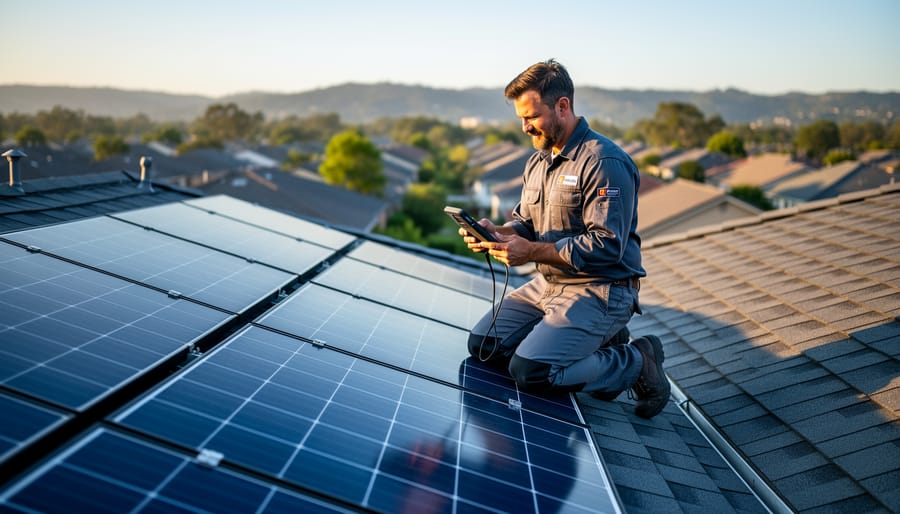
For even more detailed insights, portable energy monitors are fantastic tools. These devices typically clip onto your main electrical panel or individual circuits and connect to smartphone apps, giving you granular data about your consumption patterns. I recently installed one in my workshop, and it’s fascinating to see how different tools affect my energy usage.
Some advanced monitors can even break down consumption by appliance, predict your monthly bill, and send alerts when usage spikes occur. Many also integrate with home automation systems, allowing you to automatically control devices based on energy usage patterns.
The best part? These tools make it much easier to plan for solar installations by providing detailed historical data about your consumption patterns, helping you size your system correctly.
DIY Energy Audit Tools
You don’t need expensive equipment to start measuring your home’s energy consumption. I learned this firsthand when I began my solar journey using simple, affordable tools that gave me surprisingly accurate readings. Let me share some DIY-friendly options that won’t break the bank.
A basic Kill A Watt meter is an excellent starting point, typically costing around $20-30. Simply plug it between your device and the wall outlet to measure power consumption, running costs, and voltage. I use mine regularly to track my computer setup’s energy usage.
For a more comprehensive approach, consider a whole-home energy monitor that clamps onto your main electrical panel. While slightly pricier ($100-150), these devices provide real-time data for your entire house through smartphone apps. Some popular DIY-friendly options include the Emporia Vue and Sense Energy Monitor.
Don’t overlook the value of a simple infrared thermometer ($15-30) for identifying heat loss and insulation issues. Pair it with an inexpensive light meter ($20) to assess your lighting efficiency and determine where you might benefit from LED upgrades.
For those who enjoy building, you can create a basic energy monitor using an Arduino or Raspberry Pi, some current sensors, and open-source software. This approach costs around $50 in parts and provides a great learning experience while delivering useful consumption data.
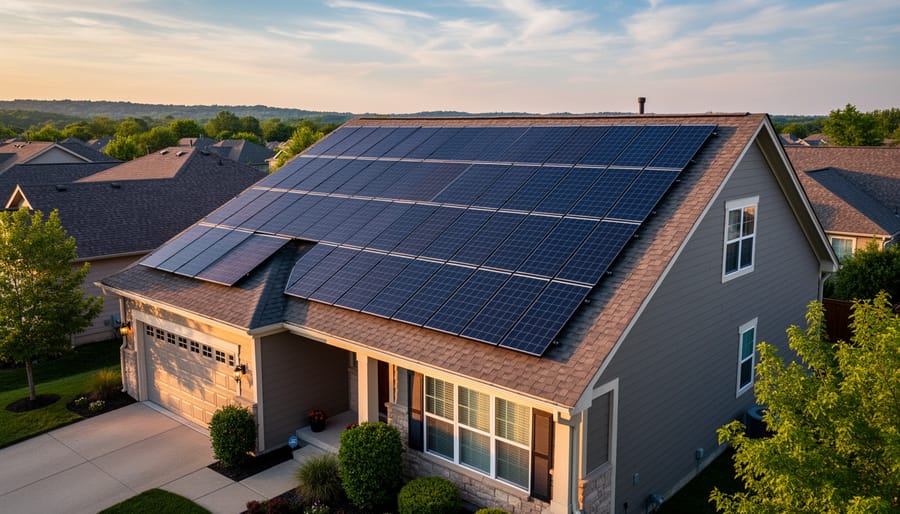
A power consumption meter provides accurate measurements of individual appliance energy usage.Residential solar panel installation sized to match household energy consumption needs.
Using Your Calculations for Solar Planning
Determining Solar Panel Requirements
Now that you’ve calculated your daily energy usage, let’s transform those numbers into a practical solar power solution. As a DIY enthusiast who’s helped countless homeowners make this transition, I can tell you that getting this part right is crucial for a successful solar installation.
To calculate required solar panel size, start by multiplying your daily energy consumption (in kWh) by 1000 to convert it to watts. Next, factor in your location’s peak sun hours and system efficiency losses. Here’s a simple formula I use:
Required Solar Panel Wattage = (Daily Energy Usage × 1000) ÷ (Peak Sun Hours × 0.75)
The 0.75 factor accounts for typical system losses from factors like wire resistance, inverter efficiency, and temperature effects. For example, if your daily usage is 30 kWh and you receive 5 peak sun hours, you’d need approximately:
(30 × 1000) ÷ (5 × 0.75) = 8,000 watts or 8 kW of solar panels
Remember to consider your available roof space and local weather patterns. I always recommend adding a 10-20% buffer to account for seasonal variations and future energy needs. This approach has helped many of my fellow DIYers build systems that truly meet their needs.
Planning for Future Energy Needs
When planning for your future energy needs, it’s crucial to consider how your consumption patterns might change over time. I learned this firsthand when my family grew from two to four members – our energy usage nearly doubled! Start by identifying potential lifestyle changes that could impact your energy consumption, such as working from home, adding new appliances, or welcoming new family members.
Consider seasonal variations too. Your summer cooling needs might increase as global temperatures rise, or you might need more heating during extreme winter events. Create different usage scenarios: a baseline scenario (current usage), a moderate growth scenario (10-15% increase), and a high-growth scenario (25-30% increase).
Don’t forget about energy-efficient upgrades you’re planning. New insulation, smart thermostats, or LED lighting can significantly reduce your consumption. On the flip side, factor in potential additions like electric vehicles or a home office setup.
I recommend maintaining a flexible buffer of 20-30% above your calculated needs when planning your energy system. This provides headroom for unexpected changes and future expansions. Keep a log of your consumption patterns and review it annually to spot trends and adjust your predictions accordingly.
Remember, technology evolves rapidly. Today’s energy-hungry appliances might be replaced by more efficient versions in the future, potentially offsetting some of your increased usage predictions.
Understanding and tracking your energy usage is a powerful first step toward taking control of your home’s energy consumption. By following the calculation methods we’ve discussed, you can make informed decisions about your energy habits and identify opportunities for savings. Whether you choose the simple manual approach or invest in smart monitoring devices, the key is to start tracking today. Remember, knowledge is power – quite literally in this case! As someone who’s helped countless homeowners optimize their energy usage, I can tell you that the insights you gain from monitoring your consumption often lead to surprising discoveries and meaningful savings. Take that first step now: grab your latest utility bill, note down some meter readings, and begin your journey toward energy awareness and efficiency. Your wallet – and the planet – will thank you for it.
How useful was this post?
Click on a star to rate it!
Average rating 0 / 5. Vote count: 0
No votes so far! Be the first to rate this post.
We are sorry that this post was not useful for you!
Let us improve this post!
Tell us how we can improve this post?
charlesnoble
Here at Spheral Solar, I’m a hands-on solar power enthusiast, constantly exploring and experimenting with DIY solutions. I’m dedicated to sharing my discoveries, insights, and even the bumps I hit along the way, all in the pursuit of a more sustainable future.
How Much Power Does an 8kW Solar System Actually… by Charlesnoble March 24, 2026 An 8kW solar system typically generates between 24 and 40 kWh per day, depending on your location, season, and installation quality. That’s enough to power most average homes completely, but the reality is more nuanced than a single number can capture. I remember installing my first 8kW array in Arizona…
How Many kWh Does Your Solar System Actually Need?… by Charlesnoble November 29, 2025 Calculate your daily energy consumption by checking your utility bill for the monthly kilowatt-hour (kWh) usage, then divide by 30 to get your average daily number. This single figure becomes your North Star for sizing any solar system, whether you’re powering a full household, weekend cabin, or portable camping setup.…
Calculate Your Solar Panel kWh Output Before You Buy… by Charlesnoble January 29, 2026 Grab your solar panel specs and electricity bill—you’re about to discover exactly how many kilowatt-hours your solar setup can generate and whether it’ll actually cover your energy needs. Most people dive into solar projects with enthusiasm but fuzzy math, leading to oversized systems that waste money or undersized ones that…
Why Your Solar System Needs a Usage Graph (And How… by Charlesnoble March 11, 2026 Check your solar inverter’s display screen or manufacturer app right now—most modern systems already generate real-time usage graphs without additional equipment. Your inverter likely shows daily production curves, typically peaking between 11 AM and 2 PM, which gives you instant insight into whether your panels are performing as expected. Download…
Stop Guessing Energy Numbers: Your Practical Joule… by Charlesnoble November 11, 2025 **Understanding Energy in Real Numbers: Your Joule Conversion Guide** Converting joules into watts, kilowatt-hours, or calories transforms abstract energy measurements into practical numbers you can actually use for your solar projects and off-grid calculations. Whether you’re sizing a battery bank, calculating how long your portable solar panel will run a…
Stop Burning Out Your Solar Gear: Why Electrical… by Charlesnoble February 22, 2026 Grab your multimeter and calculator—understanding electrical conversions transforms confusing numbers into actionable data for your solar setup. When I first started working with solar panels, I’d stare at spec sheets showing watts, amps, and volts, completely baffled about which numbers actually mattered for sizing my components. That confusion nearly led…
Subscribe for handpicked DIY projects, exclusive tips, and giveaways.
Route your PV wires through UV-resistant conduit within 18 inches of leaving the solar array, securing it every 3 feet with proper clamps to prevent wind damage and code violations. This single step prevents 80% of the wire degradation issues I’ve seen in DIY solar installations over the past decade. Group your positive and negative… Read more: Why Your PV Wire Management Could Fail Inspection (And How to Fix It)
Understand that 6000 volts sounds terrifying but delivers surprisingly low amperage—typically around 120 milliamps for just 3/10,000th of a second per pulse. This combination creates an unforgettable shock that trains animals to avoid the fence without causing lasting harm. The voltage pushes current through thick fur and hide, while the minimal amperage and microsecond duration… Read more: Why 6000 Volts Won’t Kill Your Livestock (But Will Stop Predators Cold)
Check the maximum voltage and current ratings first—these determine whether your controller can actually handle your solar panel array without frying itself on the first sunny day. I learned this the hard way when my first DIY system shut down every afternoon because I’d paired 600 watts of panels with a controller rated for only… Read more: Why Your Solar Setup Needs Both a Charge Controller and Inverter (And How to Pick the Right Ones)