Why Your Oval Pool Needs a Solar Cover (And How to Pick the Right One)
Updated:
Measure your oval pool at its longest and widest points before shopping—oval solar covers aren’t one-size-fits-all, and ordering the wrong dimensions means dealing with gaps that let heat escape or excess material that creates a frustrating installation headache. Unlike rectangular pools where cutting to fit is straightforward, oval shapes require precise measurements along the curved edges to ensure proper heat retention and chemical savings.
Choose between standard blue covers for basic heating (raising water temperature 10-15°F) or clear covers if you prioritize maximum solar gain and light penetration for healthier pool chemistry. The thickness matters too: 12-mil covers work fine for seasonal use, but 16-mil options last twice as long and resist tearing when you’re wrestling with that curved perimeter during daily removal.
Install your cover using a reel system designed specifically for oval pools—these typically feature telescoping tubes that accommodate the varying width. I learned this the hard way after spending three summers manually folding an oval cover every morning, which turned a simple task into a 15-minute workout and eventually damaged the cover’s edges.
Expect your oval solar cover to reduce water evaporation by 95%, slash heating costs by up to 70%, and cut chemical use significantly by blocking debris and UV degradation. For DIY-minded pool owners, this translates to measurable monthly savings that typically recover the cover cost within one season while supporting your commitment to energy efficiency. The real question isn’t whether an oval solar cover works, but rather which specifications match your climate, usage patterns, and budget constraints.
What Makes Oval Pool Solar Covers Different
If you’ve ever tried shopping for a pool cover and felt frustrated that most options seem designed for rectangular or round pools, you’re not alone. I remember when my neighbor Charles first got his beautiful oval pool installed – he assumed buying a solar cover would be straightforward. After all, how different could it be from any other pool cover? Turns out, quite different.
The challenge with oval pools comes down to geometry. While rectangular pools have four straight edges and round pools are perfectly symmetrical, oval pools combine curved ends with straight sides. This unique shape means you can’t simply throw a rectangular cover over it and expect good results, nor will a round cover work. Standard covers will either leave gaps that let heat escape and debris enter, or they’ll bunch up awkwardly, creating areas where water pools and stress points that lead to premature wear.
Here’s what makes oval pool covers special: they’re specifically cut to match those curved ends while maintaining straight sides. The fitting needs to be precise because even a few inches off can compromise the cover’s effectiveness. Unlike rectangular covers where you might get away with some overhang, oval covers need to follow the pool’s contours closely to create that crucial air pocket between the water surface and the cover – that’s where the real insulating magic happens.
Another consideration is the variety of oval pool sizes out there. While round pools often come in standard diameters and rectangular pools in common length-width combinations, oval pools have endless size variations. You might have a 15×30 oval, an 18×33, or something completely custom. This means you’ll need to measure carefully and often look for covers that can be trimmed or are made-to-order for your specific dimensions.
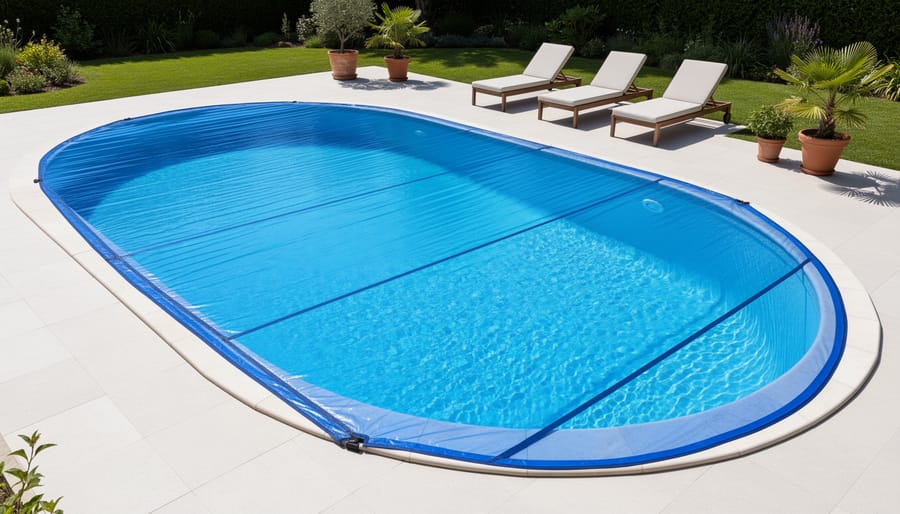
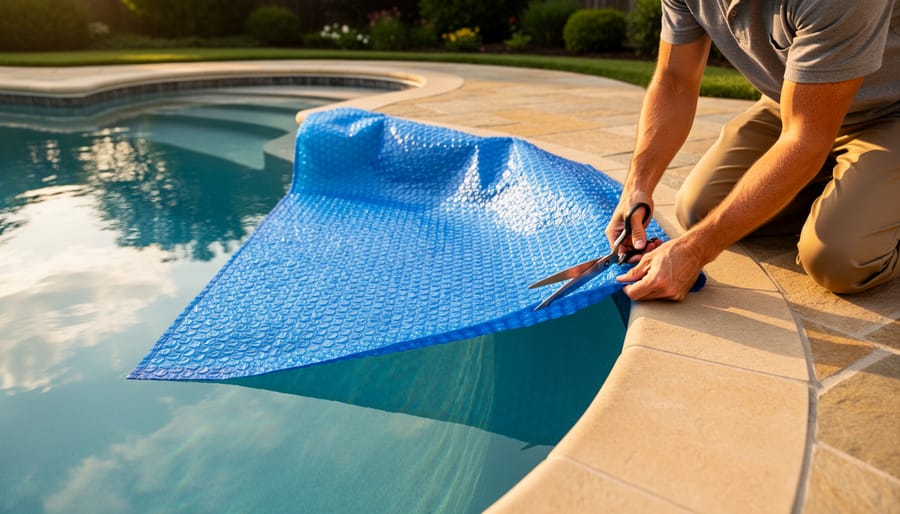
An oval pool with a properly fitted solar cover demonstrates how these covers conform to the unique shape while providing heating and protection benefits.
How Solar Pool Covers Actually Work
Think of a solar pool cover like a giant blanket made of bubble wrap—because that’s essentially what it is! Each bubble acts as a tiny magnifying glass, capturing sunlight and converting it into heat that warms your pool water. But there’s a lot more happening beneath the surface than you might realize.
The magic starts when sunlight hits those air-filled bubbles. The transparent material allows solar radiation to pass through and penetrate the water, while the bubbles trap heat like miniature greenhouses. This trapped warmth transfers directly into your pool, raising the temperature degree by degree. The darker underside of most covers helps absorb even more heat, maximizing efficiency. If you’re curious about how quickly solar covers heat pools, the answer depends on factors like sun exposure and cover quality, but many pool owners see temperature increases of 10-15 degrees Fahrenheit.
Here’s where it gets even better: evaporation is actually your pool’s biggest energy thief. When water evaporates, it takes heat with it—up to 70% of your pool’s total heat loss happens this way. A solar cover creates a physical barrier that dramatically reduces evaporation, keeping that hard-earned warmth exactly where you want it. I learned this the hard way during my first summer with a pool, watching my water level drop and my heating bills climb before I discovered solar covers.
The bubble design also provides a third benefit: debris protection. Those same bubbles that capture heat also keep leaves, dirt, and insects out of your water, reducing your cleaning time and chemical usage.
For oval pools specifically, the cover needs to match your pool’s unique shape to maximize these benefits. Gaps around the edges let heat escape and allow debris to sneak in, undermining the whole system. That’s why proper sizing matters so much—you want complete coverage to get complete protection.
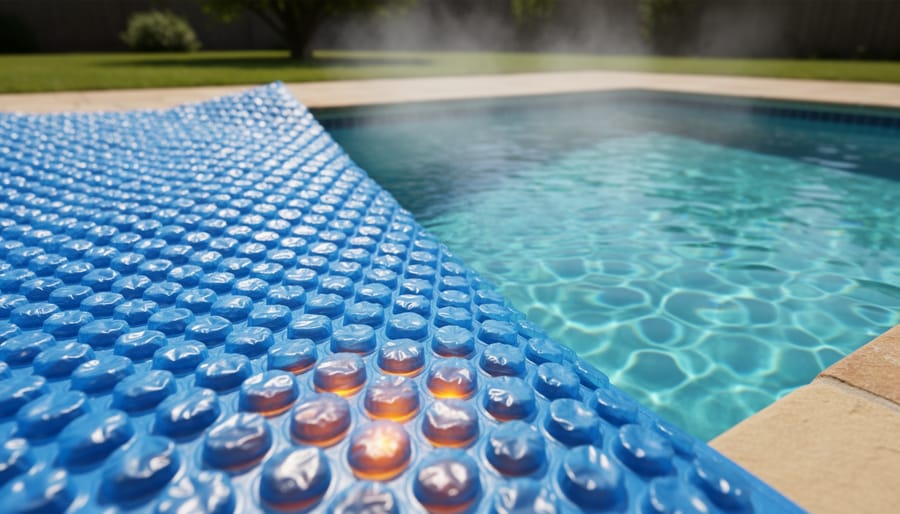
The bubble structure of solar pool covers traps heat and transfers it to the water while preventing evaporation.
The Real Benefits You’ll Notice Right Away
Warmer Water Without Cranking the Heater
Here’s the thing about solar covers that really excites me: the temperature gains are genuinely impressive, and you don’t need to be an engineer to see the difference. Most oval pool owners report temperature increases of 8-15 degrees Fahrenheit when using a quality solar cover consistently. That’s not a small bump—it’s the difference between chilly and comfortable.
I’ve spoken with dozens of pool owners who’ve made the switch, and the story is remarkably consistent. One friend in Pennsylvania told me she extended her swimming season from three months to nearly five, simply by keeping her solar cover on whenever the pool wasn’t in use. The cover trapped heat during sunny days and prevented overnight cooling, which is where you typically lose most of your warmth.
The real magic happens through passive solar gain. During daylight hours, the cover’s bubbles act like tiny magnifying glasses, capturing sunlight and transferring that energy directly into your water. At night, it becomes an insulating blanket that slows heat loss significantly. For families in cooler climates, this means starting your season earlier in spring and stretching it well into fall—sometimes adding six to eight extra weeks of swimming time without touching your heater’s thermostat. That’s more family time in the pool and genuine energy savings you’ll notice on your utility bills.
Slash Your Water and Chemical Bills
Here’s something I learned the hard way during my first summer with a pool: watching your water bill climb while chemicals seemed to evaporate into thin air is incredibly frustrating. That’s when I discovered how much money a solar cover actually saves.
The numbers really speak for themselves. A quality oval solar cover can reduce water evaporation by up to 95%, which is pretty remarkable when you think about it. For most pool owners, this translates to saving hundreds of gallons per month during peak summer. I’ve personally cut my water refilling down from twice weekly to maybe once every two weeks, depending on weather conditions.
But the water savings are just the beginning. When less water evaporates, fewer chemicals go with it. Chlorine and other pool treatments typically escape through evaporation, forcing you to constantly rebalance your water chemistry. With a solar cover in place, you’ll use approximately 35-60% fewer chemicals throughout the season. That’s a significant chunk of change staying in your wallet.
Most homeowners report combined savings of $300-$600 annually just from reduced water and chemical costs. In my experience, the cover usually pays for itself within the first year or two.
Less Time Skimming, More Time Swimming
Here’s something I learned the hard way after my first summer with an oval pool: I spent more time fishing out leaves and bugs than actually enjoying the water. Sound familiar? A quality solar cover completely flips that script.
Think of your oval solar cover as a shield that works around the clock. When you’re not using the pool, it keeps leaves, twigs, insects, and all that neighborhood debris from turning your water into a soup you’d never want to swim in. I remember watching my neighbor spend 20 minutes skimming before every swim while I just pulled back my cover and jumped right in.
The maintenance time savings really add up. Instead of daily skimming sessions and constant filter cleaning, you’re looking at maybe a quick once-over every few days. Your pool’s chemical balance stays more consistent too, since you’re not constantly introducing organic matter that throws everything off. Plus, you can enjoy running your pump with the cover on during certain situations, maximizing your efficiency.
Bottom line? More relaxation time, less chore time. That’s the whole point of having a pool, right?
Types of Solar Covers for Your Oval Pool
Bubble Covers (The DIY Favorite)
Bubble covers are hands-down the most popular choice among pool owners, and for good reason. These are the covers you’ll see at most pool supply stores, featuring those distinctive air pockets that look like bubble wrap. I remember when I first installed one on my neighbor’s oval pool—we were skeptical about something so simple making a real difference, but her heating bills dropped noticeably within the first month.
The beauty of bubble covers lies in their versatility. You’ll find them in thickness options ranging from 8 mil to 16 mil. The 8-12 mil versions work wonderfully if you live in moderate climates like I do in the Pacific Northwest, where we need heat retention but don’t face extreme sun exposure. For those of you in southern states with intense UV rays, stepping up to a 14-16 mil cover makes sense—it’ll last longer and provide better insulation.
Affordability is another major win. These covers typically cost a fraction of what you’d pay for premium alternatives, making them perfect for DIY enthusiasts testing the solar heating waters. The thicker options naturally cost more, but even a quality 16 mil bubble cover won’t break the bank compared to other pool heating methods.
Liquid Solar Covers
If you’re looking for a hassle-free alternative to traditional covers, liquid solar covers might catch your attention. These products are essentially biodegradable chemicals you pour directly into your pool water. They form an invisible, ultra-thin molecular layer on the water’s surface that helps reduce evaporation—which is where most heat loss occurs.
Here’s the thing: liquid solar covers work the same way whether you have a round, rectangular, or oval pool, which makes them particularly appealing for those odd-shaped pools where traditional covers can be tricky to manage. I’ve talked to several pool owners who switched to liquid options after getting frustrated with wrestling bubble covers onto their oval pools every evening.
However, they do have limitations. While they reduce evaporation by about 30-40%, they don’t match the heat retention of a good physical cover (which can hit 70-80%). They also don’t prevent debris from entering your pool, so you’ll still need to skim regularly. And you’ll need to reapply them weekly, which adds to ongoing costs.
Liquid covers make the most sense for oval pool owners who want some heat retention benefits without the daily cover routine, or as a supplement during periods when you’re using the pool frequently and don’t want to deal with constant cover removal.
Heavy-Duty vs. Standard Options
When I first purchased a solar cover for my oval pool, I went with the cheapest option available—and replaced it within two seasons. Here’s what I learned about choosing between heavy-duty and standard covers.
Standard covers, typically 8-12 mil thick, work fine for occasional use and mild climates. They’re budget-friendly (usually $50-150 for oval pools) and adequate if you’ll manually remove them frequently. However, they tear more easily around the curved edges where tension is greatest, especially if you use a reel system.
Heavy-duty covers (12-16 mil) cost more upfront ($150-300), but they’re game-changers for oval pools. The reinforced material handles the unique stress points better, resists UV damage longer, and typically lasts 5-7 years versus 2-3 for standard options.
Consider heavy-duty if you have harsh sun exposure, use your pool heavily during swimming season, or plan to leave the cover on for extended periods. For weekend-only use in moderate climates, standard options provide decent value. Calculate the cost per season—often, premium covers actually save money long-term while reducing the hassle of premature replacements.
Getting the Right Size and Fit
Getting the right fit for your oval pool solar cover isn’t quite as straightforward as rectangular pools, but don’t worry—I learned this the hard way so you don’t have to! When I first helped my neighbor measure her oval pool, we nearly ordered the wrong size because we didn’t account for the manufacturer’s sizing conventions.
Start by measuring both the longest length and the widest width of your pool at the waterline. Here’s the key thing most people miss: oval pool covers are typically labeled by these two dimensions, like 15×30 or 18×33, where the first number is always the width and the second is the length. Double-check your measurements twice, and make sure you’re measuring the actual water surface, not the outer rim of the pool.
Most manufacturers offer pre-sized oval covers in standard dimensions, usually in 3-foot increments. If your pool measures 16×31, you’d typically order an 18×33 cover for adequate coverage. The general rule is to size up rather than down—you want some overhang to secure the cover properly and maximize heat retention.
For oddly-shaped or true elliptical pools that don’t match standard oval dimensions, custom-sized covers are available. Yes, they cost more—usually 20 to 40 percent extra—but they’re worth considering if you have significant gaps with a standard size. I’ve seen too many folks struggle with covers that are 4 feet too short on one end, which defeats the whole purpose.
Here’s a common mistake to avoid: don’t measure the pool deck or coping. Measure the actual water surface. Another gotcha? Some above-ground oval pools have slightly different curves than in-ground models, even at the same stated dimensions.
If you’re feeling uncertain about your measurements, many retailers offer measuring guides, and some even provide virtual consultations. Trust me, spending an extra fifteen minutes getting accurate measurements beats the hassle of returns and reorders every single time.
Installation Tips That Make Life Easier
Should You Trim It or Leave Extra?
Here’s a practical tip from my own experience: I used to think trimming solar covers to an exact fit was the way to go, but I learned that leaving a small overlap actually works better for most oval pools.
For the best fit, lay your cover completely over the pool and let it settle naturally for a day or two. This allows the material to relax and conform to your pool’s shape. Then, aim to trim it so you have about 2-3 inches of overlap on all sides. This extra material ensures complete coverage even when wind shifts the cover slightly, and it gives you something to grip when removing it.
When trimming, use sharp scissors or a utility knife and work slowly around the perimeter. Mark your cutting line with a washable marker first. Remember that you can always trim more later, but you can’t add material back.
If your oval pool has unique curves or features, leave extra material in those areas until you’ve tested the fit. And before you start cutting, double-check the bubble side orientation to ensure you’re working with the correct side facing up.
One amateur mistake to avoid: don’t trim in cold weather when the material is contracted. Wait for a warm day when the cover is fully expanded for the most accurate sizing.
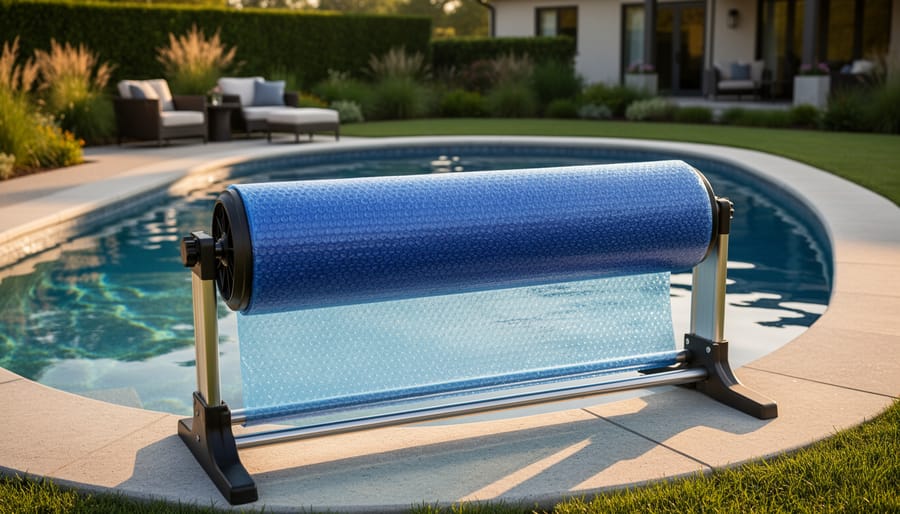
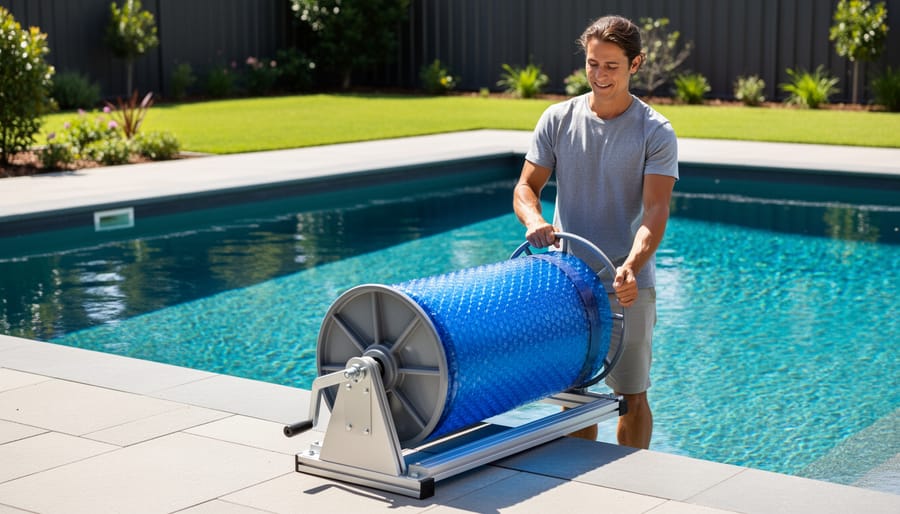
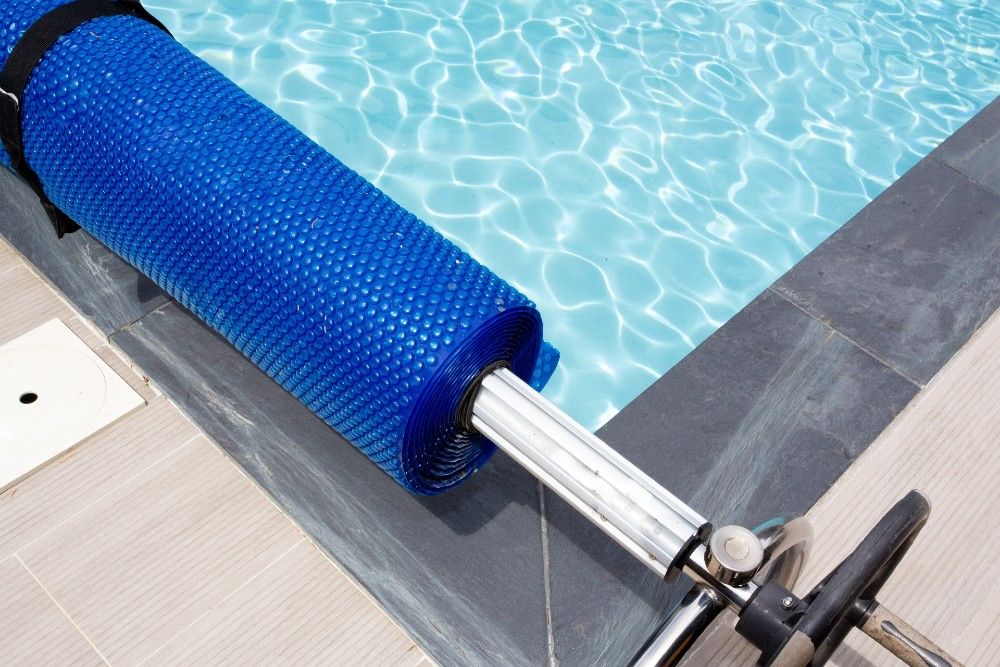
A reel system makes removing and replacing an oval solar cover much easier, especially for larger pools.
Reel Systems Worth Considering
If you’ve got an oval pool larger than 15 feet, trust me when I say a reel system will become your best friend. I learned this the hard way after spending weeks wrestling with my 18×33 foot oval cover like I was handling a boat sail in a windstorm. Your back will thank you for investing in a reel.
For oval pools, you’ve got two main paths: commercial reel systems specifically designed for oval shapes, or the DIY route. Commercial options typically run between $150-400 and come with heavy-duty aluminum construction and wheels for easy positioning. The beauty of these systems is they’re designed to handle the curved edges of oval covers without creating wear points. Brands like Blue Wave and Kokido make models that work well with most oval configurations.
The DIY approach can save you significant money if you’re handy with basic tools. I’ve built simple reel systems using PVC pipe or aluminum tubing for under $75. The key is creating a wide enough drum to accommodate your cover’s width without excessive bunching. Some community members in our forums have shared brilliant designs using repurposed materials from hardware stores.
For budget-conscious pool owners, consider a manual hand-crank reel rather than motorized versions. While motorized reels offer convenience, manual systems are reliable, maintenance-free, and perfectly adequate for most residential oval pools. The investment pays for itself in time saved and reduced strain on your solar cover, extending its lifespan by preventing dragging and folding damage.
Making Your Solar Cover Last
Your oval solar cover is an investment worth protecting, and I’ve learned firsthand that a little care goes a long way. My neighbor Charlie rushed through maintenance for years, replacing his cover every two seasons—until he started following some simple preventative steps that tripled his cover’s lifespan.
The secret to longevity starts with cleaning your solar cover regularly. Debris, chemicals, and algae can degrade the material faster than UV exposure alone. Once a week during pool season, give it a gentle rinse with your hose. For stubborn spots, use a soft brush with mild soap—never harsh chemicals that can break down the bubbles or weaken the material.
When pool season ends, proper storage techniques become critical. Don’t just fold it up wet and toss it in the shed. Dry your cover completely in the shade, then roll it loosely to avoid permanent creases. Store it in a cool, dry location away from rodents and sharp objects. A storage bag or container protects against accidental punctures.
Here’s a common mistake: leaving your cover on 24/7. While it’s tempting for maximum heat retention, constantly exposing it to intense sunlight accelerates UV degradation. Remove it occasionally to give the material a break, and consider using a UV protectant spray designed for pool covers every few months.
Watch for warning signs that replacement time is approaching: excessive bubbling loss, brittleness, large tears, or diminished heating performance. Most quality oval covers last three to five years with proper care, but pushing beyond their useful life means you’re not getting the energy savings you deserve. Investing in maintenance today saves you money tomorrow.
What to Look for When Shopping
Shopping for an oval pool solar cover doesn’t need to be overwhelming once you know what actually matters. Let me share what I’ve learned from helping friends navigate this purchase and what separates genuinely good products from marketing fluff.
First things first: proper sizing is everything. Oval covers come in standard sizes, but here’s the catch—your pool might not match those standards perfectly. Measure your pool’s length and width at the widest points, then look for a cover that’s slightly larger rather than smaller. You can always trim excess material, but you can’t add to a cover that’s too small. Most quality manufacturers provide detailed measurement guides, and if they don’t, that’s your first red flag.
Material thickness really does matter, but not in the way marketing teams want you to believe. You’ll see numbers like “8 mil,” “12 mil,” or even “16 mil” thickness. Here’s the reality: thicker isn’t automatically better. A well-constructed 12 mil cover with good UV stabilization will outlast a poorly made 16 mil option. What you want is material that feels substantial but remains flexible enough to handle without a struggle. When I helped my neighbor Charles choose his cover, we found that anything below 10 mil felt flimsy and prone to tearing.
Pay attention to bubble design too. Larger bubbles generally provide better insulation and heat retention, but they can be more fragile. Smaller bubbles are more durable but might not trap heat as effectively. Consider your climate and how often you’ll be removing and replacing the cover.
UV resistance is non-negotiable. Your cover will spend all day in direct sunlight, so it needs proper UV stabilizers to prevent degradation. Look for specific UV protection ratings rather than vague promises about “sun resistance.”
Budget-wise, expect to spend between seventy and two hundred dollars for a quality oval cover, depending on size. Anything significantly cheaper usually means compromises in durability. Conversely, super-premium options often charge extra for features that don’t meaningfully improve performance.
Warranty coverage tells you a lot about manufacturer confidence. One to three years is standard for quality covers.
Investing in a solar cover for your oval pool isn’t just about keeping leaves out of the water—it’s about embracing a smarter, more sustainable way to enjoy your backyard oasis. By harnessing free energy from the sun, you’re reducing your carbon footprint while cutting heating costs and extending your swimming season. That’s what I call a win-win.
I’ve talked with countless pool owners who hesitated at first, wondering if a solar cover would really make a difference. Six months later, they’re telling me they wish they’d made the switch sooner. The water stays warmer, they use fewer chemicals, and their pumps don’t have to work overtime. One neighbor even mentioned she’s now swimming in October—something she never imagined possible before.
If you’re ready to take that first step, remember that choosing the right oval solar cover doesn’t have to be complicated. Measure carefully, pick a quality material that fits your climate, and don’t skip those installation basics we covered. You’ve got this.
Have questions about your specific pool setup? Drop them in the comments below—our community of DIY solar enthusiasts is always here to help. Together, we’re making backyard energy efficiency accessible to everyone. Now go turn that oval pool into a sun-powered paradise.
How useful was this post?
Click on a star to rate it!
Average rating 0 / 5. Vote count: 0
No votes so far! Be the first to rate this post.
We are sorry that this post was not useful for you!
Let us improve this post!
Tell us how we can improve this post?
charlesnoble
Here at Spheral Solar, I’m a hands-on solar power enthusiast, constantly exploring and experimenting with DIY solutions. I’m dedicated to sharing my discoveries, insights, and even the bumps I hit along the way, all in the pursuit of a more sustainable future.
Best Solar Pool Covers in 2023 by Adeyomola May 13, 2021 The quality and effectiveness of a solar pool cover are typically defined by the following features: thickness, size, UV stability or resistance, and color. So, when compiling this list, we focused on solar pool covers offering the best features. Best Solar Pool Covers at a Glance Overall Best Solar Pool…
How to Cover Your Oddly-Shaped Pool Without Wasting… by Charlesnoble December 6, 2025 Measure your pool’s widest points and order a rectangular solar cover 2-3 feet larger than these dimensions—you’ll trim it to fit your kidney, L-shaped, or freeform pool for a fraction of custom cover costs. Most pool owners with irregular shapes successfully use standard rectangular covers by either overlapping multiple smaller…
9 Best Solar Pool Heaters in 2023 by Adeyomola June 20, 2021 When buying solar pool heaters, people often give precedence to features like square footage, mounting type, water pressure limit, and the type of pool the solar pool heater is suitable for. But, in the end, the best solar pool heaters tip above the rest by offering superior temperature rise in…
Clear vs. Blue Solar Pool Covers by Adeyomola May 19, 2021 Indeed, cover color does affect your swimming pool temperature, but it is not quite as straightforward as you may think – there is a bigger picture. The presence/absence of air bubbles in solar pool covers, the thickness, the type of material, and the color influence various performance features, including heat…
Hook Up Your Solar Pool Heater the Right Way (Before… by Charlesnoble January 17, 2026 Position your solar collectors above pool water level whenever possible to enable gravity drainage when the system shuts off, preventing freeze damage and extending panel life. This single design choice eliminates the most common failure point in DIY solar pool heating installations. Study the three-zone valve configuration before purchasing components.…
How Fast Does a Solar Cover Heat a Pool by Charlesnoble September 1, 2023 The effectiveness and how fast a solar cover will heat a pool are influenced by various factors, including but not limited to the type of solar cover used, the structural design and size of your pool, and the weather at the time. When you install a solar pool cover, you…
Subscribe for handpicked DIY projects, exclusive tips, and giveaways.
Position your solar panels at an angle equal to your latitude for year-round performance, or adjust seasonally by adding 15 degrees in winter and subtracting 15 degrees in summer to capture maximum sunlight during each season’s sun path. Use a simple angle finder app on your smartphone against the back of your panel to verify… Read more: The Right Tilt Angle Can Boost Your Solar Panel Output by 30% (Here’s How to Find It)
Route your PV wires through UV-resistant conduit within 18 inches of leaving the solar array, securing it every 3 feet with proper clamps to prevent wind damage and code violations. This single step prevents 80% of the wire degradation issues I’ve seen in DIY solar installations over the past decade. Group your positive and negative… Read more: Why Your PV Wire Management Could Fail Inspection (And How to Fix It)
Understand that 6000 volts sounds terrifying but delivers surprisingly low amperage—typically around 120 milliamps for just 3/10,000th of a second per pulse. This combination creates an unforgettable shock that trains animals to avoid the fence without causing lasting harm. The voltage pushes current through thick fur and hide, while the minimal amperage and microsecond duration… Read more: Why 6000 Volts Won’t Kill Your Livestock (But Will Stop Predators Cold)