Solar Inground Lights That Actually Survive Winter (And How to Install Them)
Updated:
Bury solar inground lights 4-6 inches deep in compacted soil along pathways, ensuring the solar panel faces true south for maximum charge—a lesson I learned after my first installation facing southeast yielded only 3 hours of nightly illumination instead of the promised 8. Test soil drainage before purchasing by digging a 6-inch hole and filling it with water; if it doesn’t drain within 12 hours, you’ll need upgraded waterproof models with IP67 ratings or higher to prevent premature failure.
Calculate spacing at 6-8 feet intervals for ambient pathway lighting or 3-4 feet for task lighting near steps and garden features, remembering that LEDs dim by roughly 30% after the first year regardless of manufacturer claims. Clean solar panels monthly with a microfiber cloth and diluted vinegar solution—debris accumulation reduces charging efficiency by up to 70%, the single most common reason these lights fail within the first season.
Replace rechargeable batteries every 18-24 months even if lights still function, since degraded batteries cause inconsistent performance and the frustrating “works great for two hours then dies” problem most DIYers encounter. Position lights away from competing light sources like porch lights or street lamps; solar sensors often malfunction when ambient light confuses the auto-on mechanism, leaving your pathway dark when you need it most. Understanding these practical realities transforms solar inground lighting from a disappointing experiment into a reliable, cost-effective outdoor lighting solution that actually delivers on its environmental promise.
Why Most Solar Inground Lights Fail (And What Makes the Good Ones Different)
The Water Problem Nobody Talks About
I learned this lesson the hard way last spring when I replaced six inground solar lights in my front pathway—all failed from water infiltration within eight months. The frustrating part? They were all rated IP65, which sounds impressive until you understand what those numbers actually mean in your garden.
Here’s the reality most manufacturers don’t emphasize: IP ratings measure specific laboratory conditions, not your actual soil. That IP65 rating means the sixth number (5) indicates protection against water jets from any direction. Sounds waterproof, right? Wrong. It doesn’t account for prolonged submersion, which is exactly what happens when autumn leaves block drainage or spring thaw creates temporary puddles around your lights.
What you actually need is IP67 or IP68. The seventh digit means the fixture can handle temporary submersion up to one meter, and the eighth means continuous submersion. These ratings matter because inground lights sit in the wettest part of your landscape where condensation, groundwater, and irrigation converge.
The second problem nobody mentions: seals degrade. Rubber gaskets that protect electronics deteriorate from UV exposure and temperature cycling. I’ve opened “waterproof” lights that looked bone-dry outside but had visible moisture inside corroding the battery terminals and solar panel connections.
Check the seal material specifications—silicone seals outlast rubber by years. Also look for lights with removable battery compartments that include secondary seals, giving you two barriers against moisture intrusion instead of one.
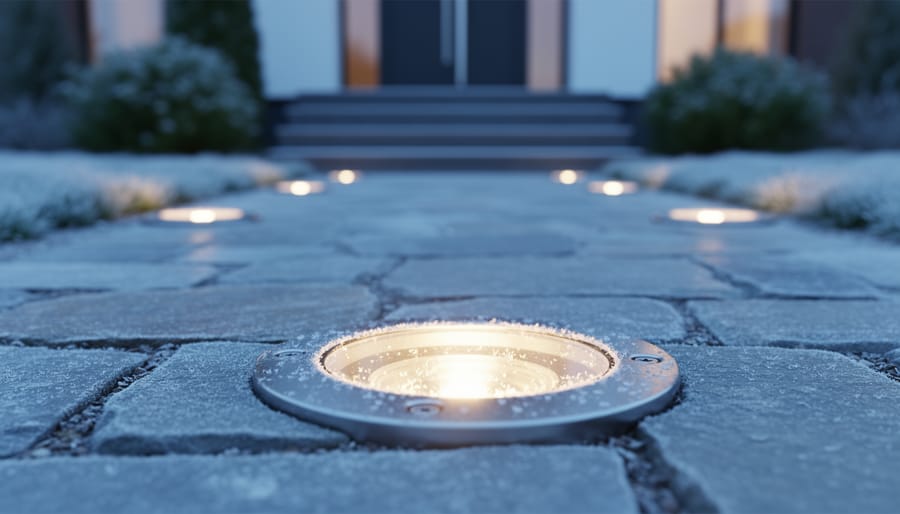
Water intrusion and corrosion are the most common failure points in budget solar inground lights, especially after winter freeze-thaw cycles.
Battery Life: The Hidden Cost of Cheap Lights
Here’s where I learned a tough lesson during my first solar lighting project. I bought a dozen budget inground lights online, and within six months, half were dead. The culprit? Cheap nickel-cadmium batteries that couldn’t hold a charge.
Most quality solar inground lights use either Nickel-Metal Hydride (NiMH) or Lithium-ion (Li-ion) batteries. NiMH batteries are the budget-friendly workhorses—they handle temperature swings well and typically last 2-3 years. Li-ion batteries cost more upfront but deliver better performance in cold weather and can last 4-5 years with proper care.
Battery capacity, measured in milliamp-hours (mAh), tells you how long your lights will actually shine. A 600mAh battery might give you 4-6 hours of light, while a 1200mAh battery could double that runtime. For pathway lighting, aim for at least 800mAh.
Here’s the kicker most manufacturers don’t advertise: can you actually replace the battery? I’ve seen beautiful solar lights become expensive paperweights because the batteries were sealed inside. Look for models with accessible battery compartments—usually a small panel secured with a screw or two. This simple feature transforms a disposable product into a long-term investment you can maintain yourself.
Choosing Solar Inground Lights That Match Your Garden’s Needs
Lumens vs. Ambiance: Finding Your Sweet Spot
Finding the right brightness for your solar inground lights comes down to understanding what you’re trying to achieve. When I first installed pathway lights in my garden, I made the rookie mistake of choosing the brightest option available, thinking more lumens always meant better. The result? My peaceful evening garden felt more like a shopping mall parking lot.
For gentle pathway marking and subtle ambiance, you’re looking at 5-15 lumens per fixture. These create a soft glow that guides without overwhelming your outdoor space. If you need actual task lighting for steps or potential hazards, aim for 50-100 lumens. These provide enough visibility for safety while still maintaining atmosphere.
Want to highlight a garden feature or sculpture? Go for 100-200 lumens with a focused beam angle. The key is layering different brightness levels throughout your space rather than using uniform lighting everywhere.
Here’s a practical tip: start with lower lumen options and add brighter accent lights strategically. It’s much easier to add brightness than to dim fixtures that are too powerful. Remember, effective outdoor lighting creates depth and interest through contrast, not by flooding every corner with light. Your evening garden should invite exploration, not eliminate all mystery.
Stainless Steel vs. Plastic: What Really Matters
Here’s the honest truth about materials: stainless steel housings look gorgeous and resist corrosion beautifully, especially in coastal areas or regions with harsh winters. I invested in premium stainless steel units along my driveway, and five years later, they still look showroom-fresh. But here’s what surprised me – the plastic solar disk lights I installed as a budget experiment in my backyard flower beds? They’re holding up remarkably well.
The real question isn’t which material is better, but where you’re installing them. High-traffic areas like walkways and driveways benefit from stainless steel’s durability against accidental kicks and lawn equipment bumps. The premium cost makes sense when you’re installing fewer lights in visible spots. However, plastic housings work perfectly fine for garden beds, decorative borders, or areas protected from foot traffic. Quality plastic units use UV-resistant materials that won’t yellow or crack for years.
My recommendation: mix and match strategically. Use stainless steel where durability and appearance matter most, then stretch your budget further with quality plastic options elsewhere. This approach gave me twice the lighting coverage for the same investment.
Solar Panel Position: The One Thing That Changes Everything
The solar panel placement can make or break your entire lighting setup. I learned this the hard way when my first batch of inground lights barely glowed after sunset—turned out the panels were shadowed by my fence for most of the afternoon.
You’ll find two main configurations: integrated panels (built into the light fixture) and separate panels connected by a cable. Integrated designs work great for open sunny spots and keep installation simple. Separate panels give you flexibility—place the light wherever you need it while positioning the panel in full sun up to 10 feet away.
For optimal performance, your panels need at least 6-8 hours of direct sunlight daily. Morning and midday sun works best since afternoon shadows tend to appear earlier in most yards.
Got a shaded pathway? Try mounting separate panels on nearby fence posts, your roof edge, or even a decorative garden stake in a sunnier spot. I’ve successfully lit a heavily shaded side yard by running the panel cables to a southern-facing flower bed. Another trick: use lights with larger separate panels (they charge faster) or consider a single panel powering multiple lights through a low-voltage hub system.
Step-by-Step Installation Guide (The DIY-Friendly Way)
Planning Your Layout Without the Guesswork
Before you start drilling holes, take a smart approach that’ll save you from regret later. I learned this the hard way when I installed my first set of solar pathway lights—what looked perfect during the day created weird shadows and missed the steps entirely at night.
Start with a simple mapping technique: use stakes or even empty flowerpots to mark where you think lights should go. Walk the path during daylight, then come back after dark with a flashlight to simulate each light’s position. Shine the light from ground level at each marked spot and notice what it actually illuminates. You’ll quickly discover that what seemed logical in daylight doesn’t always work once the sun sets.
Here’s a practical trick I always recommend: before permanent installation, set your solar inground lights on the surface for a few nights. Most models work just fine sitting on top of the ground temporarily. This test run lets you see the actual light spread, adjust spacing, and identify any glare issues or dark spots you missed.
Pay attention to shadows cast by plants, furniture, or architectural features—these change throughout the evening as moonlight shifts. Take photos from different angles to review later, and don’t hesitate to move lights around until the coverage feels right. This extra patience upfront prevents the frustration of relocating permanently installed fixtures.
Proper installation technique ensures solar inground lights remain level and stable throughout seasonal ground movement.
The Right Way to Dig and Set Your Lights
Getting your solar inground lights properly installed doesn’t require professional skills, but it does demand a bit of patience and the right approach. I learned this the hard way when I rushed through my first installation and ended up with lights that tilted every time it rained.
Start by marking your desired locations and checking the soil conditions. If you’re dealing with soft loamy soil, you’re in luck – a simple hand trowel or garden spade will work perfectly. For harder ground, though, you’ll need a sturdy auger or post hole digger. I’ve found that morning digging is easiest because the soil has overnight moisture making it more workable.
Rocky soil presents special challenges. Don’t force your way through rocks, as this can damage your tools and the light housing. Instead, remove larger rocks carefully and backfill with a mix of the native soil and some purchased topsoil if needed. Clay soil is another tricky situation – it holds water like a basin. The solution is creating a drainage layer. Dig slightly deeper than required, add about an inch of pea gravel at the bottom, then place your light.
The level installation trick that changed everything for me was using a small torpedo level placed across the top of each light before completely backfilling. Pack soil firmly around the housing in layers, checking level after each addition. This prevents settling and tilting over time. Water the area lightly after installation to help the soil settle naturally, then top off any low spots the next day.
First-Night Testing (Don’t Skip This)
Here’s something I learned the hard way: those first few nights are absolutely crucial for catching problems early. Once you’ve installed your solar inground lights, resist the urge to just walk away and hope for the best.
On night one, head outside after it gets completely dark to see if all your lights have activated. If some aren’t glowing, first check that you removed any protective tabs from the batteries and that the on/off switch is in the right position. It sounds silly, but I once spent twenty minutes troubleshooting a “defective” light before realizing I’d forgotten the plastic battery tab.
Over the next three nights, watch for consistency. Do they turn on at the same time each evening? Are they staying lit for several hours? If you notice lights dimming within an hour or two, they probably didn’t get enough sunlight during the day. This is your sign to reposition them to sunnier spots.
Pay attention to brightness variations too. One light significantly dimmer than its neighbors might have a dirty solar panel or be positioned in partial shade you didn’t notice during installation. Quick fix: clean the panel with a damp cloth and observe for another night.
If lights still underperform after repositioning and cleaning, consider whether nearby trees, buildings, or even your roof are casting shadows during peak sun hours. Sometimes moving a light just two feet makes all the difference.
Maintenance Tricks That Double Your Lights’ Lifespan
The 15-Minute Seasonal Checkup
I learned this routine the hard way after discovering three of my pathway lights weren’t charging properly last spring. Now I set a calendar reminder for each season change, and it takes just 15 minutes to keep everything running smoothly.
Start with the solar panels. Wipe them down with a soft, damp cloth to remove accumulated dust, pollen, or debris. You’d be surprised how much a thin layer of grime can reduce charging efficiency—sometimes by 30 percent or more. While you’re at it, trim back any plants that might be casting new shadows as they grow.
Next, inspect the seals around each light fixture. Look for cracks, gaps, or signs of moisture inside the lens. Press gently around the seal to check if it still feels firm and pliable. If you notice condensation inside, that’s your early warning that water is getting in.
Finally, do a simple performance test. Cover the solar panel with your hand to trigger the light sensor, then check if it illuminates at full brightness. If it seems dim or flickers, the battery might need replacing soon. Make notes of which lights seem weaker—patterns often reveal bigger issues like inadequate sun exposure in that particular spot.
Regular cleaning of solar panels is essential maintenance that significantly extends light performance and battery lifespan.
When to Replace Batteries (And How to Do It Yourself)
Your solar inground lights will eventually need new batteries, but the good news is you’ll get plenty of warning signs. The most obvious indicator is when lights that used to stay bright for 6-8 hours now barely make it through 2-3 hours. You might also notice they’re not shining as brightly even when freshly charged, or they’re becoming inconsistent—some nights working fine, others flickering or dying early.
I learned this the hard way with my pathway lights. After about two years, I noticed half of them would quit around 10 PM while the rest kept going. That’s when Charles told me it’s usually not the entire batch failing simultaneously—batteries age at different rates depending on their specific location and sun exposure.
Finding compatible replacements is straightforward. Most solar inground lights use standard rechargeable batteries: AA or AAA NiMH (nickel-metal hydride) rated at 1.2V, or sometimes lithium-ion cells. Check your light’s user manual or open the battery compartment to identify the exact type. Look for the voltage and mAh rating printed on the old battery—matching these specifications ensures optimal performance.
Here’s how to swap them yourself. First, let the light cool down and turn off any switches. Most inground lights have a battery compartment accessed by unscrewing the top housing or twisting a waterproof cap. Remove the old batteries, noting the polarity direction. Clean any corrosion with a dry cloth or cotton swab. Insert fresh batteries matching the positive and negative terminals correctly, reassemble, and give them a full sunny day to charge before testing.
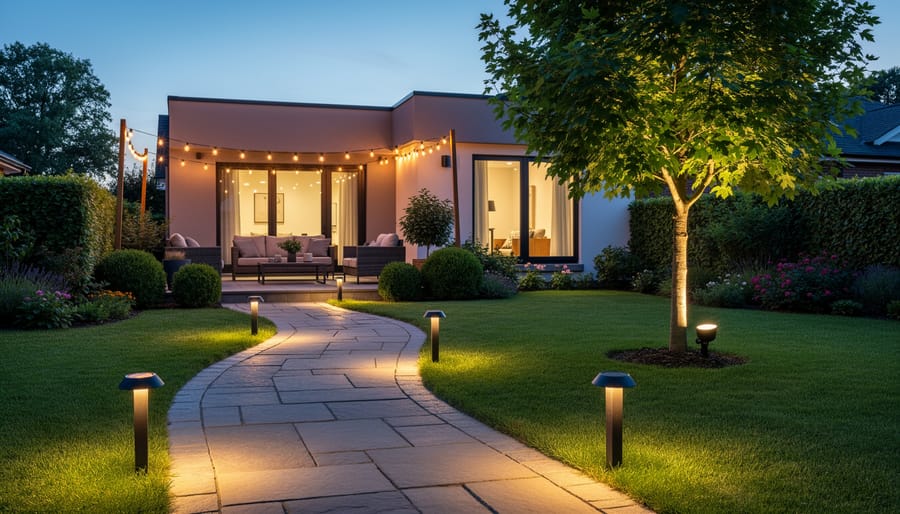
Well-placed solar inground lights create both functional pathway illumination and attractive nighttime ambiance without electricity costs.
Portable Solar Inground Lights for Camping
I learned this trick during a week-long camping trip in the Rockies when our group kept stumbling around in the dark. Solar inground lights aren’t just for permanent garden installations—they’re fantastic for camping, and with a few simple modifications, they become incredibly portable.
The key is creating removable mounting bases. I use short sections of PVC pipe (about 4 inches long) as sleeves that I can press into softer ground at campsites. The lights slide into these temporary holders and stay upright without permanent installation. For harder terrain, weighted bases work brilliantly—think small sandbags or fabric pouches you can fill with rocks or dirt on-site. This approach means you’re not adding much weight to your pack.
For camping applications, position these lights along pathways to your tent, around the perimeter of your cooking area, or marking guy-lines to prevent tripping hazards at night. Since they’re solar-powered, there’s zero fire risk and no need for batteries or fuel.
Choose compact, durable models designed for outdoor conditions. Look for lights with protective rubber casings rather than decorative glass—they’ll survive being packed and unpacked repeatedly. Some campers even attach small fabric loops to their lights, making them hangable from tree branches or tent poles for versatile lighting options beyond ground placement.
Mixing Inground Lights with Other Solar Garden Features
Creating a truly magical outdoor space means thinking beyond a single type of fixture. I learned this the hard way when I first installed inground lights along my pathway—they looked great, but something was missing. The real transformation happened when I started layering different lighting types together.
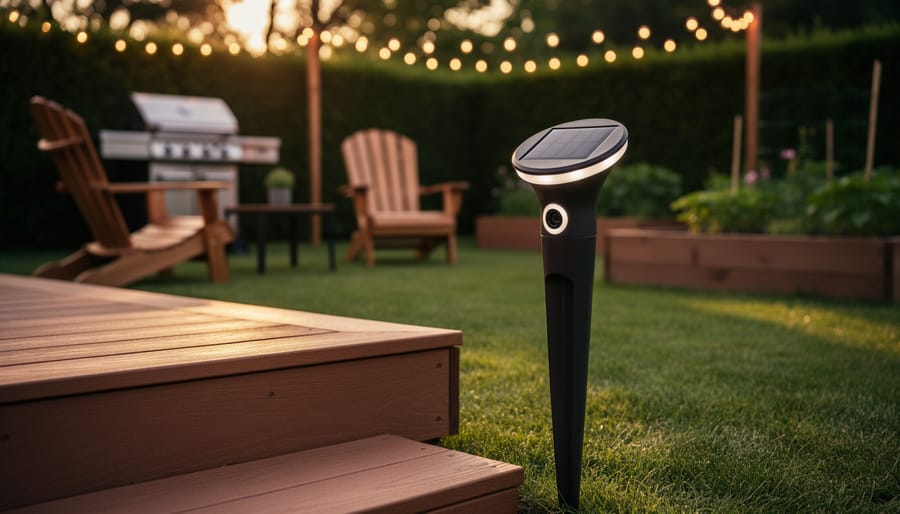
Think of your solar landscape lighting as painting with light. Inground lights provide foundational illumination at ground level, perfect for defining pathways and borders. Add stake lights at mid-height to highlight specific plants or create visual interest around garden beds. Overhead string lights bring warmth and ambiance to seating areas, while spotlights can dramatically uplight trees or architectural features.
The key is varying both height and purpose. Use inground lights for safety and structure, then build atmosphere with complementary fixtures. I positioned inground lights every six feet along my walkway, added stake lights among my hostas, and strung café lights over the patio. The result feels professionally designed but cost a fraction of hardwired systems.
Start with your functional needs first, then add decorative elements. This approach ensures your outdoor space is both beautiful and practical.
Troubleshooting Common Problems (Before You Give Up)
Before you toss those underperforming solar inground lights and chalk it up to “you get what you pay for,” let’s run through some quick fixes. I’ve salvaged more than a few installations with these simple solutions, and chances are you can too.
Problem: Lights won’t turn on at all
First, check if there’s a protective film still covering the solar panel—I know, it sounds obvious, but I’ve done this myself! Next, ensure the on/off switch is actually in the “on” position. Many models ship with the switch off to preserve battery life. If it’s been cloudy for several days, the battery might be completely drained. Give them 2-3 sunny days to charge fully before declaring them dead. Finally, inspect for water intrusion around the battery compartment. Even “waterproof” units can fail if the seal wasn’t seated properly during installation.
Problem: Lights are noticeably dim
Dirty solar panels are the number one culprit here. A thin layer of dust, pollen, or grime can cut charging efficiency by 30-40%. Clean panels monthly with a damp microfiber cloth. If cleaning doesn’t help, your rechargeable batteries have probably degraded—most last only 1-2 years before needing replacement. This is normal wear, not a defect. Also verify nothing is casting shadows on the panels during peak sunlight hours (10am-2pm). That decorative shrub you planted last month might be the problem.
Problem: Lights work inconsistently or flicker
Temperature fluctuations can temporarily affect battery performance, particularly in extreme cold. This usually resolves when temperatures moderate. Check all wire connections inside the housing—vibration from lawn equipment can loosen them over time. Tighten any loose connections you find.
Problem: Lights died after just a few months
Poor quality batteries are usually responsible for premature failure. Consider upgrading to higher-capacity NiMH batteries from reputable brands. Also examine your installation location—are the lights submerged in water regularly? Most inground lights are splash-resistant, not submersion-proof. Standing water is a death sentence for electronics.
There’s something deeply satisfying about walking out into your garden on a warm evening and seeing your pathways glow with light that costs absolutely nothing to operate. No electricity bills, no wiring headaches, just the sun doing what it does best—powering your outdoor sanctuary while you sleep.
I remember when I installed my first solar inground lights. I started with just six units along my front walkway, unsure if they’d even make a noticeable difference. That small experiment taught me more than any article could have. I learned which spots got the best sun exposure, how spacing affected the overall look, and which features actually mattered versus marketing hype. Now, years later, my entire property showcases various solar lighting projects, each one building on lessons from the last.
My advice? Start small. Choose one area you really want to illuminate and experiment there first. Maybe it’s your driveway entrance or a garden path you use most often. Learn what works in your specific environment before committing to a larger installation. Every yard has its quirks, and hands-on experience is your best teacher.
Once you’ve got your system running smoothly, I’d love to see what you’ve created. The Spheral Solar community thrives on sharing real-world projects, and your experience could help someone else avoid the pitfalls you navigated. Before you buy your lights, check out our solar calculators on the site to estimate your energy needs and ensure you’re choosing fixtures that’ll actually perform in your conditions. Here’s to beautiful, sustainable garden lighting that pays for itself from day one.
How useful was this post?
Click on a star to rate it!
Average rating 0 / 5. Vote count: 0
No votes so far! Be the first to rate this post.
We are sorry that this post was not useful for you!
Let us improve this post!
Tell us how we can improve this post?
charlesnoble
Here at Spheral Solar, I’m a hands-on solar power enthusiast, constantly exploring and experimenting with DIY solutions. I’m dedicated to sharing my discoveries, insights, and even the bumps I hit along the way, all in the pursuit of a more sustainable future.
Transform Your Yard After Dark: Solar Lights That… by Charlesnoble March 21, 2026 Position your solar path lights along walkways where they’ll receive at least 6-8 hours of direct sunlight daily—shaded placement is the number one reason homeowners complain about dim performance after sunset. I learned this the hard way when I installed a beautiful string of solar lanterns under my patio overhang,…
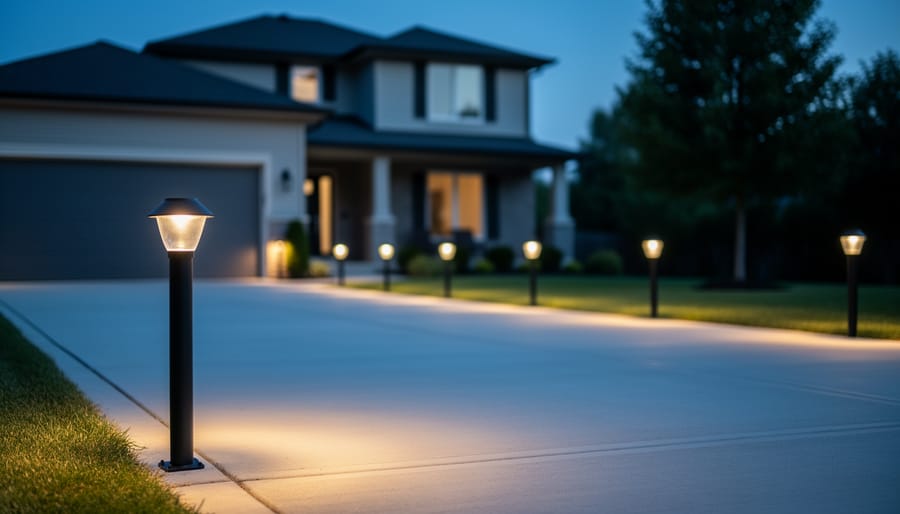
Solar Post Lamps That Actually Light Your Driveway… by Charlesnoble May 9, 2026 Position solar post lamps 15-20 feet apart along your driveway perimeter to create consistent illumination without dark gaps between fixtures. This spacing works for most residential driveways and prevents the frustrating experience of adequate lighting at the posts but pitch darkness in between—a mistake I made on my first installation…
Solar Pest Repellent That Actually Works (And Saves… by Charlesnoble December 20, 2025 Mosquitoes ruined my backyard barbecues for years until I discovered solar pest repellents could create an invisible barrier around my deck without extension cords or monthly electricity bills. These devices harness sunlight to power ultrasonic waves, electromagnetic pulses, or LED lights that claim to repel everything from rodents to insects,…
10 Best Outdoor Solar Lights in 2026 by Adeyomola August 30, 2021 Heads up: some links here are affiliate links, and purchases through them support the site. As an Amazon Associate I earn from qualifying purchases. You will get the best experience with outdoor solar lights when you opt for lights with good solar panels and long lighting times. But besides that,…
Mason Jar Solar Lights That Actually Work (And Cost… by Charlesnoble November 12, 2025 Transform ordinary mason jars into enchanting garden lights by securing solar lids to clean, dry containers—no wiring, no electricity bills, just pure sun-powered ambiance. Position them along walkways where they’ll capture at least 6 hours of direct sunlight daily, then watch them automatically illuminate your evenings with a warm, welcoming…
Why Your Flagpole Deserves Solar Light (And How to… by Charlesnoble November 7, 2025 Choose a solar light specifically designed for flagpole tops—not generic garden lights—with at least 20 lumens output and a downward-facing beam angle that creates the proper illumination pattern required by U.S. Flag Code. Mount the solar panel where it receives 6-8 hours of direct sunlight daily, even if that means…
Subscribe for handpicked DIY projects, exclusive tips, and giveaways.
After testing dozens of solar chargers across camping trips, power outages, and backyard experiments, we found the X-Dragon 20W delivers the most reliable charging performance for phones and tablets, while the Goal Zero Nomad 50W steps up when you need to power larger devices or handle extended emergencies. If you’re planning weekend hikes, assembling an… Read more: 7 Best Solar Powered USB Chargers of 2026, Tested and Reviewed
There is something special about a mature tree. Decades of growth, shade that actually cools the house, branches that the kids climbed, a root system that has quietly held the yard together through every storm. So when circumstances force a move, whether it is a home renovation, a new driveway, or a construction project that… Read more: How to Move a Mature Tree Without Killing It: The Complete Relocation Guide
A mass energy conversion calculator lets you determine how much energy is locked inside any amount of matter using Einstein’s famous equation E=mc². Whether you’re working on a physics assignment or simply curious about the enormous energy potential in everyday objects, the calculation itself takes just seconds once you understand the formula’s three components: energy… Read more: How to Use a Mass Energy Conversion Calculator (Step-by-Step Guide)