Why Florida Homeowners Are Going Solar (And How You Can Too)
Updated:
Calculate your home’s solar potential by checking your annual electricity bills and measuring your available south-facing roof space—Florida homes typically need 20-30 panels to offset 100% of energy usage. Contact your utility provider to understand net metering policies, as companies like Duke Energy, FPL, and Tampa Electric have different buyback rates that directly impact your return on investment. Review the federal Investment Tax Credit allowing you to deduct 30% of your solar installation costs, which represents thousands in immediate savings when combined with Florida’s property tax exemption for solar equipment value.
Florida’s unique position as the Sunshine State makes it surprisingly complex for residential solar. While you’d expect the nation’s third-sunniest state to lead in solar adoption, regulatory hurdles and utility company influence have historically slowed progress. However, recent policy changes and dropping equipment costs have transformed the landscape, making 2024 an opportune moment for Florida homeowners to explore the benefits of going solar.
Your roof receives approximately 5.5 peak sun hours daily across most of Florida, translating to substantial energy generation potential. A typical 8kW system can produce 11,000-13,000 kWh annually, often exceeding average household consumption of 10,800 kWh. The practical question isn’t whether your home can support solar—it’s whether you can navigate permitting requirements, understand your utility’s interconnection agreement, and decide between DIY installation versus professional help while maximizing available incentives.
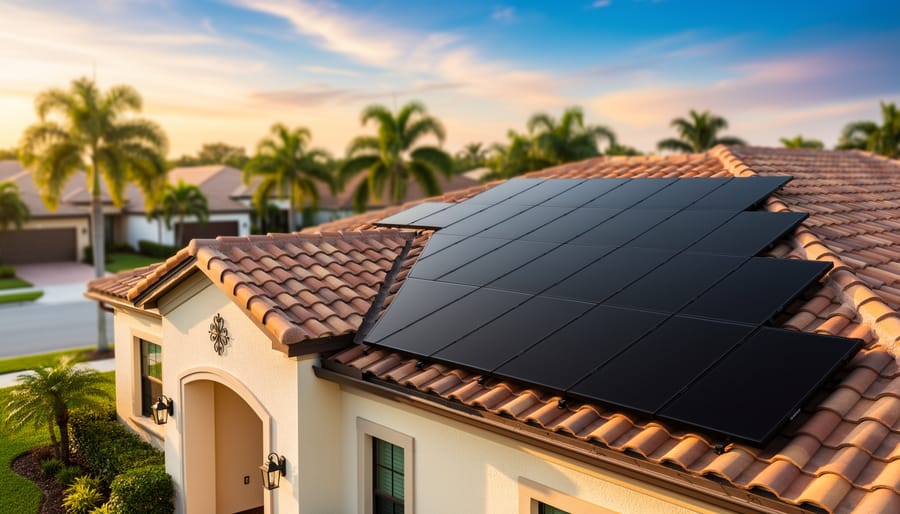
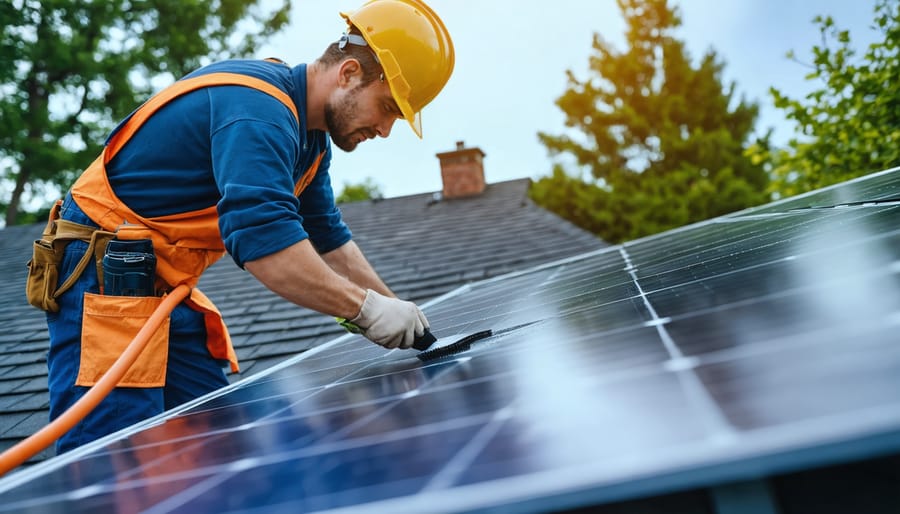
Modern solar panels on a Florida home take advantage of the state’s abundant sunshine and generate clean energy year-round.
Florida’s Solar Sweet Spot: What Makes the Sunshine State Different
The Numbers Behind Florida’s Solar Potential
Here’s the thing about Florida – we’re basically sitting on a goldmine of sunshine, and I learned this firsthand when I started tracking my own system’s performance. Florida averages between 4.5 to 5.5 peak sun hours daily, which is pretty impressive when you consider that these aren’t just any daylight hours – they’re the equivalent of full-strength sunlight your panels can actually convert into electricity.
The numbers vary depending on where you call home. South Florida, particularly Miami and the Keys, consistently hits around 5.5 peak sun hours, making it one of the best solar regions in the country. Central Florida, including Orlando and Tampa, sees about 5.2 peak sun hours, while the Panhandle region typically gets 4.8 to 5.0 hours daily.
What does this mean for your actual energy production? Let’s break it down in real terms. A standard 6-kilowatt residential system in South Florida can generate approximately 9,000 to 10,000 kilowatt-hours annually – that’s enough to cover most average Florida homes’ electricity needs. In Central Florida, that same system produces around 8,500 to 9,500 kWh yearly.
I remember when my neighbor asked if our occasional cloudy days would ruin his solar investment. The beautiful reality is that even Florida’s rainy season doesn’t dramatically impact annual production because our winter months balance things out with crystal-clear skies. Your panels work year-round, accumulating credits during high-production months that offset any slower periods.
Hurricane Season Reality Check
Let me be straight with you—Florida’s hurricane season is real, and pretending otherwise would be irresponsible. I learned this lesson during my first major storm season after installing panels. The anxiety was real, but the reality turned out to be more manageable than I’d feared.
Modern solar panels are engineered to withstand winds up to 140 mph when properly installed. That’s stronger than many Category 3 hurricanes. The key phrase there is “properly installed.” This is where DIY installation requires serious honesty with yourself. If you’re mounting panels on your roof, you’re not just dealing with electrical work—you’re creating potential wind sails that could turn into projectiles if not secured correctly.
Florida’s building codes actually work in your favor here. Post-Hurricane Andrew regulations require specific mounting standards that professional installers must follow. As a DIYer, you need to meet these same standards, which means using reinforced mounting systems, proper lag bolts that reach rafters (not just plywood), and adequate structural support.
The good news? Solar systems are surprisingly resilient. During Hurricane Irma, studies showed that properly installed systems generally survived intact. The real vulnerabilities aren’t usually the panels themselves—it’s flying debris damaging them or inadequate mounting letting wind get underneath.
My practical advice: if you’re in a high-risk coastal zone, seriously consider having at least the mounting and structural work reviewed by a licensed professional, even if you handle the electrical yourself. Insurance companies will thank you, and you’ll sleep better when those hurricane warnings pop up on your phone.
Understanding Florida’s Solar Incentives and Net Metering
The Federal Solar Tax Credit: Your Biggest Savings Tool
Here’s the real deal that gets most Florida DIYers excited: the federal solar tax credit gives you back 30% of your total system costs when you file your taxes. And yes, this absolutely applies to DIY installations.
Let me break this down with a practical example. Say you install a 6kW system yourself for $12,000 in equipment costs. Come tax time, you’ll get $3,600 back as a credit, which directly reduces what you owe the IRS. That’s not a deduction, it’s actual money back in your pocket.
When I installed my first system in Tampa, I meticulously tracked every expense: panels, inverters, mounting hardware, even the permits. Everything qualified for the credit. Here’s what counts toward your total: solar panels, inverters, batteries, mounting equipment, wiring, and even your permit fees.
The beauty for DIYers? You’re already saving thousands on installation labor, and you still get the full 30% credit on your equipment costs. It’s like getting paid to learn a valuable skill. Just keep those receipts organized and work with a tax professional who understands solar installations to maximize your savings.
Net Metering in Florida: Selling Power Back to the Grid
Florida’s net metering policy is one of the most homeowner-friendly aspects of going solar in the Sunshine State. Here’s how it works in practical terms: when your solar panels produce more electricity than your home uses during the day, that excess power flows back into the grid, and your utility meter literally spins backward, crediting your account.
I remember when my neighbor Maria installed her system and called me excitedly after her first sunny weekend away from home. She’d generated way more power than she needed, and her utility bill showed she’d built up credits. That’s net metering in action.
Florida law requires all investor-owned utilities to offer net metering, which covers most residents. Your utility company must credit you at the full retail rate for the electricity you send back. These credits roll over month to month, helping offset your bills during cloudy periods or nighttime usage. At the end of your annual cycle, some utilities may pay out remaining credits, though policies vary by provider.
The process is straightforward: after installing your system, your utility will replace your standard meter with a bidirectional meter that tracks both incoming and outgoing electricity. You’ll submit an interconnection agreement, which most utilities process within 30 to 60 days. There’s typically a small application fee, usually under 100 dollars.
Keep in mind that net metering doesn’t mean you’ll never have a utility bill. You’ll still pay basic connection fees and charges for any grid electricity you use beyond what your solar system produces.
Property Tax Exemptions and Other Hidden Perks
Here’s something I wish I’d known before installing my first system: Florida doesn’t just hand you rebates, it saves you money through smart tax breaks that keep giving year after year.
When you install solar panels in Florida, the added value to your home is exempt from property taxes. Think about it this way: if solar adds $20,000 to your home’s value, you won’t pay a penny more in property taxes on that increase. Over 25 years, that’s potentially thousands in savings depending on your local millage rate.
Florida also exempts solar equipment from sales tax. On a typical residential system costing $15,000, that’s around $1,050 you keep in your pocket at purchase. This applies whether you’re buying a complete professional installation or piecing together a DIY setup.
These exemptions work quietly in the background, but they’re powerful. I remember calculating my total costs and realizing these “hidden” perks reduced my actual investment by nearly 15 percent before even considering the federal tax credit. The property tax exemption especially matters if you’re planning to stay in your home long-term, as it protects you from rising assessments on your solar investment indefinitely.
Sizing Your Florida Solar System: A Practical Approach
Reading Your Electric Bill Like a Pro
Before you can figure out the right solar system size for your Florida home, you need to understand what you’re currently using. Your electric bill is like a treasure map, and I learned this the hard way when I first started exploring solar. I was totally overwhelmed by all those numbers and codes until a fellow DIYer showed me the basics.
Start by locating your monthly kilowatt-hour usage, usually listed as “kWh used” or “total usage.” This number tells you how much electricity you consumed that billing period. In Florida, typical homes use between 1,000 and 1,500 kWh monthly, though summer months with air conditioning running full blast can spike higher.
Next, find your rate per kWh. Florida’s average is around 13 cents, but yours might vary depending on your utility company and rate plan. Multiply your usage by this rate to understand your baseline cost.
Look for a graph or chart showing usage over 12 months. This annual view is critical because Florida’s seasonal variations are dramatic. Your January usage might be half of what you use in August when battling the heat and humidity.
Understanding your electric bill is the first step in calculating the right solar system size for your Florida home.
Accounting for AC: Florida’s Energy Elephant
Let me be straight with you about something I learned the hard way when I first moved to Florida: your AC isn’t just another appliance here, it’s practically a household member. And it eats electricity like there’s no tomorrow.
In most of the country, heating and cooling might account for 40-50% of residential energy use. Here in the Sunshine State? We’re talking 60-70% or more during those brutal summer months. I remember checking my first summer electric bill and nearly falling over. My air conditioner was running what felt like 23 hours a day.
This reality completely changes how you need to think about sizing your solar system. While a 5kW system might handle a typical home’s needs in Colorado, that same setup in Tampa could leave you buying plenty of grid power during peak summer months when your AC is battling 95-degree heat and humidity that feels like a wet blanket.
Most Florida homes use between 10,000-15,000 kWh annually, with AC driving those numbers way up compared to milder climates. When you’re planning your system size, you need to look at your highest-usage months, not just your annual average. Installing a system based on winter consumption will leave you disappointed come July.
The good news? All that AC usage means solar panels are producing when you need them most. Florida’s peak sun hours align beautifully with peak cooling demand, making solar particularly effective here.
Navigating Florida’s Permitting and HOA Requirements
The Permitting Process: What to Expect
Getting your solar system permitted in Florida might sound intimidating, but I promise it’s more straightforward than you’d think. When I installed my first system, I was pleasantly surprised by how organized the process was, though patience definitely helps.
First, you’ll submit your application to your local building department. This typically includes your system design, electrical diagrams, roof plans, and engineering calculations. Many Florida counties now accept online submissions, which speeds things up considerably. Your application will show where panels go, how they’re mounted, and how everything connects to your electrical system.
Next comes the plan review, where officials check that your design meets Florida Building Code and electrical standards. This usually takes one to three weeks, depending on your county’s workload. Some areas are faster than others—Miami-Dade and Broward tend to have more streamlined processes than smaller rural counties.
Once approved, you’ll receive your permit and can start installation. Most counties require an inspection after installation but before connecting to the grid. The inspector checks mounting integrity, electrical connections, and safety features. This typically happens within a week of requesting it.
Finally, you’ll need utility approval for interconnection. Your power company will review the system to ensure it meets their requirements for connecting to the grid. This can take anywhere from two weeks to two months.
Total timeline? Expect six to twelve weeks from application to flip-the-switch day. Pro tip: communicate early with both your building department and utility company to avoid surprises.
Florida’s Solar Rights Act: Your Legal Protection
Here’s some good news for Florida solar enthusiasts: your right to install solar panels has strong legal backing. The Florida Solar Rights Act protects homeowners from having their solar dreams blocked by overly restrictive homeowners associations or deed restrictions.
I learned about this firsthand when my neighbor was initially told by our HOA that his rooftop panels would violate neighborhood aesthetics. Thanks to Florida Statute 163.04, HOAs cannot prohibit solar installations outright, though they can impose reasonable restrictions on where panels are placed. The key word here is “reasonable”—they can’t make requirements so strict that they effectively prevent installation or significantly increase your costs.
This law means you have real protection when going solar. Your HOA might require panels to be positioned in less visible areas when possible, but they cannot deny your application simply because they don’t like how solar panels look. If you’re facing pushback, document everything and consider consulting with a solar-friendly attorney. Many Florida solar installers are also familiar with these laws and can help you navigate HOA conversations. Remember, this protection exists because Florida recognizes solar energy as important public policy—your investment benefits everyone.
DIY vs. Professional Installation in Florida: Finding Your Path
What You Can Realistically DIY
Let me be straight with you – when I first considered going solar here in Florida, I thought I could handle the whole project myself. After diving deep into state regulations and talking with several inspectors, I learned where the realistic boundaries are.
You can absolutely tackle some meaningful parts of your solar project. Ground-mounting preparation is entirely DIY-friendly – clearing the site, pouring concrete footings, and assembling racking systems are well within reach for most handy homeowners. You can also handle preliminary roof assessments, measuring your available space, and determining optimal panel placement. Many folks successfully wire their panels together into strings and install monitoring equipment after the main system is connected.
However, Florida law draws clear lines you cannot cross. The actual roof penetrations, weatherproofing, and structural attachments require licensed contractors due to our hurricane codes. More importantly, anything involving connecting to your home’s electrical panel or the utility grid must be performed by licensed electricians. This isn’t just red tape – it’s about safety and maintaining your homeowner’s insurance. The professional electrical work also ensures your system qualifies for utility interconnection agreements and federal tax credits.
Think of it this way: you can be the project manager and handle 30-40% of the labor, saving substantial money while ensuring code compliance. I’ve found this hybrid approach gives you hands-on involvement without the liability headaches or permit rejections that come from overstepping legal boundaries.
The Hybrid Approach: Getting the Best of Both Worlds
Here’s the practical middle ground I’ve seen work beautifully for Florida homeowners: tackle what you’re comfortable with and hire pros for the rest. You can handle site assessment, basic racking assembly, and equipment research yourself, which builds your knowledge and saves money. Then bring in licensed contractors for electrical connections, roof penetrations, and utility interconnection paperwork.
I remember my neighbor Jake took this approach. He spent weekends assembling ground-mount racking in his backyard and carefully planned his system layout. When it came time for the actual electrical work and permitting, he hired a licensed electrician who understood Florida’s specific codes. Jake saved about 30% compared to a full installation quote while staying completely compliant.
This hybrid strategy keeps you legal with Florida’s licensing requirements while letting you contribute sweat equity where it counts. The licensed electrician handles final connections and signs off on permits, giving you both insurance coverage and code compliance. You learn the system intimately, save thousands, and sleep soundly knowing everything meets Florida building standards. It’s the sweet spot between full DIY dreams and contractor-dependent reality.
Equipment Considerations for Florida’s Climate
Heat and Humidity: How They Affect Panel Performance
Here’s something I learned the hard way during my first Florida summer with solar panels: not all panels handle heat equally. When I installed my initial setup, I hadn’t paid much attention to temperature coefficients, and I noticed my production dropping on those scorching 95-degree days when I expected maximum output.
Here’s the thing about solar panels: they actually lose efficiency as they get hotter. Every panel has a temperature coefficient, usually listed as a percentage per degree Celsius. This tells you how much power output drops as temperatures rise above 25°C (77°F). In Florida, where roof temperatures can hit 150°F on summer afternoons, this matters tremendously.
Most conventional panels lose about 0.4% to 0.5% efficiency for every degree above their rated temperature. Over a typical Florida summer day, that can mean 10-15% less power than the panel’s rating suggests. Premium panels with better temperature coefficients (around 0.3% or lower) perform significantly better in our climate.
I recommend looking at panels from manufacturers like SunPower, LG, or Panasonic, which typically have superior temperature coefficients. Yes, they cost more upfront, but they’ll generate more power during Florida’s long, hot summers when you need air conditioning most.
The good news is that proper installation with adequate airflow beneath panels helps keep them cooler, and regular solar panel maintenance ensures they’re operating at peak efficiency. Consider this factor when comparing quotes from installers.
Wind Ratings and Mounting Systems That Last
Living in Florida means preparing for hurricane season, and your solar installation needs to stand strong when the winds pick up. I learned this firsthand when my neighbor’s poorly mounted panels turned into dangerous projectiles during a storm—not something you want happening on your roof.
Florida building codes require solar systems to withstand wind speeds up to 160 mph in most coastal areas. That’s serious engineering, but it’s absolutely achievable with proper mounting hardware. You’ll need racking systems specifically rated for hurricane zones, which typically means aluminum or stainless steel rails with reinforced attachments penetrating directly into your roof rafters, not just the plywood sheathing.
The mounting hardware matters as much as the panels themselves. Look for systems tested to Florida’s strict standards, with lag bolts at least 5 inches long and spaced appropriately based on your specific wind zone. Many DIYers underestimate this step, but skimping here risks your entire investment.
Your building permit application will require engineered drawings showing these calculations. While this might sound intimidating, many mounting system manufacturers provide pre-engineered plans for common roof types, making the approval process much smoother. Think of it as building a fortress for your solar investment—one that’ll keep generating power long after the storm passes.
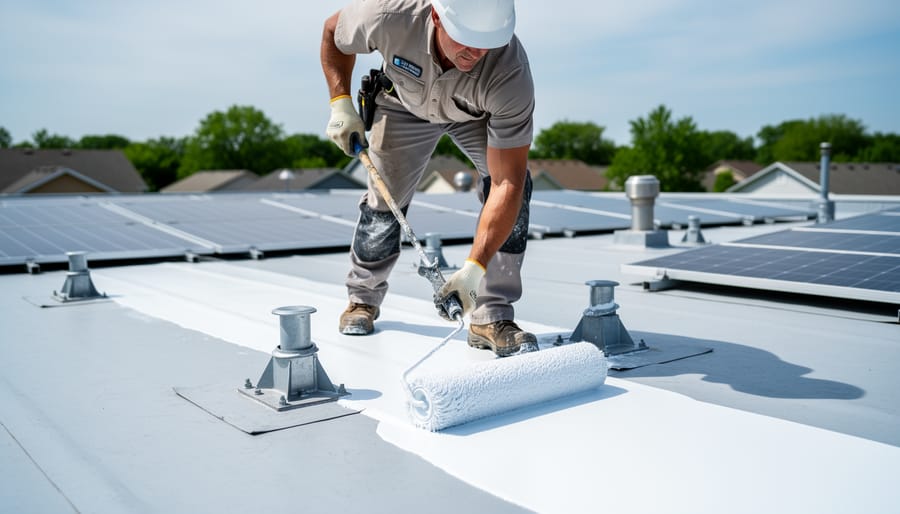
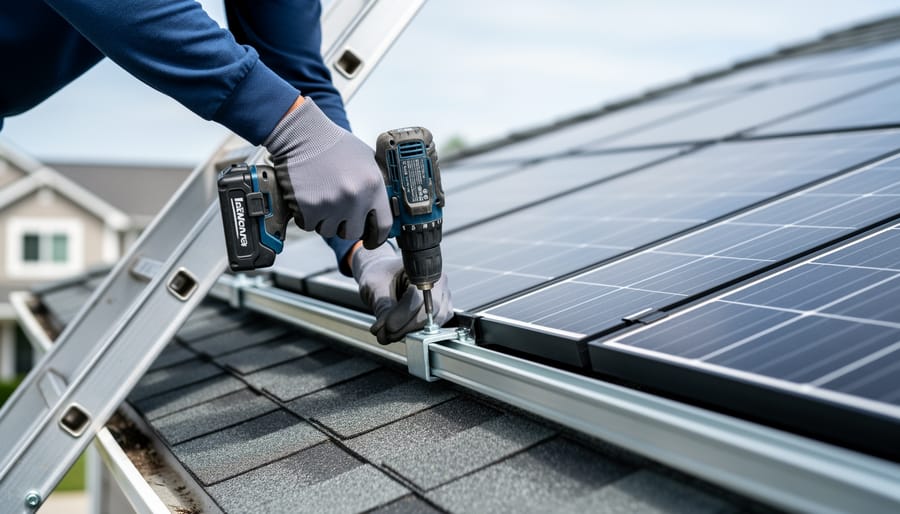
Proper mounting hardware installation ensures solar systems can withstand Florida’s hurricane-force winds and extreme weather.
Real Stories from Florida Solar DIYers
When I first started exploring solar options for my Tampa home back in 2019, I had more questions than answers. Like most Floridians, I wondered if our legendary sunshine would really translate into savings, especially during those brutal summer months when the AC runs constantly. Spoiler alert: it absolutely does, but not without learning a few hard lessons along the way.
My initial 8kW system performed about 15% better than the online calculators predicted during winter months, which was a pleasant surprise. However, I quickly discovered that Florida’s afternoon thunderstorms create more shading issues than I’d anticipated. That beautiful oak tree I wanted to preserve? It cost me about 200 kWh per month during summer. Lesson learned: be ruthlessly honest about shading when planning your array.
Community member Sarah from Orlando shared her experience with permitting delays that stretched her timeline by six weeks. “I thought getting HOA approval would be the hard part,” she told me. “Turns out, scheduling the utility interconnection inspection during peak season meant waiting in line behind professional installers.” Her advice? Start the permitting process before ordering equipment.
Then there’s Miguel in Jacksonville, who went the DIY route on a modest 5kW system. His biggest challenge wasn’t the installation itself but understanding net metering statements. “The first bill looked wrong until I realized the credits don’t show up the way you’d expect,” he explained. He now tracks his production daily and has seen a 92% offset on his annual electricity costs.
The common thread in all our stories? Florida’s solar potential is real, but success requires patience, community support, and willingness to adapt. We’ve all had moments of frustration, usually involving roof work in 95-degree heat, but watching those meter readings drop makes every sweaty afternoon worthwhile.
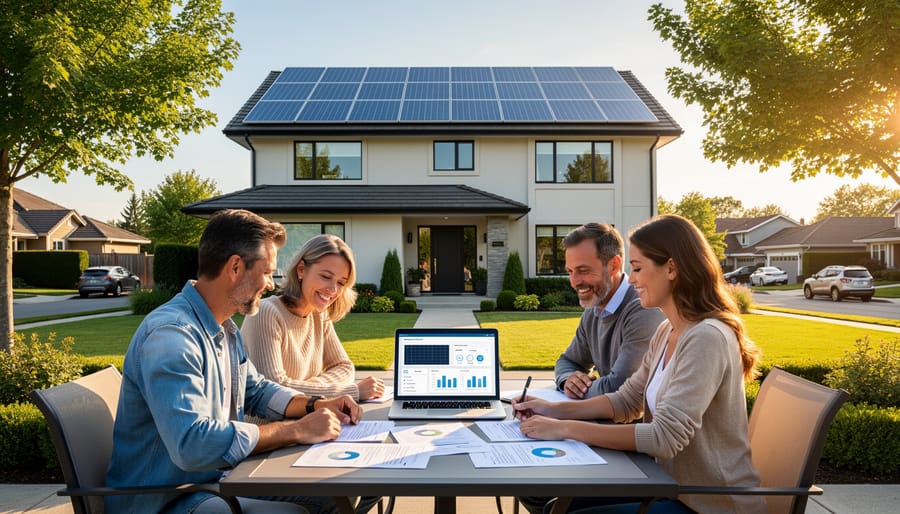
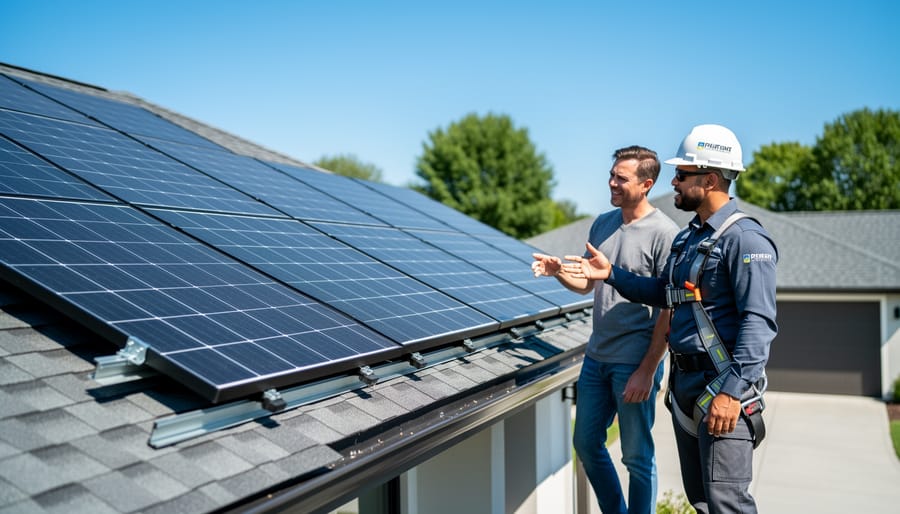
Florida homeowners who go solar join a growing community enjoying energy independence and reduced electricity costs.
You’ve made it this far, which tells me you’re serious about taking control of your energy future here in Florida. That’s exactly the mindset that helped me get started years ago, and I can tell you from experience that every journey begins with a single step.
Maybe your next move is exploring our solar calculators to crunch the numbers for your specific situation. Perhaps you’ll start small, installing a simple off-grid system for your shed or workshop to get comfortable with the technology. Or you might be ready to dive into planning a complete rooftop system that’ll drastically cut your electric bills and add real value to your home.
Whatever path you choose, remember you’re not doing this alone. Our community is filled with Florida residents who’ve faced the same questions, overcome the same challenges, and are eager to share what they’ve learned. Join the conversation, ask questions, and share your own experiences as you go.
Florida’s sunshine isn’t just a vacation selling point; it’s a genuine resource waiting to work for you. The incentives are there, the technology is proven, and the knowledge is accessible. The only question left is: when will you start your solar journey?
How useful was this post?
Click on a star to rate it!
Average rating 0 / 5. Vote count: 0
No votes so far! Be the first to rate this post.
We are sorry that this post was not useful for you!
Let us improve this post!
Tell us how we can improve this post?
charlesnoble
Here at Spheral Solar, I’m a hands-on solar power enthusiast, constantly exploring and experimenting with DIY solutions. I’m dedicated to sharing my discoveries, insights, and even the bumps I hit along the way, all in the pursuit of a more sustainable future.
How the Solar Tax Credit Puts Thousands Back in Your Pocket by Charlesnoble January 16, 2026 Claim up to 30% of your solar installation costs back from the federal government through the residential solar tax credit—officially called the Investment Tax Credit (ITC)—which applies to equipment, labor, and even permits when you install solar panels on your home. This credit directly reduces what you owe the IRS…
How I Built a Zero Energy Home Without Breaking the Bank by Charlesnoble November 14, 2025 **Imagine slashing your electricity bill to zero—permanently.** A zero energy home produces as much renewable energy as it consumes over the course of a year, transforming your house from an energy drain into a self-sustaining powerhouse. It’s not science fiction or reserved for millionaires; thousands of homeowners are already living…
Six Energy Sources That Work With Your Solar Panels… by Charlesnoble December 16, 2025 Harness the sun’s energy streaming onto your roof right now—solar panels convert sunlight into electricity that powers your home while slashing monthly utility bills. Capture moving air with residential wind turbines mounted on your property, generating supplemental power during breezy days and nights when solar production drops. Tap into the…
Your Dream Home Can Run on Pure Sunshine (Here’s How) by Charlesnoble October 12, 2025 Transform your home into a self-sustaining powerhouse that produces as much energy as it consumes. Zero-energy homes represent the pinnacle of sustainable living, combining advanced architectural design with cutting-edge renewable technology to eliminate utility bills while maximizing comfort. Through strategic implementation of benefits of solar energy, superior insulation, and smart…
UV Roof Coating Saved My Solar Setup (And Stopped a… by Charlesnoble April 28, 2026 Inspect your roof for cracks, blisters, or worn areas before applying any UV coating—these problem spots need repair first, or you’ll just be sealing in future leaks. I learned this the hard way when I rushed to coat my garage roof before installing my first solar array and ended up…
Solar Panel Maintenance Actually Costs Less Than You… by Charlesnoble November 20, 2025 Budget between $150 and $330 annually for basic solar panel maintenance—that’s typically what most homeowners spend keeping their systems running at peak efficiency. Compare this to the $0 you’ll pay in fuel costs, and you’ll quickly see why the benefits of solar energy far outweigh these minimal upkeep expenses. Inspect…
Subscribe for handpicked DIY projects, exclusive tips, and giveaways.
Nine times out of ten, an RV generator that won’t start has a stale fuel problem. If your generator hasn’t run in more than 30 days, degraded gasoline is likely gumming up the carburetor and preventing ignition. Before you panic or call for expensive roadside service, try this: turn on the generator’s fuel valve (if… Read more: RV Generator Troubleshooting: Common Problems and How to Fix Them
A 5kW solar system occupies between 250 and 350 square feet of roof or ground space and produces roughly 20 to 25 kilowatt-hours of electricity per day in most U.S. locations. That’s enough to power a typical three-bedroom home with moderate energy use, though your exact needs depend on your daily consumption patterns, climate zone,… Read more: How to Size a 5kW Solar System for Your Home or RV
Installing a home solar system yourself takes 2-4 weekends for an average 5kW setup, requires solid electrical knowledge and comfort working at heights, and can save you $5,000-$8,000 in labor costs if you tackle everything except the final utility interconnection. The process breaks down into five main phases: permitting and design, mounting the racking system,… Read more: Solar Power Installation Step by Step: Complete DIY Guide From Start to Finish