Why Your Parallel Battery Setup Isn’t Charging Evenly (And How to Fix It)
Updated:
Connect your parallel batteries to a single charge controller rather than using multiple controllers—this prevents voltage mismatches that cause one battery to overcharge while another sits partially drained. I learned this the hard way when my first dual-battery setup left one battery constantly undercharged because each controller operated independently, creating competing charging profiles.
Install a dedicated battery combiner or isolator between your parallel banks if you must use separate charge controllers. These devices automatically balance the charging load by monitoring voltage differentials and directing current where it’s needed most, ensuring each battery receives appropriate charge regardless of controller differences.
Verify all batteries in your parallel configuration are identical—same brand, capacity, age, and chemistry. Mixing different batteries creates internal resistance variations that no amount of clever wiring can fully compensate for. Even batteries from the same manufacturer but purchased months apart can develop charging imbalances over time.
Use appropriately sized interconnect cables between parallel batteries, following the principle that these cables should be at least as thick as your main power cables. Inadequate wiring creates voltage drops that compound charging imbalances, especially in larger systems with multiple solar system components.
Monitor individual battery voltages weekly during the first month of operation. This simple practice reveals developing imbalances before they become critical, allowing you to adjust your setup or identify failing batteries early. Most parallel charging issues manifest gradually, giving you time to intervene if you’re paying attention.
The Parallel Battery Charging Problem Nobody Talks About
Multiple batteries connected in parallel share the charging load, but unequal current distribution can lead to performance issues if not properly configured.
Why Current Takes the Path of Least Resistance
Here’s something I learned the hard way during one of my early solar setups: electricity is remarkably lazy. It always takes the easiest route available, and when you connect batteries in parallel, this can create some unexpected problems.
Think of current flow like water running downhill. Water doesn’t split evenly between two paths; it rushes down whichever slope offers less resistance. Electricity behaves exactly the same way.
Every battery has what’s called internal resistance, which is basically how much the battery fights against current flowing through it. This resistance changes based on several factors. A brand-new battery typically has lower internal resistance than an older one. A warm battery offers less resistance than a cold one. And here’s the kicker: a partially discharged battery often has higher internal resistance than a fully charged one.
When you connect multiple batteries in parallel and hook them up to a single charge controller, the current naturally gravitates toward the battery with the lowest resistance. This means one battery might receive 70% of the charging current while its neighbor gets only 30%, even though they’re wired identically.
I’ve watched my friend Mark scratch his head over why one battery in his three-battery bank was constantly overheating while the others barely got warm. The culprit? Uneven current distribution caused by mismatched internal resistances. Understanding this principle is your first step toward solving parallel charging challenges.
The Age and Temperature Factor
Here’s something I learned the hard way during a winter project: not all batteries are created equal, even when they’re the same model. When you connect batteries in parallel, age and temperature differences can cause some real headaches.
Older batteries naturally have higher internal resistance than newer ones, which means they’ll charge and discharge at different rates even in a parallel setup. I once mixed a two-year-old battery with a brand new one in my garage system, and the older battery was constantly lagging behind, working harder than it should.
Temperature plays an equally important role. A battery sitting in direct sunlight can be 20 degrees warmer than one in the shade, and that temperature difference changes how efficiently it accepts charge. Warmer batteries charge faster initially but can also degrade quicker, while colder ones are more sluggish.
Even manufacturing variations between supposedly identical batteries can create imbalances. Small differences in internal resistance or capacity mean one battery might reach full charge while its partner is still catching up.
The practical takeaway? Try to use batteries of similar age, keep them at the same temperature, and whenever possible, buy them from the same production batch. Your parallel system will thank you with longer life and better performance.
What Are Parallel Charge Controllers?
Single vs. Multiple Controller Setups
When I first expanded my solar setup, I faced this exact dilemma: should I upgrade to one beefy charge controller or add another smaller one alongside my existing unit? Turns out, both approaches work, but they each have distinct advantages depending on your situation.
The single large controller approach is the cleaner option. You’re essentially sizing your charge controller to handle your entire solar array from the start. This means fewer connection points, simpler wiring, and only one device to monitor and maintain. Plus, there’s no concern about controllers competing with each other since everything flows through one brain. The downside? Upfront cost can be steep, and if that single controller fails, your entire charging system goes down until you replace it.
Multiple smaller controllers in parallel offer flexibility and redundancy. I personally love this approach for gradual system expansion because you can add charging capacity as your budget allows. If one controller fails, the others keep working, maintaining partial charging capability. You’re also spreading the heat load across multiple devices, which can extend their lifespan.
However, running multiple controllers requires careful attention to settings. Each controller must have identical voltage parameters to prevent them from fighting each other during charging transitions. I’ve seen systems where mismatched settings caused one controller to finish charging while another was still bulk charging, creating inefficiency. The extra wiring also means more potential failure points and a slightly messier installation.
For most DIYers starting fresh, a single appropriately sized controller makes sense. But if you’re expanding gradually or want backup redundancy, multiple controllers can work beautifully.
When You Actually Need Parallel Controllers
Let me be honest with you—most backyard solar setups don’t actually need parallel controllers. A single quality controller handles multiple batteries just fine. But there are some situations where parallel controllers genuinely make sense.
If you’re building an expandable system, parallel controllers shine. I started with a small weekend cabin setup using one 30A controller and two batteries. When I added panels three years later, I simply installed a second controller rather than replacing everything. Each controller manages its own battery pair, and I can keep expanding as my budget allows. It’s like building with LEGO blocks instead of pouring concrete.
Large battery banks beyond 400-500Ah really benefit from parallel controllers too. My neighbor runs an off-grid workshop with eight batteries divided into two banks of four. Each bank gets its own 60A controller. If one controller fails, half his system keeps running—he’s not completely in the dark.
Mixed solar arrays are another solid use case. Maybe you have panels on both your garage (facing east) and shed (facing west). Separate controllers let each array work independently, capturing morning and evening sun without the stronger array dragging down the weaker one. This actually happened at my place, and the improvement was noticeable—about 15% more daily charging during shoulder seasons.
Current-Sharing Strategies That Actually Work
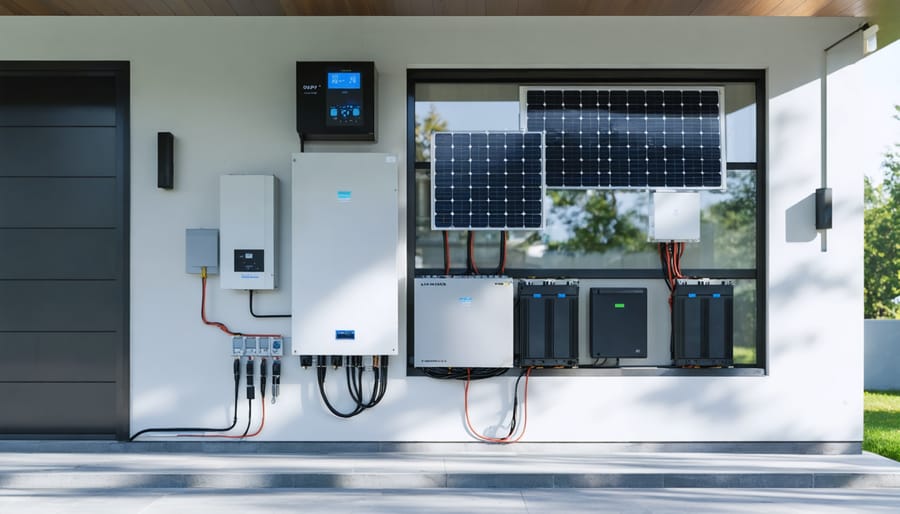
Multiple charge controllers working in parallel can distribute the charging load, but proper configuration ensures balanced current delivery to the battery bank.
The Simple Bus Bar Method
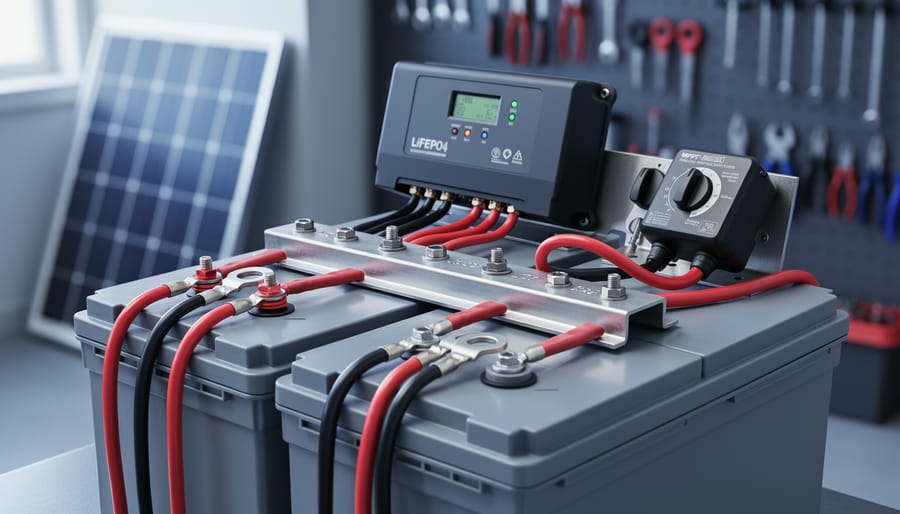
The bus bar method is one of the most effective ways to charge parallel batteries evenly, and it’s surprisingly simple once you understand the basic principle. Think of a bus bar as a central distribution hub—instead of connecting batteries in a daisy chain (which creates unequal resistance paths), you connect each battery directly to a common conductor.
Here’s how it works: Install two bus bars—one for positive connections and one for negative. Each battery gets its own dedicated wire running to these bars, and importantly, all these wires should be the same length and gauge. This creates equal resistance paths from the charging source to each battery, promoting balanced current distribution.
Charles learned this lesson the hard way during his first parallel battery setup. “I just connected everything in the easiest way possible, shortest routes and all,” he recalls. “Three months later, one battery was cooked while another barely seemed to charge. That’s when I discovered the equal-distance rule.”
The equal-distance principle is critical. Measure the distance from your bus bars to the farthest battery, then cut all your connecting wires to that same length—even if it means some batteries have extra wire coiled up. Yes, it feels wasteful, but the electrical balance is worth it.
For wire gauge selection, use the same thickness for all battery connections. If you’re working with a 400Ah parallel bank, 2 AWG or 4 AWG wire is typically appropriate, but always consult a wire sizing chart based on your total current and distance. The charging controller output connects to the bus bars, not directly to individual batteries, ensuring the current splits evenly across all paths before reaching your battery bank.
Diode-Based Current Balancing
When I first started working with parallel battery setups, I kept running into a frustrating problem: one battery would finish charging while the others lagged behind. A solar buddy of mine suggested trying isolation diodes, and it made a real difference in how my system performed.
Isolation diodes, also called blocking diodes, are simple semiconductor devices that act like one-way valves for electricity. They allow current to flow in one direction (from your charge controller to the battery) while blocking it from flowing backward. In a parallel battery system, this means each battery gets its own dedicated charging path through its own diode.
Here’s how they help with balancing: when one battery reaches full charge before the others, the diode prevents it from accepting more current or discharging back into the charging circuit. Meanwhile, the batteries that need more charge continue receiving current. This naturally encourages a more balanced charge distribution across your battery bank.
The main trade-off to consider is voltage drop. Every diode consumes a small amount of voltage as current passes through it, typically between 0.3 to 0.7 volts depending on the type. While this might seem minor, it’s something to account for when sizing your solar panels and charge controller. For a 12-volt system, that half-volt loss means your charge controller needs to compensate by outputting slightly higher voltage to ensure your batteries reach full charge.
Schottky diodes are popular for this application because they have lower voltage drops (around 0.3 volts) compared to standard silicon diodes, making them more efficient for battery charging applications.
Active Current-Sharing Controllers
Here’s where things get really exciting. Active current-sharing controllers are the sophisticated option for parallel battery charging, and they’re changing the game for DIY solar enthusiasts who want the best performance from their systems.
Think of these smart controllers as teammates that constantly communicate with each other. Instead of just passively limiting current through diodes or resistors, they actively coordinate to ensure each battery receives exactly the right amount of charge at the right time. They share data about voltage, current, and temperature, then adjust their output in real-time to balance the load perfectly.
I remember when I first installed a Victron system with their VE.Can network capability. The difference was immediately noticeable. Each controller knew what the others were doing, and they worked together like a well-rehearsed orchestra. My battery bank stayed balanced, and charging efficiency improved noticeably compared to my previous setup.
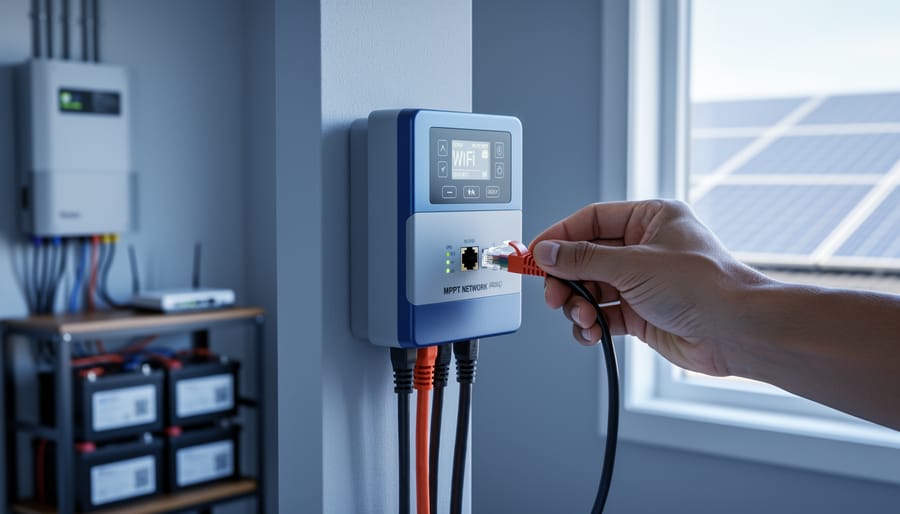
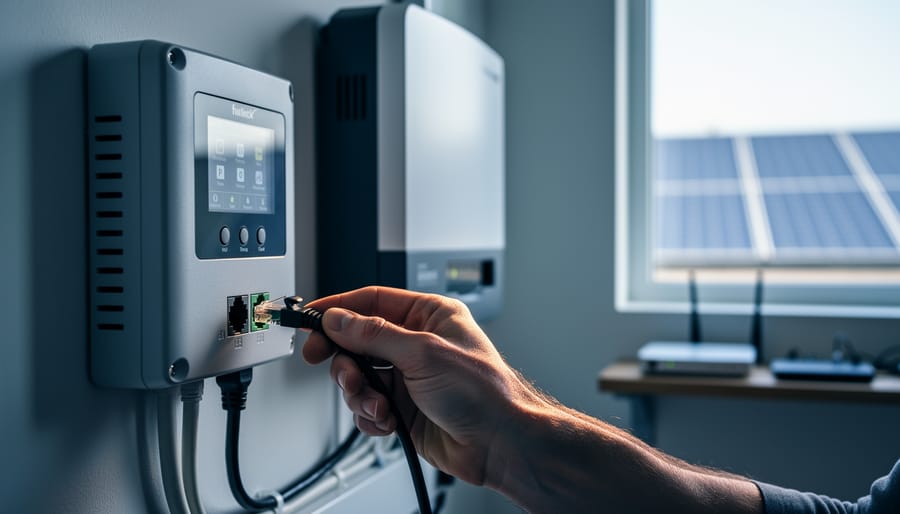
Several manufacturers offer these quality charge controllers with communication capabilities. Victron leads the pack with their VE.Can and VE.Smart networking systems, allowing multiple controllers to share voltage and temperature data wirelessly or through cables. Morningstar offers their MSView software for monitoring and coordinating multiple TriStar controllers. OutBack Power’s FLEXnet system provides similar functionality for their charge controller lineup.
The real beauty of these systems is their adaptability. If one battery needs more attention due to temperature differences or slight capacity variations, the controllers automatically adjust. Some systems even allow you to monitor and configure everything from your smartphone, giving you unprecedented control over your charging strategy.
The investment is higher than passive solutions, but for serious solar setups with multiple batteries and controllers, the improved performance and battery longevity make it worthwhile.
The Battery Management System (BMS) Approach
Modern lithium batteries have changed the game when it comes to parallel charging, and here’s where Battery Management Systems really shine. I learned this the hard way when I first set up my off-grid cabin—my old lead-acid setup didn’t need much babysitting, but when I upgraded to lithium, I quickly discovered these batteries are much smarter and, frankly, a bit pickier about how they’re charged.
A BMS is essentially the brain inside each lithium battery, monitoring cell voltages, temperatures, and current flow. When you’re charging batteries in parallel, each BMS independently manages its own battery pack, which is both a blessing and a challenge. The good news? Each battery protects itself from overcharging, over-discharging, and temperature extremes. The tricky part? Different BMS units might have slightly different cutoff voltages or charging profiles, which can lead to some batteries finishing earlier than others.
Here’s what actually happens: Your charge controller sends power to your parallel battery bank, and each BMS decides whether to accept that charge based on its internal parameters. If one BMS cuts off charging at 14.4V while another allows 14.6V, you’ll get uneven charging cycles. This isn’t necessarily dangerous—the BMS systems prevent damage—but it does mean you might not be using your full battery capacity.
The solution is choosing batteries with compatible BMS specifications and ensuring your charge controller can communicate with them properly. Many modern setups use CAN bus or RS485 communication protocols, allowing the charge controller and BMS to “talk” to each other and coordinate charging strategies for optimal performance across your entire parallel bank.
Setting Up Your Parallel Charging System the Right Way
Wire Sizing and Connection Points
Getting your wire sizing right is absolutely crucial for safe, efficient parallel battery charging. I learned this the hard way when I first set up my system and wondered why one battery always seemed warmer than the others—turns out my wimpy 10-gauge wire was the culprit!
For most DIY solar setups with parallel batteries, you’ll want to use at least 2/0 AWG (that’s double-aught) wire for the main connections between batteries if you’re running a typical 12V system with significant current flow. The key principle here is simple: thicker wires mean less resistance, which means more equal current distribution. Think of it like water flowing through pipes—the bigger the pipe, the easier the water flows.
Here’s where many folks go wrong: daisy-chaining. This is when you connect Battery 1 to Battery 2, then Battery 2 to Battery 3, and so on. Don’t do it! The battery closest to your charge controller gets hit with all the current first, while the last battery in the chain barely gets a trickle. Instead, use a proper bus bar setup where each battery connects directly to a common point—positive terminals all connect to the positive bus bar, negative terminals all connect to the negative bus bar.
Your charge controller should then connect to these bus bars, not directly to any individual battery. This ensures every battery sees the same voltage and receives current based on its actual state of charge rather than its physical position in your battery bank. It’s the difference between fair distribution and battery favoritism!
Proper bus bar configuration with equally-spaced connection points is essential for balanced current distribution across parallel batteries.
Controller Programming and Settings
When you’re running multiple charge controllers to handle parallel batteries, getting them to play nicely together requires some thoughtful configuration. I learned this the hard way when I first expanded my own solar setup and wondered why one battery bank was always topping off before the others.
The key is ensuring all your controllers use identical charge controller settings. Start with voltage setpoints, which are absolutely critical. Your bulk, absorption, and float voltages must match exactly across all units. Even a 0.1-volt difference can cause one controller to finish charging while another keeps pushing current, leading to uneven wear on your batteries.
For a typical 12V lead-acid system, you might set bulk at 14.4V, absorption at 14.6V, and float at 13.6V. The exact numbers depend on your battery chemistry, so check your manufacturer’s specs. If you’re using lithium batteries, these numbers will be different, typically around 14.2V for bulk/absorption and 13.6V for float.
Timing matters too. Set your absorption duration identically on each controller, usually between 1-3 hours depending on battery type. Some folks prefer slightly shorter times to reduce stress on the batteries.
Temperature compensation is another setting that needs synchronization. If one controller compensates for temperature and another doesn’t, you’ll get mismatched charging behavior. Either enable it on all units or disable it completely.
Here’s a pro tip from my experience: write down your settings before programming each controller. It sounds obvious, but it prevents those facepalm moments when you realize controller number three has different parameters than the first two.
Monitoring Your System
Keeping tabs on your parallel battery system doesn’t require fancy equipment, but it does need regular attention. I learned this the hard way when one of my batteries in a three-battery setup was quietly underperforming for weeks before I noticed. Now I check weekly, and it takes about five minutes.
Start by measuring the voltage of each battery individually while they’re charging. They should read within 0.1-0.2 volts of each other. If one battery consistently shows lower voltage, it’s not receiving its fair share of current. A simple multimeter works perfectly for this, and you can pick one up for under twenty dollars.
Next, track the temperature of each battery during charging. Feel them with your hand or use an infrared thermometer. One battery running noticeably warmer than the others signals an imbalance or internal resistance issues.
I keep a simple spreadsheet with voltage readings for each battery every weekend. You could also use your phone’s notes app or even a paper logbook. The key is consistency. After a month, you’ll see patterns emerge that reveal which batteries might need attention.
Watch for these red flags: batteries that finish charging at different times, one that consistently reads lower voltage, or unusual warmth during charging. Catching these early prevents bigger problems down the road.
Common Mistakes That Kill Battery Performance
Mixing Old and New Batteries
I learned this lesson the hard way during my first solar expansion. I added a shiny new battery alongside my two-year-old units, thinking they’d all work harmoniously together. Within months, I noticed the old batteries heating up more during charging while the new one barely broke a sweat.
Here’s what happens: batteries age differently, developing unique internal resistances and capacity losses. When you parallel mix old and new batteries, the newer one with lower internal resistance accepts charge more readily, while the older batteries struggle to keep up. This creates an unbalanced system where some batteries overcharge while others remain undercharged. Over time, this mismatch accelerates degradation in all batteries, actually shortening the lifespan of your entire bank.
When is mixing acceptable? If your batteries are within six months of age and from the same manufacturer with identical specifications, you’ll probably be fine. The performance differences will be minimal enough that your charge controllers can manage the variation.
When should you absolutely avoid it? Never mix batteries that differ by more than a year in age, have different capacities, or come from different brands. The stress on both old and new batteries simply isn’t worth the temporary cost savings. Instead, retire the old batteries to a separate, smaller system or recycle them responsibly.
Unequal Wire Lengths
Here’s something I learned the hard way during my first parallel battery setup: I thought a few extra inches of wire wouldn’t matter. Turns out, even small differences in cable length create measurable resistance imbalances that affect how your batteries charge.
When one battery has a 3-foot cable and another has a 5-foot cable, the longer wire adds extra resistance. This means the battery with the shorter cable receives more current during charging, while the one with the longer cable gets shortchanged. Over time, this imbalance causes the batteries to drift apart in their state of charge.
The solution is surprisingly simple: measure carefully and cut all cables to identical lengths. If your physical layout makes equal lengths tricky, you can intentionally route the shorter path with extra wire to match the longest required run. Yes, it seems wasteful, but that extra copper ensures balanced charging across your entire battery bank. I’ve seen systems where a 2-foot difference caused one battery to consistently reach full charge 30 minutes before the others, significantly reducing the lifespan of the overworked battery.
Ignoring Temperature Compensation
Here’s something I learned the hard way during a winter camping trip with my solar setup: temperature dramatically affects battery charging, and when you’re running batteries in parallel, ignoring this can create real problems. Most quality charge controllers include temperature compensation, adjusting voltage based on battery temperature to prevent overcharging in hot conditions or undercharging in cold ones.
In a parallel battery setup, here’s the catch – you only get one temperature sensor. Where you place it matters enormously. I’ve seen folks stick the sensor on the nearest battery and call it done, but that battery might be in direct sunlight while its parallel partner sits in shade, experiencing completely different temperatures.
The best practice? Place your temperature sensor on the battery that’s likely to experience the most extreme temperatures, or better yet, position it where it can read an average temperature between all your batteries. Some DIYers even create a small insulated box housing multiple batteries together to minimize temperature variations. If your batteries are spread out across different locations or environments, you might need to reconsider your physical layout before worrying about charge controller settings. Temperature differences of just 10-15 degrees between parallel batteries can lead to significantly uneven charging over time.
Regular monitoring with a multimeter helps detect charging imbalances before they damage your battery bank.
Choosing the Right Strategy for Your Setup
Now that you understand the current-sharing approaches available, let’s talk about picking the right one for your situation. I learned this lesson the hard way when I initially overbuilt my first battery bank expansion, spending twice what I needed because I assumed complex meant better.
Your choice really comes down to three main factors: your technical comfort level, budget constraints, and how much you’re willing to tinker with your system going forward.
If you’re just starting out or working with a modest budget (under $500 for the entire charging setup), the matched charge controller approach is your friend. It’s straightforward, requires minimal electrical knowledge, and works reliably as long as you keep your controllers identical and configured the same way. The downside? You’ll need to replace them all together if one fails, and you’re locked into that specific model for future expansions.
For those of you comfortable with some basic wiring and looking at mid-range budgets ($500-1500), diode isolation offers excellent protection at reasonable cost. This was my go-to for years before I needed more sophisticated control. You’ll sacrifice about 5-10% efficiency due to voltage drop across the diodes, but you gain peace of mind knowing your batteries are protected from backfeeding issues.
The ideal diode method sits right between these options, offering better efficiency than standard diodes with only slightly more complexity.
Here’s my practical decision framework: Choose matched controllers if your system is under 1000 watts total and you value simplicity. Go with diode isolation if you’re mixing panel types or brands and need foolproof protection. Consider active balancers or centralized charge distribution if you’re building a system over 2000 watts or plan significant future expansion.
One final thought from my experience: start simple. You can always add complexity later as your needs grow and your confidence builds. The best system is the one you understand well enough to troubleshoot yourself.
Getting parallel battery charging right doesn’t have to be complicated, but it does require understanding how current flows and being intentional about your setup. Whether you’ve chosen to match your controller sizes, use a battery combiner, or go with a DC distribution panel, the goal remains the same: giving each battery bank the attention it deserves.
I encourage you to take a few minutes this weekend to check your own system. Are your batteries showing similar voltage levels? Do your charge controllers display roughly equal charging currents? These simple observations can tell you a lot about whether your parallel setup is working as it should.
Over in our community forums, folks share creative solutions all the time. Someone recently posted about using colored cable ties to track which controller feeds which battery, making troubleshooting so much easier. These little insights from real experiences are invaluable.
Here’s something I’ve learned after years of tinkering with solar setups: there’s always more to discover. Just when I think I’ve figured everything out, someone shares a new approach or I run into a scenario I hadn’t considered. That’s what makes this DIY solar journey exciting. Keep experimenting, stay curious, and don’t hesitate to share what works for you.
How useful was this post?
Click on a star to rate it!
Average rating 0 / 5. Vote count: 0
No votes so far! Be the first to rate this post.
We are sorry that this post was not useful for you!
Let us improve this post!
Tell us how we can improve this post?
charlesnoble
Here at Spheral Solar, I’m a hands-on solar power enthusiast, constantly exploring and experimenting with DIY solutions. I’m dedicated to sharing my discoveries, insights, and even the bumps I hit along the way, all in the pursuit of a more sustainable future.
Your Solar Setup’s Hidden Vulnerability: Why 5G… by Charlesnoble April 3, 2026 Disconnect your 5G-enabled charge controller from the internet when you’re not actively monitoring it—this single step eliminates 80% of remote attack vectors while still allowing you to check in when needed. Change every default password on your solar monitoring system the day you install it, using unique 16-character combinations that…
Why a 9kW Solar System with Batteries Could Be… by Charlesnoble November 23, 2025 Calculate your actual energy consumption before committing to a 9kW solar system with batteries. Pull your last 12 months of electricity bills, add up the total kilowatt-hours used, and divide by 365 to get your daily average. Most households consuming 25-35 kWh daily find a 9kW system hits the sweet…
Your Solar Charge Controller Could Be Hacked (Here’s… by Charlesnoble May 1, 2026 Disconnect your charge controller from the internet immediately if you haven’t changed the default password—this single action prevents approximately 80% of automated attacks targeting smart solar systems. Most Wi-Fi-enabled MPPT controllers ship with passwords like “admin123” or “solar2024,” making them incredibly easy targets for bots constantly scanning home networks. Change…
Why Your 8kW Off-Grid Solar System Might Be Wasting… by Charlesnoble December 17, 2025 Calculate your actual daily energy consumption in watt-hours before investing a single dollar—not your estimated usage, but real measurements taken over at least two weeks using a kill-a-watt meter on every circuit. An 8kW off-grid system produces roughly 32-40 kWh daily under ideal conditions, but real-world performance drops 20-30% due…
Why Your DIY Solar Setup Could Be a Hacker’s Next… by Charlesnoble February 14, 2026 Disconnect your charge controller from the internet immediately if you’re not actively monitoring it—most DIY solar setups don’t need constant connectivity, and an offline system can’t be hacked remotely. Change every default password on your solar equipment right now, using unique 15+ character combinations that include numbers, symbols, and mixed-case…
Every Component Your Solar Panel System Actually… by Charlesnoble November 26, 2025 Picture this: you’re standing in front of a solar panel, ready to harness free energy from the sun, but you’re not quite sure what else you need to make it actually work. I’ve been there. When I first started tinkering with solar in my garage, I quickly learned that panels…
Subscribe for handpicked DIY projects, exclusive tips, and giveaways.
There is something special about a mature tree. Decades of growth, shade that actually cools the house, branches that the kids climbed, a root system that has quietly held the yard together through every storm. So when circumstances force a move, whether it is a home renovation, a new driveway, or a construction project that… Read more: How to Move a Mature Tree Without Killing It: The Complete Relocation Guide
A mass energy conversion calculator lets you determine how much energy is locked inside any amount of matter using Einstein’s famous equation E=mc². Whether you’re working on a physics assignment or simply curious about the enormous energy potential in everyday objects, the calculation itself takes just seconds once you understand the formula’s three components: energy… Read more: How to Use a Mass Energy Conversion Calculator (Step-by-Step Guide)
Low voltage circuit protection in DIY solar systems boils down to matching the right fuse or breaker to your wire size and expected current, not to the capacity of your battery bank or inverter. Most fires and equipment failures happen when people oversize protection devices, thinking bigger is safer, when the opposite is true. Your… Read more: How to Size Low Voltage Circuit Protection for Your DIY Solar System