Why Your Next Outdoor Water Pump Should Run on Sunshine
Updated:
Picture this: You’re standing in your garden on a sunny afternoon, watching crystal-clear water flow effortlessly from your well to your vegetable beds—no extension cords snaking across the lawn, no monthly electricity bills, and no guilt about your carbon footprint. That’s the promise of solar powered outdoor water pumps, and it’s more accessible than you might think.
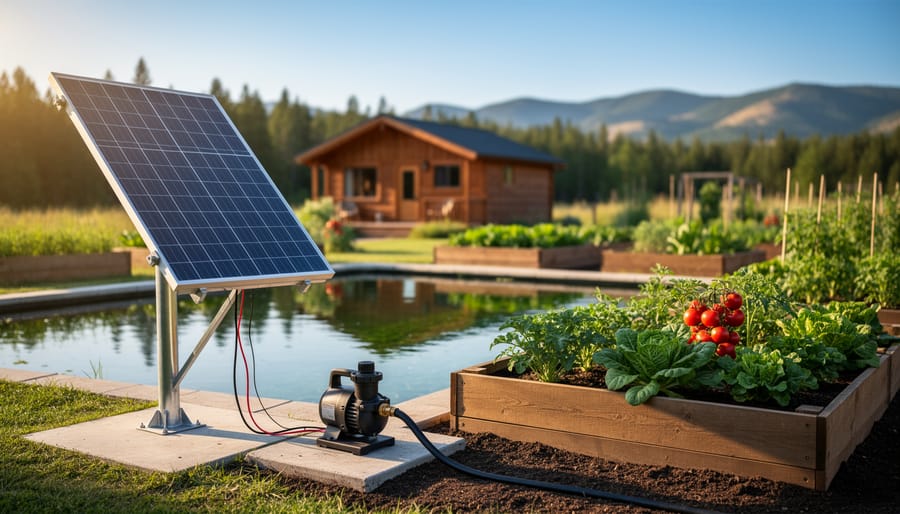
Solar water pumps harness energy directly from the sun to move water wherever you need it, whether that’s irrigating remote garden beds, filling livestock troughs on acreage without grid access, keeping your pond circulating, or providing reliable water at your off-grid cabin. Unlike their grid-dependent cousins, these systems offer genuine freedom: install them anywhere the sun shines, and they’ll work tirelessly without ongoing costs or complex electrical hookups.
The technology has matured beautifully over the past decade. What once required expensive custom installations and specialized knowledge now comes in straightforward DIY-friendly packages that weekend warriors can set up in an afternoon. Modern solar pumps range from compact fountain pumps powered by small panels to robust submersible systems that can lift hundreds of gallons per hour from deep wells.
Whether you’re dipping your toes into solar energy for the first time or you’re already powering half your homestead with renewable energy, understanding how these pumps work and which system fits your specific situation will save you money, frustration, and countless trips to haul water manually. Let’s demystify the options together.
What Makes Solar Water Pumps Perfect for Outdoor Use
A complete solar water pump system combines a solar panel with a submersible or surface pump, requiring no grid connection for remote water sources.
The Simple Science Behind Solar Pumping
When I first started exploring solar water pumping, I thought it would be incredibly complex—but the beauty of these systems is their elegant simplicity. Think of a solar pump setup as three friends working together in perfect harmony.
First, you’ve got the solar panel—your energy collector. Just like a plant capturing sunlight for photosynthesis, the panel converts sunlight into electricity. When photons from the sun hit the panel’s cells, they knock electrons loose, creating an electrical current. More sunlight equals more power, which is why sunny days give you stronger water flow.
Next comes the pump controller, which I like to call the “traffic cop” of your system. This smart device regulates the electricity flowing from your panel to the pump, ensuring everything runs smoothly and protecting your pump from power surges or low-voltage situations. Some advanced controllers even include battery management systems if you’re storing excess energy.
Finally, there’s the pump itself—the muscle of your operation. Here’s where understanding DC versus AC matters. DC (direct current) pumps are the go-to choice for most DIY solar setups because they run directly off solar panel power without conversion. They’re simpler, more efficient, and perfect for smaller applications like garden fountains or livestock watering. AC (alternating current) pumps, which run on household-style electricity, require an inverter to convert DC solar power to AC—adding complexity and energy loss, though they’re sometimes necessary for larger commercial operations.
Together, these three components create a self-contained, eco-friendly pumping solution that just works.
Where Solar Pumps Shine Brightest
Solar pumps really come into their own in situations where traditional electricity is expensive, impractical, or simply unavailable. I’ve seen these systems transform how people approach water management in off-grid scenarios, and the applications are wonderfully diverse.
For livestock owners, solar pumps are absolute game-changers. They provide reliable watering for cattle, horses, sheep, and other animals in remote pastures where running electrical lines would cost thousands. Pair them with solar electric fencing, and you’ve got a completely off-grid livestock management system. I know a rancher who eliminated his monthly electricity bills for three pasture water tanks simply by switching to solar pumps.
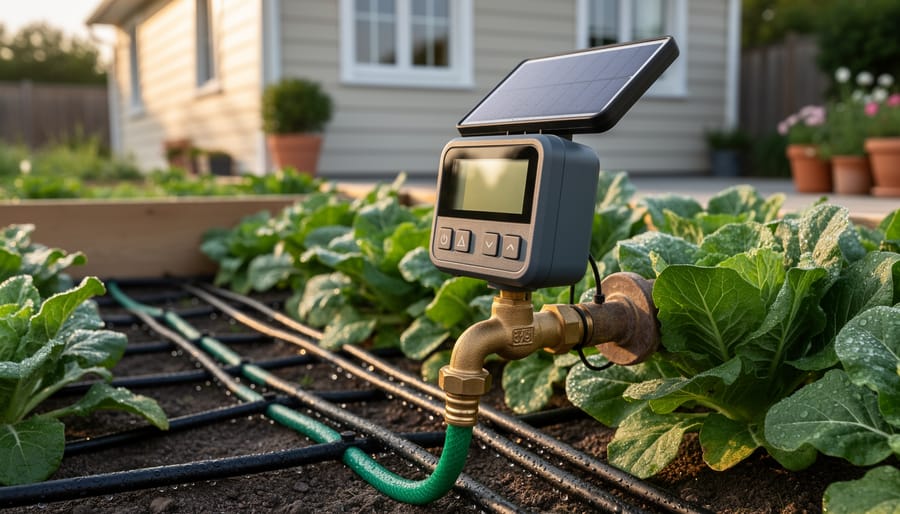
Garden enthusiasts find tremendous value in solar irrigation pumps, especially for larger plots where hand-watering becomes tedious. These systems work beautifully with solar drip irrigation systems to deliver consistent moisture exactly when your plants need it most, during sunny daylight hours.
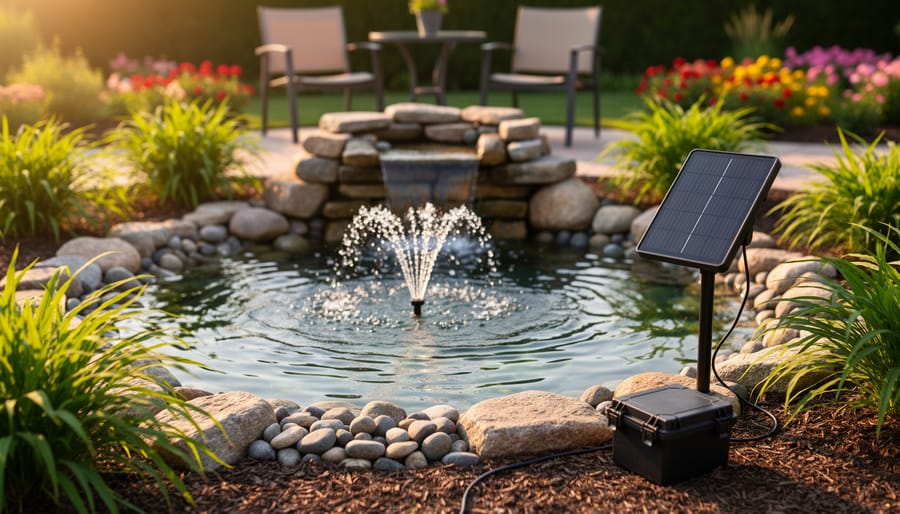
Pond owners use solar pumps for aeration, keeping fish healthy and preventing algae buildup without adding to their electric bill. The pumps run during peak sunlight when photosynthesis increases oxygen demand in the water, creating a naturally balanced system.
For outdoor adventurers, portable solar pumps provide clean water at campsites near lakes or streams. They’re lightweight, reliable, and eliminate the need for manual pumping or battery replacements.
Emergency preparedness enthusiasts appreciate solar pumps as backup water sources during power outages. Whether drawing from a well, stored rain barrel, or nearby pond, these systems provide crucial water access when conventional infrastructure fails.
Remote cabin owners might find the most practical application of all, using solar pumps to deliver running water without generator noise or fuel costs, making off-grid living significantly more comfortable and sustainable.
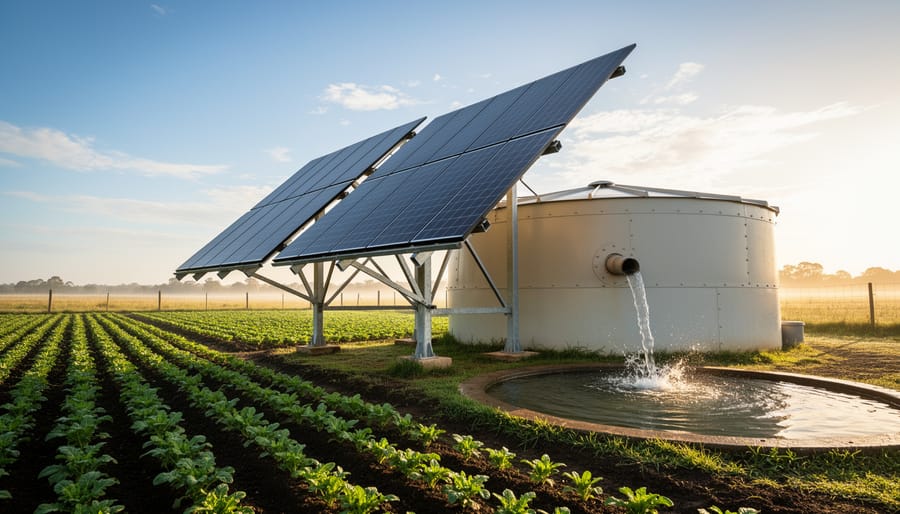
Solar water pumps excel at providing reliable water for livestock in remote pastures without access to electrical infrastructure.
Choosing the Right Solar Water Pump for Your Needs
Calculating Your Water Requirements
Before you pick out your solar pump, you need to figure out what it actually needs to do. I learned this lesson the hard way on my first attempt – I grabbed what looked like a powerful pump without doing the math, and it couldn’t quite reach my garden beds uphill. Let me walk you through the simple calculations that’ll save you from making the same mistake.
Start with your daily water needs. How many gallons do you use each day? For a small garden, you might need 50-100 gallons daily. Livestock varies by animal – a horse needs about 10-12 gallons per day, while chickens need far less. Add up all your uses and give yourself a 20% buffer for those extra-thirsty summer days.
Next, measure your head height – that’s how high the water needs to climb from its source to where you’re using it. Grab a tape measure and calculate the vertical distance from your water source to the highest delivery point. Don’t measure the diagonal distance along your pipe; only the straight vertical rise matters here.
Finally, determine the horizontal distance your water travels. This affects friction loss in your pipes, which means you’ll need a slightly more powerful pump for longer runs.
Here’s where things get easier: Spheral Solar offers a free calculator tool that does all this math for you. Just plug in your measurements, and it’ll recommend the right pump size and solar panel configuration for your specific situation. No complicated formulas required – just accurate measurements and honest estimates of your water needs.
Accurately measuring head height and distance helps determine the pump specifications needed for your specific water delivery requirements.
Matching Solar Panel Size to Pump Power
Getting the right match between your solar panel and pump is like pairing the perfect dance partners—they need to work in harmony. I learned this the hard way when I first tried powering a pond pump with an undersized panel. The pump sputtered along during midday but gave up completely on cloudy afternoons, leaving my fish quite unhappy with me.
Here’s the straightforward approach: look at your pump’s wattage rating and multiply by 1.5 to account for efficiency losses and less-than-ideal sun conditions. A small decorative fountain running on a 10-watt pump? A 50-watt solar panel will keep it bubbling cheerfully all day. But if you’re pumping water for a few chickens or goats from a shallow well, that 75-watt pump needs at least a 100-120 watt panel to handle the job reliably.
Sizing your solar panel correctly from the start saves frustration and money down the road. Pay attention to the pump’s peak demand—some pumps spike when starting up, requiring extra capacity.
Battery backup makes a world of difference if you need water during early mornings or overcast days. A 12V deep-cycle battery paired with a charge controller stores excess solar energy for when you need it. For my garden drip irrigation system, adding a simple 35Ah battery meant consistent watering schedules regardless of weather.
Pro tip: Check your panel’s voltage matches your pump’s requirements. Most outdoor water pumps run on 12V or 24V DC systems. The math isn’t complicated, but getting it right the first time means your system works smoothly from day one.
Types of Solar Outdoor Water Pumps (And When to Use Each)
Surface Pumps for Shallow Water Sources
Surface pumps are perfect for folks working with shallow water sources—think ponds, streams, rain barrels, or shallow wells up to about 20 feet deep. These pumps sit above the water line and draw liquid up through an intake hose, making them incredibly versatile for outdoor projects.
For decorative applications, fountain pumps create beautiful water features in your garden pond while running completely free on solar power. I’ve helped several community members set up these systems, and they’re always amazed at how a simple 10-20 watt solar panel can keep their fountain bubbling all day.
Transfer pumps handle the heavy lifting when you need to move water from one location to another—perfect for filling livestock troughs from a nearby creek or irrigating raised garden beds from rain barrels. These typically offer flow rates between 200-500 gallons per hour, depending on your solar panel size and pump specifications.
Utility pumps are your go-to workhorses for general water movement tasks. They’re great for draining flooded areas, transferring stored rainwater, or managing water in remote locations where grid power isn’t available. Most solar utility pumps can handle debris-laden water better than fountain pumps, making them ideal for real-world outdoor conditions.
The beauty of surface pumps is their simplicity—no complex installation, easy maintenance, and straightforward troubleshooting when issues arise.
Submersible Pumps for Deep Wells and Tanks
Deep-well submersible pumps are the heavy-duty champions of solar water pumping, designed for serious applications where water needs to be lifted from 100 feet or more below ground. These pumps sit completely underwater at the bottom of your well, pushing water upward through connected piping to the surface.
I’ll be honest with you—these systems represent a significant investment, typically ranging from $1,500 to $5,000 or more depending on depth and flow requirements. But when you’re dealing with a remote property without grid access, or facing astronomical electricity bills from conventional well pumps, the numbers start making sense. Check out our guide to the best solar well pumps to understand what features justify the cost.
Installation isn’t a casual weekend project. You’ll need proper well access, appropriate pipe sizing (usually 4-inch minimum diameter wells), and often professional assistance for the actual pump installation. The solar array itself can be DIY-friendly, but dropping a pump hundreds of feet down requires careful planning.
These systems shine for permanent water solutions—whole-house supply, livestock operations, or irrigation systems where reliability matters more than portability.
Diaphragm and Piston Pumps for Reliability
When you’re dealing with livestock watering or pumping from ponds and streams that might have debris, diaphragm and piston pumps are your heavy-duty champions. I learned this the hard way at my cousin’s ranch—after watching three submersible pumps clog up from sediment, we switched to a diaphragm pump and haven’t looked back in five years.
These pumps work differently from their submersible cousins. Diaphragm pumps use a flexible membrane that moves back and forth, creating pressure to push water through. Piston pumps, similar to your car engine, use a plunger action. Both designs excel at handling water that’s less than pristine—small sticks, sand, algae—things that would kill a centrifugal pump in days.
The ruggedness comes with a trade-off in efficiency. Diaphragm and piston pumps typically move less water per watt of solar power compared to submersible pumps, making them better suited for applications where you need reliability over volume. Think livestock troughs, remote cabin supply, or emergency backup systems rather than irrigating large gardens.
Maintenance is straightforward but necessary. You’ll need to inspect and replace diaphragms or piston seals annually—a 20-minute job that costs around 20 to 40 dollars. The pump housings themselves often last decades if you perform basic winterization in cold climates (draining water to prevent freeze damage). Many models have replaceable check valves that prevent backflow, and these should be cleaned seasonally.
The peace of mind knowing your water keeps flowing even in challenging conditions makes these pump types worth considering for serious outdoor applications.
Installing Your Solar Water Pump System: A DIY Walkthrough
Site Selection and Solar Panel Positioning
Getting your solar panel placement right makes all the difference between a pump that runs reliably and one that sputters along. I learned this the hard way when I first set up a system for my backyard pond. I mounted the panel on the east side of my shed, thinking morning sun would be enough. Big mistake! By afternoon, the pump barely trickled, and I quickly realized I’d only captured half the day’s potential energy.
The golden rule is simple: aim for maximum southern exposure in the Northern Hemisphere (or northern exposure if you’re south of the equator). Your panel should face the sun during peak hours, typically between 10 AM and 2 PM. Scout your location at different times throughout the day, watching for shadows cast by trees, buildings, or fences. Even partial shading can dramatically reduce output, sometimes by 50 percent or more.
You’ll need to decide between fixed and adjustable mounting. Fixed mounts are simpler and more durable, perfect if you’ve found that sweet spot with consistent sun exposure year-round. Adjustable mounts let you change the angle seasonally to match the sun’s path, squeezing out maybe 20 to 30 percent more energy. For most backyard water pumping needs, a fixed mount angled at your latitude plus 15 degrees works wonderfully.
Common mistakes include underestimating how much nearby vegetation grows over time and forgetting about winter sun angles. That small tree today might cast a huge shadow next year, so plan ahead and leave some buffer room.
Proper solar panel positioning maximizes sun exposure throughout the day, ensuring consistent pump performance during peak water demand hours.
Connecting the Components Safely
Getting your components talking to each other properly is where the magic happens, and honestly, where I see most beginners get a bit nervous. Don’t worry—this isn’t rocket science, just a few straightforward connections that’ll have your pump running smoothly.
First up, wire sizing matters more than you might think. I learned this the hard way on my first project when I used leftover lamp cord (don’t judge me). Thin wires create resistance, which wastes precious solar energy as heat. For most small to medium pumps, 12 or 14-gauge wire works perfectly fine. The basic rule: longer distances need thicker wire. If your panel sits more than 20 feet from your pump, bump up to 10-gauge to keep things efficient.
Waterproof connections are non-negotiable for outdoor setups. Regular wire nuts won’t cut it here. Look for marine-grade heat shrink connectors or IP67-rated junction boxes. I use dielectric grease on every connection point—it’s like insurance against corrosion and moisture creep.
Fuse protection is your safety net. Install an inline fuse between your panel and controller, sized slightly above your pump’s maximum current draw. If something goes wrong, that little fuse sacrifices itself instead of your expensive equipment.
Finally, the charge controller hookup follows a simple sequence: connect the battery terminals first, then the solar panel, and lastly the pump load. This order prevents voltage spikes that could damage sensitive electronics. Most controllers have clearly labeled terminals and color-coded wires—red to positive, black to negative. Take a photo before you start connecting; you’ll thank yourself later if you need to troubleshoot.
Testing and Troubleshooting Your Setup
Once your system is connected, let’s make sure everything’s working smoothly. Start by testing during full sunlight—your pump should start automatically when the panel receives adequate light. No water flowing? First, check that your intake hose is fully submerged and free from debris or kinks. I learned this the hard way when my first setup sputtered because a leaf had lodged in the filter screen.
If you’re experiencing intermittent operation, your panel might not be receiving enough direct sunlight or could be partially shaded. Reposition it to face true south (in the Northern Hemisphere) and adjust the tilt angle. Low water flow often indicates the pump is undersized for your lift height—remember, every foot of vertical rise reduces output significantly.
For maximum performance, clean your solar panel monthly with a soft cloth and water. Algae buildup in hoses can strangle flow, so flush your system periodically. Keep an eye on water levels in your source—pumps can burn out when run dry. I recommend adding a simple float switch as a safeguard.
Here’s a quick optimization tip from the community: if your pump cycles on and off throughout the day, consider adding a small battery buffer to smooth out power delivery during passing clouds. This extends pump life and maintains consistent flow.
Real-World Performance: What to Actually Expect
Let me be straight with you about solar pump performance: it’s not magic, but it’s more reliable than most people think. I learned this the hard way during my first installation when I expected consistent output regardless of conditions. Reality teaches better lessons than theory ever could.
Here’s what actually happens throughout the year. During peak summer months with clear skies, your solar pump will perform at or near its rated capacity from roughly 9 AM to 4 PM. That’s your golden window. In my experience testing various setups, a 100-watt solar panel powering a matched pump easily moved 500 gallons per day during June and July. Come winter, though, that same system dropped to about 40-60% capacity due to shorter days and lower sun angles. It still worked, just pumped less water.
Now, about those cloudy days everyone worries about. Your pump won’t stop completely unless it’s heavily overcast or stormy. On partly cloudy days, I’ve seen systems operate at 30-50% capacity, which is often enough for essential watering tasks. The key is building in flexibility. Most successful solar pump users I’ve talked to follow this strategy: pump extra water on sunny days into storage tanks or holding ponds. This creates a buffer for cloudy periods.
Morning and evening performance differs significantly from midday. Expect minimal pumping before 8 AM and after 5 PM, even on clear days. The sun angle matters tremendously. During my spring garden watering project, I noticed the pump barely trickled before 9 AM but worked beautifully from 10 AM to 3 PM.
Practical solutions exist for every scenario. Battery backup systems extend pumping into evenings and cloudy days. Oversizing your solar panel by 20-30% compensates for seasonal variations. Strategic water storage eliminates worry about inconsistent pumping schedules. The smartest approach combines modest expectations with simple backup planning, and you’ll find solar pumps incredibly dependable for real-world outdoor water needs.
Maximizing Efficiency and Adding Battery Backup
Once you’ve got your solar-powered water pump running smoothly, you might find yourself wondering about those cloudy days or early morning watering sessions. That’s where battery backup comes into the picture, and I’ll be honest with you—it’s not always necessary, but when it makes sense, it’s absolutely worth it.
From my years helping DIYers with their solar projects, I’ve learned that battery storage really shines in a few specific situations. If you need to pump water outside of peak sunlight hours—say, watering your garden in the cool morning or running livestock waterers overnight—batteries become less of a luxury and more of a necessity. The same goes if you live in an area with frequent cloud cover or if your water source is critical enough that you can’t afford any downtime.
The sizing question is where most people get tripped up. Here’s a practical rule I share with my community: calculate your pump’s wattage, multiply by the hours you need it to run without sun, then add 30 percent as a safety buffer. So if you have a 50-watt pump and want three hours of battery runtime, you’re looking at roughly 200 watt-hours of battery capacity (50 watts × 3 hours × 1.3). Don’t forget that deep-cycle batteries shouldn’t be drained below 50 percent, so you’ll actually need double that capacity—around 400 watt-hours in this example.
For outdoor installations, your battery choices matter significantly. Sealed lead-acid batteries offer the most affordable entry point and handle temperature swings reasonably well, though they’re heavy and have shorter lifespans. Lithium iron phosphate (LiFePO4) batteries cost more upfront but deliver better performance in cold weather, weigh considerably less, and last three to five times longer. I’ve seen hobbyists start with lead-acid and upgrade to lithium once they understand their actual usage patterns—there’s no shame in that approach.
The honest cost-benefit analysis? A battery backup system typically adds 150 to 400 dollars to your setup depending on capacity and chemistry. If your application can tolerate sun-only operation, skip the batteries initially and invest that money in a larger solar panel instead. You can always add storage later when your needs evolve. The beauty of solar systems is their modularity—they grow with you.
Maintenance Tips That Keep Your Pump Running for Years
Here’s the good news: solar pumps are incredibly low-maintenance compared to traditional electric pumps. I learned this firsthand when I installed my first system three years ago and basically forgot about it for months—it just kept working! But that doesn’t mean you should ignore it completely. A little regular attention goes a long way toward ensuring decades of reliable service.
Your seasonal maintenance checklist is refreshingly simple. Every three months, inspect your solar panels for dirt, bird droppings, leaves, or pollen buildup. A quick rinse with a garden hose and a soft brush usually does the trick—avoid harsh chemicals or abrasive scrubbers that might scratch the surface. While you’re at it, check that panel mounting hardware remains tight and that no vegetation has grown to cast shadows on your panels.
For the pump itself, examine the inlet screen or filter monthly during heavy use. Debris buildup here is the most common cause of reduced performance. Clean or replace filters according to your manufacturer’s recommendations. Check all electrical connections for corrosion, especially if you live in humid climates. A light coating of dielectric grease on terminals prevents oxidation.
If you live where temperatures drop below freezing, winterization is essential. Drain all water from the pump and lines before the first hard freeze. Some folks remove their pumps entirely for winter storage in a garage or shed—this protects both the pump and controller from ice damage.
Watch for early warning signs: suddenly reduced flow often means a clogged filter or failing pump bearings. Panels producing noticeably less power despite clean surfaces might indicate cell degradation. Address these issues promptly, and your solar pump will reward you with years of trouble-free operation.
So here we are at the end of our solar water pump journey together, and I hope you’re feeling as excited about the possibilities as I was when I first discovered how accessible this technology has become. Whether you’re dreaming of an off-grid livestock watering system, a garden fountain that doesn’t add to your electric bill, or simply want reliable water access at a remote property, solar-powered pumps put you in control.
I remember Charles telling me about his first solar pump project—it was just a small fountain for his backyard, nothing fancy. He was nervous about whether it would even work. But that tiny project opened the door to bigger installations, more confidence, and eventually helping dozens of community members do the same. The beauty of solar water pumps is that you don’t have to commit to a massive system right away. Start small, learn as you go, and scale up when you’re ready.
If you’re feeling hesitant, remember that you’re not alone in this. The Spheral Solar community is packed with fellow DIYers who’ve walked this path before you. They’ve shared their successes, their mistakes, and the lessons learned along the way. Tap into those resources, ask questions, and contribute your own experiences once you get started.
Taking control of your water access through renewable energy isn’t just practical—it’s empowering. You’re reducing your environmental footprint, gaining energy independence, and building skills that last a lifetime. The sun is already shining. Why not put it to work?
How useful was this post?
Click on a star to rate it!
Average rating 0 / 5. Vote count: 0
No votes so far! Be the first to rate this post.
We are sorry that this post was not useful for you!
Let us improve this post!
Tell us how we can improve this post?
charlesnoble
Here at Spheral Solar, I’m a hands-on solar power enthusiast, constantly exploring and experimenting with DIY solutions. I’m dedicated to sharing my discoveries, insights, and even the bumps I hit along the way, all in the pursuit of a more sustainable future.
Solar Water Pumps That Bring Your Garden Features to… by Charlesnoble January 13, 2026 Match your pump’s wattage to your solar panel capacity by calculating total daily runtime hours multiplied by pump watts, then add 30% for cloudy days and battery charging losses. A typical 10-watt fountain pump running 8 hours daily needs a minimum 20-watt panel and 12-volt, 7-amp-hour battery to maintain consistent…
How Does a Solar-Powered Drip Irrigation System Work by Paul September 13, 2021 Heads up: some links here are affiliate links, and purchases through them support the site. As an Amazon Associate I earn from qualifying purchases. Solar-powered drip irrigation can be installed in most gardens using a small solar system, readily available irrigation materials, and minimal tools. If you already have a…
5 Best Solar Powered Water Pump for Irrigation in… by Adeyomola June 18, 2021 A high-capacity solar panel is not all that defines the best solar water pumps. Factors like flow rate, head lift, pump efficiency, and power source flexibility add to the total quality a solar-powered water pump for irrigation will offer. Then the ease of maintenance and resistance to corrosion will determine…
7 Best Solar Well Pump Reviews by Charlesnoble August 11, 2023 The best solar well pumps come with efficient systems and durable bodies and are easy to install. But when it comes to it, the best of the best is a solar pump with a high flow rate and high lift. It is only right that the best solar-powered water pumps…
Set Your Garden Watering on Autopilot (Even When the… by Charlesnoble February 23, 2026 Picture this: You’re enjoying a relaxing weekend morning when you suddenly remember—you forgot to water the garden yesterday. Again. That sinking feeling is all too familiar for busy homeowners and gardening enthusiasts alike. But what if your irrigation system could run itself, powered entirely by the sun, without trenching for…
Why Your Farm Needs Solar Water Pumping That Follows the Sun by Charlesnoble December 14, 2025 Picture this: Your crops are wilting under the afternoon sun while your water pump sits idle because electricity costs spike during peak hours. Or worse, you’re in a remote field with no grid connection at all. I faced this exact frustration on my cousin’s farm three summers ago, watching perfectly…
Subscribe for handpicked DIY projects, exclusive tips, and giveaways.
Nine times out of ten, an RV generator that won’t start has a stale fuel problem. If your generator hasn’t run in more than 30 days, degraded gasoline is likely gumming up the carburetor and preventing ignition. Before you panic or call for expensive roadside service, try this: turn on the generator’s fuel valve (if… Read more: RV Generator Troubleshooting: Common Problems and How to Fix Them
A 5kW solar system occupies between 250 and 350 square feet of roof or ground space and produces roughly 20 to 25 kilowatt-hours of electricity per day in most U.S. locations. That’s enough to power a typical three-bedroom home with moderate energy use, though your exact needs depend on your daily consumption patterns, climate zone,… Read more: How to Size a 5kW Solar System for Your Home or RV
Installing a home solar system yourself takes 2-4 weekends for an average 5kW setup, requires solid electrical knowledge and comfort working at heights, and can save you $5,000-$8,000 in labor costs if you tackle everything except the final utility interconnection. The process breaks down into five main phases: permitting and design, mounting the racking system,… Read more: Solar Power Installation Step by Step: Complete DIY Guide From Start to Finish