Is Community Solar a Pyramid Scheme? What You Need to Know Before Joining
Updated:
Community solar is not a pyramid scheme. It’s a subscription-based model that lets you buy a share of a larger solar farm’s output and receive credits on your electricity bill, without installing panels on your roof.
I get why the question comes up, though. When my neighbor Charles first told me about a community solar offer he’d received in the mail, his exact words were, “This feels like one of those things where I’m supposed to recruit my friends.” He’d been burned before by a multilevel marketing pitch disguised as an energy program, so his skepticism made perfect sense. The truth is, legitimate community solar programs operate nothing like pyramid schemes, but the confusion is understandable because both involve signing up, both mention savings, and the aggressive marketing tactics some solar companies use can raise red flags.
The key difference comes down to this: pyramid schemes require you to recruit others to make money, and they collapse when recruitment slows. Community solar programs make money by selling renewable energy, period. You’re a customer buying electricity credits, not a distributor building a downline. Your savings come from the solar farm producing power, not from signing up your coworkers.
That said, scams do exist in the solar space. Some companies use high-pressure sales tactics, hide fees in complex contracts, or make unrealistic savings promises. This article will show you exactly how legitimate community solar works, what actual pyramid schemes look like, the warning signs that separate real programs from fraudulent ones, and the specific questions you should ask before signing anything. You’ll walk away knowing how to protect yourself while taking advantage of a genuinely useful way to go solar.
Key Takeaway: Vet any community solar program by confirming it’s listed in your state’s regulatory database, verifying direct utility partnerships, reading contracts for hidden fees, comparing actual bill savings versus promises, and checking independent reviews, skip programs that emphasize recruiting others.
What Community Solar Actually Means
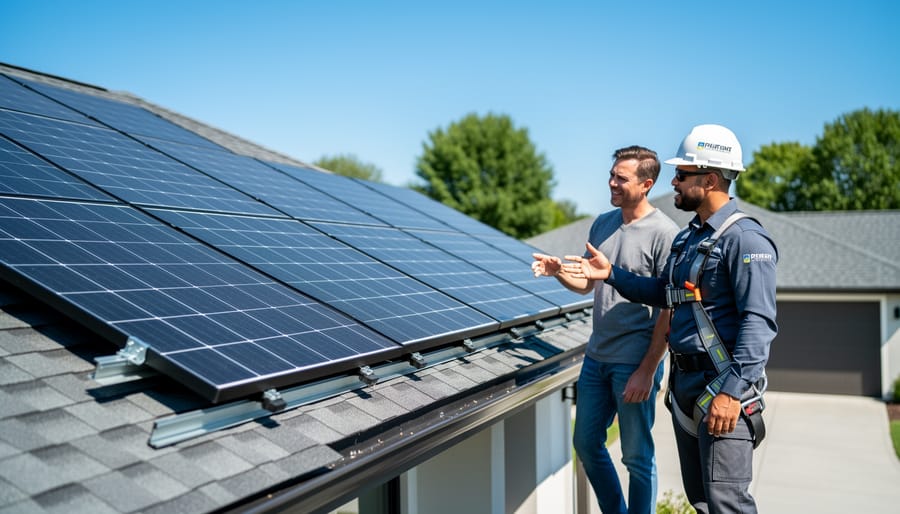
Neighbors gather with distant solar panels in view, illustrating how community solar connects people to shared renewable energy without rooftop installation.
Community solar is a shared renewable energy program where a single, centrally-located solar installation, often called a solar garden or solar farm, generates electricity that benefits multiple households or businesses at once. Instead of mounting panels on your own roof, you subscribe to a portion of this shared array and receive credits on your monthly electric bill for the energy your share produces.
Think of it like a community garden for electricity. Just as neighbors might share plots in a garden without needing individual backyards, community solar subscribers share space in a solar farm without needing suitable rooftops. Your local utility tracks how much power your portion of the solar farm generates, then applies credits to your bill that offset what you’d normally pay for grid electricity.
Community Solar
A shared solar energy system where multiple subscribers receive bill credits from a single solar installation they don’t own or host on their property.
Subscription
Your allocated share of the solar farm’s output, typically measured in kilowatts, which determines how many credits you receive each month.
Virtual Net Metering
The billing mechanism that allows energy credits from a remote solar farm to appear on your utility bill, even though the panels aren’t at your address.
Solar Credits
Dollar-amount reductions on your electric bill that reflect your share of the solar farm’s energy production for that billing period.
Solar Farm
A ground-mounted solar installation, usually one to five megawatts in size, designed specifically to serve community solar subscribers rather than a single customer.
This model exists precisely because rooftop solar isn’t practical for everyone. Renters can’t make permanent installations on property they don’t own. Homeowners with heavily shaded roofs, older structures that can’t support panel weight, or historic properties with installation restrictions face similar barriers. Community solar removes the need for tens of thousands in upfront costs, roof assessments, permits, and ongoing maintenance while still letting you support and benefit from clean energy.
How Community Solar Works (Not How Pyramid Schemes Work)
A person reviews a utility bill while solar energy imagery is present in the background, conveying the utility-credit aspect of how community solar participation works.
Understanding how community solar actually works makes it obvious why it’s nothing like a pyramid scheme. The process is straightforward, transparent, and centered on delivering real energy, not recruiting your neighbors.
Here’s how it typically unfolds. First, you find a community solar program in your area, usually through your utility company’s website or a third-party solar developer approved by state regulators. You browse available projects, review pricing structures, and choose a subscription level that matches your household’s energy use, often a percentage of the solar farm’s total output.
Once you subscribe, you’re allocated a portion of a physical solar array located somewhere in your utility’s service territory. This isn’t a hypothetical share; it’s actual panels generating actual electricity. Each month, the solar farm produces energy that flows into the local grid. Your utility tracks how much power your portion generated, then applies credits to your electric bill based on that production.
You’ll see two line items on your bill: your normal electricity charges from the utility, and the community solar credits offsetting those charges. You pay a subscription fee to the solar program, typically slightly less than what you’re saving in credits, allowing you to slash your bill without upfront costs. The math is simple and verifiable against your own utility statements.
Your utility remains your primary provider. They deliver power, read your meter, and handle billing just like always. The solar program simply adds credits. There’s no separate energy delivery system, no mystery about where the power comes from, and no requirement to bring in other subscribers to make your arrangement work.
Contrast that with how pyramid schemes operate: participants make money primarily by recruiting others, not by selling a legitimate product. The structure collapses when recruitment slows because there’s no sustainable value underneath. Early participants get paid with money from new recruits, not from actual product sales.
Community solar flips that model. Your savings come directly from solar energy production, not from signing up your friends. If you never tell another soul about the program, your credits keep flowing as long as the sun shines and panels produce. The value exchange is transparent: panels generate power, you get bill credits, you pay a fee lower than those credits. No recruitment. No unsustainable payouts. Just electricity.
Why People Confuse Community Solar with a Scam
Community solar programs face an uphill credibility battle, and it’s not hard to see why. The model itself is unfamiliar to most people, sharing a solar farm with strangers and getting credits on your electric bill sounds abstract compared to the tangible act of mounting panels on your own roof. When something feels new and complicated, our scam radar naturally kicks in, especially when money’s involved.
The subscription structure trips people up constantly. You’re paying a monthly fee to save money, which feels counterintuitive at first glance. Traditional thinking says you buy solar panels outright or you don’t participate at all. The idea of a recurring payment for energy savings can look suspiciously like those “business opportunities” that promise passive income but deliver nothing. Add in the fact that savings aren’t immediate or guaranteed in every billing cycle, and skepticism grows.
Unfortunately, some legitimate providers don’t help themselves. Aggressive sales tactics, cold calls, door-to-door pitches, high-pressure closes, mirror the exact approach pyramid schemes use. When a salesperson pushes you to “sign today” or claims you’ll miss out on limited spots, it triggers every warning bell you’ve learned to trust. The industry’s rapid growth has attracted both honest companies and opportunistic ones, making it harder to separate the two.
Then there’s the referral component. Many community solar programs offer subscriber bonuses if you bring in friends or neighbors. While this is standard marketing (think credit card referral bonuses), it superficially resembles multi-level marketing structures. The difference is crucial: legitimate programs don’t require recruitment to participate or profit, and your savings don’t depend on building a downline. Still, the visual similarity makes people nervous.
Several factors commonly raise red flags that aren’t actually scam indicators:
Monthly subscription fees instead of upfront purchase, a legitimate access model, not a hidden cost scheme
Utility bill credits rather than direct cash savings, how net metering actually works
Long-term contracts with cancellation terms, standard for securing stable solar farm financing
Referral incentives, typical customer acquisition, not pyramid recruitment
Savings that vary month to month, reflects actual solar production and your usage patterns
Your caution isn’t paranoia; it’s smart. The renewable energy space has seen its share of shady operators, and the financial stakes matter. The key is learning how renters benefit from community solar’s structure rather than dismissing it outright because it looks unfamiliar. Real programs operate transparently with utility partnerships and regulatory oversight, features you can verify before signing anything.
Red Flags vs. Legitimate Community Solar Features
Knowing how to spot the difference between a trustworthy community solar program and a questionable offer can save you from a costly mistake. Real community solar programs share certain hallmarks that scammers and predatory operators can’t replicate.
Transparent pricing is the foundation of any legitimate program. You should receive a clear breakdown of your subscription cost, usually expressed as cents per kilowatt-hour or a fixed monthly fee. This pricing should compare favorably to your current utility rate, with simple math you can verify yourself. If a salesperson dances around pricing details, uses vague terms like “big savings” without numbers, or insists you’ll understand the costs “once you sign up,” walk away.
No recruitment requirements separates real solar from pyramid schemes. Community solar is about energy, not building a downline. You subscribe, you get credits, you save money. Period. If anyone mentions earning bonuses by signing up friends, hitting recruitment tiers, or building a team, you’re looking at a multilevel marketing scheme wearing a solar costume. Legitimate programs might offer a referral discount as a courtesy, but it’s never a core feature or income opportunity.
Utility partnership verification gives you instant credibility confirmation. Real community solar programs work directly with your utility company, which handles the billing credits automatically. Call your utility’s customer service line and ask if they recognize the program by name. If they don’t, or if the program insists you don’t need utility involvement, that’s a massive red flag. Your utility should confirm they issue credits for community solar subscribers.
Clear contract terms mean you can read and understand your agreement without a law degree. Look for plainly stated subscription length, cancellation policies, fee structures, and credit calculation methods. Legitimate contracts explain what happens if you move, if the solar farm underperforms, or if you want to cancel. Predatory contracts bury fees in fine print, lock you in for unreasonable terms, or make cancellation nearly impossible.
Realistic savings claims reflect the actual economics of solar energy. Honest programs promise savings in the 5-15% range off your electric bill, maybe 20% in ideal situations. Anyone guaranteeing you’ll cut your bill in half, eliminate electric costs entirely, or earn income from your subscription is lying. The math doesn’t work that way.
Regulatory oversight provides your safety net. Check your state’s public utilities commission website for approved community solar programs. Most states maintain registries of legitimate providers. Programs operating outside regulatory frameworks lack accountability and consumer protections you’ll desperately want if something goes wrong.
Different Types of Community Solar Programs
Community solar isn’t one-size-fits-all. The industry has evolved three main program types, each with its own ownership structure and subscription approach.
Utility-sponsored programs are run directly by your electric company. The utility builds and operates the solar farm, then offers subscriptions to customers in its service territory. You sign up through your existing utility account, and the credits appear automatically on your monthly bill. These programs typically have straightforward pricing, you pay for your share of solar generation at a set rate, often locked in for several years. Savings tend to be modest but predictable, and there’s zero recruitment involved. The downside? Not all utilities offer these programs, and waitlists can be long in popular areas.
Third-party developer subscriptions involve independent solar companies that build the farms and manage subscriber relationships. You contract with the developer, not your utility, though your utility still delivers the credits. This example program shows how third-party arrangements work in practice. Pricing structures vary, some charge a percentage discount off your utility rate, others use fixed monthly fees. Savings potential can be higher, but you’ll want to read contracts carefully. Legitimate developers don’t require you to recruit friends; they operate like any subscription service.
Non-profit community solar co-ops are member-owned projects where subscribers collectively invest in and benefit from a shared solar array. You might pay an upfront membership fee or ongoing dues, and the co-op structure means members have a voice in decisions. These programs emphasize community ownership over profit, often resulting in better long-term savings but requiring more initial commitment.
The variety reflects a growing, legitimate market, not shadiness.
Who Benefits from Community Solar (and How)
Community solar opens the door to clean energy for people who’ve been locked out of traditional rooftop installations. If you’re renting an apartment or condo, you can share solar as a renter without needing landlord permission or a long-term commitment to the property. Homeowners with heavily shaded roofs, historic homes with installation restrictions, or older buildings that can’t support panel weight also gain access to solar savings they couldn’t get otherwise.
People who want the environmental benefits of solar but don’t want the hassle of maintenance, inverter replacements, or panel cleaning find community solar appealing, the developer handles all upkeep. Subscribers seeking predictable energy costs appreciate locking in rates that often beat utility price increases over time.
I remember helping my friend Sarah navigate this exact situation. She’d been frustrated living in a third-floor walk-up, watching her neighbors with houses go solar while she felt stuck with rising electric bills. When I showed her a local community solar program, she was skeptical at first, it sounded too easy. But after subscribing to a small share of a nearby solar farm, she started seeing monthly credits that offset about 15% of her bill. No panels, no installation, no landlord conversations. She called it her “solar loophole,” and honestly, that’s exactly what community solar is for millions of renters and property-constrained homeowners.
How to Vet a Community Solar Program Before You Subscribe
Contract documents and a pen suggest careful review and due diligence, helping readers vet community solar offers before subscribing.
Before you hand over your email and payment details, treat community solar like any major financial decision, with healthy skepticism and thorough homework. The good news is that legitimate programs leave a clear paper trail you can follow.
Start with your state’s public utilities commission or energy office website. Most states that allow community solar maintain searchable databases of approved programs and licensed providers. If the company contacting you doesn’t appear in official records, that’s an immediate red flag. You can also call your utility company directly and ask if they recognize the program by name, legitimate community solar farms coordinate billing credits through your existing utility, so the utility will know about them.
Read the contract slowly and completely before signing anything. Look for clear explanations of your subscription rate, how credits apply to your bill, contract length, cancellation terms, and any fees beyond the monthly subscription. Legitimate programs spell this out in plain language because they want informed, satisfied customers. If the contract is vague about costs or packed with confusing legal jargon that obscures the basics, walk away.
Compare the promised savings against your actual electric bills from the past year. Pull out real numbers, what you currently pay per kilowatt-hour, your average monthly usage, seasonal variation. Use an independent calculator like the ones at Spheral Solar to model whether the subscription fee genuinely results in net savings based on your specific usage patterns. If the sales pitch promises 30% savings but the math shows 5%, you’ve caught an exaggeration.
Search for reviews outside the company’s own website. Check the Better Business Bureau, state attorney general complaint databases, local community forums, and solar-focused discussion groups. A few complaints are normal for any business, but patterns matter, watch for repeated issues around billing surprises, inability to cancel, or pressure to recruit neighbors.
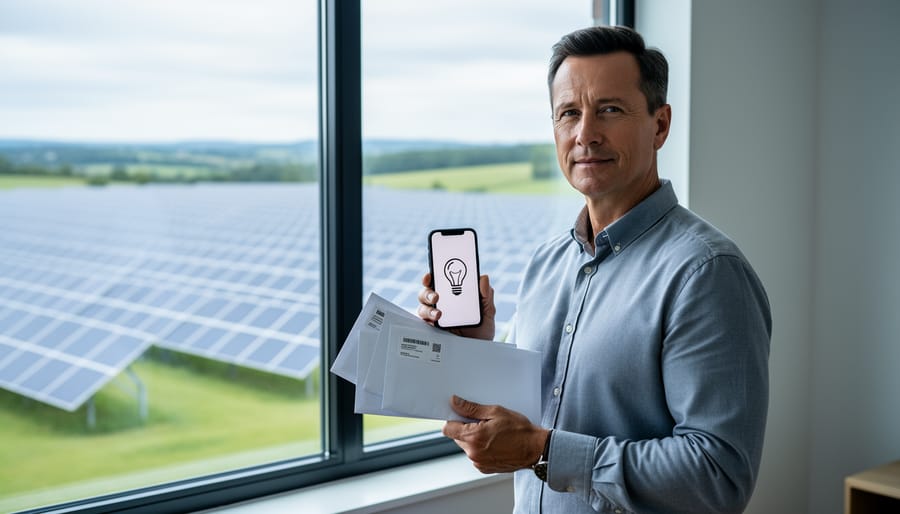
Finally, confirm there’s zero recruitment component. Ask directly: do I get paid or credited for signing up friends? Legitimate community solar might offer a small one-time referral bonus as a thank-you, but if the conversation keeps circling back to building your downline or earning ongoing income from others’ subscriptions, you’re looking at something closer to a pyramid scheme than an energy program. Real community solar makes money from selling clean electricity, not from endless recruitment chains.
Common Questions About Community Solar Legitimacy
Can I lose money with community solar?
You won’t lose money in the pyramid scheme sense, there’s no upfront investment to forfeit. However, if your subscription fee exceeds the credit you receive on your utility bill, you could pay more than you save, especially if the program’s pricing structure changes or if your electricity rates drop.
Do I have to recruit other people to join?
No. Legitimate community solar programs don’t require recruitment. Some providers offer referral bonuses if you spread the word, but your savings and participation never depend on bringing in new subscribers, that’s the key difference from a pyramid scheme.
What happens if the solar farm shuts down or goes out of business?
Your utility bill credits would stop, and you’d revert to paying standard electricity rates. Most contracts specify what happens in this scenario, some allow you to cancel without penalty, while others might transfer your subscription to a different solar farm if the developer has multiple projects.
Is community solar actually regulated, or can anyone start a program?
Yes, it’s regulated. Community solar programs must comply with state renewable energy laws and work with your local utility, which is heavily regulated. You can verify a program’s legitimacy through your state’s public utility commission or renewable energy office.
These questions reflect the core concerns I hear when people first encounter community solar. The legitimacy worry usually boils down to control and transparency, can you get out if it’s not working, and who’s watching to make sure you’re not being exploited?
One thing that surprises people: community solar contracts vary wildly in their cancellation policies. I’ve seen everything from month-to-month subscriptions you can drop anytime to multi-year commitments with early termination fees. That’s not inherently sketchy, but it does mean you need to read the fine print before signing. A reputable program will explain the cancellation terms upfront and won’t pressure you to decide on the spot.
The savings verification question deserves special attention. You can check if the numbers add up by comparing your current electricity rate to the program’s subscription rate, then estimating how many kilowatt-hours your share of the solar farm would generate monthly. Most utility-sponsored programs publish this data clearly. If a provider won’t show you the math or claims savings that seem implausibly high compared to your current bill, walk away. Real community solar programs want informed subscribers who stick around, not confused customers who cancel after the first billing cycle.
Community solar isn’t a pyramid scheme, it’s a real pathway to renewable energy for people who can’t install rooftop panels. The confusion is understandable given unfamiliar subscription models and occasional pushy salespeople, but legitimate programs operate transparently, partner with your utility, and deliver measurable savings without requiring you to recruit anyone.
Before you sign up, do your homework. Verify the program through your state’s regulatory database, read the contract carefully, and use independent calculators to confirm the numbers make sense for your situation. Look for clear pricing, realistic savings claims, and straightforward cancellation terms.
The beauty of community solar is that it removes barriers, no roof needed, no maintenance headaches, and often no upfront cost. Whether you’re renting an apartment or just exploring energy independence for the first time, these programs can get you started.
I’d love to hear about your experiences or questions. Have you looked into community solar in your area? What’s holding you back? Drop a comment below and let’s figure it out together. The solar community thrives when we share knowledge and help each other navigate these decisions confidently.
How useful was this post?
Click on a star to rate it!
Average rating 0 / 5. Vote count: 0
No votes so far! Be the first to rate this post.
We are sorry that this post was not useful for you!
Let us improve this post!
Tell us how we can improve this post?
charlesnoble
Here at Spheral Solar, I’m a hands-on solar power enthusiast, constantly exploring and experimenting with DIY solutions. I’m dedicated to sharing my discoveries, insights, and even the bumps I hit along the way, all in the pursuit of a more sustainable future.
How to Make DIY Solar Tubes for Free Natural… by Charlesnoble July 7, 2026 You can build a DIY solar tube for $50 to $150 and start harvesting natural daylight in a weekend. This simple project combines a reflective tube, clear dome, and diffuser to channel sunlight from your roof into dark interior spaces, delivering illumination equivalent to multiple bulbs without electrical costs or…
6 Best Solar Spot Lights of 2026, Tested and Reviewed by Charlesnoble August 8, 2026 After testing dozens of solar spotlights in real-world conditions throughout 2026, the AloftSun Solar Motion Sensor Outdoor Lights emerged as the top overall choice for most homeowners, thanks to its reliable performance and versatility across different landscape lighting scenarios. But picking the right solar spotlight depends entirely on what you’re…
How to Install a Solar Heating System for Your… by Charlesnoble August 25, 2026 You can heat your inground pool with solar panels mounted on your roof, garage, or ground rack, capturing free energy from the sun and extending your swim season by months while slashing heating costs to nearly zero. A properly sized solar heating system circulates pool water through black collector panels…
How to Install a Whole House Ventilation System… by Charlesnoble July 12, 2026 Installing a whole house ventilation system powered by solar takes about 6 to 8 hours for a moderately skilled DIYer and delivers continuous fresh air circulation without touching your electric bill. The core method involves mounting a solar panel on your roof to power an intake or exhaust fan, routing…
5 Sources of Electrical Energy Every Solar DIYer… by Charlesnoble July 1, 2026 Electricity powers our homes from five main sources: solar panels, wind turbines, hydroelectric generators, fossil fuel generators, and battery storage systems. If you’re building a reliable off-grid setup or backing up your solar array, understanding how these sources work together transforms a single-point-of-failure system into resilient, year-round power. I learned…
Your Portable Power Station Won’t Last as Long as… by Charlesnoble July 19, 2026 A portable power station will typically run your camping devices for anywhere from a few hours to several days on a single charge, depending on what you’re powering and the station’s capacity. As for lifespan, most quality units last between 3 to 10 years before the battery degrades enough to…
Subscribe for handpicked DIY projects, exclusive tips, and giveaways.
Nine times out of ten, an RV generator that won’t start has a stale fuel problem. If your generator hasn’t run in more than 30 days, degraded gasoline is likely gumming up the carburetor and preventing ignition. Before you panic or call for expensive roadside service, try this: turn on the generator’s fuel valve (if… Read more: RV Generator Troubleshooting: Common Problems and How to Fix Them
A 5kW solar system occupies between 250 and 350 square feet of roof or ground space and produces roughly 20 to 25 kilowatt-hours of electricity per day in most U.S. locations. That’s enough to power a typical three-bedroom home with moderate energy use, though your exact needs depend on your daily consumption patterns, climate zone,… Read more: How to Size a 5kW Solar System for Your Home or RV
Installing a home solar system yourself takes 2-4 weekends for an average 5kW setup, requires solid electrical knowledge and comfort working at heights, and can save you $5,000-$8,000 in labor costs if you tackle everything except the final utility interconnection. The process breaks down into five main phases: permitting and design, mounting the racking system,… Read more: Solar Power Installation Step by Step: Complete DIY Guide From Start to Finish