5 Sources of Electrical Energy Every Solar DIYer Should Know for Complete Off-Grid Power
Updated:
Electricity powers our homes from five main sources: solar panels, wind turbines, hydroelectric generators, fossil fuel generators, and battery storage systems. If you’re building a reliable off-grid setup or backing up your solar array, understanding how these sources work together transforms a single-point-of-failure system into resilient, year-round power.
I learned this the hard way during my first winter off-grid. My solar panels produced beautifully from May through September, then November hit with its short, cloudy days. I watched my battery bank drain to 40% three days in a row before I admitted I needed backup generation. That experience taught me what the specs never do: real energy independence means matching multiple sources to your local conditions, usage patterns, and weather reality.
Most DIYers start with solar because the panels are silent, low-maintenance, and increasingly affordable in 2026. But solar alone leaves you vulnerable to seasonal gaps, extended storms, and the simple fact that half your day happens after sunset. Wind fills some of those gaps if you have consistent breezes. Hydro delivers 24/7 power if you’re lucky enough to have flowing water. A generator covers the rest when nature doesn’t cooperate. And battery storage lets you bank energy from any source for use exactly when you need it.
The magic happens when you combine them strategically. A modest wind turbine can keep your batteries topped up on cloudy winter days. A small backup generator running two hours per week prevents the deep discharge cycles that kill battery banks. This article walks you through each source with a practical eye toward integration, cost, and real-world performance in a diversified power system.
Why Multiple Energy Sources Matter for Solar Integration
When I first started building solar systems, I made the classic rookie mistake: I assumed more panels would solve everything. After a week of cloudy weather left my cabin batteries dangerously low, I learned that solar alone isn’t enough for true energy independence.
Solar panels only generate electricity when the sun shines, which creates three fundamental challenges. First, nighttime operation requires stored battery power, draining your reserves for 12-16 hours daily. Second, weather variations can slash output by 70-90% during overcast conditions, exactly when you need power for heating or lighting. Third, seasonal changes dramatically affect production, my December output runs at roughly 40% of my July peak, creating a winter energy deficit that no amount of panel addition fully resolves.
Key Takeaway: Combining multiple energy sources creates year-round reliability that solar alone cannot achieve. Diversified systems match power generation to actual demand patterns while providing backup during solar’s predictable low-production periods.
Understanding different energy sources lets you build resilient systems through three core principles. Redundancy means backup options kick in when solar underperforms. Load matching pairs generation sources to consumption patterns, wind often produces at night when solar doesn’t, while generators handle peak demands that exceed solar capacity. Seasonal gaps get filled by complementary sources that peak during solar’s low periods.
The practical result? A hybrid system might use solar as the primary source, wind turbines for nighttime generation, and a propane generator for extended winter clouds. Each source compensates for the others’ weaknesses, creating reliable power without massive battery banks or oversized solar arrays. This approach costs less and performs better than trying to force solar to do everything alone.
Knowing all five major energy sources helps you make smarter integration decisions based on your location, budget, and power needs rather than defaulting to solar-only solutions that leave you vulnerable during predictable low-production periods.
The 5 Essential Electrical Energy Sources for Solar Systems
1. Solar Photovoltaic (PV) Energy
Solar panels serve as the backbone of nearly every DIY renewable energy system, and for good reason. When photons from sunlight strike a PV panel’s semiconductor surface, they knock electrons loose, creating a flow of direct current electricity. This simple but elegant process (PV converts sunlight to electricity) happens silently and reliably for decades with minimal intervention, making solar the most accessible entry point for off-grid power.
I learned this firsthand when I mounted my first panel on an RV roof back in 2015. That 100-watt panel transformed weekend trips by eliminating the constant hum of a generator. Since then, I’ve installed monocrystalline panels on my cabin (better efficiency in limited space), polycrystalline panels on my workshop (more budget-friendly for larger arrays), and thin-film panels on curved surfaces where rigid panels wouldn’t work. Each type has its place depending on your specific constraints.
Understanding how PV works helps you set realistic expectations. A typical residential panel produces peak power only during a four to six hour window around solar noon. Output drops to 10-25 percent on overcast days and zero at night. Winter production can fall by half compared to summer, especially at higher latitudes where the sun’s angle becomes less favorable.
Panel placement makes or breaks system performance. South-facing installations at an angle matching your latitude work best in the Northern Hemisphere. Even partial shade from a tree branch can cut output dramatically thanks to how cells connect in series. I size systems by calculating average daily energy needs, then multiplying by 1.3 to account for inefficiencies and weather variability.
Beyond installation, panel maintenance remains refreshingly simple. Most systems need only occasional cleaning and annual connection checks, making solar uniquely suited to the DIY approach.
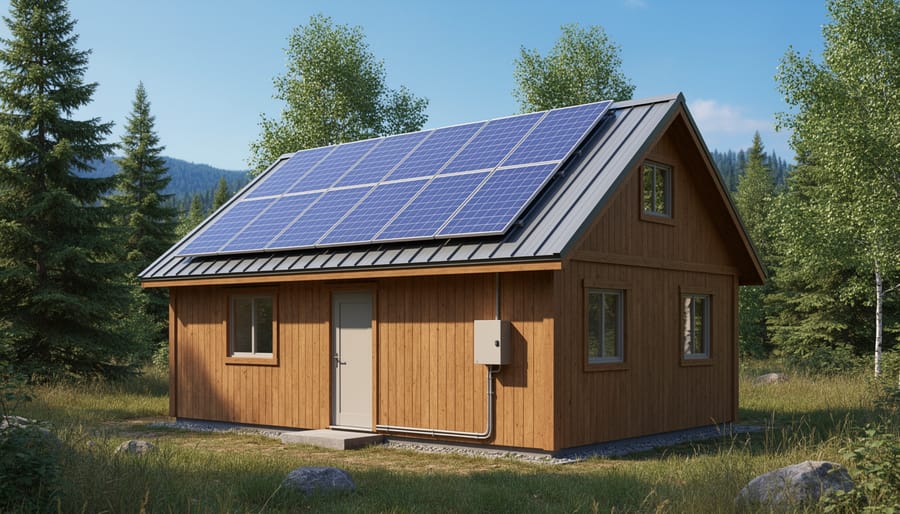
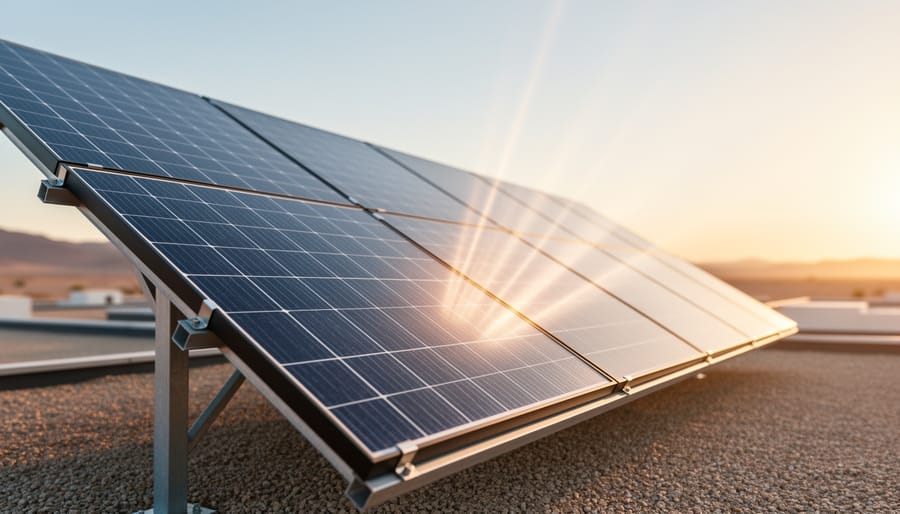
Solar PV panels mounted on an off-grid cabin roof show the practical, real-world foundation of a hybrid power setup.
2. Wind Turbine Energy
Wind power stands out as solar’s perfect partner because it generates electricity precisely when solar panels struggle, during cloudy weather and throughout the night. I’ve watched my small wind turbine spin steadily through overcast afternoons and dark hours, feeding power to my battery bank while the solar panels sat idle. This complementary relationship makes wind an attractive addition for DIYers building resilient off-grid systems.
Small-scale wind turbines suitable for residential and off-grid integration typically range from 400 watts to 5 kilowatts. These compact units mount on towers or poles and can integrate with your existing solar charge controller through hybrid controllers designed to handle multiple inputs. The catch? Wind power requires consistent wind speeds of at least 10-12 mph to produce meaningful output, and most residential locations simply don’t have reliable wind resources.
Note: Most residential properties generate less than 200 kWh annually from small wind turbines due to insufficient wind speeds, making careful site assessment essential before investing.
Before considering wind integration, spend a few weeks monitoring wind conditions at your site. Mount an anemometer at the proposed turbine height, usually 30-40 feet minimum to clear ground turbulence, and log the data. You need average wind speeds above 10 mph for wind power to make financial sense. Exposed hilltops, coastal areas, and open plains offer the best potential, while properties surrounded by trees or buildings rarely justify the investment.
Hybrid solar-wind systems work beautifully in the right locations. The same battery bank stores energy from both sources, and modern hybrid charge controllers manage the varying voltage and current from each. Wind makes sense when you have documented wind resources, need power during extended cloudy periods, or live in northern latitudes where winter solar production drops significantly. For most suburban homeowners, however, generator backup or grid connection provides more reliable and cost-effective complementary power than residential wind turbines.
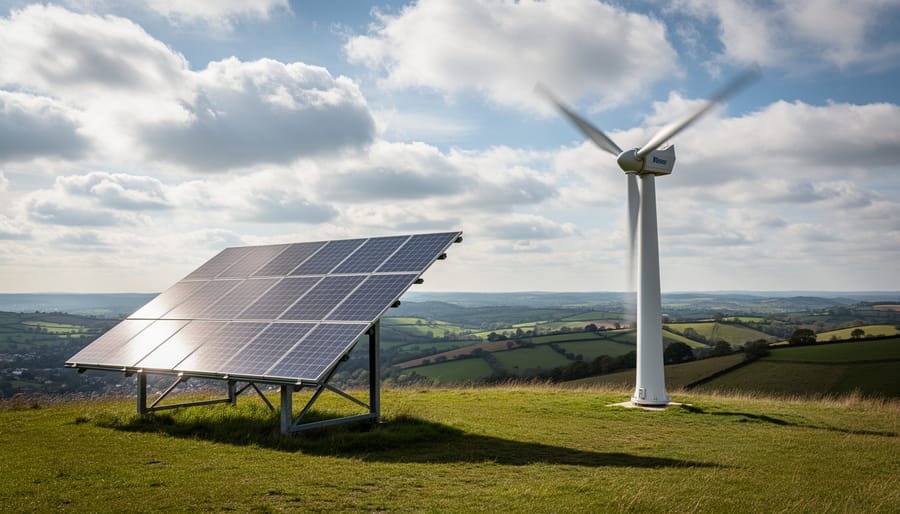
A compact wind turbine illustrates how wind can complement solar by generating power when conditions differ.
3. Micro-Hydro Energy
If you’re lucky enough to have a creek or stream on your property, micro-hydro might be your best-kept secret for consistent renewable power. Unlike solar panels that sleep at night and wind turbines that wait for breezes, a small water turbine generates electricity around the clock, often producing more energy per dollar invested than any other renewable source.
The magic happens through simple physics: flowing water spins a turbine connected to a generator. What matters most are two measurements: head (the vertical drop in your water source) and flow (volume of water moving past per minute). Even a modest stream dropping 10 feet with decent flow can produce several hundred watts continuously. That’s 24 watts every single hour, which adds up fast compared to solar’s 4-6 peak hours daily.
A micro-hydro system typically diverts a portion of stream water through a pipe to increase pressure, then releases it through a nozzle that spins the turbine. The water returns to the stream immediately, you’re borrowing energy, not consuming water. Systems producing under 100 kilowatts qualify as “micro,” but most DIY setups generate 1-5 kilowatts, plenty to cover a home’s baseload with solar handling daytime peaks.
Integration with solar is straightforward since both feed the same battery bank through compatible charge controllers. The hydro system maintains your batteries overnight while solar takes over during the day. This combination dramatically reduces your need for generator backup.
The catch? Location is everything. You need year-round water flow, adequate head, and you’ll face regulatory hurdles since water rights are complex. Most states require permits even for tiny installations. But where conditions align, micro-hydro delivers unmatched reliability and value. I’ve seen systems run continuously for years with minimal maintenance, just occasional debris clearing and bearing inspection. For the right property, it’s the renewable energy world’s equivalent of winning the lottery.
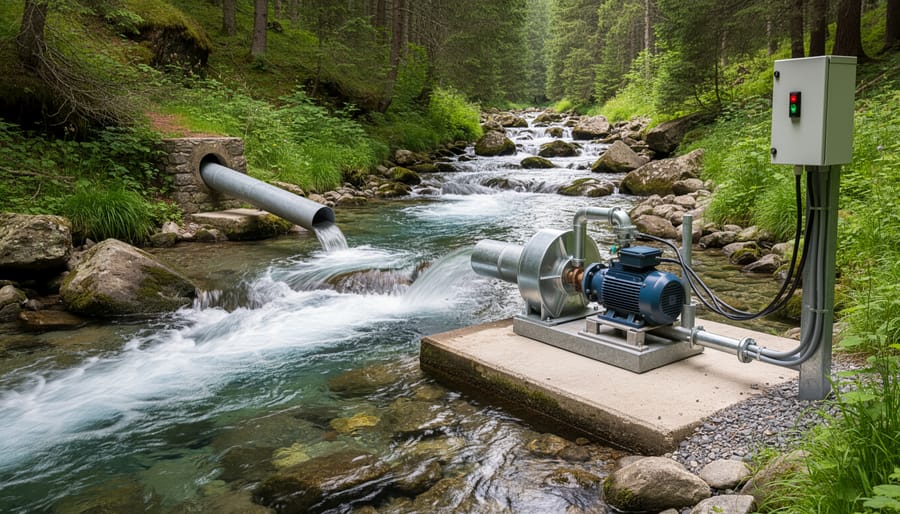
Micro-hydro hardware beside a flowing creek demonstrates a location-dependent way to produce consistent renewable electricity.
4. Generator Backup Power
When your batteries are running low during three days of cloudy weather, a generator becomes your system’s insurance policy. I learned this during my first winter off-grid, solar alone couldn’t keep up, and I finally understood why experienced DIYers always have backup power ready.
Most DIY solar systems use propane, diesel, or gasoline generators. Propane stores indefinitely and runs cleaner, making it my top choice for seasonal cabins. Diesel offers better fuel efficiency for larger loads but requires more maintenance. Gasoline generators are cheapest upfront but gasoline degrades quickly in storage, so they suit frequent-use scenarios better.
Sizing matters more than you’d think. Don’t just match your peak load, that wastes fuel. Instead, size your generator to efficiently charge your battery bank. A 3,500-watt generator typically handles most small off-grid systems, running your inverter-charger to bulk-charge batteries while powering essentials. Oversized generators waste fuel running at low load; undersized ones struggle and wear faster.
Automatic generator start (AGS) systems monitor your battery voltage and fire up the generator when needed, usually around 50% state of charge. This prevents deep discharge damage and ensures you wake up to charged batteries. Manual starting works fine if you’re always on-site, but AGS provides real peace of mind for remote properties or when you’re away.
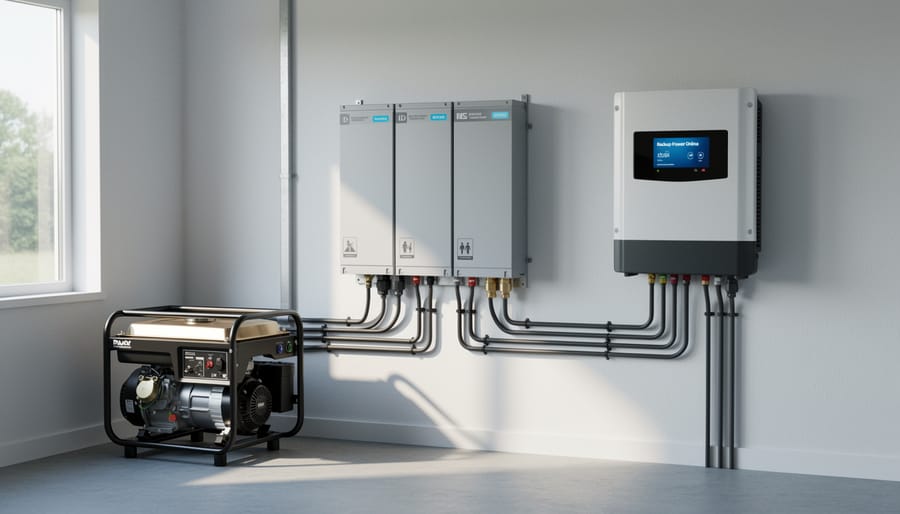
Integration is straightforward: your generator connects to the AC input on your inverter-charger, which manages charging automatically. The inverter handles the actual battery charging profile while the generator just supplies AC power. This setup is far simpler than trying to charge directly with the generator.
Basic maintenance keeps generators reliable: change oil every 50-100 hours, run them monthly under load even when not needed, and stabilize fuel in storage. Think of runtime in hours per year, not days per week, generators are there for gaps, not daily power production.
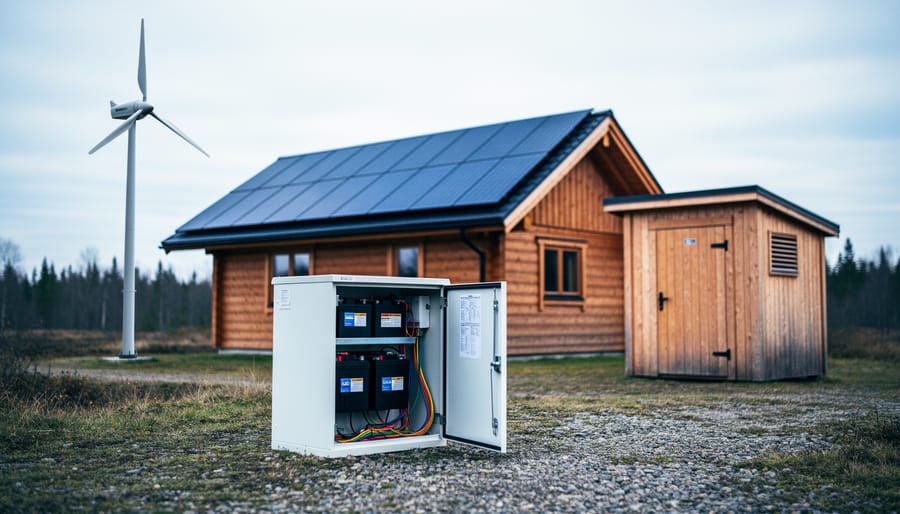
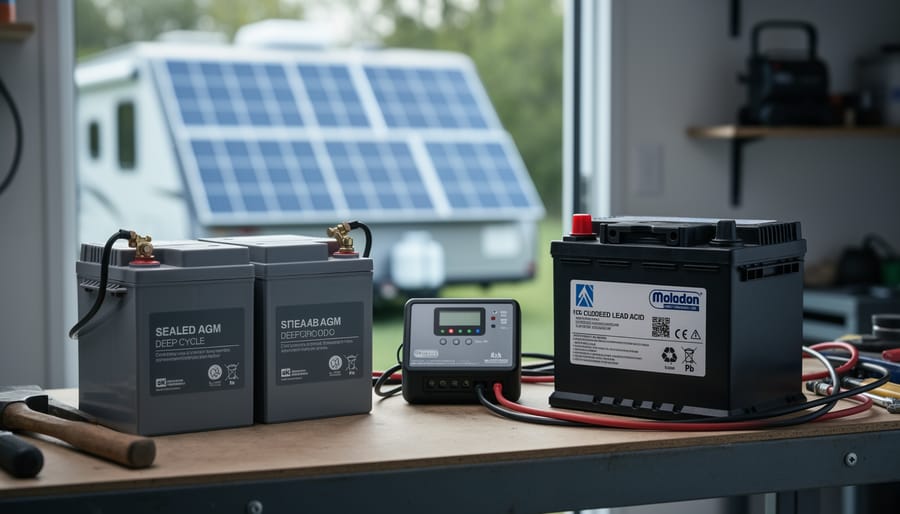
A generator paired with battery and inverter equipment conveys how backup and storage support reliable off-grid electricity.
5. Grid Connection (Grid-Tied Systems)
The utility grid might seem like the opposite of off-grid independence, but it’s actually one of the smartest energy sources for most solar installations. When you stay connected to the grid while generating solar power, you’re essentially using the entire electrical network as a massive battery bank, without buying a single cell.
Grid-tied systems work through a simple concept: when your panels produce more electricity than you’re using, the excess flows back to the utility company. Your meter literally runs backward, banking energy credits. At night or during cloudy periods when your panels can’t keep up, you draw from the grid using those credits. This arrangement, called net metering, turns the traditional one-way power relationship into a two-way exchange that dramatically improves the economics of solar.
You’ve got two main approaches here. Pure grid-tied systems skip batteries entirely, your solar feeds directly into your home’s electrical panel through an inverter, with the grid handling all the balancing. These are the simplest and cheapest solar setups. Hybrid systems add battery storage for backup power during outages while maintaining that grid connection for everyday use. You get the best of both worlds: energy independence when the grid goes down and financial benefits when it’s running.
The electrical integration process requires utility approval and inspection, but it’s become standardized in most areas. You’ll need an interconnection agreement, proper permits, and an inverter that meets utility safety standards (automatic disconnect during outages protects line workers). Installation time from application to flip-the-switch typically runs 30-90 days depending on your utility.
Grid connection makes financial sense when your utility offers decent net metering rates and interconnection costs stay reasonable. The payback period often beats off-grid systems by years since you’re avoiding massive battery investments.
Comparing Your Energy Source Options
Now that you understand each energy source individually, let’s compare them side-by-side so you can quickly evaluate which combinations work for your situation.
Availability and Reliability
Solar produces during daylight hours, with peak output midday. Wind generates power day or night but depends on location and weather patterns. Micro-hydro runs 24/7 if you have flowing water, making it the most consistent renewable option. Generators provide on-demand power whenever you need it. Grid connection offers unlimited availability as long as utility service remains active.
Upfront Costs and Payback
Solar panels cost around $1-3 per watt installed for DIY systems, with typical payback in 5-8 years. Small wind turbines run $3,000-8,000 but rarely pay for themselves in residential settings. Micro-hydro systems start at $5,000 but deliver exceptional value with constant generation. Basic backup generators cost $500-2,000, though you’ll pay ongoing fuel costs. Grid-tied systems save money on batteries but require utility hookup fees.
Maintenance Demands
Solar panels need occasional cleaning and virtually nothing else. Wind turbines require annual inspections and bearing maintenance every few years. Micro-hydro systems need seasonal intake cleaning and occasional repairs. Generators demand regular oil changes, filter replacements, and exercise runs. Grid connections require zero maintenance on your end.
Best Integration Partners
Solar pairs beautifully with generators for weekend cabin use. Grid-tied solar offers the simplest path for homeowners. Solar plus wind works in exposed locations with good wind resources. Micro-hydro with solar creates incredible reliability. Most successful off-grid systems combine solar as the foundation with either generator backup or hydro supplementation, using batteries to tie everything together.
Combining Sources: Creating Your Hybrid Energy System
The beauty of hybrid energy systems is that they’re surprisingly modular, you don’t need to build everything at once. I learned this the hard way when I tried to design my entire off-grid cabin system on paper before buying a single component. The smarter approach? Start with solar as your foundation, then add complementary sources as you understand your actual energy patterns and gaps.
Your charge controller is the brain of any hybrid system. For solar-only setups, a basic MPPT controller works great. But when you’re mixing sources, you need either multiple specialized controllers or a hybrid controller that can handle various inputs. Most DIYers run separate controllers for each source, one MPPT for solar, a dedicated wind controller for turbines, and a separate system for generator charging. These all feed into a common battery bank. It sounds complicated, but it’s actually more flexible than trying to force everything through one controller.
Battery bank sizing changes dramatically when you add multiple sources. With solar alone, you typically size for three to five days of autonomy. Add a generator backup, and you can get by with two days. Include wind or hydro that generates during solar’s downtime, and your battery bank becomes more of a buffer than long-term storage. The key consideration isn’t just capacity, it’s how fast you can recharge from multiple directions simultaneously.
When designing your multi-source system, pay attention to these critical factors:
Voltage matching: all sources must charge at your system voltage (12V, 24V, or 48V)
Charge controller compatibility: verify controllers won’t conflict when charging the same battery bank
Battery chemistry: lithium batteries handle mixed charging better than lead-acid
Monitoring needs: invest in a good battery monitor that shows which source is contributing what
Real-world examples make this concrete. For my remote cabin, I run 800 watts of solar with a 5kW propane generator. The solar handles daily loads, the generator kicks in for cloudy stretches or power-hungry tools. My parents’ home uses grid-tied solar with battery backup, they generate during the day, pull from grid at night, and the batteries cover outages. A friend in Wyoming combines solar with a small wind turbine because his hilltop location gets consistent wind when clouds roll in.
The electrical integration is straightforward if you follow basic principles: common ground for all sources, properly sized wire for each input, and DC disconnects between each source and the battery bank. Our solar calculator tools can help you size the solar portion, then you scale other sources to fill the gaps your monitoring reveals.
Start simple. Get solar working reliably first. Live with it for a season. Then you’ll know exactly where you need backup, and which of the five sources makes the most sense for your specific situation.
Common Questions About Energy Source Integration
Do I need all five energy sources for a working system?
Not at all. Most DIY solar systems start with just panels and batteries, adding other sources as needs grow. Solar alone works great for many applications, the other four sources solve specific challenges like winter shortfalls or emergency backup.
Can I add energy sources to my existing solar setup later?
Absolutely, and that’s how most successful systems evolve. Start with solar, see where gaps appear, then add wind, a generator, or grid connection as your budget and experience allow. Modern charge controllers make it straightforward to integrate additional inputs without rebuilding your whole system.
Which energy source combination is most affordable?
Solar plus grid connection typically costs least upfront and delivers the most reliable power. For off-grid situations, solar with a small backup generator beats trying to oversize solar panels for worst-case scenarios. Wind and hydro add value only if your site has strong, consistent wind or flowing water.
How complicated is wiring multiple energy sources together?
Less intimidating than you’d think. A quality hybrid charge controller handles the electrical management, accepting inputs from solar, wind, and hydro simultaneously while protecting your batteries. The physical wiring follows the same basic principles you learned with your first solar panel, you’re just repeating the process with proper wire sizing for each source.
What role does battery storage play when combining sources?
Batteries serve as the central hub where all your energy sources meet and balance out. They smooth the intermittent nature of renewables and store excess production for when you need it. Bigger battery banks let you take full advantage of diverse sources, but you can start modest and expand capacity alongside your generation mix.
The biggest mental hurdle for beginners is the fear that adding complexity means losing control. In practice, each source operates independently until the charge controller brings everything together at the battery bank. You won’t be constantly disconnecting panels or rewiring systems, proper setup means everything runs automatically.
Charles learned this during his cabin project, where he started with 400 watts of solar and worried that adding a wind turbine later would require a complete system overhaul. Instead, it took one afternoon to mount the turbine and run a cable to his existing controller. The batteries didn’t care whether electrons came from sun or wind; they just charged more consistently across weather conditions.
One question that doesn’t get asked enough: “Which source should I skip?” For most DIYers, micro-hydro falls into this category unless you genuinely have year-round flowing water. Wind works only in exposed locations with sustained breezes, not occasional gusts. Being realistic about your site conditions saves money you can invest in more of what actually works for your location.
items
Taking these five energy sources from concept to reality requires the right equipment matched to your specific situation. Your solar array forms the foundation, panels, charge controllers, and mounting hardware sized for your energy needs. If you’re adding wind, small turbines from established manufacturers offer reliable integration with existing solar charge controllers through common DC bus connections. Micro-hydro systems need minimal equipment but proper piping and turbine selection makes all the difference in consistent output.
Generator backup means choosing between propane, diesel, or gas units with automatic transfer switches that sense when your batteries need charging. For grid-tied integration, you’ll need a grid-tie inverter that meets local utility standards and handles net metering requirements. Quality battery banks remain crucial regardless of which sources you combine, lithium iron phosphate batteries offer the longest life and deepest discharge cycles for serious installations.
Don’t overlook the integration components: properly rated breakers, disconnects, and monitoring systems that let you track production from each source. Building a zero energy home or off-grid system means investing in equipment that works together reliably. Start with quality basics and expand as your system proves itself.
Recap: Building Your Energy-Diverse Solar System
You now understand the five sources that can power your off-grid dreams: solar panels, wind turbines, micro-hydro systems, generator backup, and grid connection. Each brings unique strengths to your energy mix, and knowing how they work together transforms you from someone dependent on a single source into a system designer who can weather any condition.
Solar remains your starting point for good reason. It’s accessible, scalable, and gets cheaper every year. But the real magic happens when you add complementary sources that fill solar’s gaps. Wind picks up when clouds roll in. Hydro runs constantly if you have flowing water. Generators provide on-demand power during extended bad weather. Grid connection offers unlimited backup with net metering benefits.
Start simple. Get your solar system running first, then expand based on what your location offers and your budget allows. A cabin in the woods might add a small wind turbine and propane generator. A home system could stay grid-tied while adding solar capacity. An RV setup might pair solar with a quiet inverter generator for cloudy stretches.
I’ve watched countless DIYers build confidence by starting with a basic solar kit and growing from there. You don’t need to implement everything at once. Each source you add makes your system more resilient and your energy independence more real.
Ready to design your hybrid system? Use our solar calculators to size your foundation, then explore our tutorials for integrating secondary sources. Your journey toward energy diversity starts with that first panel.
How useful was this post?
Click on a star to rate it!
Average rating 0 / 5. Vote count: 0
No votes so far! Be the first to rate this post.
We are sorry that this post was not useful for you!
Let us improve this post!
Tell us how we can improve this post?
charlesnoble
Here at Spheral Solar, I’m a hands-on solar power enthusiast, constantly exploring and experimenting with DIY solutions. I’m dedicated to sharing my discoveries, insights, and even the bumps I hit along the way, all in the pursuit of a more sustainable future.
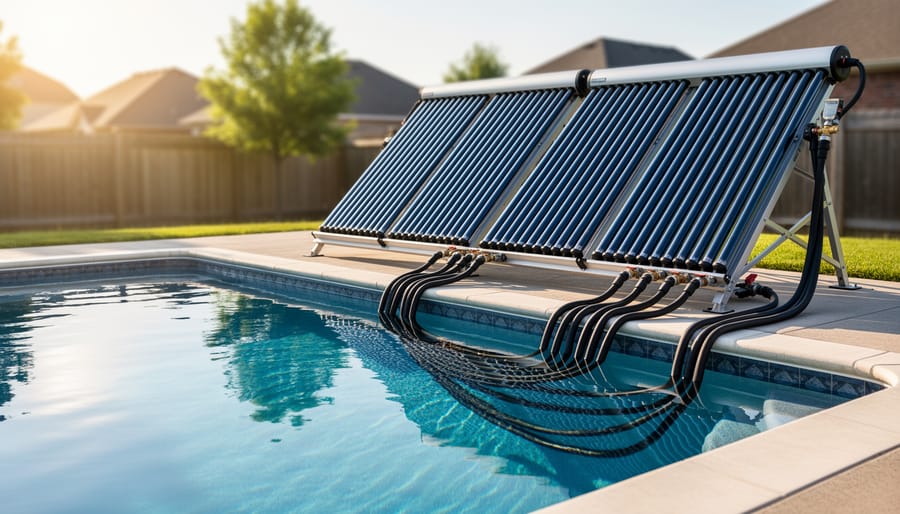
How to Install a Solar Heating System for Your… by Charlesnoble August 25, 2026 You can heat your inground pool with solar panels mounted on your roof, garage, or ground rack, capturing free energy from the sun and extending your swim season by months while slashing heating costs to nearly zero. A properly sized solar heating system circulates pool water through black collector panels…
6 Best Solar Spot Lights of 2026, Tested and Reviewed by Charlesnoble August 8, 2026 After testing dozens of solar spotlights in real-world conditions throughout 2026, the AloftSun Solar Motion Sensor Outdoor Lights emerged as the top overall choice for most homeowners, thanks to its reliable performance and versatility across different landscape lighting scenarios. But picking the right solar spotlight depends entirely on what you’re…
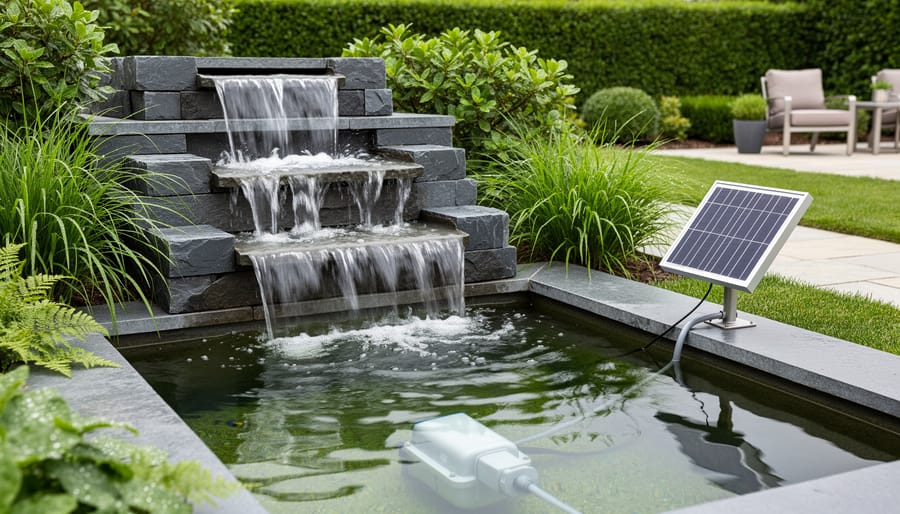
Why Your Garden Needs a Large Solar Water Feature… by Charlesnoble August 13, 2026 Yes, you can power large water features with solar energy, but success depends on matching your pump’s wattage requirements to an adequately sized solar panel array and battery system. Most substantial pond fountains and waterfalls need pumps ranging from 50 to 300 watts, which typically requires a 100-400 watt solar…
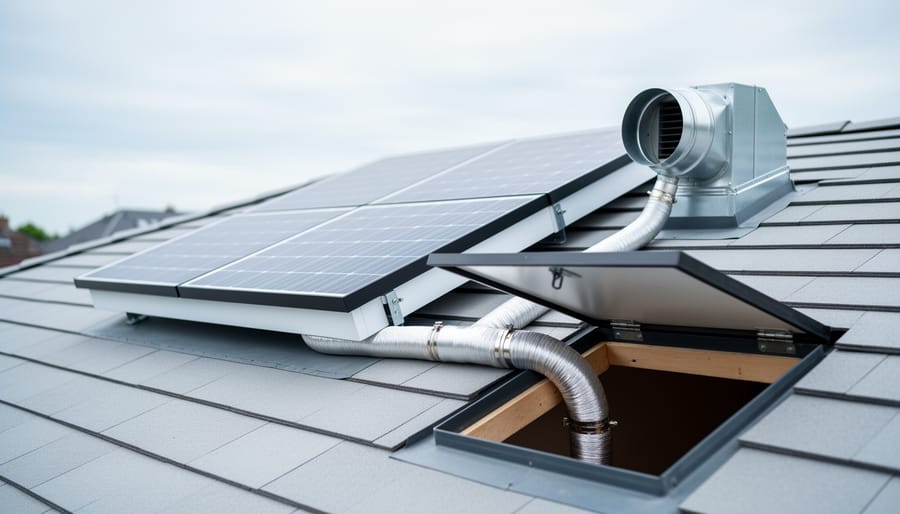
How to Install a Whole House Ventilation System… by Charlesnoble July 12, 2026 Installing a whole house ventilation system powered by solar takes about 6 to 8 hours for a moderately skilled DIYer and delivers continuous fresh air circulation without touching your electric bill. The core method involves mounting a solar panel on your roof to power an intake or exhaust fan, routing…
How to Wire a 7-Way RV Plug: Step-by-Step Diagram… by Charlesnoble September 12, 2026 Wiring a 7-pin RV plug correctly connects your tow vehicle to your trailer’s lights, brakes, and auxiliary power in about 45 minutes with basic hand tools and careful attention to the color-coded wire standard. The diagram follows a specific layout mandated by the RV Industry Association: each pin controls a…
AGM vs. Lead Acid Batteries: Which Is Better for… by Charlesnoble July 23, 2026 AGM batteries outperform traditional flooded lead acid batteries in nearly every practical measure that matters for solar installations, but whether that performance justifies their 50-100% higher upfront cost depends entirely on how hands-off you want your system to be and how often you’ll cycle the battery deeply. After running both…
Subscribe for handpicked DIY projects, exclusive tips, and giveaways.
After testing dozens of solar chargers across camping trips, power outages, and backyard experiments, we found the X-Dragon 20W delivers the most reliable charging performance for phones and tablets, while the Goal Zero Nomad 50W steps up when you need to power larger devices or handle extended emergencies. If you’re planning weekend hikes, assembling an… Read more: 7 Best Solar Powered USB Chargers of 2026, Tested and Reviewed
There is something special about a mature tree. Decades of growth, shade that actually cools the house, branches that the kids climbed, a root system that has quietly held the yard together through every storm. So when circumstances force a move, whether it is a home renovation, a new driveway, or a construction project that… Read more: How to Move a Mature Tree Without Killing It: The Complete Relocation Guide
A mass energy conversion calculator lets you determine how much energy is locked inside any amount of matter using Einstein’s famous equation E=mc². Whether you’re working on a physics assignment or simply curious about the enormous energy potential in everyday objects, the calculation itself takes just seconds once you understand the formula’s three components: energy… Read more: How to Use a Mass Energy Conversion Calculator (Step-by-Step Guide)