Why 9 Volt Solar Panels Are Perfect for Your Portable Power Setup
Updated:
Understand that 9 volt solar panels aren’t actually standardized products delivering exactly 9V—most small panels marketed this way produce anywhere from 6V to 12V depending on sunlight conditions, making them surprisingly versatile for charging batteries, running small electronics, or powering Arduino projects. Match your panel’s actual output voltage to your device’s requirements by checking the specs carefully, since that “9V” label often refers to the nominal voltage rather than what you’ll measure in real-world conditions.
Calculate your power needs before buying by multiplying your device’s current draw by its voltage—a typical 9V battery holds about 500-600 milliamp-hours, so if you’re replacing disposable batteries for a camping radio or trail camera, you’ll need a panel producing at least 100-200 milliamps in full sun to charge efficiently. I learned this the hard way when my first panel took three days to charge a simple weather station because I hadn’t done the math beforehand.
Choose panels with built-in voltage regulators if you’re powering sensitive electronics directly, or add a buck-boost converter for under ten dollars to ensure stable output regardless of cloud cover or panel angle. These small portable solar power systems work best when paired with rechargeable 9V batteries as buffers, giving you consistent power even when the sun isn’t cooperating.
Test your setup at home first by measuring actual voltage and current output with a multimeter during different times of day—this fifteen-minute investment prevents frustration when you’re miles from civilization expecting your panel to work miracles it was never designed to perform.
What Makes 9 Volt Solar Panels Different
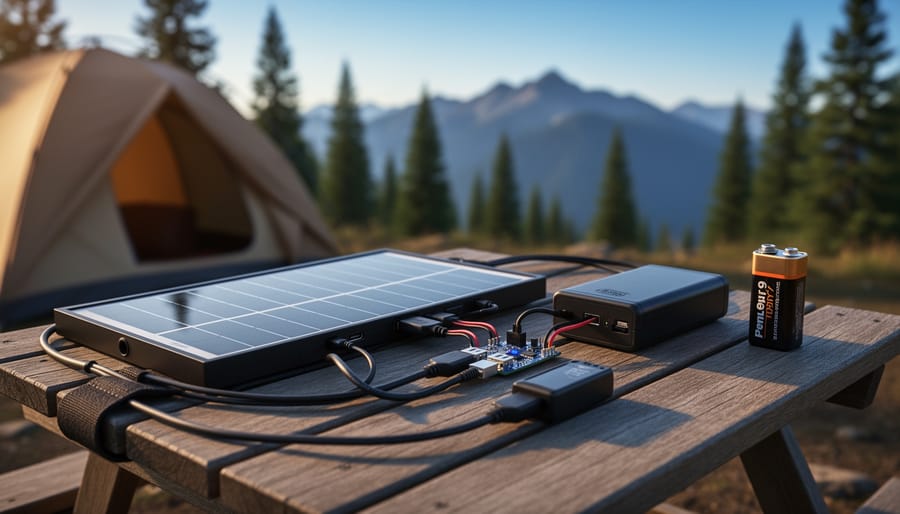
A typical 9-volt solar panel setup with portable battery bank demonstrates the compact nature of these systems for camping applications.
The Voltage Sweet Spot
Here’s something I learned the hard way during my first solar experiments: not all voltages are created equal. When I was powering a small radio on a camping trip, I discovered why 9V hits that perfect balance.
Think of voltage like water pressure in a hose. Too little, and nothing happens. Too much, and you might damage your device. The 9V sweet spot exists because so many portable electronics and battery systems are designed around this standard. Your guitar effects pedals, smoke detectors, and countless Arduino projects all expect this voltage range.
The technical reason is actually pretty straightforward. A standard 9V battery contains six small 1.5V cells stacked together. When you use a 9V solar panel, you’re matching this expected power delivery without needing complex voltage regulation circuits. This means simpler designs, fewer components that can fail, and better compatibility with existing battery holders and charging systems.
For DIY enthusiasts, this compatibility is golden. You can directly charge 9V rechargeable batteries or power devices that typically run on them, without fussing with buck converters or voltage regulators. It’s plug-and-play simplicity that makes your weekend projects actually work on the first try, rather than the fifth.
Size and Portability Advantages
One of the biggest advantages of 9 volt solar panels is their incredibly compact size. Most 9V panels measure only about 4-6 inches across, making them roughly the size of a paperback book or smaller. I remember stuffing my first 9V panel into my camping backpack alongside my tent and sleeping bag without even noticing the extra weight. That’s the kind of convenience you’re looking for when portability matters.
These panels slip easily into laptop bags, emergency kits, or glove compartments where larger panels simply won’t fit. If you’re hiking, biking, or traveling light, every ounce and every inch counts. A 9V panel typically weighs less than half a pound, compared to the several pounds you’d carry with even a modest 20-watt panel.
The compact design also makes them perfect for integrating into small DIY projects. Whether you’re building a portable weather station, a solar-powered bird feeder camera, or a backup charger for your phone, 9V panels won’t dominate your design or require bulky mounting hardware. They’re genuinely pocket-sized power solutions that give you the freedom to experiment without committing to heavy, expensive equipment. For anyone testing the solar waters or needing occasional portable power, this size advantage is genuinely game-changing.
Best Uses for 9 Volt Solar Panels in Portable Systems
Charging Small Electronics and Battery Packs
Here’s where 9V solar panels really shine in everyday use. With the right voltage regulator, these compact panels become perfect companions for keeping your essential gadgets charged during outdoor adventures or emergencies.
I learned this firsthand during a camping trip when my phone battery died just as I needed GPS directions. A small 9V panel with a USB voltage regulator saved the day, slowly bringing my phone back to life while I enjoyed lunch. The key is using a buck converter or dedicated USB charging module to step down the voltage to the safe 5V that most electronics expect.
For powering small electronics like phones and tablets, pair your 9V panel with a lithium battery bank that has built-in charging protection. This creates a buffer system where the panel charges the battery bank throughout the day, and you draw power from the bank as needed. GPS devices, e-readers, and Bluetooth speakers work beautifully with this setup.
Portable battery packs with 5,000-10,000mAh capacity are ideal matches for 9V panels. Expect charging times of 4-8 hours in direct sunlight, depending on panel wattage and battery capacity. Keep realistic expectations though – these panels won’t rapid-charge your devices, but they’ll reliably maintain power for essential electronics when you’re off-grid.
Powering Low-Draw Devices at Camp
When you’re out camping, a 9-volt solar panel becomes your reliable companion for keeping essential low-draw devices running without draining batteries or relying on noisy generators. I remember my first camping trip with a small 9V setup – it transformed how we experienced the outdoors while staying comfortably connected to our basic needs.
LED lighting is probably the most practical application for 9V solar systems at camp. A single 9V panel can easily power LED strip lights inside your tent or around your campsite, providing hours of illumination that makes evening tasks safer and more enjoyable. Most LED camping lanterns draw less than 2 watts, making them perfect candidates for direct solar power. You’ll find plenty of inspiration for creative solar lighting projects that adapt perfectly to camping scenarios.
Small personal fans are another game-changer, especially during summer camping trips. A USB-powered fan typically draws around 2-5 watts, well within the capability of even modest 9V panels. Portable radios and weather alert devices also work beautifully on this voltage, keeping you entertained and informed about conditions.
The key is matching your devices to your panel’s output capacity. Check the power requirements on your gear – anything under 5 watts works reliably with standard 9V panels, giving you genuine energy independence in the backcountry.
Emergency and Backup Power Applications
When the power goes out or you’re far from electrical outlets, 9V solar panels can be genuine lifesavers for critical small devices. I learned this firsthand during a weekend camping trip when my emergency weather radio died just as a storm was rolling in. Having a small 9V panel meant I could trickle-charge the radio enough to stay informed about the developing situation.
These compact panels are perfect additions to emergency preparedness kits because they’re lightweight, take up minimal space, and require no fuel or maintenance. They can keep essential devices running like emergency radios, LED flashlights, small medical equipment monitors, and backup communication devices. Many preppers keep them specifically for charging AA and AAA battery packs that power smoke detectors or emergency lighting during extended outages.
The key advantage in emergency scenarios is their reliability. Unlike batteries that degrade over time while sitting in storage, solar panels remain ready to generate power whenever sunlight is available. For backup power applications, consider pairing your 9V panel with a small rechargeable battery bank to store energy for nighttime use. This combination provides round-the-clock access to limited but crucial power when you need it most.
Choosing the Right 9V Solar Panel for Your Needs
Understanding Wattage and Output
Before you pick up that 9V solar panel, let’s talk about matching power to your project. I learned this the hard way when I tried running a small fan that kept cutting out every few minutes!
Here’s the simple formula: Watts = Volts x Amps. Most 9V solar panels produce between 1 to 3 watts of power. That might not sound like much, but it’s perfect for low-power devices like LED lights, small sensors, or trickle-charging batteries.
Let’s walk through a real example. Say you want to power a security camera that uses 0.5 amps at 9 volts. Multiply those together: 9V x 0.5A = 4.5 watts. You’d need at least a 5-watt panel to run it reliably, factoring in some buffer for cloudy days.
Check your device’s label or manual for its power requirements. Look for either the wattage directly or the voltage and current ratings. If you only see milliamps (mA), just divide by 1000 to get amps. For instance, 200mA equals 0.2 amps.
Remember, solar panels produce peak wattage only in direct sunlight. On overcast days, expect 10-25% of the rated output. That’s why adding a small rechargeable battery as a buffer makes your setup much more reliable, especially for projects that need consistent power throughout the day.
Durability Features for Outdoor Use
When you’re planning to take your 9 volt solar panel outdoors, durability becomes just as important as power output. I learned this the hard way during my first camping trip with a homemade solar setup – one unexpected rain shower taught me everything about proper weatherproofing!
Look for panels with IP65 or higher ratings, which means they can handle dust, splashes, and light rain. For serious outdoor adventurers, IP67-rated panels offer even better protection against temporary water immersion. The junction box where wires connect is particularly vulnerable, so check that it’s properly sealed with silicone or rubber gaskets.
Frame construction matters more than you might think. Aluminum frames provide excellent corrosion resistance while keeping weight down for portability. Some budget panels use plastic frames, which work fine for occasional use but may crack in extreme temperatures. Corner reinforcements add strength without much extra weight – something I always recommend for backpacking applications.
For camping and hiking, consider foldable designs with carrying handles or integrated attachment points. These typically weigh under two pounds and fold down to notebook size. Some models include built-in kickstands that let you angle the panel toward the sun without propping it against rocks or gear.
Tempered glass front panels offer the best scratch resistance, while newer polymer-coated options provide decent protection at lighter weights for ultralight camping setups.
Connecting a 9-volt solar panel to power camping equipment like LED lanterns is straightforward with basic wiring skills.
Building Your Own 9V Portable Solar Power System
Essential Components You’ll Need
Getting started with 9 volt solar panels is easier than you might think, but you’ll need a few key components to make everything work smoothly. Let me walk you through what I’ve learned from building my own setups over the years.
First up is a charge controller. This little device protects your battery from overcharging and damage. For small 9V projects, a simple PWM controller works great and typically costs under $15. I remember frying my first battery by skipping this step, so trust me, it’s worth the investment.
Next, you’ll need a rechargeable battery. A 9V NiMH rechargeable battery is perfect for beginners since it matches your panel’s voltage. If you’re scaling up to power larger devices or building a DIY solar generator, consider a 12V lead-acid or lithium battery instead.
Don’t forget the connectors and wiring. Grab some MC4 connectors (the industry standard for solar), alligator clips for testing, and 18-gauge wire. A simple multimeter is also essential for checking voltage and troubleshooting connections.
Finally, consider adding a small junction box to protect your connections from weather if you’re mounting outdoors. These components form the foundation of any reliable solar setup, and once you understand how they work together, you can tackle increasingly ambitious projects.
Wiring Your System Safely
Getting your 9 volt solar panel connected properly doesn’t have to be intimidating. I learned this the hard way when I once reversed the polarity on my first DIY project and fried a small motor—not my proudest moment! Let me save you from similar mishaps.
First things first: polarity matters. Your solar panel will have two wires, typically red (positive) and black (negative). Always match red to red and black to black when connecting to your device or battery. If you’re unsure, use a multimeter to verify which wire is which before making any connections.
For safer operation, add an inline fuse between your panel and whatever you’re powering. A 1-amp fuse works well for most 9V applications and prevents damage if something goes wrong. You can find these at any hardware store for just a couple dollars.
Use proper connectors rather than twisting wires together. Barrel connectors, alligator clips, or screw terminals all work great and ensure solid, safe connections. Heat shrink tubing over any exposed wire connections adds an extra layer of protection against moisture and accidental shorts.
Before permanently installing anything, test your setup in daylight to confirm everything works as expected. Our comprehensive solar panel setup guide walks through additional connection techniques if you need more detailed instructions for complex projects.
Testing and Troubleshooting Your Setup
Once you’ve connected everything, it’s time to make sure your 9V solar setup actually works. Start by placing your panel in direct sunlight and using a multimeter to measure the output voltage. You should see readings close to 9V (though it might fluctuate between 8V and 11V depending on sunlight intensity). If you’re getting zero or very low readings, check that all your connections are secure and your panel isn’t shaded.
I remember my first project where I spent an hour troubleshooting, only to discover I’d connected the wires backward. Simple mistake, easy fix! If your device isn’t charging or powering on, verify the polarity matches what your device needs. Most 9V electronics have clear positive and negative markings.
Common issues include intermittent power (usually loose connections), no power output (check for damaged panels or faulty wiring), and slower-than-expected charging (remember, 9V panels produce minimal current, so patience is key). Test your system on a sunny day first to establish a baseline before expecting it to work in cloudy conditions.
For ongoing monitoring, consider keeping a simple log of voltage readings at different times of day. This helps you understand your panel’s performance patterns and troubleshoot future issues more effectively.
Testing solar panel output with a multimeter helps verify performance and troubleshoot issues in real-world conditions.
Real-World Performance: What to Actually Expect
Cloudy Days and Less-Than-Perfect Conditions
Let me be straight with you: 9 volt solar panels and cloudy weather aren’t best friends. During one camping trip in Oregon, I watched my panel’s output drop to about 10-25% of its sunny-day performance when thick clouds rolled in. That’s just physics at work, but it doesn’t mean your trip is ruined.
Here’s what I’ve learned works. First, position your panel to capture whatever diffuse light is available, even on overcast days, something is better than nothing. Second, lower your expectations and plan accordingly. If you’re counting on charging devices, start earlier in the day and give yourself extra time. I typically double my estimated charging time on cloudy days.
Consider bringing a small USB power bank as backup. Charge it on sunny days, then use it as a buffer when conditions aren’t ideal. This two-tier approach has saved me more than once. Also, remember that partial sun, like those brief breaks between clouds, still provides decent charging opportunities. Stay patient and flexible. Your 9V panel will still work, it just needs a bit more cooperation from you and a little luck with the weather windows.
Maximizing Your Panel’s Efficiency
Getting the most from your 9 volt solar panel doesn’t require fancy equipment, just a bit of attention to the basics. First up, positioning matters more than you might think. Angle your panel directly toward the sun whenever possible. I learned this the hard way during a camping trip when my panel was propped against a tree at a weird angle. I barely got half the charge I expected! Even a 15-degree difference can significantly impact output.
Keep those panels clean, friends. Dust, pollen, and bird droppings are your panel’s enemies. A simple wipe-down with a damp microfiber cloth every few weeks works wonders. I once forgot about my outdoor panel for a month, and the grime reduced efficiency by nearly 30 percent.
Temperature also plays a role. While panels need sunlight, excessive heat can actually reduce efficiency. If you’re using panels in scorching conditions, try to ensure some airflow underneath to prevent overheating.
Finally, check your connections regularly. Loose wires or corroded terminals can waste precious power. A quick visual inspection every month takes just minutes but prevents frustrating troubleshooting later. Remember, consistency in these simple maintenance habits means reliable power when you need it most.
Starting your solar journey with a 9 volt panel is like learning to ride a bike with training wheels. It’s manageable, forgiving, and builds the confidence you need to tackle bigger projects down the road. I remember my first 9V setup powering a small weather station, and that little success sparked a passion that transformed my entire approach to energy independence.
These compact panels won’t power your entire home, but that’s not the point. They teach you the fundamentals of solar technology without the intimidation factor or massive upfront investment. You’ll learn about voltage matching, charge controllers, and energy budgeting on a scale where mistakes are cheap lessons rather than expensive disasters.
The beauty of starting small is that you can always expand. Today’s portable phone charger project might become next month’s camping power station or next year’s off-grid cabin setup. Each success builds on the last, and the community of DIYers out there is incredibly supportive and ready to help.
Ready to take the next step? Head over to our solar calculator tool to see what your specific project needs, and don’t forget to join our DIY solar community forum where thousands of hobbyists share their wins, troubleshoot challenges, and celebrate the journey toward energy independence together.
How useful was this post?
Click on a star to rate it!
Average rating 0 / 5. Vote count: 0
No votes so far! Be the first to rate this post.
We are sorry that this post was not useful for you!
Let us improve this post!
Tell us how we can improve this post?
charlesnoble
Here at Spheral Solar, I’m a hands-on solar power enthusiast, constantly exploring and experimenting with DIY solutions. I’m dedicated to sharing my discoveries, insights, and even the bumps I hit along the way, all in the pursuit of a more sustainable future.
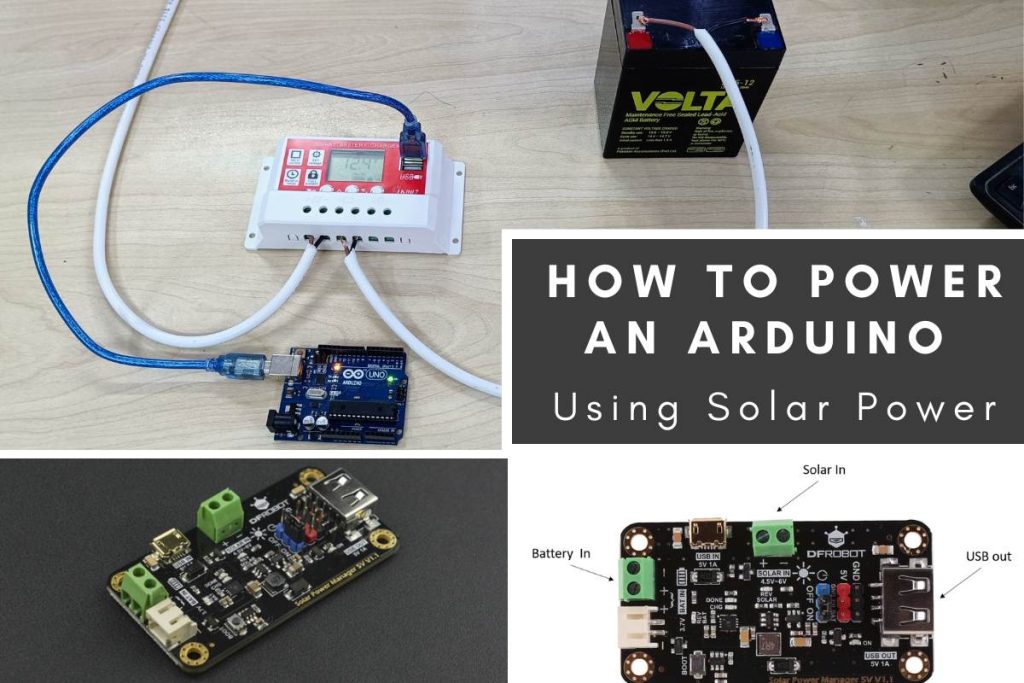
3 Ways to Power an Arduino With Solar Power by Charlesnoble April 24, 2023 To power an Arduino board using solar power, you need a solar panel to generate solar power, a rechargeable battery to store and supply power to your Arduino, and a method to regulate the voltage from the solar panel and prevent overcharging. You can select a solar charge controller with…
Why 9 Volt Solar Panels Are Perfect for Your… by Charlesnoble March 9, 2026 Understand that 9 volt solar panels aren’t actually standardized products delivering exactly 9V—most small panels marketed this way produce anywhere from 6V to 12V depending on sunlight conditions, making them surprisingly versatile for charging batteries, running small electronics, or powering Arduino projects. Match your panel’s actual output voltage to your…
Why 9 Volt Solar Panels Are Perfect for Your… by Charlesnoble March 9, 2026 Understand that 9 volt solar panels aren’t actually standardized products delivering exactly 9V—most small panels marketed this way produce anywhere from 6V to 12V depending on sunlight conditions, making them surprisingly versatile for charging batteries, running small electronics, or powering Arduino projects. Match your panel’s actual output voltage to your…
Why 9 Volt Solar Panels Are Perfect for Your… by Charlesnoble March 9, 2026 Understand that 9 volt solar panels aren’t actually standardized products delivering exactly 9V—most small panels marketed this way produce anywhere from 6V to 12V depending on sunlight conditions, making them surprisingly versatile for charging batteries, running small electronics, or powering Arduino projects. Match your panel’s actual output voltage to your…
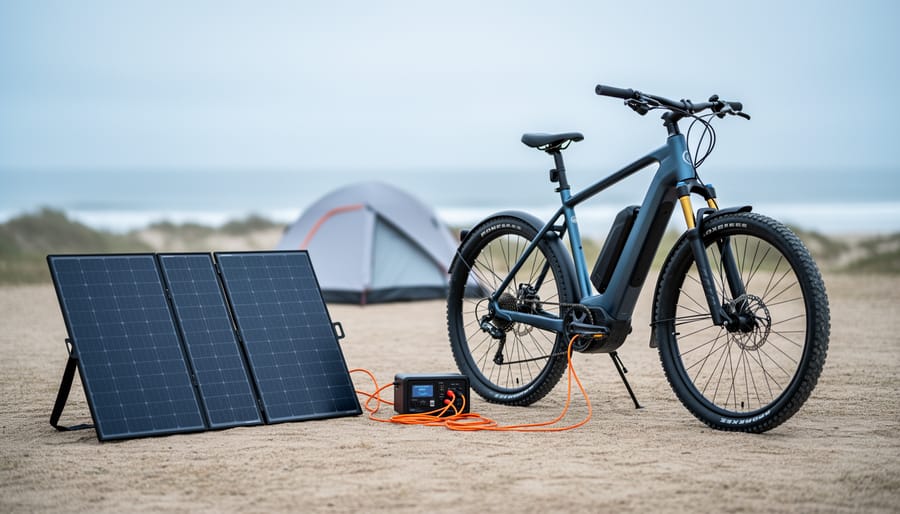
How I Built a 48V Ebike Solar Charger That Works Anywhere by Charlesnoble January 14, 2026 Calculate your ebike’s battery capacity in watt-hours by multiplying 48 volts by your amp-hour rating—this determines the minimum solar panel wattage you’ll need. A standard 48V 14Ah ebike battery holds 672Wh, requiring at least a 200-watt solar panel for a full day’s charge in optimal sunlight conditions. Match your solar…
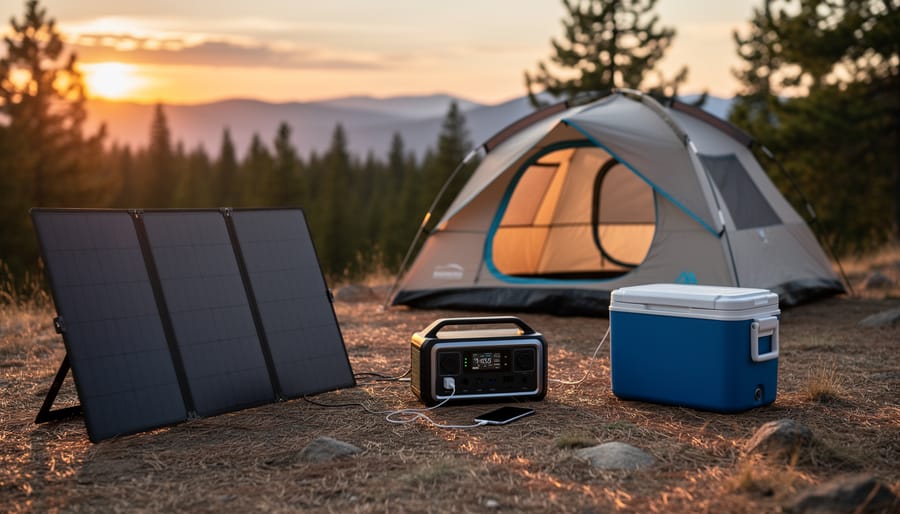
Why Your Next Camping Trip Needs a Portable Solar… by Charlesnoble January 24, 2026 Picture yourself camping under a starlit sky, phone at 5%, miles from the nearest outlet. Or imagine a summer storm knocking out power while your refrigerator full of food slowly warms. These moments reveal a simple truth: energy independence isn’t just convenient—it’s essential. Portable solar power systems have evolved far…
Subscribe for handpicked DIY projects, exclusive tips, and giveaways.
Understand that 9 volt solar panels aren’t actually standardized products delivering exactly 9V—most small panels marketed this way produce anywhere from 6V to 12V depending on sunlight conditions, making them surprisingly versatile for charging batteries, running small electronics, or powering Arduino projects. Match your panel’s actual output voltage to your device’s requirements by checking the… Read more: Why 9 Volt Solar Panels Are Perfect for Your Portable Power Setup
Understand that 9 volt solar panels aren’t actually standardized products delivering exactly 9V—most small panels marketed this way produce anywhere from 6V to 12V depending on sunlight conditions, making them surprisingly versatile for charging batteries, running small electronics, or powering Arduino projects. Match your panel’s actual output voltage to your device’s requirements by checking the… Read more: Why 9 Volt Solar Panels Are Perfect for Your Portable Power Setup
Understand that 9 volt solar panels aren’t actually standardized products delivering exactly 9V—most small panels marketed this way produce anywhere from 6V to 12V depending on sunlight conditions, making them surprisingly versatile for charging batteries, running small electronics, or powering Arduino projects. Match your panel’s actual output voltage to your device’s requirements by checking the… Read more: Why 9 Volt Solar Panels Are Perfect for Your Portable Power Setup