Why a 7 kWh Battery Might Be Your Solar System’s Sweet Spot
Updated:
Match a 7 kWh battery to your actual energy usage by checking your utility bills for daily consumption patterns. If your household uses 20-30 kWh per day, this size covers roughly 4-6 hours of evening power or essential loads during an outage—perfect for keeping your refrigerator, internet, and a few lights running overnight.
Calculate whether 7 kWh fits your backup priorities by listing which appliances matter most during grid failures. A typical refrigerator draws 150-200 watts, LED lighting adds another 100 watts, and your router needs about 10 watts. That’s roughly 260-310 watts combined, meaning a 7 kWh battery could sustain these essentials for 20-25 hours straight before depletion.
Compare 7 kWh against other common sizes to understand where it sits in the market. Smaller 5 kWh units work for minimalist setups or partial home backup, while 10-13 kWh systems support whole-home needs. The 7 kWh sweet spot serves single-person households, small apartments, or targeted backup systems where you’re selective about what stays powered.
Consider modular expansion capabilities when finding the right solar battery in this capacity range. Many manufacturers design 7 kWh units to stack or connect with additional batteries later, letting you start small and scale up as your solar array grows or your energy independence goals evolve.
Evaluate real-world depth of discharge limitations that affect usable capacity. Most lithium batteries shouldn’t drain below 10-20% for longevity, meaning your 7 kWh system practically delivers 5.6-6.3 kWh of reliable storage. This distinction matters when sizing your system against actual needs rather than manufacturer specifications alone.
Understanding the 7 kWh Battery Sweet Spot
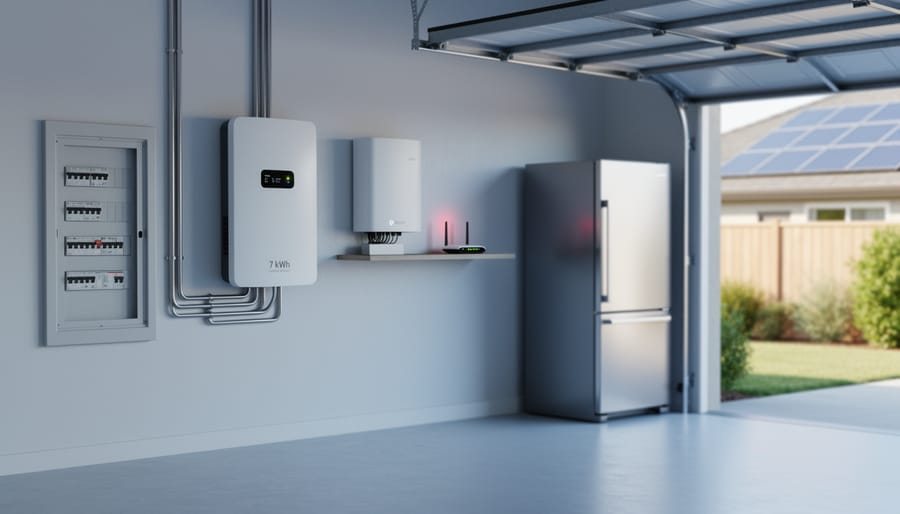
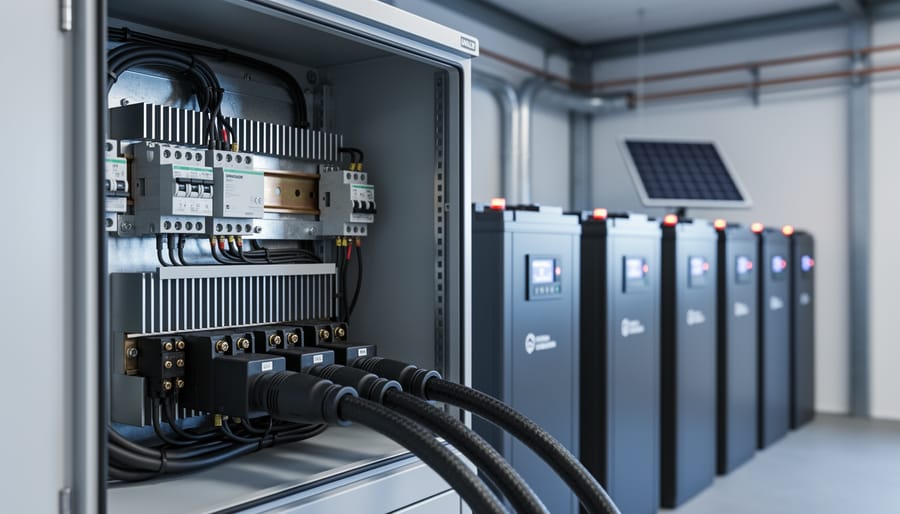
A 7 kWh lithium battery system installed in a typical residential garage provides backup power for essential home systems.
What 7 kWh Actually Powers in Real Life
Let me break down what 7 kWh of stored energy actually means for your home. When I first got into solar, I’ll be honest – numbers like “kilowatt-hours” felt abstract. But once I started thinking about it in terms of real appliances, everything clicked.
Think of it this way: a 7 kWh battery stores enough energy to run your full-size refrigerator for roughly 35-40 hours straight. That’s more than a day and a half of keeping your food cold during a power outage. Pretty reassuring, right?
Here are some practical examples that really put it in perspective:
Your LED lighting throughout the house (using about 100 watts total) could run for 70 hours – nearly three full days. A laptop drawing 50 watts? That’s 140 hours of work time, or almost six full days. Your Wi-Fi router and modem together use around 20 watts, giving you nearly two weeks of internet connectivity.
For everyday scenarios, a 7 kWh battery could power your essentials during an overnight outage quite comfortably. Picture running your refrigerator (200W), a few LED lights (50W), your phone chargers (20W), and the Wi-Fi router (20W) simultaneously. That’s about 290 watts total, meaning your battery could keep everything running for roughly 24 hours.
Of course, if you’re running power-hungry appliances like an electric water heater (4,500W) or central air conditioning (3,500W), that 7 kWh depletes much faster – we’re talking 1-2 hours. This is why understanding your actual power needs matters so much when choosing battery capacity.
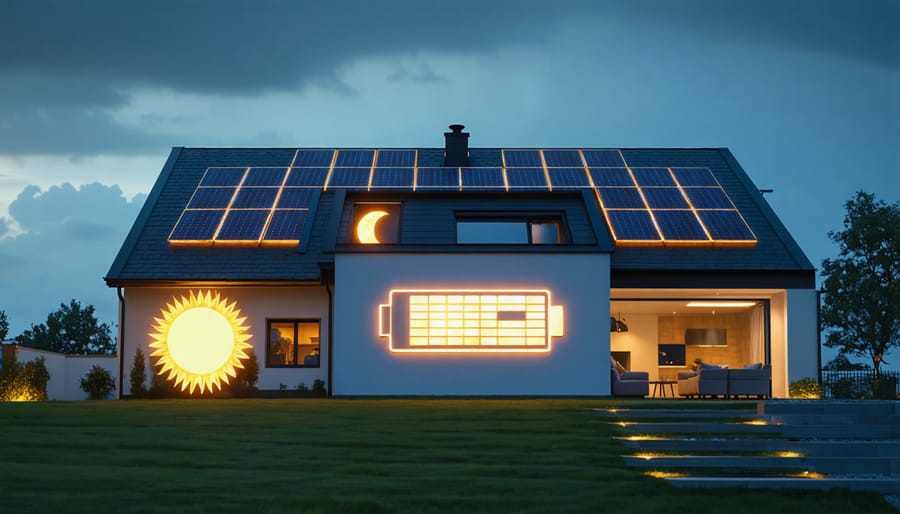
A 7 kWh battery can power essential appliances in a small home or cabin, including refrigeration, lighting, and electronics throughout the evening.
The Ideal User for a 7 kWh System
A 7 kWh battery isn’t a one-size-fits-all solution, but it might be just right for you depending on your energy needs and living situation.
This capacity works beautifully for small homes or apartments where daily energy consumption stays relatively modest. If you’re someone who’s mindful about energy use, running efficient appliances and LED lighting, a 7 kWh system can cover your essential overnight needs quite comfortably.
I’ve seen these batteries become incredibly popular with the RV and van life community. The capacity provides enough power for lighting, a small refrigerator, laptop charging, and entertainment systems without taking up excessive space or adding too much weight. It’s that sweet spot between capability and portability.
Off-grid cabin owners find 7 kWh systems particularly practical. When paired with solar panels, this size handles weekend or vacation property needs without the expense of larger installations. You’ll have enough juice for basic comforts while maintaining that off-grid independence.
For backup power during outages, a 7 kWh battery can keep your refrigerator running, charge devices, and power essential lighting for 12-24 hours, depending on your usage patterns. It won’t run your entire house indefinitely, but it provides meaningful security during short-term grid disruptions.
How 7 kWh Stacks Up Against Other Battery Sizes
Smaller Systems (3-5 kWh): When Less Is Enough
Sometimes smaller really is better. If you’re just getting started with solar or have modest energy needs, a 3-5 kWh battery might be exactly what you need. These compact powerhouses typically cost $2,000-4,000, making them much friendlier to your budget than their larger cousins.
I remember helping my neighbor install her first 4 kWh system. She was nervous about jumping into solar, but this smaller setup was perfect for her needs. It powered her essential circuits during evening hours and gave her confidence to expand later.
The advantages go beyond price. Smaller batteries are lighter and easier to install, especially if you’re tackling this as a DIY project. They also work beautifully for specific applications like powering a workshop, running essential appliances during brief outages, or supplementing grid power during peak rate hours.
Choose a smaller system when you only need backup for a few critical circuits, your daily energy consumption is under 15 kWh, or you’re testing the solar waters before committing to a larger investment. They’re also ideal for off-grid cabins, RVs, or vacation homes where space and weight matter.
The trade-off? Limited runtime and fewer simultaneous loads. But for many situations, that’s perfectly acceptable.
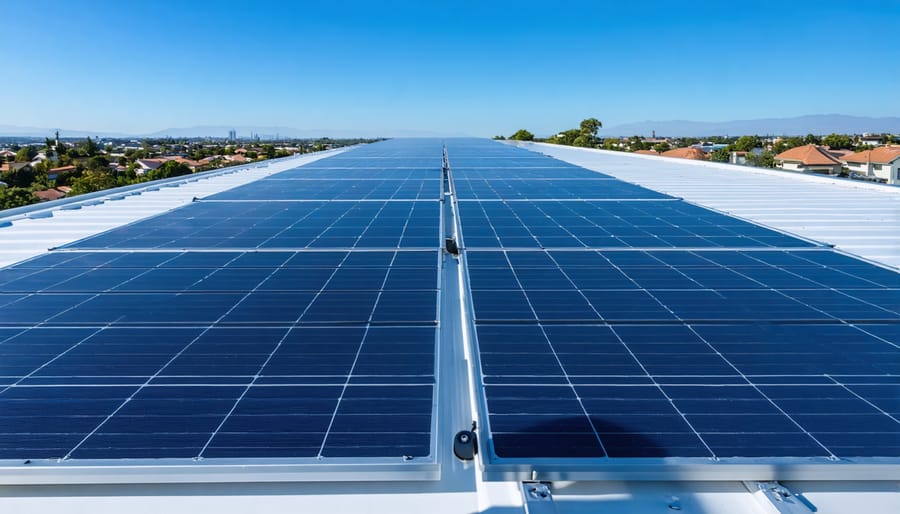
Battery systems come in various capacities, with 7 kWh occupying the middle ground between compact and whole-home solutions.
Mid-Range (7-10 kWh): The Goldilocks Zone
When I first started exploring DIY solar, I kept hearing people say you need “huge” battery banks to make solar worthwhile. That intimidated me until I discovered the 7-10 kWh sweet spot, what I call the Goldilocks Zone. It’s not too small, not too large, just right for most home solar projects.
Here’s why this range works so well. A 7 kWh battery gives you enough juice to power essential loads during an outage or overnight. We’re talking your refrigerator, some lights, a few devices charging, and maybe a fan or two. That’s genuinely useful without breaking the bank. You’re looking at roughly $3,000-$5,000 for quality systems in this range, compared to $7,000-plus for larger 15 kWh units.
The practicality factor matters too. These batteries are manageable for DIY installation. Most 7-10 kWh lithium batteries weigh between 100-200 pounds, heavy but still movable with a helper. Compare that to multiple lead-acid batteries totaling the same capacity, you’d need maybe 6-8 units, each requiring individual wiring and maintenance.
For the average DIYer running a small solar setup, this capacity lets you experiment, learn the ropes, and actually see meaningful results without a massive upfront investment. You can always expand later once you understand your actual usage patterns. That’s the beauty of starting in this range.
Larger Systems (13+ kWh): When You Need the Extra Juice
Sometimes 7 kWh just won’t cut it, and that’s perfectly okay. If you’re running a full-sized home with central air conditioning, multiple refrigerators, an electric water heater, or power-hungry workshop equipment, you’ll likely need to scale up to 13 kWh or more for meaningful backup capability.
I learned this the hard way when I first installed my system. My household’s evening energy consumption during summer easily hit 15-20 kWh, and my initial 7 kWh battery barely made a dent during outages. We couldn’t run the AC, which in Texas heat is basically non-negotiable.
Larger systems become essential when you want true whole-home backup that doesn’t require you to think about what you’re using. With 13-15 kWh, you can run your refrigerator, lights, internet, and even some climate control without constant calculations. For families with medical equipment requiring uninterrupted power, this extra capacity provides genuine peace of mind.
These systems also make sense if you’re pursuing energy independence with time-of-use rate optimization. The larger capacity lets you store more cheap nighttime electricity to use during expensive peak hours, maximizing your savings over time.
The tradeoff? Cost and space. Expect to invest $10,000-$18,000 or more for these systems, and you’ll need adequate wall or floor space for installation. But for high-consumption households or those serious about backup power, the investment pays dividends in reliability and capability.
Top 7 kWh Battery Options Worth Considering
Lithium Iron Phosphate (LiFePO4) Options
When you’re hunting for a 7 kWh lithium iron phosphate battery system, you’ll quickly discover that Battle Born and Renogy dominate the conversation among DIY solar enthusiasts, and for good reason. Let me walk you through some solid options that have proven themselves in real-world applications.
Battle Born’s approach to reaching 7 kWh capacity typically involves connecting multiple 100Ah 12V batteries in series and parallel configurations. You’d need about fourteen of their flagship 100Ah units to hit that 7 kWh sweet spot. What makes Battle Born stand out is their exceptional 10-year warranty and reputation for customer support. I’ve personally seen these batteries perform flawlessly in off-grid setups for years. They’re genuinely DIY-friendly with built-in Battery Management Systems that protect against the common mistakes beginners make. The downside? They’re pricier upfront, though many consider it an investment in peace of mind.
Renogy offers a more budget-conscious path to 7 kWh with their lithium iron phosphate battery lineup. Their 12V 200Ah batteries mean you’d need fewer units to reach your target capacity, which simplifies installation and reduces connection points where problems could develop. Renogy’s 5-year warranty is shorter than Battle Born’s, but their pricing makes them attractive for hobbyists testing the waters. From community feedback, these batteries deliver reliable performance for typical home backup and RV applications, though some users report the Bluetooth monitoring app could be more intuitive.
For those wanting a more integrated solution, companies like EG4 and SOK Battery offer pre-configured server rack-style LiFePO4 systems in the 7 kWh range. These arrive ready to connect with fewer assembly headaches. SOK’s 48V models particularly shine for DIYers because they come with detailed documentation and active community forums where you’ll find troubleshooting help from fellow enthusiasts who’ve navigated the same challenges you’re facing.
All-in-One Battery Solutions
If you’re looking for a simple, plug-and-play solution, all-in-one battery systems around 7 kWh might be exactly what you need. These portable power stations have really changed the game for people who want backup power without the hassle of assembling separate components.
Brands like EcoFlow, Bluetti, and Jackery offer these integrated systems that bundle everything together: the battery cells, inverter, charge controller, and multiple outlets all in one sleek unit. I remember when Charles first tried an EcoFlow Delta Pro system at a friend’s cabin. He was amazed at how you could literally unbox it, plug in your solar panels, and start powering devices within minutes. No wiring diagrams, no voltage calculations, just straightforward power.
The beauty of these systems is their versatility. Most 7 kWh all-in-one units include multiple AC outlets, USB ports, and even car charging sockets. You can run your refrigerator during a power outage, charge your tools at a remote worksite, or keep your electronics running during a camping trip. The built-in displays show you exactly how much power you’re using and how much battery life remains, which takes the guesswork out of energy management.
One thing to consider: these systems typically cost more upfront than building your own from individual components. You’re paying for convenience and warranty coverage. However, for many people, especially those just starting their solar journey, the peace of mind and simplicity make the extra cost worthwhile. Plus, they’re expandable. Most brands let you add extra battery modules to increase your capacity as your needs grow, so you’re not locked into 7 kWh forever.
Budget-Friendly DIY Build Options
Building your own 7 kWh battery bank can save you 40-60% compared to pre-assembled systems, typically costing between $1,400 and $2,100 in materials. You’ll need lithium cells (usually prismatic LiFePO4), a battery management system, busbars, and an enclosure.
Charles, a member of our community, built his first 7 kWh bank using 16 280Ah cells in a series configuration. “The hardest part wasn’t the assembly,” he shares, “it was patience-testing each cell and ensuring proper balance.” His total cost came to $1,650, including all safety components.
This approach requires intermediate electrical knowledge and basic tools like a spot welder or quality terminals. Plan for 8-12 hours of work spread over a weekend. Key skills include understanding voltage calculations, proper cell balancing, and safe handling of high-capacity lithium cells.
The trade-off is clear: significant savings and customization options versus warranty coverage and plug-and-play convenience. If you’re comfortable following detailed guides and have basic electrical experience, DIY building offers excellent value. However, those preferring guaranteed performance and professional support should consider pre-built options. Always prioritize safety with proper fusing, temperature monitoring, and fire-resistant enclosures.
Key Factors Beyond Capacity
Depth of Discharge and Usable Capacity
Here’s something I learned the hard way during my first battery installation: a 7 kWh battery doesn’t always give you the full 7 kWh to use. This comes down to something called Depth of Discharge, or DoD for short.
Think of DoD as a safety buffer for your battery’s health. Most manufacturers recommend not draining your battery completely because it significantly shortens its lifespan. For example, a battery with 90% DoD means you can safely use 6.3 kWh of that 7 kWh capacity. Some batteries allow 100% DoD, but this varies by chemistry and brand.
This matters more than you might think for real-world performance. If you’re planning to power specific appliances during an outage, you need to calculate based on usable capacity, not the advertised total. I once had a neighbor who assumed his full capacity was available and got caught short during a power outage because he’d planned too tightly.
The good news is that modern batteries, especially lithium-ion and LiFePO4 battery performance types, typically offer higher DoD percentages than older lead-acid batteries. Always check your battery’s specifications to know exactly how much energy you can count on when you need it most.
Cycle Life and Warranty Considerations
When I first started comparing 7 kWh batteries for my workshop, I learned quickly that the sticker price tells only part of the story. The real value comes down to how many charge-discharge cycles a battery can handle before its capacity degrades significantly.
Most quality lithium batteries offer between 3,000 to 6,000 cycles at 80% depth of discharge, though some premium models claim up to 10,000 cycles. Here’s a practical way to think about it: if you cycle your battery daily, 3,000 cycles means roughly 8 years of use, while 6,000 cycles doubles that to 16 years. To calculate the true cost per cycle, divide the battery price by the guaranteed cycles. A $4,000 battery with 4,000 cycles costs you $1 per cycle, while a $5,500 battery with 6,000 cycles actually costs less at roughly $0.92 per cycle.
Pay close attention to warranty terms too. Look for warranties that guarantee specific capacity retention, like 70-80% capacity after 10 years, rather than just warranty duration alone. Some manufacturers only cover defects, not normal degradation, which makes a huge difference in long-term protection. The best warranties combine both a cycle count guarantee and a time-based guarantee, giving you whichever protection lasts longer.
Charge and Discharge Rates That Actually Matter
When I first started researching batteries for my solar setup, the term “C-rating” had me completely confused. But once I understood it, everything clicked into place. Think of C-rating as how fast your battery can charge or discharge compared to its total capacity.
Here’s the simple version: A 1C rating means your 7 kWh battery can fully charge or discharge in one hour. That’s 7 kilowatts of power. A 0.5C rating means it takes two hours (3.5 kilowatts), while a 2C rating does it in 30 minutes (14 kilowatts).
Why does this matter? If you’re planning to charge your battery from solar panels during limited daylight hours, you need a decent charge rate. Similarly, if you want to run power-hungry appliances like air conditioning or electric water heaters during an outage, you need a high discharge rate.
Most quality 7 kWh batteries offer between 0.5C to 1C ratings, which works perfectly for typical home use. I learned the hard way that cheaper batteries with lower C-ratings might save money upfront but severely limit your system’s flexibility.
Making Your 7 kWh Battery Work Harder
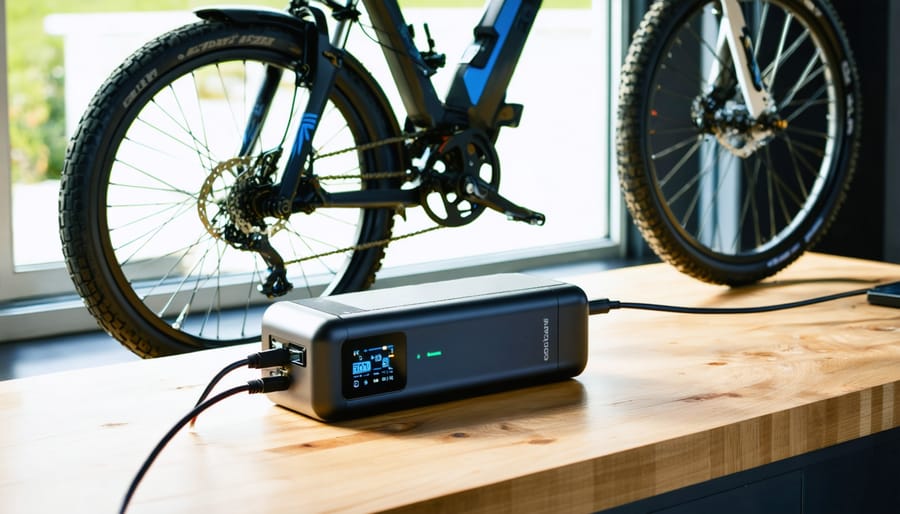
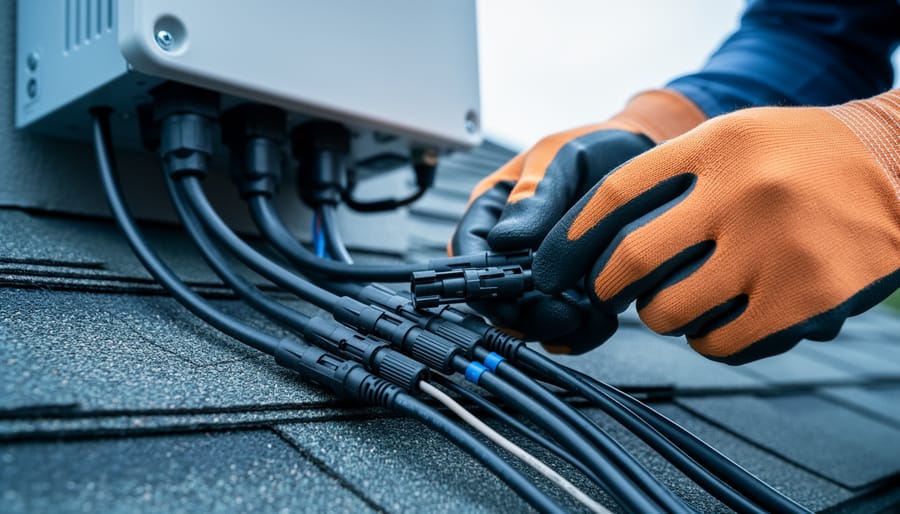
Proper battery connections and maintenance practices ensure optimal performance and longevity of your solar energy storage system.
Optimal Charging Practices
Getting the most life from your 7 kWh battery starts with smart charging habits. I learned this the hard way when my first battery system underperformed because I didn’t understand the basics. Following optimal charging practices can add years to your battery’s lifespan.
First, avoid completely draining your battery regularly. Lithium batteries, which most 7 kWh systems use, prefer staying between 20% and 80% charge. Think of it like your smartphone—constantly running it to zero degrades capacity over time. Set your charge controller to maintain this sweet spot whenever possible.
Temperature matters more than most people realize. Keep your battery in a climate-controlled space if you can. Extreme heat or cold forces the battery to work harder, shortening its life. My garage setup works great because it stays relatively moderate year-round.
Finally, ensure your solar panels can adequately charge your battery without overloading it. A proper charge controller prevents overcharging, which can damage cells. Match your panel output to your battery’s recommended charging rate, typically found in the manufacturer’s specifications.
Temperature Management for Longevity
Your 7 kWh battery’s lifespan depends heavily on temperature. I learned this the hard way when I stored my first battery setup in an uninsulated garage. Extreme heat or cold can reduce capacity by up to 20% and significantly shorten overall battery life.
The sweet spot for lithium batteries is between 50-77°F (10-25°C). Above 95°F, you’re accelerating degradation. Below freezing, your battery won’t charge efficiently and may even shut down for protection.
For DIY temperature management, start simple. If you’re installing indoors, choose a climate-controlled space like a basement or utility room. For outdoor installations, consider an insulated battery enclosure. You can build one yourself using foam board insulation and weatherproof plywood, adding ventilation fans for airflow.
In hot climates, shade is your friend. A simple roof overhang or strategically placed shade cloth can drop temperatures by 15-20 degrees. For cold weather, heating pads designed for battery boxes work wonders and draw minimal power.
Some modern 7 kWh batteries include built-in thermal management systems, but understanding these basics helps you make smarter placement decisions and extends your investment’s life considerably.
Using Our Calculator to Size Your Battery Needs
Here’s the honest truth: figuring out your exact battery needs can feel like solving a puzzle with missing pieces. That’s why we built our battery sizing calculator to take the guesswork out of the equation.
I remember when I was starting out, I spent hours with spreadsheets trying to calculate my power needs. Now, our calculator does the heavy lifting for you. Just plug in your essential appliances, how long you want backup power, and your typical usage patterns, and it’ll show you whether a 7 kWh battery hits the sweet spot or if you need something different.
The beauty of this tool is that it’s designed for real people, not engineers. You don’t need to know watts from volts to get accurate results. And here’s where community comes in: once you run your numbers, hop into our forums and share your setup. Other DIYers love comparing notes, and you might discover creative ways to optimize your system that the calculator doesn’t cover. Together, we’re building smarter solar solutions.
Finding the right battery size is honestly one of the most satisfying parts of planning a solar setup. I remember when I was helping my neighbor figure out their system, and we realized a 7 kWh battery was the sweet spot between their budget and their actual energy needs. It just clicked, and seeing their system run smoothly months later reminded me why getting this decision right matters so much.
A 7 kWh battery is the right choice when you need reliable backup for essential appliances during outages, want to maximize self-consumption from a modest solar array, or you’re starting smaller with plans to expand later. It bridges the gap between entry-level options and whole-home solutions beautifully.
When comparing your options, prioritize three things: depth of discharge, which determines how much usable capacity you actually get; warranty length and cycle life, because this is a long-term investment; and compatibility with your existing or planned solar setup. Don’t get caught up in every technical specification. Focus on what matches your real-world usage patterns.
Your solar journey doesn’t have to be overwhelming. Start with understanding your needs, compare a few solid options, and take that first step. Whether you’re powering a tiny home, backing up critical circuits, or dipping your toes into energy independence, there’s a 7 kWh battery that fits your situation. Ready to explore more? Check out our other solar battery comparisons to see how different capacities stack up and find the perfect match for your unique energy goals.
How useful was this post?
Click on a star to rate it!
Average rating 0 / 5. Vote count: 0
No votes so far! Be the first to rate this post.
We are sorry that this post was not useful for you!
Let us improve this post!
Tell us how we can improve this post?
charlesnoble
Here at Spheral Solar, I’m a hands-on solar power enthusiast, constantly exploring and experimenting with DIY solutions. I’m dedicated to sharing my discoveries, insights, and even the bumps I hit along the way, all in the pursuit of a more sustainable future.
Why Your RV Solar System Isn’t Charging (And How to Fix It) by Charlesnoble May 6, 2026 Picture this: You’re parked at a stunning boondocking spot, miles from the nearest electrical hookup, and your RV batteries are draining fast. Your fridge starts warming, lights dim, and you’re left wondering if you’ll need to pack up and find a campground. I’ve been there, and it’s frustrating. RV solar…
How Solar Energy Actually Works in Your Home (And… by Charlesnoble December 5, 2025 Capture sunlight with photovoltaic panels that convert solar radiation into direct current electricity through semiconductor technology. Position your panels at the optimal angle for your latitude—typically between 30 and 45 degrees in most locations—to maximize energy absorption throughout the day. Store excess electricity in deep-cycle lithium or lead-acid batteries, which…
How a 7kW Solar System With Battery Backup Keeps… by Charlesnoble October 15, 2025 A 7kW solar system with battery backup represents the sweet spot for residential energy independence, typically powering a 3-4 bedroom home while providing crucial backup during grid outages. This complete solar solution combines high-efficiency solar panels capable of generating 28-32 kWh daily with advanced lithium battery storage systems storing 10-15…
Build Your Perfect Solar Setup with This Power… by Charlesnoble October 23, 2025 Calculate your ideal solar system size in minutes instead of hours with a reliable solar power calculator – the essential first step that separates successful installations from costly mistakes. Whether you’re planning your first off-grid cabin setup or upgrading your home’s existing solar array, accurate system sizing determines everything from…
Stop Killing Your E-Bike Battery: Charging Mistakes… by Charlesnoble November 6, 2025 Charge your e-bike battery to only 80% for daily rides—this single habit can double its usable lifespan compared to always topping off to 100%. Store the battery at room temperature between 32°F and 77°F, removing it from the bike during extreme weather since heat above 90°F accelerates degradation faster than…
Why LFP Batteries Changed Everything About Solar… by Charlesnoble April 3, 2026 Match your LFP battery capacity to your actual lighting needs by calculating your nightly watt-hour consumption and multiplying by three—this gives you enough storage for cloudy stretches without overspending on unused capacity. A 20-watt LED running five hours nightly needs a 300Wh minimum battery, which translates to a 100Ah 12V…
Subscribe for handpicked DIY projects, exclusive tips, and giveaways.
Charging a battery bank with a 3-phase inverter requires connecting your inverter’s AC output to a compatible battery charger or hybrid inverter system that can convert the 3-phase power back to DC for storage. Most DIY solar setups achieve this by using a hybrid inverter that handles both solar input and battery charging simultaneously, or… Read more: How to Wire and Configure a Battery Inverter 3 Phase System for Off-Grid Solar
Wiring a 7-pin RV plug correctly connects your tow vehicle to your trailer’s lights, brakes, and auxiliary power in about 45 minutes with basic hand tools and careful attention to the color-coded wire standard. The diagram follows a specific layout mandated by the RV Industry Association: each pin controls a distinct function, from left turn… Read more: How to Wire a 7-Way RV Plug: Step-by-Step Diagram and Setup Guide
Nine times out of ten, an E050 arc fault error on your solar inverter means a loose connection somewhere in your DC wiring. Before you panic or call an expensive technician, check every MC4 connector between your panels and inverter. A single connection that wasn’t snapped fully closed or has corroded from weather exposure will… Read more: Why Is My Solar Inverter Showing Arc Fault E050? Causes and How to Fix It