What Is a 3 Phase Solar Inverter (and How Does It Work)?
Updated:
A 3 phase solar inverter is a device that converts the DC power from your solar panels into three-phase AC power: three alternating currents running in a staggered rhythm, each offset by one-third of a cycle. That steady, overlapping delivery is what lets larger motors, workshop machinery, and bigger homes draw smooth, balanced power without the shuddering peaks and dips of a single phase.
If you’ve ever wondered whether you can get there by stacking a few single-phase inverters, one on each phase, you’re asking the same question I did when I first started tinkering with my own setup. The short answer is that it often works, but the details matter a lot, and they’re exactly what this guide covers.
We’ll look at how three-phase inverters actually work, how stacking and multi-phase configurations fit in, and which setup types make sense for different properties. Many people call these units game-changers for home energy, but whether you truly need one depends on your supply, your loads, and your budget. By the end, you’ll know how to decide, and you’ll have a few calculators to check your numbers before you spend a cent.
Key Takeaway: Three-phase only matters if your loads need it, and stacking offers a modular route to get there. Listing your loads and checking nameplates first saves money and frustration.
What a 3 Phase Solar Inverter Actually Means
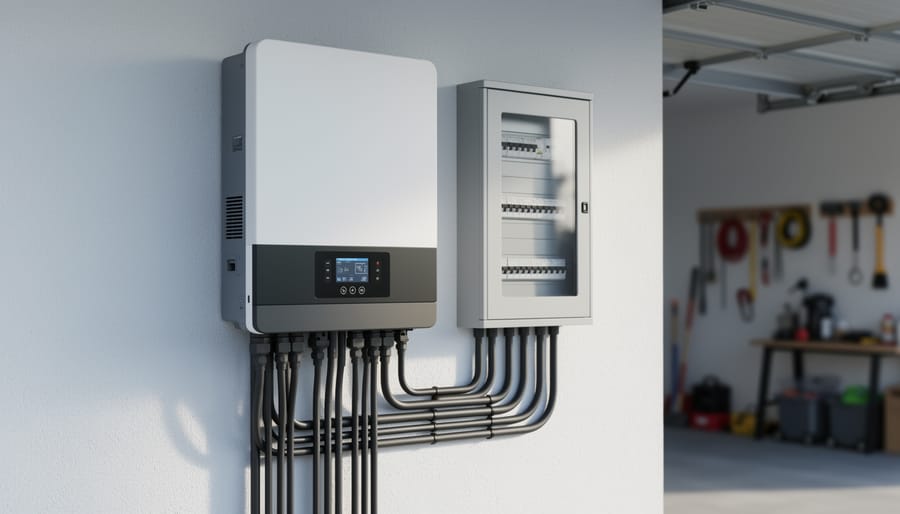
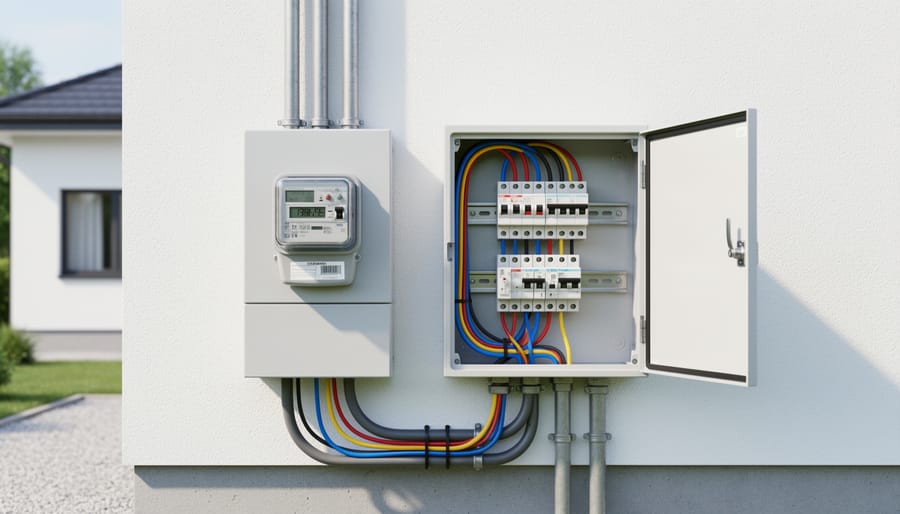
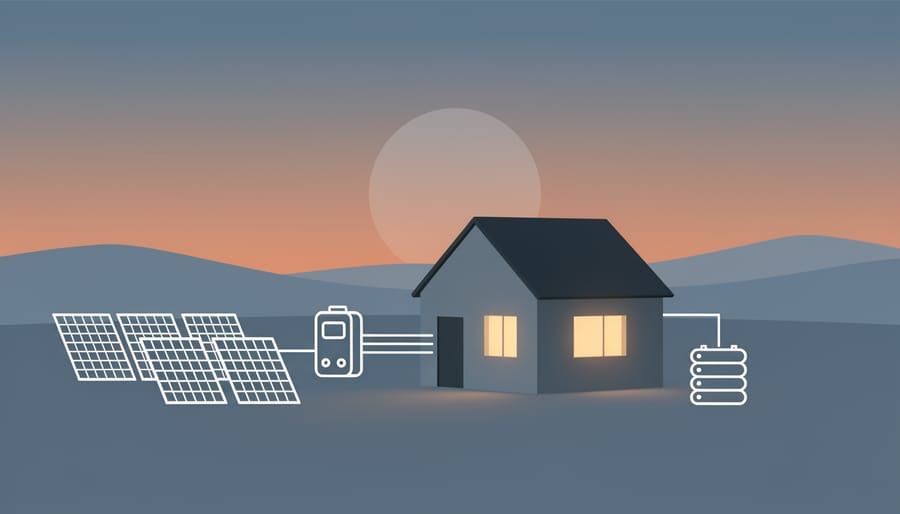
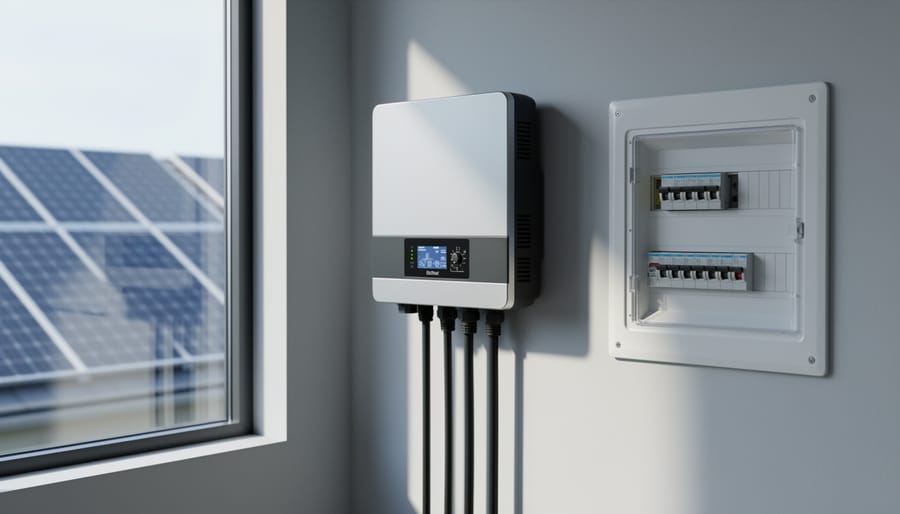
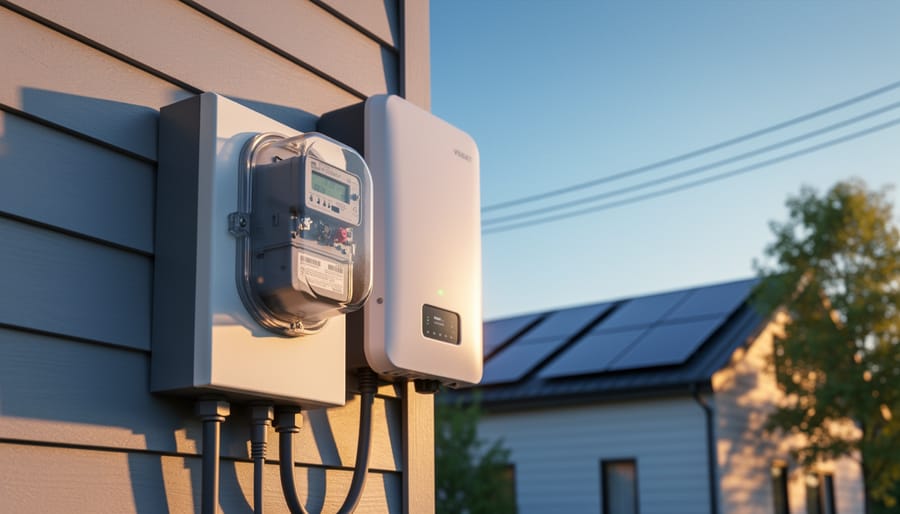
A real installation setup helps readers connect the idea of three-phase power to the hardware they’ll actually encounter at home.
Single-Phase vs. Split-Phase vs. Three-Phase in Plain English
Think of power like pedaling a bike. Single-phase is pedaling with one leg: you push, coast, push again. The power surges and dips, and that’s perfectly fine for lights, laptops, and most small appliances.
Split-phase, the setup in most North American homes, is like having a second leg that pushes in step with the first. The utility feeds two “hot” lines that are opposite each other, so you get 120V between either hot line and neutral for everyday outlets, and 240V across both hot lines for big loads like dryers, ovens, and well pumps. It’s technically still one phase, just tapped in a clever way. RVs with 50-amp service work the same way, while smaller 30-amp RV hookups are plain single-phase 120V.
Three-phase is pedaling with three legs, evenly spaced, so there’s always a push happening somewhere. The power arrives smooth and steady, which is why large motors love it. They start easier, run cooler, and last longer.
So who uses what? Typical homes and most RVs run split-phase or single-phase. Workshops with big compressors, planers, or welders sometimes have three-phase, especially in commercial buildings. Farms with large irrigation pumps or grain equipment often rely on it too, though plenty of small farms get by on split-phase with a phase converter.
Before you shop for anything, check your service panel and your utility bill. Many people assume they have three-phase when they actually have split-phase, and that one detail changes everything about which inverter setup makes sense for you.
How a 3 Phase Solar Inverter Works
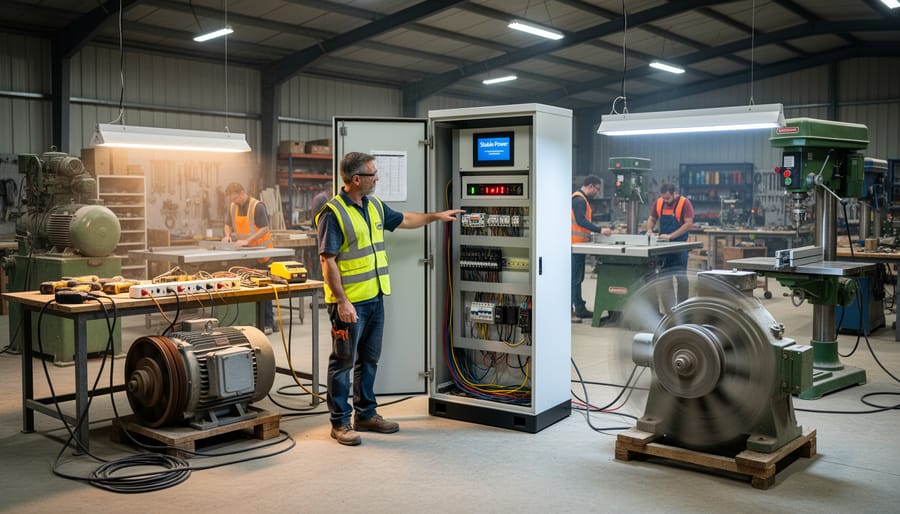
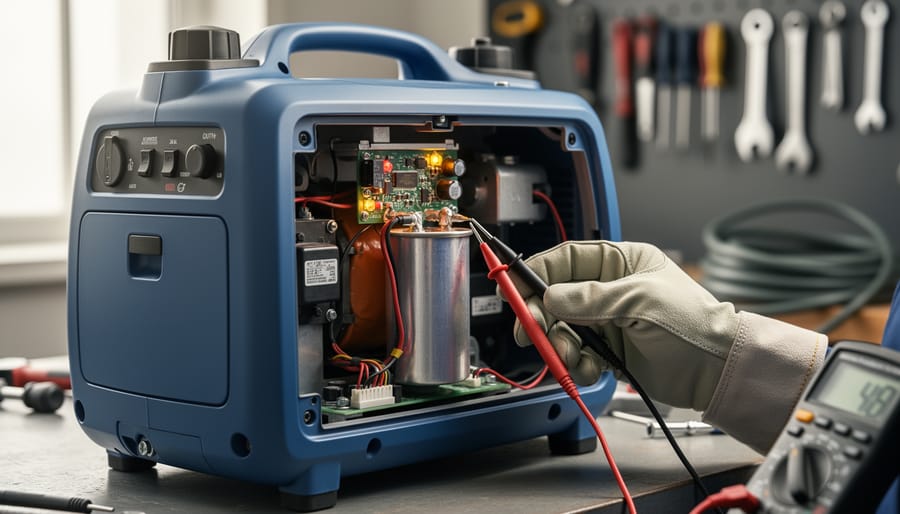
A busy workshop scene shows why smoother, higher-capacity power can matter when starting and running larger motor loads.
What Happens When You Stack Inverters
Stacking just means wiring several inverters together so they act like one bigger system. There are two main flavors, and mixing them up is the fastest way to confuse yourself.
Parallel stacking puts multiple units on the same phase. You get more power on that one line, so two 5 kW inverters become a 10 kW single-phase system. It’s the right move when your loads are big but your wiring is ordinary single or split-phase.
Multi-phase stacking assigns each unit to a different phase. Three single-phase inverters, each set to its own phase and synchronized, together produce three-phase output. This is the route many DIYers take when they want three-phase without buying a dedicated unit.
The glue that makes either approach work is the communication cable. Those little cables let the inverters talk, share timing, and agree on who’s in charge. Usually one unit acts as the leader and the others follow. Each unit also has to be told its role through its settings: which phase it belongs to and whether it’s leader or follower. Skip that step and the units will fight each other instead of cooperating.
Matching matters more than most people expect. Different models, or even the same model on different firmware versions, can refuse to sync or throw cryptic faults. Check your manufacturer’s manual for exactly which combinations they support and how to program each unit.
I learned this the hard way. I once bought a second inverter used, same brand and same rated power, and assumed it would slot right in. It had older firmware, and the stack wouldn’t even recognize it. I lost a whole weekend before updating it fixed everything. Now I check model numbers and firmware before I buy anything.
Types of 3 Phase Solar Setups and Their Key Components
Dedicated Units vs. Stacked Single-Phase Inverters
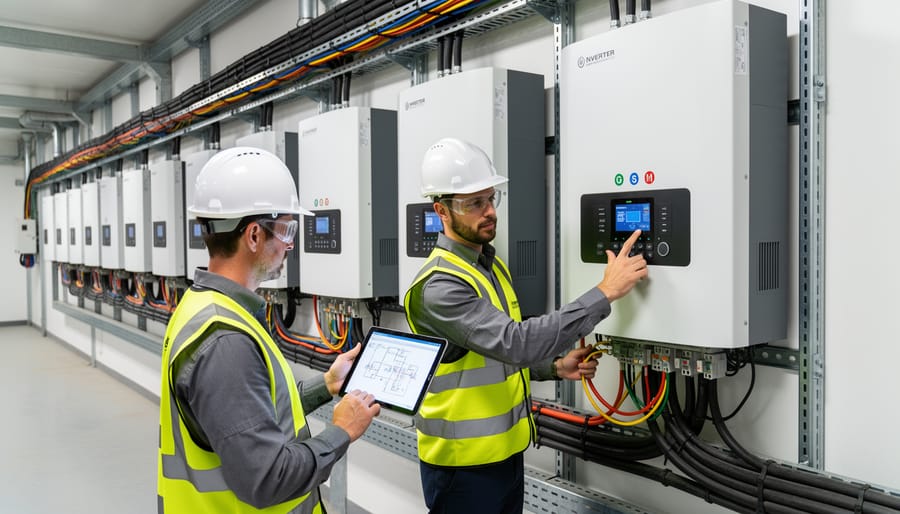
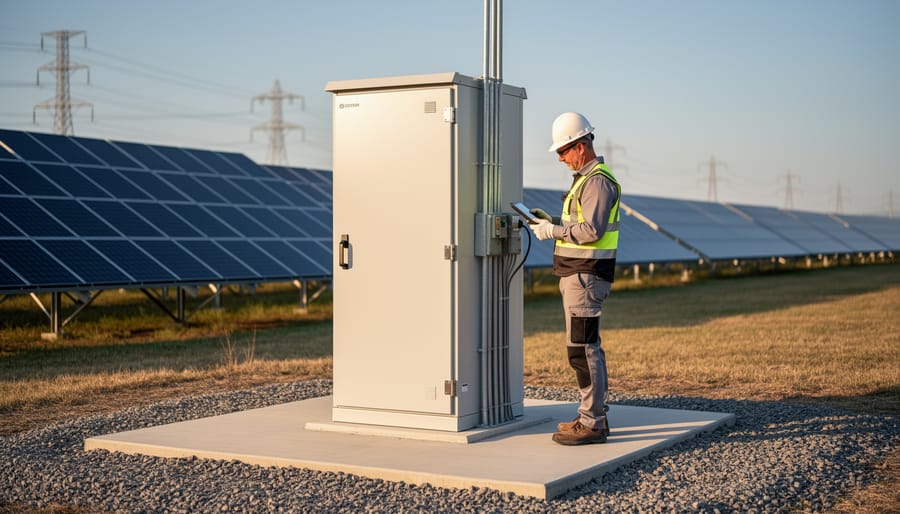
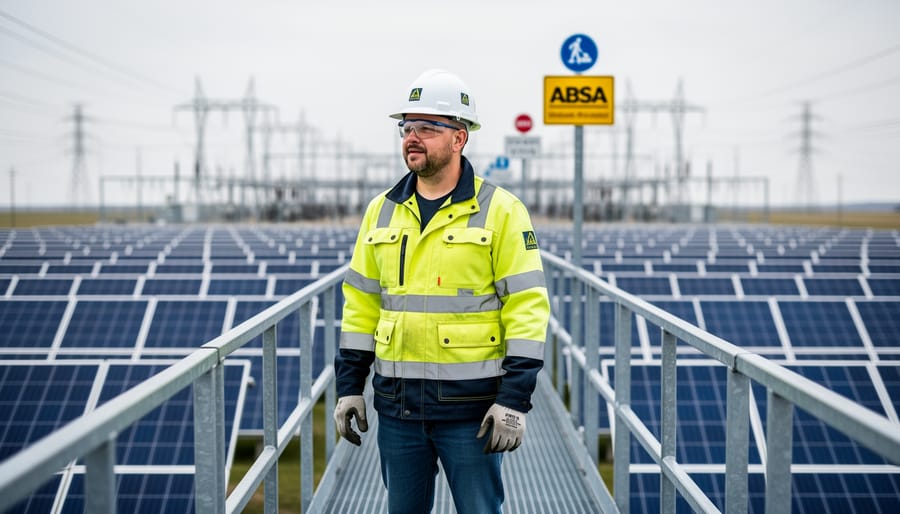
Technicians working beside inverter equipment conveys how multi-unit setups are installed and managed for coordinated three-phase output.
Neither approach is better across the board. The right pick depends on your loads, your budget, and how much wiring you’re willing to take on.
A dedicated three-phase unit is the simple route. You get one box, one set of settings, and typically better efficiency, since there’s less hardware converting power. If you already know your loads and they won’t grow much, it’s hard to beat. If you want a walkthrough of what the wiring involves, our guide on how to wire 3 phase battery inverter systems covers the basics.
Stacking is the modular alternative. You start with a unit or two and add more as your needs grow, which is easier on the wallet up front. It can also be more forgiving: in some designs, if one inverter drops out, the others keep running and you aren’t left in the dark. That depends on the brand and how it’s configured, so check the manual before counting on it.
Here’s how the two stack up:
Dedicated unit: simpler install, fewer connections, and usually higher efficiency.
Dedicated unit: a single point of failure, and less room to grow later.
Stacked inverters: expandable in steps, and possible partial redundancy.
Stacked inverters: more cabling, more settings, and a higher chance of setup headaches.
The extra wiring in a stack is the part people tend to underestimate. Every unit needs communication cables, correct phase assignments, and matching firmware. One loose connection can cause strange behavior that takes an evening to track down. I learned that the hard way.
If your system also feeds the utility, remember that grid-tie inverters come with their own approval rules, and those can narrow your choices either way. Confirm with your utility and a qualified electrician before you buy.
How 3 Phase Solar Inverters Are Used in the Real World
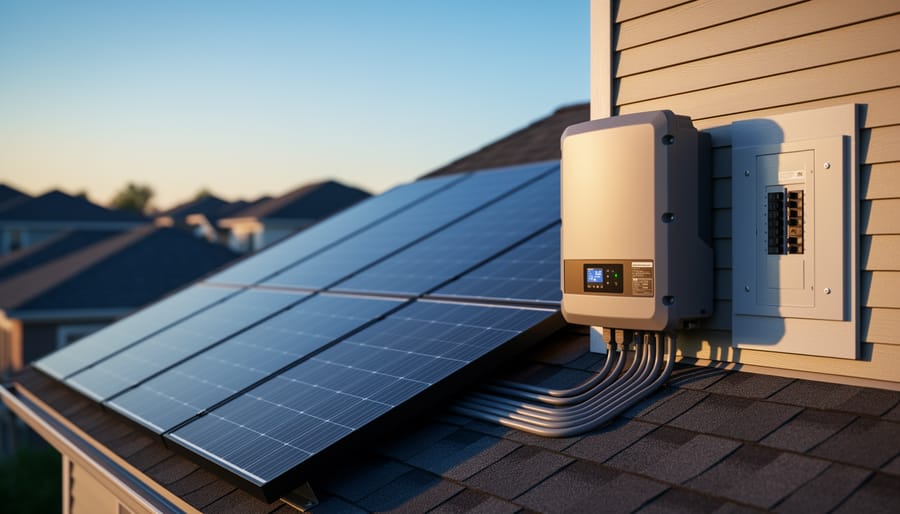
An off-grid property at dusk symbolizes real-world solar power use, where getting the right inverter configuration supports practical daily loads.
Three-phase inverters earn their keep wherever the equipment is built for three-phase power. Motors run smoother on it, start easier, and draw less strain on each wire. Here’s where I see them show up most:
Workshops: lathes, mills, and table saws with three-phase motors.
Well pumps: deep-well submersibles that need a clean, strong start.
Air compressors: big shop units that struggle on single-phase.
Welders: heavy industrial machines that pull large, uneven loads.
Small farms: grain dryers, irrigation pumps, and barn ventilation.
Large off-grid homes and multi-building properties: spreading loads across several structures.
Campgrounds, scout camps, and remote cabins: water pumps, walk-in coolers, and shop tools far from the grid.
A few years back, a reader named Dale emailed me about his hunting lodge. He had a three-phase water pump and a stubborn compressor, and his single-phase setup kept tripping whenever both ran together. We talked through his loads, and he ended up stacking inverters in a multi-phase configuration rather than buying one big dedicated unit. The pump started clean on the first try. He told me the best part was that when one unit needed a firmware update, the lodge didn’t go completely dark.
Here’s the part that saves people money: many homes don’t need three-phase at all. Most household loads, like lights, fridges, laptops, and even a typical split-phase air conditioner, run happily on single or split-phase power. If nothing on your property has a three-phase motor, a dedicated three-phase system is probably overbuilding.
That said, if you rely on solar for backup during power outages think about which loads you truly can’t live without. A well pump or a workshop compressor might be worth planning around, while everything else can stay simple. Check the nameplate on any motor before you decide. It’ll tell you exactly what kind of power it wants.
Do You Actually Need 3 Phase? Sizing and Planning Your Setup
Start with a simple list of everything you plan to run, and note each item’s wattage, voltage, and whether it’s a motor. Most homes live happily on single-phase or split-phase. Three-phase earns its keep when you have loads that genuinely ask for it.
The best clue is the motor nameplate. Look for “3~” or “3 PH” on a pump, compressor, or table saw, plus the voltage and amp rating. If it says three-phase, you’ll need three-phase output, or a converter, to run it properly. Anything labeled single-phase can run off one leg of a three-phase system without trouble.
Once you’ve done the list, check for phase imbalance. If you end up with three-phase power but pile all your single-phase loads (lights, outlets, a mini-split) onto one phase, that phase works harder than the others. Spread those loads across all three as evenly as you can. In a stacked setup, a heavily lopsided load is also a common reason a unit trips, and you may have to reset overload faults more often than you’d like.
Then think about growth. Maybe you’ll add a welder next year or a second well pump down the road. Leaving headroom now, whether through a bigger dedicated unit or room to add another stacked inverter, is far cheaper than rewiring later.
For the math, try Spheral Solar’s interactive calculators for load sizing and system design. They’re a practical starting point for turning your list into real numbers.
Before you buy or wire anything, confirm local code, permitting, and your utility’s grid-tie rules with a qualified electrician. Requirements vary by region, and a quick review can spare you a failed inspection.
Common Questions About 3 Phase Solar Inverters and Stacking
Here are the questions I hear most from DIYers. If your brand’s manual says something different from what I describe, follow the manual.
Can I run three-phase loads from single-phase inverters?
Yes, but only if the units are designed to be stacked in a multi-phase configuration, with each one assigned to a different phase and linked by communication cables. Wiring three random single-phase inverters together won’t create real three-phase power.
Can any inverters be stacked?
No. Stacking usually works only with the same brand and model, and often matching firmware too. Your manufacturer’s documentation will list which models can be combined and how.
Do I need three-phase for a normal home?
Probably not. Most homes run fine on single or split-phase, and three-phase mainly matters for motors, pumps, and shop equipment that call for it. Check your loads before you spend the extra money.
What happens if one phase is overloaded?
That phase’s inverter may shut down or trip, even if the other two have plenty of capacity to spare. Spreading your loads evenly across the phases helps avoid this.
Can I add more inverters later?
Often, yes. Stacking is popular partly because it’s modular, but you’ll need to stay within the maximum number of units your manufacturer supports.
Two more things come up a lot. The first is whether this is a DIY job. Planning, learning, and even assembling parts of the system is well within reach for many hobbyists, but the final wiring, grounding, and any grid connection should be reviewed or done by a licensed electrician. Local code and utility rules vary a lot, and mistakes here can be dangerous. The second is where to start. Make a list of your actual loads, then run the numbers in Spheral Solar’s interactive calculators. That gives you a solid picture before you shop, and it often shows that a simpler setup will do the job.
So, what have we covered? A 3 phase solar inverter takes the DC power from your panels and turns it into three evenly spaced AC waveforms, which is what bigger motors, pumps, and compressors want to see. You can get there with a dedicated three-phase unit, or you can stack single-phase inverters and assign each one a different phase. Neither path is automatically better. It comes down to your loads, your budget, and how comfortable you are with extra wiring.
Start by listing what you actually run. Plenty of homes never need three-phase at all, and that’s a perfectly good answer. Once you’ve got your list, our calculators can help you size things up. Before you wire anything, have a qualified electrician look over your plan and check local code and utility rules.
Then come tell us about it. Share your setup, your wins, and your head-scratchers in the Spheral Solar community. Somebody has probably been there already, and you’ll help the next person too.
How useful was this post?
Click on a star to rate it!
Average rating 0 / 5. Vote count: 0
No votes so far! Be the first to rate this post.
We are sorry that this post was not useful for you!
Let us improve this post!
Tell us how we can improve this post?
charlesnoble
Here at Spheral Solar, I’m a hands-on solar power enthusiast, constantly exploring and experimenting with DIY solutions. I’m dedicated to sharing my discoveries, insights, and even the bumps I hit along the way, all in the pursuit of a more sustainable future.
Why 3-Phase Solar Inverters Are Game-Changers for… by Charlesnoble January 29, 2026 Check your main electrical panel right now—if you see three thick power cables entering your home instead of two, you already have 3-phase power and might benefit from a 3-phase solar inverter. Most residential homes run on single-phase power, making 3-phase systems unnecessary for typical DIY solar setups, so understanding…
Why Your DIY Solar Project Needs a Commercial-Grade Inverter by Charlesnoble May 5, 2026 Compare your power needs against inverter capacity ratings before choosing between string, central, or micro-inverter configurations—commercial systems typically handle 10kW to 500kW, far exceeding residential 3-10kW units. Calculate your total panel wattage, then add 25% overhead to account for startup surges and future expansion. A 50kW system, for instance, performs…
10 Best Pure Sine Wave Inverters in 2026 by Nick August 13, 2021 The best pure sine wave inverters are the ones that can keep multiple sensitive electronics charged while protecting them from harm. In the interest of transparency, we earn a commission on some purchases made through links on this site. As an Amazon Associate I earn from qualifying purchases. Other important…
Why Your RV Inverter Keeps Failing (And How to Fix It Fast) by Charlesnoble January 11, 2026 Check your battery connections first—loose or corroded terminals account for nearly 60% of inverter issues I’ve seen in my years working with RV solar systems. Remove both positive and negative cables, clean them with a wire brush and baking soda solution, then reconnect tightly. While you’re at it, use a…
Why Grid-Tie Solar Inverters Are Your Gateway to… by Charlesnoble December 4, 2025 Grid-tie solar inverters transform your solar panels’ DC electricity into AC power that feeds directly into your home’s electrical system and the utility grid, eliminating the need for expensive battery banks while letting you earn credits for excess power you generate. When your panels produce more electricity than you’re using,…
Why Your Generator Inverter Fails (And How to Fix It… by Charlesnoble May 16, 2026 Listen for the telltale signs first: if your generator runs fine but produces no usable AC power, or if sensitive electronics won’t charge despite the unit operating, you’re likely dealing with inverter failure rather than engine problems. I learned this the hard way during a week-long camping trip when my…
Subscribe for handpicked DIY projects, exclusive tips, and giveaways.
A 3 phase solar inverter is a device that converts the DC power from your solar panels into three-phase AC power: three alternating currents running in a…
In Alberta, certified operators for power and solar plants are licensed through ABSA, the province’s safety codes authority for pressure equipment, and the path runs through written exams that match a certificate class to the plant you want to run. Most hobbyists and homeowners never need one, since a rooftop array doesn’t call for a… Read more: How Alberta’s Power and Solar Plant Operators Get Certified Through ABSA Exams