Heat Your 7000 Gallon Pool for Pennies Using Solar Power
Updated:
Calculate your heating needs by multiplying 7000 gallons by 8.34 pounds per gallon, then factor in your desired temperature rise and the time frame you want to achieve it. For a 7000-gallon pool, you’ll typically need between 75,000 and 150,000 BTUs per hour depending on your climate, but before you commit thousands of dollars to a gas or electric heater that will cost $200-500 monthly to operate, consider this: solar pool heating can deliver the same results for essentially free after installation.
I learned this the hard way when my gas bill hit $380 in a single month just to keep my pool comfortable. That sticker shock sent me down the path of exploring solar alternatives, and what I discovered changed everything. A 7000-gallon pool sits right in the sweet spot for DIY solar heating projects because it requires roughly 3500-5250 square feet of collector surface, which translates to about 8-12 standard 4×8-foot panels that you can build yourself for a fraction of commercial system costs.
The beauty of heating a pool this size is that you’re working with manageable volumes. Unlike massive commercial pools that demand industrial-grade equipment, a 7000-gallon setup responds quickly to solar gain, meaning you’ll see temperature increases within days of installing your system, not weeks. Your existing pool pump likely already has enough power to circulate water through solar collectors, eliminating the need for additional equipment purchases.
Whether you’re exploring budget-friendly DIY panels made from irrigation tubing or considering more polished commercial solar options, understanding your specific pool volume gives you the foundation to make smart heating decisions. The right system will extend your swimming season by months while your neighbors watch their utility bills climb.
Why Your 7000 Gallon Pool is Expensive to Heat (And Why That Matters)
Here’s the thing about heating a 7000 gallon pool that catches most people off guard: you’re essentially trying to warm up about 58,000 pounds of water. Let me put that in perspective from my own experience. When I first calculated the energy needed for my neighbor’s similar-sized pool, the numbers were eye-opening.
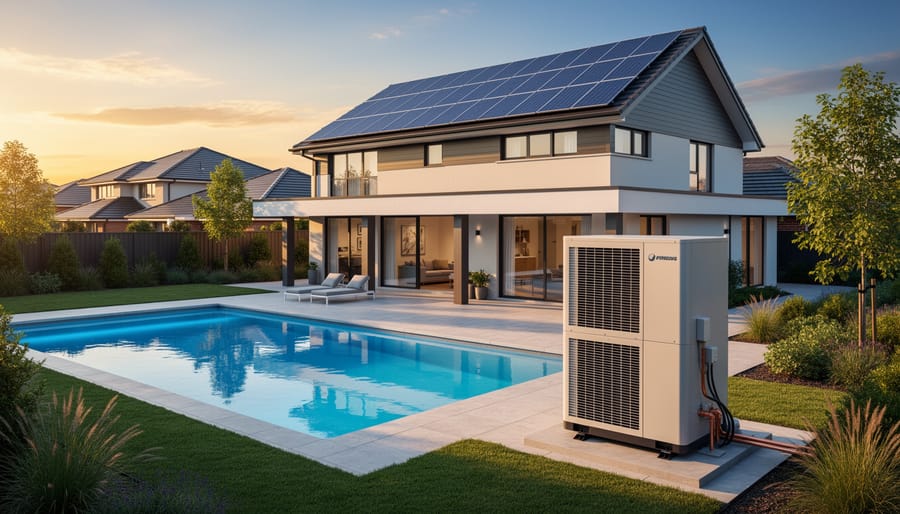
A 7000 gallon pool requires roughly 58,333 BTUs of energy to raise the temperature just one degree Fahrenheit. If you want to heat your pool from a chilly 65°F to a comfortable 80°F, that’s a 15-degree increase requiring around 875,000 BTUs. With a conventional gas heater, you’re looking at approximately 8-10 therms of natural gas, which translates to about $12-15 per heating session at current rates.
But here’s where it gets expensive: pools don’t just lose heat when you’re actively using them. Through evaporation, radiation, and conduction, your pool is constantly cooling down. On an average night, a pool this size can lose 3-5 degrees, especially without a cover. That means you might be reheating every single day during the swimming season.
Let’s break down the real costs. If you’re heating your pool from April through September (roughly 180 days) and need to add heat even three times per week, you’re spending around $2,160 per season on gas alone. Electric heat pumps are more efficient but still run $600-1200 per season depending on your electricity rates and climate.
The volume of water in a 7000 gallon pool sits in an interesting sweet spot. It’s large enough that conventional heating becomes genuinely expensive, but it’s small enough that solar heating solutions can actually make a dramatic difference. Understanding these numbers is the first step toward finding a solution that won’t drain your wallet every time you want to take a swim.
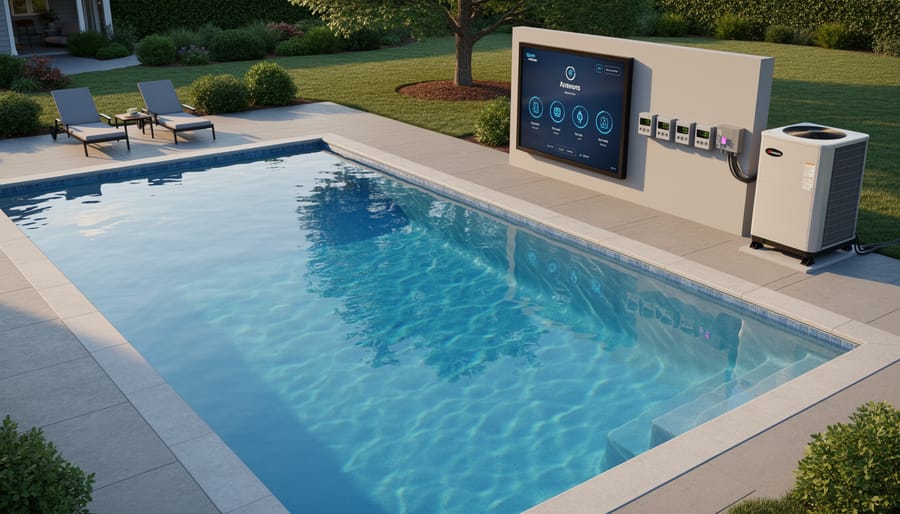
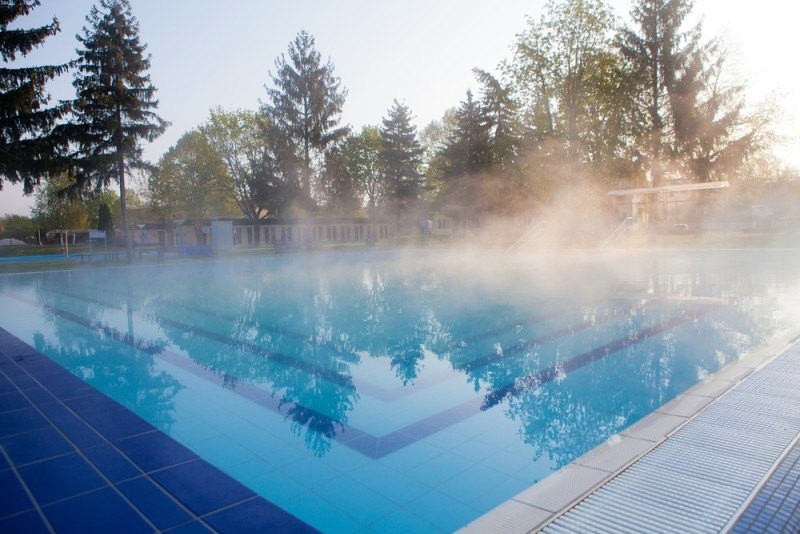
A typical 7000 gallon pool represents a significant volume of water that requires substantial energy to heat using conventional methods.
Solar Pool Heating: How It Actually Works
The Three Components Every Solar Pool Heater Needs
Let me share something I learned when I first installed a solar pool heater: you really only need three main components to make it work. Once you understand these parts, the whole system becomes much less intimidating.
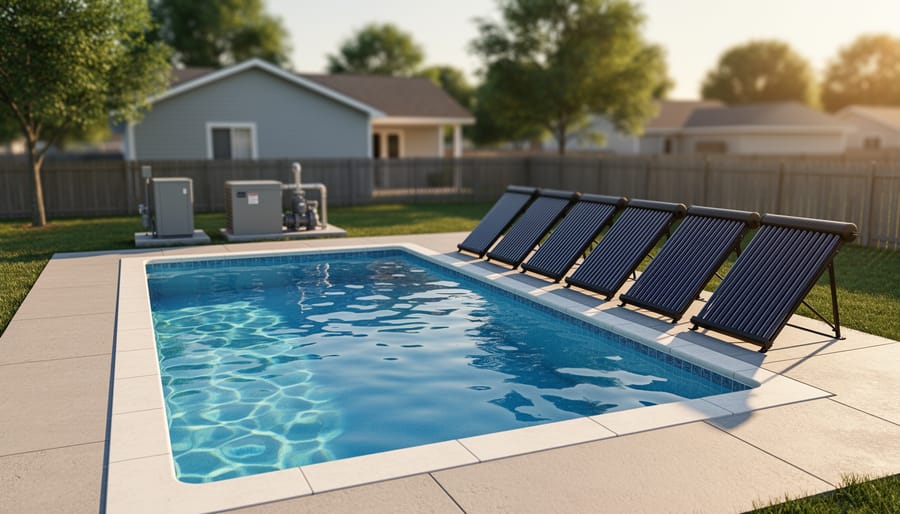
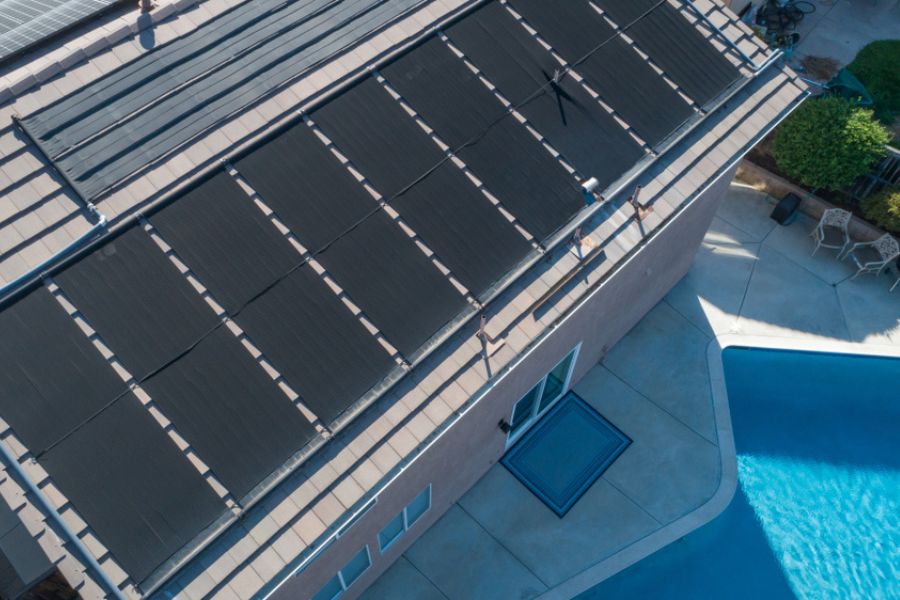
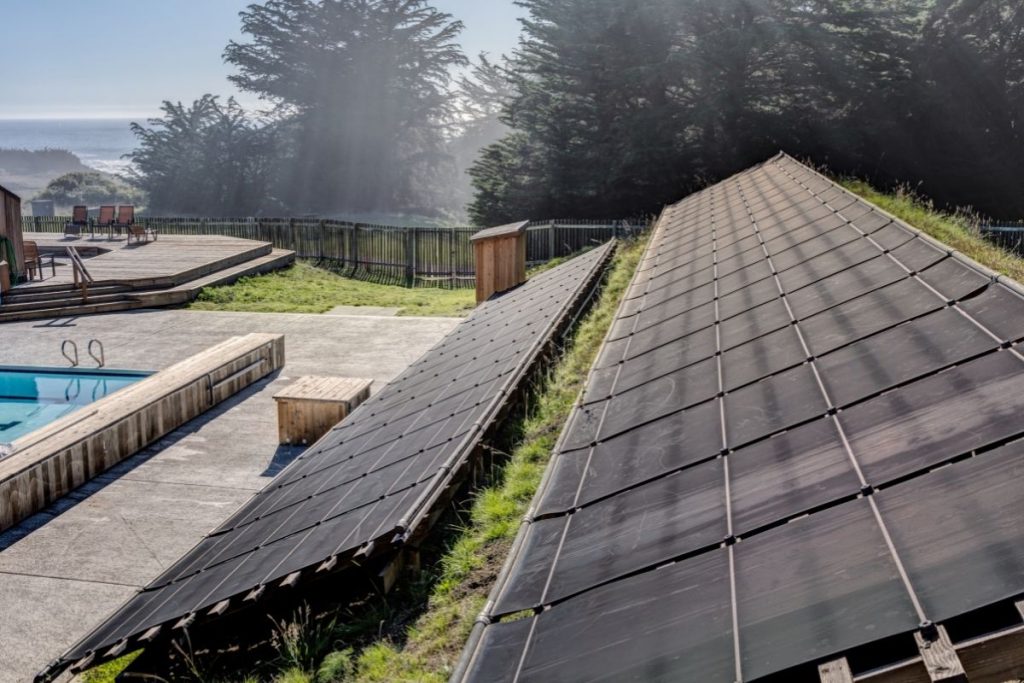
First up are the solar collectors, which are the workhorses of your system. These are the black panels you’ve probably seen on roofs or near pools. For a 7000 gallon pool, you’ll typically need about 3500 to 5250 square feet of collector area, which is roughly half to three-quarters of your pool’s surface area. Water flows through these panels, and the sun’s energy warms it up before sending it back to your pool. Think of them like giant radiators working in reverse.
Next, you need your pump and filter system. Here’s the good news: you probably already have this installed for your pool maintenance. The same pump that circulates water for cleaning can push water through your solar collectors. I was relieved to discover this during my own installation since it meant one less component to buy and install.
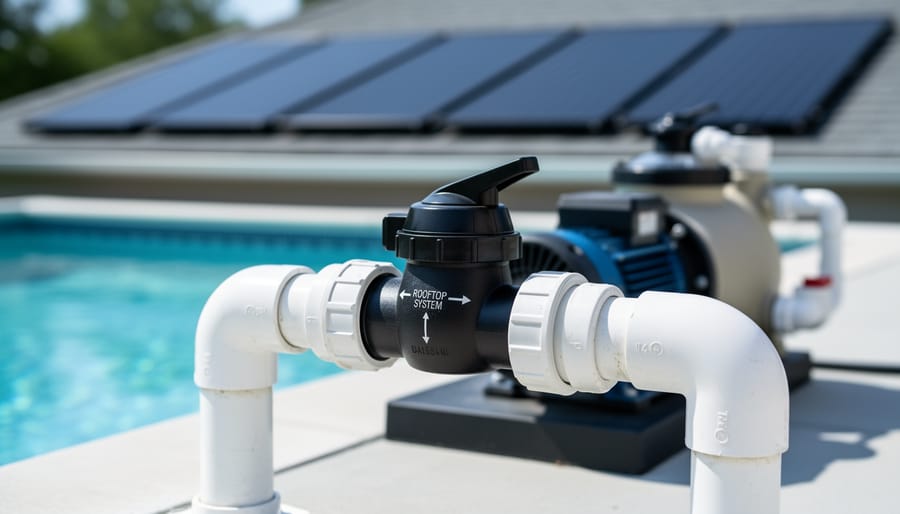
Finally, there’s the control valve, which acts as the traffic director for your system. This simple device determines whether water flows through the solar collectors for heating or bypasses them when your pool is already warm enough. You can get manual valves that you adjust yourself, or automatic ones that do the thinking for you. I started with a manual valve and upgraded later, which worked perfectly fine for getting comfortable with the system.
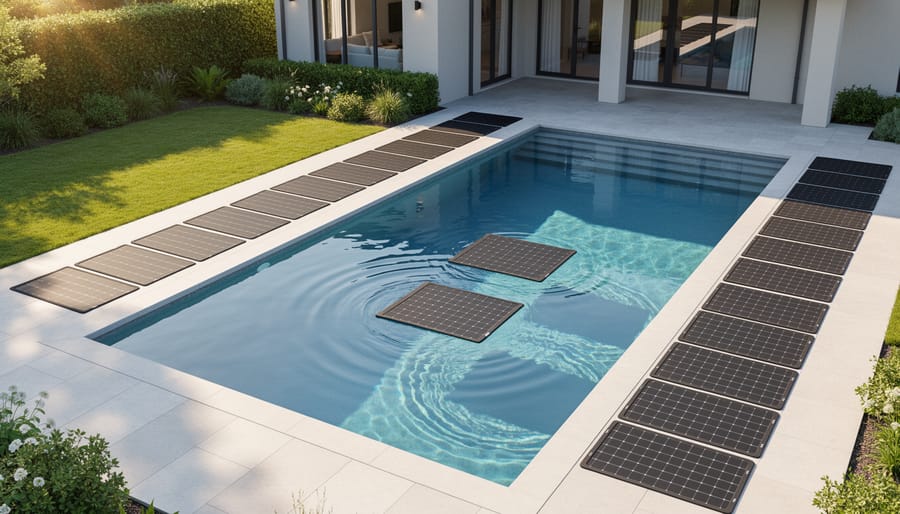
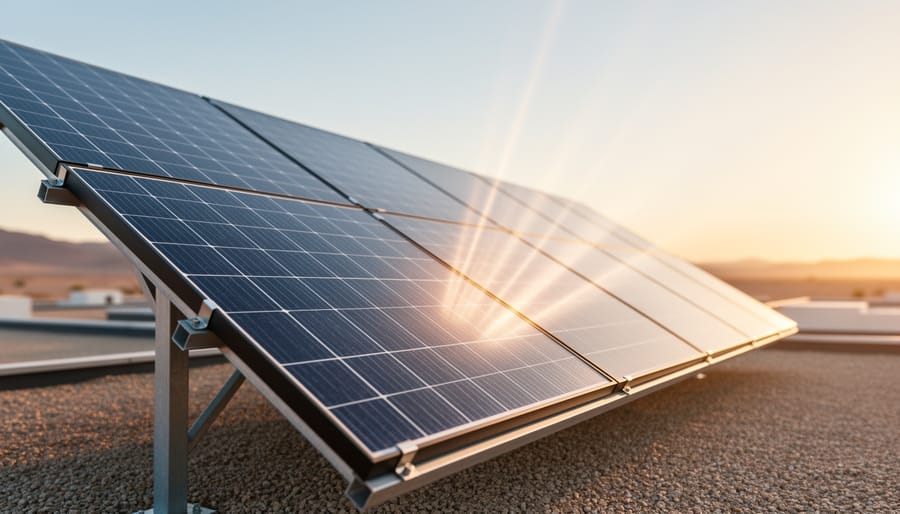
Solar collectors absorb sunlight and transfer heat directly to pool water as it circulates through the system.
How Much Solar Collector Area Does a 7000 Gallon Pool Need?
For a 7000-gallon pool, you’ll typically need between 3,500 to 5,600 square feet of solar collector area, which is about 50-80% of your pool’s surface area. The general rule of thumb is to match your collector area to your pool’s surface area in cooler climates or when you want extended season heating, while warmer regions can get away with less coverage.
Here’s a real-world example: If your pool measures roughly 18 feet by 36 feet (648 square feet of surface area), you’d need approximately 325-520 square feet of solar collectors. That might translate to around 12-20 standard 4×8-foot solar panels.
Several factors influence your exact needs. Wind exposure, desired temperature, how long you want to extend your swimming season, and whether you use a pool cover all play a role in solar collector sizing. I’ve found that pools with good covers can operate effectively with smaller collector arrays since they retain heat better overnight.
To take the guesswork out of your planning, try our interactive solar pool heating calculator available on the site. Just input your pool dimensions, location, and heating goals, and it’ll provide a customized recommendation for your specific situation.
DIY Solar Pool Heater Options for Your 7000 Gallon Pool
The Budget Build: Black Pipe Solar Collectors
Let me tell you about my favorite entry point into solar pool heating – it’s affordable, effective, and you probably already know someone who’s tried it. The classic black hose solar heating approach uses simple materials that work surprisingly well.
For a 7000 gallon pool, you’ll need about 3500-4200 square feet of black polyethylene pipe (typically half-inch diameter) or EPDM rubber matting. I know that sounds like a lot, but here’s the beauty: these materials are genuinely budget-friendly. You’re looking at roughly $200-400 for the pipe itself, plus another $100-150 for mounting hardware, pipe connectors, and basic plumbing supplies.
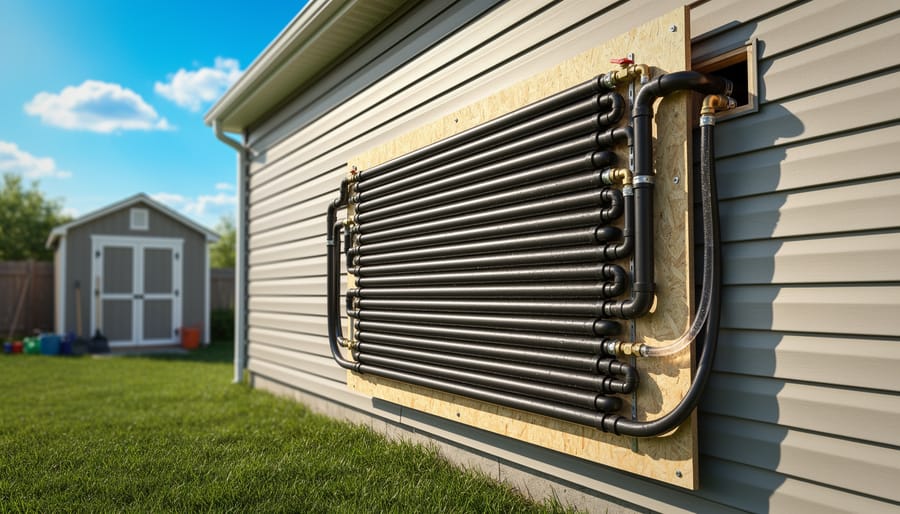
The concept is straightforward. Black material absorbs sunlight incredibly well, heating the water as it flows through. You’ll arrange your pipe in a coiled pattern on a south-facing roof, fence, or ground-mounted rack. Connect it to your existing pool pump, and you’ve got a functioning solar heater.
Charles here – I built my first system using 400 feet of irrigation pipe from the local hardware store. Took a weekend to set up, and I saw a 6-8 degree temperature increase within the first week.
Effectiveness varies by location and sun exposure, but most DIYers report 5-10 degree gains during peak season. It won’t match commercial systems in extreme efficiency, but for under $500 total investment, you’re getting genuine results without complicated installation or ongoing energy costs.
Budget-friendly DIY solar heating systems can be built using simple black pipe that absorbs solar energy efficiently.
The Middle Ground: Glazed Solar Panels
If DIY panels feel too experimental but commercial gas heaters make you wince at the utility bill, glazed solar panels offer a sweet spot worth considering. These are purpose-built solar collectors that sit between the homemade route and high-end evacuated tube systems.
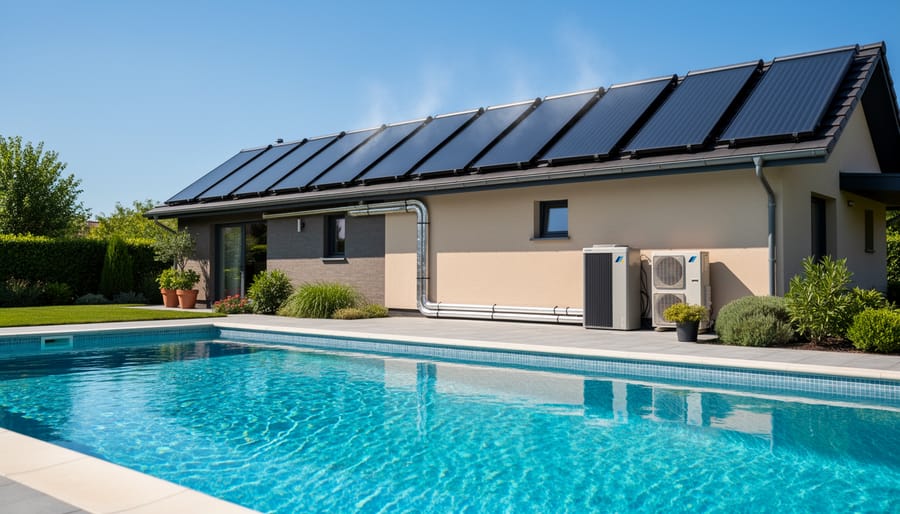
I installed glazed panels on my neighbor Sarah’s pool three years ago, and she’s been thrilled with the results. Unlike unglazed panels that work best in warm climates, glazed collectors have a transparent cover that traps heat, making them efficient even when the air temperature drops. For your 7000-gallon pool, you’d typically need about 280-350 square feet of glazed panel surface, which is roughly 50-70% of your pool’s surface area.
The real advantage here is performance consistency. While unglazed panels lose efficiency on cool or windy days, the glazing creates a greenhouse effect that maintains heat collection. You’ll pay more upfront than DIY options, usually between 2,000 to 4,000 dollars for materials, but less than commercial gas or heat pump systems.
Installation requires some planning. These panels are heavier than unglazed versions, so your roof structure needs proper support. You’ll want south-facing placement with minimal shade between 9am and 3pm. The system ties into your existing pool pump, circulating water through the panels during sunny hours.
Expect to extend your swimming season by 3-4 months in most climates. That’s not quite year-round swimming, but it’s substantial comfort without the ongoing fuel costs. Many hobbyists find this balance of investment, performance, and environmental impact hits just the right note.
The Efficient Route: Repurposing Solar Water Heating Panels
Here’s a cost-effective shortcut that many pool owners overlook: those flat-panel solar water heaters designed for household hot water can actually work beautifully for pool heating. While they weren’t specifically designed for pools, their basic operation is identical to dedicated pool panels, just with some clever adaptation.
Charles discovered this approach when he found a set of discontinued solar thermal panels at a local salvage yard. “I paid about 40% of what new pool panels would have cost,” he recalls. “The main difference? These panels have internal copper tubing instead of the plastic headers you’d find in pool-specific models.”
The key to making this work is understanding flow rates. Solar water heating panels are designed for slower flow and higher temperatures, while pool panels prefer faster flow and gentler heating. To adapt them, you’ll need to configure your pump to circulate water more slowly through the panels, which actually works well for most pool setups anyway.
For a 7000 gallon pool, you’d still need roughly 3500-4500 square feet of collector area, but repurposed water heating panels often come in convenient 4×8 foot sizes that make installation planning straightforward. Just ensure the panels can handle pool chemicals by checking the materials used in the heat exchanger tubing.
One important consideration: these panels may require slightly different mounting angles than pool-specific options. They’re optimized for year-round hot water production rather than summer pool heating, so positioning them for maximum summer sun exposure becomes even more critical for your application.
Building Your Own Solar Pool Heater: Step-by-Step Overview
Planning Your System Layout
Before you start connecting panels, take time to assess your space properly. I learned this the hard way when I initially planned a roof mount only to discover shading issues at certain times of day that would have reduced efficiency by nearly 40%.
Start by measuring your available mounting area. For a 7000 gallon pool, you’ll need roughly 350-525 square feet of collector area depending on your climate and desired swimming season. Walk your property at different times throughout the day, noting shade patterns from trees, buildings, or other structures. Even partial shading can significantly impact performance.
Roof mounting offers space efficiency and often better sun exposure, but requires structural assessment to ensure your roof can handle the additional weight (typically 2-3 pounds per square foot when filled with water). Ground mounting provides easier access for maintenance and avoids roof penetrations, though it consumes valuable yard space.
For optimal performance, orient your collectors facing true south (in the Northern Hemisphere) with a tilt angle roughly equal to your latitude. However, don’t stress over perfection—angles within 15 degrees still perform reasonably well.
Finally, plan your integration points with existing pool equipment. You’ll need to tap into the filtration system’s plumbing after the filter but before any chemical feeders. Measure distances and account for pipe runs when calculating your system’s pressure requirements.
Materials and Tools You’ll Need
When I first tackled heating my 7000-gallon pool with solar, I learned that having the right materials makes all the difference between a weekend project and a month-long headache. Here’s what you’ll need to get started.
The heart of your system is the solar panels themselves. You’ll need roughly 3500 to 5250 square feet of solar collector surface area, which typically means 10 to 15 panels depending on your climate. Look for unglazed polypropylene collectors, which are perfect for pool heating and surprisingly affordable at around 25 to 40 dollars per panel when bought in bulk from home improvement stores or online retailers.
You’ll also need a variable-speed pool pump if you don’t already have one. This circulates water through your solar collectors efficiently without driving up electricity costs. Don’t skimp here because proper flow rate is crucial for heat transfer.
PVC piping and fittings are essential for routing water to and from your collectors. Budget about 100 to 150 dollars for quality schedule 40 PVC, along with primer and cement. Grab a good pipe cutter too, it saves time and ensures clean connections.
Finally, consider an automatic solar controller with temperature sensors. This 150 to 200 dollar investment automatically diverts water through your collectors when the sun is shining and temperatures are optimal, maximizing your heating efficiency without constant manual adjustments.
Installation Basics and Common Pitfalls
I learned this lesson the hard way during my first solar pool heater installation: location matters more than you think. I placed my panels where they looked good rather than where they’d perform best, and ended up with water barely warmer than unheated. For a 7000 gallon pool, you need south-facing panels with zero shade between 10am and 2pm—that’s when you capture most of your heat.
Safety first: never pressurize your system before checking every connection. I once forgot to tighten a single coupling and created an impressive fountain in my backyard. Not my proudest moment. Always do a low-pressure test with the pump on its lowest setting before ramping up to full flow.
The biggest mistake I see fellow DIYers make is undersizing their system. For a 7000 gallon pool, you need roughly 3500-5600 square feet of collector area depending on your climate and desired temperature. Going smaller to save money upfront means you’ll be disappointed with the results and potentially spend more trying to fix it later.
Another common pitfall: inadequate filtration capacity. Your existing pump needs to handle the additional pressure from pushing water through solar panels. Check your pump specifications before committing to a system size, or you might need an upgrade.
Calculating Your Real-World Performance and Savings
Let me walk you through what you can realistically expect from heating your 7000-gallon pool with solar, because understanding the numbers upfront will help you avoid disappointment and celebrate the wins.
In ideal conditions during peak summer months, a properly sized solar pool heater can raise your pool temperature by about 10-15°F above the ambient temperature. So if your unheated pool naturally sits at 70°F, you could see it climb to 80-85°F with solar heating. However, here’s where it gets interesting: these gains vary significantly by season and weather patterns.
During spring and fall, expect more modest gains of 5-10°F, and on cloudy weeks, you might only maintain your current temperature rather than increasing it. I learned this the hard way my first season when I expected August performance in October! The key is adjusting your expectations with the sun’s seasonal patterns.
Now for the exciting part: the cost savings. A natural gas pool heater for a 7000-gallon pool typically costs between $300-600 monthly during heating season, while electric heat pumps run $150-400 depending on your electricity rates. Your solar system? After the initial investment, your ongoing costs are essentially zero besides a small pump running cost of about $15-30 monthly.
To calculate your specific savings, multiply your current monthly heating bill by the number of months you heat your pool. Most pool owners I’ve talked with see payback periods of 2-4 years, after which everything is pure savings.
Temperature gains depend on three main factors: your collector area (aim for 50-80 percent of your pool’s surface area), sun exposure hours, and how well you use a pool cover at night. A pool cover alone can boost your system’s effectiveness by 50 percent by preventing overnight heat loss.
Use online solar pool heating calculators that factor in your zip code, desired temperature, and pool specifications. These tools account for your local climate patterns and give you personalized performance predictions. Remember, even conservative estimates show significant savings over traditional heating methods within just a few seasons.
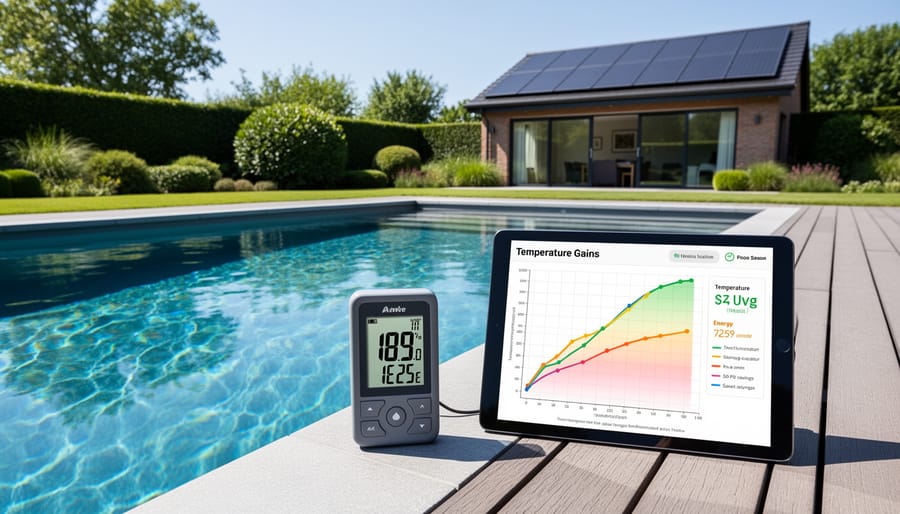
Monitoring your pool’s temperature gains helps track solar heating system performance and energy savings throughout the season.
Beyond DIY: When to Consider a Professional Solar Pool Heater
I’ll be honest with you – sometimes going DIY isn’t the best choice, and that’s perfectly okay. After building my third solar pool heater, I’ve learned that certain situations really do call for professional systems.
If your roof layout is complex, with multiple angles and limited southern exposure, a professionally designed system can maximize efficiency in ways that might frustrate a DIYer. The same goes if you’re dealing with strict HOA regulations or building codes – manufactured systems typically come with certifications that smooth the approval process considerably.
Budget-wise, if you can comfortably afford a commercial system and value your weekends, it might make sense. Professional installations include warranties, often 10-15 years, which DIY systems obviously don’t offer. Plus, if you’re not mechanically inclined or lack the time for maintenance, a turnkey solution removes those concerns entirely.
When evaluating commercial solar pool heaters, look for systems with glazed collectors if you live in cooler climates – they perform better year-round. Check the SRCC rating (Solar Rating and Certification Corporation), which tells you exactly how much heat you’ll get. For a 7000-gallon pool, you’ll want systems rated between 40,000-60,000 BTU daily output.
Here’s the thing though – even if you buy commercial, understanding DIY principles helps tremendously. You’ll know if installers are positioning panels optimally, whether the pump sizing makes sense, and how to troubleshoot basic issues. You’ll also maintain it better and spot problems early.
Think of DIY knowledge as your insurance policy against getting sold something inappropriate or overpriced. Whether you ultimately build or buy, you’re making an informed decision based on understanding, not just marketing materials.
Heating your 7000 gallon pool with solar energy isn’t just possible—it’s entirely within your reach as a DIY project. Throughout this guide, we’ve explored how proper system sizing, smart panel placement, and thoughtful component selection can transform your pool into a comfortable, extended-season retreat without the hefty operating costs of traditional heaters.
Let’s recap the essentials: You’ll need roughly 3,500 to 5,250 square feet of solar collector area (that’s 50-75% of your pool’s surface), strategic south-facing placement when possible, and a system that moves water at about 35-50 gallons per minute. Whether you choose unglazed collectors for warm climates or glazed panels for cooler regions, the investment typically pays for itself within 3-7 years through eliminated energy bills.
I’ve seen countless pool owners in our community successfully tackle these projects over weekends, and the satisfaction of swimming in solar-heated water you installed yourself is genuinely rewarding. The initial time investment might seem daunting, but breaking the project into manageable phases makes it surprisingly straightforward.
Ready to take the plunge? Head over to our solar pool heating calculators to get personalized sizing recommendations for your specific situation. These interactive tools factor in your location, pool dimensions, and heating goals to give you a customized blueprint. Once you’ve completed your project, we’d love to hear about your experience—share your story, photos, and lessons learned with the Spheral Solar community. Your insights might be exactly what inspires another DIYer to start their solar journey.
How useful was this post?
Click on a star to rate it!
Average rating 0 / 5. Vote count: 0
No votes so far! Be the first to rate this post.
We are sorry that this post was not useful for you!
Let us improve this post!
Tell us how we can improve this post?
charlesnoble
Here at Spheral Solar, I’m a hands-on solar power enthusiast, constantly exploring and experimenting with DIY solutions. I’m dedicated to sharing my discoveries, insights, and even the bumps I hit along the way, all in the pursuit of a more sustainable future.
9 Best Solar Pool Heaters in 2026 by Adeyomola June 20, 2021 Heads up: some links here are affiliate links, and purchases through them support the site. As an Amazon Associate I earn from qualifying purchases. When buying solar pool heaters, people often give precedence to features like square footage, mounting type, water pressure limit, and the type of pool the solar…
Heat Your Pool for Pennies Using Solar Panels You… by Charlesnoble April 12, 2026 Imagine cutting your pool heating costs by 70% while extending your swimming season by months—that’s the reality when you harness your existing solar panel system to warm your pool water. If you’ve already invested in rooftop solar or are planning an installation, you’re sitting on an untapped heating solution that…
9 Ways to Heat a Pool by Adeyomola July 24, 2021 Considering how popular they are, one might think that electric heat pump pool heaters, electric resistance heaters, and gas pool heaters are the only ways to heat a pool. However, one can heat a pool through many other means, including: Electric heat pump Electric resistance pool heater Gas pool heater…
Pool Heating Mats: The Solar Solution That Pays for… by Charlesnoble May 1, 2026 Harness the sun’s energy to warm your pool water passively by laying dark-colored mats on your pool deck or floating them directly on the water surface—this simple solar collection method can raise water temperature by 5-15°F depending on your climate and setup. Position these mats where they’ll receive maximum sunlight…
Why Your Pool Solar Heater Valve Position Changes… by Charlesnoble March 9, 2026 Set your three-way valve to point toward the roof when you want solar heating, typically between 10 AM and 4 PM on sunny days when your panels can effectively warm the water. Point it toward the bypass position during cloudy weather, at night, or when your pool has reached the…
Heat Pump vs Solar Pool Heating by Adeyomola July 13, 2021 What advantages do heat pump vs. solar pool heating offer over each other? With solar pool heating, you get cheap operational costs, high durability, low cost of maintenance, and an environment-friendly pool heating option. On the other hand, electric pool heat pumps are cheaper to buy and install. They are…
Subscribe for handpicked DIY projects, exclusive tips, and giveaways.
After testing dozens of solar chargers across camping trips, power outages, and backyard experiments, we found the X-Dragon 20W delivers the most reliable charging performance for phones and tablets, while the Goal Zero Nomad 50W steps up when you need to power larger devices or handle extended emergencies. If you’re planning weekend hikes, assembling an… Read more: 7 Best Solar Powered USB Chargers of 2026, Tested and Reviewed
There is something special about a mature tree. Decades of growth, shade that actually cools the house, branches that the kids climbed, a root system that has quietly held the yard together through every storm. So when circumstances force a move, whether it is a home renovation, a new driveway, or a construction project that… Read more: How to Move a Mature Tree Without Killing It: The Complete Relocation Guide
A mass energy conversion calculator lets you determine how much energy is locked inside any amount of matter using Einstein’s famous equation E=mc². Whether you’re working on a physics assignment or simply curious about the enormous energy potential in everyday objects, the calculation itself takes just seconds once you understand the formula’s three components: energy… Read more: How to Use a Mass Energy Conversion Calculator (Step-by-Step Guide)