What Should a Pool Be Heated To? The Complete Temperature Guide for Comfort and Efficiency
Updated:
Most residential swimming pools should be heated to 78-82°F for comfortable recreational use, though your ideal temperature depends on how you plan to use the pool, who’s swimming, and whether you want to keep energy costs in check. If you’re heating with solar, you’ll find this sweet spot is easy to maintain in most climates without breaking the bank.
I’ve been helping folks optimize their pool heating systems for years, and the single most common question I get is always the same: what’s the right temperature? The answer isn’t as simple as picking a number off a chart. A lap swimmer training for fitness will prefer cooler water around 78-80°F, while a family with young children often cranks it up to 84-86°F. Therapy pools and hot tubs go even higher, sometimes reaching 90°F or more.
Key Takeaway: Recreational swimming works best at 78-82°F, lap swimming at 78-80°F, children’s pools at 84-86°F, and therapy pools at 86-92°F. Each 1°F increase can add 10-30% to your heating costs, so finding your personal comfort threshold matters.
The temperature you choose affects everything from swimmer comfort to energy bills to how long your heating season lasts. Understanding these variables lets you dial in a setting that works for your household rather than just guessing or copying what the previous owner set years ago.
Setting the right pool temperature isn’t rocket science, but it does require a reliable thermometer, a basic understanding of your heater’s controls, and a willingness to test different settings over a week or two. Solar heating adds another layer since your available warmth depends on sunlight hours and panel efficiency, but that same constraint often pushes you toward smarter, more efficient temperature management. Let me walk you through exactly how to determine your ideal pool temperature and actually achieve it with the heating system you have.
Understanding Ideal Pool Temperature Ranges
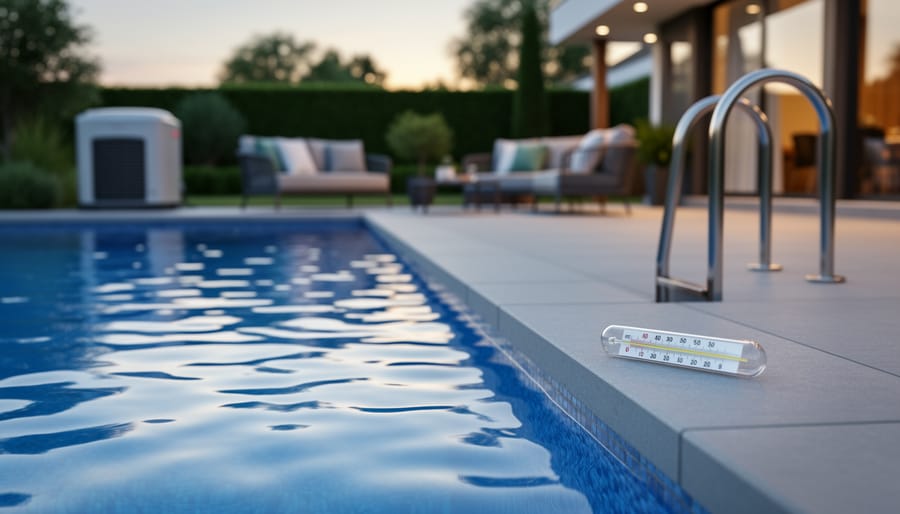
A comfortable, inviting pool temperature makes everyday swimming feel effortless. The warm evening reflections emphasize how the right heat level improves relaxation.
Recreational Swimming: The 78-82°F Sweet Spot
The 78-82°F range hits the Goldilocks zone for most recreational pool users, not too hot, not too cold, just right for lounging, casual laps, and family play. This safe pool temperature range feels comfortably neutral against your skin, meaning you can stay in the water for extended periods without shivering or overheating. Your body doesn’t have to work hard to regulate its core temperature, so you’re free to enjoy the water rather than fight it.
From an energy standpoint, this range is a smart compromise. Every degree you heat above 78°F increases your energy bill, but the comfort gain per degree drops off quickly after 82°F. Most adults find 80°F ideal, warm enough to relax without feeling chilly when you first dive in, yet cool enough that you won’t feel sluggish or drained after 20 minutes of swimming.
This temperature suits families with older children, social swimmers, and anyone who uses the pool for relaxation more than intense exercise. If you’re hosting pool parties or spending lazy afternoons floating on a raft, 78-82°F keeps everyone happy without cranking your heater into overdrive.
Lap Swimming and Exercise: Cooler is Better
If you’re swimming laps or doing water aerobics, you’ll want your pool a few degrees cooler than the recreational standard. Serious swimmers typically set their pools between 76-79°F, and there’s solid reasoning behind that preference.
When you’re pushing through sets or doing a high-intensity workout, your body generates substantial heat. A pool at 80°F or above can make it hard to cool down, leading to overheating, fatigue, and cut workouts. The slightly cooler water acts as a heat sink, pulling excess warmth away from your muscles and core as you move.
Competitive pools stick to this range for good reason, it strikes the balance between comfortable temperatures for activity and performance. Too cold (below 75°F) and your muscles tighten up; too warm and you’re fighting to stay cool instead of focusing on form and endurance.
I’ve noticed in my own morning lap sessions that 77°F feels brisk when I first dive in but perfect once I’m moving. By the third or fourth lap, I’m grateful it’s not warmer. If you’re training regularly rather than just floating around, err on the cooler side of the spectrum.
Therapy and Children’s Pools: Warmer Waters
Therapy pools need warmer water because patients spend long periods stationary or moving slowly, which prevents the body from generating heat through activity. Medical professionals typically set these pools between 86-92°F, with most running at 88-90°F. This elevated temperature keeps muscles relaxed during rehabilitation exercises and prevents the chill that could cause muscles to tense up, defeating the therapeutic purpose.
Children’s pools work best at 84-86°F, notably warmer than adult recreational pools. Young children have higher surface-area-to-body-mass ratios than adults, which means they lose heat faster in water. They also tend to spend more time playing than continuously swimming, with frequent pauses where they’re not generating much body heat. A toddler standing waist-deep and splashing will get cold quickly at 78°F, but stays comfortable at 85°F. The warmer temperature lets kids play longer without shivering, though you’ll want to watch for signs they’re getting too warm during very active play.
Factors That Influence Your Target Pool Temperature
Climate and Seasonal Considerations
Your outdoor temperature plays a bigger role in comfort than you might expect. When the air is 70°F or below, that 78°F pool starts feeling cold as you exit the water, evaporation pulls heat from your skin faster in cooler air. In these conditions, many pool owners bump their target temperature to 82-84°F to maintain the same perceived warmth.
Summer heat reverses this calculation. On a 95°F day, a pool at 80°F feels refreshing, but that same temperature in spring or fall feels lukewarm at best. I’ve watched friends crank their heaters in September only to realize the issue wasn’t the water, it was the 60-degree evening air chilling them between dips.
Seasonal adjustments matter for your wallet, too. Every degree you raise the temperature increases heating costs by roughly 10-30% depending on your system. During shoulder seasons (spring and fall), set your pool 2-3 degrees cooler than your summer target. For winter swimming, if you’re committed, expect to heat to 84-86°F to offset the cold air, or embrace solar heating with a backup system to manage the higher demand without breaking the bank.
Energy Costs and Heating Efficiency
Every degree you add to your pool temperature increases heating costs by roughly 10-30%, depending on your climate and pool size. That seemingly small jump from 78°F to 82°F can mean hundreds of dollars more per season with gas or electric heaters.
The energy math gets real fast. A typical 15,000-gallon pool might cost $300-600 monthly to maintain at 82°F using natural gas in a moderate climate. Drop that target to 78°F, and you’re looking at $200-400 instead. The difference compounds over swimming season, we’re talking potentially $1,000+ in annual savings just by tolerating slightly cooler water.
Solar heating flips this equation entirely. Once installed, sunlight is free. Your only ongoing cost is running the circulation pump, which you’d need anyway. I’ve seen homeowners cut their pool heating bills by 70-85% after switching to solar collectors, even while maintaining their preferred temperature year-round.
The payback period for a DIY solar pool heating system typically runs 2-4 years compared to conventional heating. After that, you’re essentially heating for free while gas and electric users keep paying. Even a hybrid approach, solar as primary with gas backup for cloudy stretches, slashes costs dramatically. The key is matching your collector area to your actual temperature goals rather than overbuilding or under-sizing the system.
Pool Usage Patterns and Frequency
Your pool’s usage pattern dramatically affects what temperature you should maintain and when. If you swim daily or several times per week, keeping the pool at a constant 78-82°F makes sense, you’ll step into comfortable water whenever you want without waiting hours for it to warm up. The energy cost of maintaining steady heat is often lower than repeatedly heating a cold pool, especially with solar systems that work continuously during sunny days.
Weekend-only swimmers face a different calculation. Heating your pool just before use and letting it cool between sessions can save energy, but requires planning ahead. Most pools need 24-48 hours to reach target temperature from ambient, so you’ll want to start heating on Thursday for Saturday swimming. Solar heating works well here if your schedule aligns with sunny days.
Occasional or seasonal users should definitely heat on-demand. There’s no reason to maintain 80°F water in a pool you use twice per month. However, even occasional heating benefits from a baseline temperature, keeping water at 70°F instead of 60°F means faster, cheaper heating when guests arrive. Your solar system can maintain this baseline at minimal cost, then boost temperature as needed.
Track your actual usage for a month to determine your true pattern before committing to a heating strategy.
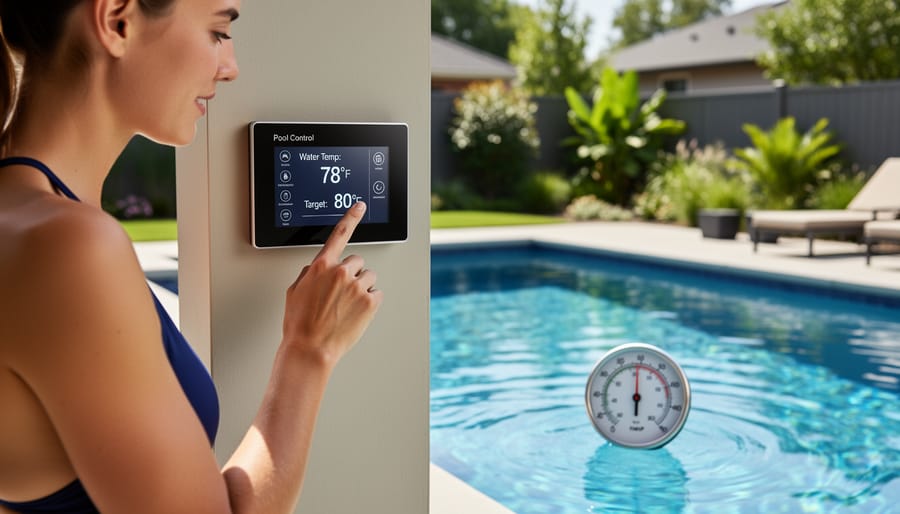
Accurate temperature measurement helps you set a comfortable target and stay consistent week to week. The control area suggests where homeowners check readings before swimming.
How to Determine the Right Temperature for Your Pool
Tools and Materials Needed
Before you can dial in your pool’s perfect temperature, you’ll need a few straightforward tools to measure, adjust, and track your settings accurately. Here’s what to gather:
Digital pool thermometer (look for ±0.5°F accuracy or better)
Access to your pool heater controls (gas, electric, heat pump, or solar system controller)
Small notebook or smartphone app for recording daily temperature readings and comfort observations
Energy meter or utility monitoring device (optional but helpful for tracking heating costs per degree)
Floating thermometer or infrared gun (optional secondary device for spot-checking different pool zones)
You don’t need specialized equipment or technical expertise. A quality digital thermometer is your most critical investment, cheap floating dial thermometers can drift by 3-5 degrees, which defeats the purpose of careful testing. I learned this the hard way when my bargain thermometer had me chasing phantom temperature swings for weeks.
The notebook matters more than you’d think. Recording temperature alongside user feedback (too cold, just right, too warm) for different weather conditions reveals patterns that guide your permanent settings. After testing for 7-10 days across varying conditions, you’ll have enough data to confidently set your target temperature rather than guessing.
Safety Considerations
Pool temperature safety matters more than many realize. Water that’s too hot can cause dizziness, dehydration, and dangerous drops in blood pressure, particularly for pregnant women, young children, and older adults whose bodies regulate heat less efficiently. Water above 104°F poses immediate health risks, while temperatures between 92-100°F become unsafe during extended exposure. On the flip side, prolonged swimming in water below 70°F increases hypothermia risk even on warm days, since water conducts heat away from your body twenty-five times faster than air.
Warning: Never heat pool water above 92°F for general use, and avoid swimming in water below 70°F for extended periods, both extremes create serious health risks.
For accurate temperature management, place your thermometer in the middle depth of your pool, away from return jets and skimmers where readings skew warmer or cooler than the actual average. Take measurements at the same time each day, since surface temperature fluctuates throughout daylight hours. If you’re deciding between heating systems, understanding the safety implications of each helps, check our comparison of heat pump vs solar options to see how different technologies affect temperature control precision. Children under five need closer monitoring at any temperature, as their smaller body mass means they overheat or cool down much faster than adults.
The Testing Process
Start by choosing a baseline week when you can actively observe pool usage. Set your heater to 78°F, the lower end of the comfort range, and measure the temperature at the same time each day, preferably mid-morning before direct sun impacts your reading. Use your pool thermometer in the middle of the pool at elbow depth, not near return jets or skimmers where readings skew warmer or cooler.
Over three to four days at this temperature, swim yourself and ask family members or regular users how it feels. Keep simple notes: too cold for lounging? Perfect for laps? Kids complaining or comfortable? Pay attention to different times of day, morning swims feel different than afternoon sessions even at the same temperature.
After gathering feedback, adjust up or down by two degrees. If 78°F felt slightly cool for recreation, bump to 80°F and repeat your observation period. If it felt fine but you want to test warmer for evening use, try 82°F. Give each new setting at least two days before judging; your perception adapts quickly to small changes.
Track your adjustments in a notebook with dates, temperatures, and user reactions. This creates a personal reference map. I’ve found that most families settle on one temperature for weekday use and another for weekend gatherings, you might heat to 80°F normally but push to 82°F when hosting.
The goal isn’t perfection on day one. It’s finding the sweet spot where comfort meets your energy budget, based on real experience rather than generic advice.
Verification and Fine-Tuning
After you’ve set your target temperature, don’t assume the job’s done. Pool water stratifies, warmer layers float on top while cooler water sinks. Check temperatures at multiple depths and locations to confirm consistency. Use your thermometer to test the shallow end, deep end, and mid-pool at both surface level and about a foot below. If readings vary by more than 2°F, your circulation system might need adjustment or your heating distribution could be uneven.
Track your pool’s temperature daily for the first week, always at the same time (early morning works best before sun exposure alters readings). Note outside air temperature and whether your heater cycled on overnight. This pattern reveals how well your system maintains the temperature you’ve chosen. If you’re consistently overshooting or undershooting your target, recalibrate your heater’s thermostat or adjust its settings.
Once stable, weekly checks suffice for most pools. Keep a simple log, I use a waterproof notebook clipped near my equipment, recording temperature, weather conditions, and any adjustments made. This record becomes invaluable when troubleshooting efficiency drops or planning seasonal changes.
Solar Pool Heating Solutions: Maintaining Your Ideal Temperature
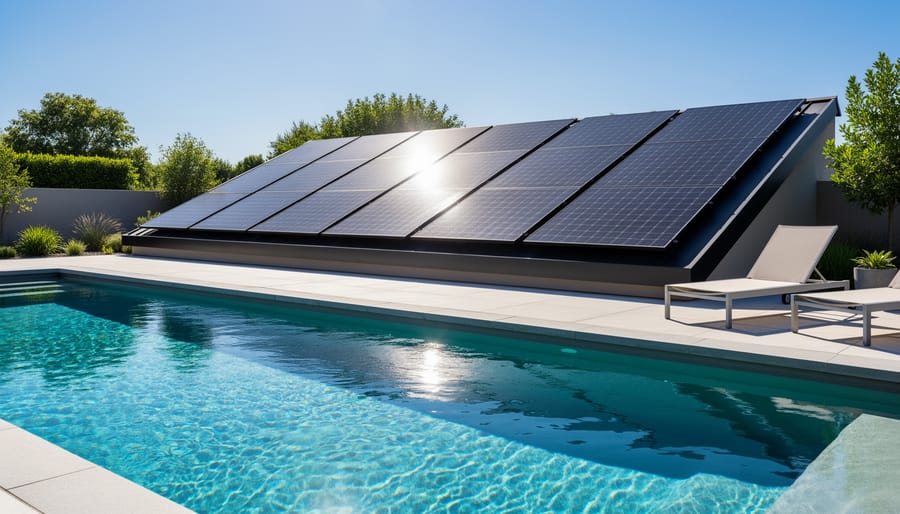
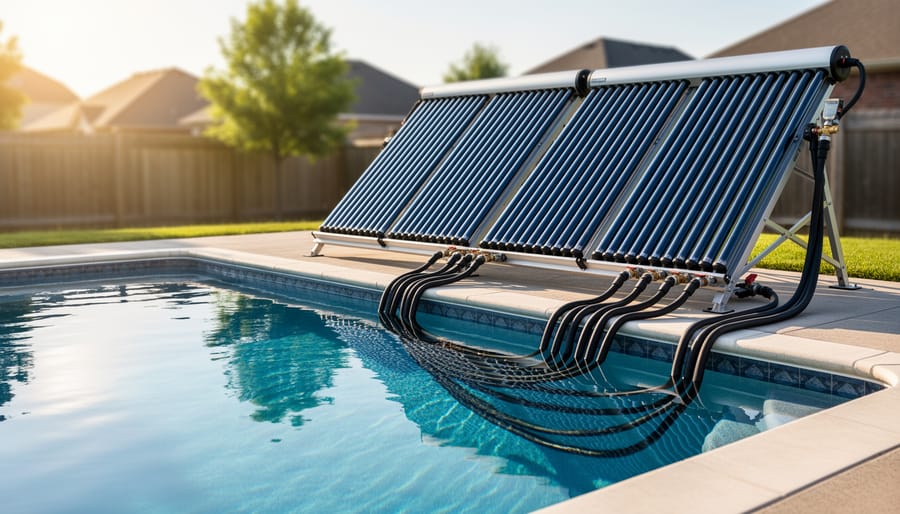
Solar collectors capture energy from the sun to help maintain your preferred pool temperature more efficiently. The bright reflections illustrate active solar heating in clear weather.
How Solar Pool Heaters Work
Solar pool heating taps into the sun’s energy to warm your pool water without burning fossil fuels or racking up electric bills. Here’s how solar heating works: your pool pump pushes cold water through a series of solar collectors (usually black panels or tubes mounted on your roof or ground-mounted racks), where the sun’s heat transfers directly into the flowing water. The warmed water then returns to your pool, gradually raising the overall temperature.
There are two main collector types. Glazed collectors have a glass or polycarbonate cover over copper tubing and work well in cooler climates or when you need higher temperatures, but they cost more. Unglazed collectors use simple black plastic or rubber matting without a cover, making them cheaper and perfectly adequate for most pool heating since you’re only aiming for 78-82°F, not boiling water.
The circulation system is straightforward: pool pump, filter, diverter valve (to route water through the collectors when you want heat), solar collectors, and back to the pool. A controller with roof and pool sensors automates the process, opening the valve when the roof is warmer than the pool and bypassing the collectors when it’s not.
Sizing Your Solar Pool Heater
The general rule of thumb is to install solar collectors that cover 50-100% of your pool’s surface area. A pool in a warm, sunny climate like Florida might need only 50-60% coverage to reach 78-82°F, while pools in cooler regions like the Pacific Northwest often require 80-100% coverage to maintain comfortable temperatures. For example, a 400 square-foot pool in Arizona would need about 200-240 square feet of solar collectors, while the same pool in Seattle might need 320-400 square feet.
The higher percentage also matters if you want to extend your swimming season into cooler months or heat to warmer temperatures (above 82°F). Your target temperature directly affects sizing, each additional degree typically requires 10-15% more collector area. If you’re wondering how many panels you’ll actually need for your specific setup, several factors beyond surface area come into play: shade on your collectors, wind exposure that cools the pool, whether you use a pool cover at night, and your local sun hours.
Note: Use our interactive solar pool heater calculator to get a customized sizing estimate based on your pool dimensions, location, and target temperature.
I’ve sized dozens of systems, and I always recommend starting with the conservative (higher) end of the range if budget allows. It’s far easier to dial back a slightly oversized system by restricting flow than to discover mid-summer that you’re 20% short on heating capacity.
Combining Solar with Conventional Heating
Most pool owners find the sweet spot by running solar as their primary heat source and keeping a conventional heater on standby. I’ve helped dozens of neighbors set up this exact configuration, and it cuts heating bills by 60-80% while maintaining your target temperature year-round.
Here’s the setup that works: let your solar collectors handle the baseline heating during sunny periods, bringing your pool to 78-82°F over several days. Your conventional gas or electric heater then kicks in only when needed, after heavy rain, during extended cloudy stretches, or when you want rapid temperature recovery for an unexpected pool party.
The key is thermostat placement and setpoint strategy. Install your solar controller to maintain your ideal temperature (say, 80°F) whenever sun is available. Set your backup heater 2-3 degrees lower (77-78°F) so it only fires up when solar can’t keep pace. This prevents the expensive heater from fighting the free solar heat.
Time your conventional heating wisely. If you know clouds are forecast for three days, a short boost from your backup before the weather turns keeps you swimming comfortably without running the heater constantly. Track your energy bills monthly, you should see solar handling 70% or more of your heating load in decent climates.
Common Pool Heating Mistakes and How to Avoid Them
After figuring out your ideal pool temperature, it’s equally important to avoid the mistakes that can drive up energy bills or leave your pool uncomfortably warm or cold. Here are the most common errors I’ve seen homeowners make, and how to sidestep them.
Overheating and Wasting Energy
The biggest mistake? Cranking the thermostat too high. Every degree above your comfortable range can increase heating costs by 10-30%, depending on your system. Some pool owners set their heaters to 85°F “just in case,” then wonder why their energy bills spike. Find your sweet spot (usually 78-82°F) and stick to it.
Ignoring the Power of Pool Covers
I’ve worked with countless DIYers who invest in heating systems but skip covers entirely. That’s like heating your home with the windows open. An uncovered pool loses most of its heat overnight through evaporation. Using a solar cover, and understanding the differences between clear vs blue covers can cut heat loss by 70% and help heat a pool faster during the day.
Common Temperature Management Errors
Beyond the big two, watch out for these pitfalls:
Inconsistent temperature monitoring, checking once and assuming it stays constant
Heating the pool when nobody’s using it for days or weeks
Neglecting heater maintenance, reducing efficiency by 20% or more
Setting different temperatures daily instead of maintaining consistency
Placing the thermometer near return jets, which gives falsely high readings
The fix for most of these? Create a simple routine. Check your pool temperature at the same time each day, record it in a notebook or phone app, and adjust your heating schedule to match actual usage patterns. If you’re only swimming weekends, program your heater accordingly rather than maintaining 80°F all week.
One trick I learned from my own solar setup: monitor your system’s run time. If your heater runs constantly without reaching target temperature, you’ve likely got a sizing problem or significant heat loss that needs addressing before you throw more energy at it.
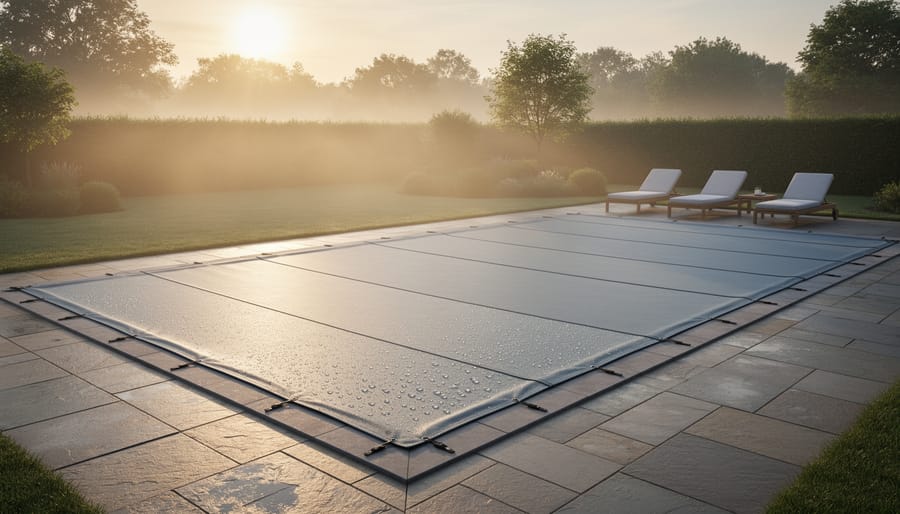
Using the right pool cover can reduce heat loss and cut wasted energy. The calm morning scene highlights efficiency and better temperature retention.
Frequently Asked Questions
What’s the cheapest temperature to heat a pool to?
The most cost-effective approach is heating your pool to the minimum comfortable temperature for your needs, typically 78°F for recreational use. Each degree above this increases energy consumption by roughly 10-30% depending on your heating system and climate, so finding your lowest acceptable temperature delivers the biggest savings.
How long does it take to heat a pool?
Heating time depends on your pool size, current temperature, target temperature, and heater capacity. As a rough guide, a gas heater might raise a 15,000-gallon pool by 20°F in 8-12 hours, while a heat pump could take 24-48 hours. Solar heaters work gradually over several days of sun exposure, making them better suited to maintaining temperature than rapid heating.
Does pool temperature affect chlorine effectiveness?
Yes, chlorine dissipates faster in warmer water, so pools heated above 85°F require more frequent chemical monitoring and higher chlorine levels. This is one reason therapy pools need extra maintenance despite their higher temperatures.
What temperature is too cold for swimming?
Most people find water below 70°F uncomfortably cold for recreational swimming, though tolerance varies. Competitive swimmers often train in 76-79°F water, while anything under 60°F poses hypothermia risks even for brief exposure.
Can solar heating maintain 80°F year-round?
In warm, sunny climates, properly sized solar systems can maintain 80°F for most of the year. In cooler regions or during winter months, you’ll likely need a backup heating system to reach and hold that temperature consistently, though solar can still handle the majority of your heating load during sunnier seasons.
Beyond these common questions, readers often wonder whether they should heat their pool to different temperatures for different family members. The practical answer is to aim for a middle ground that accommodates most users, usually that 78-82°F range, and adjust clothing or activity level for those who run hot or cold. Kids splashing around stay warm through movement even in 78°F water, while adults lounging might prefer 82°F.
Another frequent concern involves overnight temperature drops and whether you should maintain heat 24/7 or let the pool cool. The answer depends on your heating system’s recovery speed and local climate. In consistently warm areas with solar heating, letting the temperature drift down a few degrees overnight and reheating during the day makes sense. With gas or heat pump systems in cooler climates, maintaining a steady temperature often costs less than repeatedly reheating from scratch, since a pool cover prevents most overnight heat loss anyway.
Finding the right temperature for your pool ultimately comes down to balancing comfort, efficiency, and your specific needs. For most recreational swimmers, the sweet spot remains 78-82°F, but as we’ve explored, your ideal setting depends on who’s using the pool, how active they’ll be, and what you’re willing to spend on heating.
The most important takeaway? Don’t just set it and forget it. Test different temperatures, gather feedback from family and friends, and adjust based on actual use. What feels perfect in May might need tweaking by August, and what works for a lazy float session won’t suit lap swimming.
Solar pool heating offers an elegant solution to the energy challenge. By harnessing free sunlight, you can maintain your target temperature without the guilt or the hefty utility bills that come with conventional heating. I’ve seen countless DIY solar installations pay for themselves within two seasons while keeping pools comfortably warm well into fall.
Ready to dial in your perfect pool temperature? Start testing this weekend. Try our solar pool heating calculator to see how much collector area you’d need for your setup, or share your own temperature preferences and heating experiences in the comments below. What temperature works best for your pool, and how do you maintain it efficiently? Your insights might help another reader find their ideal setting.
How useful was this post?
Click on a star to rate it!
Average rating 0 / 5. Vote count: 0
No votes so far! Be the first to rate this post.
We are sorry that this post was not useful for you!
Let us improve this post!
Tell us how we can improve this post?
charlesnoble
Here at Spheral Solar, I’m a hands-on solar power enthusiast, constantly exploring and experimenting with DIY solutions. I’m dedicated to sharing my discoveries, insights, and even the bumps I hit along the way, all in the pursuit of a more sustainable future.
How to Install a Solar Heating System for Your… by Charlesnoble August 25, 2026 You can heat your inground pool with solar panels mounted on your roof, garage, or ground rack, capturing free energy from the sun and extending your swim season by months while slashing heating costs to nearly zero. A properly sized solar heating system circulates pool water through black collector panels…
AGM vs. Lead Acid Batteries: Which Is Better for… by Charlesnoble July 23, 2026 AGM batteries outperform traditional flooded lead acid batteries in nearly every practical measure that matters for solar installations, but whether that performance justifies their 50-100% higher upfront cost depends entirely on how hands-off you want your system to be and how often you’ll cycle the battery deeply. After running both…
Residential ERV Systems: How They Work with Solar… by Charlesnoble August 9, 2026 A residential ERV (Energy Recovery Ventilator) exchanges stale indoor air with fresh outdoor air while recovering up to 80% of the heating or cooling energy that would otherwise be lost, and when paired with solar power, it delivers year-round ventilation with virtually no grid electricity cost. Unlike a simple exhaust…
5 Sources of Electrical Energy Every Solar DIYer… by Charlesnoble July 1, 2026 Electricity powers our homes from five main sources: solar panels, wind turbines, hydroelectric generators, fossil fuel generators, and battery storage systems. If you’re building a reliable off-grid setup or backing up your solar array, understanding how these sources work together transforms a single-point-of-failure system into resilient, year-round power. I learned…
6 Best Solar Spot Lights of 2026, Tested and Reviewed by Charlesnoble August 8, 2026 After testing dozens of solar spotlights in real-world conditions throughout 2026, the AloftSun Solar Motion Sensor Outdoor Lights emerged as the top overall choice for most homeowners, thanks to its reliable performance and versatility across different landscape lighting scenarios. But picking the right solar spotlight depends entirely on what you’re…
How to Install a Whole House Ventilation System… by Charlesnoble July 12, 2026 Installing a whole house ventilation system powered by solar takes about 6 to 8 hours for a moderately skilled DIYer and delivers continuous fresh air circulation without touching your electric bill. The core method involves mounting a solar panel on your roof to power an intake or exhaust fan, routing…
Subscribe for handpicked DIY projects, exclusive tips, and giveaways.
Nine times out of ten, an RV generator that won’t start has a stale fuel problem. If your generator hasn’t run in more than 30 days, degraded gasoline is likely gumming up the carburetor and preventing ignition. Before you panic or call for expensive roadside service, try this: turn on the generator’s fuel valve (if… Read more: RV Generator Troubleshooting: Common Problems and How to Fix Them
A 5kW solar system occupies between 250 and 350 square feet of roof or ground space and produces roughly 20 to 25 kilowatt-hours of electricity per day in most U.S. locations. That’s enough to power a typical three-bedroom home with moderate energy use, though your exact needs depend on your daily consumption patterns, climate zone,… Read more: How to Size a 5kW Solar System for Your Home or RV
Installing a home solar system yourself takes 2-4 weekends for an average 5kW setup, requires solid electrical knowledge and comfort working at heights, and can save you $5,000-$8,000 in labor costs if you tackle everything except the final utility interconnection. The process breaks down into five main phases: permitting and design, mounting the racking system,… Read more: Solar Power Installation Step by Step: Complete DIY Guide From Start to Finish