Why Every Solar DIYer Needs a 6 Wire Crimper in Their Toolbox
Updated:
Examine the wire gauge stamped on your tool before making a purchase—most 6-wire crimpers handle 10 AWG to 22 AWG, which covers standard solar panel MC4 connectors and battery cable terminals perfectly. If you’re working with thicker 6 AWG battery cables for your off-grid setup, you’ll need a different tool entirely, despite what the confusing name suggests.
Test the crimper’s ratcheting mechanism in the store by squeezing the handles halfway and trying to release them—quality models won’t let go until the crimp cycle completes, preventing those frustrating half-crimps that cause connection failures months down the road. I learned this the hard way when a cheap crimper from a big box store left me troubleshooting intermittent power loss in my workshop solar array for three weekends straight.
Match your crimper to your connector type from the start. Solar work typically requires ferrule crimpers for stranded wire going into charge controllers, while automotive-style insulated terminals need the curved dies found on mechanic’s crimpers. Buying the wrong style means you’ll either damage your connectors or create loose connections that heat up under load—neither option is acceptable when you’re 20 feet up on a roof installing panels.
Strip your wire to the exact length marked on the connector barrel, crimp once in the wire section and once in the insulation section for waterproof terminals, then give each connection a firm tug test pulling at least 20 pounds of force. If it slides out, your crimp pressure was insufficient or your die size was wrong. This two-minute verification process saves hours of diagnostic work later when your system mysteriously underperforms or fails completely during the first rainstorm.
What Makes a 6 Wire Crimper Different (And Why It Matters)
When I first started building my solar setup, I kept hearing experienced DIYers talk about their “6 wire crimper” like it was some kind of magical tool. I’ll be honest – I had no idea what made it different from any other crimper. Let me save you the confusion I went through.
The “6 wire” designation refers to the number of crimping cavities or die positions built into the tool’s head. Think of these as different-sized grooves that accommodate various wire gauges. A 6 wire crimper typically handles wire sizes from 10 AWG down to 22 AWG, which is the sweet spot for most solar energy projects.
Here’s why that matters for your solar setup: your main battery cables usually sit around 10-12 AWG, your charge controller connections often use 12-14 AWG, and your smaller monitoring or sensor wires typically fall in the 16-22 AWG range. One tool handles everything. I remember the day I realized I could stop switching between three different crimpers – it was like finding out I’d been using a butter knife when I owned a proper chef’s knife all along.
Compare this to a 4 wire crimper, which only handles limited gauge ranges and might leave you stuck when connecting smaller gauge wires. On the flip side, 8 wire crimpers exist but often include tiny gauge sizes (like 24-26 AWG) that you probably won’t use in solar work, and they’re bulkier to boot.
The beauty of the 6 wire crimper is its Goldilocks nature – not too specialized, not too general. It covers the practical range you’ll encounter when wiring solar panels, connecting batteries in parallel or series, and hooking up charge controllers and inverters. You’re not paying for capabilities you won’t use, but you’re also not left scrambling when a project requires a slightly different wire size than expected.
For the community-minded DIYer, this versatility means you can help friends with their projects too, making you the go-to solar helper in your circle.
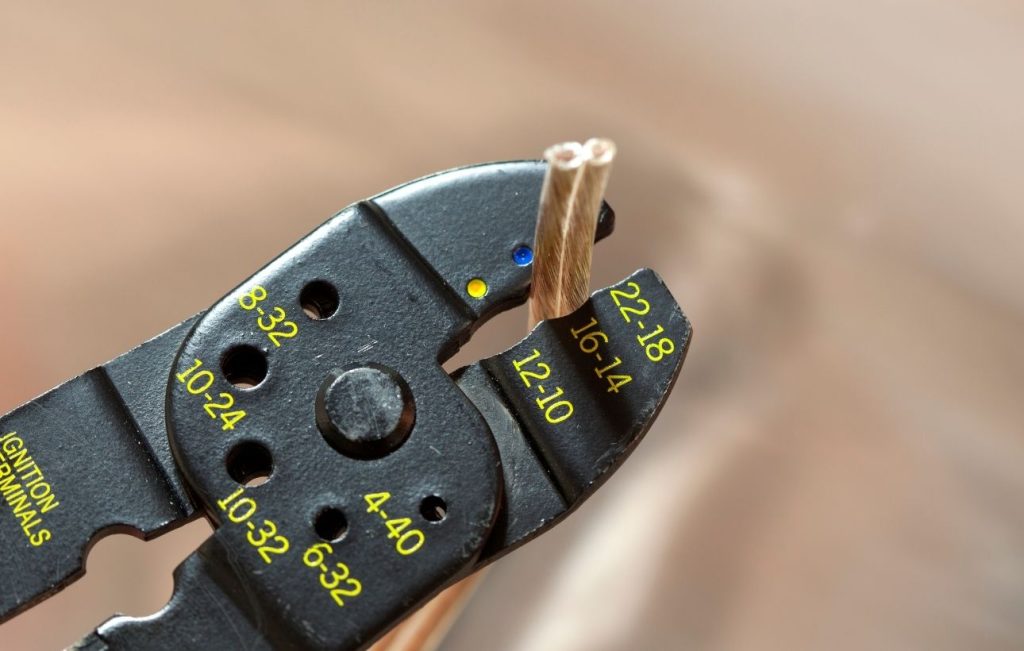
A quality 6 wire crimper in action, showing the ratcheting mechanism creating a secure connection on an insulated terminal—the foundation of reliable solar wiring.
The Three Solar Connections Where Your 6 Wire Crimper Shines
Panel-to-Panel and Panel-to-Controller Connections
When connecting multiple panels together or running wire from your rooftop array down to your charge controller, you’ll encounter different connector options beyond the basic MC4s that come pre-attached to most panels. Some solar panel kits include Y-branch connectors or T-connectors for parallel connections, while others require you to create custom wire runs using bare wire and terminals.
This is where your 6 wire crimper becomes absolutely essential. I learned this the hard way during my first installation when I thought I could get away with twist-on wire connectors for a 30-foot run to my controller. Within weeks, I was troubleshooting voltage drop issues that were robbing me of precious charging capacity.
Proper crimping ensures each connection maintains full electrical contact without resistance. Poor crimps create hot spots where electricity struggles to pass through, leading to voltage drop that steals power from your system. Even worse, these resistance points generate heat, and in extreme cases, can spark fires.
When making these critical connections, strip your wire carefully, insert it fully into the terminal or connector, and apply firm, even pressure with your crimper until you feel it bottom out completely.
Battery Bank Wiring
When I first started building my solar battery bank, I learned the hard way that weak connections can literally melt under high current loads. Battery banks are the powerhouse of any off-grid solar system, and they demand rock-solid connections that won’t fail when you need them most.
Your 6 wire crimper becomes absolutely essential here because you’ll be working with ring terminals and battery interconnects that carry serious amperage. We’re talking 100, 200, even 300 amps flowing through these connections during peak charging or heavy loads. A loose or improperly crimped terminal creates resistance, which generates heat, which can lead to connection failure or even fire.
Ring terminals are your go-to connectors for battery bank wiring. These circular connectors slip over battery posts and bolt down securely, creating maximum surface contact. When crimping ring terminals for battery applications, you want to use the largest wire gauge your system requires, typically between 6 AWG and 2/0 AWG for most residential setups.
Here’s the critical part: inspect every crimp visually and give it a firm tug test. The wire should not pull out with reasonable force. For battery interconnects, consider using tinned copper lugs, which resist corrosion better in the humid environments where batteries often live. A quality crimp with your 6 wire crimper creates a gas-tight connection that will serve your system reliably for years.
Properly crimped battery connections are critical for high-current solar applications, where loose connections can cause dangerous heat buildup and power loss.
Inverter and Charge Controller Terminations
When you’re connecting high-power components like inverters and charge controllers in your solar setup, you absolutely need rock-solid terminations. I learned this the hard way years back when a loose connection on my charge controller created enough resistance to melt the insulation. Not fun, and definitely not safe.
These components handle serious current, so your 6 wire crimper becomes essential for proper inverter connections and charge controller hookups. You’ll typically work with heavier gauge wires here, commonly 10 AWG, 8 AWG, 6 AWG, or even 4 AWG depending on your system size and power requirements. The larger your solar array and battery bank, the thicker the wires need to be to handle the current safely.
A quality crimp on these connections prevents voltage drop, reduces heat buildup, and eliminates the fire hazard that poor connections create. Many DIYers underestimate how much force these larger gauges require for proper crimping. Your 6 wire crimper needs to handle these beefier wires with the same precision it gives smaller gauges. Always double-check your crimp quality by gently tugging on the wire, and remember that proper crimps should show a slight indentation without cutting into the conductor strands.
Choosing Your 6 Wire Crimper: What Actually Matters
Ratcheting vs. Non-Ratcheting: The One Feature Worth Paying For
Here’s the thing about wire crimping that I wish someone had told me years ago: the number one mistake beginners make is releasing the crimper before the crimp is fully complete. I learned this the hard way when three of my early solar panel connections failed within weeks because I thought I’d crimped them properly.
This is where ratcheting mechanisms become absolute game-changers. A ratcheting crimper won’t let you open the handles until the crimp cycle is 100% complete. It physically forces you to squeeze all the way through, ensuring every connection meets the proper compression standards. Think of it like a safety lock that protects you from yourself.
Non-ratcheting crimpers are cheaper, usually by about half the cost, but they rely entirely on your judgment and hand strength. You might think you’ve squeezed hard enough, but unless you’re experienced, you’re probably leaving connections partially crimped. These weak points create resistance, heat buildup, and eventually failure, which is especially problematic in solar systems where connections might be on your roof and difficult to access.
For solar work specifically, where reliable connections can literally determine whether your system works for two years or twenty, the ratcheting feature isn’t just nice to have. It’s the single most important upgrade worth paying for.
Insulated vs. Non-Insulated Terminals: Which Does Your Project Need?
When crimping wire terminals for your solar project, you’ll encounter two main types: insulated and non-insulated. Here’s the practical difference that matters for your work.
Insulated terminals come with a colored plastic sleeve (usually red, blue, or yellow) that covers the crimped connection. These are your go-to choice for most solar installations. The insulation provides protection against accidental contact with other wires or metal surfaces, which is crucial when you’re working in tight junction boxes or combiner boxes. I learned this the hard way when a non-insulated terminal in my first DIY solar setup nearly caused a short circuit during a rainstorm.
Non-insulated terminals are bare metal connections without any protective sleeve. While they create excellent electrical contact, they require additional heat shrink tubing or electrical tape for safety. You might choose these when working in extremely tight spaces where the extra bulk of pre-insulated terminals won’t fit, or when you need maximum current capacity.
For beginners, I always recommend starting with insulated terminals. They’re safer, easier to work with, and the color coding helps you match wire gauges correctly. Your 6 AWG wire crimper will handle both types, but insulated terminals give you that extra peace of mind as you’re learning.
Price Points and Quality Markers
Here’s the honest truth from my workshop experience: budget 6 wire crimpers start around $15-25, and they’ll work fine for occasional solar panel projects or small home installations. I’ve used several in this range, and while they get the job done, expect looser tolerances and handles that might feel wobbly after a year of regular use.
Mid-range options ($35-60) offer better durability and more consistent crimps, which matters when you’re working with expensive solar connectors. These are my go-to recommendation for most DIY solar enthusiasts who’ll use the tool regularly but aren’t running a professional operation.
Professional-grade crimpers ($80-150) feature hardened steel jaws, precise ratcheting mechanisms, and comfortable grips that reduce hand fatigue during bigger projects. Unless you’re installing multiple solar systems yearly, the mid-range sweet spot usually makes more sense. I learned this after splurging on a premium model early on – great tool, but honestly overkill for weekend projects.
How to Crimp Like a Pro: The Technique That Changed My Solar Installs
I’ll be honest—my first solar crimps were terrible. I’m talking connections that looked okay but failed my tug test within seconds. I remember standing on a roof in the middle of July, sweat dripping down my face, redoing eight connectors because I’d rushed through them. That frustrating afternoon taught me more about proper crimping than any tutorial video ever could.
The technique itself isn’t complicated, but the details matter enormously. Here’s what actually works:
Start by stripping your wire to the exact length specified by your connector—usually between 6-8mm for solar MC4 connectors. Too little exposed wire and you won’t get proper contact. Too much and you’ll have exposed copper that could short or corrode. Your 6 wire crimper should have a built-in stripper that makes this consistent every time.
Before inserting the wire, inspect it carefully. Any stray strands? Twist them gently with your fingers so they’re all aligned. Push the wire fully into the connector until it stops—you should feel it bottom out against the internal barrier. This is where I messed up initially. I’d get impatient and crimp without ensuring the wire was fully seated.
Now for the actual crimp: Position your crimper’s jaws completely around the connector’s crimp barrel. The tool should be perpendicular to the connector, not at an angle. Squeeze firmly and steadily until the handles nearly touch. Don’t pump the handles or do partial squeezes—that creates weak spots. With a good ratcheting crimper, you’ll hear a click when it’s complete.
Here’s the test I now do religiously: Hold the connector and pull hard on the wire. I mean really yank it. If it slides even slightly, cut it off and start over. A proper crimp is actually stronger than the wire itself. I also do a visual check—the crimp should show a clear hexagonal or rectangular indent pattern, with no gaps or incomplete compression marks.
Common mistakes? Crimping too close to the wire insulation (which can damage it), using the wrong die size for your wire gauge, and my personal favorite error—forgetting to slide the connector housing onto the wire before crimping. Trust me, you only make that mistake once before it’s burned into your memory.
The learning curve feels steep at first, but after about twenty crimps, your hands develop the muscle memory. Now I can crimp an entire solar array’s worth of connections in an afternoon, and every single one passes inspection. That confidence is worth the initial frustration.
The Wire Stripping Side of the Equation
Here’s something I learned the hard way during my first solar panel installation: even the best crimper in the world won’t save you from a poorly stripped wire. I’d measured everything perfectly, had my MC4 connectors lined up, and then realized I’d stripped way too much insulation off. The exposed copper was sticking out like a sore thumb, creating a potential short circuit hazard.
Proper wire stripping is the foundation of any good crimp connection. For most solar connectors, you’ll want to strip between 6-8mm of insulation. Too little, and you won’t get enough conductor engagement inside the connector barrel. Too much, and you risk exposed copper that can arc or short. I keep a small piece of tape on my workbench marked with the exact lengths for my most-used connectors as a quick reference guide.
Now, should you invest in a combination crimper-stripper tool? For solar work, my honest answer is maybe. Dedicated quality wire strippers give you more precision and control, which matters when you’re working with expensive solar wire and connectors. However, if you’re doing rooftop installations where every trip up the ladder counts, having one tool that does both jobs can be incredibly convenient.
The key is understanding that stripping and crimping are two distinct skills. A combination tool won’t automatically make you better at either. I typically recommend starting with separate tools so you can learn the feel of each process, then upgrading to a combo tool once you’ve built that muscle memory and know what quality results look and feel like.
The difference between a proper crimp and a failed one is subtle to the eye but critical for system performance—proper technique ensures complete compression.
Common Crimping Mistakes That Can Tank Your Solar System
I learned this lesson the hard way during my first big solar array installation. Everything looked perfect until I started getting mysterious voltage drops three months later. After hours of troubleshooting, I discovered the culprit: improperly crimped connections that looked fine on the outside but were failing internally. Don’t make the same mistakes I did.
Under-crimping is probably the most common error beginners make. When you don’t apply enough pressure, the wire strands don’t fully embed into the terminal, creating a high-resistance connection. You’ll think it looks secure because the terminal has closed around the wire, but there’s not enough metal-to-metal contact. This causes heat buildup, voltage drops, and eventually complete connection failure. A properly crimped terminal should require significant force to pull off and won’t rotate around the wire.
Over-crimping creates its own problems. When you apply too much force, you can actually break wire strands or crack the terminal itself. I’ve seen terminals that looked completely crushed, with visible damage to the barrel. This weakens the connection and creates potential failure points. Your 6 AWG wire crimper has calibrated dies specifically to prevent this, but you still need to stop at the correct point in the handle squeeze.
Wrong terminal size selection happens more often than you’d think. Just because a terminal physically fits on your wire doesn’t mean it’s the right match. Each terminal is designed for specific wire gauges. Using an 8 AWG terminal on 6 AWG wire leaves gaps, while forcing 6 AWG wire into a 10 AWG terminal creates excessive strain. Always check the terminal packaging for compatible wire sizes.
Crimping over insulation is a rookie mistake that compromises everything. The crimp must contact bare copper strands only. Even a tiny bit of insulation between the terminal and wire creates resistance and prevents proper electrical contact. Strip your wire to the exact length indicated on the terminal or use the strip gauge on your crimper.
Beyond Solar: Other Uses for Your 6 Wire Crimper
Here’s something I love about investing in a quality 6 wire crimper: it doesn’t just sit in your toolbox waiting for the next solar project. This tool becomes your go-to companion for all sorts of electrical connections beyond panel installations.
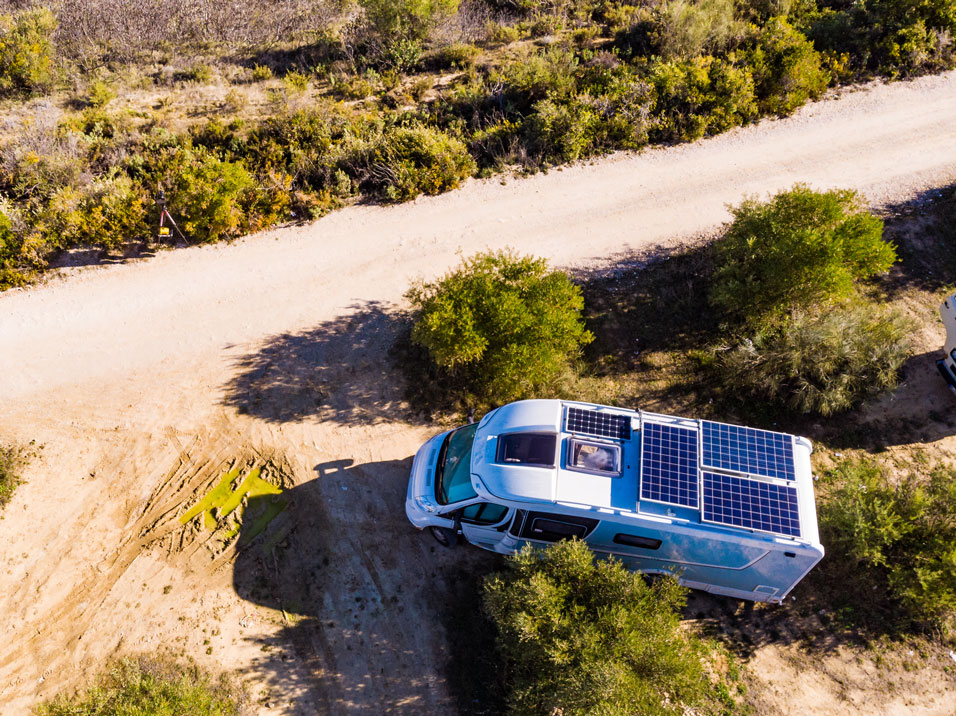
If you’re into camping or RVing, your crimper will earn its keep quickly. I’ve used mine countless times for RV solar installations, but also for repairing interior lighting, fixing battery connections, and even troubleshooting the sound system. Those same MC4 connectors you’re crimping for portable solar panels work perfectly for portable battery setups at campsites.
Automotive projects are another natural fit. Whether you’re adding auxiliary lights to your truck, installing a dashcam, or upgrading your car audio system, you’ll appreciate having the right crimping tool. I recently helped a neighbor wire LED strips under his boat console, and my trusty crimper made quick work of dozens of connections.
Camp lighting systems, backup power stations, and even garden lighting projects all benefit from proper wire crimping. The investment pays for itself surprisingly fast once you realize how many electrical projects around your home, vehicle, and outdoor spaces require solid connections. Instead of twisting wires together with electrical tape or using unreliable methods, you’ll have professional-grade connections every time.
A well-equipped solar DIY workspace featuring the essential crimping and stripping tools needed for reliable installations beyond just solar projects.
Remember Charles and his frustrating flickering solar lights? That story ended happily once he invested in a proper 6 wire crimper and learned the right technique. What seemed like a complicated electrical problem was simply a case of unreliable connections made with the wrong tool. His solar system has been running flawlessly for over two years now, all because he took the time to do it right.
Here’s the truth: your solar project is only as reliable as your weakest connection. A quality 6 wire crimper isn’t just another tool to add to your collection—it’s the foundation of a safe, efficient solar installation that will serve you for decades. Whether you’re setting up a small garden light system or tackling a full off-grid setup, those solid crimped connections are what stand between success and constant troubleshooting.
Investing in a quality crimper might seem like an expense now, but consider the alternative: redoing connections, replacing damaged components, or worse, dealing with safety hazards from poor electrical work. The right tool pays for itself in reliability and peace of mind.
Ready to take your solar journey further? Explore our other guides on solar wiring, system design, and installation techniques to build your skills and confidence one project at a time.
How useful was this post?
Click on a star to rate it!
Average rating 0 / 5. Vote count: 0
No votes so far! Be the first to rate this post.
We are sorry that this post was not useful for you!
Let us improve this post!
Tell us how we can improve this post?
charlesnoble
Here at Spheral Solar, I’m a hands-on solar power enthusiast, constantly exploring and experimenting with DIY solutions. I’m dedicated to sharing my discoveries, insights, and even the bumps I hit along the way, all in the pursuit of a more sustainable future.
8 Best Wire Strippers in 2023 by Adeyomola August 4, 2021 A lightweight, versatile wire stripper with a sharp cutting edge and a solid grip is great. However, the best wire strippers stand out largely because of their broad wire gauge range. A versatile wire stripper does more than just wire stripping. Some brands design wire strippers and add extra features…
Best Solar Pool Covers in 2023 by Adeyomola May 13, 2021 The quality and effectiveness of a solar pool cover are typically defined by the following features: thickness, size, UV stability or resistance, and color. So, when compiling this list, we focused on solar pool covers offering the best features. Best Solar Pool Covers at a Glance Overall Best Solar Pool…
10 Best Solar Panels for RV in 2023 by Nick April 2, 2021 You’ve decided to build an RV, and your feelings of excitement are through the roof. Though in the back of your mind, you still feel a bit of anxiety, thinking about the things that go into building an RV. One of these things is probably your RV electric system. Best…
10 Best Portable Solar Panels in 2023 by Nick September 8, 2021 Portable solar panels provide steady power wherever it’s needed. Ideally, they will be lightweight, small enough to carry and resist outdoor elements. Many of the products reviewed also come with helpful bags or built-in handles. The balance between portability and power output is important. They’re often used for backpacking, camping,…
10 Best Rechargeable Batteries for Solar Lights by Nick April 23, 2021 While lithium-ion batteries have long been touted as the future of the solar battery world, some close rivals are giving them a run for their money. This blog post gives you a closer look at the best rechargeable batteries for solar lights currently available for solar light applications. We’ve covered…
8 Best Solar Flashlights in 2023 by Nick July 14, 2021 It’s time to brighten your day and night with the best solar-powered flashlights! No emergency kit is ever complete without a proper flashlight to ensure you’ll have visibility when there is none. Whether the power goes out or you’re stuck on a dark road, a solar flashlight will keep you…
Subscribe for handpicked DIY projects, exclusive tips, and giveaways.
Position your solar panels at an angle equal to your latitude for year-round performance, or adjust seasonally by adding 15 degrees in winter and subtracting 15 degrees in summer to capture maximum sunlight during each season’s sun path. Use a simple angle finder app on your smartphone against the back of your panel to verify… Read more: The Right Tilt Angle Can Boost Your Solar Panel Output by 30% (Here’s How to Find It)
Route your PV wires through UV-resistant conduit within 18 inches of leaving the solar array, securing it every 3 feet with proper clamps to prevent wind damage and code violations. This single step prevents 80% of the wire degradation issues I’ve seen in DIY solar installations over the past decade. Group your positive and negative… Read more: Why Your PV Wire Management Could Fail Inspection (And How to Fix It)
Understand that 6000 volts sounds terrifying but delivers surprisingly low amperage—typically around 120 milliamps for just 3/10,000th of a second per pulse. This combination creates an unforgettable shock that trains animals to avoid the fence without causing lasting harm. The voltage pushes current through thick fur and hide, while the minimal amperage and microsecond duration… Read more: Why 6000 Volts Won’t Kill Your Livestock (But Will Stop Predators Cold)