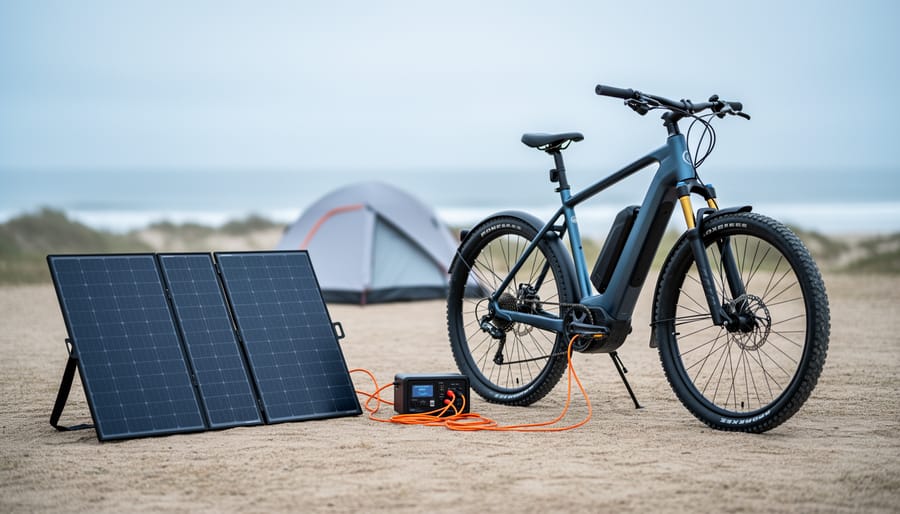
Why Your Next Camping Trip Needs a Portable Solar Power System (And How to Pick One)
Updated:
Picture yourself camping under a starlit sky, phone at 5%, miles from the nearest outlet. Or imagine a summer storm knocking out power while your refrigerator full of food slowly warms. These moments reveal a simple truth: energy independence isn’t just convenient—it’s essential.
Portable solar power systems have evolved far beyond the clunky, inefficient panels of a decade ago. Today’s systems pack serious power into backpack-friendly designs, capable of running everything from smartphones to mini-fridges, even power tools for remote job sites. Whether you’re a weekend warrior seeking reliable off-grid power or a preparedness-minded homeowner building backup resilience, these systems offer genuine freedom without the complexity of permanent installations.
Here’s what makes this technology so compelling right now: costs have dropped dramatically while efficiency has soared. What once required a $2,000 investment and expert installation now fits in a carrying case for a fraction of the price. You can start small with a basic setup for essential devices, then scale up as your needs grow—no electrician required.
I’ve spent years testing these systems in real-world conditions, from desert camping trips to power outage scenarios at home. The difference between a system that delivers and one that disappoints often comes down to understanding a few key principles. This guide cuts through the marketing noise to show you exactly what works, what doesn’t, and how to choose the right setup for your specific needs without overspending or under-preparing.
What Exactly Is a Portable Solar Power System?
Think of a portable solar power system as your personal, mobile electricity station that you can take virtually anywhere. Unlike those permanent solar installations bolted to rooftops, these systems are designed to be picked up, moved around, and set up wherever you need power—no electrician required.
I remember the first time I helped my neighbor Sarah set up her portable system for a weekend camping trip. She was amazed that within fifteen minutes, she had a fully functioning power source ready to charge her phone, run a small cooler, and power her laptop for remote work. That’s the beauty of these systems—they’re genuinely plug-and-play.
So what makes up one of these mobile power solutions? At its heart, you’ve got three main components working together. First, there are the solar panels themselves, which capture sunlight and convert it into electricity. These are usually foldable or come in compact designs that are easy to transport.
Next is the battery or power station—think of this as your energy storage unit. It holds the electricity generated by your panels so you can use it whenever needed, whether the sun’s shining or not. Modern power stations often look like sturdy boxes with various outlets, USB ports, and displays showing how much juice you’ve got left.
Finally, there’s the charge controller, which acts as a traffic cop for your electricity. It regulates the power flowing from your panels to your battery, preventing overcharging and keeping everything running smoothly. In many portable systems, this component is built right into the power station, which means one less thing to worry about.
The key difference from permanent installations? You’re not drilling into your roof, running wires through your attic, or getting permits. You simply unfold your panels, plug them into your power station, and you’re generating clean energy. It’s solar power without the commitment or complexity.
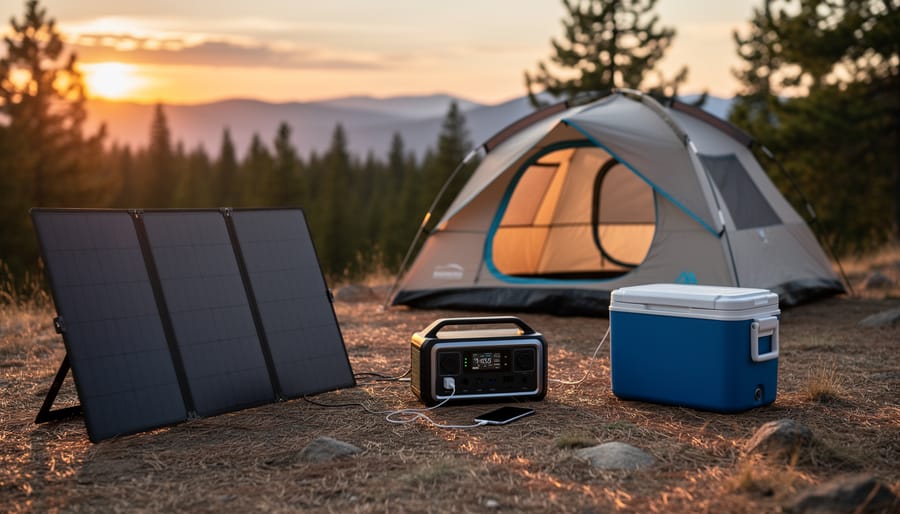
A portable solar power system provides quiet, reliable energy for camping trips without the noise and fuel requirements of generators.
Why Portable Solar Beats Traditional Power Sources
The Freedom Factor
I still remember my first off-grid camping trip with a portable solar setup. Sitting by the campfire three days into a backcountry adventure, watching my phone charge from nothing but sunshine, I felt genuinely liberated. No searching for electrical hookups, no rationing battery power, no generator noise disturbing the peace.
That’s the real magic of portable solar power systems: complete independence. You’re no longer tethered to the grid or hunting for the nearest fuel station. Whether you’re exploring remote trails, setting up basecamp in the wilderness, or preparing for unexpected power outages at home, these systems put energy production directly in your hands.
For emergency preparedness, this independence becomes critical. When storms knock out power for days, your portable solar system keeps essential devices running—phones for communication, medical equipment, refrigeration for medications. I’ve talked with countless community members who felt genuine peace of mind knowing they had reliable backup power that doesn’t depend on fuel deliveries or grid restoration.
The freedom extends beyond emergencies too. Extended RV trips, weeks-long camping adventures, or simply powering your workspace in a remote cabin all become possible. You’re carrying your own personal power plant, ready whenever sunshine appears.
Cost Savings Over Time
Let me walk you through the math that convinced me to make the switch to portable solar. When I was planning my first extended camping trip, I nearly spent $800 on a high-end gas generator. I’m so glad I ran the numbers first.
A decent portable solar power system might cost you anywhere from $300 to $1,500 upfront, depending on capacity. Seems like a lot, right? But here’s where it gets interesting. A comparable gas generator running 4 hours daily burns about half a gallon of fuel. At $4 per gallon, that’s $2 daily, or $60 per month if you’re a regular weekend camper.
Do the quick calculation: that $800 generator plus fuel costs means you’ve spent $1,520 in just one year of regular use. Meanwhile, your solar setup paid for itself and keeps delivering free power from the sun.
I remember chatting with my neighbor who powers his RV weekend trips with a generator. Over five years, he’s dropped over $3,600 on fuel alone, not counting maintenance, oil changes, and that carburetor replacement that set him back $150. My solar panels from that same period? Zero additional costs, and they’re still going strong.
The beauty is that after your initial investment, sunlight doesn’t send you a bill. No trips to the gas station, no storage concerns with fuel cans, and no wondering if your generator will actually start when you need it. For anyone using portable power regularly, solar typically breaks even within 12 to 24 months, then it’s pure savings from there.
Understanding Your Power Needs (It’s Easier Than You Think)
What Can You Actually Power?
Let me break down what you can realistically run with portable solar systems—because understanding power consumption makes all the difference between a successful setup and disappointment.
Your smartphone needs roughly 5-10 watts to charge, making it the easiest device to power. Most portable systems handle this without breaking a sweat. Tablets and e-readers fall into a similar category, typically drawing 10-15 watts.
Laptops get more interesting. A standard laptop pulls 50-75 watts while charging, though smaller Chromebooks or ultrabooks might only need 30-45 watts. I learned this the hard way during a camping trip when my power station drained faster than expected—turned out my gaming laptop was drawing nearly twice what I’d calculated!
LED lights are incredibly efficient, using just 5-15 watts depending on brightness. String up several around your campsite and you’ll barely notice the drain. Your solar charging station can easily handle multiple lights simultaneously.
CPAP machines typically need 30-60 watts, making them manageable with mid-range systems. Many users successfully run theirs all night on a 500Wh power station.
Mini-fridges are power-hungry, requiring 40-100 watts continuously. They’re possible with larger systems, but calculate your capacity carefully. Portable fans use 10-50 watts depending on size.
When it comes to charging larger devices like power tools or electric coolers, you’ll need robust systems with 1000Wh or more capacity. Always check your device’s wattage label and multiply by hours of use to determine your needs.
Quick Calculator Guide
One of the most common questions I get from readers is: “Charles, how do I know what size system I actually need?” I remember standing in my garage years ago, surrounded by random solar panels and a notepad full of confusing calculations, wishing someone had just given me a simple tool to figure it out.
That’s exactly why we created the calculator tools at Spheral Solar. These free resources take the guesswork out of sizing your portable solar setup, and they’re surprisingly simple to use.
Here’s how to get started. First, make a quick list of the devices you want to power. For each one, note the wattage (usually found on a label or in the manual) and how many hours per day you’ll use it. A phone charger might be 10 watts for 2 hours, while a mini-fridge could be 60 watts running continuously.
Head to the calculator and plug in these numbers. The tool will automatically calculate your daily watt-hours, then recommend an appropriate battery capacity and solar panel wattage. It accounts for real-world factors like charging efficiency and cloudy days, so you’re not left short on power.
The beauty of these calculators is that you can experiment with different scenarios. Planning a weekend camping trip versus a week-long off-grid adventure? Just adjust the numbers and see how your system requirements change. Within minutes, you’ll have a solid baseline for what components you need, taking all the intimidation out of the planning process.
Key Components and How They Work Together
Solar Panels: Your Energy Collectors
The solar panel is the heart of your portable power system—it’s what captures sunlight and transforms it into usable electricity. When I first started experimenting with portable solar, I made the mistake of choosing panels based solely on price. Big mistake! Understanding the different types and what makes a quality panel will save you headaches down the road.
Portable panels come in three main varieties. Folding panels are the most popular for good reason—they pack down small, typically include built-in kickstands, and often have pockets for easy storage. They’re perfect for weekend camping trips. Rigid panels are tougher and more efficient but bulkier to transport. I keep these mounted on my adventure trailer. Flexible panels are lightweight and can conform to curved surfaces like RV roofs, though they generally don’t last as long as their rigid cousins.
Efficiency matters more than you might think. Look for monocrystalline panels—they perform better in partial shade and low-light conditions compared to polycrystalline options. Most quality portable panels range from 15-23% efficiency, which is perfectly adequate for recreational use.
Wattage determines how quickly you’ll charge your battery bank. A 100-watt panel is the sweet spot for most beginners—enough to keep phones, lights, and small devices running without breaking your back. Need to power more? Consider linking multiple panels together.
Durability features to prioritize include weatherproof construction, reinforced corners, and protective cases. Check that junction boxes are sealed against moisture. Quality panels should withstand occasional rain and typical outdoor abuse while maintaining performance for years.
Modern portable power stations feature multiple output ports to charge phones, cameras, laptops, and other essential camping devices simultaneously.
Power Stations: Your Energy Storage
Think of your power station as the heart of your portable solar setup—it’s where all that sunshine gets stored for when you actually need it. I learned this the hard way on my first camping trip with solar gear, when I didn’t understand battery capacity and ran out of juice halfway through cooking dinner!
Let’s break down what those numbers mean. You’ll see two measurements: Amp-hours (Ah) and Watt-hours (Wh). Watt-hours are the more useful number because they tell you the actual usable energy. A 500Wh power station can theoretically run a 50-watt device for 10 hours, or a 100-watt device for 5 hours. Simple math, but incredibly helpful for planning.
Battery chemistry matters more than most people realize. Lithium batteries (specifically lithium iron phosphate or LiFePO4) are the gold standard for portable systems. They’re lighter, last through more charge cycles—often 2,000 to 3,000 compared to lead-acid’s 300 to 500—and maintain consistent power output. Lead-acid batteries are cheaper upfront but heavier and require more maintenance. For portable applications, lithium wins hands down.
Modern power stations are essentially battery packs with built-in inverters that convert DC power from your panels into AC power for regular household devices. Look for multiple output options: USB ports for phones, 12V outlets for car accessories, and standard AC outlets for laptops and small appliances. Some even include wireless charging pads and LED displays showing real-time power usage—features that transform a simple battery into a complete portable energy hub.
The Connection: Making It All Work
Think of your portable solar setup like a well-orchestrated band—each component needs to play nicely together. The charge controller acts as the conductor, regulating power flow from your panels to prevent overcharging your battery. Many portable power stations have these built right in, which simplifies everything tremendously.
When I first started experimenting with portable systems, I learned the hard way that cable thickness matters. Thinner cables create resistance, wasting precious solar energy as heat. For most small setups, 10-gauge wire works great for runs under 10 feet.
The real key is matching voltage ratings. Most portable panels output 18-20 volts for charging 12-volt batteries, but always double-check compatibility. Modern power stations usually accept a range of inputs, but connecting mismatched voltages can damage equipment or simply won’t charge at all.
Look for MC4 connectors on panels—they’re the industry standard and make swapping components easy. Many portable setups now use barrel-style plugs or USB-C connections, offering plug-and-play simplicity that removes guesswork from the equation entirely.
Choosing the Right System for Your Adventures
Weekend Warrior Setup
For those weekend camping trips where you just need the essentials, a compact setup will serve you perfectly without breaking the bank. I remember my first camping solar setup—just a small 20-watt panel and a basic power station. It kept my phone charged, ran LED camp lights, and even powered a small fan during a surprisingly warm spring night.
For casual weekend warriors, I recommend starting with a 50-100 watt portable solar panel paired with a 150-300 watt-hour power station. This combination easily handles phones, tablets, cameras, headlamps, and portable speakers. You can charge the power station at home before leaving, then use the solar panel to top it off during the day at camp.
Look for foldable panels with built-in kickstands and USB ports for direct device charging. The power station should have multiple output options—USB-A, USB-C, and at least one AC outlet. Many quality systems in this range cost between $200-400 total and weigh under 15 pounds combined, making them genuinely portable.
This setup gives you the freedom to camp off-grid without worrying about dead batteries, and it’s expandable if you catch the solar bug like I did.
Extended Off-Grid Setup
When you’re planning week-long camping trips, running an RV fridge 24/7, or setting up a semi-permanent base camp, you’ll need something with serious capacity. Extended off-grid setups typically feature 300-500 watt panels paired with battery banks in the 1,000-3,000 watt-hour range.
I remember my first attempt at powering a three-day wilderness photography workshop. My smaller system couldn’t handle charging multiple camera batteries, laptops, and keeping lights running after dark. That experience taught me that underestimating your power needs is a costly mistake.
These larger systems often include multiple battery expansion options, MPPT charge controllers for maximum efficiency, and AC outlets capable of running small appliances. Look for systems with at least 2,000 charge cycles, meaning they’ll serve you reliably for years of adventures.
The beauty of these setups is their modular nature. Start with a solid base unit and expand as your needs grow. Many RV enthusiasts use them to supplement shore power or run air conditioning during sunny afternoons, significantly reducing campground electrical costs.
Consider portability versus capacity trade-offs carefully. A 40-pound system is manageable for car camping but impractical for backpacking. Wheeled options exist for heavier configurations, making relocation around your campsite much easier.
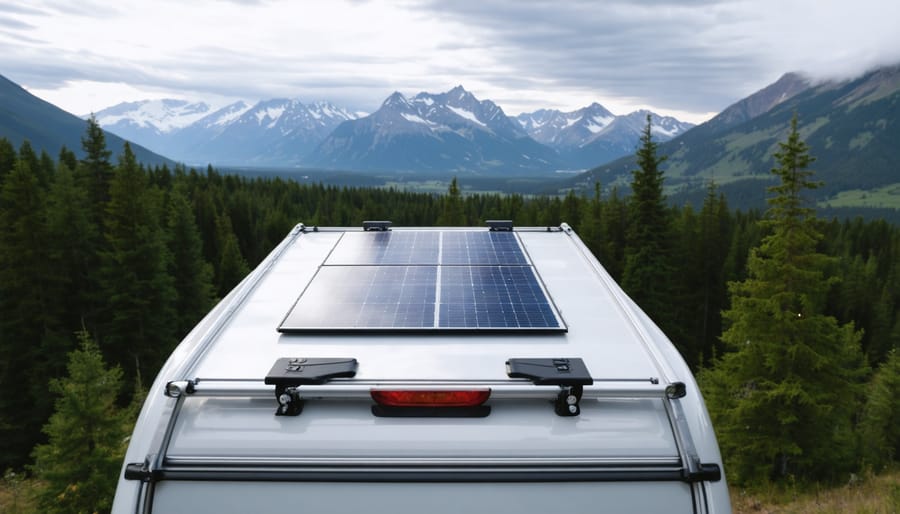
Portable solar systems enable extended off-grid adventures, powering essential equipment for multi-day camping trips in remote locations.
Emergency Preparedness Setup
When the power goes out, having a reliable portable solar system can mean the difference between comfort and chaos. I learned this firsthand during a three-day outage last winter when my DIY solar generator kept our essentials running smoothly.
For emergency preparedness, prioritize capacity over portability. Look for systems offering at least 1000-1500 watt-hours of battery storage, which should power a refrigerator, lights, phone chargers, and a laptop for 24-48 hours. Multiple charging ports are essential, so choose units with both AC outlets and USB connections.
Key features to consider include pass-through charging, allowing simultaneous solar charging while powering devices, and expandable battery options for longer outages. A pure sine wave inverter protects sensitive electronics like medical equipment and computers.
Calculate your needs by listing critical devices and their wattage. Add up the total watts and multiply by hours of daily use. This gives you your minimum watt-hour requirement. Always add 20-30 percent buffer capacity for cloudy days or unexpected needs.
Keep your system accessible and regularly maintained. Test it quarterly, keep batteries charged to 50-80 percent for longevity, and store solar panels where you can quickly deploy them when needed.
Getting Started: Your First Setup
Testing at Home First
Before you pack up your portable solar system for that weekend camping trip or emergency preparedness scenario, spend an afternoon testing everything in your backyard. Trust me on this—I learned the hard way after arriving at a remote campsite only to discover a loose cable connection that would have taken thirty seconds to fix at home.
Start by following the same steps outlined in our solar panel setup guide, but do it where you have easy access to tools and replacement parts. Lay out your panels in direct sunlight, connect your charge controller, and hook up your battery. Watch for the charging indicator lights—they should show power flowing from panels to battery within moments of proper connection.
Next, test your actual devices. Plug in your phone, laptop, or camp fridge and verify they charge or run as expected. Time how long it takes to charge your battery from 50% to full on a sunny day—this gives you realistic expectations for the field. Check all cable connections by giving them a gentle tug, and inspect for any fraying or damage.
Finally, simulate a real-world scenario by running your system for a full day, then using stored power overnight. This home trial run reveals any weak points before they become wilderness headaches.
Common Beginner Mistakes to Avoid
Let me share something I learned the hard way during my first camping trip with a portable solar setup: I placed my panels in what I thought was full sun, only to realize they were shaded by my tent for half the day. It’s one of those facepalm moments that taught me a valuable lesson about panel placement.
Speaking of placement, the most common mistake beginners make is positioning panels incorrectly. Even partial shade from a tree branch or your RV can dramatically reduce power output. Always check the sun’s path throughout the day and adjust your panels to follow it when possible. Think of your panels like sunbathers—they need unobstructed rays to perform their best.
Another trap many newcomers fall into is being overly optimistic about weather conditions. I’ve met countless folks who sized their system assuming every day would be bright and sunny, only to struggle during cloudy stretches. Here’s a reality check: weather varies, and panels produce significantly less power on overcast days. When planning your setup, factor in those less-than-perfect conditions.
The flip side? Underestimating your actual power needs. Before my solar journey, I never realized how much energy my devices consumed. Running that mini-fridge, charging laptops, and powering lights adds up faster than you’d think. Create a realistic inventory of everything you’ll power and add a 20-30% buffer for unexpected usage. Your future self will thank you when you’re not rationing power on day three of your adventure.
Maximizing Your System’s Performance
Getting the most from your portable solar setup isn’t rocket science, but a few smart habits can make a dramatic difference in how much power you actually capture. I learned this the hard way during a camping trip when my supposedly fully-charged battery bank died halfway through the weekend. Turns out, I’d been doing almost everything wrong.
Panel positioning is your biggest lever for performance. The sun moves across the sky throughout the day, so what works at 9 AM won’t be optimal at 2 PM. If you’re stationary for a while, repositioning your panels every few hours to face the sun directly can boost output by 25-40%. Think of it like a plant following the light. The ideal angle depends on your latitude, but a general rule is to tilt your panels at an angle equal to your latitude for maximum year-round performance. In summer, decrease that angle by about 15 degrees, and in winter, increase it by 15 degrees.
Weather considerations go beyond just cloudy versus sunny days. Even on overcast days, you’re still capturing diffused sunlight, often around 10-25% of full capacity. Don’t pack up your panels just because clouds roll in. However, keep panels clean. Dust, pollen, bird droppings, and even morning dew can create a surprising barrier. A quick wipe with a soft cloth and water before you start collecting power each day can improve efficiency by 5-15%.
Shade is your enemy. Even partial shading on one corner of a panel can reduce total output disproportionately due to how solar cells are wired together. Scout your setup location carefully and watch for moving shadows from trees or structures throughout the day.
For maintenance, portable systems are pretty low-fuss. Inspect connections regularly for corrosion, especially if you’re near saltwater. Store panels flat or slightly tilted to prevent water pooling. Check your battery health monthly using a simple voltage meter, and never let batteries sit completely drained for extended periods.
These small adjustments compound into significantly better performance and longer system life.
Proper positioning and angling of solar panels maximizes energy collection, especially important when camping in varying terrain and weather conditions.
Expanding Your Solar Journey
Once you’ve got your first portable system up and running, you might find yourself bitten by the solar bug—I know I was after my first camping setup kept my coffee hot and phone charged all weekend. The beautiful thing about solar is that it grows with you. Want more power? Adding panels to your existing system is straightforward. Curious about building something custom? The skills you’ve learned here translate directly to larger projects.
Many of our community members start with portable setups before tackling van solar power systems or even home installations. At Spheral Solar, we’ve got resources to guide you through each step, from calculating your expanded power needs to selecting compatible components. Our solar calculator tools can help you plan your next upgrade, and our community forum is filled with folks who’ve walked this path before. They’re always eager to share what worked, what didn’t, and how they’d do it differently next time. The journey from portable power user to confident solar DIYer is closer than you think.
Getting started with portable solar power might seem like a big leap, but here’s what I’ve learned after years of tinkering with these systems: the first step is always the simplest one. You don’t need to become an electrical engineer overnight or invest thousands of dollars right away. Start with something manageable—maybe a small 100-watt panel and a basic charge controller for your weekend camping trips. Test it, learn from it, and build from there.
I remember my first portable setup. It was nothing fancy, just enough to keep my phone charged and run a small fan. But that feeling of generating my own power, completely off-grid? That’s what hooked me. And the beautiful thing is, that same feeling is accessible to everyone, regardless of your technical background or budget.
The portable solar community is growing every day, and we’d love to hear your story. Whether you’re planning your first system or you’ve been running solar setups for years, your experiences help others take that crucial first step. Share your successes, your challenges, and your creative solutions with the Spheral Solar community.
Energy independence isn’t just a buzzword—it’s a real, achievable goal that starts with a single solar panel. You’ve got the knowledge, the resources, and a whole community backing you up. Now it’s your turn to harness the sun.
How useful was this post?
Click on a star to rate it!
Average rating 0 / 5. Vote count: 0
No votes so far! Be the first to rate this post.
We are sorry that this post was not useful for you!
Let us improve this post!
Tell us how we can improve this post?
charlesnoble
Here at Spheral Solar, I’m a hands-on solar power enthusiast, constantly exploring and experimenting with DIY solutions. I’m dedicated to sharing my discoveries, insights, and even the bumps I hit along the way, all in the pursuit of a more sustainable future.
Why 9 Volt Solar Panels Are Perfect for Your… by Charlesnoble March 9, 2026 Understand that 9 volt solar panels aren’t actually standardized products delivering exactly 9V—most small panels marketed this way produce anywhere from 6V to 12V depending on sunlight conditions, making them surprisingly versatile for charging batteries, running small electronics, or powering Arduino projects. Match your panel’s actual output voltage to your…
How Does a Solar-Powered Drip Irrigation System Work by Paul September 13, 2021 Solar-powered drip irrigation can be installed in most gardens using a small solar system, readily available irrigation materials, and minimal tools. If you already have a home solar system, it can be tapped into without installing a dedicated system. And the installation of an average drip irrigation system is well…
DIY Solar Generator – Complete Guide With Diagrams by Paul July 17, 2021 Building a weatherproof DIY solar generator involves mounting and wiring a battery, charge controller, inverter, trickle charger, and fusing inside a weatherproof case. Then all the relevant input and output sockets are wired and mounted on the outside of the case where they are easily accessible. What Exactly Are Solar…
How Far a 5 Mile Solar Fence Charger Actually… by Charlesnoble November 30, 2025 Understand that the “5 mile” rating on solar fence chargers doesn’t mean your fence will shock animals five miles away—it refers to the maximum length of wire the charger can energize under perfect conditions. In reality, expect effective coverage for 2-3 miles of actual fencing once you factor in vegetation…
How I Built a 48V Ebike Solar Charger That Works Anywhere by Charlesnoble January 14, 2026 Calculate your ebike’s battery capacity in watt-hours by multiplying 48 volts by your amp-hour rating—this determines the minimum solar panel wattage you’ll need. A standard 48V 14Ah ebike battery holds 672Wh, requiring at least a 200-watt solar panel for a full day’s charge in optimal sunlight conditions. Match your solar…
Build Your Perfect Van Solar Power System (Without… by Charlesnoble October 19, 2025 Transform your van into a self-sufficient mobile haven with a custom solar power system that delivers reliable, renewable energy wherever the road takes you. From weekend warriors to full-time nomads, installing solar panels on your van opens up endless possibilities for off-grid living while significantly reducing your environmental impact. Whether…
Subscribe for handpicked DIY projects, exclusive tips, and giveaways.
Check your solar inverter’s communication ports right now – if you see two screw terminals labeled A and B (or D+ and D-), you’re looking at 2-wire RS485, the most common communication protocol in DIY solar monitoring setups. This simple two-wire system lets your solar equipment talk to monitoring devices, allowing you to track power… Read more: Why 2-Wire RS485 Is the Smartest Choice for Your DIY Solar Monitoring System
Match your solar panels to microinverters or power optimizers based on your roof’s shading patterns—even partial shade from a chimney or tree during morning hours means module-level power electronics will recover 15-25% more energy than string inverters lose to the weakest panel. Install power optimizers when you’re working with mixed panel orientations across multiple roof… Read more: Why Smart Solar Modules Could Save Your DIY Array (Before It’s Too Late)
Measure your conduit run before purchasing materials by mapping the exact path from your solar array to the inverter and battery location, accounting for a 10% waste factor and additional length for bends. PVC electrical conduit remains the most cost-effective protective solution for DIY solar installations, but improper installation creates fire hazards, code violations, and… Read more: Why Your Solar Conduit Installation Could Start a Fire (And How to Do It Right)