Solar-Powered Ventilation That Slashes Your Energy Bill While Keeping Your Home Fresh
Updated:
Calculate your home’s air exchange rate by dividing your square footage by 60—most homes need complete air replacement every 1-3 hours to prevent moisture buildup, stale air, and indoor pollutants that trigger allergies and respiratory issues. A 1,500 square foot home requires roughly 25-50 cubic feet per minute of continuous ventilation.
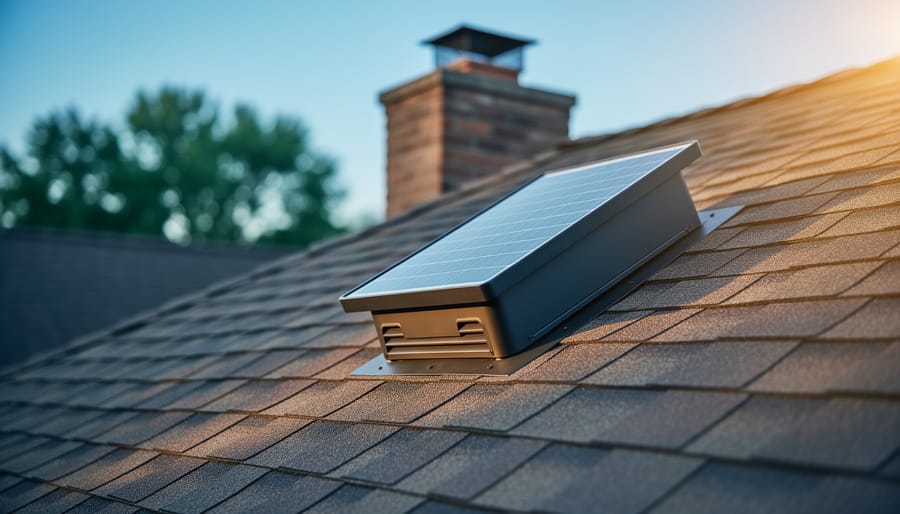
Install solar-powered attic fans as your entry point into renewable ventilation—these $150-400 units mount directly onto roof vents, require no electrical wiring, and can reduce attic temperatures by 40-50 degrees while extending roof shingle life by years. I discovered this firsthand when my own attic temperatures dropped from a scorching 150°F to a manageable 100°F after a single weekend installation.
Position intake vents low and exhaust vents high to leverage natural convection currents that pull fresh air through your living spaces automatically. This passive design principle costs nothing to operate and works continuously, even when mechanical systems fail. Combine this with solar exhaust fans in bathrooms and kitchens where moisture concentrates most heavily.
Test your current ventilation adequacy using the simple match test—light a match, blow it out, and watch the smoke. If smoke hangs motionless in the air for more than 5 seconds, your ventilation is insufficient. Proper airflow should clear smoke within 2-3 seconds, indicating healthy air circulation that prevents mold growth and maintains indoor air quality.
Solar ventilation systems offer the perfect marriage of environmental responsibility and practical home improvement, requiring minimal maintenance while slashing energy costs and improving your family’s daily comfort and health.
Why Your Home’s Air Is Probably Worse Than You Think
I learned this the hard way during my first winter in a newly built, energy-efficient home. I’d invested in quality insulation and tight seals to keep heating costs down, but within weeks, I noticed something odd. The windows were constantly fogging up, my son’s allergies were acting up more than usual, and the house just felt stuffy, even though the thermostat read a comfortable 68 degrees.
Here’s what most homeowners don’t realize: modern homes are built to be airtight, which is fantastic for energy efficiency but terrible for air quality. That same insulation that keeps your heating and cooling bills low also traps everything inside—cooking fumes, volatile organic compounds from furniture and cleaners, excess moisture from showers and laundry, and even the carbon dioxide we exhale with every breath.
Think about it this way. Older homes naturally “breathed” through gaps around windows, doors, and other leaky spots. They wasted energy, sure, but they also constantly exchanged stale indoor air with fresh outdoor air. Today’s well-sealed homes can have air exchange rates so low that you’re essentially breathing recycled air all day long.
This matters more than you might think. That persistent headache you get in the afternoon? Could be elevated CO2 levels. The mold growing in your bathroom corners? That’s moisture with nowhere to go. Even that general feeling of grogginess when you wake up might stem from spending eight hours in a bedroom with minimal fresh air circulation.
The Environmental Protection Agency actually found that indoor air can be two to five times more polluted than outdoor air, even in major cities. We worry about outdoor pollution, but statistically, we spend 90 percent of our time indoors, breathing air that’s potentially making us sick, tired, and uncomfortable.
The solution isn’t tearing out your insulation. It’s implementing a smart ventilation strategy that works with your home’s envelope, not against it.
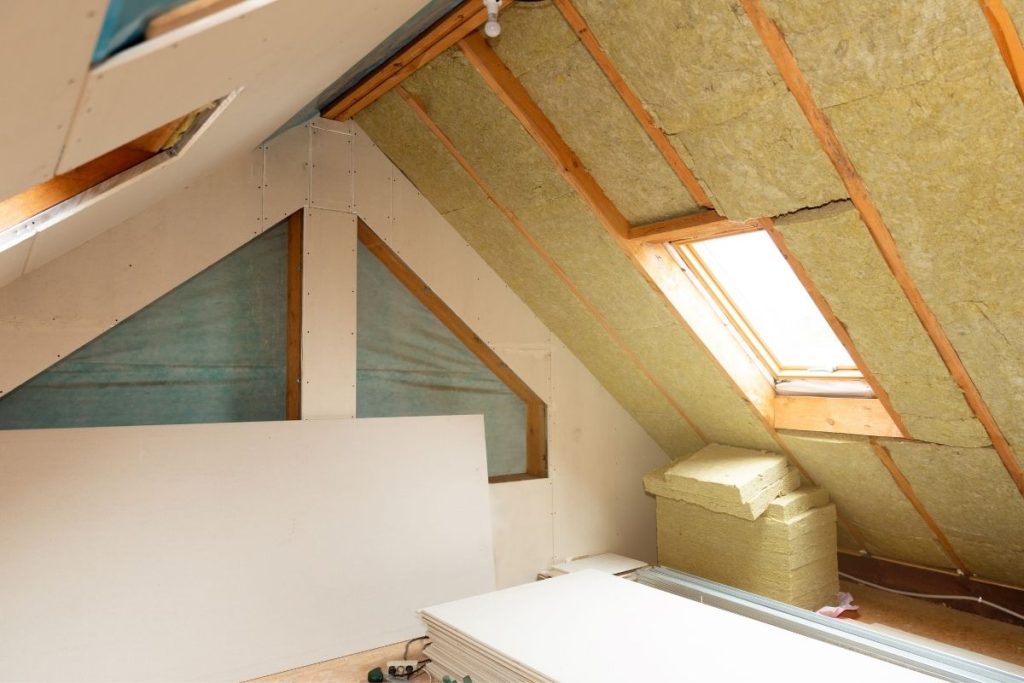
Poor attic ventilation traps heat and stale air, creating uncomfortable conditions that affect your entire home.
How Solar Ventilation Actually Works (No Engineering Degree Required)
The Brilliant Simplicity of Sun-Powered Airflow
Here’s the beautiful part about solar-powered ventilation: it’s almost like nature designed it this way. When the sun beats down hardest on your roof, that’s exactly when your solar panels generate the most electricity, and that’s precisely when your home needs ventilation the most.
I remember installing my first solar attic fan on a scorching July afternoon. What struck me wasn’t just how attic fans work, but the elegant timing of it all. As the temperature climbed, the fan naturally ramped up its speed without me lifting a finger. No thermostat needed, no complicated controls.
Think about it: on a mild, cloudy day, your attic stays relatively cool, so the solar panels produce less power and the fan runs slower. Perfect, because you don’t need much ventilation anyway. But when summer sun turns your attic into an oven, those same panels kick into high gear, pulling hot air out exactly when the heat buildup is worst.
This self-regulating system means you’re not wasting energy ventilating when you don’t need to, and you’re getting maximum airflow when you do. It’s a natural partnership that works harder as conditions demand it, all while drawing zero power from your electrical grid.
Active vs. Passive Solar Ventilation: What’s the Difference?
When I first explored solar ventilation for my workshop, I was surprised to learn there are two distinct approaches: active and passive systems. Understanding the difference helped me choose the right setup, and it’ll help you too.
Active solar ventilation systems use fans powered by solar panels to actively move air through your space. Think of them as the go-getters of ventilation. The solar panel generates electricity that drives a fan, creating controlled airflow even when natural breezes aren’t cooperating. These systems are particularly effective in attics, garages, and workshops where you need reliable air movement. The beauty is they work hardest when you need them most—on sunny days when heat buildup is greatest. If you’re considering this route, checking out solar vs electric attic fans can help you understand your options better.
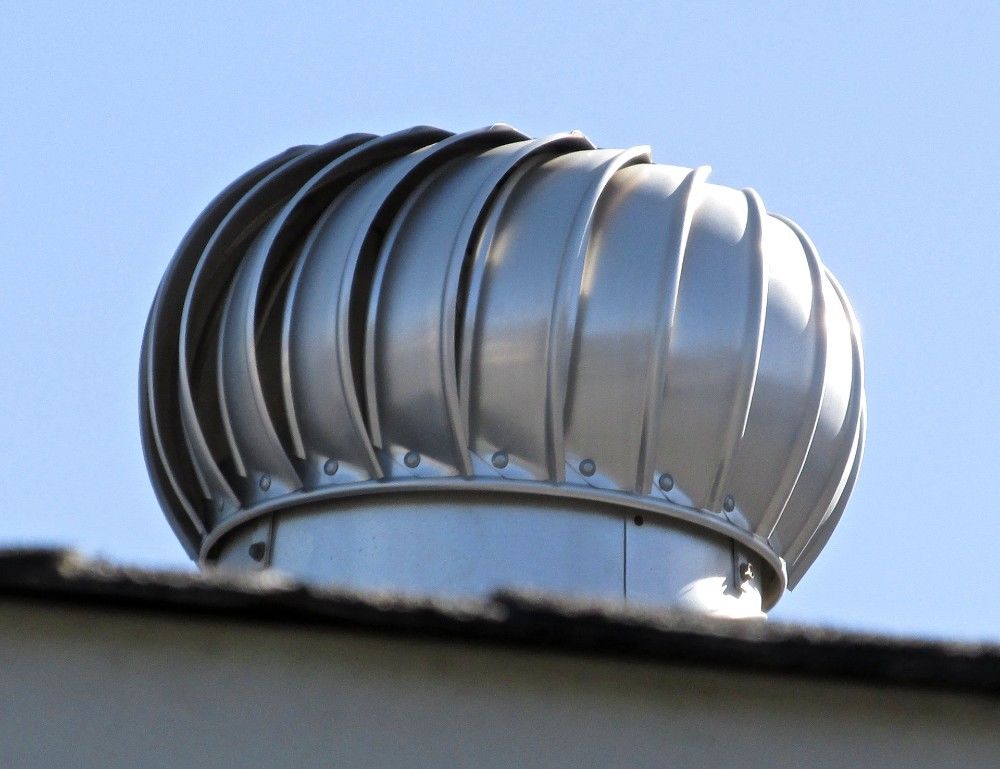
Passive solar ventilation relies entirely on natural convection—no moving parts required. These systems use strategically placed vents that allow hot air to rise and escape naturally while drawing cooler air in from below. They’re wonderfully simple and maintenance-free, but their effectiveness depends heavily on your climate, building design, and temperature differentials.
The choice comes down to your specific needs. Active systems give you predictable, powerful ventilation and work in almost any situation. Passive systems shine when you want zero maintenance and have the right conditions for natural airflow. Many homeowners actually combine both approaches, using passive vents as their baseline with active fans for extra boost during peak heat.
The Real-World Benefits You’ll Actually Notice
Proper ventilation creates noticeably more comfortable living spaces while reducing the burden on your cooling system.
Your Energy Bills Will Thank You
Here’s the real talk about energy savings: a properly ventilated attic can reduce your cooling costs by 15-30%, depending on your climate and home setup. When I installed my solar attic fan three summers ago, my AC usage dropped noticeably during those brutal afternoon hours when the sun beats down relentlessly.
Think about it this way: without ventilation, your attic can reach 150°F on a hot day, turning your ceiling into a giant radiator that heats your living space from above. Your air conditioner has to work overtime just to keep up. With good ventilation, you’re keeping that attic temperature closer to outdoor levels, which means your AC cycles less frequently and runs more efficiently.
Now, let’s set realistic expectations. If you’re spending $200 monthly on cooling during summer, you might see savings of $30-60 per month. Solar-powered fans have the added advantage of zero operating costs since they work hardest when the sun is strongest. Over a 10-year lifespan, that’s potentially $3,600-$7,200 back in your pocket. The payback period for a DIY solar ventilation system typically ranges from 2-5 years, making it one of the more sensible energy upgrades you can tackle.
Goodbye Attic Heat, Hello Comfortable Rooms
Here’s something I learned the hard way during my first Arizona summer: your attic can turn into an oven that bakes the rooms below. I measured 150°F up there while my living room felt like a sauna despite the AC running nonstop.
Proper attic ventilation creates a crucial barrier between that extreme heat and your comfortable living spaces. When hot air gets trapped in your attic, it radiates down through your ceiling, forcing your cooling system to work overtime. A well-ventilated attic, especially one powered by solar fans, continuously pushes that superheated air out while drawing cooler air in.
Think of it like opening a car window on a hot day. That trapped heat needs somewhere to go. Solar-powered attic fans work during peak heat hours when you need them most, using the sun’s energy to exhaust hot air before it penetrates your insulation and warms your rooms below. The result? Bedrooms that stay comfortable, lower energy bills, and an AC system that doesn’t constantly struggle against attic heat radiating downward.
Moisture Problems? Not Anymore
Trapped moisture is one of the biggest enemies your home can face, and I learned this the hard way when I discovered black mold creeping up my basement walls a few years back. Without proper air circulation, moisture from everyday activities like cooking, showering, and even breathing gets trapped inside, creating the perfect breeding ground for mold and mildew.
A good ventilation system acts like your home’s lungs, constantly exchanging stale, humid air with fresh outdoor air. This continuous air movement prevents moisture from settling on surfaces where it can cause damage. Think of it as giving dampness nowhere to hide. When moisture levels stay balanced, you protect everything from your drywall and insulation to wooden beams and flooring.
The beauty of solar-powered ventilation is that it works hardest when you need it most—during sunny days when heat and humidity naturally increase. You’re preventing costly structural repairs while keeping your indoor environment healthy and comfortable, all without adding to your energy bills.
Types of Solar Ventilation Systems for Different Needs
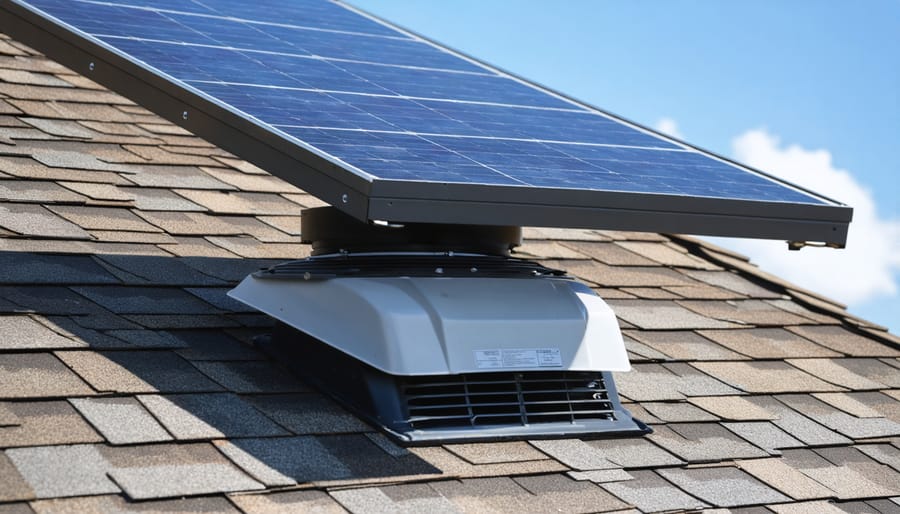
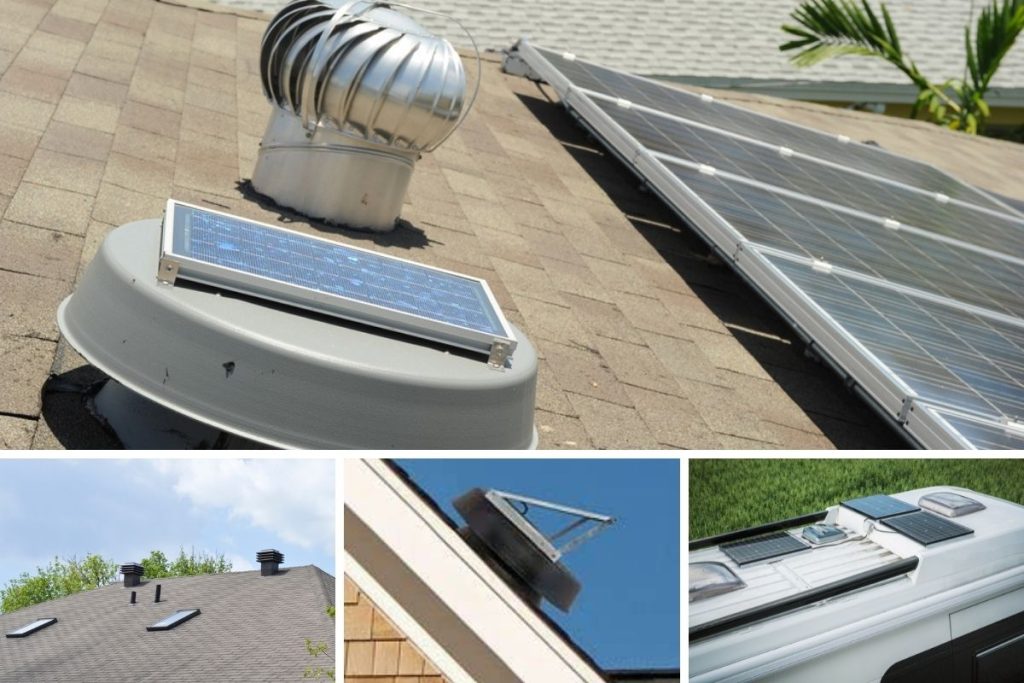
Solar attic fans combine a ventilation fan with an integrated solar panel for zero-cost operation during sunny days.
Solar Attic Fans: The Most Popular Starting Point
When I first started exploring home ventilation upgrades, solar attic fans caught my attention immediately. They’re essentially the gateway project for anyone interested in solar-powered home improvements, and for good reason.
These self-contained units mount directly on your roof or gable, using built-in solar panels to power a fan that exhausts hot air from your attic space. No electrical wiring needed, which makes them perfect for DIY installation. Most homeowners can complete the project in a single afternoon with basic tools like a drill, jigsaw, and caulking gun.
The beauty of solar attic fans lies in their simplicity. They work hardest when you need them most, since they generate maximum power during sunny days when attics reach temperatures of 140°F or higher. By removing this superheated air, they reduce cooling costs and extend your roof’s lifespan by preventing moisture buildup.
Installation typically involves cutting an opening in your roof or gable wall, securing the unit with screws and weather-resistant sealant, and you’re done. Most best solar attic fans include detailed instructions and mounting hardware.
For beginners, these systems offer immediate gratification. You’ll literally feel the difference in your upper floor comfort within hours of installation, making them an incredibly rewarding first solar project that builds confidence for more ambitious upgrades down the road.
Solar Gable Vents: Side-Mounted Ventilation
Gable-mounted solar vents offer a smart alternative to traditional roof installations, and I’ve found they’re often the better choice for certain homes. These units install on your home’s gable ends—those triangular wall sections under the roof peak—rather than penetrating your roofing material.
The biggest advantage? You avoid cutting holes in your roof, which means zero risk of leaks down the road. I installed one on my 1920s farmhouse specifically because I didn’t want to compromise the original slate roof. Plus, if you’re dealing with a metal or tile roof, gable mounting is typically much simpler and less expensive.
Gable vents work particularly well for homes with adequate gable wall space and when your attic’s ridge line runs perpendicular to prevailing winds. They’re also ideal for DIY installation since you’re working on a vertical surface rather than scrambling around on a sloped roof—much safer and more comfortable.
The main limitation? Your home needs accessible gable ends with enough wall space to accommodate the vent. Homes with complex roof designs or limited gable access might need to stick with roof-mounted options.
Whole-House Solar Ventilation Systems
While attic ventilation is great, what about cooling and freshening the air where you actually live? That’s where whole-house solar ventilation systems shine. These more comprehensive setups use solar-powered fans to create positive air circulation throughout your entire home, pulling stale air out and drawing fresh air in.
I remember installing my first whole-house system on a sweltering July weekend. The difference was immediately noticeable—my family could actually feel the air moving through the rooms, replacing that stuffy indoor atmosphere with fresh outdoor air. These systems typically mount on your roof or gable end, strategically positioned to maximize airflow through hallways, bedrooms, and common areas.
The beauty of solar-powered whole-house ventilation is twofold: you’re running it during peak heat hours when the sun is strongest, and you’re not adding to your electric bill. Most systems move between 1,000 to 3,000 cubic feet per minute, which is substantial air movement for moderate-sized homes. They work best when you create deliberate airflow paths—cracking windows strategically on opposite ends of your home creates cross-ventilation that really moves air efficiently. For DIY enthusiasts, installation typically requires basic carpentry skills and roofing knowledge, making it an achievable weekend project for most homeowners.
Hybrid Systems: Combining Solar with Grid Backup
Hybrid systems give you the best of both worlds. Your ventilation fan runs on solar power during sunny days, keeping your energy bills low and reducing your carbon footprint. When the sun sets or clouds roll in, the system automatically switches to grid power, ensuring continuous fresh air circulation.
I’ve installed this setup in my workshop, and it’s incredibly practical. The automatic transfer switch handles everything, so you never have to think about it. Most hybrid controllers are surprisingly affordable, adding just $50-150 to your project cost. You’re essentially future-proofing your ventilation while enjoying immediate solar benefits. It’s perfect for bathrooms, attics, or any space needing reliable airflow regardless of weather conditions.
Can You DIY It? (Spoiler: Probably Yes)
What You Need to Know Before Starting
Before you dive into installing a home ventilation system, let’s cover some essential groundwork that’ll set you up for success. First, you’ll need basic comfort with electrical concepts, though most solar-powered systems operate on safe low-voltage DC power. If you’re confident changing light fixtures, you’re likely ready for this project.
Safety is paramount when working on your roof. Always check weather conditions beforehand and never work alone. Use proper fall protection equipment, including a safety harness if your roof pitch exceeds 6:12. Ensure your ladder extends at least three feet above the roofline and is secured at the base.
I learned this the hard way during my first installation when I underestimated how slippery morning dew makes shingles. Now I always wait until mid-morning and wear rubber-soled shoes with good grip.
You’ll also need to assess your roof’s condition. Damaged or aging shingles should be repaired before installation to prevent future leaks. Check your attic access too, as you’ll need to work from both above and below during installation. Most importantly, verify local building codes and permit requirements, as some jurisdictions require inspections for ventilation modifications.
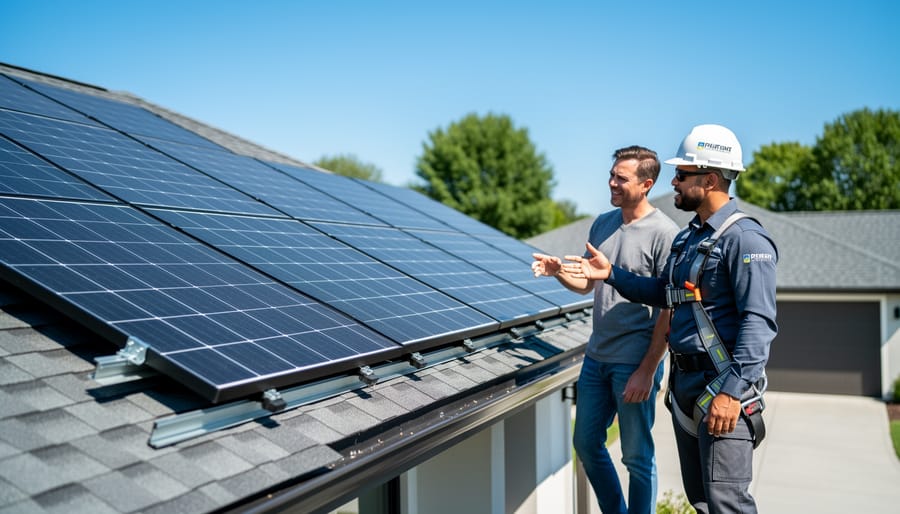
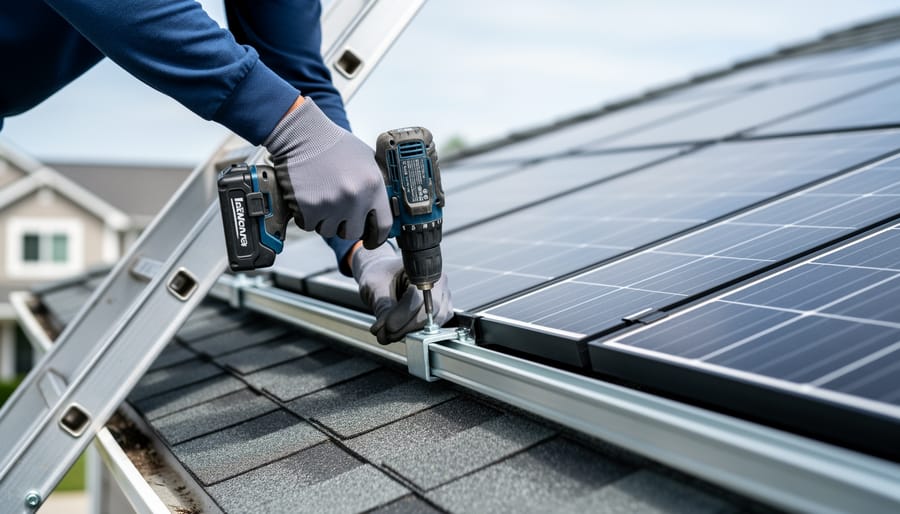
Most solar ventilation systems are designed for straightforward DIY installation with basic tools and moderate skills.
The Basic Installation Process
Installing a solar home ventilation system is more straightforward than many people think, and I’ve seen countless first-timers successfully complete the project in a weekend. Let me walk you through the essential steps so you can approach this with confidence.
Start by selecting the optimal location for your unit. For attic fans, this typically means positioning near the roof peak where hot air naturally accumulates. You’ll want to avoid areas with obstructions like roof valleys or structural beams. Mark your installation spot carefully, ensuring it provides adequate clearance for the fan and solar panel.
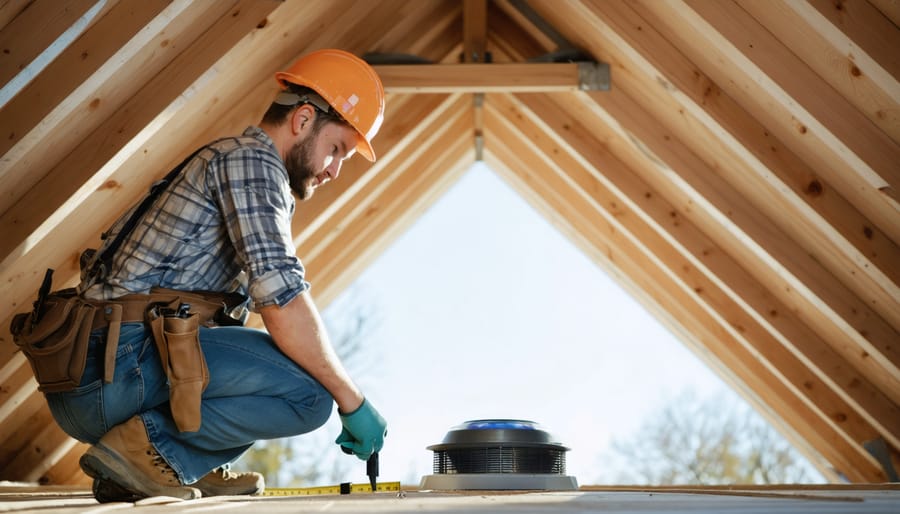
Next comes cutting the opening. Measure twice, cut once is my golden rule here. Use a reciprocal saw to create the necessary opening from inside your attic, then carefully remove any shingles from the exterior. This step requires patience and precision to maintain your roof’s integrity.
Mount the fan unit according to manufacturer specifications, ensuring the flashing integrates properly with your existing shingles. This waterproof seal is absolutely critical. Many units come with adjustable mounts that accommodate different roof pitches.
Position and connect the solar panel, angling it toward maximum sun exposure. Most systems use simple plug-and-play connections, making the electrical work surprisingly accessible for DIYers.
Finally, seal all penetrations with quality roofing cement and test the system during daylight hours. You should feel immediate airflow once the panel receives adequate sunlight. For detailed step-by-step instructions, check out our comprehensive DIY installation guide that covers every aspect of the process.
When to Call in the Pros
I’ll be honest with you—I’ve tackled plenty of home projects myself, but there are times when calling a professional just makes sense. If your attic space is particularly complex, with multiple roof angles or tricky ductwork configurations, a pro can save you hours of frustration. Electrical connections, especially when integrating solar panels into your home’s existing system, should be handled by a licensed electrician unless you’re truly confident in your skills. I learned this the hard way when I initially underestimated a wiring project—no harm done, but it cost me more time than money would have.
Also consider professional help if you’re installing a whole-house ventilation system rather than a single solar attic fan. These systems require careful calculations for proper airflow balance and often involve cutting into your roof structure. Permits and inspections may be required in your area too, and professionals navigate these requirements daily. Think of it as an investment in peace of mind and long-term performance.
Choosing the Right System: What Actually Matters
Sizing It Right: CFM and Your Space
Understanding CFM (cubic feet per minute) is like learning your home’s breathing rate—it tells you how much air your ventilation system can move in sixty seconds. Getting this number right makes all the difference between a system that works beautifully and one that underperforms.
Here’s a straightforward way to think about it: your home needs its entire air volume exchanged several times per hour for optimal ventilation. Most homes benefit from 0.35 air changes per hour as a baseline. To find your CFM needs, multiply your home’s total cubic feet (length times width times height of all rooms) by 0.35, then divide by 60.
For example, a 2,000 square foot home with 8-foot ceilings contains 16,000 cubic feet. Using our formula: 16,000 x 0.35 ÷ 60 = roughly 93 CFM minimum.
I learned this the hard way when I first installed a solar ventilation system in my workshop. I eyeballed the size and ended up with a unit that was too small—the space stayed stuffy. After running proper sizing calculations, I upgraded and immediately felt the improvement.
Remember, factors like climate, insulation quality, and how many people occupy the space can adjust these numbers upward. When in doubt, size slightly larger rather than smaller for better performance.
Solar Panel Wattage: How Much Do You Need?
Solar panel wattage tells you how much power your panel can generate under ideal conditions. Think of it like a light bulb—a 100-watt bulb uses more energy than a 50-watt bulb. For solar ventilation, the same principle applies.
Most solar-powered attic fans use panels ranging from 10 to 40 watts. Smaller units (10-20 watts) work well for standard attics up to 1,500 square feet, while larger spaces need 30-40 watt panels to move enough air effectively.
I learned this the hard way when I first installed a 15-watt panel on my workshop. It barely moved the air on cloudy days! Upgrading to 25 watts made all the difference.
Here’s the practical reality: higher wattage means your fan runs stronger and handles overcast days better. However, you’re not just picking the biggest number. Match your panel wattage to your space size and typical sunlight conditions. A good rule of thumb is one watt per 50 square feet of attic space, but adjust upward if you live in frequently cloudy areas.
Features Worth Paying For (And Ones That Aren’t)
Let me be straight with you: not every feature is worth your hard-earned money. After helping a neighbor install their system last summer, I learned this firsthand.
Definitely worth it: built-in thermostats that automatically adjust airflow based on temperature. This feature paid for itself within months by reducing our manual adjustments and optimizing energy use. Battery backup is also essential if you live somewhere with frequent power outages—your ventilation won’t stop when you need it most.
Smart timers are another winner, letting you schedule operation during peak solar production hours. Adjustable vents and dampers give you control over airflow direction, which proved crucial when we needed to redirect air away from a bedroom.
Skip these: fancy digital displays that show more data than you’ll ever use. Basic LED indicators work just fine. Remote controls sound convenient but honestly, once you set your system up properly, you’ll rarely need them. And those premium filters marketed specifically for solar systems? Regular MERV-rated filters work identically at half the price.
Focus your budget on features that genuinely improve efficiency and reliability rather than convenience gimmicks.
What It Actually Costs (And How to Save)
Let me be straight with you about costs, because I remember when I first looked into ventilation systems and nearly fell off my chair at some of the quotes I received. The good news? There’s truly something for every budget.
For basic solar-powered attic fans, you’re looking at anywhere from $150 to $400 for a decent unit. I installed my first one for around $200, and it worked beautifully for years. These are genuinely DIY-friendly, and if you’re comfortable on a ladder and can follow instructions, you’ll save the $300 to $600 that installers typically charge.
Whole-house solar ventilation systems represent a bigger investment, ranging from $1,500 to $5,000 depending on your home’s size and the system’s capacity. Installation can add another $1,000 to $2,500 if you hire professionals. However, here’s where it gets interesting: many regions offer incentives that can significantly reduce your out-of-pocket costs.
Check your local utility company for rebates on energy-efficient ventilation systems. I’ve seen homeowners recoup 20% to 30% of their costs through these programs. The federal residential clean energy credit can also help, potentially covering up to 30% of your system cost. Don’t forget to investigate state and municipal programs too, as they stack beautifully with federal incentives.
Want to maximize savings? Consider a phased approach. Start with a single solar attic fan to tackle your hottest area, then expand as budget allows. I’ve also found incredible deals on quality equipment during off-season sales, particularly late fall and winter when demand drops.
The real money-saver, though, is doing the installation yourself. With proper research and basic tools, most homeowners can handle simple installations over a weekend. Your wallet will thank you, and honestly, there’s something deeply satisfying about improving your home’s efficiency with your own two hands.
Common Mistakes and How to Avoid Them
Through conversations with Charles and countless members of the DIY solar community, I’ve learned that even enthusiastic beginners can successfully install ventilation systems when they avoid a few common pitfalls.
The biggest mistake Charles sees? Undersizing the system. “I once installed a beautiful solar attic fan that looked great but barely moved any air,” he admits. “I picked it based on price rather than calculating my actual space’s needs.” The lesson here is simple: measure your attic or room volume, then choose a fan rated for at least that cubic footage per hour. When in doubt, slightly oversizing beats undersizing every time.
Another frequent error involves improper sealing around the installation. Sarah from our community forum shared how her first attempt created more problems than it solved. “I was so excited to get the fan running that I rushed the weatherproofing,” she explained. “Three months later, I had water stains on my ceiling.” Take your time with flashing, sealant, and weatherstripping. These unglamorous details make the difference between a system that lasts decades and one that causes headaches.
Placement mistakes also top the list. Installing your solar ventilation in shaded areas drastically reduces performance. Charles recommends mapping your roof’s sun exposure throughout the day before drilling any holes. South-facing locations in the Northern Hemisphere typically provide optimal solar collection.
Finally, many DIYers forget about maintenance after installation. Even solar systems need annual checkups. Charles schedules a quick inspection each spring, cleaning panels and checking for debris in vents. “Fifteen minutes of maintenance beats replacing a burned-out motor,” he notes. Set a calendar reminder and your system will thank you with years of reliable service.
Maintenance: Less Than You’d Think
Here’s the good news: solar ventilation systems are surprisingly low-maintenance. I remember when I first installed mine, I kept waiting for something complicated to go wrong. Five years later, and I’ve spent maybe two hours total on upkeep.
Your main job is keeping the solar panel clean. Dust, pollen, and debris can reduce efficiency by up to 25%, so give it a quick rinse with your garden hose every three months. If you live in a dusty area or near construction, bump that up to monthly. Spring is when I do my most thorough cleaning, coinciding with pollen season.
Here’s a simple seasonal checklist to follow: In spring, clean the solar panel and check for any winter damage. Summer is when I verify the fan is running at peak hours and clear any debris from intake vents. Fall means inspecting seals around roof penetrations and cleaning panels after leaves settle. Winter requires minimal effort, just an occasional check that snow isn’t blocking the panel.
For troubleshooting, most issues are straightforward. If your fan isn’t running on sunny days, check the panel for dirt first. No luck? Look for loose wire connections at the panel and fan motor. The fan making noise? Debris might be caught in the blades, which happens more than you’d think.
The beauty of these systems is their simplicity. No software updates, no complex electronics to fail. Just clean panels, clear vents, and you’re golden. That’s the kind of maintenance schedule even the busiest homeowner can handle.
You’ve made it this far, and that tells me you’re serious about making solar ventilation a reality in your home. Here’s the truth I’ve learned from my own projects: the hardest part isn’t the installation or the technical stuff—it’s simply taking that first step.
Start small. Head over to our ventilation calculator to figure out exactly what your home needs. There’s no guesswork required, and you’ll have concrete numbers in minutes. From there, browse through some of the specific models we’ve reviewed to see what fits your budget and situation. Don’t worry about making the perfect choice right away—solar ventilation is forgiving, and you can always expand later.
I also encourage you to join our community forum. The folks there have tackled everything from attic ventilation in tiny bungalows to whole-house systems in sprawling ranch homes. They’re generous with advice, and you’ll find that shared knowledge beats expensive consultants every time.
The benefits are real: lower energy bills, better air quality, and the satisfaction of harnessing free energy from the sun. This isn’t some far-off technology—it’s achievable right now, with tools and resources readily available. Take that first step today.
How useful was this post?
Click on a star to rate it!
Average rating 0 / 5. Vote count: 0
No votes so far! Be the first to rate this post.
We are sorry that this post was not useful for you!
Let us improve this post!
Tell us how we can improve this post?
charlesnoble
Here at Spheral Solar, I’m a hands-on solar power enthusiast, constantly exploring and experimenting with DIY solutions. I’m dedicated to sharing my discoveries, insights, and even the bumps I hit along the way, all in the pursuit of a more sustainable future.
Solar Ventilation Just Saved My Attic (And Cut My… by Charlesnoble November 3, 2025 **Assess your home’s air quality by standing in your living space right now—if you notice stale odors, condensation on windows, or that stuffy feeling when you walk in the door, your home is telling you it needs better ventilation.** Most homes built in the last 30 years are sealed tight…
Why Your Attic Needs Exactly This Much Ventilation… by Charlesnoble November 22, 2025 Calculate your attic’s square footage by multiplying length times width, then divide by 150 to determine the minimum net free ventilation area (NFVA) required in square inches. For example, a 30-foot by 40-foot attic (1,200 square feet) needs at least 8 square inches of ventilation. Split this requirement evenly between…
Why Your Greenhouse Needs a Solar Ventilation Fan… by Charlesnoble May 30, 2026 Monitor your greenhouse temperature daily during peak sun hours—if it consistently exceeds 85°F or condensation builds up on interior surfaces, you’re losing crops to heat stress and creating the perfect environment for fungal diseases. A greenhouse solar ventilation fan addresses both problems without adding a penny to your electricity bill,…
How Do Attic Fans Work? by Adeyomola June 21, 2021 Attic fans work primarily by augmenting the movement of hot air rising out of the attic. They do this by transmitting the mechanical energy (kinetic energy) from their rotation to the molecules of the air around them, thus increasing the rate of convection. As attic fans promote the escape of…
Best Way to Keep Attic Cool – 7 Energy Efficient Ways by Adeyomola June 1, 2021 Fixing the leaks and opening the skylights might help make your attic cool, but harnessing the sun’s power – transforming it from problem to solution – could be the answer to keeping your attic cool. But how can you keep your attic cool using the sun? Well, you can improve…
6 Best Solar Attic Fan Reviews in 2026 by Adeyomola September 30, 2021 Heads up: some links here are affiliate links, and purchases through them support the site. As an Amazon Associate I earn from qualifying purchases. High CFM rating, versatility, durability, easy installation, and high solar panel wattage – these features typify the best solar attic fan. A solar-powered attic fan will…
Subscribe for handpicked DIY projects, exclusive tips, and giveaways.
Nine times out of ten, an RV generator that won’t start has a stale fuel problem. If your generator hasn’t run in more than 30 days, degraded gasoline is likely gumming up the carburetor and preventing ignition. Before you panic or call for expensive roadside service, try this: turn on the generator’s fuel valve (if… Read more: RV Generator Troubleshooting: Common Problems and How to Fix Them
A 5kW solar system occupies between 250 and 350 square feet of roof or ground space and produces roughly 20 to 25 kilowatt-hours of electricity per day in most U.S. locations. That’s enough to power a typical three-bedroom home with moderate energy use, though your exact needs depend on your daily consumption patterns, climate zone,… Read more: How to Size a 5kW Solar System for Your Home or RV
Installing a home solar system yourself takes 2-4 weekends for an average 5kW setup, requires solid electrical knowledge and comfort working at heights, and can save you $5,000-$8,000 in labor costs if you tackle everything except the final utility interconnection. The process breaks down into five main phases: permitting and design, mounting the racking system,… Read more: Solar Power Installation Step by Step: Complete DIY Guide From Start to Finish