Solar Curtain Lights That Actually Work Outdoors (What I Learned Installing Mine)
Updated:
Picture this: Last summer, I draped what looked like sparkling fairy lights across my patio pergola, and guests immediately asked where I’d hidden the extension cord. There wasn’t one. These solar powered outdoor curtain lights had transformed my backyard into an enchanting evening retreat without adding a cent to my electric bill or requiring any complicated wiring.
Solar curtain lights have come a long way from the dim, unreliable novelty items they once were. Modern versions pack surprisingly powerful LED arrays and efficient solar panels that can illuminate your outdoor spaces for 8-10 hours on a full charge. I’ve tested dozens of these setups over the past three years, from budget options that barely lasted a season to premium models still going strong through harsh winters.
The appeal is obvious: installation takes minutes instead of hours, there’s zero ongoing cost, and you can place them anywhere the sun reaches. But here’s what most product descriptions won’t tell you: not all solar curtain lights perform equally, placement matters more than you’d think, and understanding a few key specifications will save you from disappointment. Like other outdoor solar lighting solutions, these lights work brilliantly when matched correctly to your specific situation.
Whether you’re looking to create ambient lighting for evening gatherings, add a romantic backdrop to your garden wedding, or simply illuminate a dark corner of your yard, this guide will walk you through everything I’ve learned about choosing, installing, and getting the most from solar powered curtain lights.
What Makes Solar Curtain Lights Different from Regular String Lights
At first glance, solar curtain lights might look like your typical holiday string lights, but there’s more going on than meets the eye. Let me walk you through what makes them unique, because understanding these differences completely changed how I approach outdoor lighting projects.
The most obvious distinction is the cascading design. While regular string lights run horizontally in a single strand, curtain lights feature multiple vertical strands hanging from one main horizontal cable. Think of it like a waterfall of light, with each strand creating those gorgeous vertical lines. This is what gives them that dramatic curtain effect, perfect for covering larger wall spaces or creating backdrops for outdoor events.
Now here’s where the solar component really shakes things up. Traditional curtain lights need to plug into an outlet, which immediately limits where you can use them. You’re stuck planning around extension cords, outlet locations, and weatherproof connections. I learned this the hard way when I first tried lighting up my back fence, only to realize my nearest outlet was thirty feet away.
Solar curtain lights flip this script entirely. Each set comes with a small solar panel, usually mounted on a stake or attached to the light strand itself. During the day, that panel soaks up sunlight and stores energy in a rechargeable battery pack. When darkness falls, the lights automatically turn on using that stored power.
This solar setup means complete installation freedom. Want lights on your garden shed? No problem. Fence line far from the house? Easy. The only requirement is ensuring your solar panel gets decent sun exposure during the day. No electrician needed, no wiring to hide, and zero increase to your electricity bill.
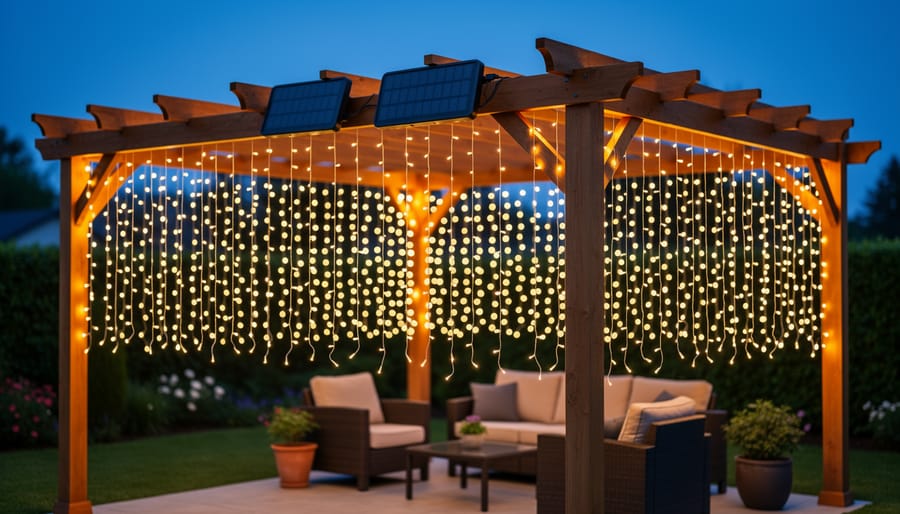
Solar curtain lights create a dramatic cascading effect on outdoor structures, transforming patios into ambient evening spaces without requiring electrical outlets.The solar panel positioning determines performance—proper mounting with unobstructed sun exposure is critical for reliable operation.
The Solar Panel Setup: Your Success Starts Here
Understanding the Battery Storage Component
The magic behind solar curtain lights lies in their rechargeable batteries, typically nickel-metal hydride (NiMH) batteries tucked inside the solar panel housing. During daylight hours, the solar panel converts sunlight into electricity and stores it in these batteries, ready to power your lights once darkness falls.
In my testing, most quality solar curtain lights run for about 6-8 hours on a full charge after receiving 6-8 hours of direct sunlight. I set up a string in my backyard last summer, and on sunny June days, they’d illuminate my patio from dusk until well past midnight. However, winter performance tells a different story.
Here’s what really happens on cloudy days: the lights still charge, just more slowly. Think of it like filling a bucket with a trickle instead of a steady stream. After a heavily overcast day, I’ve found my lights might only run for 2-4 hours instead of the full evening. Three consecutive cloudy days usually meant barely 90 minutes of runtime, which was honestly disappointing for a backyard dinner party I’d planned.
The key is managing expectations. These aren’t going to perform like plug-in lights every single night. I learned to position my solar panels where they’d catch morning sun even on partly cloudy days, which helped maintain more consistent performance. Battery capacity typically ranges from 600-1200mAh in consumer models, with higher capacity meaning longer potential runtime but also requiring more charging time to reach full capacity.
Best Places to Use Solar Curtain Lights (Beyond the Obvious)
Here’s where solar curtain lights really shine, and I’m not just talking about your back porch! After installing these around my property and hearing from folks in the Spheral Solar community, I’ve discovered some genuinely creative applications that go way beyond the typical deck setup.
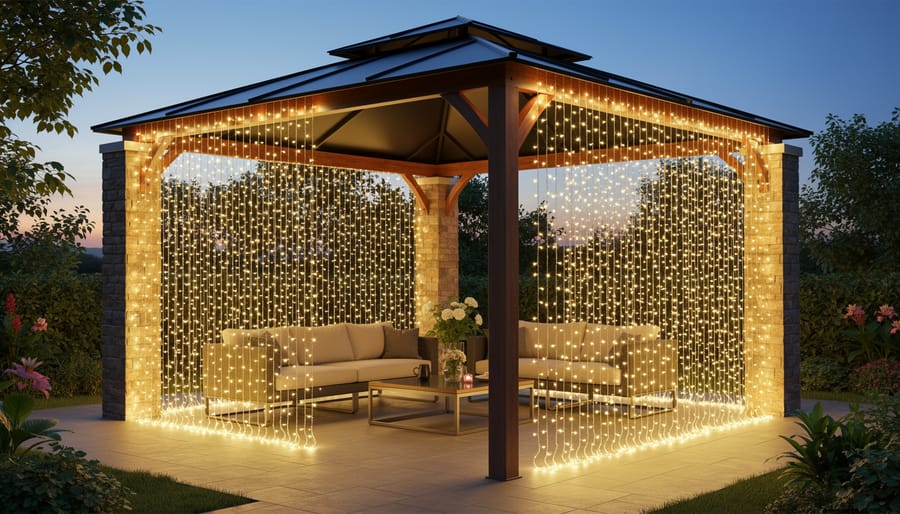
Gazebos and pergolas are absolute game-changers with curtain lights. Community member Sarah from Oregon draped hers inside her pergola framework, creating what she calls her “outdoor living room” that rivals any indoor space. The vertical panels of light add dimension that string lights alone can’t achieve.
For camping enthusiasts, portable solar curtain lights transform your campsite into a cozy basecamp. Just hang them from your awning or between trees, and you’ve got instant ambiance without draining your RV battery or dealing with extension cords. One Spheral member even reported using them at music festivals, though I’d recommend securing them well since they can catch wind.
Temporary event installations are where these really prove their worth. I’ve used mine for backyard graduation parties, and they’re infinitely easier than running power to various corners of the yard. Similar to how solar driveway lights can guide guests to your door, curtain lights can define party zones or create intimate conversation areas.
The balcony application surprised me most. My apartment-dwelling nephew uses them as a privacy screen that doubles as mood lighting, perfect for renters who can’t do permanent installations. Garden sheds, chicken coops for predator deterrence, and even backdrop lighting for outdoor photography have all been reported by our community. The key is thinking vertically rather than just horizontally.
What to Look for When Shopping (The Specs That Actually Matter)
Durability Features You Can’t Skip
Here’s something I learned the hard way after my first set of curtain lights died after just three months: not all outdoor lights are created equal. The difference between lights that survive multiple seasons and those that fail quickly comes down to a few critical durability features.
First, let’s talk about IP ratings, which sound complicated but are actually pretty simple. IP stands for “Ingress Protection,” and you’ll see it as two numbers, like IP65 or IP44. The first number tells you dust protection (6 is the best), and the second tells you water resistance. For outdoor curtain lights, you want at least IP44, which means they can handle splashing water. If your lights will be exposed to heavy rain or you live in a wet climate, go for IP65 or higher.
Here’s my personal recommendation: check where the IP rating applies. Some manufacturers only rate the solar panel or control box, leaving the actual light strands vulnerable. The entire light string should be weather-resistant.
Wire quality matters more than most people realize. Look for copper wiring with thick, flexible insulation. Cheap lights use thin aluminum wire that corrodes quickly when exposed to moisture. I’ve seen connections literally disintegrate after one rainy season. Quality lights will also have sealed connections between bulbs, preventing water from seeping in at vulnerable junction points.
Finally, UV-resistant plastic casings protect against sun damage. Without this, your lights will become brittle and crack within months, especially in sunny locations.
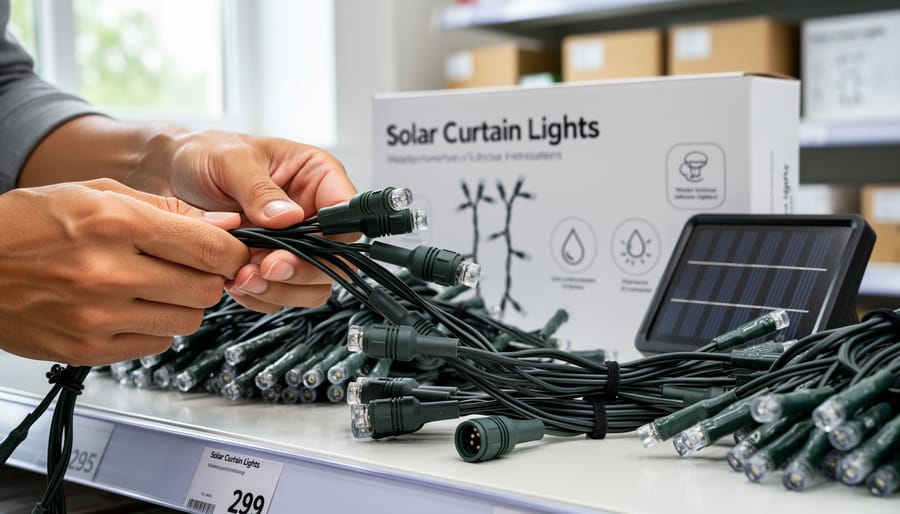
Examining wire quality and weatherproof connections before purchase helps identify durable solar curtain lights that withstand outdoor conditions.
Installation Tips from Real-World Testing
I’ll be honest—my first attempt at hanging solar curtain lights was a bit of a disaster. I didn’t account for the solar panel cable length and ended up with this awkward loop of wire that looked terrible. Let me save you from making the same mistakes.
Start by planning your solar panel placement before you hang anything. The panel needs direct sunlight for at least 6-8 hours daily, so walk around your space at different times to identify the sunniest spot. I learned this the hard way when my lights barely lasted two hours because I positioned the panel under a porch overhang. Once you’ve found your location, measure the distance to where you want the lights—most standard cables are 6-10 feet long, so make sure your layout works within that range.
For mounting hardware, skip the cheap adhesive hooks that come with some sets. They’ll fail within weeks, especially in humid conditions. I now use heavy-duty stainless steel cup hooks or shepherd’s hooks rated for outdoor use. For brick or stucco walls, masonry anchors are your best friend. Space your mounting points about 12-18 inches apart to prevent sagging and create that elegant curtain effect.
When hanging the lights, start from the top and work your way down, securing each strand before moving to the next. The key is keeping consistent tension—not too tight or you’ll stress the wiring, but not so loose that wind turns them into a tangled mess. I use small cable clips every few feet to manage the solar panel cable along walls or railings, keeping it neat and protected from accidental tugs.
One mistake I made early on: installing lights in completely shaded areas hoping the remote panel would compensate. It doesn’t work well. The lights themselves generate some heat, and when trapped without airflow in deep shade, performance suffers. Always ensure your installation location allows some air circulation around the strands.
Making Them Brighter and Last Longer (DIY Modifications)
If you’re like me, you’ll eventually want to squeeze every last bit of performance out of your solar curtain lights. I spent a winter evening tinkering with a disappointing set, and honestly, the results amazed me. Here’s what actually works.
The easiest upgrade is adding a supplementary solar panel. Most curtain light sets use small, underpowered panels that struggle in less-than-perfect conditions. You can connect a larger panel (usually 5-6 volts) to the existing charging circuit using simple wire splicing. Just match the polarity carefully—red to positive, black to negative—and secure connections with electrical tape or heat shrink tubing. I doubled my charge rate this way during cloudy Ohio winters.
Battery upgrades make the biggest difference in runtime. Most sets come with wimpy 600mAh NiMH batteries. Swapping these for 1200-2000mAh versions (same voltage, just higher capacity) can triple your illumination time. The battery compartment is usually in the solar panel housing—unscrew it, note the battery size (typically AA or AAA), and replace with higher-capacity rechargeable versions. This modification alone transformed my pathetic 3-hour runtime into a solid 8-10 hours.
For brighter lights, consider replacing standard LEDs with higher-output versions. This requires basic soldering skills but isn’t difficult. Warm white LEDs around 20mA work well without overwhelming the system. Just ensure your replacement LEDs match the original voltage requirements.
One safety tip from hard experience: always disconnect the solar panel before working on the circuit, and never modify anything while batteries are installed. These are low-voltage systems, so they’re beginner-friendly, but respecting basic electrical safety prevents frustration and potential damage to your lights.
When Solar Curtain Lights Don’t Work (And What to Do About It)
Let me be straight with you: solar curtain lights aren’t magic, and they won’t work perfectly in every situation. I learned this the hard way when I first hung a set under my covered patio. They looked gorgeous at night, but after three cloudy days in a row, they barely lasted an hour before dimming out.
The most common issue? Insufficient sunlight reaching the solar panel. If your panel sits in shade for most of the day, these lights simply won’t charge properly. I’ve found they need at least 4-6 hours of direct sunlight to perform well. Trees, roof overhangs, and north-facing walls are the usual culprits. Sometimes you can reposition the panel using an extension cable, but if that’s not an option, plug-in lights might be your better bet.
Dim lights usually signal a dirty solar panel or aging battery. I make it a habit to wipe down my panels monthly with a damp cloth – you’d be surprised how much dust accumulates. If your lights are over two years old and running short, the rechargeable battery probably needs replacing.
Winter performance is another reality check. Shorter days and weaker sun mean reduced runtime, sometimes dropping from 8 hours to just 3-4. That’s normal physics, not a defect.
Here’s my honest take: if you absolutely need reliable lighting every single night regardless of weather, or if you’re lighting a truly dark area where safety matters, choose plug-in or hardwired options. But for ambient decorative lighting where occasional dimmer nights are acceptable? Solar curtain lights work beautifully when you understand their limitations.
After several months living with these solar curtain lights, I can honestly say they’ve exceeded my expectations. They’re not perfect—cloudy winter weeks still challenge them—but solar technology has genuinely reached a point where it’s practical, not just a novelty. My patio setup has weathered storms, snow, and scorching summer sun, and it’s still going strong.
If you’re considering solar curtain lights for your own space, my advice is simple: start small, learn what works for your specific conditions, and don’t be afraid to experiment. The beauty of solar lighting is its flexibility and low stakes. No electrician needed, no costly mistakes if something doesn’t work out.
I’d love to hear how your own solar lighting projects turn out. Share your setups, challenges, and creative solutions with the Spheral Solar community in the comments below. Whether you’re lighting a balcony, creating ambiance for backyard gatherings, or tackling more complex DIY modifications, your experiences help us all learn and improve our solar setups together.
How useful was this post?
Click on a star to rate it!
Average rating 0 / 5. Vote count: 0
No votes so far! Be the first to rate this post.
We are sorry that this post was not useful for you!
Let us improve this post!
Tell us how we can improve this post?
charlesnoble
Here at Spheral Solar, I’m a hands-on solar power enthusiast, constantly exploring and experimenting with DIY solutions. I’m dedicated to sharing my discoveries, insights, and even the bumps I hit along the way, all in the pursuit of a more sustainable future.
Solar Driveway Lights That Actually Work (No… by Charlesnoble December 5, 2025 Picture this: You’re pulling into your driveway after dark, and instead of fumbling for a flashlight or navigating by memory, your path is illuminated by a gentle row of lights that cost you absolutely nothing to operate. No electrician bills, no trenching through your yard, and no spike in your…
Solar Water Pumps That Bring Your Garden Features to… by Charlesnoble January 13, 2026 Match your pump’s wattage to your solar panel capacity by calculating total daily runtime hours multiplied by pump watts, then add 30% for cloudy days and battery charging losses. A typical 10-watt fountain pump running 8 hours daily needs a minimum 20-watt panel and 12-volt, 7-amp-hour battery to maintain consistent…
8 Best Solar Electric Fence Chargers in 2026 by Charlesnoble June 21, 2021 Heads up: some links here are affiliate links, and purchases through them support the site. As an Amazon Associate I earn from qualifying purchases. The best solar electric fence chargers will provide a strong enough charge to keep animals contained with a reliable voltage spread out over miles of fencing.…
How Solar-Powered Greenhouses Slash Your Growing… by Charlesnoble November 13, 2025 Picture this: It’s mid-July, your tomatoes are thriving, but your electricity bill just jumped $80 because your greenhouse exhaust fans have been running nonstop. I’ve been there. Three summers ago, I watched my monthly power costs climb while knowing the sun beating down on my 12×16 greenhouse could be doing…
Set Your Garden Watering on Autopilot (Even When the… by Charlesnoble February 23, 2026 Picture this: You’re enjoying a relaxing weekend morning when you suddenly remember—you forgot to water the garden yesterday. Again. That sinking feeling is all too familiar for busy homeowners and gardening enthusiasts alike. But what if your irrigation system could run itself, powered entirely by the sun, without trenching for…
Why Your Next Outdoor Water Pump Should Run on Sunshine by Charlesnoble March 12, 2026 Picture this: You’re standing in your garden on a sunny afternoon, watching crystal-clear water flow effortlessly from your well to your vegetable beds—no extension cords snaking across the lawn, no monthly electricity bills, and no guilt about your carbon footprint. That’s the promise of solar powered outdoor water pumps, and…
Subscribe for handpicked DIY projects, exclusive tips, and giveaways.
Crimping 8-gauge wire correctly takes about 2 minutes per connection once you’ve got the hang of it, but those two minutes make the difference between a solar installation that lasts 25 years and one that fails in the first storm. An 8-gauge wire crimper is a heavy-duty hand tool designed to cold-forge lugs and terminals… Read more: How to Use an 8 Wire Crimper for Solar Panel and Battery Connections
Building a solar powered outdoor table takes about 8 to 12 hours and requires basic woodworking skills plus some familiarity with electrical connections. You’ll mount solar panels directly onto a custom-built or modified outdoor table, wire them to a charge controller and battery system housed underneath, and add USB ports or AC outlets for charging… Read more: How to Build a Solar Powered Outdoor Table for Your Camping Setup
Charging a battery bank with a 3-phase inverter requires connecting your inverter’s AC output to a compatible battery charger or hybrid inverter system that can convert the 3-phase power back to DC for storage. Most DIY solar setups achieve this by using a hybrid inverter that handles both solar input and battery charging simultaneously, or… Read more: How to Wire and Configure a Battery Inverter 3 Phase System for Off-Grid Solar