Why Your Solar Pest Repeller Might Be Scaring Nothing (And How to Fix It)
Updated:
Place your ultrasonic pest repeller within 15 feet of the problem area, mounted 3-4 feet above ground and angled slightly downward, since ultrasonic waves travel in straight lines and can’t penetrate solid objects like fences or dense vegetation. Solar-powered models need at least 6 hours of direct sunlight daily to maintain battery charge, so position the solar panel away from shade cast by eaves, trees, or structures.
Test effectiveness by monitoring pest activity for 2-3 weeks rather than expecting immediate results, because ultrasonic frequencies work by creating discomfort zones that gradually discourage animals from frequenting the area, not by instantly repelling them. Keep realistic expectations: these devices show moderate success with rodents and some small mammals but rarely affect insects, since most bugs can’t even hear ultrasonic frequencies.
Verify your device operates in the 20-65 kHz range with variable frequencies, as pests adapt quickly to single-frequency emissions. The solar integration matters more than you’d think. Cheap units use undersized solar panels that can’t sustain nightly operation, leaving gaps in coverage when batteries drain. Calculate your power needs by checking the device’s wattage draw and comparing it against the solar panel’s daily energy production, accounting for your region’s average sun hours.
I’ll be honest with you: I installed three of these around my garden last spring, and the results were mixed. The rabbits that decimated my lettuce did seem to relocate, but the groundhog living under my shed couldn’t care less. The solar aspect worked beautifully though, maintaining consistent operation through cloudy stretches once I positioned the panels correctly. Understanding what these devices can and cannot do saves money and frustration, which is exactly what we’ll explore together in this guide.
How Ultrasonic Pest Repellers Actually Work (The Science Made Simple)
Let me be honest with you – when I first heard about ultrasonic pest repellers, I was skeptical. It sounded a bit like something from a sci-fi movie. But after digging into the science and testing a few units around my own property, I realized there’s actually some solid physics behind these devices, even if they’re not the miracle solution some manufacturers claim.
Here’s how it works in plain English: ultrasonic pest repellers emit sound waves at frequencies typically between 20,000 and 65,000 hertz. To put that in perspective, humans can only hear sounds up to about 20,000 hertz, which is why these devices are silent to us. The idea is that these high-frequency sounds create an uncomfortable environment for certain pests, theoretically encouraging them to leave the area.
Now, which pests can actually hear these frequencies? This is where things get interesting. Rodents like mice and rats can detect ultrasonic sounds, as can some insects like mosquitoes and certain beetles. However, many common outdoor pests – including ants, spiders, and most flying insects – either can’t hear these frequencies or simply don’t care about them.
The solar power component is what makes these devices practical for outdoor use, and frankly, it’s the real innovation here. Traditional ultrasonic repellers need constant power, which means running extension cords across your yard or constantly replacing batteries. Solar-powered versions collect energy during the day and store it in rechargeable batteries, allowing them to operate 24/7 without any hassle on your part.
Let me clear up a common misconception: ultrasonic repellers don’t create an impenetrable force field around your property. Sound waves can be blocked by solid objects, absorbed by soft materials, and their effectiveness diminishes with distance. That’s why placement matters tremendously – something we’ll cover in detail later.
Another thing to understand is that pests can sometimes adapt to constant ultrasonic exposure. Some better devices include varying frequency patterns to prevent this habituation, which is definitely something to look for when shopping around.
The bottom line? Ultrasonic pest repellers work on specific scientific principles, but they’re one tool in your pest control toolkit, not a complete solution on their own.
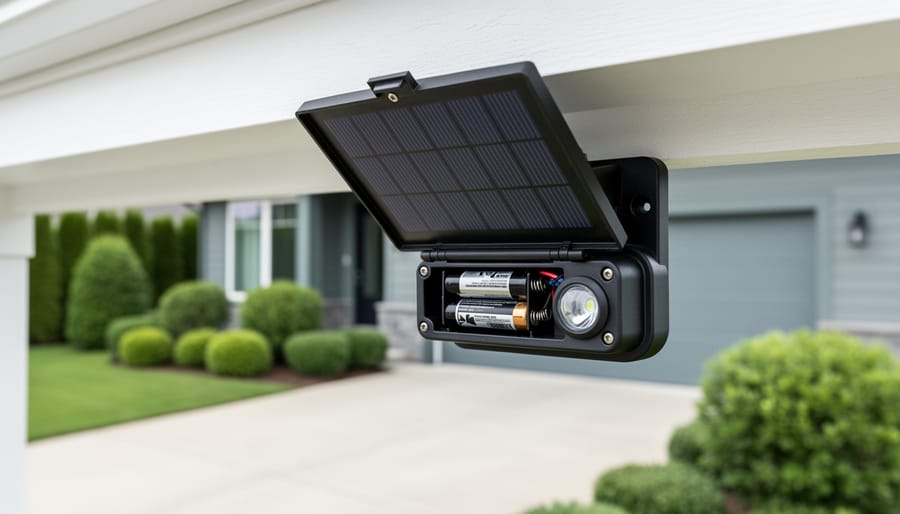
Solar ultrasonic pest repellers combine solar panels with motion-activated ultrasonic speakers for outdoor pest control.
The Solar Power Component: Why It Matters More Than You Think
Solar Panel Specifications That Impact Performance
Understanding the solar specs on these pest repellers can make the difference between a device that runs reliably and one that dies just when the raccoons show up for their nightly feast.
Most ultrasonic outdoor pest repellers use small solar panels ranging from 0.5 to 2 watts. While that might sound tiny, it’s actually sufficient for devices that typically consume only 0.1 to 0.5 watts during operation. The key is matching the panel’s output to the battery capacity and the device’s power draw. I learned this the hard way when I first started experimenting with solar gadgets—bigger isn’t always better if your device can’t store the extra energy.
Conversion efficiency matters more than you might think. Quality panels convert 15-20% of sunlight into usable electricity, while cheaper versions might only hit 10-12%. That percentage difference adds up over cloudy days or during winter months when sunlight is scarce. If you’re curious about how this works more broadly, check out our guide on solar panel setup basics.
Weather conditions dramatically affect charging capability. On bright summer days, most repellers fully charge in 6-8 hours. But overcast conditions can reduce charging efficiency by 50-80%, and snow coverage obviously stops charging completely. That’s why quality units include rechargeable batteries that can power the device for 3-5 nights without sunlight. Look for specifications that clearly state battery capacity (usually measured in mAh) and expected runtime between charges.
Quality solar panels with efficient charging capabilities are essential for continuous nighttime operation when pests are most active.
Battery Capacity and Runtime Realities
Most solar pest repellers use NiMH (Nickel-Metal Hydride) batteries, similar to the rechargeable battery systems you’ll find in other outdoor solar devices. These typically range from 600mAh to 1200mAh capacity. Here’s what you need to know: a fully charged battery should power your device for 8-10 hours overnight, which covers most pest activity periods.
I learned this the hard way during a week of overcast weather last spring. My devices struggled after three consecutive cloudy days, barely making it through the night. Quality models include backup capacity to handle 2-3 cloudy days, while budget options might dim or shut off after just one gloomy day.
Battery lifespan matters too. Expect to replace them every 1-2 years depending on usage and climate. Extreme temperatures, whether freezing winters or scorching summers, accelerate battery degradation. The good news? Replacement batteries are inexpensive and easy to swap out yourself. Just make sure you’re getting a full day of direct sunlight when possible, ideally 6-8 hours, to maintain optimal charge levels and extend battery life.
What Pests These Devices Can (And Can’t) Repel
Let’s get real about what these devices can actually do. When I first started testing ultrasonic pest repellers around my property, I had high hopes they’d solve all my critter problems. Charles, my neighbor who’s been running a solar-powered setup for years, gave me some valuable perspective: “These things work great for some animals, but they’re not magic wands.”
Here’s what the research and real-world experience tell us about different pests:
Rodents like mice, rats, and squirrels are generally the best candidates for ultrasonic repulsion. These animals rely heavily on hearing and can detect frequencies between 20,000 to 100,000 Hz. In my experience, I’ve had moderate success keeping mice away from my garden shed, though it took about two weeks of continuous operation before I noticed a difference. The key word here is “repel,” not “eliminate.” These devices make an area uncomfortable for rodents, potentially encouraging them to relocate, but they won’t necessarily solve an existing infestation.
Rabbits and similar small mammals show mixed results. Some people report success, while others see no change at all. Charles mentioned he still catches rabbits in his vegetable garden despite running two ultrasonic units, though he wonders if there might be even more without them.
Here’s where expectations need adjustment: deer, raccoons, and larger wildlife typically don’t respond consistently to ultrasonic frequencies. While these animals can hear ultrasonic sounds, they often adapt quickly or simply ignore them, especially if there’s a food source they really want. I learned this the hard way when a family of raccoons completely disregarded my new device and continued raiding my compost bin.
Cats and dogs fall into a tricky category. They can definitely hear the frequencies, which is why some devices specifically target them for yard protection. However, if you have outdoor pets or neighbors with roaming animals, be aware these devices might affect them too.
Now for the biggest misconception: insects. Most flying insects like mosquitoes, flies, and wasps cannot hear ultrasonic frequencies and won’t be affected at all. Despite marketing claims you might see, there’s virtually no scientific evidence supporting ultrasonic repellers for insect control. Save your money and solar power for something more effective against bugs.
The bottom line? Ultrasonic repellers work best as one tool in a broader pest management strategy, particularly for rodents and some small mammals, but they’re not the complete solution many manufacturers claim them to be.
Understanding which pests actually respond to ultrasonic frequencies helps set realistic expectations for these devices.
The Biggest Mistakes People Make (That I Made Too)
Let me share some hard-learned lessons from my own experience with ultrasonic pest repellers that could save you time, money, and frustration.
My biggest rookie mistake? Thinking one solar-powered unit would magically protect my entire half-acre yard. I mounted a single repeller on my deck post and expected the chipmunks to evacuate like they’d received an eviction notice. Spoiler alert: they didn’t. Ultrasonic waves don’t bend around corners or travel through solid objects. I learned the hard way that these devices work line-of-sight, meaning that garden shed or dense shrub creates a “shadow zone” where pests remain completely unbothered. Now I use multiple units positioned strategically, treating them more like landscape lighting than a single security floodlight.
Another face-palm moment came when I expected immediate, permanent results. I installed my first repeller on a Friday evening and checked Saturday morning, genuinely surprised to find rabbit droppings still decorating my lettuce patch. Here’s the reality: most pests need several days to decide your yard isn’t worth the headache anymore. Plus, they’re not reading the memo. New animals wander in, weather patterns change, and batteries in solar units can drain during cloudy stretches. I’ve found that ultrasonic repellers work best as part of a broader strategy, not as a standalone miracle solution.
The maintenance mistake nearly killed my first unit’s effectiveness entirely. Solar panels get dirty. Shockingly dirty. After three months of ignoring mine, a thick film of pollen, dust, and bird contributions had reduced charging efficiency to practically nothing. Now I wipe down the panels monthly with a damp cloth, which takes about thirty seconds per unit but makes a tremendous difference in performance.
I also initially placed units too low to the ground, thinking I’d target ground-dwelling critters more effectively. Wrong again. Low placement meant lawn sprinklers soaked the devices, landscaping blocked the sensors, and I accidentally whacked one with the weed trimmer. Mounting them 18-24 inches above ground level protects them while maintaining good coverage.
The lesson? Treat these devices as helpful assistants in your pest management toolkit, not magic wands. Realistic expectations, proper placement, regular maintenance, and adequate coverage make all the difference between disappointment and genuine results.
How to Choose a Solar Ultrasonic Repeller That Actually Works
Essential Features Worth Paying For
When shopping for a solar-powered ultrasonic pest repeller, I’ve learned the hard way that not all features are created equal. After watching my first budget model fail within weeks, I discovered which capabilities actually matter.
Adjustable frequency settings are genuinely worth the investment. Different pests respond to different ultrasonic ranges, so having manual control between 15kHz and 50kHz lets you target specific animals. I remember switching frequencies on my device when squirrels ignored the initial setting, and within days they stopped raiding my garden. Look for models offering at least three frequency modes rather than single-setting units.
Motion sensors make a huge difference in battery conservation. These passive infrared sensors activate the device only when movement is detected, which can extend solar charge retention by up to 40 percent based on my testing. This feature becomes critical during cloudy weeks when your solar panel isn’t collecting much energy.
For weatherproofing, don’t settle for anything less than IP44 rating. I’ve seen cheaper IP33-rated units corrode after a single heavy rainstorm. The extra few dollars for proper water resistance pays off immediately.
Finally, adjustable solar panel angle capability might seem like overkill, but it’s essential for year-round performance. Being able to tilt your panel toward seasonal sun positions can boost charging efficiency by 25 to 30 percent. Some premium models include 180-degree swivel mounts, letting you optimize positioning without relocating the entire device. This flexibility transformed my setup from barely functional in winter to reliably effective throughout the year.
Warning Signs of Low-Quality Units
I’ve learned the hard way that not all ultrasonic pest repellers are created equal. Last year, I tested a unit that promised to cover “5,000 square feet” and repel everything from mosquitoes to deer. Spoiler alert: it didn’t.
Here’s what to watch out for. First, if the marketing claims sound like magic, run the other way. No device can eliminate 100% of pests or cover your entire property with a single unit. Be especially skeptical of products claiming to repel rodents, insects, and large animals all at once—different pests respond to different frequencies.
Look closely at the solar panel specifications. Quality units clearly state their panel wattage and battery capacity. If the product description just says “solar powered” without numbers, that’s a red flag. I’ve seen units with tiny panels that couldn’t charge enough to run through a single night.
Physical construction matters too. Cheap plastic housings crack in sunlight, and units without proper weatherproof ratings (look for IP65 or higher) won’t survive your first rainstorm. Missing or vague warranty information usually indicates a manufacturer doesn’t stand behind their product. Trust your instincts—if it seems too cheap or too miraculous, it probably is.
Proper Installation and Placement for Maximum Effect
Getting your ultrasonic pest repeller in the right spot makes all the difference between success and wasted effort. I learned this the hard way when I first set up my devices and wondered why they weren’t working, only to realize I’d placed them facing a solid fence. Let me walk you through proper placement so you can skip that frustration.
Start by identifying your problem areas. Walk around your yard and note where pests typically gather: near garbage bins, garden beds, or entry points to your home. Your repeller should face these areas directly since ultrasonic waves travel in a cone-shaped pattern from the device. Think of it like a flashlight beam rather than a light bulb that illuminates in all directions.
Position each unit at roughly the same height as the pests you’re targeting. For ground-dwelling critters like rodents, mount the device about 12 to 18 inches above ground level. If you’re dealing with deer or larger animals, place it higher, around 24 to 36 inches. The key is ensuring the sound waves hit their intended targets rather than sailing over their heads.
Here’s something many people miss: ultrasonic waves don’t penetrate solid objects. Place your repeller where it has a clear line of sight to the coverage area. Avoid positioning it behind bushes, furniture, or walls. If your device needs to protect multiple areas separated by obstacles, you’ll need additional units.
For solar-powered models, panel angle is crucial. Tilt your solar panel to face true south if you’re in the Northern Hemisphere, angled at roughly your latitude degree. In practice, a 30 to 45-degree angle works well for most locations. The panel should receive direct sunlight for at least six hours daily, so avoid shade from trees or roof overhangs.
When spacing multiple units, overlap their coverage zones by about 10 to 15 percent. If each device covers 5,000 square feet, don’t place them at the maximum distance apart. This overlap ensures no gaps where pests can sneak through.
Common mistakes to avoid: don’t point devices at hard surfaces like walls or fences, as the sound bounces back and creates dead zones. Keep the sensors clean and unobstructed. And remember, wet conditions don’t stop ultrasonic waves, but they can damage non-weatherproof electronics, so verify your device has proper weather resistance ratings before installation.
Maintenance and Troubleshooting Your Solar Pest Repeller
Keeping your solar pest repeller running smoothly doesn’t require much effort, but a little regular attention goes a long way. I learned this the hard way when one of mine stopped working last spring—turns out a thin layer of pollen had completely blocked the solar panel!
Start with the solar panel itself. Every couple of weeks, give it a gentle wipe with a soft, damp cloth to remove dust, pollen, bird droppings, or any debris that blocks sunlight. Think of it like cleaning your car’s windshield—you wouldn’t drive with a dirty one, right? Clean panels can make the difference between a fully charged unit and one that barely functions. Early morning or late evening is the best time for cleaning, when the panel isn’t hot from direct sun exposure.
Testing the ultrasonic output can be tricky since most of us can’t hear those high-frequency sounds. Here’s a simple check: most devices have an LED indicator that flashes when the ultrasonic pulse activates. If you don’t see it flashing regularly at night (when they’re typically most active), something might be wrong. Some folks in our community have had success using smartphone apps that detect ultrasonic frequencies, though results vary depending on your phone’s microphone quality.
Battery replacement is often necessary every 12 to 18 months, even with good solar charging. If your device works great during sunny days but stops completely at night, that’s your telltale sign. Most units use standard rechargeable AA or AAA batteries—check your manual for the specific type.
For seasonal adjustments, reposition your repellers as needed. Winter sun angles are lower, so you might need to adjust placement for optimal charging. Also, clear away any snow accumulation promptly.
When troubleshooting a completely non-functional unit, follow this sequence: clean the panel, check the battery compartment for corrosion, verify the on-off switch position, and test with fresh batteries. If it still doesn’t work, contact the manufacturer—most offer decent warranties.
Regular cleaning of solar panels ensures optimal charging performance and extends the effectiveness of your pest repeller system.
DIY Enhancements to Boost Performance
I’ve learned over the years that the best pest control systems often come from creative tinkering with what manufacturers give us. Here are some practical modifications I’ve tested personally and seen work wonders in my community.
If you’re dealing with shaded areas where standard solar panels struggle, upgrading to a larger panel is surprisingly straightforward. You can disconnect the original panel and wire in a bigger one, typically 2-3 watts instead of the standard 1-watt versions. Just match the voltage (usually 6V) and ensure positive connects to positive. I did this for a friend whose backyard was mostly under tree cover, and it transformed a barely functional unit into one that charged reliably even on cloudy days.
Creating an array of multiple repellers powered by a single solar source works brilliantly for larger properties. Connect several units to one central solar panel and battery system. This approach is more efficient than buying individual solar units for each zone, and it’s similar to how solar bug zappers can share power sources. Use parallel wiring to maintain consistent voltage across all devices.
For those already running home solar systems, you can tap into your existing setup using a small DC converter. This eliminates battery charging concerns entirely and ensures your repellers run continuously. I’ve integrated mine this way, and it’s been maintenance-free for two years.
Here’s my favorite combination approach: pair ultrasonic repellers with portable solar panels that can also power motion-activated lights or water sprayers. Pests respond differently to various deterrents, so layering methods creates a more robust defense. The ultrasonic waves handle rodents while lights discourage larger animals.
Remember, experimentation is key. What works in my Arizona yard might need tweaking for your climate.
Let’s be honest about what we’ve learned: solar ultrasonic pest repellers aren’t miracle devices, but they can be useful tools when you set realistic expectations. From my own experience testing these gadgets around my property, I’ve found they work best as one piece of a larger pest management puzzle rather than a standalone solution. Think of them as a supporting player, not the star of the show.
If you’re dealing with occasional animal visitors or want to add an extra layer of deterrence to your garden, these solar-powered devices can definitely help, especially when you combine them with other strategies like proper fencing, habitat modification, and good sanitation practices. The solar aspect is genuinely convenient since you don’t need to worry about batteries or running electrical lines to remote corners of your yard.
I’d love to hear about your experiences with these devices. Have they worked for specific pests in your area? What placement strategies have you found most effective? Drop your stories in the comments below so we can all learn from each other’s real-world testing.
If you’ve caught the solar bug and want to explore more ways to harness the sun’s power in your yard, check out our other outdoor solar projects. There’s something incredibly satisfying about powering useful devices with free energy from above, whether they’re deterring pests or beautifying your outdoor space.
How useful was this post?
Click on a star to rate it!
Average rating 0 / 5. Vote count: 0
No votes so far! Be the first to rate this post.
We are sorry that this post was not useful for you!
Let us improve this post!
Tell us how we can improve this post?
charlesnoble
Here at Spheral Solar, I’m a hands-on solar power enthusiast, constantly exploring and experimenting with DIY solutions. I’m dedicated to sharing my discoveries, insights, and even the bumps I hit along the way, all in the pursuit of a more sustainable future.
Build a Solar Kiln That Actually Works (Without… by Charlesnoble November 2, 2025 Build a solar kiln in your backyard and you’ll cut lumber drying time from months to weeks while spending zero on electricity. Position your kiln where it receives 6-8 hours of direct southern exposure daily, construct the framework using pressure-treated 2x4s with transparent polycarbonate panels for maximum heat capture, and…
How Much Power Does Your RV Mini Fridge Really Use? by Charlesnoble January 12, 2026 Measure your mini fridge’s actual power draw by plugging a Kill-A-Watt meter between the outlet and your fridge for 24 hours—this $25 tool gives you the exact kWh reading rather than relying on manufacturer estimates that often miss real-world conditions. Most compact mini fridges consume between 0.5-1.5 kWh per day,…
Build a 5-Gallon Solar Shower That Actually Works by Charlesnoble May 19, 2026 Choose a durable 5-gallon water bag with built-in solar absorption panels, typically black PVC or specialized solar fabric that heats water to 110°F in just 3 hours of direct sunlight. Position your solar shower bag on a flat, dark surface like a car roof or tent top during mid-day hours…
Why Your Qi Solar Power Bank Might Be Wasting Your… by Charlesnoble December 8, 2025 Expect your qi solar power bank to charge your phone wirelessly, but don’t count on the solar panel as your primary power source. I learned this the hard way during a three-day camping trip when I thought the built-in solar panel would keep my devices running indefinitely. The reality? Those…
3 Best Solar Combiner Boxes of 2026, Tested and Reviewed by Adeyomola June 3, 2021 After testing dozens of solar combiner boxes in real-world DIY installations, we found the 6 String Metal Solar Combiner Box offers the best balance of capacity, protection features, and build quality for most home solar arrays. Its rugged metal enclosure withstood months of outdoor exposure in our test setup, and…
Solar Portable Lamps That Actually Work When You… by Charlesnoble February 25, 2026 Picture this: It’s 2 AM during a power outage, and you’re fumbling in the dark for candles and matches. Now imagine instead reaching for a lamp that’s been charging silently on your windowsill all day, ready to illuminate your space for hours without electricity bills or fire hazards. That’s the…
Subscribe for handpicked DIY projects, exclusive tips, and giveaways.
Wiring a 7-pin RV plug correctly connects your tow vehicle to your trailer’s lights, brakes, and auxiliary power in about 45 minutes with basic hand tools and careful attention to the color-coded wire standard. The diagram follows a specific layout mandated by the RV Industry Association: each pin controls a distinct function, from left turn… Read more: How to Wire a 7-Way RV Plug: Step-by-Step Diagram and Setup Guide
Nine times out of ten, an E050 arc fault error on your solar inverter means a loose connection somewhere in your DC wiring. Before you panic or call an expensive technician, check every MC4 connector between your panels and inverter. A single connection that wasn’t snapped fully closed or has corroded from weather exposure will… Read more: Why Is My Solar Inverter Showing Arc Fault E050? Causes and How to Fix It
Most Defiant solar motion lights fail because the battery no longer holds a charge or the solar panel has accumulated enough grime to choke off charging completely. Before you assume your light is dead and start shopping for a replacement, pull off the panel cover and check the battery terminals for corrosion. That 30-second inspection… Read more: Why Is My Defiant Solar Motion Security Light Not Working? Causes and How to Fix It