Pool Heating Mats: The Solar Solution That Pays for Itself in One Season
Updated:
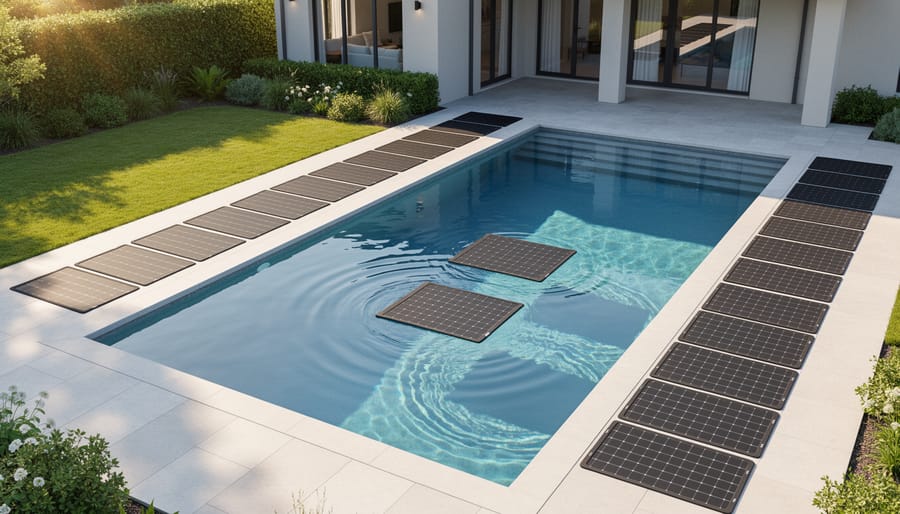
Harness the sun’s energy to warm your pool water passively by laying dark-colored mats on your pool deck or floating them directly on the water surface—this simple solar collection method can raise water temperature by 5-15°F depending on your climate and setup. Position these mats where they’ll receive maximum sunlight exposure throughout the day, typically on south-facing areas, and connect multiple mats in series to increase your heating capacity as your budget allows.
Calculate your heating needs by measuring your pool’s surface area and considering how many degrees you want to raise the temperature—a good rule of thumb is that you’ll need mat coverage equal to 50-100% of your pool’s surface area for significant heating in most climates. Start small with a single mat to test effectiveness in your specific conditions before investing in a complete system, since factors like wind exposure, nighttime temperatures, and your pool’s insulation dramatically affect real-world results.
I learned this lesson the hard way when I first experimented with pool heating at my brother’s place—we bought six mats thinking bigger was automatically better, only to discover that strategic placement of three well-positioned mats delivered nearly identical results at half the cost. The beauty of pool heating mats lies in their scalability and zero operating costs once installed.
Compare this approach against traditional gas heaters running $300-500 monthly or electric heat pumps drawing 3-5 kilowatts constantly, and the appeal becomes clear. Pool heating mats require no electrical connection, no complex plumbing, and no professional installation—just sunlight, water circulation, and patience as your pool gradually reaches that comfortable swimming temperature naturally.
What Are Pool Heating Mats and How Do They Work?
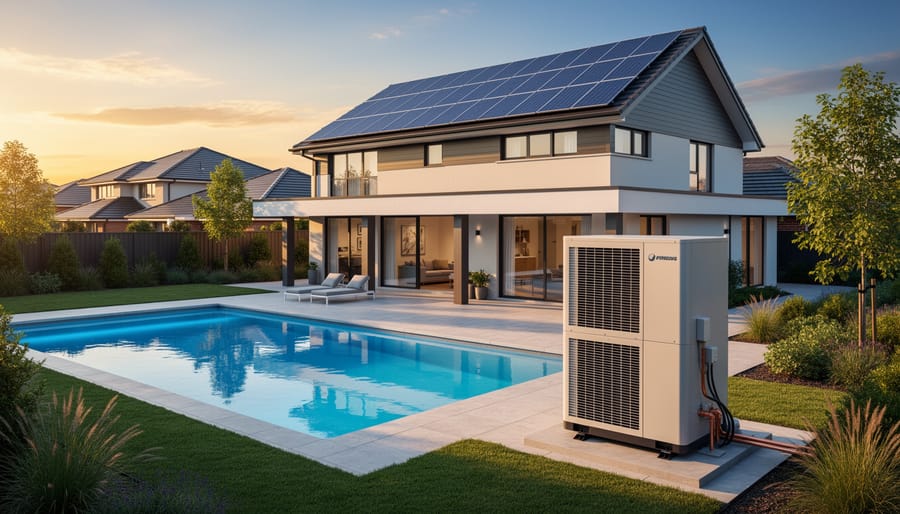
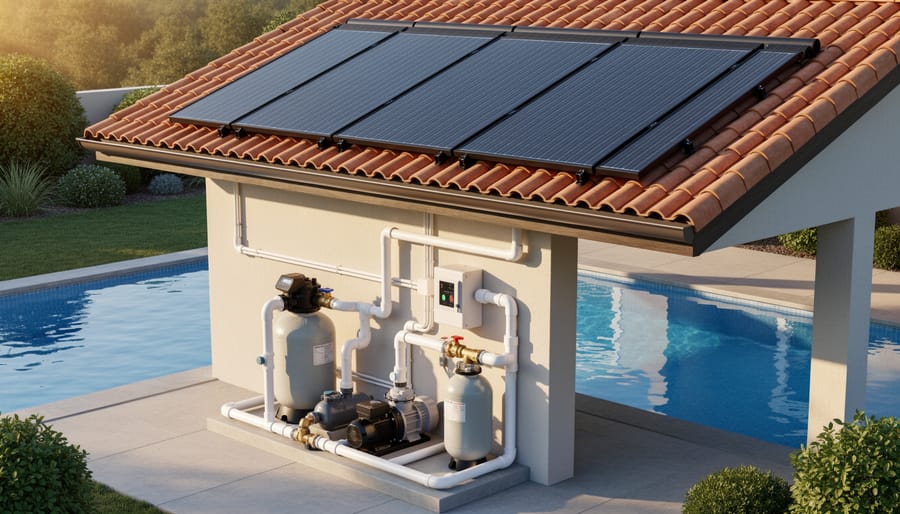
Pool heating mats installed on a residential rooftop capture solar energy to warm pool water efficiently and cost-effectively.
The Simple Science Behind Solar Pool Heating
You know that black garden hose that’s been sitting in the sun all afternoon? Touch it and you’ll quickly pull your hand back from the heat. That’s exactly the principle behind how solar pool heating works with these simple mats.
Here’s what happens: Dark surfaces are natural heat magnets. When sunlight hits the black or dark-colored material of a pool heating mat, that surface absorbs energy from the sun’s rays and gets hot, just like your car’s dashboard on a summer day. The darker the color, the more heat it absorbs.
Now here’s where it gets clever. As your pool water flows through the channels inside the mat, it picks up all that stored heat through a process called heat transfer. Think of it like running cold water through that hot garden hose. The water that comes out the other end is noticeably warmer than what went in.
The beauty of this system is its simplicity. There are no moving parts to break, no complicated electronics, and no energy bills. Your pool pump does the work of circulating water through the mats, and the sun does the heating. The warmed water then returns to your pool, gradually raising the overall temperature degree by degree throughout the day. On sunny days, you can see temperature gains of 5 to 10 degrees Fahrenheit, depending on your setup.
Water flows through the channels of a solar heating mat, absorbing heat from the sun-warmed black surface.
Different Types of Pool Heating Mats
When I first looked into pool heating mats, I was surprised to discover there’s more variety than you might expect. Understanding the different types available will help you choose what works best for your setup and budget.
The two main categories you’ll encounter are rigid panel systems and flexible mat options. Rigid panels are exactly what they sound like: structured, firm units that typically mount on racks next to your pool or on your roof. They’re durable and efficient, but they require more space and a solid mounting surface. Flexible mats, on the other hand, are like giant rubber blankets that you can unroll on your deck, roof, or even drape across a fence. They’re what most DIYers love because they’re incredibly easy to work with and adapt to whatever space you have available.
The material matters too. Most pool heating mats use either EPDM rubber or polypropylene. EPDM (which stands for Ethylene Propylene Diene Monomer, but nobody calls it that) is a synthetic rubber that’s super resistant to weather, UV rays, and pool chemicals. It’s what I have on my pool, and after five seasons, it still looks nearly new. Polypropylene mats are typically lighter and less expensive, though they may not last quite as long in harsh climates.
What really sets heating mats apart from other solar pool heating solutions is their simplicity. Unlike complex evacuated tube systems or bulky solar dome heaters, mats are straightforward: water flows through channels in the mat, absorbs heat from the sun, and returns to your pool. There are no moving parts, no electricity required, and nothing complicated to troubleshoot. It’s solar heating stripped down to its most practical, accessible form, which is why they’re perfect for the DIY crowd.
Why Pool Heating Mats Beat Other Heating Solutions
The Real Cost Comparison
Let me walk you through the numbers, because this is where pool heating mats really shine. I remember chatting with my neighbor Mark last summer who’d just installed a gas heater – he was shocked when his first utility bill arrived.
Let’s start with upfront costs. A quality pool heating mat system for an average 15×30 foot pool typically runs between $300-$800, depending on how many mats you need. Compare that to gas heaters ($1,500-$4,000), electric resistance heaters ($500-$2,000), or heat pumps ($2,500-$5,000). Right away, you’re looking at significantly lower initial investment.
But here’s where it gets interesting – the ongoing costs. Pool heating mats use zero electricity and zero gas. They just sit there soaking up free sunshine. Meanwhile, gas heaters cost roughly $300-$600 per month to run during pool season, and electric heaters can add $150-$300 monthly to your utility bills.
Let me show you a simple calculation. Say you invest $600 in heating mats and you would have otherwise spent $400 monthly on gas heating over a four-month season. That’s $1,600 in gas costs you’ve completely avoided. Your mats have paid for themselves in one season, with $1,000 left in your pocket.
In subsequent years? Pure savings. That same $1,600 annual heating cost becomes money you keep, year after year. Over five years, you’re looking at $8,000 in savings from a $600 investment.
The payback period for heating mats is typically 1-2 seasons, compared to 3-5 years for heat pumps and never for gas heaters. That’s money you could spend on pool toys, weekend getaways, or more solar projects around your home.
DIY-Friendliness Factor
Here’s what I love about pool heating mats: they’re genuinely DIY-friendly, even if you’ve never tackled a home improvement project before. Unlike installing a heat pump that requires electrical hookups and sometimes concrete pads, or a gas heater that demands professional plumbing and gas line work, pool heating mats are refreshingly straightforward.
Think of it this way: you’re essentially laying out a large, flexible mat near your pool and connecting a couple of hoses. That’s it. No specialized tools required beyond what you probably already have in your garage. Most systems connect directly to your existing pool pump using standard hose clamps and adapters that come in the kit.
I remember when my neighbor Charlie installed his first set of heating mats on a Saturday morning. He was done before lunch and spent the afternoon enjoying his warmer pool. He told me the hardest part was deciding where to place them for maximum sun exposure. Compare that to the week-long installation process and contractor fees his friend paid for a heat pump system.
The beauty of mats lies in their modular nature. You can start with one or two panels and add more later if needed. There’s no complex wiring, no gas permits, and no need to modify your existing pool equipment beyond basic plumbing connections. If something goes wrong, troubleshooting is simple because there are fewer components involved.
For anyone comfortable following clear instructions and connecting garden hoses, pool heating mats are an accessible entry point into solar pool heating.
Sizing Your Pool Heating Mat System
The 50-100% Rule of Thumb
Here’s a helpful guideline I learned the hard way during my first pool heating project: aim for mat surface area between 50-100% of your pool’s surface area. If you have a 200 square foot pool, you’ll want somewhere between 100-200 square feet of heating mat.
The question is, where do you fall in that range?
Head toward the 50% end if you live in a sunny climate with mild winters, have a smaller above-ground pool, or mainly use your pool during peak summer months. You’ll also get away with less mat coverage if your pool stays covered when not in use, since that dramatically reduces heat loss overnight.
Push closer to 100% coverage if you’re dealing with larger in-ground pools, cooler climates, or you want to extend your swimming season into spring and fall. Pools in shaded areas or windy locations lose heat faster, so they need more aggressive heating. The same goes if you’re someone who likes really warm water or you’ve got kids who want to swim year-round.
I remember chatting with a neighbor who skimped on mat coverage to save money upfront. He ended up buying additional mats the next season anyway because his pool just wasn’t reaching comfortable temperatures. Starting with adequate coverage saves you the hassle of retrofitting later.
Think of it this way: undersized mats will heat your pool, just more slowly. Properly sized mats give you the flexibility to actually control when and how warm your pool gets.
Climate and Location Considerations
Your local climate plays a huge role in determining what size heating mat you’ll need. If you’re blessed with abundant sunshine like Charles was during his Arizona summers, you might get away with a smaller mat than someone in cloudier regions. He found that his 4×20 foot mat heated his 15,000-gallon pool beautifully in direct desert sun, but when he moved to the Pacific Northwest, he needed to add another mat to compensate for the reduced sun exposure.
Ambient temperature matters too. Even the best solar mat needs help when nighttime temps regularly drop below 60°F. Your pool loses heat overnight, so if you’re dealing with cool evenings, you’ll want to oversize your mat by 25-50% to build up enough daytime heat to offset those losses.
Regional factors like humidity and wind also affect performance. Coastal areas with sea breezes will see faster heat loss than inland locations. Charles recommends checking your local climate data and talking to neighbors with pools before finalizing your mat size. What works for someone in Florida won’t necessarily work in Colorado, even if the pools are the same size. Consider your specific microclimate, including shade patterns from trees or buildings throughout the day.
Installing Pool Heating Mats: A Step-by-Step Approach
Choosing the Right Location
Finding the perfect spot for your pool heating mats can make the difference between lukewarm water and a comfortably heated pool. The key is simple: maximize direct sunlight exposure during peak hours, typically between 10 AM and 4 PM.
Ground mounting is probably the easiest option for most DIYers. Just lay your mats on a sunny patch of lawn or patio near your pool. I’ve found this works great if you have the space, and it makes winterizing a breeze since you can simply roll them up and store them. The downside? They take up valuable yard space and can become a tripping hazard if not positioned carefully.
Roof mounting offers the best sun exposure and keeps mats completely out of the way. Your roof naturally faces the sky all day, making it ideal for solar collection. However, getting up there to install and maintain your system requires confidence working at heights and proper safety equipment. Make sure your roof can handle the additional weight when the mats are full of water.
Fence mounting works wonderfully if you have a south-facing fence with good sun exposure. It’s easier to access than a roof but harder than ground placement. Just ensure your fence structure is sturdy enough to support the weight.
Deck or rack mounting gives you flexibility in positioning while keeping mats elevated and organized. Purpose-built racks let you angle the mats toward the sun for maximum efficiency, though this option requires a bit more investment upfront.
Plumbing Connections Made Simple
Here’s the thing about plumbing connections that surprised me when I first set up my heating mats: they’re actually more straightforward than hooking up a garden hose timer. If you can connect a few PVC pipes, you’re golden.
The basic idea is simple. You’ll tap into your pool’s circulation system after the filter but before the water returns to the pool. Most setups use standard 1.5-inch or 2-inch PVC connections that match your existing plumbing.
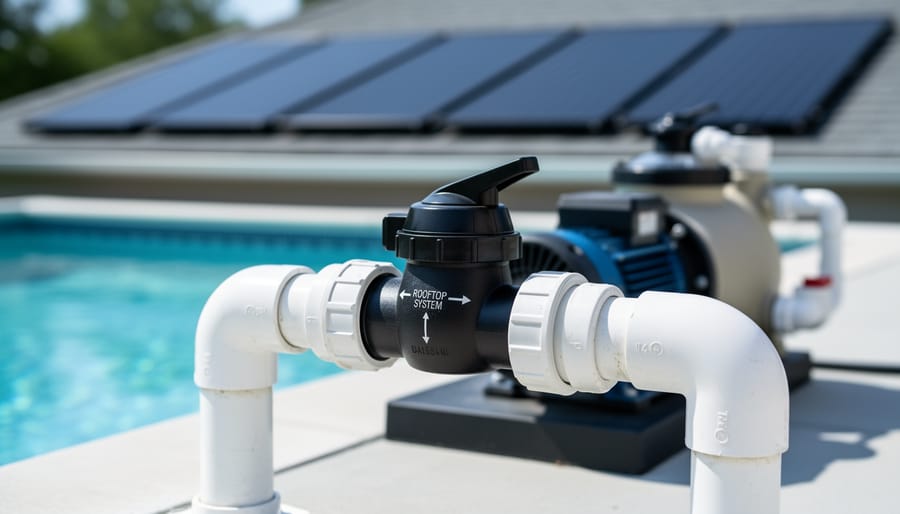
You’ll need three key components: a diverter valve (this directs water to your mats), some basic PVC fittings (elbows and couplers), and flexible hose to connect the mats themselves. The diverter valve is your friend here because it lets you bypass the mats entirely when you don’t need heating or when you’re doing maintenance.
Charles here: I installed my first system on a Saturday afternoon with just a hacksaw, PVC cement, and a basic wrench set. The trickiest part was measuring twice before cutting, but that’s good advice for any project.
Most heating mat kits include clear diagrams showing exactly where each piece goes. You’re essentially creating a detour for some of your pool water to flow through the mats before returning to the pool. Think of it like adding an extra loop to a race track.
The beauty of this setup is its flexibility. Start with one mat and add more later without redoing your plumbing work.
Installing pool heating mats is a straightforward DIY project that most homeowners can complete with basic plumbing skills.
Common Installation Mistakes to Avoid
Charles learned some valuable lessons the hard way during his first pool heating mat installation, and he’s not alone. One of the most common mistakes is inadequate mounting—those mats need secure placement with proper angle optimization to catch maximum sunlight. Loose or flat installations can reduce efficiency by up to 40%.
Another frequent issue is getting the flow rate wrong. Too fast, and water doesn’t absorb enough heat; too slow, and you risk overheating the mat itself. Charles recommends starting with your pump on its lowest setting and adjusting from there while monitoring temperatures.
Air pockets are sneaky efficiency killers. Always bleed your system completely during setup—trapped air prevents proper water circulation. Run your system for a few minutes, then check and purge any air that’s accumulated.
Finally, don’t forget seasonal considerations. What works perfectly in July might freeze and crack in November. Charles now drains his entire system before the first frost, a lesson that cost him one replacement mat. Plan your installation with both peak season performance and off-season storage in mind.
Maximizing Performance: Tips and Tricks
Timing Your Pump Cycles
Getting the timing right makes all the difference between a lukewarm pool and a perfectly heated one. The sweet spot for running your pump cycles is mid-morning through late afternoon, typically between 10 AM and 4 PM when the sun’s rays are most intense. This is when your heating mats can really work their magic.
I learned this the hard way during my first season using solar mats. I initially ran my pump early morning to evening, thinking more circulation meant more heat. Wrong! My pool stayed disappointingly cool because half that time, the mats were barely absorbing any solar energy.
Here’s a practical approach: start your pump around 10 AM when the sun is climbing and the mats have warmed up. Let it run through peak sunshine hours, then shut it down around 4 or 5 PM. If you have a programmable timer (highly recommended), set it to match your local peak sun hours. This might shift slightly depending on your location and season.
On cloudy days, you can skip running the pump entirely or reduce cycles to save energy. Many pool owners use basic temperature sensors to automate this process, only circulating water when the mats are actually warmer than the pool itself.
Seasonal Adjustments and Maintenance
Keeping your pool heating mats in top shape doesn’t require much effort, but a little seasonal care goes a long way. I learned this the hard way when I neglected my first set and found some cracked panels after a brutal winter!
When fall arrives, it’s time to winterize. Drain all water from the mats completely—trapped water can freeze and cause serious damage to the tubing. Disconnect the mats, roll them up loosely (never fold sharply), and store them somewhere dry and protected from rodents. I keep mine in my garage on a shelf, similar to how I store my solar pool covers.
Come spring, inspect your mats before reinstalling. Look for any cracks, tears, or worn spots. Check all connections for leaks by running water through before hooking them to your pool system. A simple garden hose test saves headaches later.
During swimming season, rinse your mats monthly to remove debris, pollen, and mineral buildup. This keeps the black surface absorbing maximum heat. Every few weeks, walk around and check for soft spots or bubbling, which might indicate developing leaks.
This simple routine keeps mats performing efficiently for years, maximizing your investment in renewable pool heating.
Real-World Performance: What to Expect
Let me share what you can realistically expect from pool heating mats, based on real-world feedback and my own experiences helping folks set up their systems.
The most common question I get is: “How much warmer will my pool actually get?” Here’s the honest answer – it depends. Most users report temperature increases between 5-15 degrees Fahrenheit over a week of sunny weather. I’ve seen members of our community forum track their results, and a typical 15×30 foot above-ground pool with proper mat coverage might gain about 1-2 degrees per sunny day during peak season.
Heating times vary significantly based on several factors. Your pool’s starting temperature, local climate, mat surface area, and sun exposure all play crucial roles. One community member in Arizona shared that their 10,000-gallon pool gained 8 degrees in just three days using four large mats. Meanwhile, a user in Oregon reported more modest gains of 4 degrees over a similar period with the same setup.
Here’s what I’ve learned works best: Pool heating mats shine as supplemental heating rather than primary solutions. They’re fantastic for extending your swimming season by a few weeks on either end, or maintaining comfortable temperatures once you’ve initially heated your pool through other means. Think of them as helpers, not heroes.
For smaller pools and hot tubs, expectations can be higher. A 400-gallon inflatable pool might warm up noticeably in a single afternoon. Larger in-ground pools need patience and realistic goals.
The bottom line? These mats won’t transform your pool into a hot tub overnight, but they offer genuine, free heating that adds up over time. Set your expectations accordingly, and you’ll likely be pleased with the results.
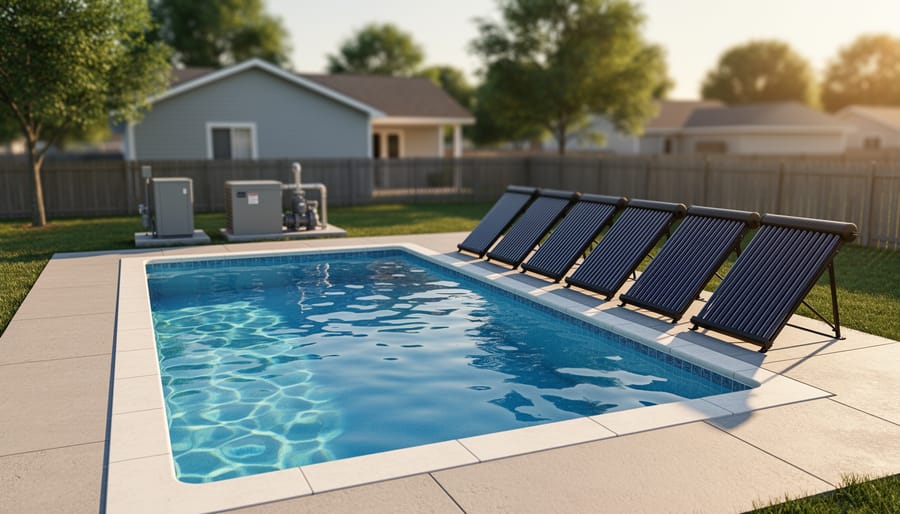
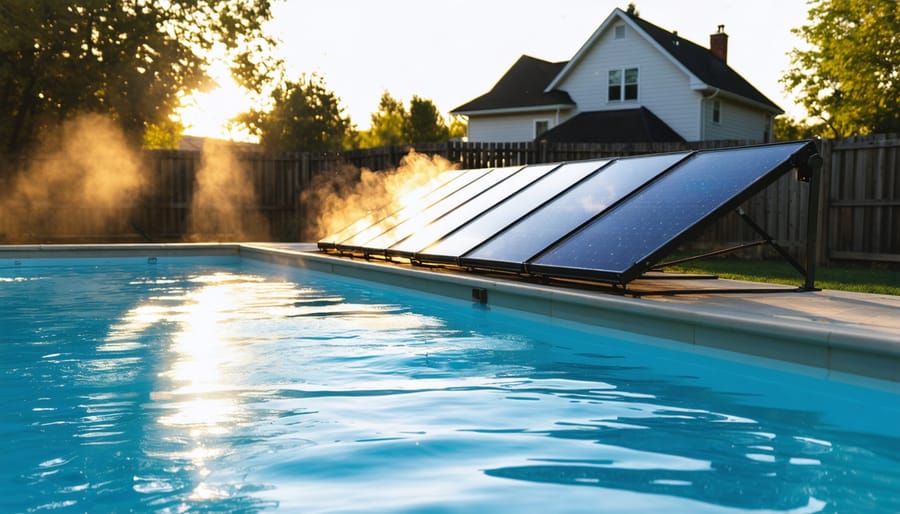
A properly heated pool extends your swimming season and provides comfortable water temperatures throughout the day.
Looking back at my own journey into solar DIY projects, I can honestly say that pool heating mats were one of the best starting points. They deliver real, measurable results without requiring an engineering degree or a massive investment. If you’ve been hesitating about diving into renewable energy, this is your moment.
What makes pool heating mats such a perfect first project? They’re forgiving. Unlike some solar installations where precision is critical, these systems work with a range of configurations. You’ll see temperature gains even if everything isn’t perfectly optimized. Plus, the satisfaction of stepping into a warm pool heated by something you built yourself is genuinely rewarding.
The financial math is straightforward too. With typical costs under $500 for a DIY setup and potential savings of $50-150 per month during swimming season, you’re looking at payback within 1-2 years. After that, it’s essentially free heating for a decade or more.
Don’t go it alone on this journey. The Spheral Solar community is filled with people who’ve tackled these projects and are eager to share their experiences. Whether you hit a snag during installation or want to show off your results, you’ll find support and encouragement.
Take control of your pool heating costs today. Start planning your system, gather your materials, and join thousands of others who’ve discovered that solar energy isn’t just for experts. Your warmer, more affordable swimming season is just one weekend project away.
How useful was this post?
Click on a star to rate it!
Average rating 5 / 5. Vote count: 1
No votes so far! Be the first to rate this post.
We are sorry that this post was not useful for you!
Let us improve this post!
Tell us how we can improve this post?
charlesnoble
Here at Spheral Solar, I’m a hands-on solar power enthusiast, constantly exploring and experimenting with DIY solutions. I’m dedicated to sharing my discoveries, insights, and even the bumps I hit along the way, all in the pursuit of a more sustainable future.
Heat Your Pool for Pennies Using Solar Panels You… by Charlesnoble April 12, 2026 Imagine cutting your pool heating costs by 70% while extending your swimming season by months—that’s the reality when you harness your existing solar panel system to warm your pool water. If you’ve already invested in rooftop solar or are planning an installation, you’re sitting on an untapped heating solution that…
Why Your Pool Solar Heater Valve Position Changes… by Charlesnoble March 9, 2026 Set your three-way valve to point toward the roof when you want solar heating, typically between 10 AM and 4 PM on sunny days when your panels can effectively warm the water. Point it toward the bypass position during cloudy weather, at night, or when your pool has reached the…
Heat Your 7000 Gallon Pool for Pennies Using Solar Power by Charlesnoble May 24, 2026 Calculate your heating needs by multiplying 7000 gallons by 8.34 pounds per gallon, then factor in your desired temperature rise and the time frame you want to achieve it. For a 7000-gallon pool, you’ll typically need between 75,000 and 150,000 BTUs per hour depending on your climate, but before you…
Best Solar Powered Pool Lights in 2026 by Adeyomola March 22, 2022 Heads up: some links here are affiliate links, and purchases through them support the site. As an Amazon Associate I earn from qualifying purchases.The best solar swimming pool lights stand out because of their long lighting times. Apart from charging fast and having long lighting times, solar pool lights should…
Hook Up Your Solar Pool Heater the Right Way (Before… by Charlesnoble January 17, 2026 Position your solar collectors above pool water level whenever possible to enable gravity drainage when the system shuts off, preventing freeze damage and extending panel life. This single design choice eliminates the most common failure point in DIY solar pool heating installations. Study the three-zone valve configuration before purchasing components.…
Why Glazed Solar Pool Heaters Outperform Everything… by Charlesnoble November 25, 2025 Understand that glazed solar pool heaters are built with a glass or polycarbonate cover over dark absorber plates, creating an insulated greenhouse effect that captures and retains heat far more efficiently than unglazed alternatives. This design makes them capable of extending your swimming season by months, even in cooler climates…
Subscribe for handpicked DIY projects, exclusive tips, and giveaways.
There is something special about a mature tree. Decades of growth, shade that actually cools the house, branches that the kids climbed, a root system that has quietly held the yard together through every storm. So when circumstances force a move, whether it is a home renovation, a new driveway, or a construction project that… Read more: How to Move a Mature Tree Without Killing It: The Complete Relocation Guide
A mass energy conversion calculator lets you determine how much energy is locked inside any amount of matter using Einstein’s famous equation E=mc². Whether you’re working on a physics assignment or simply curious about the enormous energy potential in everyday objects, the calculation itself takes just seconds once you understand the formula’s three components: energy… Read more: How to Use a Mass Energy Conversion Calculator (Step-by-Step Guide)
Low voltage circuit protection in DIY solar systems boils down to matching the right fuse or breaker to your wire size and expected current, not to the capacity of your battery bank or inverter. Most fires and equipment failures happen when people oversize protection devices, thinking bigger is safer, when the opposite is true. Your… Read more: How to Size Low Voltage Circuit Protection for Your DIY Solar System