Solar Portable Lamps That Actually Work When You Need Light Most
Updated:
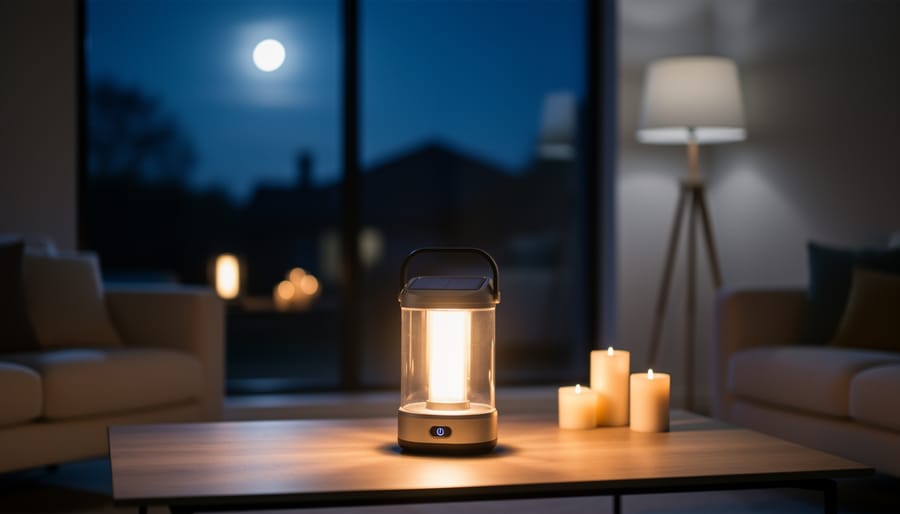
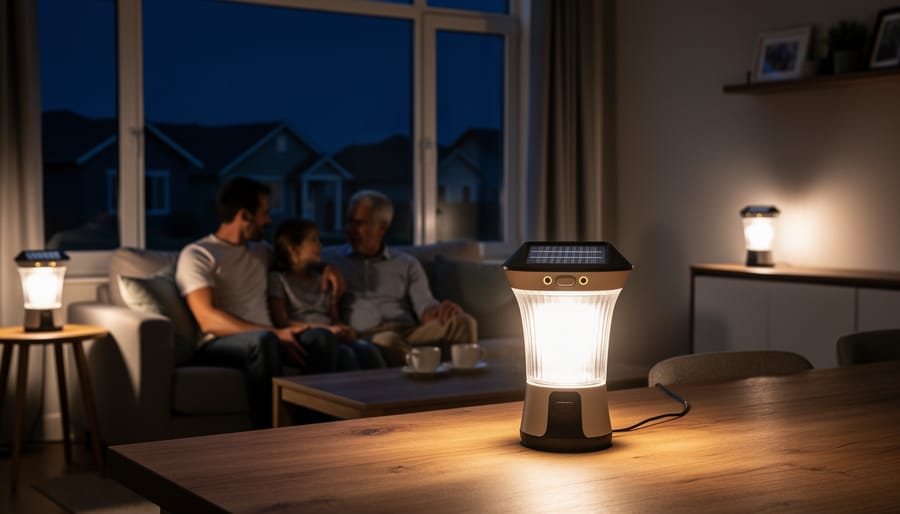
Picture this: It’s 2 AM during a power outage, and you’re fumbling in the dark for candles and matches. Now imagine instead reaching for a lamp that’s been charging silently on your windowsill all day, ready to illuminate your space for hours without electricity bills or fire hazards. That’s the everyday magic of solar portable lamps.
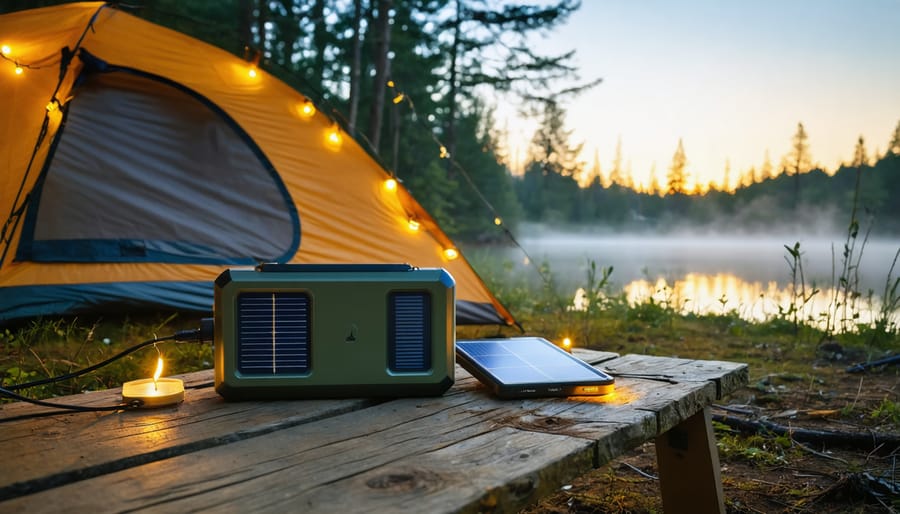
These compact powerhouses have evolved far beyond their clunky predecessors. Modern solar portable lamps pack impressive LED technology, efficient photovoltaic cells, and rechargeable batteries into lightweight designs that fit in your backpack. Whether you’re planning a weekend camping trip, preparing an emergency kit, or simply want reliable outdoor lighting for evening barbecues, these devices deliver clean energy independence at your fingertips.
I’ve been testing solar lighting solutions for years, and the transformation in quality and affordability has been remarkable. What once cost hundreds of dollars and barely lit a tent now costs a fraction of that price while providing enough brightness to read comfortably or illuminate an entire campsite.
The beauty of solar portable lamps lies in their simplicity. No complex installation, no wiring, no ongoing costs. You place them in sunlight, and they work. But choosing the right one requires understanding key factors like battery capacity, lumens output, charging time, and durability. Some models now include USB charging ports, turning your lamp into a emergency phone charger. Others feature multiple brightness settings, extending runtime from hours to days on a single charge.
Why Solar Portable Lamps Beat Traditional Battery-Powered Lights
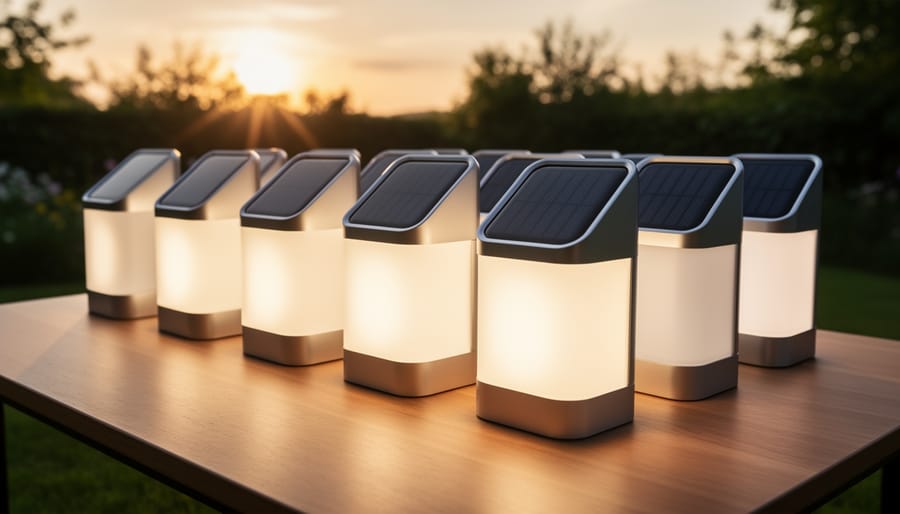
Solar portable lamps offer sustainable lighting that eliminates the ongoing costs and inconvenience of battery replacements.
The Hidden Costs Battery Lights Rack Up
I learned this lesson the hard way during a camping trip last summer. My trusty battery-powered lantern died just as darkness fell, and I realized I’d forgotten spare batteries at home. That frustrating experience got me thinking about the real cost of battery-dependent lighting.
The expenses add up faster than most people realize. Quality alkaline batteries for a typical camping lantern run about $8-12 per set, lasting maybe 10-15 hours of continuous use. If you’re a regular camper or keep emergency lights ready, you might replace batteries 4-6 times yearly, totaling $50-70 annually. Over five years, that’s $250-350 just keeping the lights on.
Then there’s the environmental headache. Americans toss 3 billion batteries annually into landfills, where toxic materials like mercury and cadmium can leach into soil and groundwater. Even rechargeable batteries eventually wear out, requiring special recycling programs that aren’t available everywhere.
The inconvenience factor deserves mention too. Dead batteries always seem to fail at the worst moments, during power outages or when you’re miles from the nearest store. Plus, you need to remember to check and rotate stored batteries every few months, adding another maintenance task to your to-do list.
How Solar Lamps Save You Money and Hassle
Let me share something I learned during a power outage last winter. While my neighbor scrambled to find working batteries for his flashlight at 2 AM, my solar portable lamp sat fully charged on the windowsill, ready to light up the entire room. That moment perfectly captured why these devices are such smart investments.
Yes, solar lamps typically cost more upfront than battery-powered alternatives, usually ranging from $15 to $60 depending on features. But here’s where the math gets interesting. Traditional flashlights require fresh batteries every few months, costing you $10-20 annually. Over just three years, you’ve spent more on batteries than you would have on a quality solar lamp that keeps working year after year.
The freedom from battery anxiety is genuinely life-changing. No more digging through junk drawers at midnight or making emergency store runs. Your lamp charges itself using free sunlight, whether sitting on your dashboard during your commute or hanging outside while you work in the garden. Many folks pair their portable lamps with solar generators for a complete off-grid lighting solution.
Beyond the dollars saved, there’s something deeply satisfying about renewable charging. You’re reducing waste from disposable batteries while gaining energy independence. During extended power outages or camping trips, that peace of mind becomes priceless. Your light source never runs dry as long as the sun rises, giving you one less thing to worry about when it matters most.
Understanding How Solar Portable Lamps Actually Work
The Three Essential Components You Need to Know
Think of a solar portable lamp as having three teammates that work together to bring you light wherever you go. Let me break down each player on this team in a way that’ll make perfect sense.
First up is the solar panel, which acts like a tiny power plant on top of your lamp. Just as plants convert sunlight into energy through photosynthesis, solar panels convert sunlight into electricity. When I first started experimenting with solar tech in my garage, I was amazed that these thin panels could capture invisible energy floating all around us and turn it into something useful. Most portable lamps use small panels ranging from 0.5 to 5 watts, which is plenty for compact lighting needs.
Next is the rechargeable battery, your lamp’s energy storage vault. Think of it like a water tank that fills up during sunny days and releases power when you need it at night. Most modern solar lamps use lithium-ion batteries, the same type in your smartphone, because they’re lightweight and hold charge efficiently. A typical battery stores enough juice to run your lamp for 4 to 12 hours on a single charge.
Finally, there’s the LED light itself, the star performer. LEDs are incredibly efficient, converting almost all their energy into light rather than heat. Compare this to old incandescent bulbs that waste energy heating up, and you’ll understand why LEDs are perfect for solar applications. They sip power slowly, meaning your stored battery energy lasts much longer into the night.
What Happens When Sunlight Hits Your Lamp
The magic starts the moment you place your solar portable lamp in sunlight. Think of it like filling a water bottle, except you’re filling it with energy instead. Here’s what’s happening behind that compact design:
When sunlight hits the solar panel on top of your lamp, the photovoltaic cells inside get to work immediately. These cells contain special materials that get excited by sunlight and start moving electrons around, creating an electrical current. It’s similar to how solar calculators have worked for decades, just scaled up for more power.
This electrical current doesn’t go directly to the LED bulb though. Instead, it flows into a rechargeable battery tucked inside the lamp’s housing. Most portable solar lamps use lithium-ion or lithium-phosphate batteries, the same technology in your phone or laptop. The lamp includes a small charge controller that acts like a traffic cop, making sure the electricity flows at the right voltage and doesn’t overcharge the battery.
I remember my first solar lamp taking what felt like forever to charge on a cloudy morning. That’s because the intensity of sunlight matters tremendously. Direct, midday sun might fully charge your lamp in 6-8 hours, while indirect or filtered light could take twice as long. The battery stores this energy chemically until you flip the switch, at which point it releases that stored power to illuminate your LED bulb. Most quality lamps hold enough charge for 8-15 hours of continuous light, depending on your brightness setting.
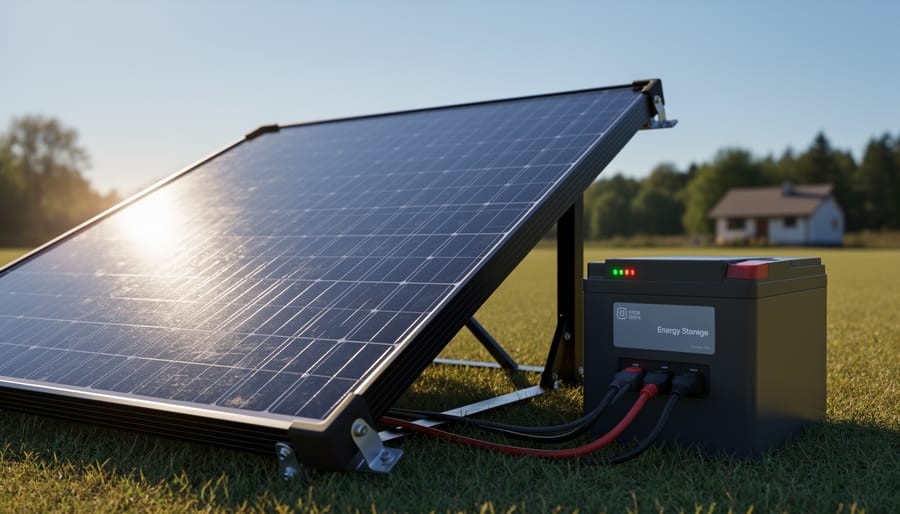
The solar panel converts sunlight into electrical energy, which is stored in the internal battery for nighttime use.
Key Features That Separate Good Solar Lamps from Garbage
Battery Capacity and Runtime: Getting Through the Night
Understanding battery capacity is like checking the fuel tank before a road trip. The mAh (milliamp-hour) rating tells you how much energy the battery stores. A 2000mAh battery holds twice the charge of a 1000mAh one, plain and simple.
Here’s what I’ve learned through years of testing these lamps at campsites: a typical 2000-3000mAh battery running on low brightness gives you 8-12 hours of light, perfect for overnight use. Medium brightness cuts that roughly in half, while high settings drain batteries in 3-5 hours. I remember one camping trip where I ran my lamp on high all evening and woke up in darkness at 2am. Lesson learned!
Match your battery to your actual needs. Weekend campers do fine with 2000-3000mAh units. For emergency preparedness or extended trips, look for 5000mAh or higher. Some lamps let you check remaining charge through LED indicators, which prevents those midnight surprises.
Pro tip: batteries lose efficiency in cold weather, so plan for 20-30 percent less runtime during winter camping. Keep your lamp inside your sleeping bag on freezing nights to maintain performance.
Brightness Levels and Lumens Demystified
Understanding lumens can feel confusing at first, but here’s the practical breakdown you actually need. Lumens measure total light output – think of them as how much light floods a space, not how bright a single spot appears.
For real-world context, a standard 60-watt incandescent bulb produces about 800 lumens. Most quality solar portable lamps range from 100 to 500 lumens, which sounds low but works perfectly for their intended uses. I learned this the hard way during a camping trip with Charles when we brought a 1000-lumen lamp – it was like having a spotlight in our tent, completely overkill and draining the battery unnecessarily.
Here’s what you actually need: reading or light tasks require 100-200 lumens, general campsite lighting works well with 200-350 lumens, and emergency situations or large area coverage needs 350-500 lumens. Anything beyond 500 lumens typically drains solar batteries too quickly for practical portable use.
This is why adjustable brightness becomes your best friend. Being able to dim your lamp to 50 lumens for nighttime tent reading, then boost it to 300 lumens when cooking dinner, dramatically extends runtime. Many modern solar lamps offer three to five brightness levels, giving you flexibility while maximizing your stored solar energy. You’ll get multiple nights from a single sunny day’s charge when you match brightness to your actual needs.
Charging Time and Solar Panel Efficiency
Understanding charge times helps set realistic expectations for your solar portable lamp. In direct, bright sunlight, most quality lamps fully charge in 6-8 hours. However, cloudy days can double or triple this time, while indirect sunlight might not charge them effectively at all. I learned this the hard way during a camping trip when overcast conditions left my lamp at half-power for two days straight.
Panel size directly impacts charging speed. Larger panels capture more energy but reduce portability. Most portable lamps balance these factors with compact panels suitable for everyday use. If you’re planning extended off-grid adventures, look for models with USB backup charging options. This safety net means you can pre-charge at home or use a power bank during poor weather. Some advanced models also accept wall adapter charging, giving you flexibility when solar conditions aren’t ideal.
Durability Features for Real-World Use
When you’re taking your solar lamp camping or relying on it during a power outage, durability matters. Let me break down the key features that separate quality lamps from those that’ll let you down.
First up is water resistance, measured by IP ratings. These two-digit codes tell you what your lamp can handle. The first number indicates dust protection (0-6), while the second covers water resistance (0-8). For outdoor use, look for at least IP65, which means dustproof and can handle rain or splashing. I learned this the hard way during a camping trip when my IP44-rated lamp failed in a downpour. IP67 or IP68 models can actually survive submersion, perfect if you’re near water or dealing with heavy storms.
Impact resistance is another real-world consideration. Quality lamps use reinforced plastic housings or rubberized bumpers. Drop-tested models rated for 1-2 meter falls give you peace of mind when kids are around or you’re navigating rough terrain in the dark.
Temperature tolerance varies widely between models. Budget options might fail below freezing or above 100°F, while better lamps operate from -20°F to 140°F. Check these specs if you live in extreme climates.
Finally, build quality indicators include sealed battery compartments, reinforced connection points, and quality solar panel mounting that won’t crack under UV exposure.
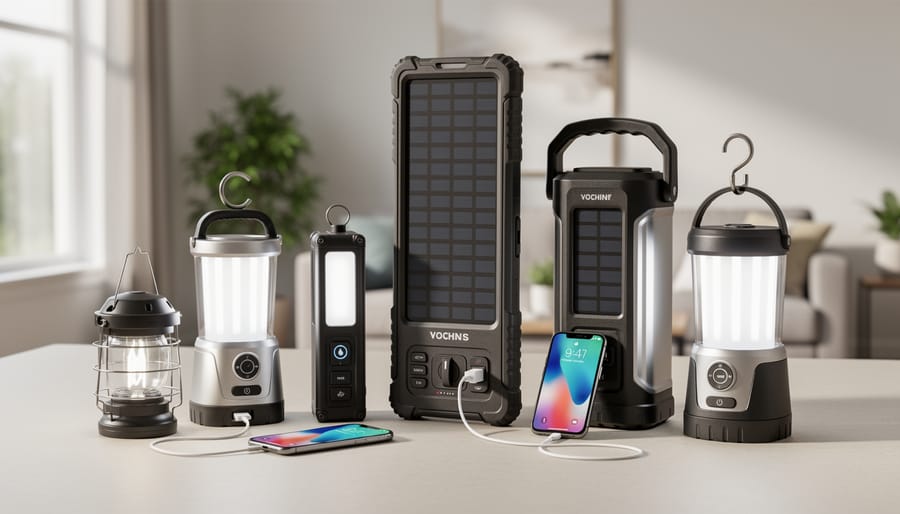
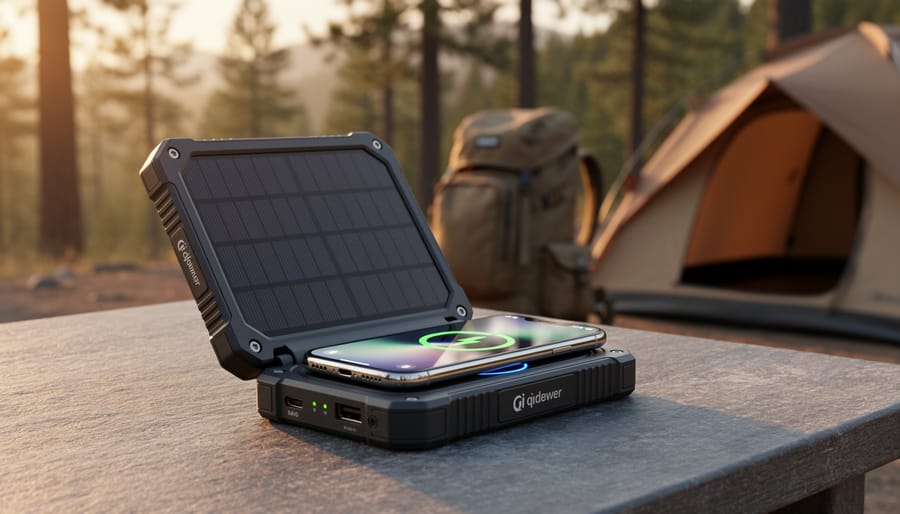
Solar portable lamps come in various designs, from compact collapsible models to multi-function units with phone charging capabilities.
Types of Solar Portable Lamps for Different Situations
Inflatable and Collapsible Solar Lanterns
These clever lanterns collapse down to nearly flat, making them absolute champions for backpackers and anyone tight on storage space. I remember Charles telling me about his first inflatable solar lantern on a three-day backpacking trip through the Cascades. He was skeptical at first, thinking it looked like a kid’s pool toy, but it proved him wrong. The lantern inflated in seconds, charged fully during a day strapped to his pack, and provided enough light for cooking and card games at camp without adding noticeable weight to his load.
The main advantage here is portability. Most inflatable models weigh under six ounces and pack down smaller than a water bottle. They’re perfect for generating electricity while camping without lugging heavy gear. The downside? Durability can be iffy. Charles punctured his second one on a sharp tent stake, though a piece of repair tape fixed it right up. The light output also tends to be more diffuse and softer compared to rigid models, which works great for ambient lighting but isn’t ideal if you need a bright, focused beam for tasks. If weight and space are your top priorities, these lanterns deliver remarkable value.
Hanging Solar Lanterns for Camp and Patio
There’s something wonderfully nostalgic about hanging solar lanterns that reminds me of camping trips with my kids. Unlike their flashlight-style cousins, these traditional lantern designs feature convenient handles or hooks that let you suspend them from tree branches, tent poles, or patio pergolas, creating ambient 360-degree illumination.
The real advantage of hanging lanterns is their brightness output. Because they typically house larger solar panels and battery packs, many models deliver between 200-400 lumens, enough to light up an entire campsite or backyard gathering. Some even include multiple brightness settings, letting you dial down to a gentle glow for late-night stargazing or crank up the power for meal prep.
I’ve found these lanterns shine brightest (pun intended) in stationary situations where you need hands-free lighting. They’re perfect for extended camping trips, backyard barbecues, power outages, or even as decorative patio lighting during summer evenings. The collapsible versions are particularly clever, compressing down to pocket size for easy packing.
One practical tip: position your lantern where it’ll catch morning sunlight for optimal charging. Most quality hanging lanterns need 6-8 hours of direct sun to deliver a full night’s worth of light, so plan accordingly when setting up your space.
Multi-Function Solar Lamps with Phone Charging
I’ve found that multi-function solar lamps are incredibly practical when you actually need those extra features, but they’re not for everyone. These versatile units combine your basic solar lamp with power bank capabilities, emergency radios, flashlights, or even weather alerts.
The phone charging feature is genuinely useful for camping trips or power outages. I once relied on mine during a three-day camping expedition, and it kept my phone alive for emergency calls and navigation. However, expect slower charging times compared to wall outlets, typically taking 4-6 hours for a full phone charge depending on the battery capacity.
When are these combo units worth it? If you’re building an emergency kit or frequently venture off-grid, the added functions justify the higher price point, usually between 40 to 80 dollars. The radio feature particularly shines during emergencies when you need weather updates without draining your phone battery.
The tradeoff is bulk and weight. These units are heavier than basic solar lamps, which might matter for backpackers counting ounces. For car camping, emergency preparedness, or backyard use, though, the extra weight is negligible compared to the convenience of having one device instead of three separate gadgets cluttering your gear.
Getting the Most from Your Solar Portable Lamp
Charging Best Practices for Maximum Battery Life
Getting the most life out of your solar portable lamp’s battery comes down to understanding a few simple charging principles. I learned this the hard way when my first solar lamp died after just one season because I was making every rookie mistake in the book!
The golden rule? Position your lamp where it receives direct sunlight for the longest possible time. This means avoiding shaded spots, even if they seem sunny at first glance. Trees, buildings, and even your patio umbrella can block crucial rays. I recommend checking your charging spot at different times of day before committing to a location.
Temperature matters more than most people realize. Batteries charge most efficiently between 50-85 degrees Fahrenheit. In summer, avoid leaving lamps in spots where temperatures exceed 100 degrees, like on dark surfaces or enclosed spaces. Excessive heat degrades battery chemistry faster than anything else. Conversely, in winter, bring your lamps inside when temperatures drop below freezing, as cold weather severely reduces charging efficiency.
Here’s a common mistake: leaving your lamp switched on during charging. Most models charge faster with the load disconnected. Also, don’t wait until your battery is completely dead before recharging. Lithium batteries, which most modern solar lamps use, prefer partial discharge cycles rather than deep discharges.
Season changes require adjustments too. Winter’s lower sun angle means you might need to tilt your lamp toward the sun or increase charging time by 30-50 percent. During longer summer days, take advantage by fully charging your lamp to maintain battery health through regular complete cycles every few weeks.
Maintenance Tips That Actually Make a Difference
Taking care of your solar portable lamp isn’t rocket science, but a few simple habits can dramatically extend its lifespan and keep it performing at peak efficiency. I learned this the hard way after leaving my first solar lamp outside all winter and finding it barely functional come spring!
The most important maintenance task is keeping your solar panel clean. Dust, pollen, and grime can reduce charging efficiency by up to 25%. Simply wipe the panel with a damp microfiber cloth every couple of weeks. For stubborn dirt, use a mild soap solution and rinse thoroughly. Never use abrasive cleaners or rough materials that might scratch the panel surface.
Storage matters more than most people realize. When you’re not using your lamp for extended periods, store it somewhere cool and dry, away from direct sunlight. Before putting it away, charge it fully, then deplete the battery to about 50%. This “sweet spot” helps preserve battery health during storage. I keep mine in a basement closet, and it’s still going strong after five years.
Winter presents special challenges. If you live in freezing climates, bring your lamps indoors during harsh weather. Lithium batteries don’t respond well to extreme cold, and some plastic housings can become brittle. If you plan to use them outdoors in winter, let them warm up to room temperature before charging.
Finally, test your lamps every few months during storage periods. A quick charge-and-discharge cycle keeps the battery chemistry active and helps you catch any issues early.
DIY Upgrades and Hacks for Solar Lamps
Upgrading Your Lamp’s Battery for Longer Runtime
Upgrading your solar lamp’s battery can significantly extend runtime, but it requires careful consideration. I learned this the hard way when I enthusiastically swapped batteries without checking compatibility and ended up with a lamp that wouldn’t charge properly.
First, identify your current battery type. Most solar portable lamps use either NiMH (nickel-metal hydride) or lithium-ion batteries. Check your lamp’s specifications or the battery label. The replacement must match the voltage exactly. A 3.7V lithium-ion battery cannot be swapped for a 1.2V NiMH without circuit modifications.
For capacity upgrades, look at the mAh (milliamp-hour) rating. A battery rated at 2000mAh will theoretically last twice as long as a 1000mAh version. However, physical size matters. Higher capacity batteries are often larger, so measure your battery compartment before purchasing.
Consider the charging circuit’s limitations. Your lamp’s solar panel and charge controller were designed for the original battery capacity. While installing a higher capacity battery typically works fine, charging times will increase proportionally. If your 1000mAh battery charged in 8 hours, a 2000mAh replacement might need 16 hours of sunlight.
Realistically, expect runtime improvements of 50-100% when doubling capacity, accounting for efficiency losses. Always purchase quality batteries from reputable suppliers to ensure safety and performance.
Adding External Solar Panels for Faster Charging
Most solar portable lamps come with small built-in panels that work fine for everyday charging, but I’ve found that connecting external portable solar panels can dramatically cut charging time, especially during cloudy weather or winter months.
The wiring is simpler than you might think. Most quality lamps include a DC input port, typically accepting 5V to 12V. You’ll need a basic understanding of polarity (positive and negative connections) and matching voltage requirements. I learned this the hard way when I first experimented with my camping lamp and accidentally reversed the wires, though thankfully most modern lamps have built-in protection.
Start by checking your lamp’s input specifications in the manual. Then choose an external panel with matching voltage output and higher wattage than the built-in panel. A 10-20 watt panel typically works well for most portable lamps. You’ll connect using standard MC4 connectors or a simple barrel plug adapter, both available at hardware stores.
This upgrade makes the most sense if you’re using your lamp frequently in remote locations, during extended camping trips, or for emergency preparedness. The investment pays off when you need reliable power without grid access. For occasional backyard use, the built-in panel usually suffices.
Real-World Applications Beyond Camping
Emergency Preparedness and Power Outage Readiness
Having weathered a few power outages myself, I’ve learned that having a solid emergency lighting plan isn’t just smart—it’s essential for peace of mind. The general rule I follow is one solar portable lamp per room, plus extras for hallways and staircases. For a typical home, that means starting with 4-6 lamps minimum.
Strategic placement makes all the difference. Keep charged lamps in your bedroom, kitchen, living room, and bathroom—the spaces you’ll need to navigate during an outage. I store mine on windowsills where they charge naturally during the day and are instantly accessible when needed. Consider adding a lamp near your circuit breaker and another by your emergency supplies.
Pro tip: rotate your lamps weekly to ensure batteries stay conditioned. If you’re planning broader solar preparedness, pair your portable lamps with solar panels for camping to maintain charging capability during extended outages.
Create a simple checklist: test each lamp monthly, verify runtime capacity, and replace any that hold less than 80% charge. This system has saved my family countless fumbling-in-the-dark moments, and it’ll give you confidence when the grid goes down.
Solar lamps provide reliable illumination during power outages and emergency situations, eliminating dependence on grid electricity.
Off-Grid Cabins, Sheds, and Workshop Lighting
Solar portable lamps can transform off-grid spaces like cabins, sheds, and workshops into functional areas without the expense of running electrical lines. I’ve personally used these lamps in my workshop for years, and they’ve been absolute game-changers for projects that extend past sunset.
For permanent installations, consider mounting solar panels on the roof or in a sunny location nearby, then running low-voltage wiring to strategically placed lamps inside. Many portable solar lamps come with detachable panels, making this setup surprisingly straightforward. Position lamps above workbenches, tool storage areas, or seating spaces for maximum utility.
The key advantage here is flexibility. Unlike traditional wiring, you can easily relocate lamps as your needs change. I’ve repositioned mine dozens of times based on different projects, something that would’ve cost a fortune with conventional electrical work.
For workshops, look for lamps with at least 300 lumens and adjustable brightness settings. Cold white light (5000K-6500K) works best for detailed work, while warm light creates a cozier atmosphere in cabins. Battery capacity matters too – aim for models that provide 6-8 hours of runtime to cover extended work sessions or evening gatherings.
Solar portable lamps represent one of the simplest, most effective ways to bring renewable energy into your everyday life. They’re proof that sustainable solutions don’t need to be complicated or break the bank to make a real difference. Whether you’re preparing for emergencies, planning weekend camping trips, or just tired of fumbling for flashlights during power outages, these compact powerhouses deliver reliable lighting exactly when and where you need it.
If you’re still on the fence, I’d encourage you to start small. Pick up one quality solar lamp that fits your primary use case and put it through its paces in your own situation. Test it during a backyard evening, take it on your next outdoor adventure, or keep it charged as part of your emergency kit. There’s no substitute for hands-on experience when it comes to understanding how solar technology can work for you.
Once you’ve had a chance to try yours out, we’d love to hear about it. The Spheral Solar community thrives on shared experiences and practical insights from real users. Your observations about what works, what doesn’t, and creative ways you’ve put your lamp to use can help others make informed decisions and discover new applications they hadn’t considered. Together, we’re building a community that proves renewable energy is accessible, practical, and absolutely within reach for everyone.
How useful was this post?
Click on a star to rate it!
Average rating 0 / 5. Vote count: 0
No votes so far! Be the first to rate this post.
We are sorry that this post was not useful for you!
Let us improve this post!
Tell us how we can improve this post?
charlesnoble
Here at Spheral Solar, I’m a hands-on solar power enthusiast, constantly exploring and experimenting with DIY solutions. I’m dedicated to sharing my discoveries, insights, and even the bumps I hit along the way, all in the pursuit of a more sustainable future.
8 Best Solar Backpacks in 2023 by Adeyomola July 23, 2021 Large-sized solar backpacks with battery banks and multiple USB ports that are weatherproof and durable are great. But in the end, high solar panel wattage defines the gap between the best solar backpack and the rest. The 8 Best Solar Backpacks at a Glance Gosun Solar Powered Backpack – Multiple Accessories…
Your Camping Trip Needs Silent Power (Here’s How to Get It) by Charlesnoble November 1, 2025 Choose a portable power station with an inverter rating below 50 decibels—quieter than normal conversation—so you can run your essential camping gear without the rattling drone that ruins peaceful mornings at the campsite. Unlike gas generators that shatter the tranquility you came outdoors to find, modern lithium battery power stations…
Why Your Qi Solar Power Bank Might Be Wasting Your… by Charlesnoble December 8, 2025 Expect your qi solar power bank to charge your phone wirelessly, but don’t count on the solar panel as your primary power source. I learned this the hard way during a three-day camping trip when I thought the built-in solar panel would keep my devices running indefinitely. The reality? Those…
5 Best Solar Radio Reviews in 2023 by Charlesnoble August 16, 2021 There are many reasons you might need a solar radio. Maybe you live in an area with severe weather or natural disasters, and you want to create an emergency preparedness kit. Perhaps you enjoy camping, hiking, or backpacking and want to add a solar power radio to your gear. It…
8 Best Solar Flashlights in 2023 by Nick July 14, 2021 It’s time to brighten your day and night with the best solar-powered flashlights! No emergency kit is ever complete without a proper flashlight to ensure you’ll have visibility when there is none. Whether the power goes out or you’re stuck on a dark road, a solar flashlight will keep you…
Why Your Motorhome Electrical System Keeps Failing… by Charlesnoble November 18, 2025 Picture this: You’re three days into a dream cross-country trip when your lights flicker, the refrigerator stops cooling, and you’re left wondering whether to call for expensive roadside assistance or figure it out yourself. I’ve been there, and here’s what I wish someone had told me before my first electrical…
Subscribe for handpicked DIY projects, exclusive tips, and giveaways.
Route your PV wires through UV-resistant conduit within 18 inches of leaving the solar array, securing it every 3 feet with proper clamps to prevent wind damage and code violations. This single step prevents 80% of the wire degradation issues I’ve seen in DIY solar installations over the past decade. Group your positive and negative… Read more: Why Your PV Wire Management Could Fail Inspection (And How to Fix It)
Understand that 6000 volts sounds terrifying but delivers surprisingly low amperage—typically around 120 milliamps for just 3/10,000th of a second per pulse. This combination creates an unforgettable shock that trains animals to avoid the fence without causing lasting harm. The voltage pushes current through thick fur and hide, while the minimal amperage and microsecond duration… Read more: Why 6000 Volts Won’t Kill Your Livestock (But Will Stop Predators Cold)
Check the maximum voltage and current ratings first—these determine whether your controller can actually handle your solar panel array without frying itself on the first sunny day. I learned this the hard way when my first DIY system shut down every afternoon because I’d paired 600 watts of panels with a controller rated for only… Read more: Why Your Solar Setup Needs Both a Charge Controller and Inverter (And How to Pick the Right Ones)