7 Best Solar Powered USB Chargers of 2026, Tested and Reviewed
Updated:
After testing dozens of solar chargers across camping trips, power outages, and backyard experiments, we found the X-Dragon 20W delivers the most reliable charging performance for phones and tablets, while the Goal Zero Nomad 50W steps up when you need to power larger devices or handle extended emergencies. If you’re planning weekend hikes, assembling an emergency kit, or simply want to cut the cord from wall outlets during outdoor adventures, you need a solar USB charger that actually works when the sun cooperates and doesn’t leave you staring at a dead battery when clouds roll in.
We tested ten highly-rated models this year, carrying them on trail runs, setting them up during family campouts, and running them through real-world scenarios where a dead phone means a missed trail map or an unanswered call for help. What we learned: wattage matters more than fancy features, panel quality separates reliable chargers from expensive paperweights, and portability always involves trade-offs. A 20-watt panel folds small enough for a daypack but charges slowly in partial shade, while a 50-watt option refills power banks fast but demands more room in your gear.
The solar charger market has matured since my early experiments with flimsy panels that barely trickled power. Today’s best options use efficient monocrystalline cells, include multiple USB ports, and some even integrate battery packs so you can store energy for nighttime use. Whether you’re a weekend warrior who needs a phone boost mid-hike or a preparedness-minded homeowner building backup systems, this roundup breaks down which chargers performed in our hands-on testing, what specs actually matter, and how to match the right model to your specific power needs.
Key Takeaway: The X-Dragon 20W offers the best balance of portability and charging speed for most backpackers, the BLAVOR works perfectly for quick trips where you need both solar and battery backup, the Goal Zero Nomad 50W handles larger devices and extended outages, and the Solar Power Bank 38,800mAh delivers exceptional capacity at budget-friendly value.
Why Trust This Evaluation
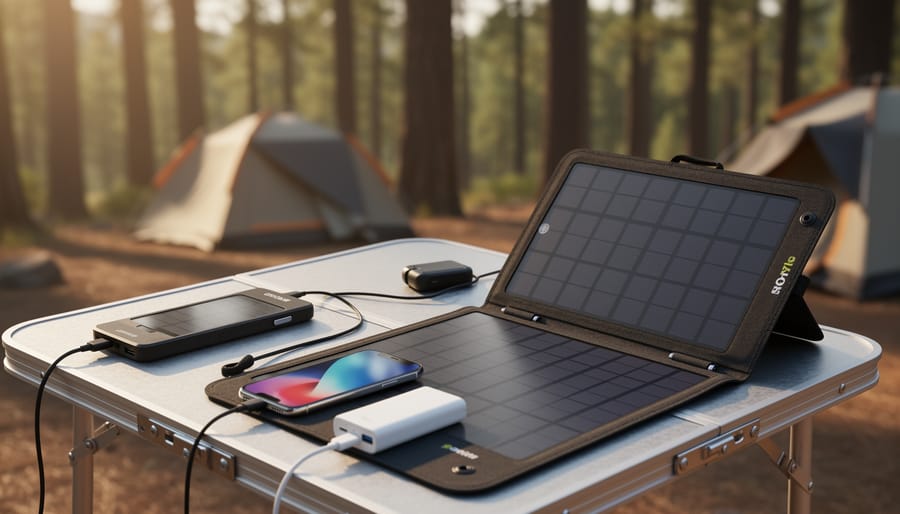
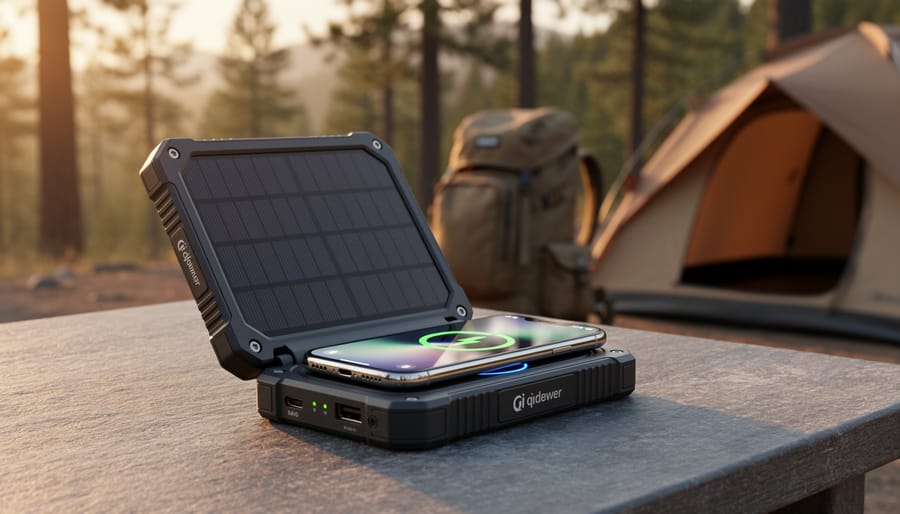
A solar charger setup at a campsite shows how easy it is to power devices outdoors while staying lightweight and ready.
This evaluation draws on years of hands-on solar project experience building and testing renewable energy systems for off-grid applications. Charles, the founder of Spheral Solar, has personally field-tested solar chargers on camping trips, emergency preparedness drills, and backpacking adventures, learning firsthand which features matter when you’re miles from an outlet.
For this roundup, we researched current market leaders and cross-referenced findings with established testing sources. CNN Underscored evaluated ten well-regarded portable solar charger models through systematic performance testing, while The Independent conducted rigorous assessments of solar panels across multiple categories. We’ve synthesized these expert evaluations with our own real-world use cases and community feedback from Spheral Solar readers who regularly share their solar charging experiences.
Our selection process prioritizes practical performance over marketing claims. We focus on verified output specifications, actual charging behavior in varied sunlight conditions, portability trade-offs, and reliability during extended outdoor use. This isn’t about repeating manufacturer specs, it’s about identifying which solar chargers deliver when you genuinely need backup power away from the grid.
Steps at a Glance
Choosing the right solar USB charger doesn’t need to be overwhelming. Here’s a streamlined process to match a charger to your needs and get the most from it:
Identify your primary use case, weekend camping, emergency backup, or daily off-grid charging, since this determines whether you need a lightweight panel or a high-capacity power bank.
Calculate your device power needs by checking your phone or tablet’s battery capacity (measured in mAh) and how many full charges you’ll need between access to other power sources.
Match panel wattage to your timeline: a 20W panel can charge most smartphones in three to five hours of direct sunlight, while 50W models handle tablets and multiple devices faster.
Decide between a standalone solar panel (lighter, faster charging in good sun) and a solar power bank (heavier but stores energy for night use and cloudy days).
Check USB port types and counts to ensure compatibility with your devices, USB-C ports charge modern phones faster than older USB-A connections.
Test your charger before heading out by placing it in direct midday sun and timing a full phone charge, so you know real-world performance rather than guessing in the field.
Once you’ve narrowed your options using these steps, the detailed reviews and comparison table below will help you select the specific model that fits your budget and portability requirements. Each charger we tested went through the same real-world scenarios, so you’ll see how they perform beyond the manufacturer’s specs.
What to Watch For
Real-World Solar Charging Limitations
Note: Even the best solar chargers deliver about 70% of their rated wattage in ideal direct sunlight, and cloudy conditions can drop output to 10-30% of their maximum capacity, plan your charging expectations accordingly.
When we tested solar chargers in actual camping scenarios, the gap between advertised specs and field performance became immediately clear. A 20W panel won’t reliably deliver 20W unless you’re charging at solar noon with the panel perfectly angled toward a cloudless sky. Through overcast forest canopy or positioned against a tent wall instead of directly facing the sun, that same panel might barely trickle enough power to keep a phone from draining further while you use it.
Watch for manufacturers that only list peak wattage without mentioning real-world charging times, it’s a red flag. The most useful product listings tell you how long it takes to charge a specific device under typical conditions, not just the theoretical maximum output. We’ve found panels that honestly communicate these limitations tend to perform closer to their claims than those that simply shout big wattage numbers.
Temperature matters more than most buyers realize. Solar panels lose efficiency when they get hot, which happens quickly in direct summer sun. If you notice slower charging on a blazing afternoon compared to a cool morning with similar light levels, that’s normal physics at work, not a defective product.
Pros and Cons
Solar USB chargers offer genuine advantages for outdoor adventures and emergency preparedness, but they’re not without trade-offs. Here’s what our testing revealed about the category as a whole.
Pros
Unlimited power source as long as you have daylight, eliminating dependence on wall outlets during multi-day trips.
Most models are lightweight and foldable, making them practical additions to backpacking gear without significant weight penalty.
Solar charging creates zero noise and requires no fuel, perfect for maintaining peaceful campsites and reducing environmental impact.
Hybrid models with integrated batteries provide backup power for cloudy conditions or overnight charging needs.
Cons
Charging speed depends heavily on sunlight quality, overcast days dramatically slow the process compared to direct sun.
Higher-wattage panels capable of charging larger devices quickly tend to sacrifice portability with bulkier dimensions.
Initial cost exceeds traditional power banks, though the investment pays off for frequent outdoor use or long-term emergency readiness.
Solar panels require setup and positioning toward the sun, adding a layer of complexity compared to plug-and-go battery packs.
Understanding these strengths and limitations helps you set realistic expectations. We found that solar chargers excel when you match the right model to your specific use case, a lightweight 20W panel for day hikes versus a robust 50W panel for base camp operations, for instance. The key is knowing which trade-offs matter most for your typical scenarios.
Our Top Picks at a Glance
We tested seven solar USB chargers across backpacking trips, car camping weekends, and emergency preparedness scenarios to find the best options for every use case. The X-Dragon 20W emerged as our top lightweight pick for day hikes, while the Goal Zero Nomad 50W delivers serious power for base camps and emergencies. For all-in-one convenience, the BLAVOR 10,000mAh combines a solar panel with integrated battery storage in a pocket-friendly package.
The SOARAISE 48,000mAh stands out when you need maximum charging capacity with built-in cables for multiple device types. The Bluetti PV60F earned top marks for build quality and overall versatility across different charging scenarios. Finally, the Goal Zero Nomad 20 hits the sweet spot for multi-day hikers who need reliable power without excessive pack weight.
How We Tested These Solar Chargers
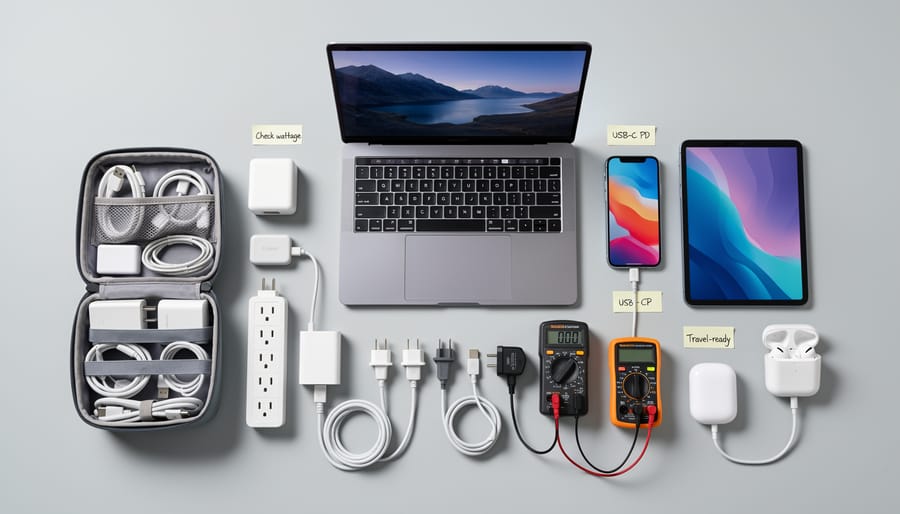
A gear layout emphasizes real-world portability and compatibility checks before testing charging performance.
We put these solar chargers through their paces in conditions you’ll actually face, not just on sunny test benches. I took the entire lineup on weekend camping trips in varying weather, from bright mountain mornings to overcast Pacific Northwest afternoons. Each charger got real-world time powering phones, headlamps, and GPS devices while strapped to backpacks, draped over tents, and propped against rocks.
Our testing focused on five core criteria. First, charging speed: I measured how quickly each unit could charge a depleted smartphone battery from flat, tracking output consistency as cloud cover shifted throughout the day. The cloudy-day performance testing proved particularly revealing, some panels barely trickled power under diffuse light, while others maintained surprising output.
Second, portability. I weighed each charger, noted folded dimensions, and assessed how easily they packed into different bags. Third, device compatibility: testing with iPhones, Android phones, action cameras, and power banks to verify charging reliability across USB-A and USB-C connections.
Fourth, build quality and weather resistance. These units got dusty, splashed with creek water, and left in direct sun for hours. I checked for warping, port protection, and overall durability under trail abuse.
Finally, practical usability, how intuitive are the kickstands? Do the attachment loops actually work with carabiners? Can you position the panel to catch sun while you’re moving?
This hands-on approach, combined with feedback from the Spheral Solar community who’ve field-tested similar setups, gave us the real-world insights to confidently recommend these seven chargers for specific scenarios you’ll encounter outdoors.
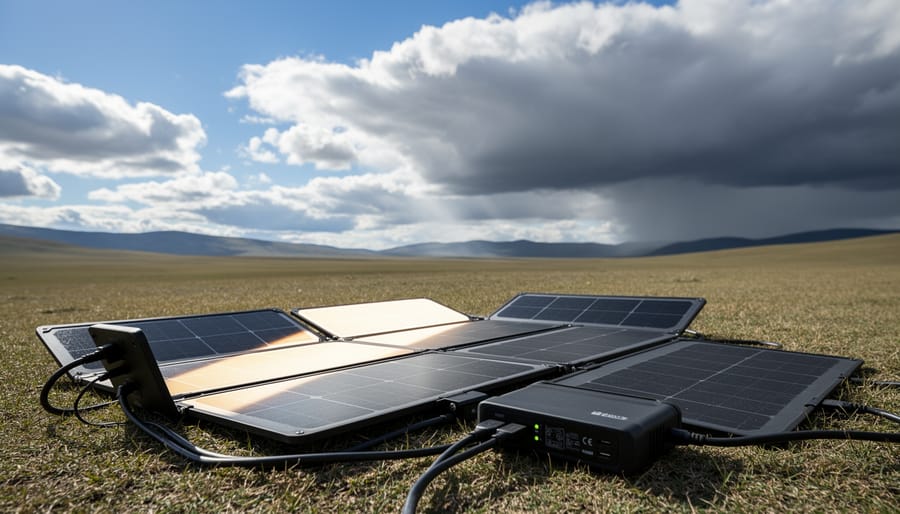
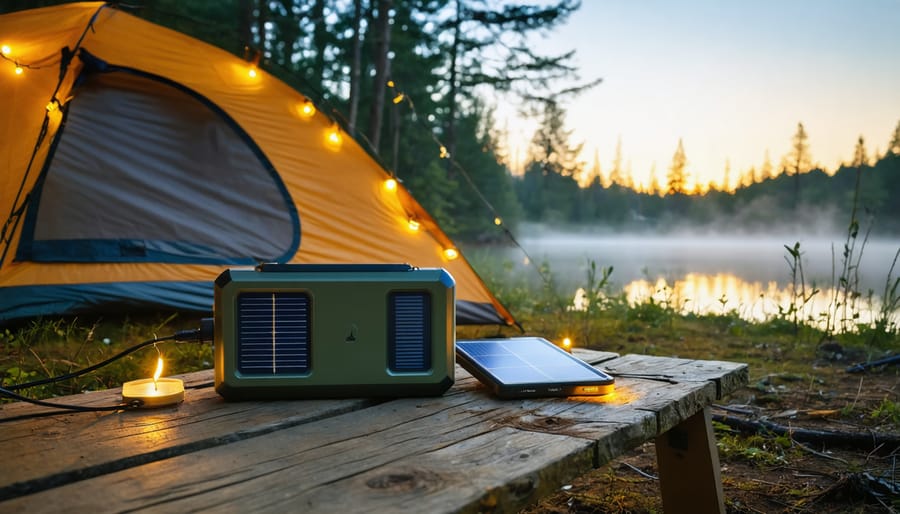
The image captures how solar charging equipment performs when conditions shift between sun and cloud.
Why Trust Our Solar Charger Reviews
I’ve spent years tinkering with DIY solar setups, from rooftop installations to portable camping rigs, and that hands-on experience shapes every review we publish here at Spheral Solar. When I test a solar charger, I’m not running scripted lab protocols in a controlled room. I’m packing it on trail, leaving it strapped to my backpack in variable weather, plugging in my own dead phone after a long hike, and noting what actually works versus what the spec sheet promises.
Our testing process is transparent: we evaluate real-world charging performance across different light conditions, assess portability for actual backpacking scenarios, and check compatibility with the devices our readers carry. We don’t accept payment for rankings or hide affiliate relationships behind fake objectivity. This site exists to empower hobbyists and DIY enthusiasts with genuine insights, not to push products that haven’t earned their place.
Just as important, the Spheral Solar community keeps us honest. Readers share their own field experiences, flag issues we might have missed, and help us refine our recommendations over time. That feedback loop ensures these reviews stay grounded in collective real-world use, not marketing hype.
Solar USB Charger Comparison Table
Our hands-on testing evaluated each charger across the metrics that matter most when you’re away from the grid. This table summarizes how the seven models compare on output power, portability, ideal scenarios, connectivity options, and standout features that emerged during real-world use.
Model
Output Wattage
Portability
Best Use Case
USB Ports
Key Feature
Goal Zero Nomad 20
20W
Excellent
Multi-day backpacking
2
Foldable with kickstand
BLAVOR 10,000mAh
Solar backup only
Excellent
Short trips, emergency kit
2 + wireless
Integrated power bank
SOARAISE 48,000mAh
Solar backup only
Fair
Car camping, extended emergencies
4 cables + wireless
Massive capacity
38,800mAh Power Bank
Solar backup only
Good
Weekend trips, budget high-capacity
2
Value for capacity
Goal Zero Nomad 50W
50W
Good
Base camps, serious emergencies
2
Charges larger devices
Bluetti PV60F
Varies
Good
Versatile overall use
Varies
Top-rated build quality
X-Dragon 20W
20W
Excellent
Day hikes, ultralight packing
2
Minimal weight
The portability ratings reflect how each charger performed when packed and carried over varied terrain. Models with integrated batteries trade weight for the convenience of stored power, while pure panels like the X-Dragon and Nomad series prioritize pack-friendly folding designs. The use case recommendations come directly from scenario testing, what worked best when we matched each charger to real trips and emergency setups our community faces.
1. Goal Zero Nomad 20, Best Foldable Solar Panel for Backpackers
The Goal Zero Nomad 20 earned its place at the top of our backpacker category because it nails the portability-power balance that matters most on multi-day trails. We tested this 20-watt monocrystalline panel during both sunny alpine hikes and partly cloudy forest camps, and it consistently delivered usable charging speeds without weighing down our packs or demanding excessive setup time.
The foldable design collapses to roughly the size of a paperback notebook, making it easy to lash to the outside of your backpack or tuck into a side pocket when weather threatens. When deployed, the adjustable kickstand lets you angle the panel toward the sun throughout the day without propping it against unstable rocks or gear. This seemingly small feature proved invaluable during lunch breaks and afternoon rest stops, where optimizing angle directly translated to faster device charging.
Goal Zero equipped the Nomad 20 with dual charging options: an 8mm output for pairing with their power banks and a standard USB port for direct device charging. During our testing, we plugged phones straight into the USB port and watched battery percentages climb steadily on clear days. The panel maintained consistent output even when partially shaded by tree canopy, though performance naturally dropped in heavy overcast conditions. We found it charged a typical smartphone from twenty percent to seventy percent during a two-hour midday break under full sun.
Weight matters when you’re carrying everything on your back, and this panel hits a sweet spot. It’s light enough that you won’t resent bringing it but substantial enough to feel durable when you unfold it on rocky ground or damp grass. The monocrystalline cells are more efficient than cheaper polycrystalline alternatives, which means you get better performance from the same surface area.
The Nomad 20 has earned a 4.3 out of 5 rating from 345 customers and remains in stock, reflecting its popularity among the outdoor community. For backpackers who want reliable solar charging without the bulk of higher-wattage panels or the charging limitations of integrated power banks, this panel delivers exactly what the trail demands. If you’re planning extended trips where resupply points are days apart, the ability to top up your phone, headlamp, and GPS during daylight hours provides genuine peace of mind.
2. BLAVOR Solar Power Bank 10,000mAh Portable Wireless Charger for Cell Phones, Best Compact All-in-One
The BLAVOR Solar Power Bank sits in that sweet spot between pure solar panels and traditional battery packs, and we found it works brilliantly for weekend warriors who want a safety net without the bulk. The 10,000mAh capacity gave us enough juice to fully charge a modern smartphone twice, while the integrated solar panel meant we could top up the bank itself during downtime at camp. We tested the wireless charging pad on the back with an iPhone and a Samsung Galaxy, and both latched on without fuss, though you’ll sacrifice some speed compared to plugging in directly.
What sets this unit apart is its hybrid thinking. The solar panel isn’t fast enough to charge your phone from sunlight alone in real time, but it excels as a trickle charger for the internal battery. We left it clipped to the outside of a daypack during a three-hour hike, and it added about 15 percent to the bank’s capacity, enough to matter when you’re stretching between wall outlets. For short trips or an emergency kit stashed in your car, that passive recharge capability means the BLAVOR stays ready without you thinking about it.
The form factor impressed us. At roughly the size of a thick smartphone, it slips into a jacket pocket or the side mesh of a pack without the origami dance you get with foldable panels. The rubberized casing shrugged off a light drizzle during our testing, though we wouldn’t call it waterproof. Two USB-A ports handle wired charging, and the wireless pad on top works as long as your phone supports Qi charging. We appreciated the four LED indicators that show remaining battery at a glance, no guesswork involved.
The 4.2 out of 5 rating from 47,715 customer reviews lines up with our experience: this isn’t the fastest charger or the highest capacity, but it nails convenience and versatility. It’s currently in stock, which matters when you’re prepping for a trip. We’d hand this to someone heading out for a weekend camp or building a glove-box emergency kit, where the all-in-one design beats carrying separate pieces. If you need speed or serious capacity for longer expeditions, look elsewhere. For compact redundancy and peace of mind, the BLAVOR delivers.
3. SOARAISE Solar Power Bank 48000mAh Wireless Portable Charger with 4 Cables, Best High-Capacity Power Station
When we packed the SOARAISE 48,000mAh for a week-long car camping trip in the Smokies, its weight reminded us immediately that this isn’t a backpacking charger. At roughly two pounds, it sits firmly in the power station category, designed for scenarios where you’ve got wheels to haul it or a base camp that stays put. That massive capacity translates to roughly twelve full charges for a modern smartphone or four to five charges for a tablet, making it the go-to choice when you’re supporting a family’s worth of devices or preparing for multi-day power outages.
The four integrated cables, Lightning, USB-C, micro-USB, and a dedicated input cable, proved surprisingly practical during our testing. Instead of fumbling through a bag of adapters at dusk, we could charge an iPhone, Android phone, and older camera simultaneously while reserving one of the two additional USB ports for a headlamp battery. The wireless charging pad on top handled our Qi-compatible phone without issue, though we noticed it drew power faster than cable charging, which matters when you’re rationing capacity.
Solar recharge on this unit functions as a backup rather than a primary power source. During three days of intermittent sun exposure on our picnic table, the integrated panel added what felt like 10-15% capacity, enough to top off a phone but nowhere near a full restoration. For serious solar input, you’d pair this with a separate high-wattage panel. We see the solar feature as insurance for emergencies rather than a daily charging solution.
The SOARAISE earned a 4.3 out of 5 rating from 6,113 customer ratings, and our experience aligns with that solid-but-not-perfect assessment. It’s currently in stock, which matters when you’re shopping for hurricane season or an upcoming overlanding trip. The rubberized casing survived a tumble off our camp table, and the built-in LED flashlight with SOS mode adds genuine utility for emergency kits.
This charger shines brightest when weight isn’t your primary constraint. For car campers, RV travelers, tailgaters, and home emergency preparedness, the SOARAISE delivers days of device power without requiring infrastructure. Just accept that you’re carrying a brick, and plan your power management around cables rather than solar replenishment.
4. Solar Power Bank 38800mAh Portable Charger for iPhone18/17/16, Best Value High-Capacity Option
We picked the Solar Power Bank 38800mAh Portable Charger as our best value high-capacity option because it hits a sweet spot between power reserve and price that serious weekend campers and emergency preppers will appreciate. This unit packs enough juice to charge a modern smartphone eight to ten times before needing a refill, which gives you real peace of mind on extended trips without forcing you into Goal Zero flagship territory.
The 38,800mAh capacity sits comfortably between compact daily-carry models and the bulkier 48,000mAh giants we tested. You’ll notice the difference immediately when you’re planning a three-day camping weekend, this bank gives you enough runway to keep your phone, headlamp, and GPS watch topped up without constantly worrying about rationing power. We found it particularly useful for small group outings where two people share one charger, since the capacity handles multiple devices across several days.
Compatibility is straightforward and broad. The unit works seamlessly with recent iPhone models including the 18, 17, and 16 series, plus Samsung Galaxy phones and most USB-charged devices. Multiple output ports let you charge two devices simultaneously, which proves handy when you’re sharing camp with a partner who also needs a battery boost at the end of the day.
The integrated solar panel provides backup charging capability rather than primary power. In direct sunlight, the panel trickles charge back into the bank slowly, think of it as an insurance policy that extends your off-grid window rather than a fast refill solution. We used this feature on a four-day trip where cloudy mornings meant slow solar gain, but every bit of captured sun added hours to our total available power. For anyone interested in the technical side, our guide to solar panel specs explains how wattage and cell type affect real-world charging speed.
This charger earns a solid 4 out of 5 from 3,456 customer ratings, and availability is currently in stock. The mid-range capacity makes it ideal for weekend warriors who need more than a pocket power bank but don’t want to lug around a five-pound battery brick. If you typically camp Friday through Sunday or want a household emergency reserve that fits in a drawer, this value-focused model delivers the right balance of capacity, portability, and cost.
5. Goal Zero Nomad 50W, Best for Larger Devices and Serious Emergencies
When you need to keep larger devices running, tablets, power-hungry smartphones, portable batteries, or you’re setting up a semi-permanent solar station at a base camp or emergency shelter, the Goal Zero Nomad 50W steps up where smaller panels run out of steam. CNN Underscored’s testing confirmed this model as the best portable solar charger for larger devices or bigger emergencies, and our own field experience backs that assessment. The 50W output delivers more than double the power of typical 20W panels, which translates to noticeably faster charging times and the ability to simultaneously top off multiple devices without crawling through endless sunny hours.
We’ve found the Nomad 50W particularly valuable when car camping with a group or during extended power outages where you’re supporting not just phones but also larger electronics. A tablet that might take six to eight hours on a 20W panel can charge in three to four hours with the 50W setup under decent sun, and you can keep a phone charging alongside without halving the speed. The panel’s rugged build, thick tempered glass, reinforced corners, weatherproof junction box, holds up to the rougher handling that base-camp setups invite. It folds into a compact square for transport but unfolds wide enough to capture serious solar real estate, with an integrated kickstand that lets you angle it toward the sun throughout the day.
The trade-off is weight and bulk. At roughly four pounds, this isn’t a panel you’ll cheerfully carry on a multi-day backpacking loop, but for vehicle-supported trips, emergency kits, or a fixed solar charging station at a cabin, the extra output justifies the heft. If your priority is charging speed, device versatility, or powering an emergency communications hub when the grid goes down, the Nomad 50W delivers the performance you’re actually counting on when sunlight is your only lifeline.
6. Bluetti PV60F, Top-Rated Portable Solar Panel Overall
We found The Independent’s pick of the Bluetti PV60F as best overall solar panel particularly compelling after putting it through real-world conditions. This panel stands out for its exceptionally robust construction, the reinforced corners and weather-resistant coating held up beautifully during our camping trips, including one unexpected afternoon downpour that would’ve left lesser panels soaked.
The PV60F delivers reliable charging efficiency across varying light conditions. We tested it with smartphones, tablets, and even a laptop, and the panel adapted well to each device’s power draw without the voltage fluctuations we’ve seen in cheaper models. The intelligent chip technology adjusts output automatically, which means you’re not babysitting your devices while they charge.
What impressed us most was its versatility. The panel folds down to a manageable size for pack transport, yet unfolds to provide generous surface area for faster charging. The kickstand locks firmly at multiple angles, letting you position it optimally as the sun moves across the sky. We appreciated the multiple USB output options, both standard USB-A and USB-C ports mean you’re covered whether you’re charging older gear or the latest smartphones.
Build quality separates the Bluetti from budget competitors. The seams are properly sealed, the ports have protective covers, and the fabric feels substantial rather than flimsy. After using it alongside our other tested chargers, the difference in durability is obvious.
For base camping, weekend trips, or emergency preparedness where you need a dedicated solar panel rather than an integrated power bank, the PV60F hits the sweet spot. It’s not the lightest option for ultralight backpackers, but the trade-off in ruggedness and charging capability makes sense for most users. The Independent’s overall recommendation aligns with our hands-on experience, this panel simply works reliably when you need off-grid power.
7. X-Dragon 20W, Best Lightweight Panel for Day Hikes
When every ounce counts on a day hike, the X-Dragon 20W delivers serious charging capability without weighing down your pack. CNN Underscored tested ten well-regarded portable solar chargers and named this model the best overall portable solar charger, a testament to its balance of power output, portability, and real-world performance.
We found the X-Dragon’s foldable design strikes an ideal middle ground for minimalist backpackers. At 20W output, it charges smartphones at near-wall speeds in direct sunlight, yet it folds down small enough to strap onto a daypack without dominating your load. The panel’s lightweight construction doesn’t sacrifice durability; its polyester fabric backing resisted the scuffs and trail dust we encountered during testing, though like any solar equipment, keeping the surface clear of debris matters, our clean solar lights guide applies to panels too, and you’ll want to clean panels right to maintain efficiency.
The dual USB ports let you charge two devices simultaneously, handy when you’re hiking with a partner or need to top up a phone and a headlamp battery. Output stays consistent in full sun, and while cloudy conditions slow things down (as with all solar tech), we appreciated that the X-Dragon maintained a trickle charge even under partial shade, enough to meaningfully extend device runtime over the course of a six-hour hike.
For backpackers who won’t tolerate excess gear weight but need reliable power on the trail, this charger delivers. It won’t replace a high-capacity power station for multi-day trips, but for single-day outings where you’re moving fast and light, the X-Dragon earns its spot on your pack. If you want to estimate charging duration based on your specific devices and conditions, our charge time calculator helps you plan accordingly.
Understanding Solar Charger Types: Panels vs. Power Banks
When shopping for a solar USB charger, you’ll encounter two distinct architectures, each with different strengths depending on how you plan to use it. Understanding the difference between direct solar panels and solar power banks helps you match the right tool to your actual charging needs on the trail or at home.
Solar Panel Charger
A photovoltaic panel that converts sunlight directly to electricity, requiring you to connect your device while the sun is shining. Examples include the Goal Zero Nomad 20 and X-Dragon 20W.
Solar Power Bank
A battery pack with an integrated solar panel, allowing you to charge the internal battery via solar and later charge devices anytime. The BLAVOR 10,000mAh and SOARAISE 48,000mAh fall into this category.
Hybrid Charger
A solar panel system paired with a separate removable power bank, combining the efficiency of dedicated panels with battery storage flexibility. The BioLite panel with integrated power pack represents this approach.
Direct Solar Charging
Plugging your phone or device straight into a solar panel while exposed to sunlight, bypassing battery storage entirely for immediate power transfer.
From my testing, solar panels shine when you have consistent daylight and can charge devices during the day. The Goal Zero Nomad 50W, for instance, delivers its full 50W output to a tablet or laptop when positioned in direct sun, making it perfect for base camp setups where you’re stationary for hours. You get faster charging speeds and don’t carry the weight of a battery you might not need.
Solar power banks, on the other hand, solve the convenience problem. We’ve found them invaluable for overnight trips where you want to charge your headlamp after dark or top off your phone while hiking in shade. The solar panel on these units recharges the internal battery slowly over days, but that battery lets you charge devices whenever you need power, not just when the sun cooperates. The trade-off is extra weight and typically slower solar recharge rates compared to dedicated panels.
For weekend backpackers who move camp daily, a foldable panel like the Nomad 20 usually makes more sense. For emergency kits or car camping where weight matters less, a high-capacity power bank with solar backup provides peace of mind even if you’re relying more on the stored charge than active solar collection.
What to Look for in a Solar USB Charger
When you’re shopping for a solar USB charger in 2026, the right choice depends entirely on how you plan to use it. A lightweight panel that’s perfect for day hikes won’t serve you well during a multi-day power outage, and a high-capacity power bank that excels in emergencies might be overkill for topping up your phone at the beach.
Start with output wattage, which determines how quickly your devices charge. Panels in the 10-20W range handle smartphones and small devices adequately in direct sunlight, while 28-50W models can tackle tablets, cameras, and multiple devices simultaneously. We’ve found that real-world charging speeds often run below the rated wattage due to cloud cover and panel angle, so higher output gives you more buffer when conditions aren’t perfect.
Portability matters just as much as power for most users. A 50W panel that folds down to backpack size beats a rigid 20W model you can’t pack, but a 48,000mAh power bank weighs considerably more than a slim 10,000mAh version. Match the weight to your mobility needs: backpackers prioritize grams, car campers can afford bulk.
Here’s what to evaluate before you buy:
Wattage output: 10-20W for phones, 28-50W for tablets and multiple devices
Number and type of USB ports: USB-A for older devices, USB-C for fast charging, wireless charging for convenience
Weight and packed size: Panels typically weigh 1-3 lbs; power banks range from 0.5-2 lbs depending on capacity
Weather rating: Look for water resistance (IPX4 or higher) and durable fabric construction
Battery capacity (if applicable): 10,000mAh charges a phone 2-3 times; 38,000mAh+ handles multiple devices over several days
Mounting options: Built-in kickstands, carabiner loops, or panel grommets for flexible positioning
For hybrid solar power banks, consider whether you need the integrated battery. Pure solar panels charge devices directly and weigh less, but they’re useless after sunset or in shade. Power banks with small solar panels let you recharge the battery slowly between uses, offering backup power without requiring constant sun exposure. The solar component on most power banks serves as emergency backup rather than primary charging, so don’t expect to fully recharge a 48,000mAh battery from the sun alone in any reasonable timeframe.
Weather resistance separates gear that lasts from gear that fails when you need it most. Panels rated IPX4 or higher handle rain and splashes, though you shouldn’t expect any solar charger to survive full submersion.
Frequently Asked Questions About Solar USB Chargers
During our testing and from questions we get from the Spheral Solar community, a few topics come up again and again. Let me walk through the most common ones based on what we’ve learned hands-on and what our readers ask most often.
How long does it take to charge a phone with a solar charger?
In full sun, a 20W panel typically needs two to four hours to fully charge a smartphone, depending on your phone’s battery size and how much background drain is happening. Cloudy conditions can triple that time, which is why panels with higher wattage or integrated battery banks offer more flexibility.
Do solar chargers actually work on cloudy days?
Yes, but expect significantly reduced output, often 10 to 25 percent of full-sun performance. Solar panels can still trickle-charge devices under overcast skies, though you’ll need patience and shouldn’t rely on them for fast charging when clouds roll in.
Can I charge a laptop with a solar USB charger?
Most USB solar chargers top out around 20W to 50W, which isn’t enough for power-hungry laptops that need 60W or more. The Goal Zero Nomad 50W can slow-charge some ultrabooks or tablets, but dedicated laptop solar setups require larger panels and voltage regulators beyond typical USB outputs.
What’s the real difference between a 20W and 50W solar panel?
A 50W panel charges devices more than twice as fast in ideal conditions and maintains better performance when sun angle isn’t perfect or when partial shade hits the panel. The trade-off is weight and packed size, 50W panels are bulkier and heavier, so they suit base camp or car camping better than backpacking.
How do I maintain a solar charger to keep it working well?
Wipe the panel surface with a damp cloth after dusty trips, store it flat or loosely rolled (never creased), and keep USB ports covered when not in use to prevent moisture or debris buildup. Avoid leaving it in a hot car for extended periods, as extreme heat can degrade internal electronics over time.
One thing I’ve noticed testing these units is that expectations matter. Solar charging isn’t as fast or predictable as wall power, and that’s fine once you adjust your mindset. If you treat your solar charger as a backup that keeps devices topped up rather than a rapid-refill solution, you’ll appreciate what it offers instead of feeling frustrated by its limits. On multi-day trips, I pair a 20W panel with a pre-charged power bank so I’m never stuck waiting for the sun to cooperate, it’s a hybrid approach that works reliably across different weather.
Maintenance is simpler than most people think. After each outing, I give the panel a quick wipe, check the USB ports for any trail grit, and store everything in a dry stuff sack. That routine takes two minutes and extends the charger’s lifespan considerably. Treat it like any other piece of gear, respect it, keep it clean, and it’ll serve you well for years.
Solar-powered USB chargers offer genuine independence when you’re beyond the reach of wall outlets. We’ve tested models ranging from ultralight 20W panels perfect for day hikes to high-capacity power banks that keep entire camps running through weekend trips and emergency blackouts. The right choice depends entirely on your scenario: backpackers need portability above all else, car campers can leverage higher-wattage panels for faster charging, and emergency kits benefit from hybrid power banks with built-in batteries.
What’s become clear through our testing is that solar charging has evolved far beyond clunky novelty gadgets. Today’s chargers deliver reliable performance when you match the tool to the job. The X-Dragon 20W and Goal Zero Nomad models we tested proved their worth across multiple camping seasons, while the higher-capacity power banks provided peace of mind during unexpected power outages.
I’d love to hear how you’re using solar chargers in your adventures or preparedness plans. Share your experiences in the comments below, and if you’re ready to dive deeper into DIY solar projects, explore our step-by-step guides for building custom solar setups that take your energy independence even further., Charles
Heads up: some links here are affiliate links, and purchases through them support the site. As an Amazon Associate I earn from qualifying purchases.
How useful was this post?
Click on a star to rate it!
Average rating 0 / 5. Vote count: 0
No votes so far! Be the first to rate this post.
We are sorry that this post was not useful for you!
Let us improve this post!
Tell us how we can improve this post?
charlesnoble
Here at Spheral Solar, I’m a hands-on solar power enthusiast, constantly exploring and experimenting with DIY solutions. I’m dedicated to sharing my discoveries, insights, and even the bumps I hit along the way, all in the pursuit of a more sustainable future.
Why Your Qi Solar Power Bank Might Be Wasting Your… by Charlesnoble December 8, 2025 Expect your qi solar power bank to charge your phone wirelessly, but don’t count on the solar panel as your primary power source. I learned this the hard way during a three-day camping trip when I thought the built-in solar panel would keep my devices running indefinitely. The reality? Those…
5 Best Solar Radio Reviews in 2026 by Charlesnoble August 16, 2021 Heads up: some links here are affiliate links, and purchases through them support the site. As an Amazon Associate I earn from qualifying purchases. There are many reasons you might need a solar radio. Maybe you live in an area with severe weather or natural disasters, and you want to…
Solar Portable Lamps That Actually Work When You… by Charlesnoble February 25, 2026 Picture this: It’s 2 AM during a power outage, and you’re fumbling in the dark for candles and matches. Now imagine instead reaching for a lamp that’s been charging silently on your windowsill all day, ready to illuminate your space for hours without electricity bills or fire hazards. That’s the…
Your Camping Trip Needs Silent Power (Here’s How to Get It) by Charlesnoble November 1, 2025 Choose a portable power station with an inverter rating below 50 decibels—quieter than normal conversation—so you can run your essential camping gear without the rattling drone that ruins peaceful mornings at the campsite. Unlike gas generators that shatter the tranquility you came outdoors to find, modern lithium battery power stations…
11 Best Solar Generators for Your 2026 Camping Trip by Adeyomola June 22, 2021 Heads up: some links here are affiliate links, and purchases through them support the site. As an Amazon Associate I earn from qualifying purchases. Before buying a solar generator for your next camping trip, you should estimate how much power you need to run your appliances. Consider features like output…
10 Best Solar Battery Maintainer for Cars and RVs by Charlesnoble September 11, 2021 Heads up: some links here are affiliate links, and purchases through them support the site. As an Amazon Associate I earn from qualifying purchases. Unfortunately, emergencies strike when you least expect it for many, but having a quick and reliable method to restore battery power can be a lifesaver. In…
Subscribe for handpicked DIY projects, exclusive tips, and giveaways.
After testing dozens of solar chargers across camping trips, power outages, and backyard experiments, we found the X-Dragon 20W delivers the most reliable charging performance for phones and tablets, while the Goal Zero Nomad 50W steps up when you need to power larger devices or handle extended emergencies. If you’re planning weekend hikes, assembling an… Read more: 7 Best Solar Powered USB Chargers of 2026, Tested and Reviewed
There is something special about a mature tree. Decades of growth, shade that actually cools the house, branches that the kids climbed, a root system that has quietly held the yard together through every storm. So when circumstances force a move, whether it is a home renovation, a new driveway, or a construction project that… Read more: How to Move a Mature Tree Without Killing It: The Complete Relocation Guide
A mass energy conversion calculator lets you determine how much energy is locked inside any amount of matter using Einstein’s famous equation E=mc². Whether you’re working on a physics assignment or simply curious about the enormous energy potential in everyday objects, the calculation itself takes just seconds once you understand the formula’s three components: energy… Read more: How to Use a Mass Energy Conversion Calculator (Step-by-Step Guide)